Meg Josephson · 2024 · social anxiety
Are You
Mad at Me?
The anxious mind treats ambiguity as accusation. The way out is evidence, not endless emotional forecasting.
Core idea.
Josephson's useful frame is that reassurance-seeking can become a loop. Social anxiety improves when you separate signal from story, check facts gently, and build enough self-trust to survive not knowing every mood in the room.
What readers keep.
Build social steadiness.
Map your reassurance loop
Write the cue, anxious story, checking behavior, and short-term reward.
Choose a fact-check question
Prepare one question that separates evidence from interpretation.
Write a direct ask
Draft a calm sentence for checking in without apologizing for existing.
Name a people-pleasing pattern
Identify one yes you give mostly to prevent someone else's mood.
Create a waiting window
Set a reasonable time before you reread, text again, or seek reassurance.
List neutral explanations
Before acting on a cue, write three non-rejection explanations.
Delay the reassurance bid
Wait through one urge to check and regulate your body first.
Ask directly once
Use one clear question instead of repeated indirect tests.
Record the outcome
After the moment passes, write what actually happened versus what anxiety predicted.
Build your mini action book.
Pick setup actions and daily habits from Are You Mad at Me?, choose a start date, and download a printable checklist with real calendar pages.
Frequently asked
What is Are You Mad at Me? about?
A compassionate guide to social anxiety, reassurance loops, people-pleasing, and learning to separate cues from stories.
What are the key takeaways from Are You Mad at Me??
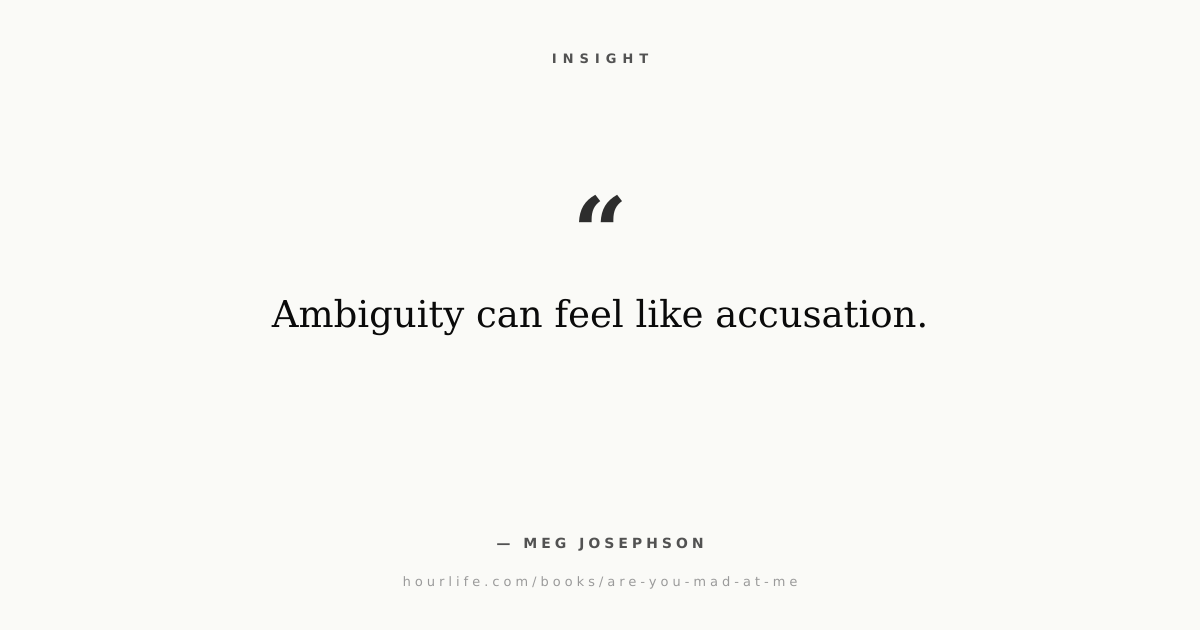
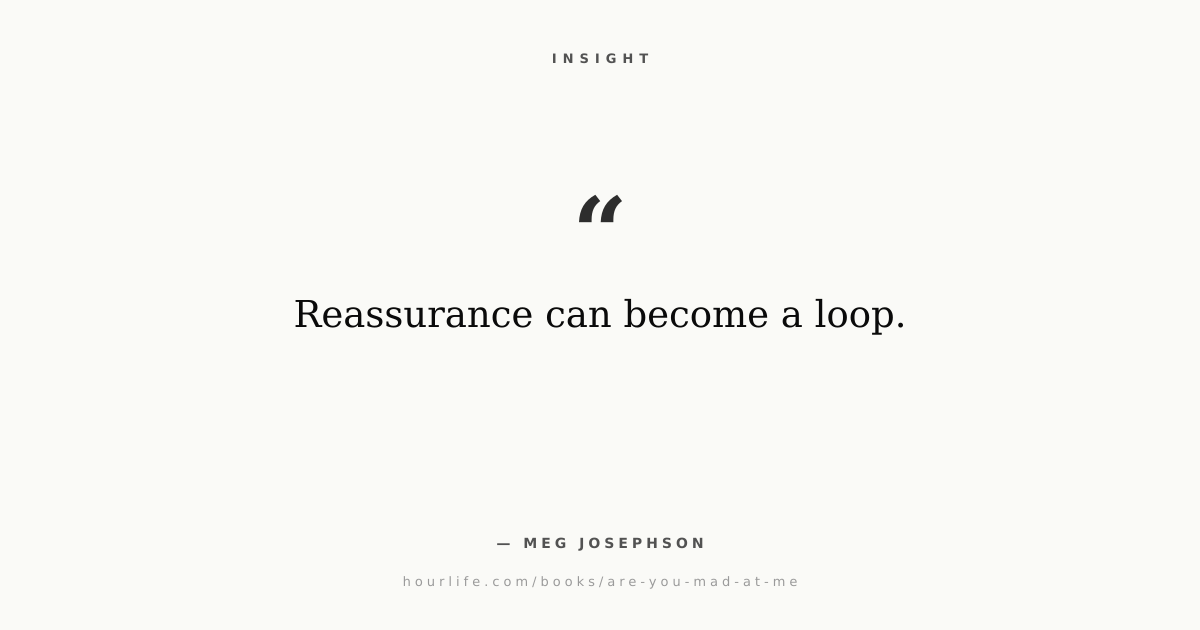
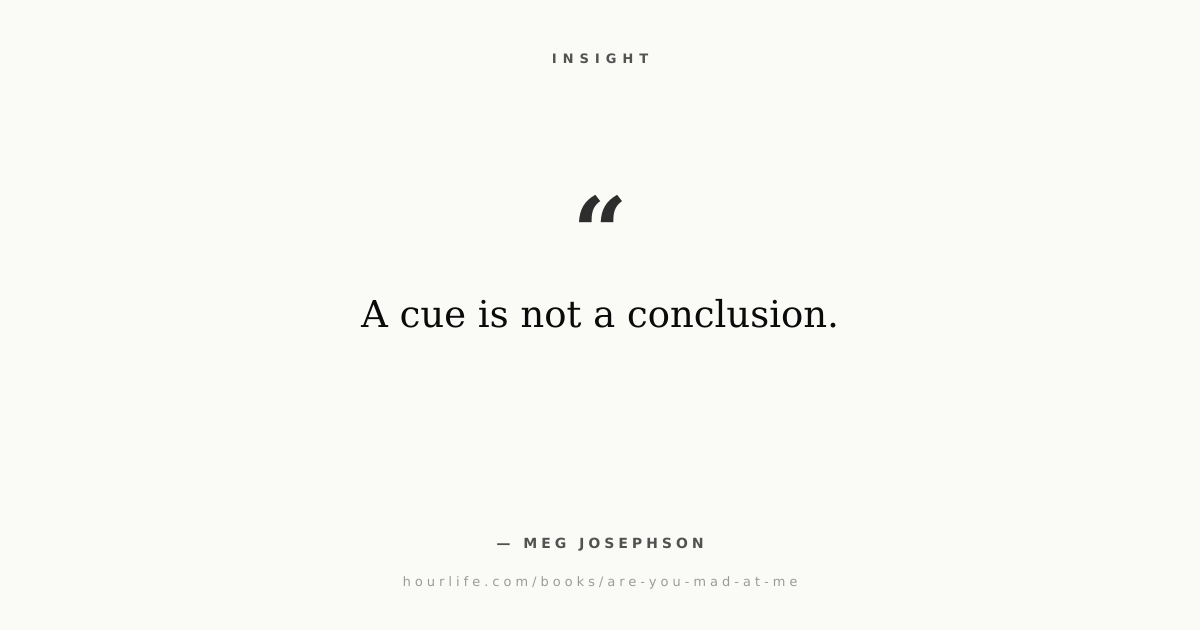
Readers on HourLife most often highlight ideas such as: “Ambiguity can feel like accusation.” “Reassurance can become a loop.” “A cue is not a conclusion.”
Who should read Are You Mad at Me??
It's a strong pick for readers exploring Managing Anxiety, Self-Awareness Journey, and The Art of Communication. HourLife distills its core idea into community-voted insights and one practical action worth trying.
What's one thing I can do after reading Are You Mad at Me??
Map your reassurance loop — Write the cue, anxious story, checking behavior, and short-term reward.
How long does it take to read the Are You Mad at Me? summary?
About five minutes. The HourLife summary distills Are You Mad at Me? into its core idea, 7 community insights, and 9 practical actions you can apply right away.
Downloads & shareables
Print it, pin it, post it. Ways to take Are You Mad at Me? off the screen and into the world.
-
Read the text summary
The core idea, key takeaways, and how to apply Are You Mad at Me?, as one clean, readable page.
Read summary -
Action checklist
Every action from this page as a printable to-do list, with a 7-day tracker.
Download PDF -
Book summary card
A shareable card with the book and its top-voted insight, for saving or posting.
Resource library
The summary card and every quote card in six sizes: Instagram feed, Story, Pinterest, YouTube thumbnail, phone wallpaper, and link preview.
Turn this book into a daily practice.
Save the insights that land, build the habits that stick, and keep what you learn from Are You Mad at Me? working long after you close the page — inside HourLife.

interactive tool
Signal or Story?
reality check
Pick the social cue.
Translate the anxious story into evidence, alternative explanations, and one clean next move.
Ask for evidence before asking for reassurance.