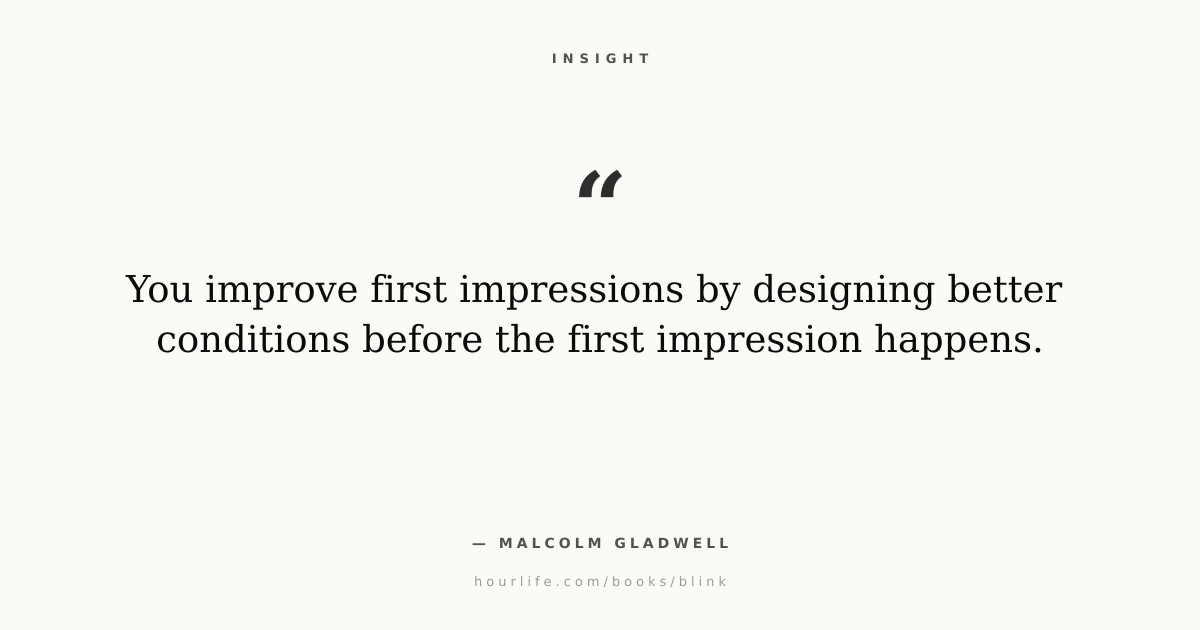
Thin slices
Small samples can be enough when they contain the few cues that actually matter.
The first two seconds can see a real pattern, or disguise a bias as certainty. The skill is knowing which one you are holding.
Core idea
Blink argues that people often make complex judgments before they can explain them. A trained expert may detect a fake artifact, a failing marriage, or a dangerous encounter from thin slices of evidence.
The problem is that the same speed also powers prejudice, panic, overconfidence, and bad first impressions. Gladwell's useful distinction is not slow versus fast. It is trained recognition versus contaminated instinct.
Small samples can be enough when they contain the few cues that actually matter.
We often cannot explain the process behind a fast judgment, so confidence is not proof.
Fast cognition improves when the environment removes stereotypes, pressure, and irrelevant cues.
Interactive tool
Tune the source of a first impression. The goal is not to distrust intuition. It is to separate trained signal from hidden distortion.
1 / Signal source
2 / Bias control
3 / Decision pressure
decision anatomy
Catch the first impression before you start decorating it with reasons.
Ask whether the feeling comes from practiced feedback or a social shortcut.
Strip irrelevant cues: names, status, framing, time pressure, or visual bias.
Run one small counter-check before a high-stakes action.
Review outcomes so future intuition learns from reality instead of ego.
community insights
Vote for the notes that make intuition sharper and less gullible.
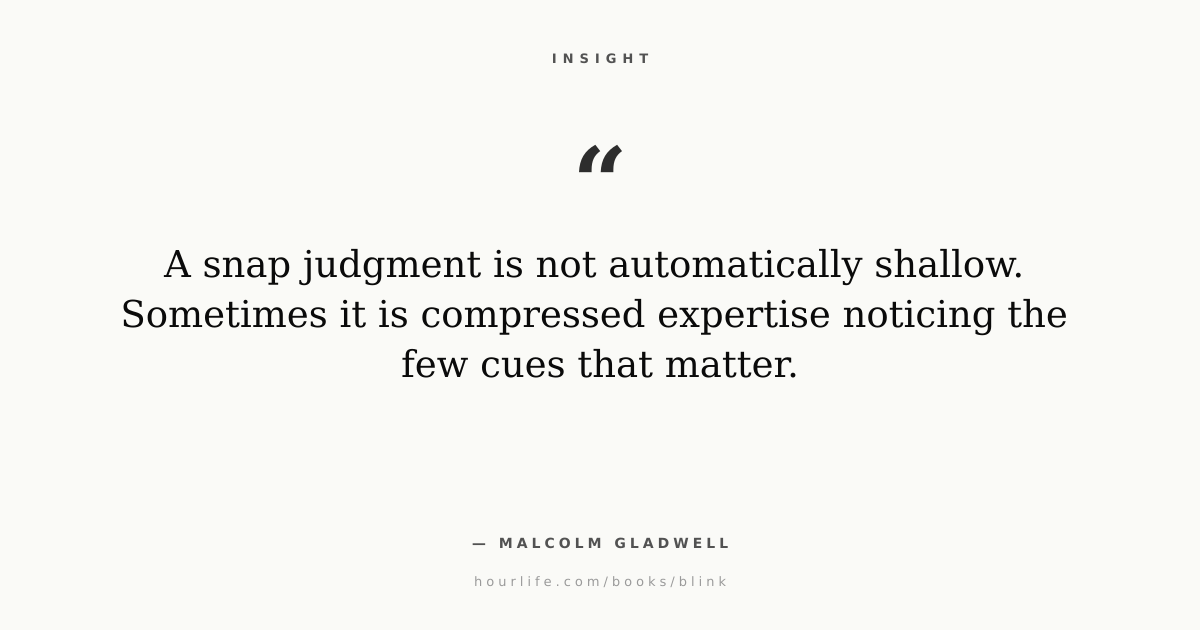
"A snap judgment is not automatically shallow. Sometimes it is compressed expertise noticing the few cues that matter."
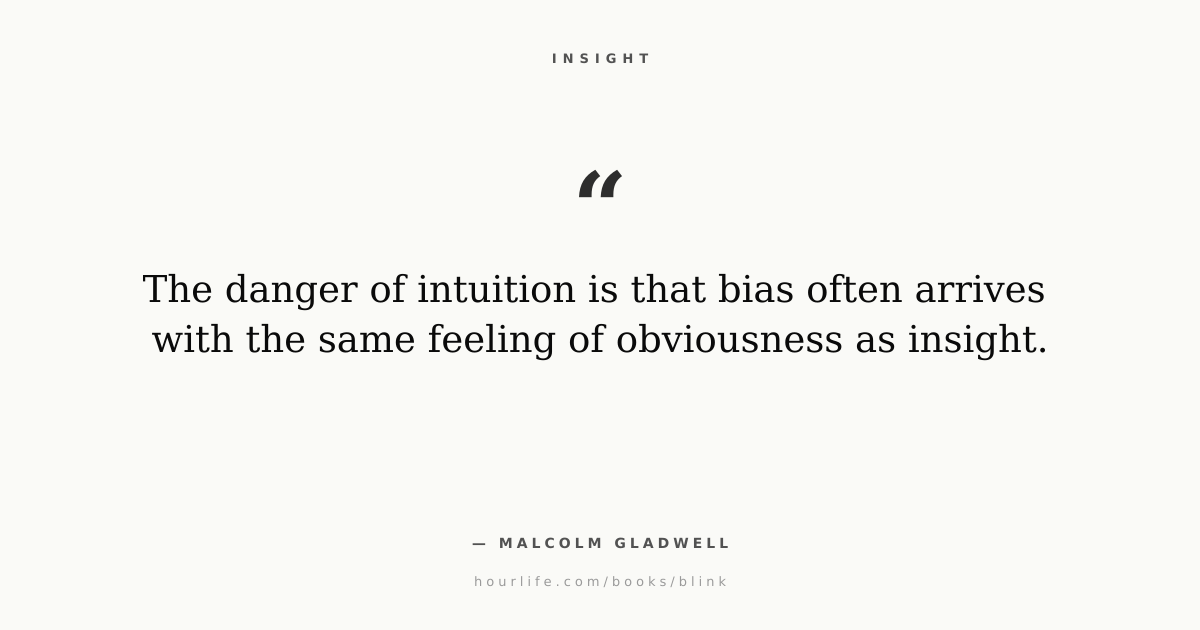
"The danger of intuition is that bias often arrives with the same feeling of obviousness as insight."
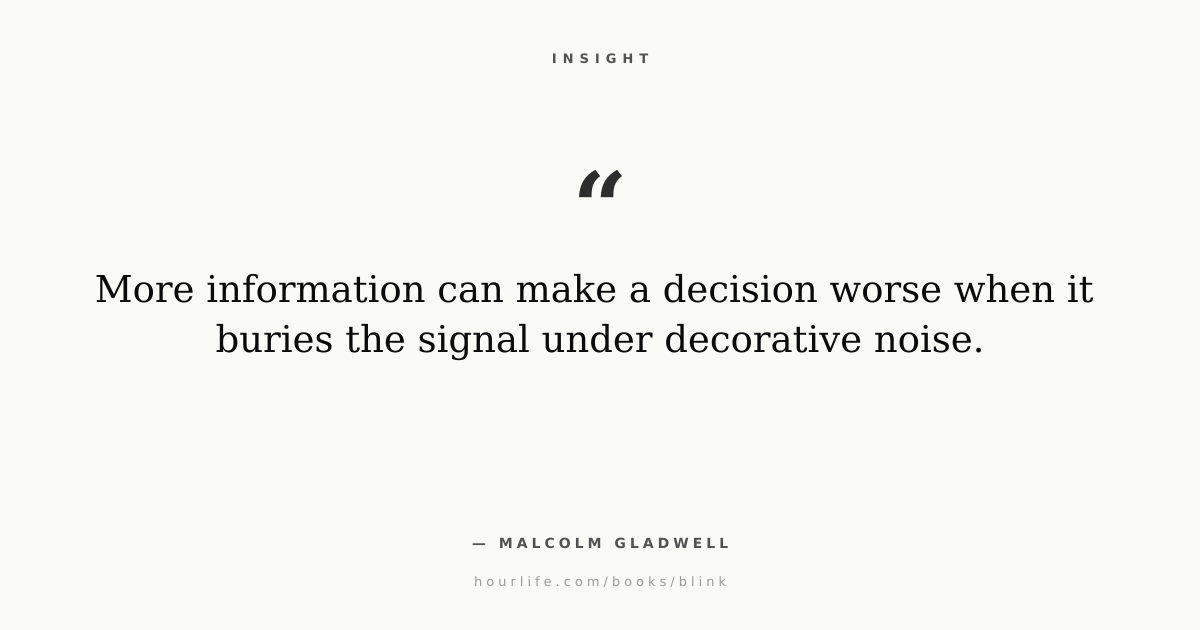
"More information can make a decision worse when it buries the signal under decorative noise."
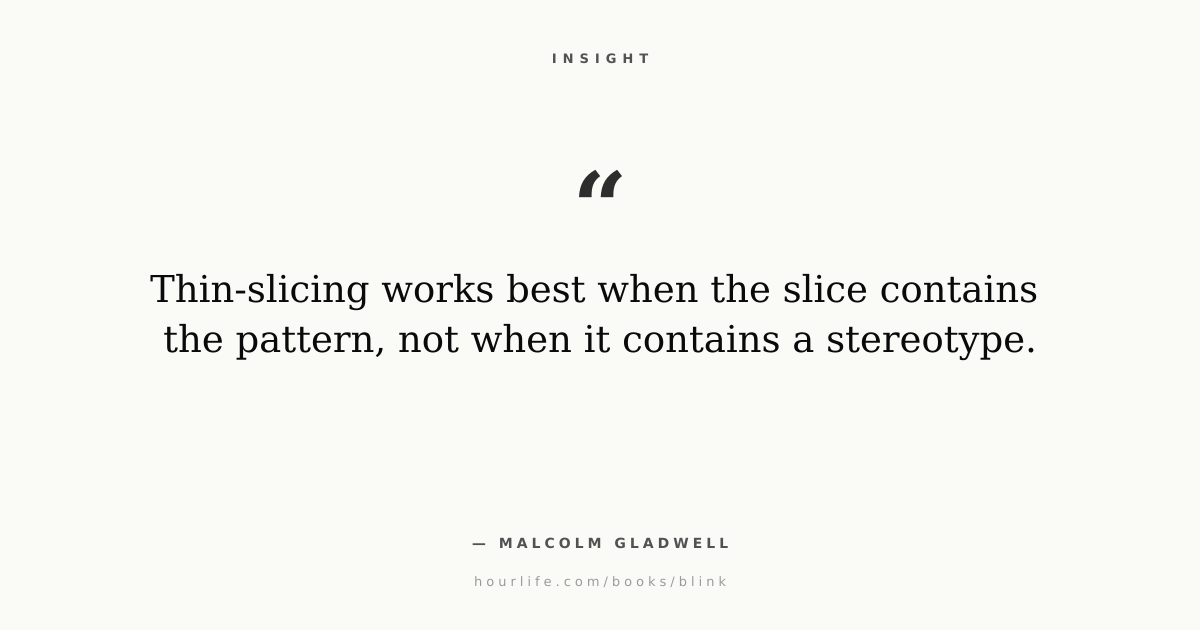
"Thin-slicing works best when the slice contains the pattern, not when it contains a stereotype."
action steps
Before explaining a hunch, write the raw read in one sentence. Keep it separate from the reasons you invent afterward.
Ask what irrelevant cue could be shaping the judgment: appearance, title, mood, urgency, similarity, or stereotype.
Remove one non-predictive variable before choosing. Hide the name, reorder the options, or compare only the outcome criteria.
Look for one piece of evidence that would make your snap judgment less certain before you act on it.
After the decision, record whether the first impression helped or misled you. Intuition improves when it gets feedback.
"A first impression is useful when it becomes a question before it becomes a verdict."
HourLife distillation
Back to libraryPick setup actions and daily habits from Blink: The Power of Thinking Without Thinking, choose a start date, and download a printable checklist with real calendar pages.
A decision-science classic about rapid cognition: when snap judgments reveal trained pattern recognition, when they hide bias, and how to build environments that make intuition more trustworthy.
Readers on HourLife most often highlight ideas such as: “A snap judgment is not automatically shallow. Sometimes it is compressed expertise noticing the few cues that matter.” “The danger of intuition is that bias often arrives with the same feeling of obviousness as insight.” “More information can make a decision worse when it buries the signal under decorative noise.”
It's a strong pick for readers exploring Decision Making, Self-Awareness Journey, and Think Like a Leader. HourLife distills its core idea into community-voted insights and one practical action worth trying.
Name the first impression — Before explaining a hunch, write the raw read in one sentence. Keep it separate from the reasons you invent afterward.
About five minutes. The HourLife summary distills Blink: The Power of Thinking Without Thinking into its core idea, 5 community insights, and 5 practical actions you can apply right away.
Print it, pin it, post it. Ways to take Blink: The Power of Thinking Without Thinking off the screen and into the world.
The core idea, key takeaways, and how to apply Blink: The Power of Thinking Without Thinking, as one clean, readable page.
Read summaryEvery action from this page as a printable to-do list, with a 7-day tracker.
Download PDFA shareable card with the book and its top-voted insight, for saving or posting.
The summary card and every quote card in six sizes: Instagram feed, Story, Pinterest, YouTube thumbnail, phone wallpaper, and link preview.
Save the insights that land, build the habits that stick, and keep what you learn from Blink: The Power of Thinking Without Thinking working long after you close the page — inside HourLife.