Celeste Headlee · 2020 · rest and work
Do Nothing
Headlee argues that exhaustion is not a personal failure. Many of us inherited a culture that confuses worth with output.
Core idea.
The answer to overwork is not a better productivity system. It is refusing the premise that every hour must justify itself through measurable output.
interactive tool
Rest Rebalance
repair move
Choose the pressure point.
Find where busyness is pretending to be virtue.
Protect one unproductive hour and do not rename it self-improvement.
Reader notes.
Practice underliving less.
Define enough
Write what finished means for one task before starting.
Block unproductive time
Reserve one hour that is not for improvement.
Name one false urgency
Identify a task that feels urgent because of anxiety.
Choose a screen boundary
Pick one daily moment that stays phone-free.
Stop at enough
End one task when the agreed version is complete.
Take a useless walk
Walk without audio, tracking, or a destination.
Let leisure be leisure
Do one enjoyable thing without making it productive.
Create a soft evening edge
Set a time when work tools close.
Notice inherited pressure
Write one sentence about the rule you are refusing today.
Build your mini action book.
Pick setup actions and daily habits from Do Nothing: How to Break Away from Overworking, Overdoing, and Underliving, choose a start date, and download a printable checklist with real calendar pages.
Frequently asked
What is Do Nothing: How to Break Away from Overworking, Overdoing, and Underliving about?
A critique of busyness culture and a practical argument for rest, leisure, and a less extractive relationship with time.
What are the key takeaways from Do Nothing: How to Break Away from Overworking, Overdoing, and Underliving?
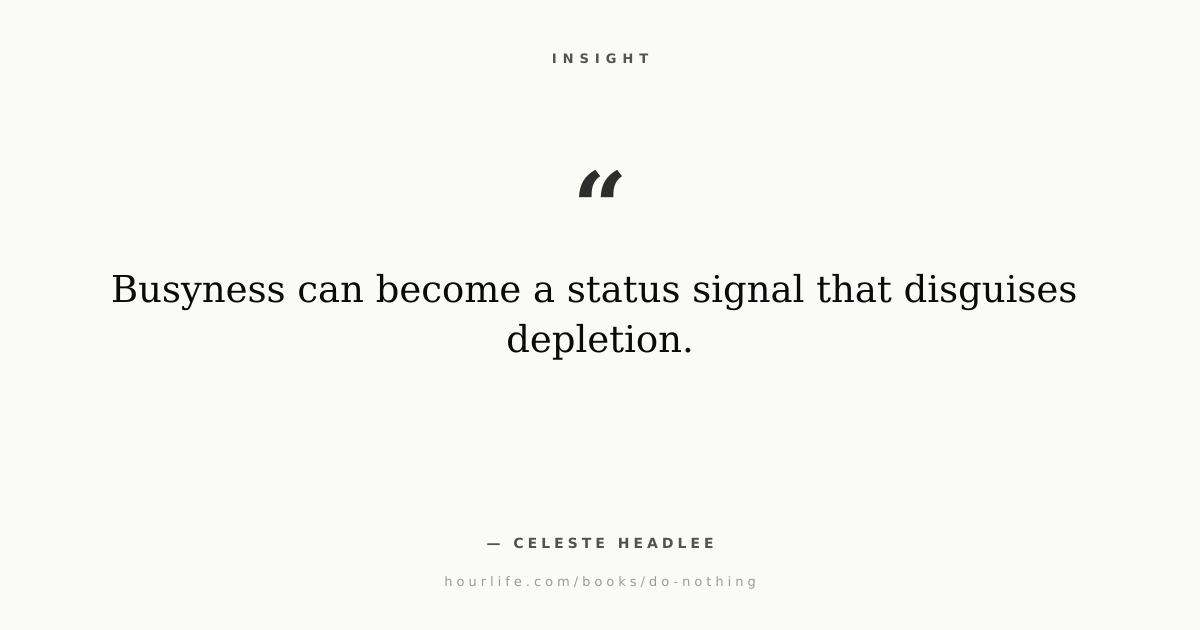
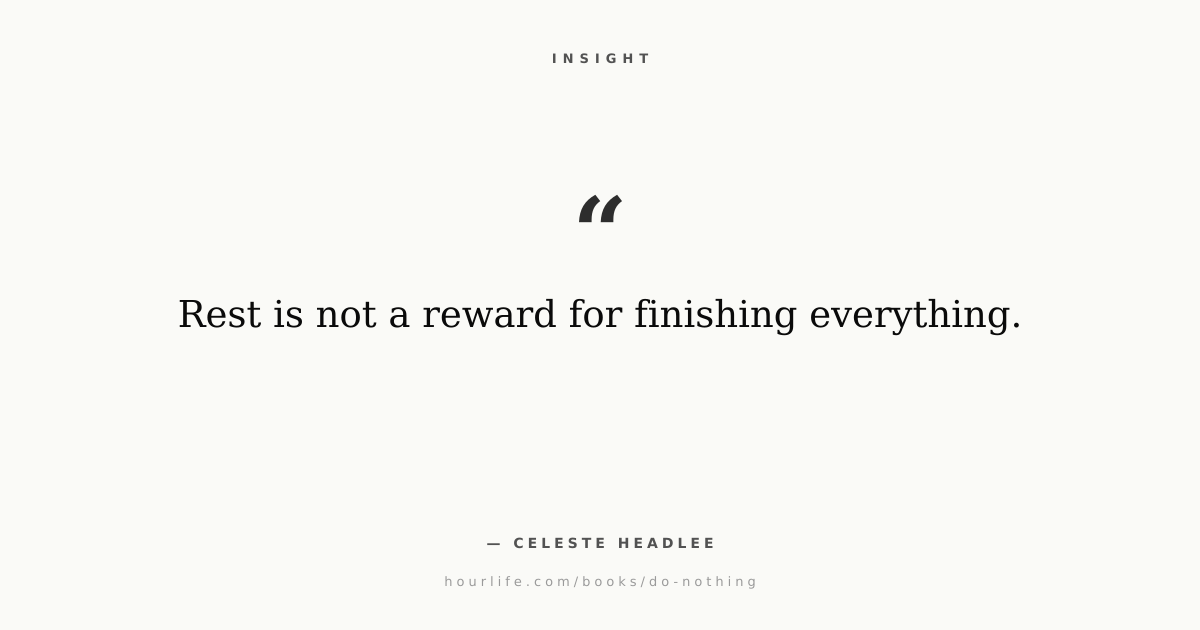
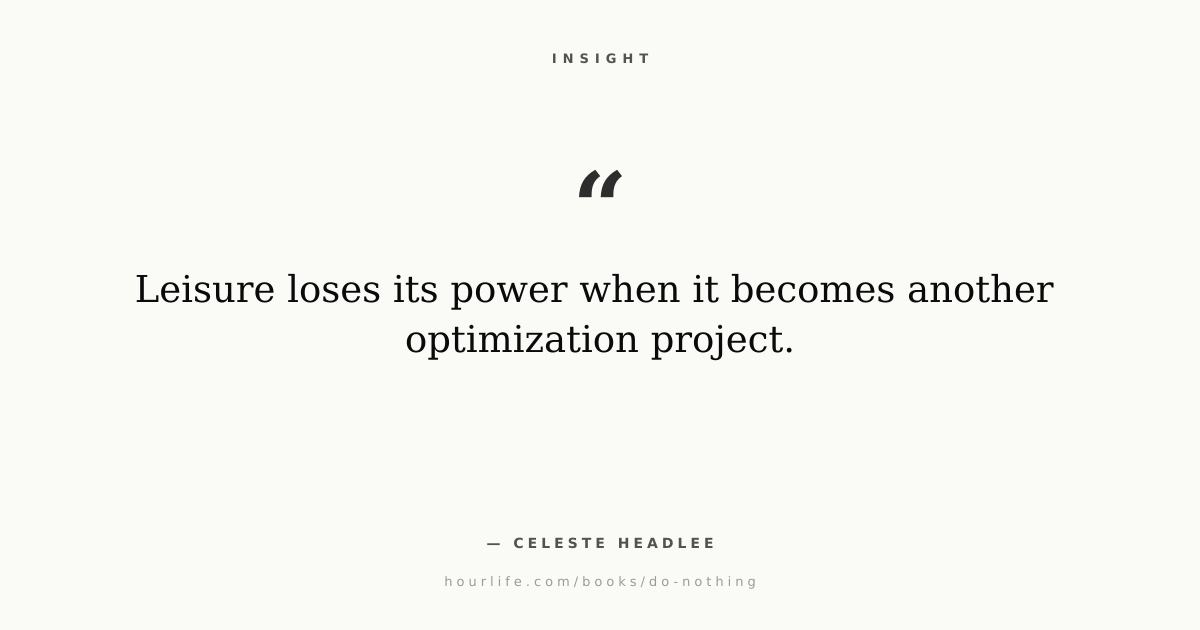
Readers on HourLife most often highlight ideas such as: “Busyness can become a status signal that disguises depletion.” “Rest is not a reward for finishing everything.” “Leisure loses its power when it becomes another optimization project.”
Who should read Do Nothing: How to Break Away from Overworking, Overdoing, and Underliving?
It's a strong pick for readers exploring Life Balance and Stress Less. HourLife distills its core idea into community-voted insights and one practical action worth trying.
What's one thing I can do after reading Do Nothing: How to Break Away from Overworking, Overdoing, and Underliving?
Define enough — Write what finished means for one task before starting.
How long does it take to read the Do Nothing: How to Break Away from Overworking, Overdoing, and Underliving summary?
About five minutes. The HourLife summary distills Do Nothing: How to Break Away from Overworking, Overdoing, and Underliving into its core idea, 7 community insights, and 9 practical actions you can apply right away.
Downloads & shareables
Print it, pin it, post it. Ways to take Do Nothing: How to Break Away from Overworking, Overdoing, and Underliving off the screen and into the world.
-
Read the text summary
The core idea, key takeaways, and how to apply Do Nothing: How to Break Away from Overworking, Overdoing, and Underliving, as one clean, readable page.
Read summary -
Action checklist
Every action from this page as a printable to-do list, with a 7-day tracker.
Download PDF -
Book summary card
A shareable card with the book and its top-voted insight, for saving or posting.
Resource library
The summary card and every quote card in six sizes: Instagram feed, Story, Pinterest, YouTube thumbnail, phone wallpaper, and link preview.
Turn this book into a daily practice.
Save the insights that land, build the habits that stick, and keep what you learn from Do Nothing: How to Break Away from Overworking, Overdoing, and Underliving working long after you close the page — inside HourLife.