Awareness
A noticed thought has less power than an unnoticed one.
A short guide to loosening the grip of thought so pain does not automatically become suffering.
core idea
The book argues that much suffering comes from believing the mind's narration without inspection.
The practical move is to notice thought as an event, not a command. When the thought is seen clearly, it can pass without becoming identity.
A noticed thought has less power than an unnoticed one.
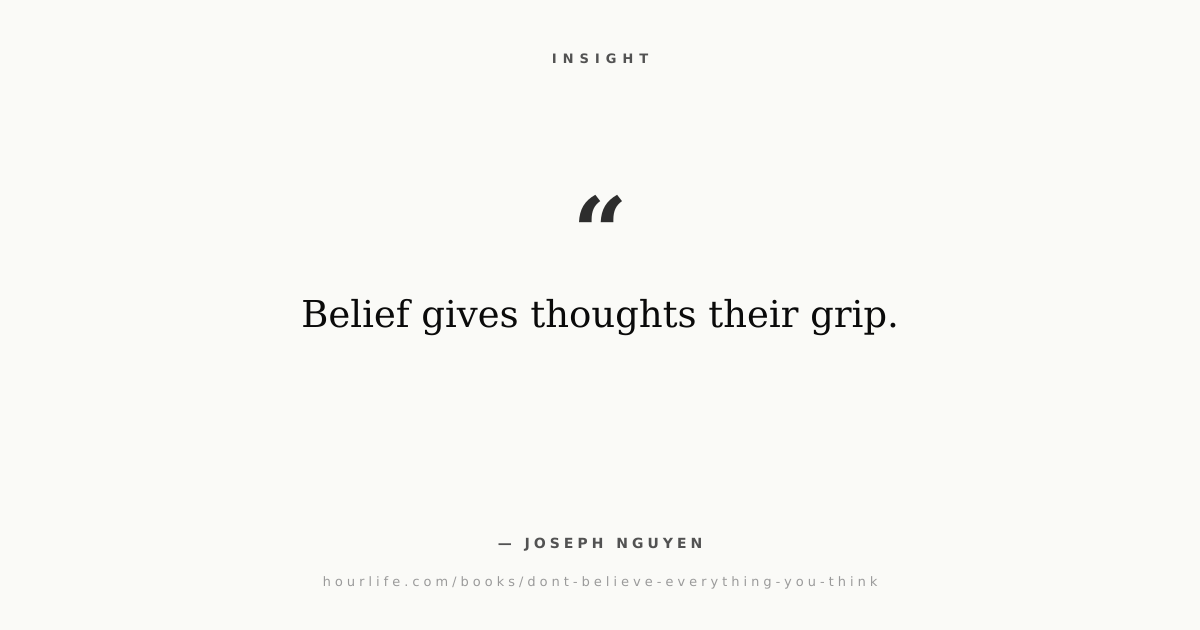
You can experience a thought without obeying it.
Reality is usually simpler than the story built around it.
interactive tool
Choose the current pattern, the signal quality, and the next move. The tool turns the book's idea into a practical prompt.
1 / thought type
2 / truth check
3 / return point
thought filter
Write the thought in one sentence.
Call it a thought, not a fact.
Ask what is directly observable.
Stop feeding the second story.
Do one thing in the present room.
community insights
Vote for the notes that separate clarity from overthinking.
action steps
Capture one stressful thought in quotation marks so it becomes something you can inspect.
Add the phrase: I am having the thought that... before the sentence.
Write only what is directly observable in the room or situation.
Pick a body cue, breath, or object that brings attention back to now.
Once per day, label a thought without arguing with it.
Use one sense for ten seconds when a story starts escalating.
Notice one extra layer of mental commentary and let it pass without adding more.
Pick setup actions and daily habits from Don't Believe Everything You Think, choose a start date, and download a printable checklist with real calendar pages.
A concise guide to seeing thoughts as passing events instead of final truths, reducing the suffering added by mental narration.
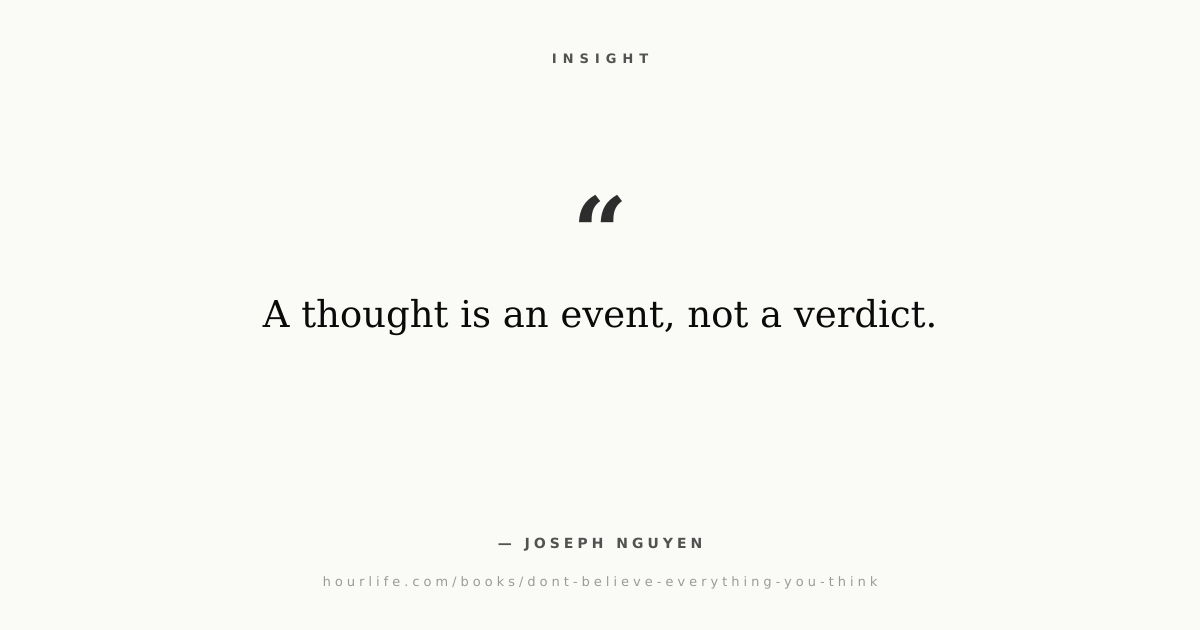
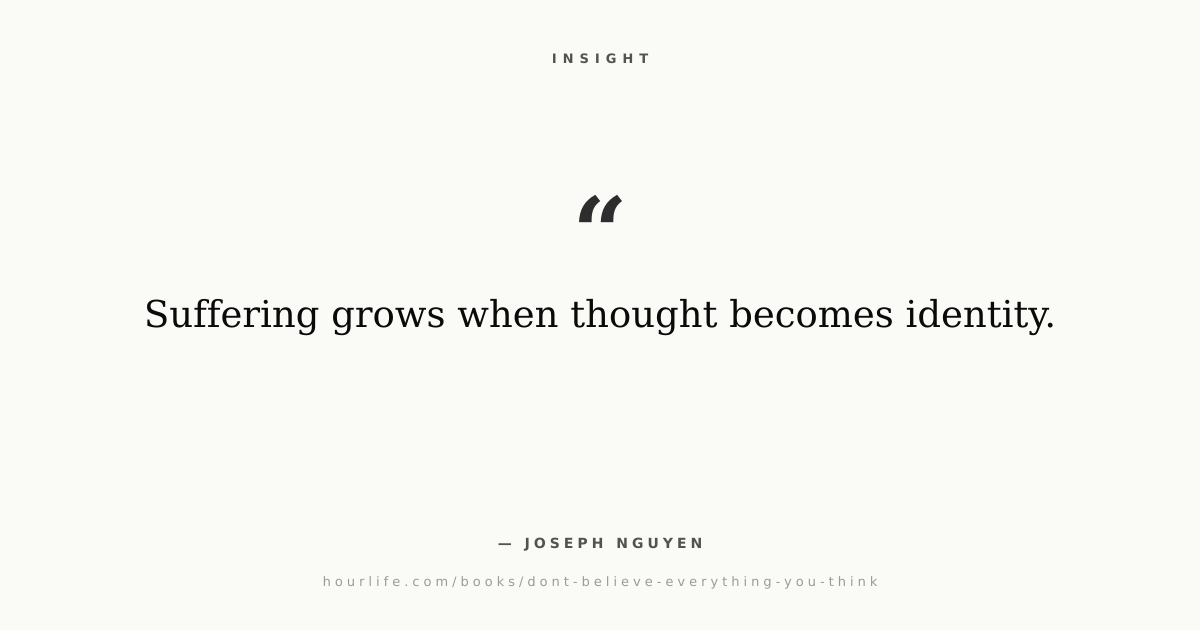
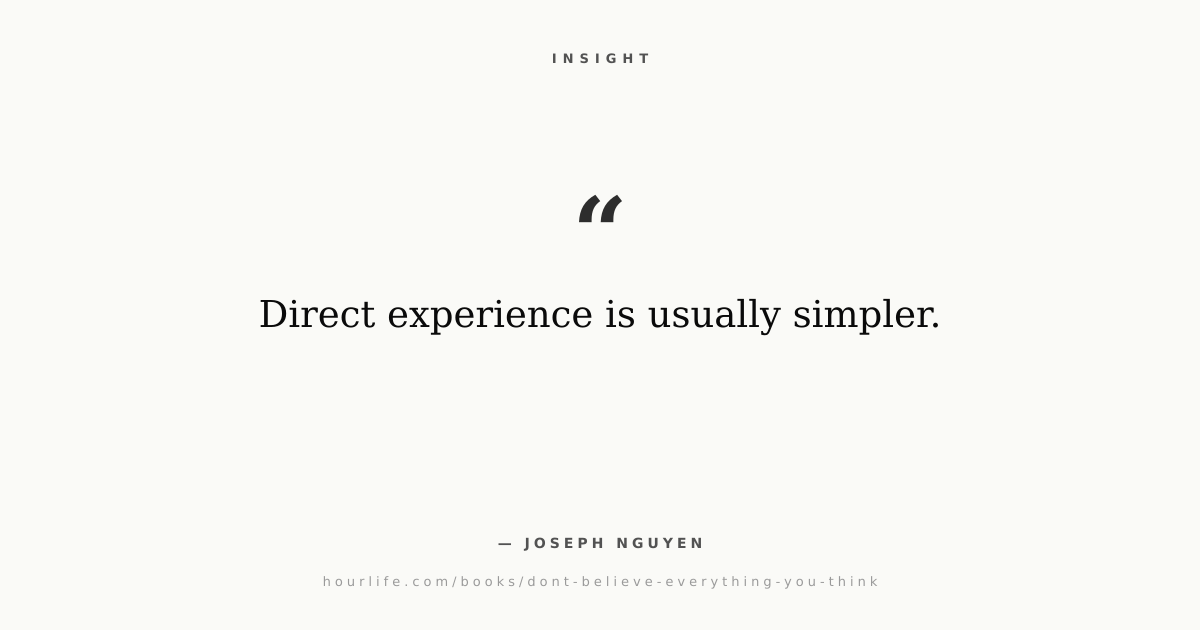
Readers on HourLife most often highlight ideas such as: “A thought is an event, not a verdict.” “Suffering grows when thought becomes identity.” “Direct experience is usually simpler.”
It's a strong pick for readers exploring Managing Anxiety, Mindfulness, and Self-Awareness Journey. HourLife distills its core idea into community-voted insights and one practical action worth trying.
Write the thought as text — Capture one stressful thought in quotation marks so it becomes something you can inspect.
About five minutes. The HourLife summary distills Don't Believe Everything You Think into its core idea, 5 community insights, and 7 practical actions you can apply right away.
Print it, pin it, post it. Ways to take Don't Believe Everything You Think off the screen and into the world.
The core idea, key takeaways, and how to apply Don't Believe Everything You Think, as one clean, readable page.
Read summaryEvery action from this page as a printable to-do list, with a 7-day tracker.
Download PDFA shareable card with the book and its top-voted insight, for saving or posting.
The summary card and every quote card in six sizes: Instagram feed, Story, Pinterest, YouTube thumbnail, phone wallpaper, and link preview.
Save the insights that land, build the habits that stick, and keep what you learn from Don't Believe Everything You Think working long after you close the page — inside HourLife.