The feeling brain
Reason rarely leads unless emotion has been given a direction it can accept.
Mark Manson's darker sequel argues that hope only works when it is built on better values, not nicer stories.
core idea
Manson argues that modern comfort does not automatically create meaning. People need a value structure that makes pain coherent.
The mature move is not believing everything will be fine. It is choosing what is worth doing even when the emotional weather is ugly.
Reason rarely leads unless emotion has been given a direction it can accept.
Hope improves when the value is chosen, durable, and bigger than status.
A life gets sturdier when pain is connected to responsibility.
interactive tool
Choose the current pattern, the signal quality, and the next move. The tool turns the book's idea into a practical prompt.
1 / pain story
2 / chosen value
3 / sacrifice
hope audit
State the discomfort without turning it into a worldview.
Ask what value would make the discomfort worth carrying.
Drop the fantasy that removes all cost.
Pick the sacrifice that proves the value is real.
Let behavior lead while hope catches up.
community insights
Vote for the notes that make hope more honest and less fragile.
action steps
Write the pain you keep trying to avoid without turning it into a life verdict.
Name the value that would make this discomfort worth carrying.
Write the fantasy outcome that removes all cost and why it keeps failing.
Choose one sacrifice that proves the value is real.
Take one value-aligned action while your feelings are unconvinced.
Ask whether today's want points toward comfort, status, or meaning.
Write the discomfort you accepted today because it served a better value.
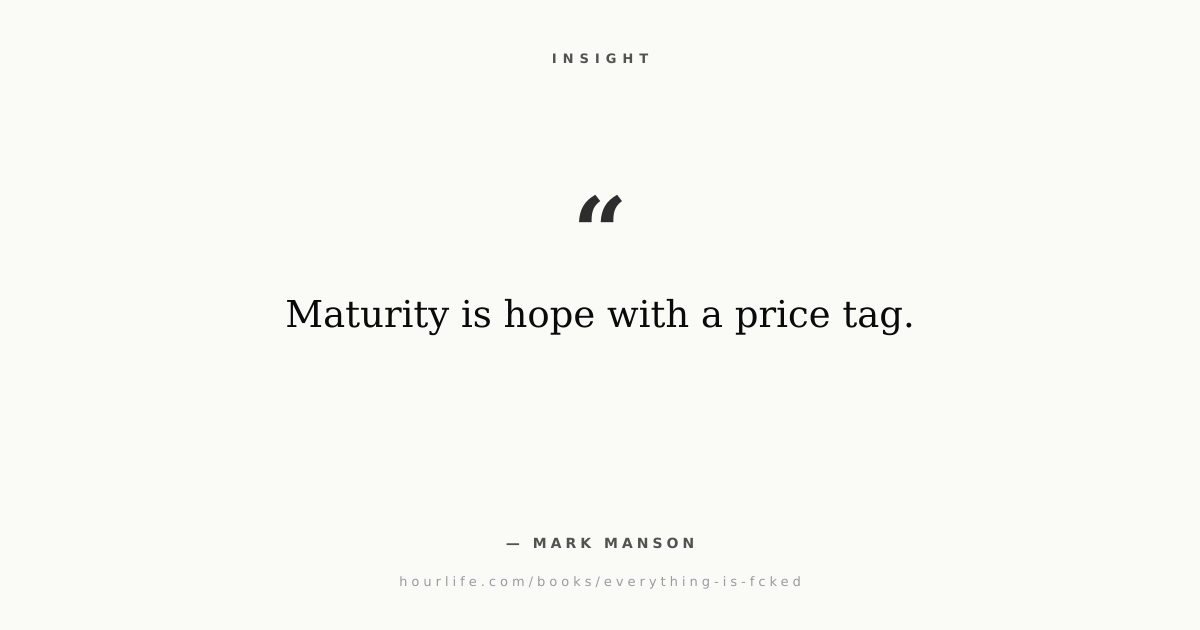
"Hope becomes useful when it stops pretending pain is optional."
HourLife field note
Back to libraryPick setup actions and daily habits from Everything Is F*cked: A Book About Hope, choose a start date, and download a printable checklist with real calendar pages.
A darker book about hope, values, maturity, and why comfort alone does not create meaning.
Readers on HourLife most often highlight ideas such as: “Hope needs a value, not a vibe.” “Comfort does not automatically create meaning.” “The feeling brain usually drives.”
It's a strong pick for readers exploring Happiness & Positive Psychology, Resilience & Mental Strength, and Self-Awareness Journey. HourLife distills its core idea into community-voted insights and one practical action worth trying.
Name the discomfort — Write the pain you keep trying to avoid without turning it into a life verdict.
About five minutes. The HourLife summary distills Everything Is F*cked: A Book About Hope into its core idea, 5 community insights, and 7 practical actions you can apply right away.
Print it, pin it, post it. Ways to take Everything Is F*cked: A Book About Hope off the screen and into the world.
The core idea, key takeaways, and how to apply Everything Is F*cked: A Book About Hope, as one clean, readable page.
Read summaryEvery action from this page as a printable to-do list, with a 7-day tracker.
Download PDFA shareable card with the book and its top-voted insight, for saving or posting.
The summary card and every quote card in six sizes: Instagram feed, Story, Pinterest, YouTube thumbnail, phone wallpaper, and link preview.
Save the insights that land, build the habits that stick, and keep what you learn from Everything Is F*cked: A Book About Hope working long after you close the page — inside HourLife.