Scott Adams · 2013 · systems and odds
How to Fail at Almost Everything
and Still Win Big
Goals judge you at the finish line. Systems improve your odds every day.
Core idea.
The book's best move is replacing identity-heavy goal chasing with low-drama systems: protect energy, build stackable skills, create luck surface area, and let failures update the machine instead of becoming a self-verdict.
interactive tool
Goal-to-System Converter
system draft
Pick a goal.
Convert the finish line into a behavior that improves your odds this week.
daily rep
Choose a repeatable action small enough to survive a bad day.
What readers keep.
Improve the odds.
Convert one goal into a system
Rewrite a desired outcome as a repeatable daily or weekly behavior that improves your odds.
Map your energy curve
Identify your best two-hour window, worst window, and the activities that raise or drain your baseline.
Pick one stackable skill
Choose a useful skill adjacent to your current work: writing, speaking, selling, coding, design, statistics, or negotiation.
Define a failure signal
Decide what evidence would tell you to adjust the system without making it personal.
Increase luck surface area
Choose one recurring way to publish, ask, meet, ship, or share your work.
Run today's system rep
Do the smallest repeatable behavior that improves your odds, regardless of mood.
Protect peak energy
Use your best window for the highest-leverage work before giving it to messages.
Add one skill rep
Spend twenty minutes practicing the stackable skill you selected.
Update without drama
After a poor result, write one adjustment to the system instead of a verdict about yourself.
Build your mini action book.
Pick setup actions and daily habits from How to Fail at Almost Everything and Still Win Big, choose a start date, and download a printable checklist with real calendar pages.
Frequently asked
What is How to Fail at Almost Everything and Still Win Big about?
A blunt systems-over-goals book about stacking skills, managing energy, and treating failure as data rather than identity.
What are the key takeaways from How to Fail at Almost Everything and Still Win Big?
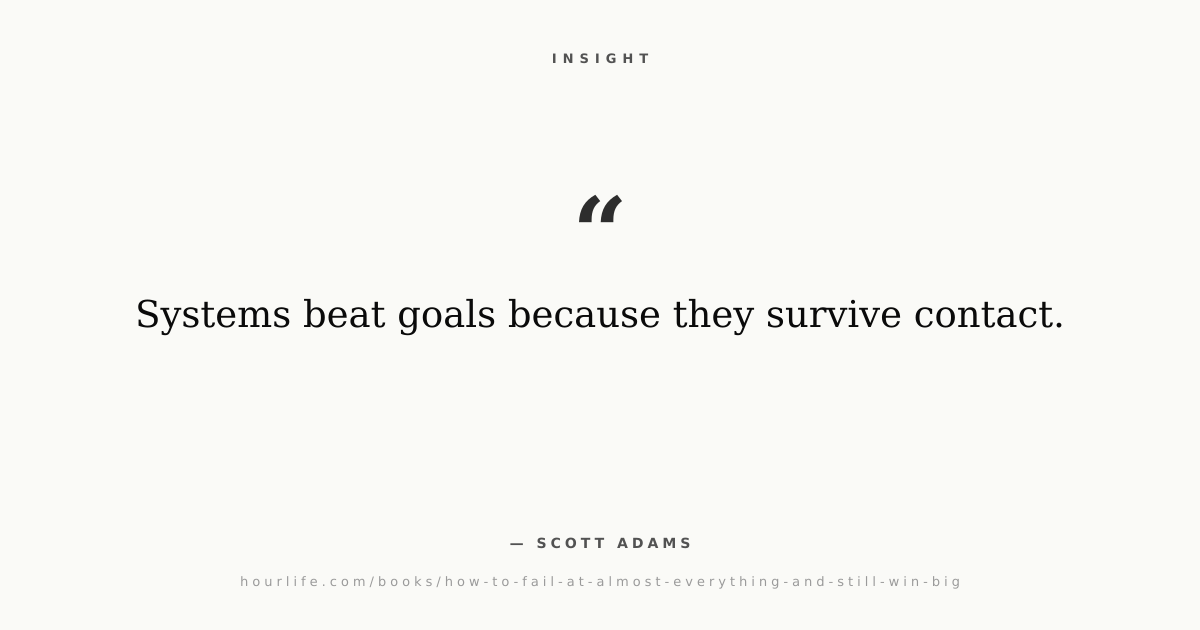
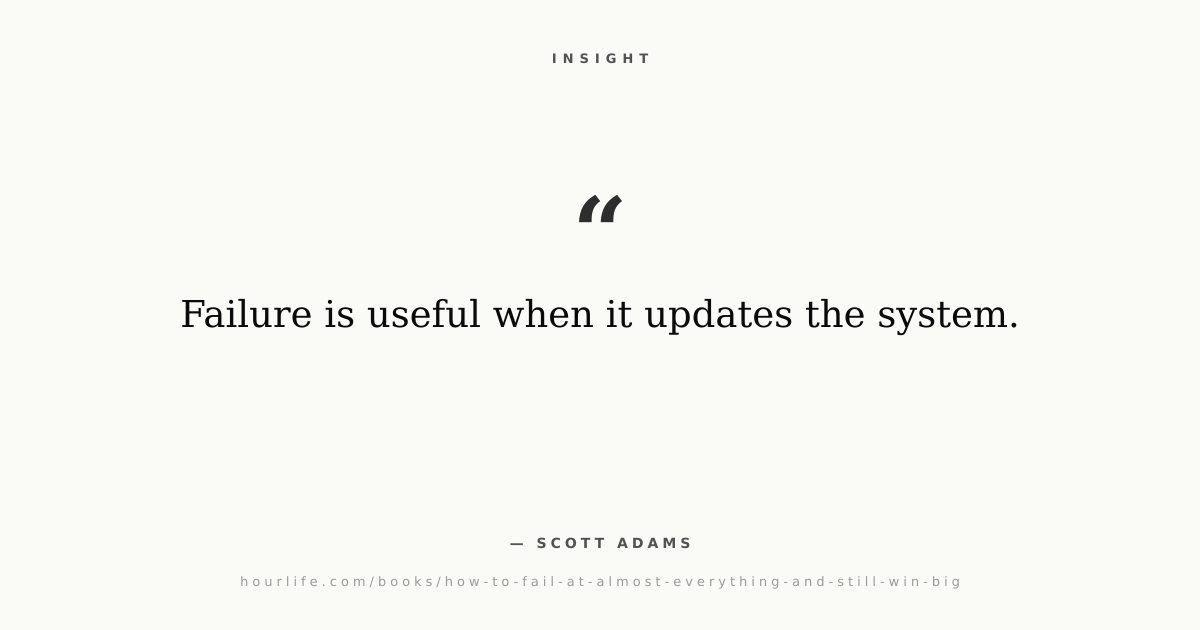
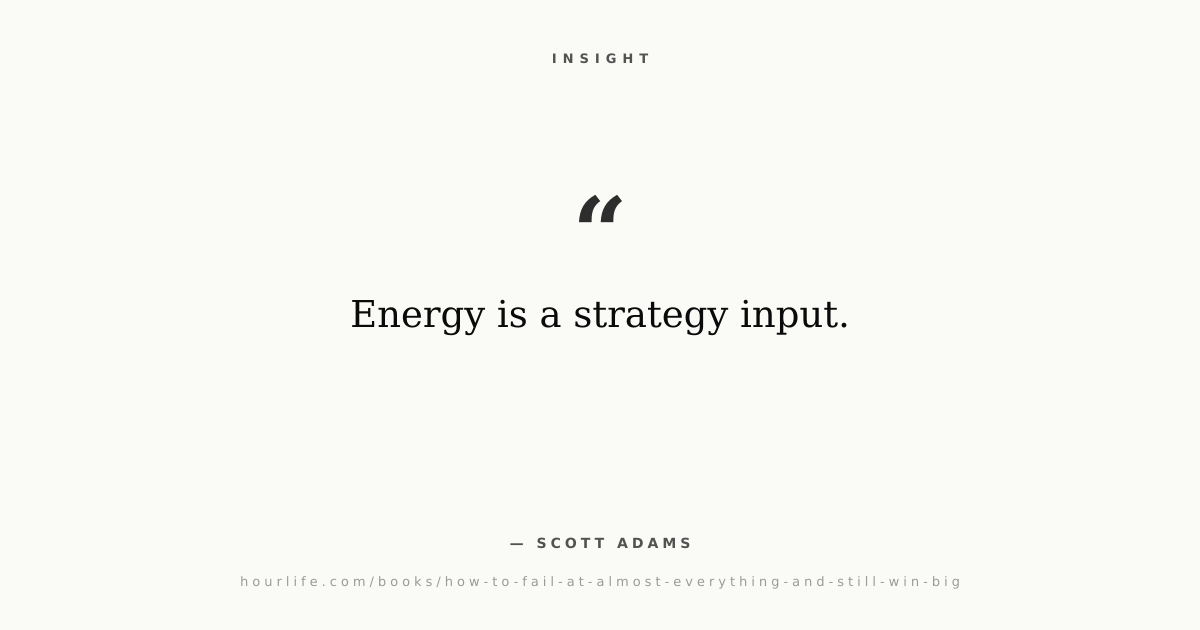
Readers on HourLife most often highlight ideas such as: “Systems beat goals because they survive contact.” “Failure is useful when it updates the system.” “Energy is a strategy input.”
Who should read How to Fail at Almost Everything and Still Win Big?
It's a strong pick for readers exploring Career Direction, Decision Making, and Resilience & Mental Strength. HourLife distills its core idea into community-voted insights and one practical action worth trying.
What's one thing I can do after reading How to Fail at Almost Everything and Still Win Big?
Convert one goal into a system — Rewrite a desired outcome as a repeatable daily or weekly behavior that improves your odds.
How long does it take to read the How to Fail at Almost Everything and Still Win Big summary?
About five minutes. The HourLife summary distills How to Fail at Almost Everything and Still Win Big into its core idea, 7 community insights, and 9 practical actions you can apply right away.
Downloads & shareables
Print it, pin it, post it. Ways to take How to Fail at Almost Everything and Still Win Big off the screen and into the world.
-
Read the text summary
The core idea, key takeaways, and how to apply How to Fail at Almost Everything and Still Win Big, as one clean, readable page.
Read summary -
Action checklist
Every action from this page as a printable to-do list, with a 7-day tracker.
Download PDF -
Book summary card
A shareable card with the book and its top-voted insight, for saving or posting.
Resource library
The summary card and every quote card in six sizes: Instagram feed, Story, Pinterest, YouTube thumbnail, phone wallpaper, and link preview.
Turn this book into a daily practice.
Save the insights that land, build the habits that stick, and keep what you learn from How to Fail at Almost Everything and Still Win Big working long after you close the page — inside HourLife.