Baek Se-hee · 2018 · therapy notes
I Want to Die
But I Want to Eat
Tteokpokki
A small appetite can be a thread back to life when meaning is unavailable.
What readers keep.
Keep one thread.
Make a small-stay list
Write five ordinary things that still hold a little pull: food, texture, music, place, person.
Track the global sentence
Notice one sweeping depressive thought and write the exact words it uses.
Choose a support doorway
Pick one low-pressure way to contact care: therapist, friend, text line, appointment, or check-in.
Create a tolerable menu
List three actions for very low capacity: eat something warm, wash face, sit near light.
Answer with one specific
When the mind says always or never, name one specific exception without arguing the whole case.
Take one appetite seriously
Follow one small want without judging whether it is meaningful enough.
Record one bearable moment
At night, write one moment that was not good, but was bearable.
Build your mini action book.
Pick setup actions and daily habits from I Want to Die But I Want to Eat Tteokpokki, choose a start date, and download a printable checklist with real calendar pages.
Frequently asked
What is I Want to Die But I Want to Eat Tteokpokki about?
I Want to Die But I Want to Eat Tteokpokki is a candid record of therapy, depression, contradiction, and small appetite for life. Its power comes from refusing neat recovery stories while still noticing ordinary reasons to stay connected.
What are the key takeaways from I Want to Die But I Want to Eat Tteokpokki?
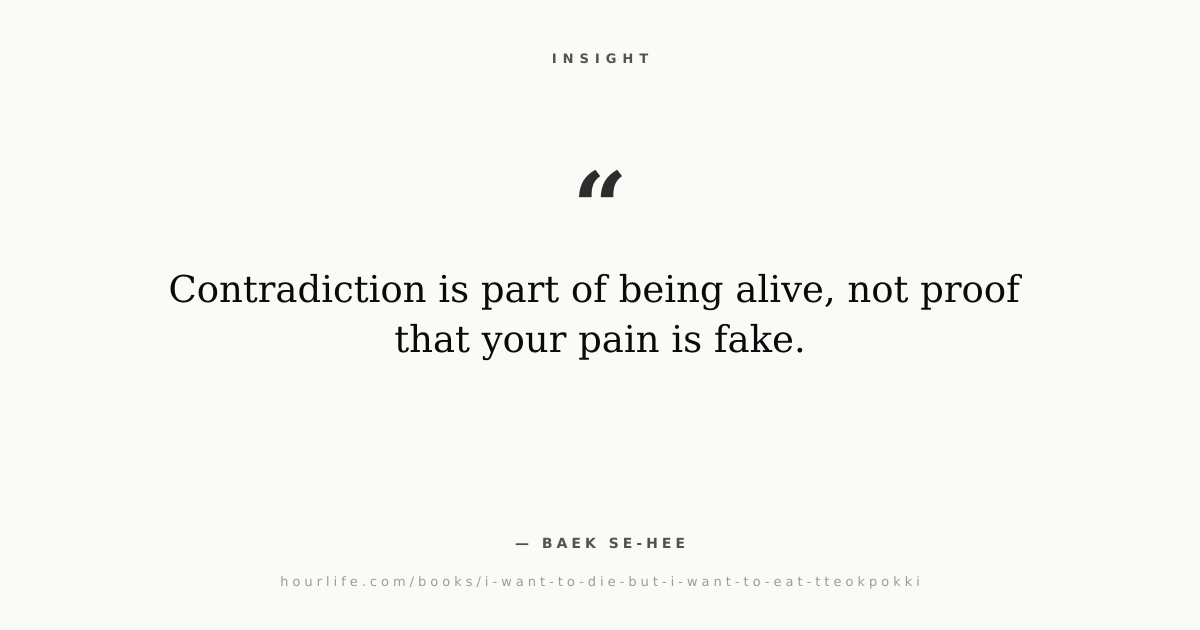
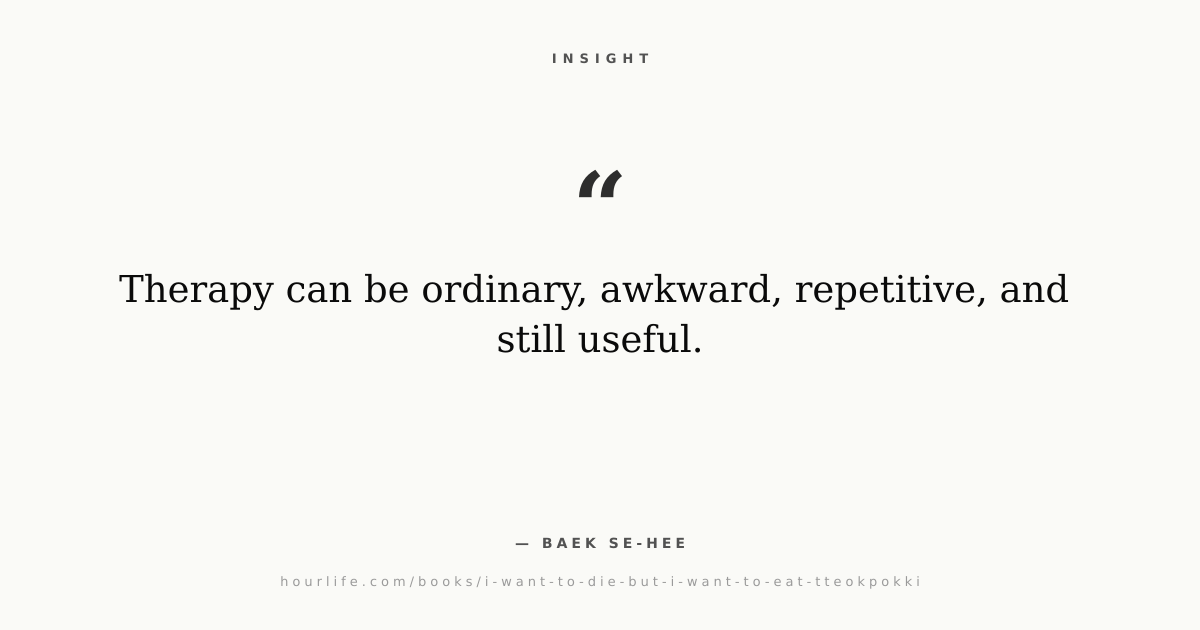
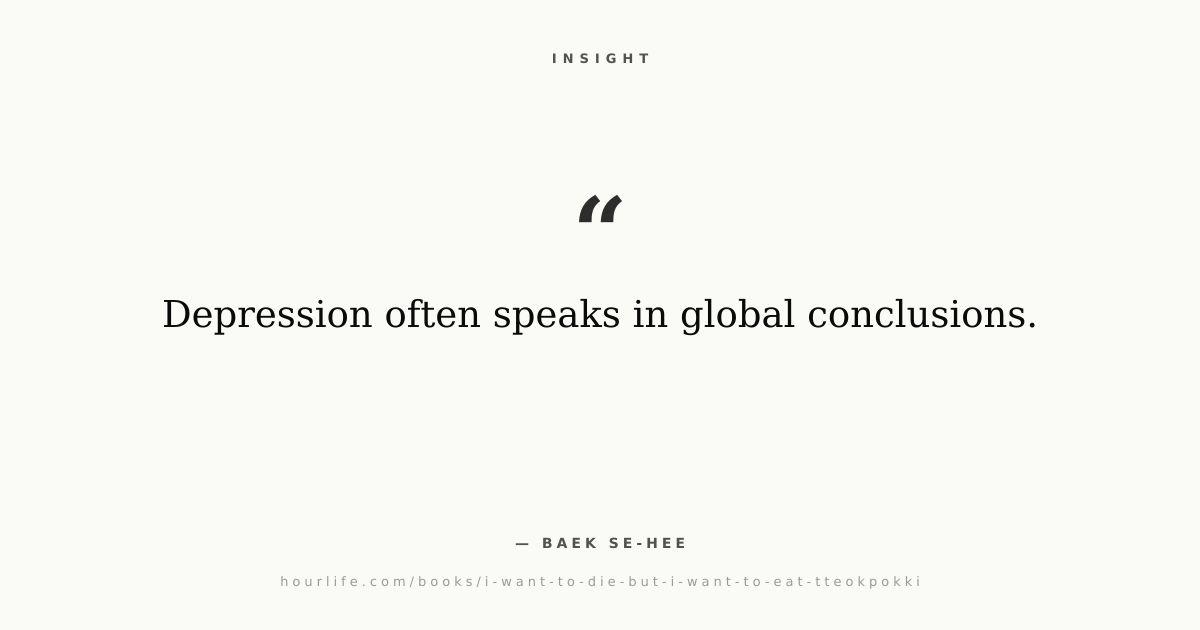
Readers on HourLife most often highlight ideas such as: “Contradiction is part of being alive, not proof that your pain is fake.” “Therapy can be ordinary, awkward, repetitive, and still useful.” “Depression often speaks in global conclusions.”
Who should read I Want to Die But I Want to Eat Tteokpokki?
It's a strong pick for readers exploring Managing Anxiety, Self-Awareness Journey, and Stress Less. HourLife distills its core idea into community-voted insights and one practical action worth trying.
What's one thing I can do after reading I Want to Die But I Want to Eat Tteokpokki?
Make a small-stay list — Write five ordinary things that still hold a little pull: food, texture, music, place, person.
How long does it take to read the I Want to Die But I Want to Eat Tteokpokki summary?
About five minutes. The HourLife summary distills I Want to Die But I Want to Eat Tteokpokki into its core idea, 5 community insights, and 7 practical actions you can apply right away.
Downloads & shareables
Print it, pin it, post it. Ways to take I Want to Die But I Want to Eat Tteokpokki off the screen and into the world.
-
Read the text summary
The core idea, key takeaways, and how to apply I Want to Die But I Want to Eat Tteokpokki, as one clean, readable page.
Read summary -
Action checklist
Every action from this page as a printable to-do list, with a 7-day tracker.
Download PDF -
Book summary card
A shareable card with the book and its top-voted insight, for saving or posting.
Resource library
The summary card and every quote card in six sizes: Instagram feed, Story, Pinterest, YouTube thumbnail, phone wallpaper, and link preview.
Turn this book into a daily practice.
Save the insights that land, build the habits that stick, and keep what you learn from I Want to Die But I Want to Eat Tteokpokki working long after you close the page — inside HourLife.