Peter F. Drucker · 1999 · career self-knowledge
Managing Oneself
Drucker turns career growth inward: know how you perform, where you belong, what you contribute, and which relationships require explicit expectations.
Core idea.
You cannot manage a career well with generic excellence. Drucker asks for feedback, operating preferences, values, and contribution because effectiveness depends on fit as much as effort.
interactive tool
Contribution Fit Map
management note
Choose the question.
Self-knowledge becomes useful when it changes a work agreement.
Write one operating fact others should know about you.
Reader notes.
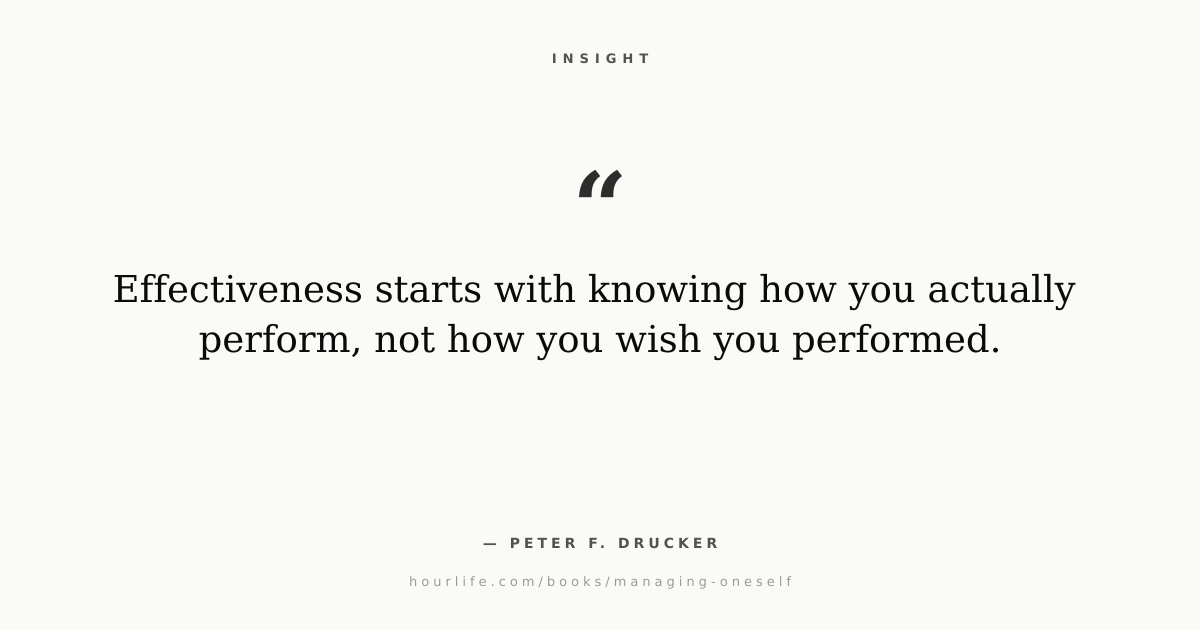
"Effectiveness starts with knowing how you actually perform, not how you wish you performed."
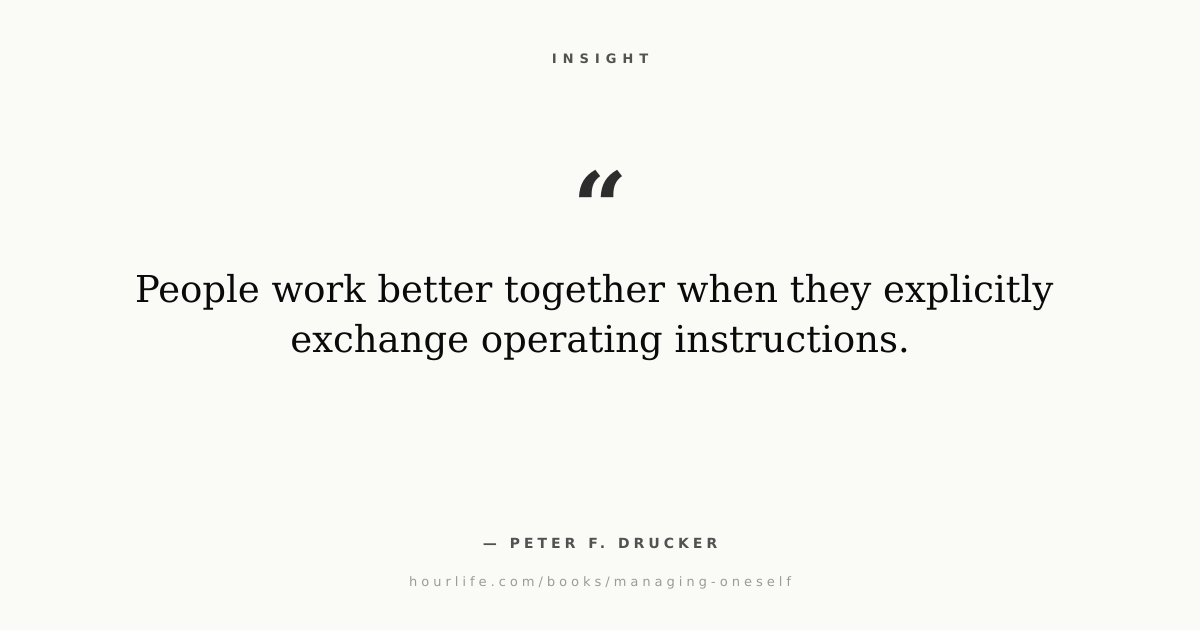
"People work better together when they explicitly exchange operating instructions."
"Contribution is defined by what the situation needs, not only by what you enjoy doing."
Manage the work.
Run feedback analysis
Write expected results for a decision, then compare them with actual results later.
Name your work style
Identify whether you learn and decide best by reading, writing, talking, or doing.
Map your strengths
List three results that came easily to you and the strength each one reveals.
Surface a values conflict
Name one place where success would require behavior you do not respect.
Define contribution
Write the result your team most needs from you in the next 12 months.
Share operating instructions
Tell a collaborator how to best communicate, brief, or review work with you.
Ask others how they work
Get the same operating preferences from one key colleague.
Stop fixing a non-strength
Move one recurring weak area to a system, partner, or lower standard.
Review fit quarterly
Ask whether your strengths are being used on work that matters.
Build your mini action book.
Pick setup actions and daily habits from Managing Oneself, choose a start date, and download a printable checklist with real calendar pages.
Frequently asked
What are the key takeaways from Managing Oneself?
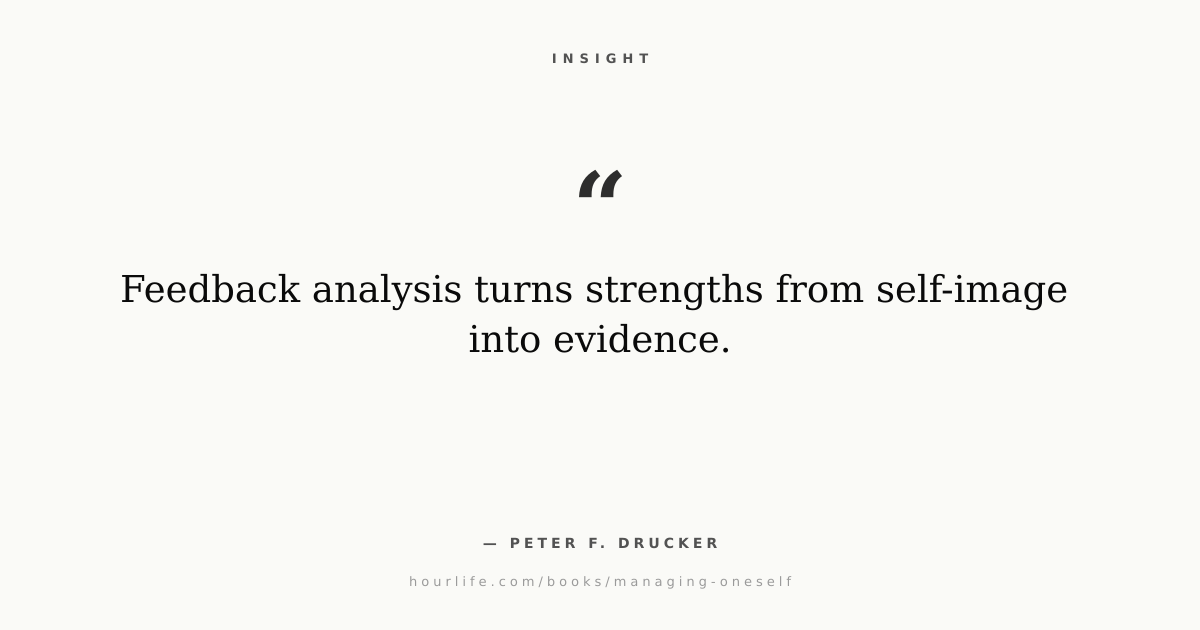
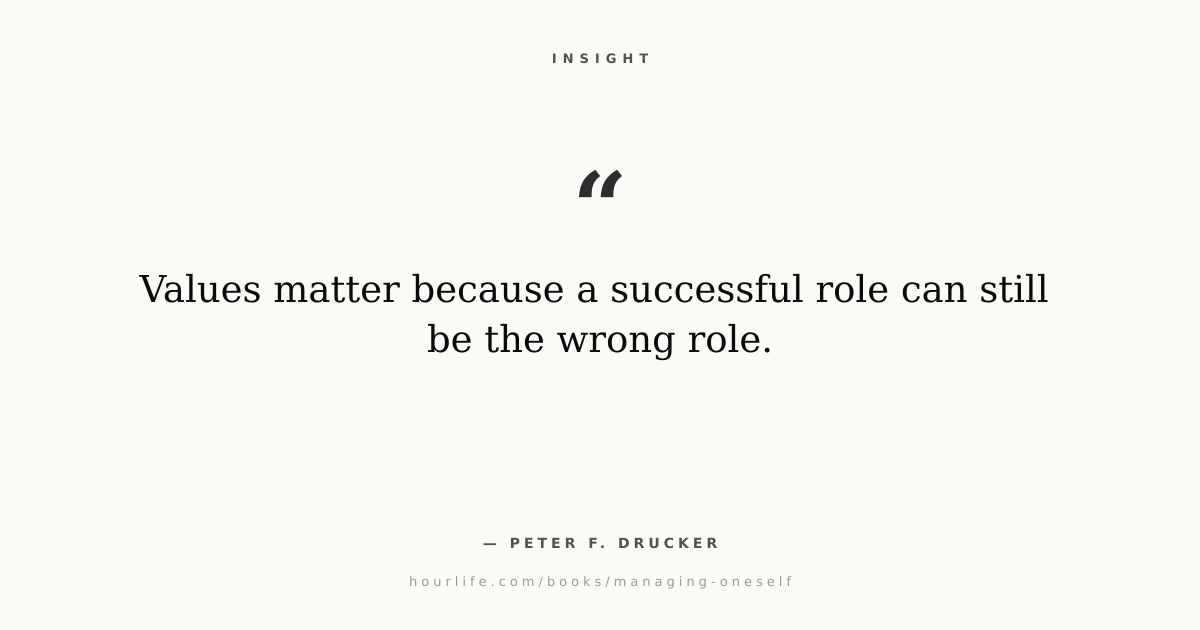
Readers on HourLife most often highlight ideas such as: “Effectiveness starts with knowing how you actually perform, not how you wish you performed.” “Feedback analysis turns strengths from self-image into evidence.” “Values matter because a successful role can still be the wrong role.”
Who should read Managing Oneself?
It's a strong pick for readers exploring Career Direction, Leadership & Management, and Self-Awareness Journey. HourLife distills its core idea into community-voted insights and one practical action worth trying.
What's one thing I can do after reading Managing Oneself?
Run feedback analysis — Write expected results for a decision, then compare them with actual results later.
How long does it take to read the Managing Oneself summary?
About five minutes. The HourLife summary distills Managing Oneself into its core idea, 7 community insights, and 9 practical actions you can apply right away.
Downloads & shareables
Print it, pin it, post it. Ways to take Managing Oneself off the screen and into the world.
-
Read the text summary
The core idea, key takeaways, and how to apply Managing Oneself, as one clean, readable page.
Read summary -
Action checklist
Every action from this page as a printable to-do list, with a 7-day tracker.
Download PDF -
Book summary card
A shareable card with the book and its top-voted insight, for saving or posting.
Resource library
The summary card and every quote card in six sizes: Instagram feed, Story, Pinterest, YouTube thumbnail, phone wallpaper, and link preview.
Turn this book into a daily practice.
Save the insights that land, build the habits that stick, and keep what you learn from Managing Oneself working long after you close the page — inside HourLife.