Daniel Todd Gilbert · 2006 · happiness psychology
Stumbling on
Happiness
Your imagination is a flawed forecasting machine. Happiness gets easier when you stop trusting every future movie it plays.
interactive tool
Forecast vs. Reality
Estimate the emotional preview, then add adaptation and bias. The tool gives a more humble forecast.
What readers keep.
Practice better forecasting.
Write the forecast
For one desired change, write what you expect to feel after one day, one month, and one year. Make the prediction visible.
Find a surrogate
Ask someone already living a version of the future you want what the ordinary days are actually like.
Add missing context
Before a major choice, list the boring background that will still exist afterward: chores, sleep, stress, money, relationships, and habits.
Check present-state bias
Note your current mood, hunger, energy, and stress before trusting a big forecast. State affects imagination.
Delay a mood-based decision
If today's emotion is intense, postpone one future-shaping choice until your state is more ordinary.
Compare forecast to result
Look back at one past prediction and write what you got wrong. This trains humility about future happiness.
Ask for lived evidence
Before idealizing a path today, find one real person, review, diary, or account from someone already there.
Build your mini action book.
Pick setup actions and daily habits from Stumbling on Happiness, choose a start date, and download a printable checklist with real calendar pages.
Frequently asked
What is Stumbling on Happiness about?
Stumbling on Happiness is Daniel Gilbert's funny, research-driven look at why people mispredict what will make them happy. It shows how imagination edits the future, exaggerates feelings, and forgets ordinary context.
What are the key takeaways from Stumbling on Happiness?
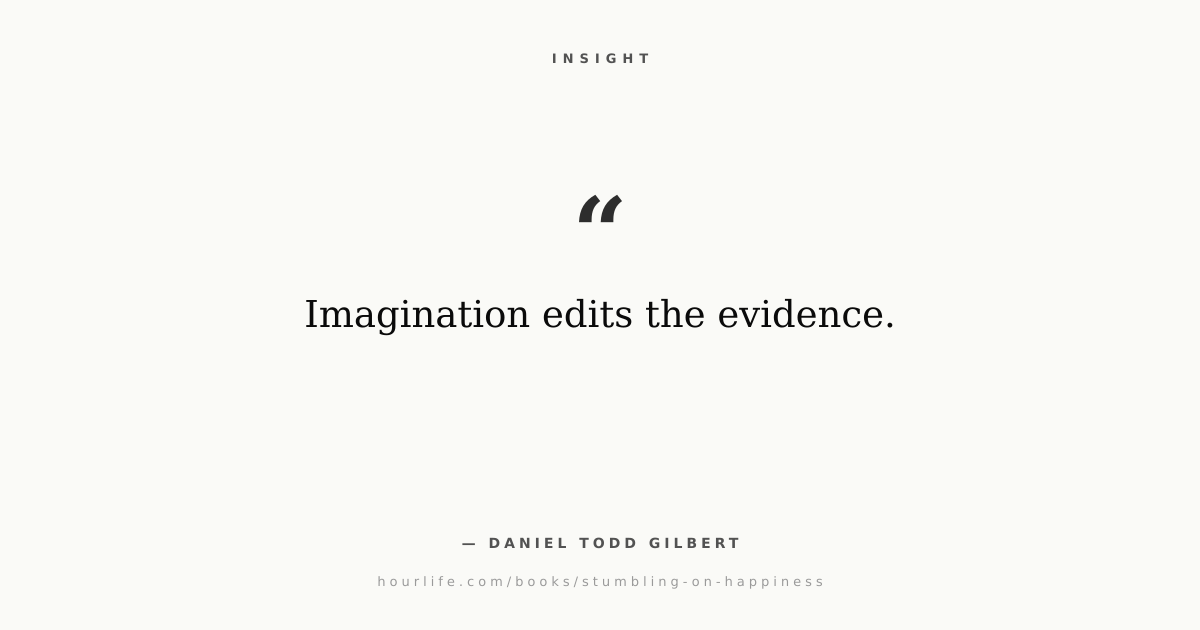
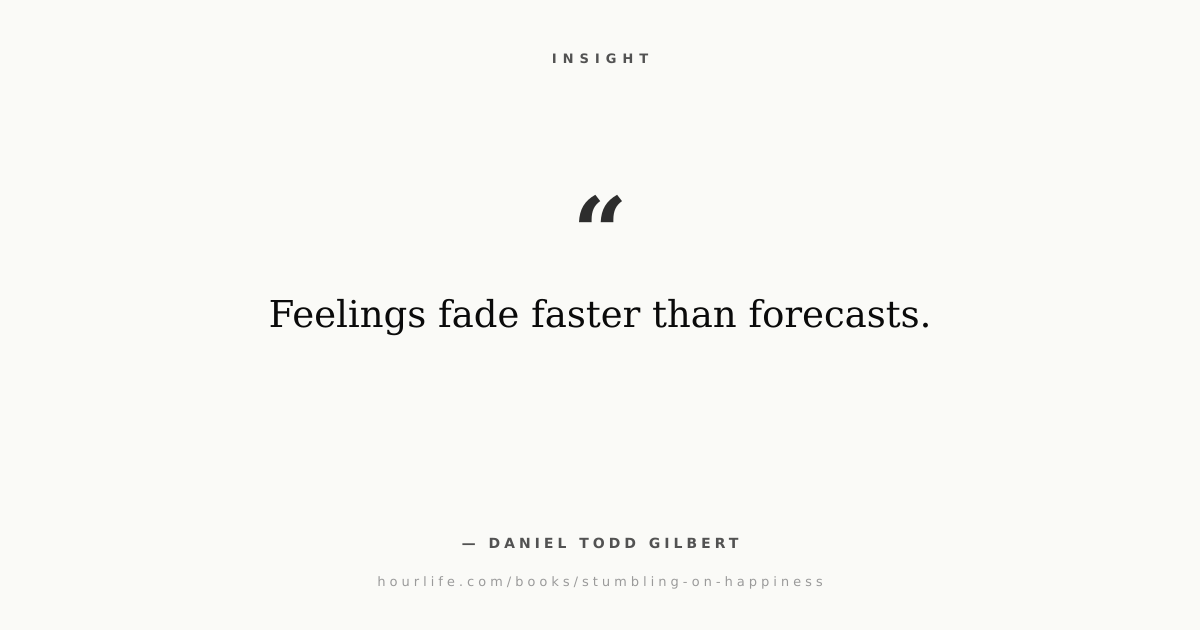
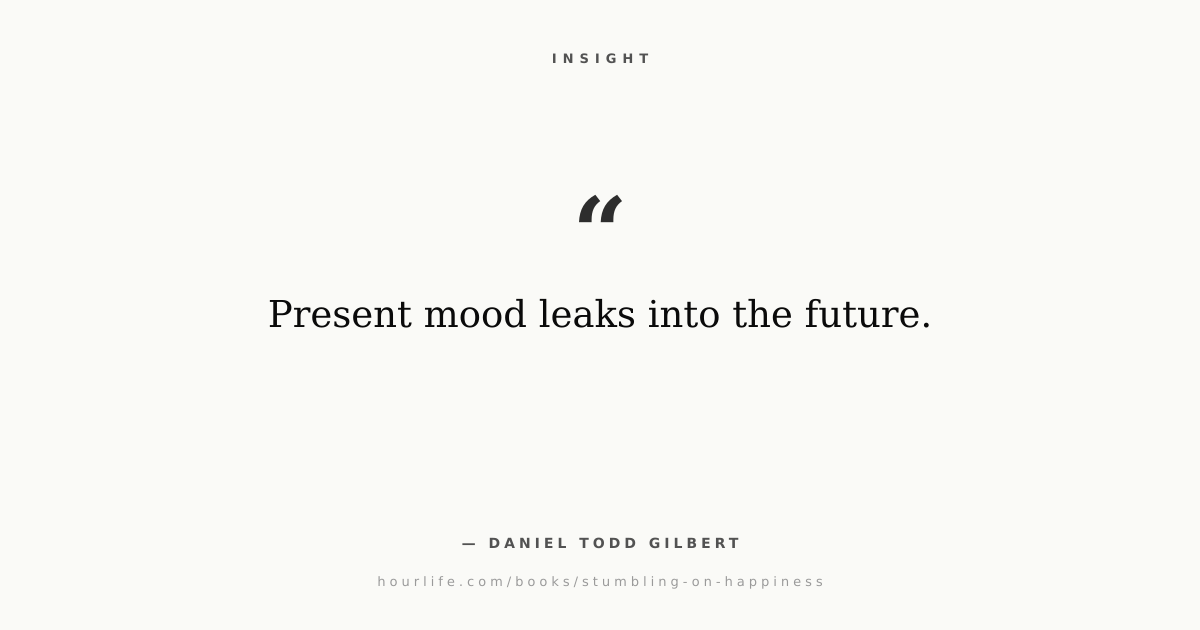
Readers on HourLife most often highlight ideas such as: “Imagination edits the evidence.” “Feelings fade faster than forecasts.” “Present mood leaks into the future.”
Who should read Stumbling on Happiness?
It's a strong pick for readers exploring Decision Making, Hack Your Brain, and Happiness & Positive Psychology. HourLife distills its core idea into community-voted insights and one practical action worth trying.
What's one thing I can do after reading Stumbling on Happiness?
Write the forecast — For one desired change, write what you expect to feel after one day, one month, and one year. Make the prediction visible.
How long does it take to read the Stumbling on Happiness summary?
About five minutes. The HourLife summary distills Stumbling on Happiness into its core idea, 5 community insights, and 7 practical actions you can apply right away.
Downloads & shareables
Print it, pin it, post it. Ways to take Stumbling on Happiness off the screen and into the world.
-
Read the text summary
The core idea, key takeaways, and how to apply Stumbling on Happiness, as one clean, readable page.
Read summary -
Action checklist
Every action from this page as a printable to-do list, with a 7-day tracker.
Download PDF -
Book summary card
A shareable card with the book and its top-voted insight, for saving or posting.
Resource library
The summary card and every quote card in six sizes: Instagram feed, Story, Pinterest, YouTube thumbnail, phone wallpaper, and link preview.
Turn this book into a daily practice.
Save the insights that land, build the habits that stick, and keep what you learn from Stumbling on Happiness working long after you close the page — inside HourLife.