Robert Greene · 2006 · strategy
The 33 Strategies of War
Greene turns conflict into a discipline: slow down, read the field, and choose the move before emotion chooses it for you.
Core idea.
The book is not a call to hostility. Its useful edge is emotional distance: treat conflict as terrain, incentives, timing, and boundaries. Good strategy reduces unnecessary fighting because it makes aims, costs, and exits explicit.
interactive tool
Campaign Room
strategic order
Choose the conflict.
Strategy begins when you name the actual contest instead of reacting to the latest provocation.
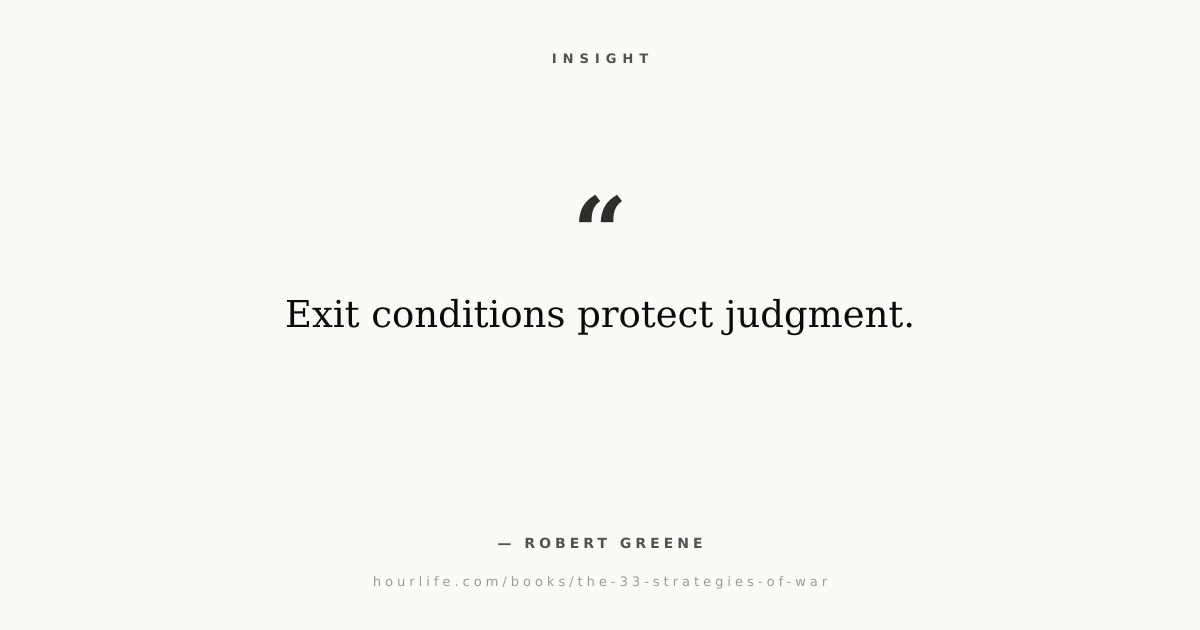
Write the objective, the cost ceiling, and the exit condition.
What readers keep.
Strategic practice.
Define the objective
Write the specific outcome you want before answering the conflict.
Set a cost ceiling
Decide what time, energy, money, or dignity you will not spend.
Name the terrain
List the people, incentives, constraints, and timing shaping the situation.
Write the exit
Decide what condition means the conflict is finished enough.
Delay one reaction
Wait ten minutes before sending a charged message.
Protect the reserve
Keep one resource unspent so you are not forced into desperation.
Refuse one decoy
Notice the tempting side argument and return to the objective.
Debrief the move
After a tense exchange, write what worked and what escalated it.
Choose quiet strength
Make one boundary clear without adding theater.
Build your mini action book.
Pick setup actions and daily habits from The 33 Strategies of War, choose a start date, and download a printable checklist with real calendar pages.
Frequently asked
What is The 33 Strategies of War about?
A field guide for reading conflict before conflict reads you.
What are the key takeaways from The 33 Strategies of War?
Readers on HourLife most often highlight ideas such as: “Emotion is bad command.” “A clear objective limits damage.” “Defense can be intelligent action.”
Who should read The 33 Strategies of War?
It's a strong pick for readers exploring Become Hard To Manipulate, Leadership & Management, and Philosophy Essentials. HourLife distills its core idea into community-voted insights and one practical action worth trying.
What's one thing I can do after reading The 33 Strategies of War?
Define the objective — Write the specific outcome you want before answering the conflict.
How long does it take to read the The 33 Strategies of War summary?
About five minutes. The HourLife summary distills The 33 Strategies of War into its core idea, 7 community insights, and 9 practical actions you can apply right away.
Downloads & shareables
Print it, pin it, post it. Ways to take The 33 Strategies of War off the screen and into the world.
-
Read the text summary
The core idea, key takeaways, and how to apply The 33 Strategies of War, as one clean, readable page.
Read summary -
Action checklist
Every action from this page as a printable to-do list, with a 7-day tracker.
Download PDF -
Book summary card
A shareable card with the book and its top-voted insight, for saving or posting.
Resource library
The summary card and every quote card in six sizes: Instagram feed, Story, Pinterest, YouTube thumbnail, phone wallpaper, and link preview.
Turn this book into a daily practice.
Save the insights that land, build the habits that stick, and keep what you learn from The 33 Strategies of War working long after you close the page — inside HourLife.