Amanda Palmer · 2014 · trust and art
The Art of Asking
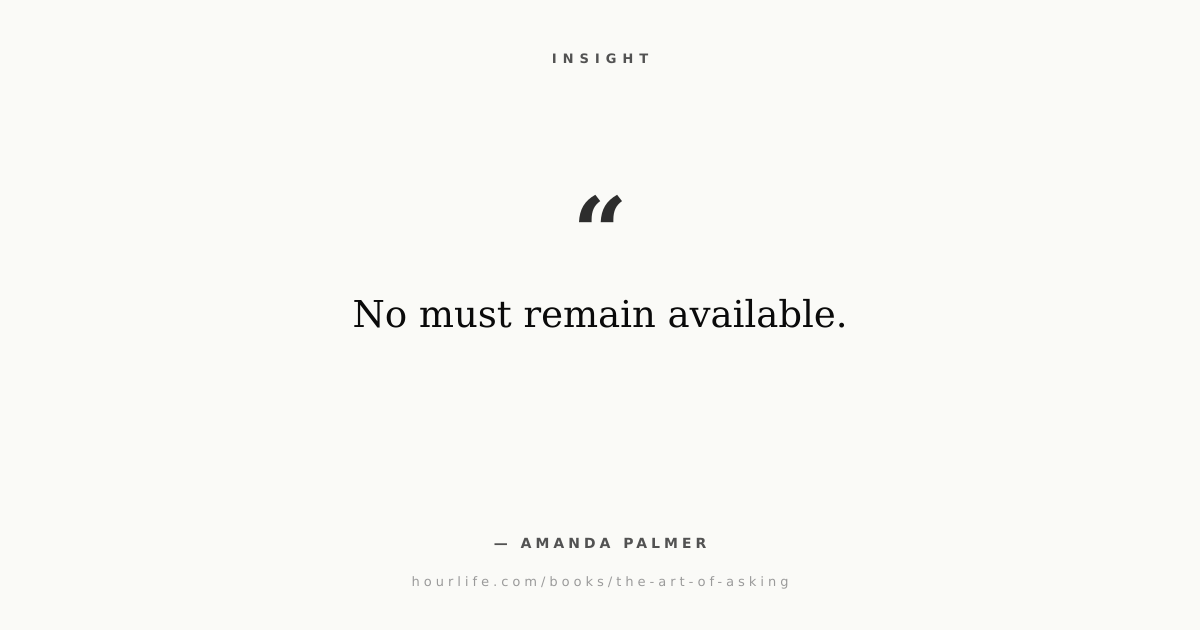
Palmer’s argument is that asking is not extraction when it is honest, mutual, specific, and willing to receive no.
Core idea.
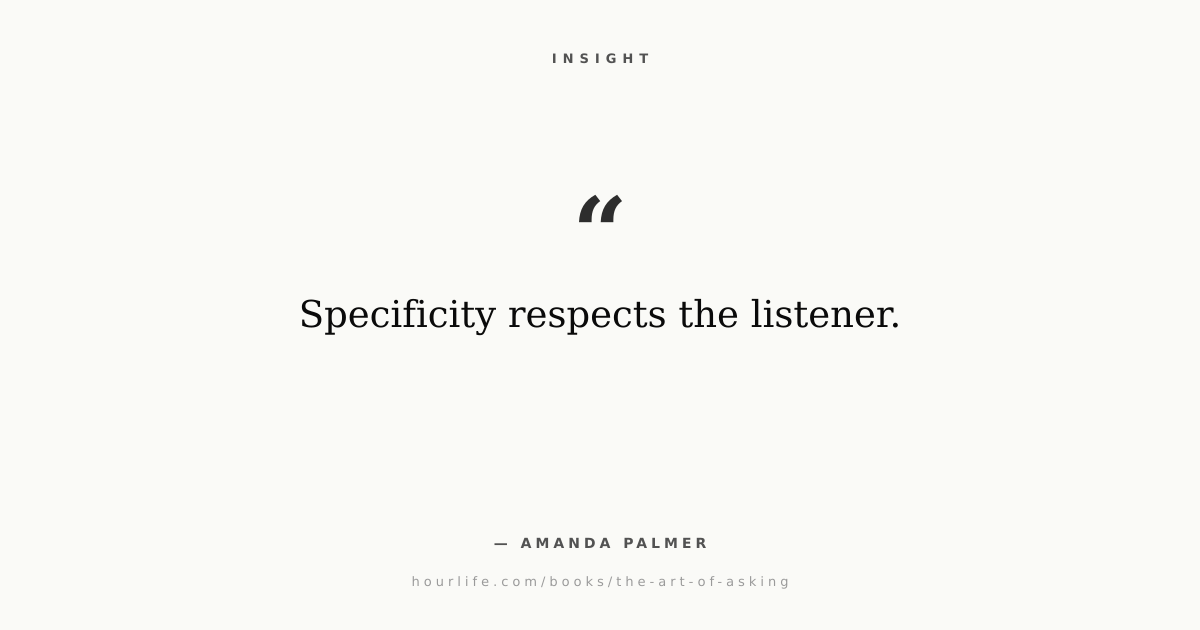
Asking requires vulnerability and respect. The ask works when the asker is visible, the relationship is real, the request is specific, and the other person is free to say no without punishment.
interactive tool
Brave Ask Builder
request draft
Choose the ask step.
Turn vague longing into a clear request.
Write: “Would you be willing to ___ by ___?”
Reader notes.
Ask cleanly.
Name one need
Write one thing you need without apologizing for needing it.
Draft a clean ask
Use: 'Would you be willing to ___ by ___?'
Ask one person directly
Send a specific request to someone with relevant context.
Add the no clause
Include a line that makes refusal genuinely safe.
Offer context
Explain why the request matters in one honest sentence.
Receive without shrinking
When someone helps, say thank you without arguing them out of it.
Make a mutuality list
Write what you can offer without making it transactional.
Stop hinting once
Replace one hint with one direct sentence.
Reflect after asking
Write what happened and whether you respected both answers.
Build your mini action book.
Pick setup actions and daily habits from The Art of Asking; or, How I Learned to Stop Worrying and Let People Help, choose a start date, and download a printable checklist with real calendar pages.
Frequently asked
What is The Art of Asking; or, How I Learned to Stop Worrying and Let People Help about?
A memoir and manifesto about trust, vulnerability, community, and making direct asks without coercion.
What are the key takeaways from The Art of Asking; or, How I Learned to Stop Worrying and Let People Help?
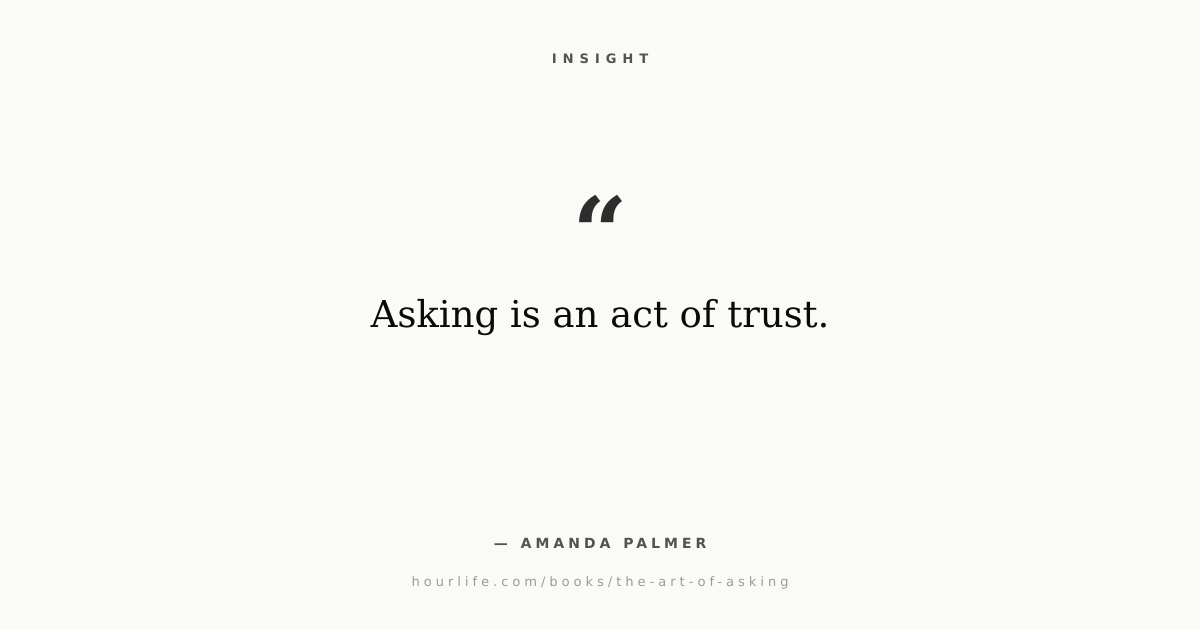
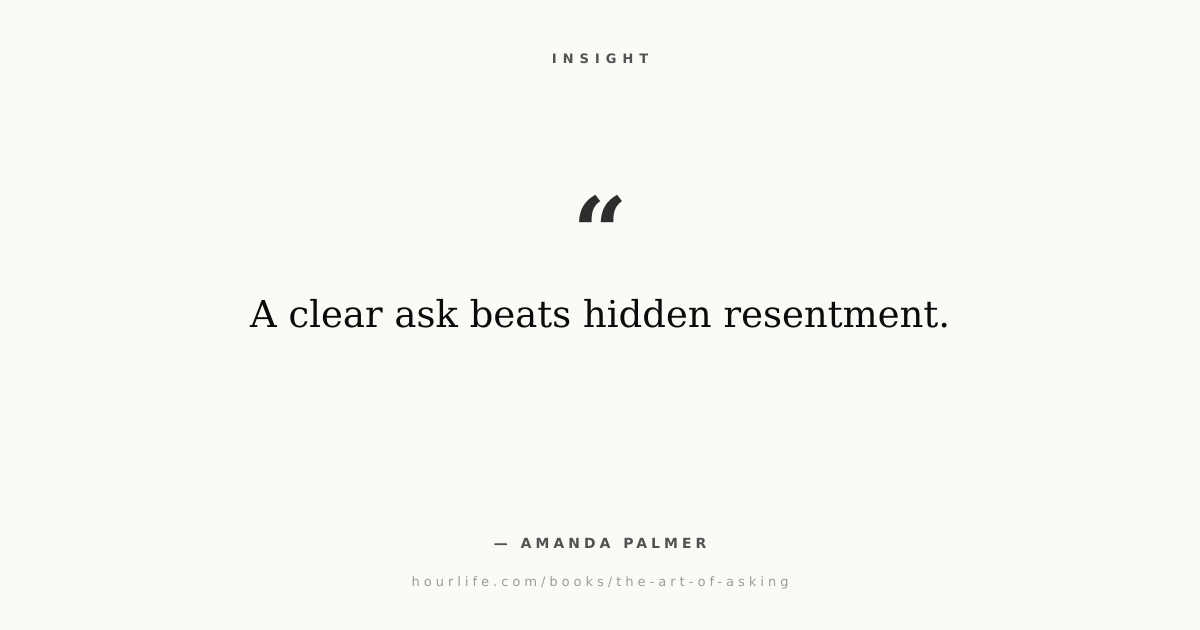
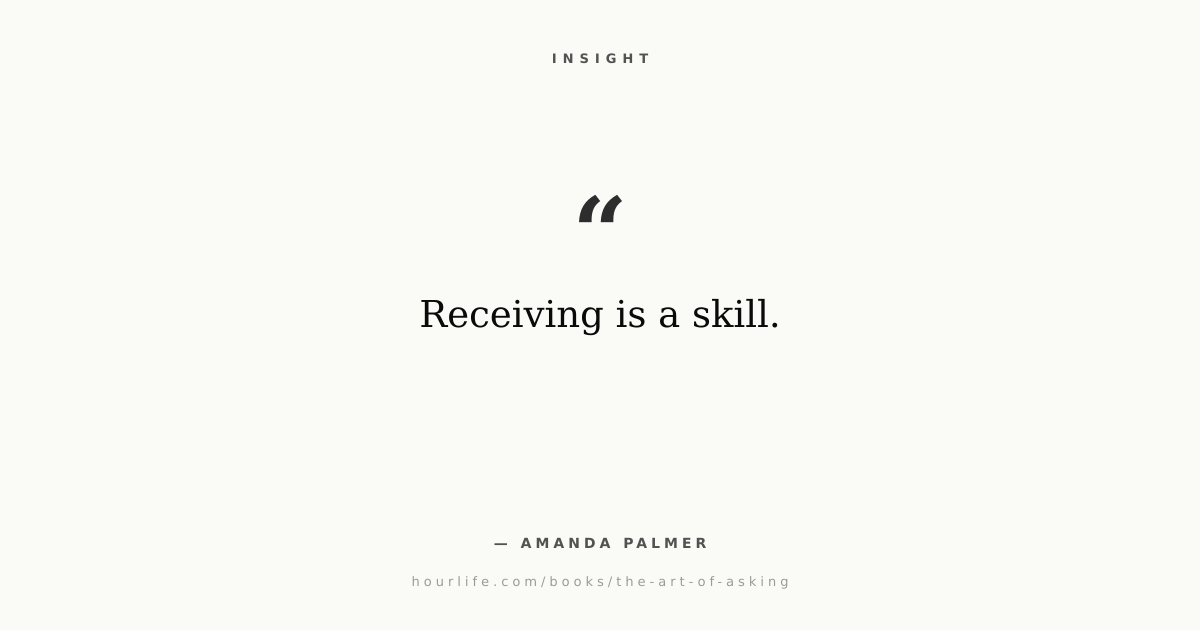
Readers on HourLife most often highlight ideas such as: “Asking is an act of trust.” “A clear ask beats hidden resentment.” “Receiving is a skill.”
Who should read The Art of Asking; or, How I Learned to Stop Worrying and Let People Help?
It's a strong pick for readers exploring Confidence, Creativity & Making, and The Art of Communication. HourLife distills its core idea into community-voted insights and one practical action worth trying.
What's one thing I can do after reading The Art of Asking; or, How I Learned to Stop Worrying and Let People Help?
Name one need — Write one thing you need without apologizing for needing it.
How long does it take to read the The Art of Asking; or, How I Learned to Stop Worrying and Let People Help summary?
About five minutes. The HourLife summary distills The Art of Asking; or, How I Learned to Stop Worrying and Let People Help into its core idea, 7 community insights, and 9 practical actions you can apply right away.
Downloads & shareables
Print it, pin it, post it. Ways to take The Art of Asking; or, How I Learned to Stop Worrying and Let People Help off the screen and into the world.
-
Read the text summary
The core idea, key takeaways, and how to apply The Art of Asking; or, How I Learned to Stop Worrying and Let People Help, as one clean, readable page.
Read summary -
Action checklist
Every action from this page as a printable to-do list, with a 7-day tracker.
Download PDF -
Book summary card
A shareable card with the book and its top-voted insight, for saving or posting.
Resource library
The summary card and every quote card in six sizes: Instagram feed, Story, Pinterest, YouTube thumbnail, phone wallpaper, and link preview.
Turn this book into a daily practice.
Save the insights that land, build the habits that stick, and keep what you learn from The Art of Asking; or, How I Learned to Stop Worrying and Let People Help working long after you close the page — inside HourLife.