Epictetus · stoic manual
The Art of Living
Epictetus makes freedom practical: stop spending your life on what is not yours to command.
Core idea.
The manual is austere because the distinction is simple: your judgments, choices, and character are yours to train. Reputation, other people, fortune, and outcomes are not yours to command.
interactive tool
Control Ledger
stoic distinction
Choose the disturbance.
Separate what belongs to choice from what belongs to fortune.
Put attention back on judgment, action, and character.
What readers keep.
Practice freedom.
Draw the control line
For one current problem, list what is yours and what is not.
Name the judgment
Write the interpretation you are adding to the event.
Define the virtue
Choose the virtue this situation asks you to practice.
Prepare for refusal
Name how you will act if the preferred outcome does not arrive.
Pause at disturbance
When upset, ask what part belongs to your choice.
Use delay well
Do one honorable task while waiting for something outside your control.
Answer criticism cleanly
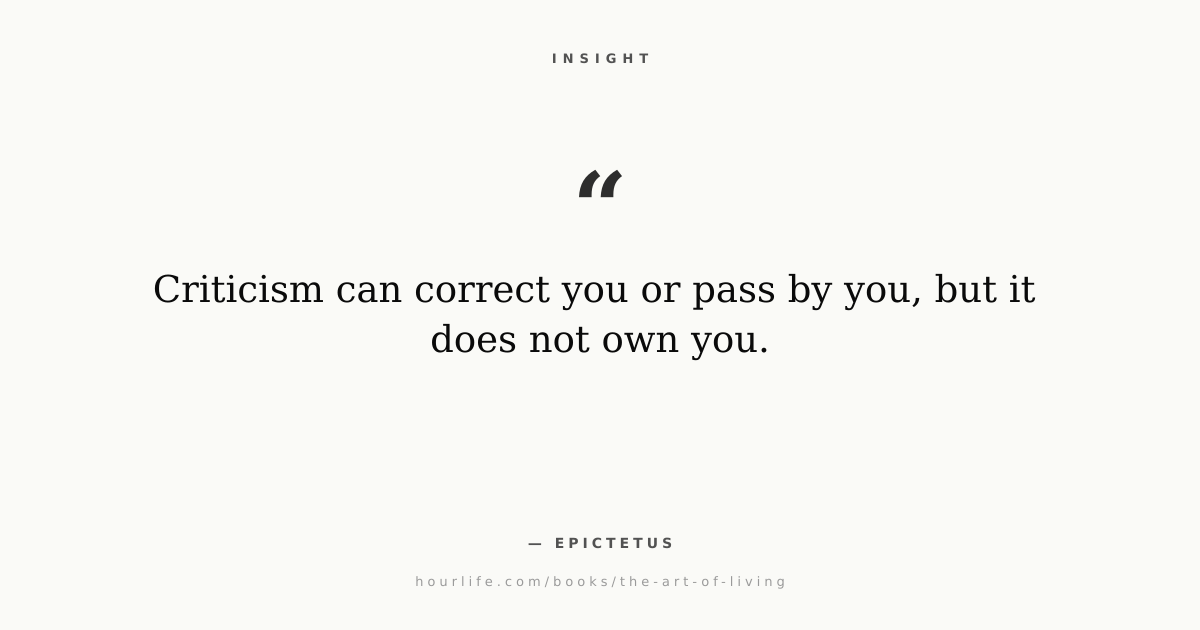
Extract useful correction and release the rest.
Practice voluntary simplicity
Skip one unnecessary comfort and notice that you remain intact.
End with character
Before sleep, ask whether your choices matched the virtue you named.
Build your mini action book.
Pick setup actions and daily habits from The Art of Living, choose a start date, and download a printable checklist with real calendar pages.
Frequently asked
What is The Art of Living about?
A concise Stoic manual on judgment, choice, character, and the freedom that comes from knowing what is yours to command.
What are the key takeaways from The Art of Living?
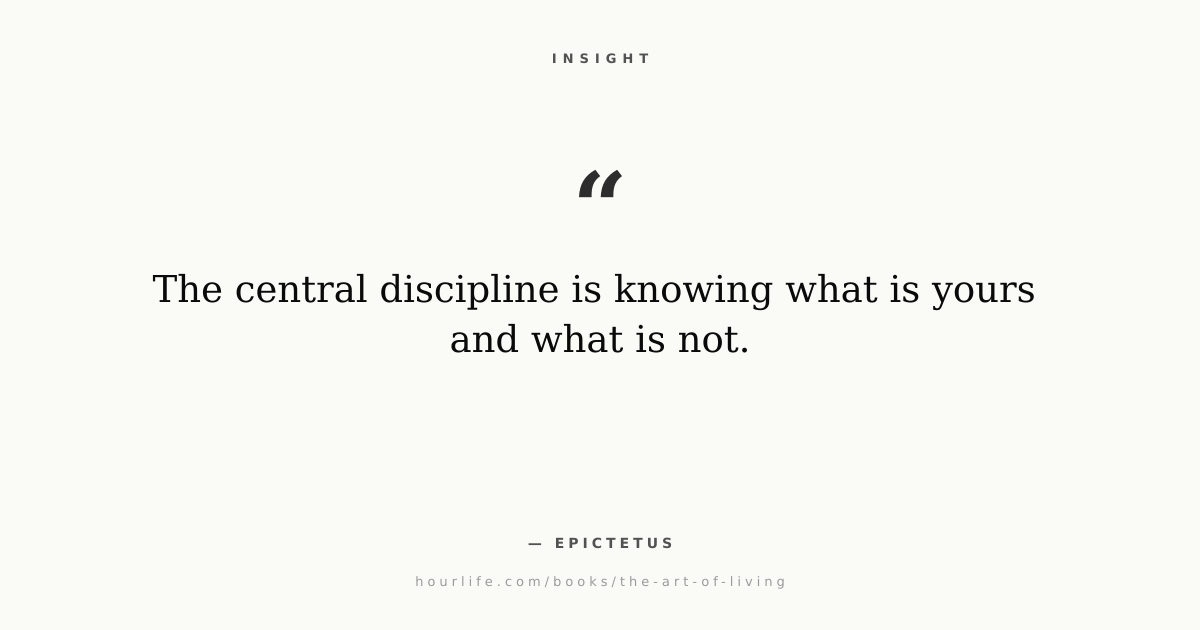
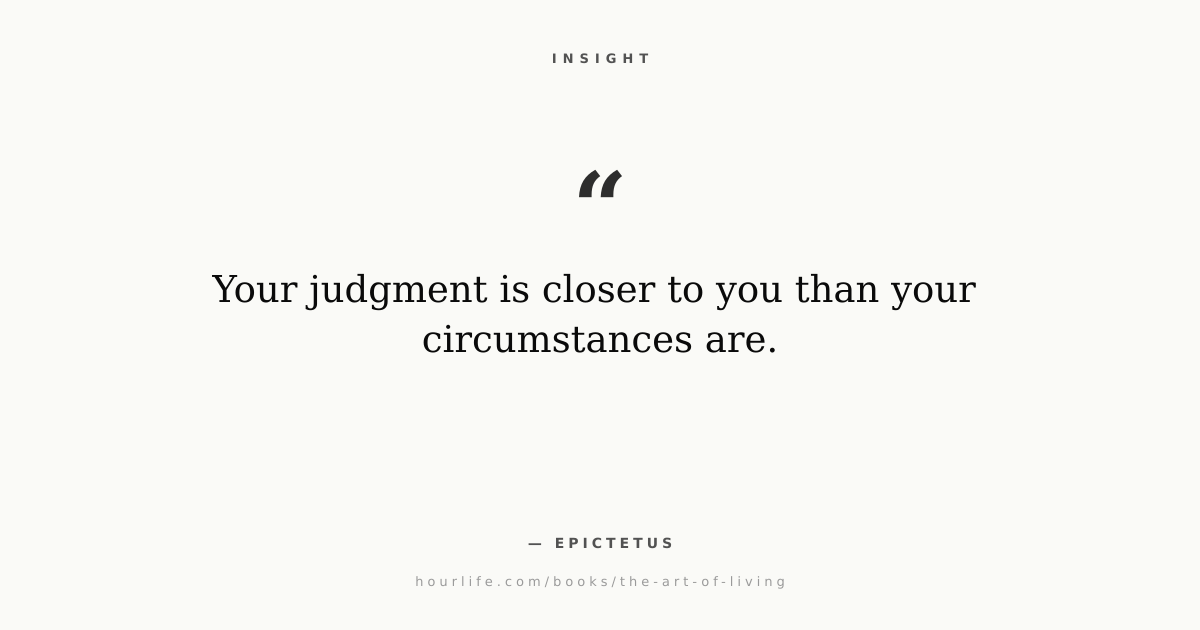
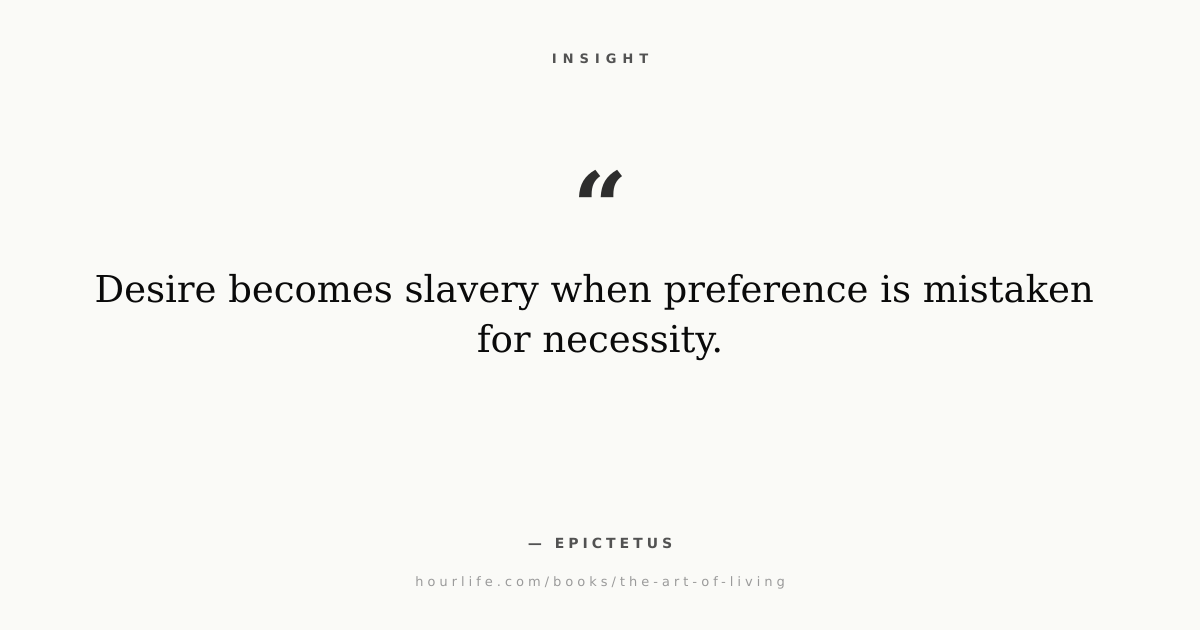
Readers on HourLife most often highlight ideas such as: “The central discipline is knowing what is yours and what is not.” “Your judgment is closer to you than your circumstances are.” “Desire becomes slavery when preference is mistaken for necessity.”
Who should read The Art of Living?
It's a strong pick for readers exploring Character & Integrity, Philosophy Essentials, and Stoicism Essentials. HourLife distills its core idea into community-voted insights and one practical action worth trying.
What's one thing I can do after reading The Art of Living?
Draw the control line — For one current problem, list what is yours and what is not.
How long does it take to read the The Art of Living summary?
About five minutes. The HourLife summary distills The Art of Living into its core idea, 7 community insights, and 9 practical actions you can apply right away.
Downloads & shareables
Print it, pin it, post it. Ways to take The Art of Living off the screen and into the world.
-
Read the text summary
The core idea, key takeaways, and how to apply The Art of Living, as one clean, readable page.
Read summary -
Action checklist
Every action from this page as a printable to-do list, with a 7-day tracker.
Download PDF -
Book summary card
A shareable card with the book and its top-voted insight, for saving or posting.
Resource library
The summary card and every quote card in six sizes: Instagram feed, Story, Pinterest, YouTube thumbnail, phone wallpaper, and link preview.
Turn this book into a daily practice.
Save the insights that land, build the habits that stick, and keep what you learn from The Art of Living working long after you close the page — inside HourLife.