Dalai Lama XIV · 2016 · joy
The Book
of Joy
Joy is not denial of suffering. It is a trained openness that can hold pain without becoming only pain.
interactive tool
Joy Practice Chooser
Choose the day’s emotional weather, then choose a joy doorway. The practice changes based on both.
weather
doorway
Practice durable joy.
Choose one joy pillar
Pick one practice for the week: perspective, humility, humor, acceptance, forgiveness, gratitude, compassion, or generosity.
Create a suffering reframe
Write one current difficulty, then add a wider frame: what it teaches, whom it connects you to, or what value it asks for.
Prepare a gratitude cue
Choose a daily trigger, such as brushing teeth or closing the laptop, for naming three specific gifts from the day.
Plan one generous act
Choose a concrete act of care that costs little but reduces someone else's burden this week.
Name shared humanity
When irritated by someone today, silently name one pressure or vulnerability they may share with you.
Collect one moment of humor
Notice one absurd, light, or gently funny moment. Let it soften the day without denying what is hard.
End with three gifts
Before sleep, name three specific things that helped, delighted, protected, or taught you today.
Build your mini action book.
Pick setup actions and daily habits from The Book of Joy, choose a start date, and download a printable checklist with real calendar pages.
Frequently asked
What is The Book of Joy about?
The Book of Joy records conversations between the Dalai Lama and Desmond Tutu about suffering, compassion, humor, gratitude, and durable joy. It presents joy as a practice of perspective rather than a denial of pain.
What are the key takeaways from The Book of Joy?
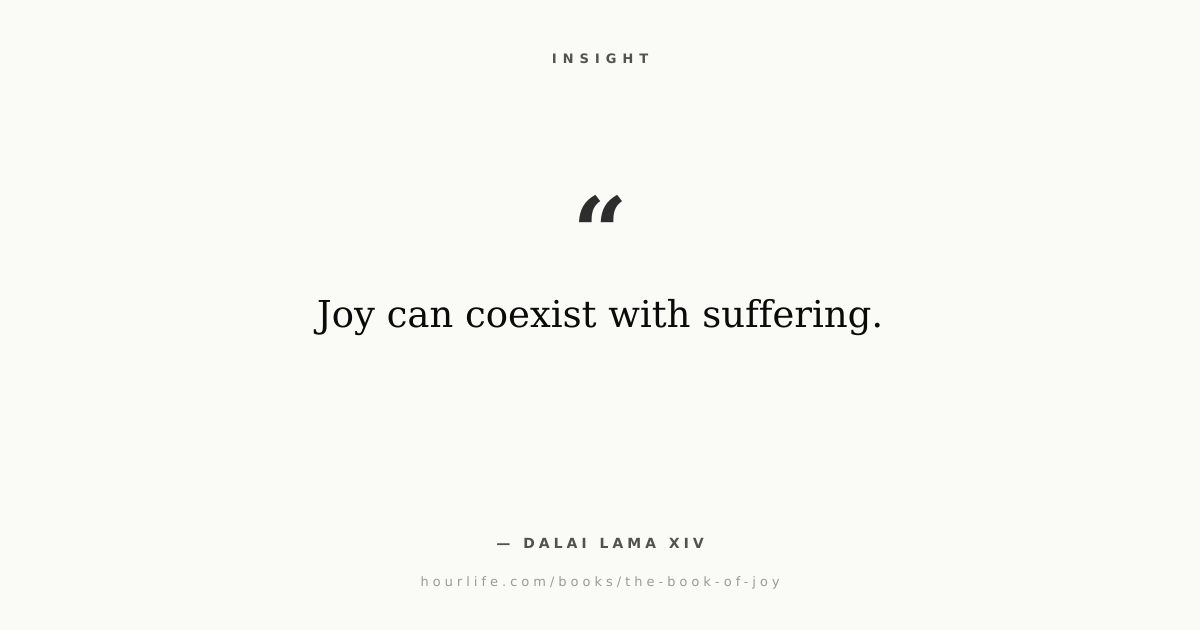
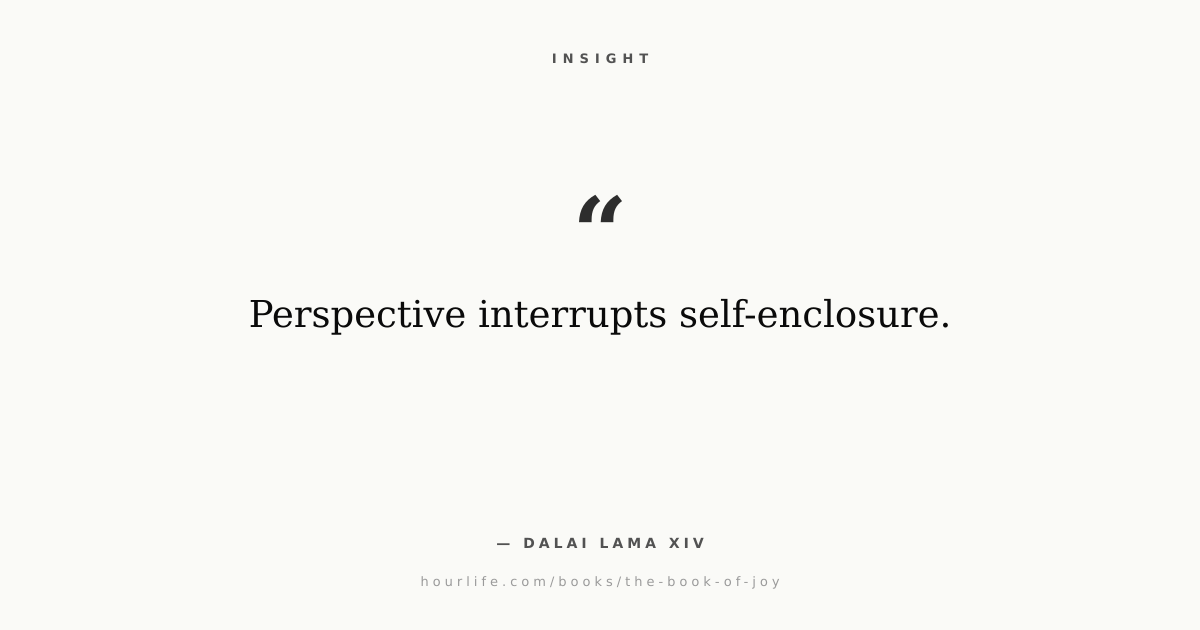
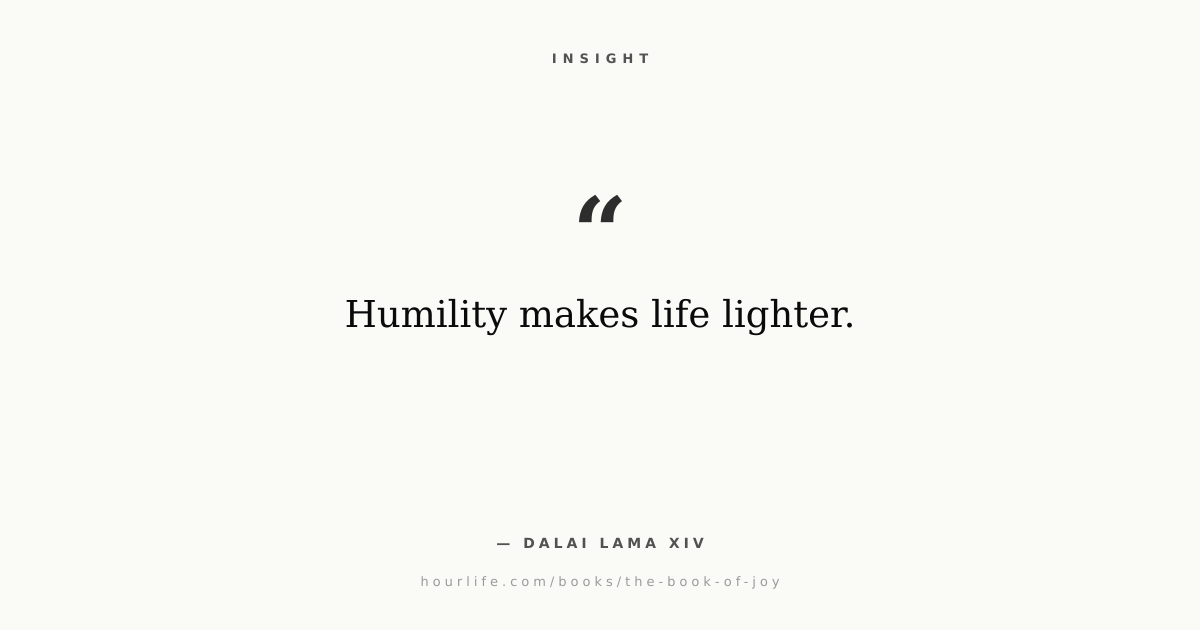
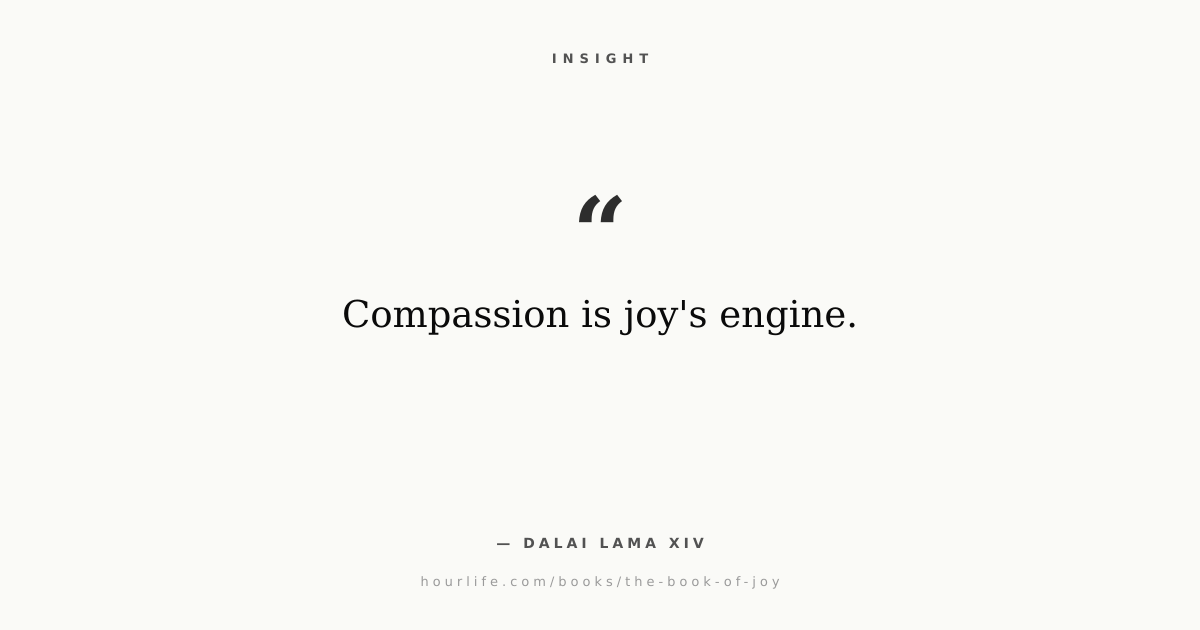
Readers on HourLife most often highlight ideas such as: “Joy can coexist with suffering.” “Perspective interrupts self-enclosure.” “Humility makes life lighter.”
Who should read The Book of Joy?
It's a strong pick for readers exploring Happiness & Positive Psychology, Mindfulness, and Resilience & Mental Strength. HourLife distills its core idea into community-voted insights and one practical action worth trying.
What's one thing I can do after reading The Book of Joy?
Choose one joy pillar — Pick one practice for the week: perspective, humility, humor, acceptance, forgiveness, gratitude, compassion, or generosity.
How long does it take to read the The Book of Joy summary?
About five minutes. The HourLife summary distills The Book of Joy into its core idea, 5 community insights, and 7 practical actions you can apply right away.
Downloads & shareables
Print it, pin it, post it. Ways to take The Book of Joy off the screen and into the world.
-
Read the text summary
The core idea, key takeaways, and how to apply The Book of Joy, as one clean, readable page.
Read summary -
Action checklist
Every action from this page as a printable to-do list, with a 7-day tracker.
Download PDF -
Book summary card
A shareable card with the book and its top-voted insight, for saving or posting.
Resource library
The summary card and every quote card in six sizes: Instagram feed, Story, Pinterest, YouTube thumbnail, phone wallpaper, and link preview.
Turn this book into a daily practice.
Save the insights that land, build the habits that stick, and keep what you learn from The Book of Joy working long after you close the page — inside HourLife.