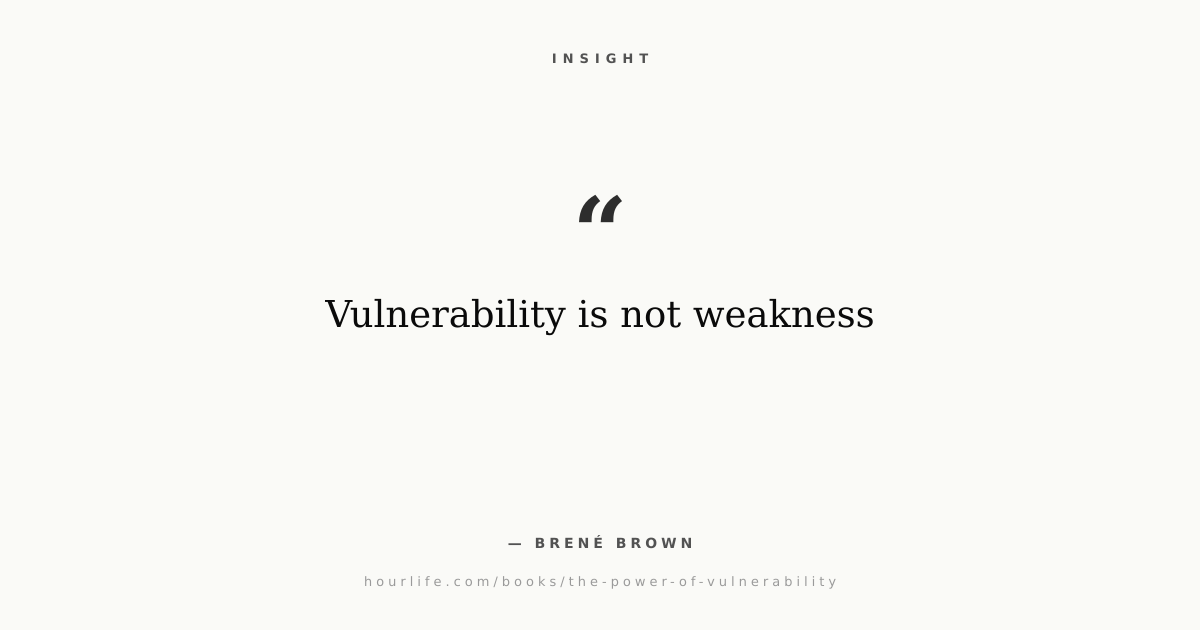
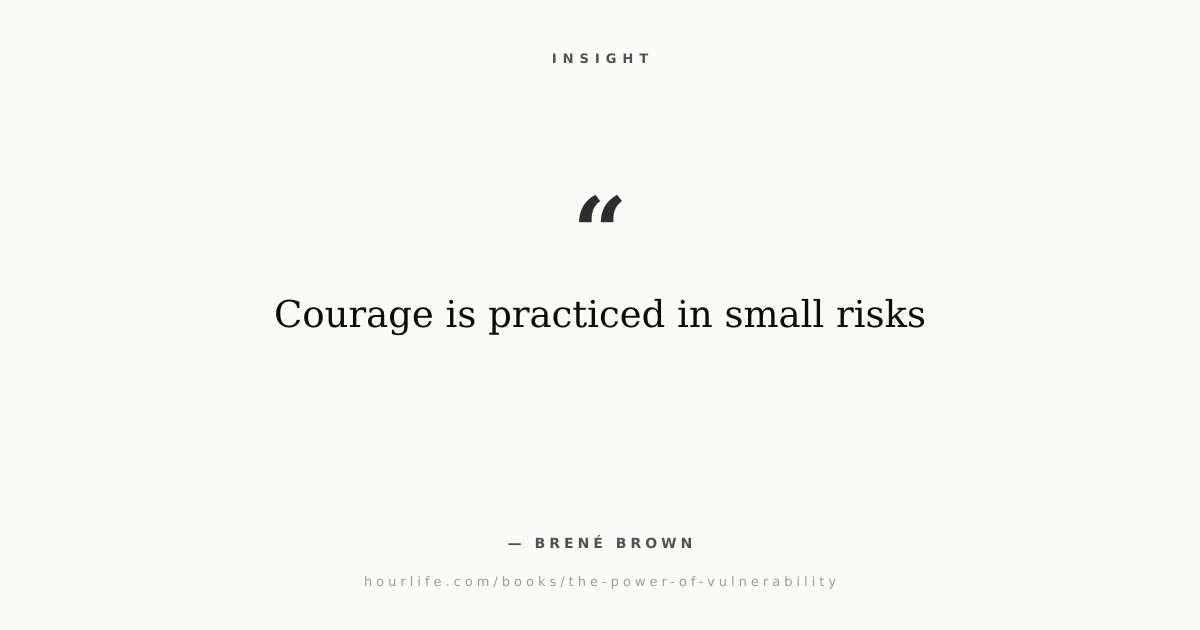
Vulnerability is not weakness
Brown reframes exposure as the birthplace of courage, connection, and creativity.
There is a moment before you ask for help when it feels easier to say nothing. Brené Brown asks us to pay attention to that moment.
You polish the work one more time instead of letting someone see it. You make a joke out of something that hurt. You say you don’t need help, then resent having to do everything yourself. The protection makes sense. It also leaves other people guessing.
In these audio teachings, Brown examines the habits we use to avoid exposure: perfectionism, numbing, cynicism. They can become so familiar that we stop noticing what they keep out. Her invitation is to notice the armor, then practice letting a little more of ourselves be seen.
Brown’s audio course brings together her work on vulnerability, shame, and connection. The everyday examples on this page are HourLife’s illustrations.
Start with a conversation you have been putting off. Read an example, consider whom you want to tell, and try a sentence in your own words.
The familiar cover
“Don’t worry about it. I’ll figure it out.”
A more honest opening
“I’m overwhelmed this week. Could you take care of dinner on Thursday?”
Name a real need and make one specific request. Give the other person room to answer.
Choose one thing you want this person to understand. You get to decide how much to share.
Your draft stays on this page. It isn’t saved or sent.
A rehearsal made by HourLife, inspired by Brown’s work. These are possible openings, not a script you have to follow.
Ideas worth returning to when the instinct is to close up. These are reader takeaways, rather than quotations from Brown.
Brown reframes exposure as the birthplace of courage, connection, and creativity.
The strategies that prevent rejection also prevent being known.
Naming shame with safe people reduces its power.
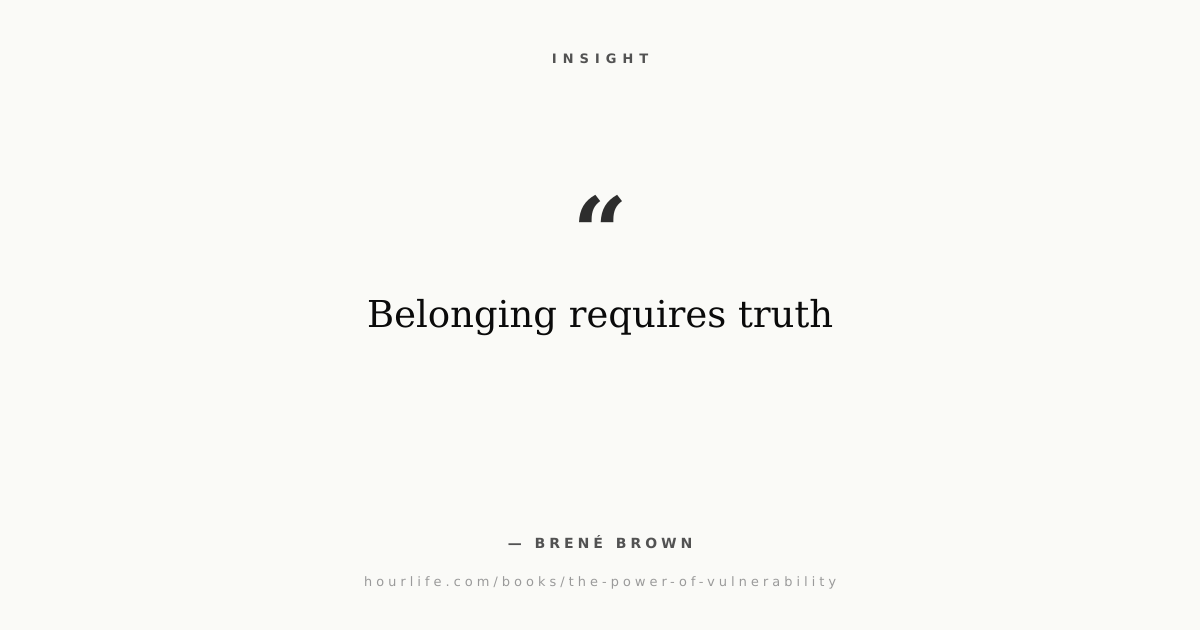
Fitting in edits the self; belonging asks for the self to show up.
The brave life is built by repeated moments of honest exposure.
You can begin with one person and one conversation. Pick something small enough to actually try.
Think of a recent conversation where you held back. Write what you did instead: made a joke, over-explained, agreed too quickly, or went quiet. Name what you were trying to protect.
Think of someone who has listened without gossiping, dismissing you, or rushing to fix you. Choose one small thing to share with that person; you do not owe everyone the whole story.
Write the opening to one conversation you have been avoiding. Try: "I could use help with..." or "I got this wrong when..." Read it aloud and replace anything you would never actually say.
Choose a manageable first step: ask for feedback on one paragraph, admit one uncertainty, or request help with one task. Decide what you want to keep private before you begin.
Make one specific request today. Instead of "Nobody helps around here," try "Could you handle dinner on Thursday?" Leave room for the other person to say what they can do.
Tell someone you trust about one feeling or uncertainty you usually hide. If you want listening rather than advice, say so: "Could you just listen for a few minutes?"
Return to a conversation where you got defensive or withdrew. Name your part without an excuse, then ask to try again: "I went quiet earlier. Can we come back to that?"
Pick setup actions and daily habits from The Power of Vulnerability, choose a start date, and download a printable checklist with real calendar pages.
The Power of Vulnerability is Brene Brown's case for courage, connection, and being seen before the outcome is guaranteed. It turns vulnerability from a weakness into a practice of honest asking, repair, openness, and showing up without armor.
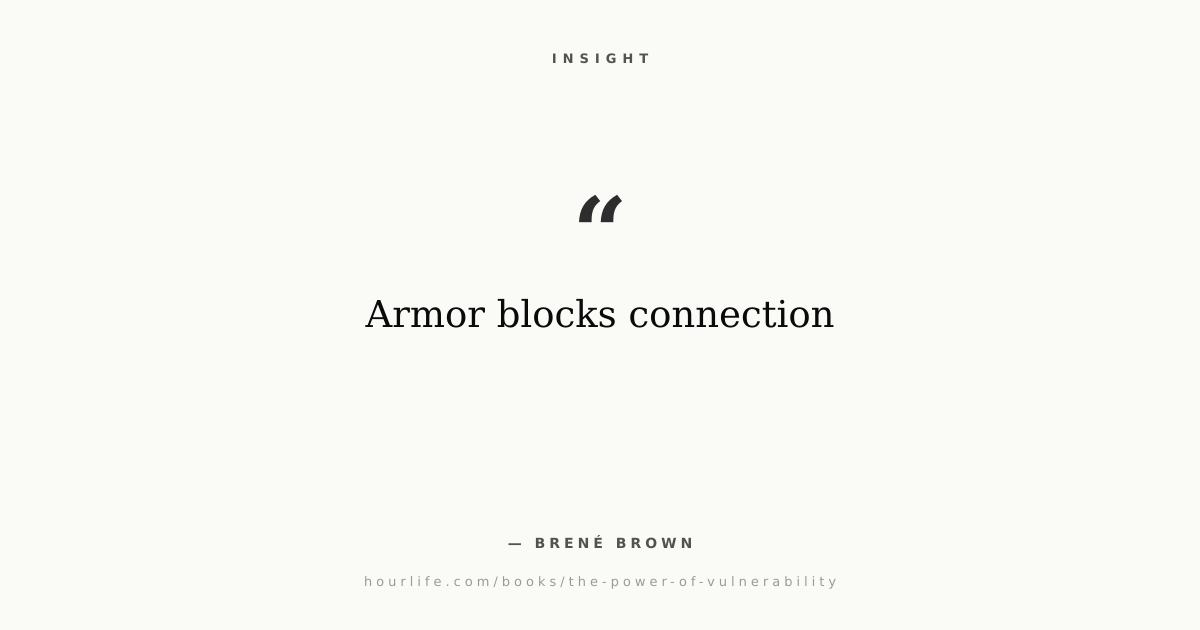
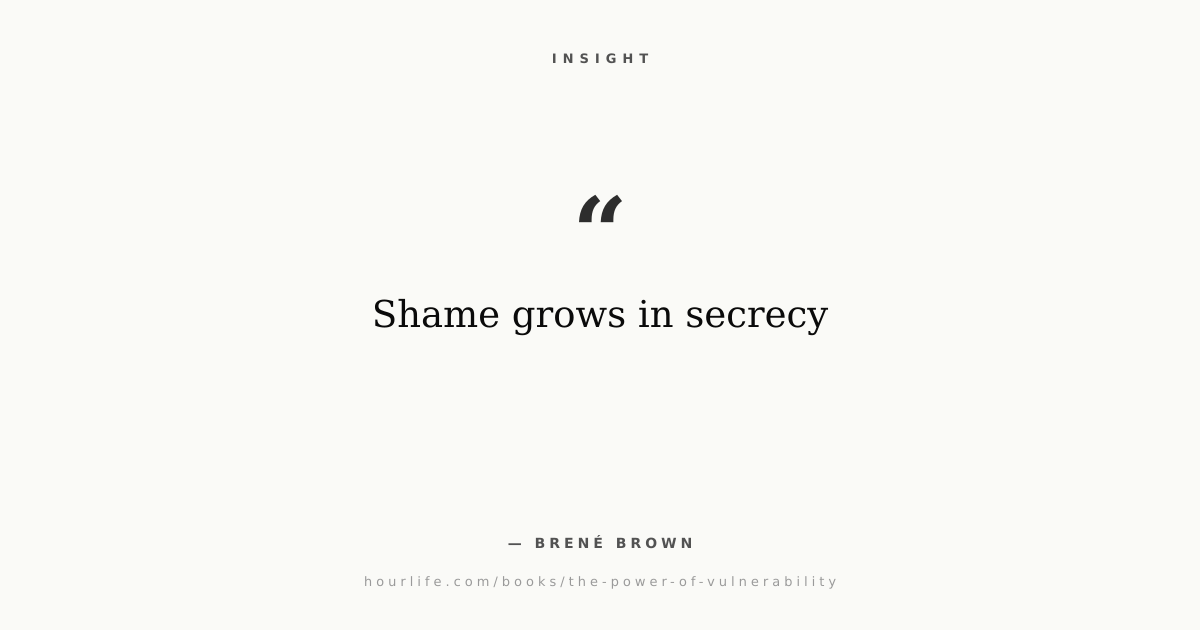
Readers on HourLife most often highlight ideas such as: “Vulnerability is not weakness.” “Armor blocks connection.” “Shame grows in secrecy.”
It's a strong pick for readers exploring Confidence, Love & Relationships, and Relationship Repair. HourLife distills its core idea into community-voted insights and one practical action worth trying.
Name the armor — Think of a recent conversation where you held back. Write what you did instead: made a joke, over-explained, agreed too quickly, or went quiet. Name what you were trying to protect.
About five minutes. The HourLife summary distills The Power of Vulnerability into its core idea, 5 community insights, and 7 practical actions you can apply right away.
Print it, pin it, post it. Ways to take The Power of Vulnerability off the screen and into the world.
The core idea, key takeaways, and how to apply The Power of Vulnerability, as one clean, readable page.
Read summaryEvery action from this page as a printable to-do list, with a 7-day tracker.
Download PDFA shareable card with the book and its top-voted insight, for saving or posting.
The summary card and every quote card in six sizes: Instagram feed, Story, Pinterest, YouTube thumbnail, phone wallpaper, and link preview.
Save the insights that land, build the habits that stick, and keep what you learn from The Power of Vulnerability working long after you close the page — inside HourLife.