Stay
The first practice is not fleeing the feeling.
Pema Chodron teaches the discipline of staying present when life stops offering stable ground.
core idea
Chodron asks readers to stop treating discomfort as proof that life has gone wrong. The unstable moment can become a teacher.
The practice is not passive. It is brave intimacy with reality: feel what is here, loosen the storyline, and let compassion widen the room.
The first practice is not fleeing the feeling.
Gentleness interrupts the habit of turning pain into aggression.
Personal pain can become a doorway into compassion for others.
interactive tool
Choose the current pattern, the signal quality, and the next move. The tool turns the book's idea into a practical prompt.
1 / collapse point
2 / body practice
3 / compassion move
falling apart practice
Notice the urge to escape, fix, or blame.
Let the body feel supported before solving.
Say what is here without making it permanent.
Drop one layer of resistance.
Remember others have felt this too.
community insights
Vote for the notes that make uncertainty more workable.
action steps
Write what feels uncertain without turning it into a permanent conclusion.
Pick one body cue, breath, hand on heart, or posture that helps you remain present.
Name your default defense: blame, fixing, withdrawing, numbing, or controlling.
Add the sentence: others have felt this too, and I am not alone in it.
When discomfort appears, take three breaths before defending or escaping.
Relax one part of the body while staying with a difficult feeling.
Do one small kind act from the tender place instead of from performance.
"The tender place is not the enemy. It is where practice begins."
HourLife field note
Back to libraryHourLife Editorial
A closer reading
Chödrön's central claim is that difficult seasons become more workable when we stop treating uncertainty as a problem to outrun and practice meeting it with curiosity and compassion.
The book's gift is a language for separating pain from the extra struggle created by resistance, avoidance, or a demand for certainty. That invitation can open reflection; it should not be mistaken for a command to accept harm, skip boundaries, or endure a crisis alone.
When a hard moment arrives, name the sensation, the story your mind is adding, and one safe next step. A short pause, a conversation, or professional support can all be forms of staying present.
This is a spiritual and contemplative framework, not a treatment plan. Acute danger, severe symptoms, trauma, or persistent depression deserve qualified mental-health care and practical safety support.
Best for readers drawn to meditation, grief work, or compassionate self-inquiry. It may feel too abstract if you need immediate clinical guidance or a concrete crisis plan.
Read the author or publisher’s Pema Chödrön Foundation's book page.
Reflective reading only; not a substitute for mental-health or emergency support.
Pick setup actions and daily habits from When Things Fall Apart: Heart Advice for Difficult Times, choose a start date, and download a printable checklist with real calendar pages.
Pema Chödrön’s Buddhist guide to meeting fear, grief, and uncertainty with curiosity, compassion, and less resistance in ordinary life.
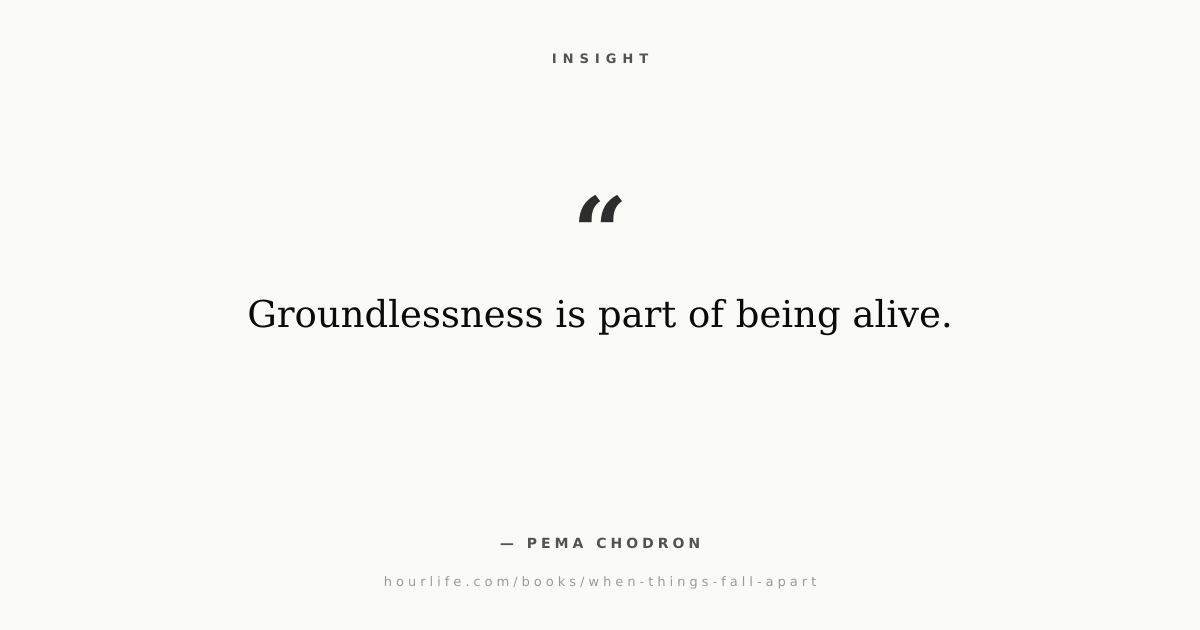
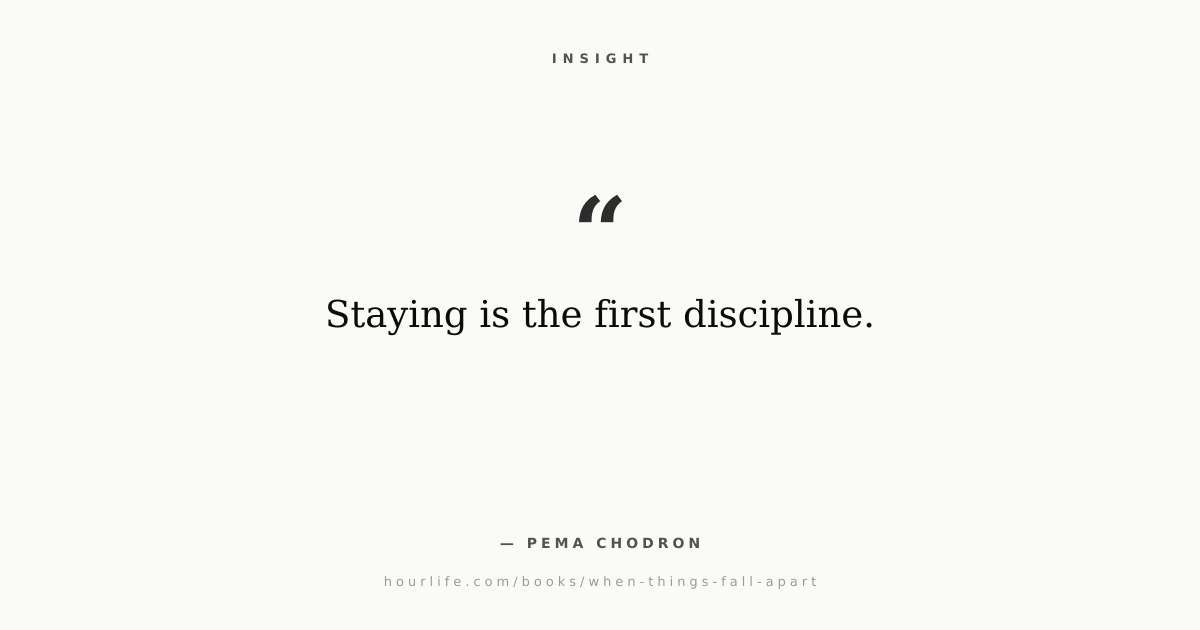
Readers on HourLife most often highlight ideas such as: “Groundlessness is part of being alive.” “Staying is the first discipline.” “Softness can be braver than armor.”
It's a strong pick for readers exploring Mindfulness, Resilience & Mental Strength, and Spiritual Growth. HourLife distills its core idea into community-voted insights and one practical action worth trying.
Name the groundless place — Write what feels uncertain without turning it into a permanent conclusion.
About five minutes. The HourLife summary distills When Things Fall Apart: Heart Advice for Difficult Times into its core idea, 5 community insights, and 7 practical actions you can apply right away.
Print it, pin it, post it. Ways to take When Things Fall Apart: Heart Advice for Difficult Times off the screen and into the world.
The core idea, key takeaways, and how to apply When Things Fall Apart: Heart Advice for Difficult Times, as one clean, readable page.
Read summaryEvery action from this page as a printable to-do list, with a 7-day tracker.
Download PDFA shareable card with the book and its top-voted insight, for saving or posting.
The summary card and every quote card in six sizes: Instagram feed, Story, Pinterest, YouTube thumbnail, phone wallpaper, and link preview.
Save the insights that land, build the habits that stick, and keep what you learn from When Things Fall Apart: Heart Advice for Difficult Times working long after you close the page — inside HourLife.