Robin Norwood · 1985 · relationship recovery
Women Who Love Too Much
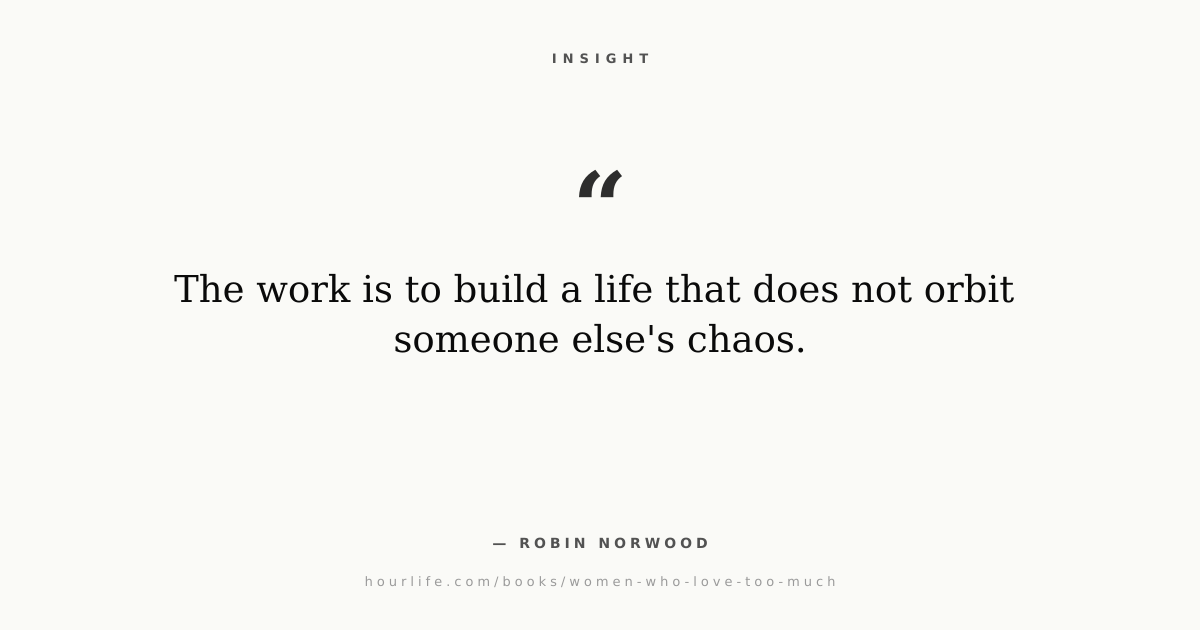
The pattern is not love's intensity. It is losing yourself while trying to manage someone else's chaos.
Core idea.
Norwood names the painful cycle where care becomes compulsion. Recovery begins when attention returns from fixing the other person to protecting your own reality, boundaries, and support system.
interactive tool
Pattern Detector
recovery move
Pick the pattern.
Shift from managing them to protecting your own reality.
Tell the truth to one safe person before making another promise.
What readers keep.
Practice recovery.
Write the pattern plainly
Record three incidents as facts without explaining or defending them.
Name your non-negotiables
List the behaviors you will no longer minimize.
Choose a safe witness
Identify one person, group, or professional who can hear the truth.
Pause the rescue
Wait before fixing a consequence that belongs to someone else.
Reclaim one routine
Restore one activity, friendship, or practice that the relationship displaced.
Make a support call first
Before returning to the cycle, contact someone outside it.
Build an exit resource list
Write the contacts, money, transport, documents, and places that increase safety.
Track self-abandonment cues
Notice when you hide needs, cancel plans, or explain harm away.
Practice one clean no
Say no without overexplaining, bargaining, or apologizing for having a limit.
Build your mini action book.
Pick setup actions and daily habits from Women Who Love Too Much, choose a start date, and download a printable checklist with real calendar pages.
Frequently asked
What is Women Who Love Too Much about?
A recovery-oriented book about compulsive relationship patterns, rescuing, and returning attention to the self.
What are the key takeaways from Women Who Love Too Much?
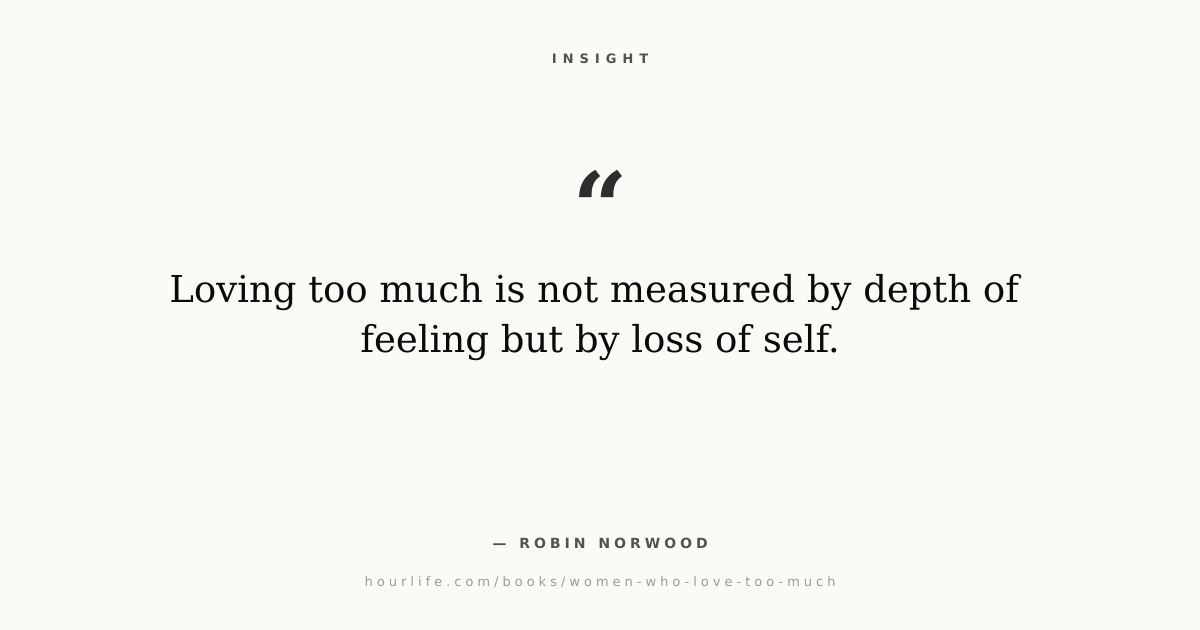
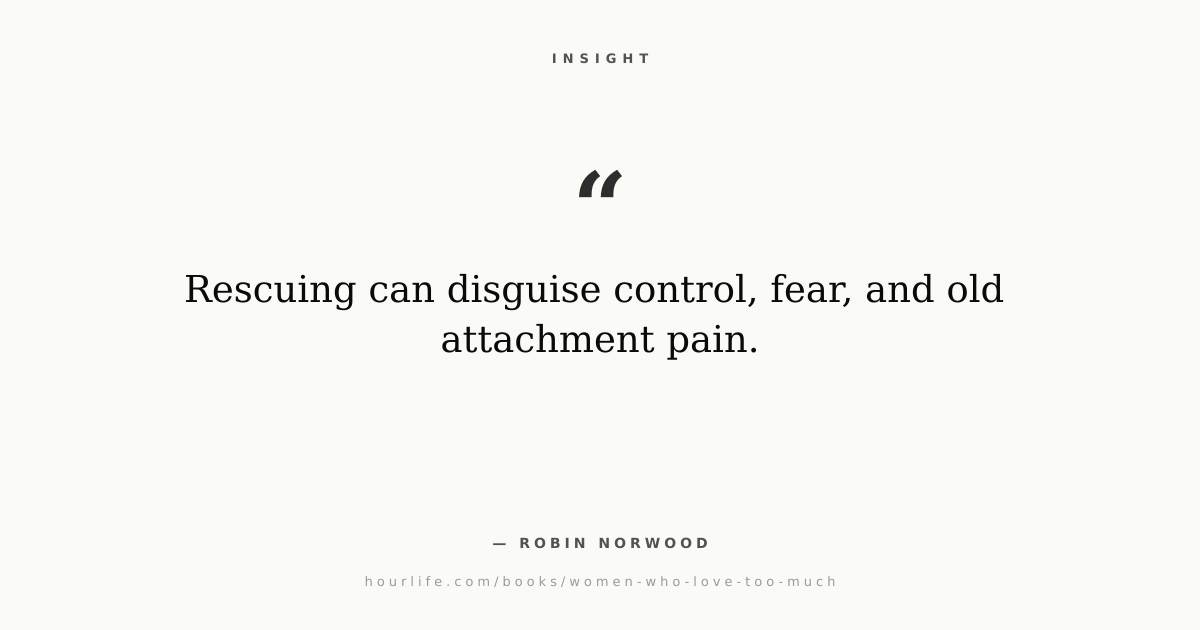
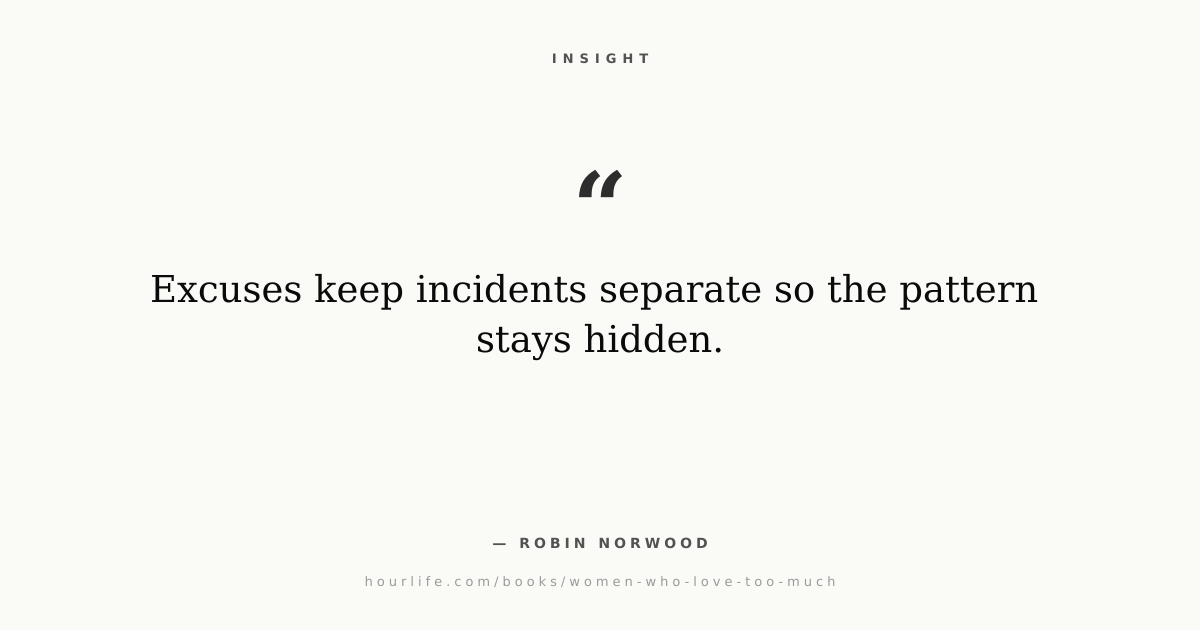
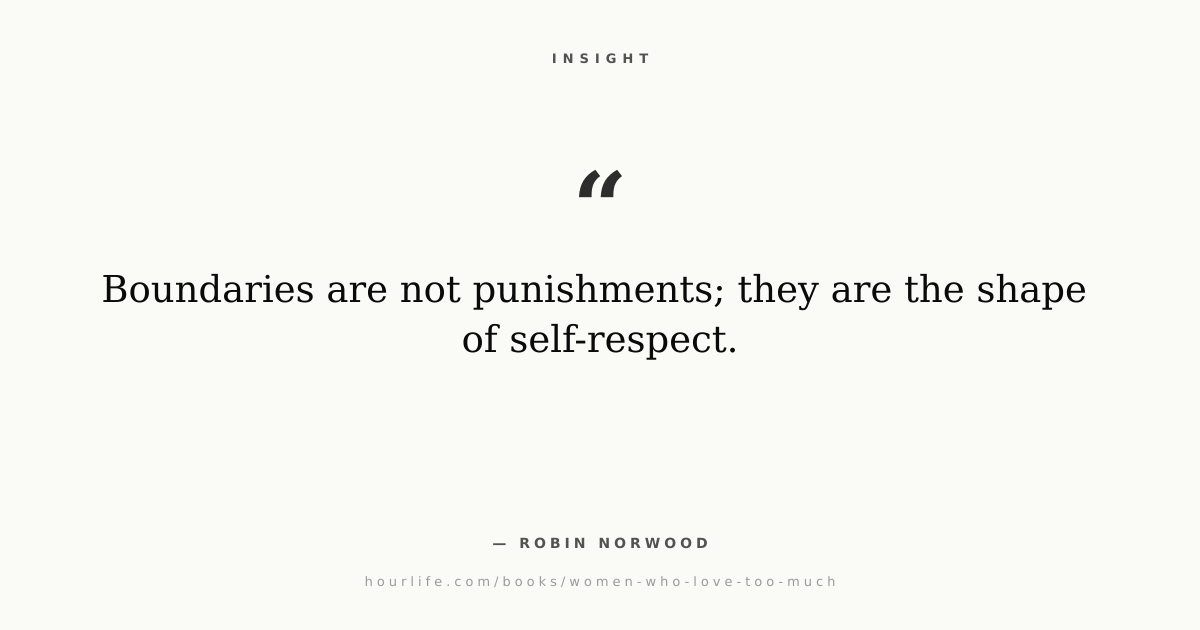
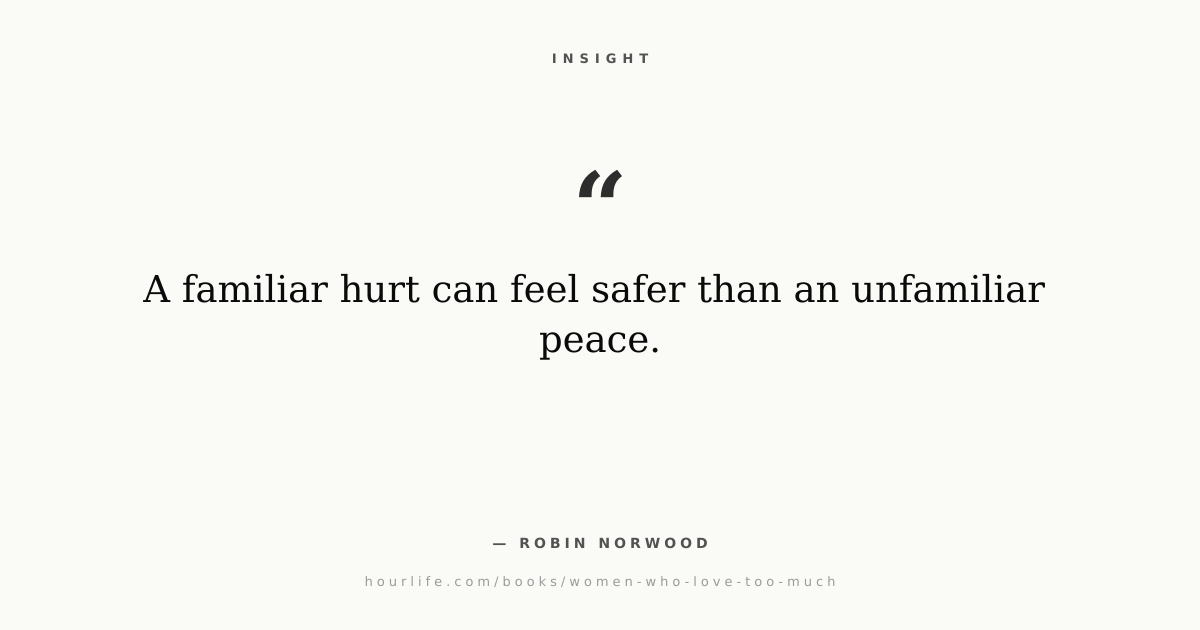
Readers on HourLife most often highlight ideas such as: “Loving too much is not measured by depth of feeling but by loss of self.” “Rescuing can disguise control, fear, and old attachment pain.” “Excuses keep incidents separate so the pattern stays hidden.”
Who should read Women Who Love Too Much?
It's a strong pick for readers exploring Love Without Losing Yourself and Toxic Relationships. HourLife distills its core idea into community-voted insights and one practical action worth trying.
What's one thing I can do after reading Women Who Love Too Much?
Write the pattern plainly — Record three incidents as facts without explaining or defending them.
How long does it take to read the Women Who Love Too Much summary?
About five minutes. The HourLife summary distills Women Who Love Too Much into its core idea, 7 community insights, and 9 practical actions you can apply right away.
Downloads & shareables
Print it, pin it, post it. Ways to take Women Who Love Too Much off the screen and into the world.
-
Read the text summary
The core idea, key takeaways, and how to apply Women Who Love Too Much, as one clean, readable page.
Read summary -
Action checklist
Every action from this page as a printable to-do list, with a 7-day tracker.
Download PDF -
Book summary card
A shareable card with the book and its top-voted insight, for saving or posting.
Resource library
The summary card and every quote card in six sizes: Instagram feed, Story, Pinterest, YouTube thumbnail, phone wallpaper, and link preview.
Turn this book into a daily practice.
Save the insights that land, build the habits that stick, and keep what you learn from Women Who Love Too Much working long after you close the page — inside HourLife.