Keep this book quotes for later
Sign in to save

50 Self-Help Classics

8 memorable lines from 50 Self-Help Classics by Tom Butler-Bowdon, each with the idea behind it.

As an Amazon Associate, HourLife earns from qualifying purchases.

Lines labelled “HourLife takeaway” are our wording of the book’s ideas and may paraphrase it. Only lines in quotation marks are the author’s own words, with where they appear. Check the book for exact wording before you quote it. Spot an error?

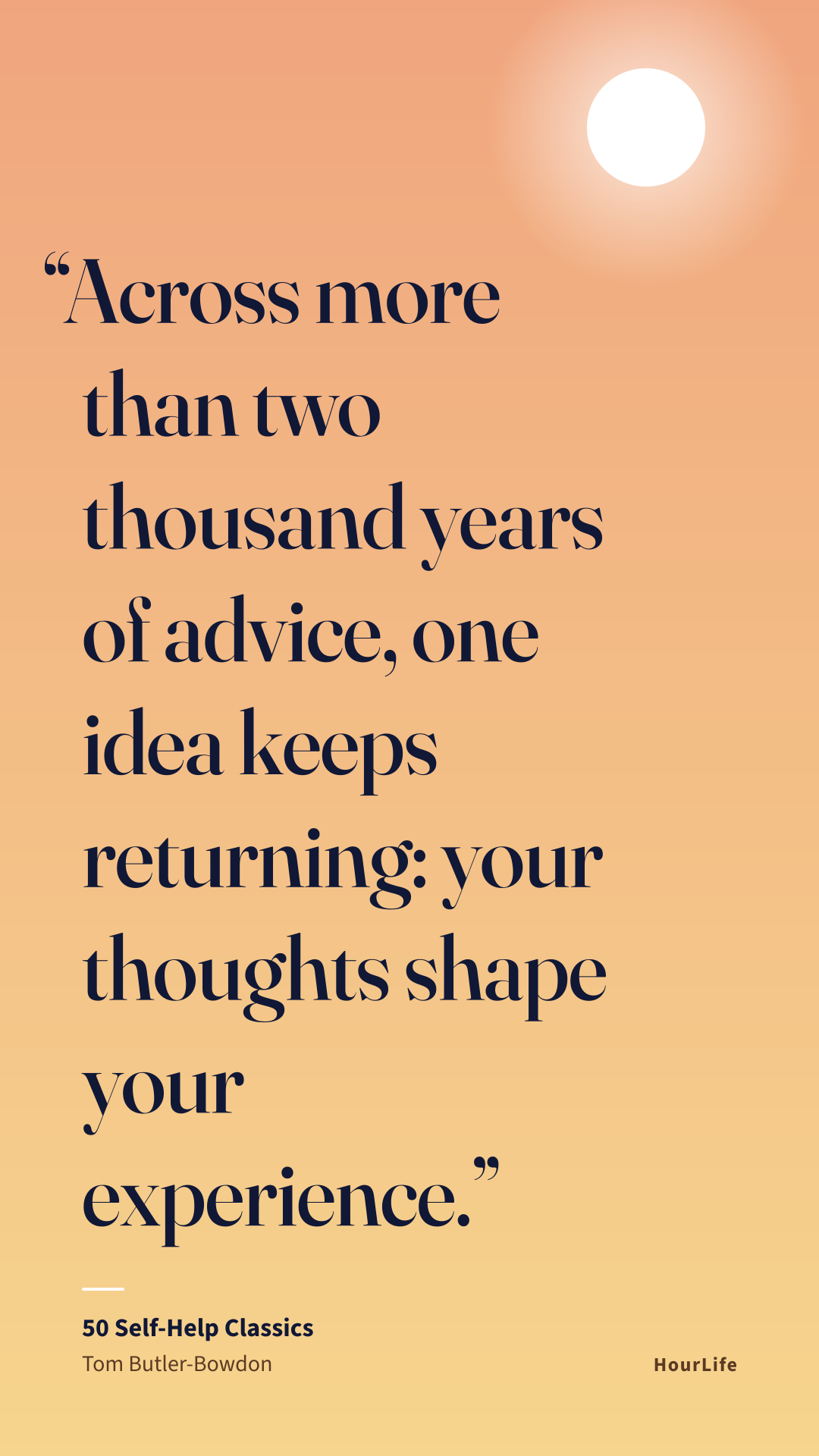
Across more than two thousand years of advice, one idea keeps returning: your thoughts shape your experience.

50 Self-Help Classics Tom Butler-Bowdon HourLife takeaway

James Allen, Norman Vincent Peale, David Burns and Martin Seligman come at it from faith, positive thinking and psychology, yet agree that how you interpret events changes how you live them. It is the closest thing the genre has to a law.


Responsibility comes before results.

50 Self-Help Classics Tom Butler-Bowdon HourLife takeaway

Samuel Smiles, Emerson's Self-Reliance and Covey's first habit, being proactive, all start in the same place: what you do is yours to choose. Every other technique depends on accepting that first.

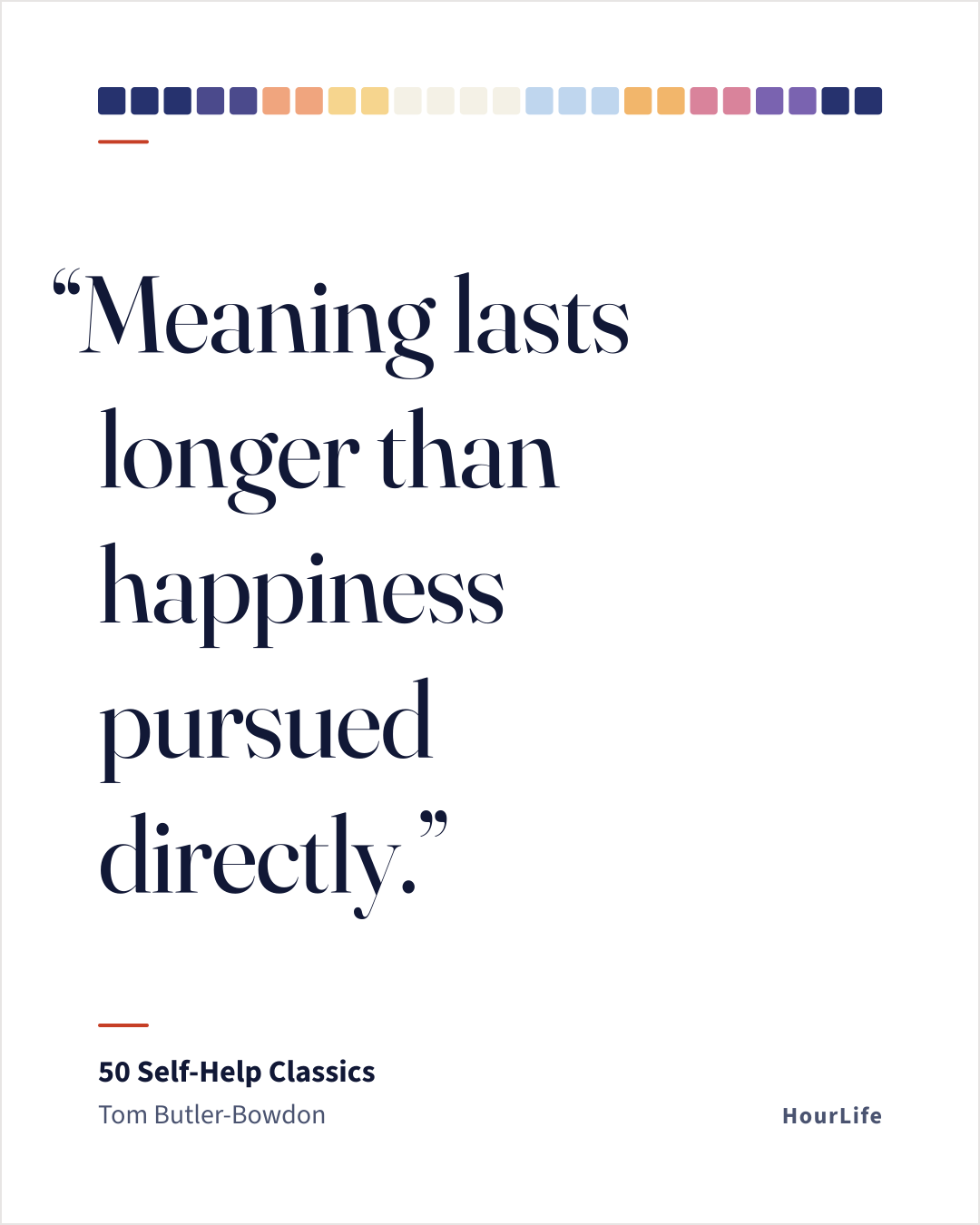
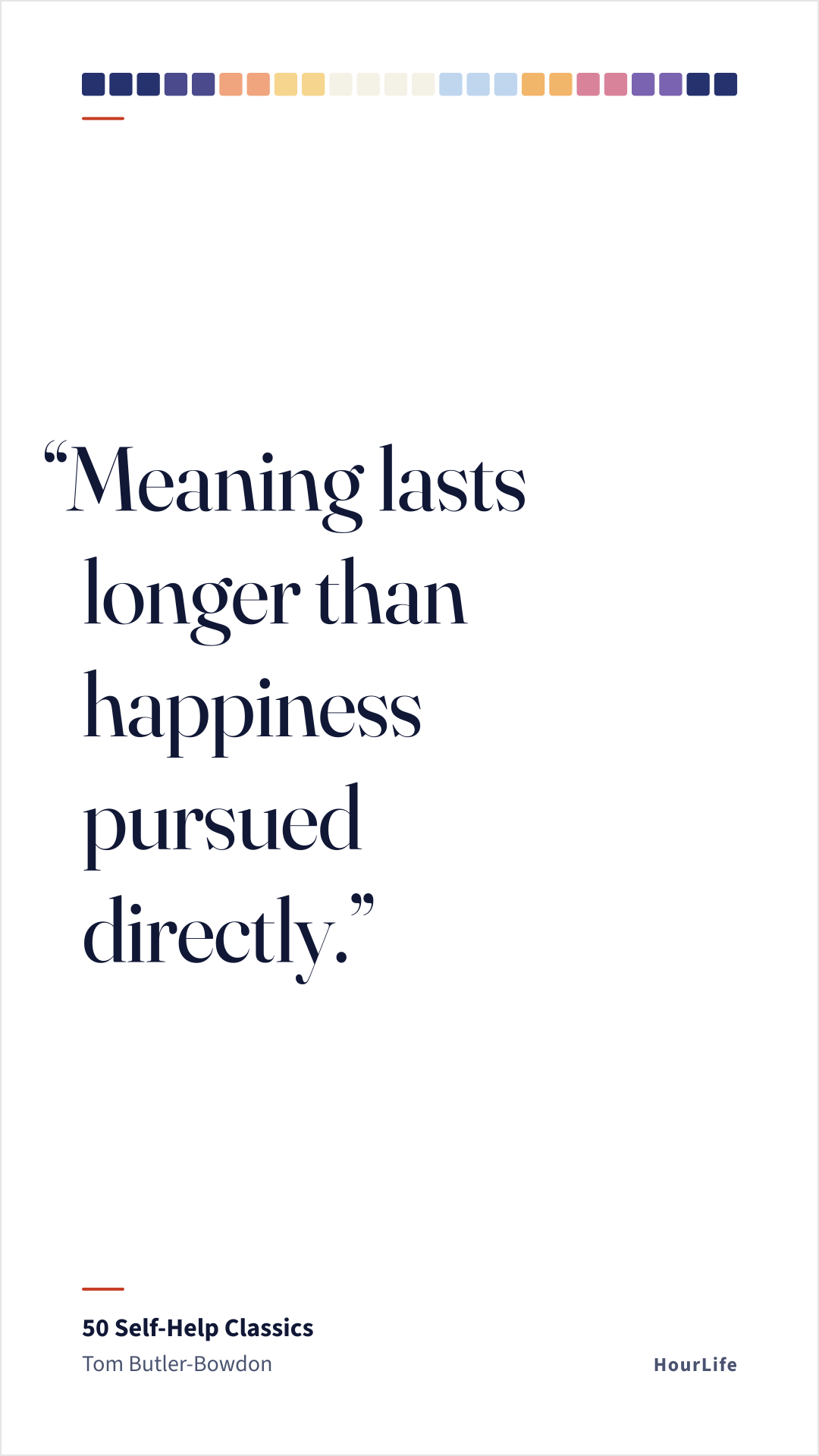
Meaning lasts longer than happiness pursued directly.

50 Self-Help Classics Tom Butler-Bowdon HourLife takeaway

Viktor Frankl, James Hillman and Clayton Christensen each argue that a purpose larger than yourself is what carries you through. Happiness tends to arrive as a by-product of something you care about.

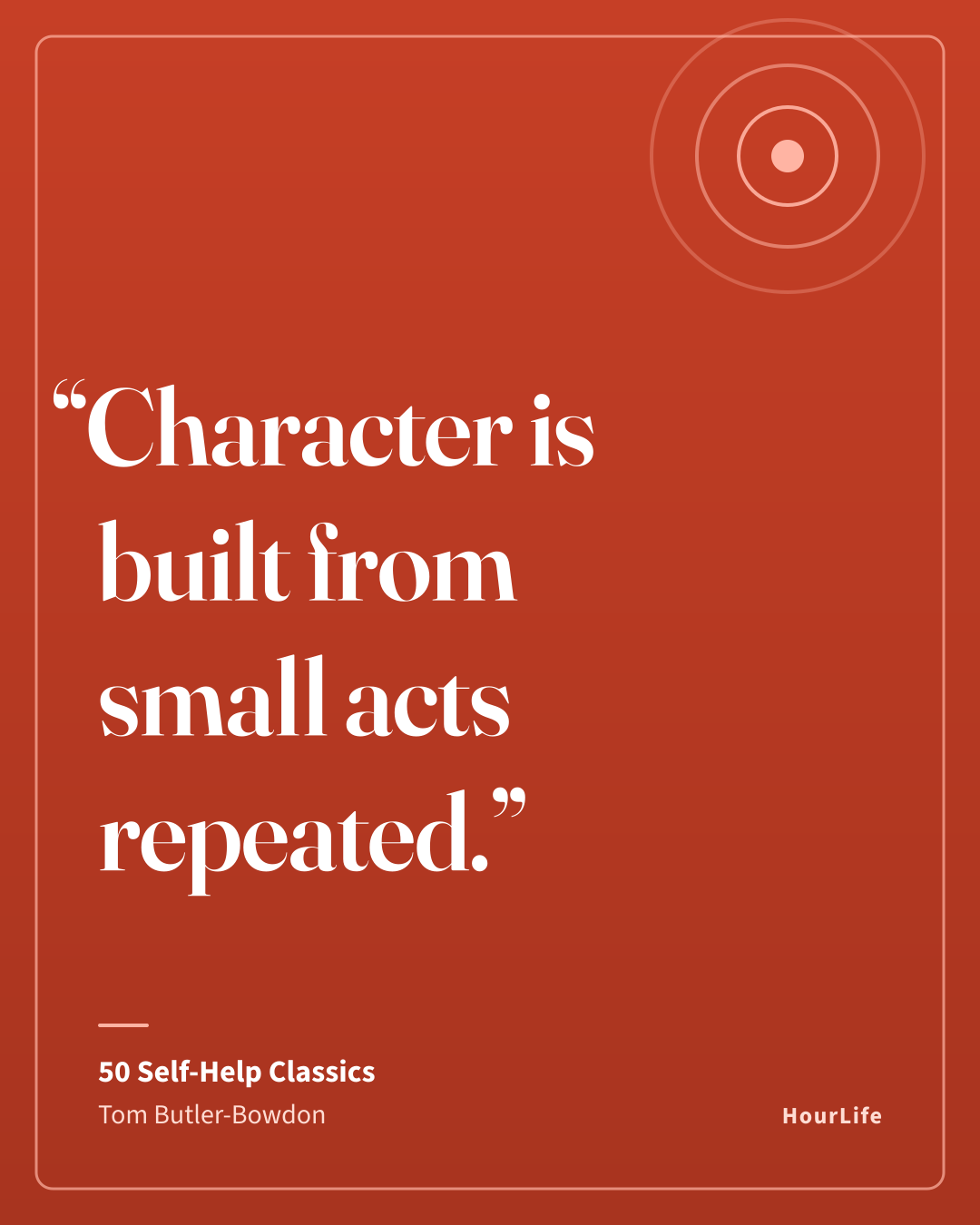
Character is built from small acts repeated.

50 Self-Help Classics Tom Butler-Bowdon HourLife takeaway

Benjamin Franklin tracked his virtues week by week, Charles Duhigg maps the loop of cue, routine and reward, and David Brooks writes about the slow work on one's own weaknesses. Change is mostly ordinary repetition.

The oldest books are still among the most useful.

50 Self-Help Classics Tom Butler-Bowdon HourLife takeaway

The Bhagavad-Gita, the Dhammapada, the Tao-te Ching and Marcus Aurelius' Meditations open the collection for a reason. Their advice on duty, desire and calm has outlasted every fashion that followed.

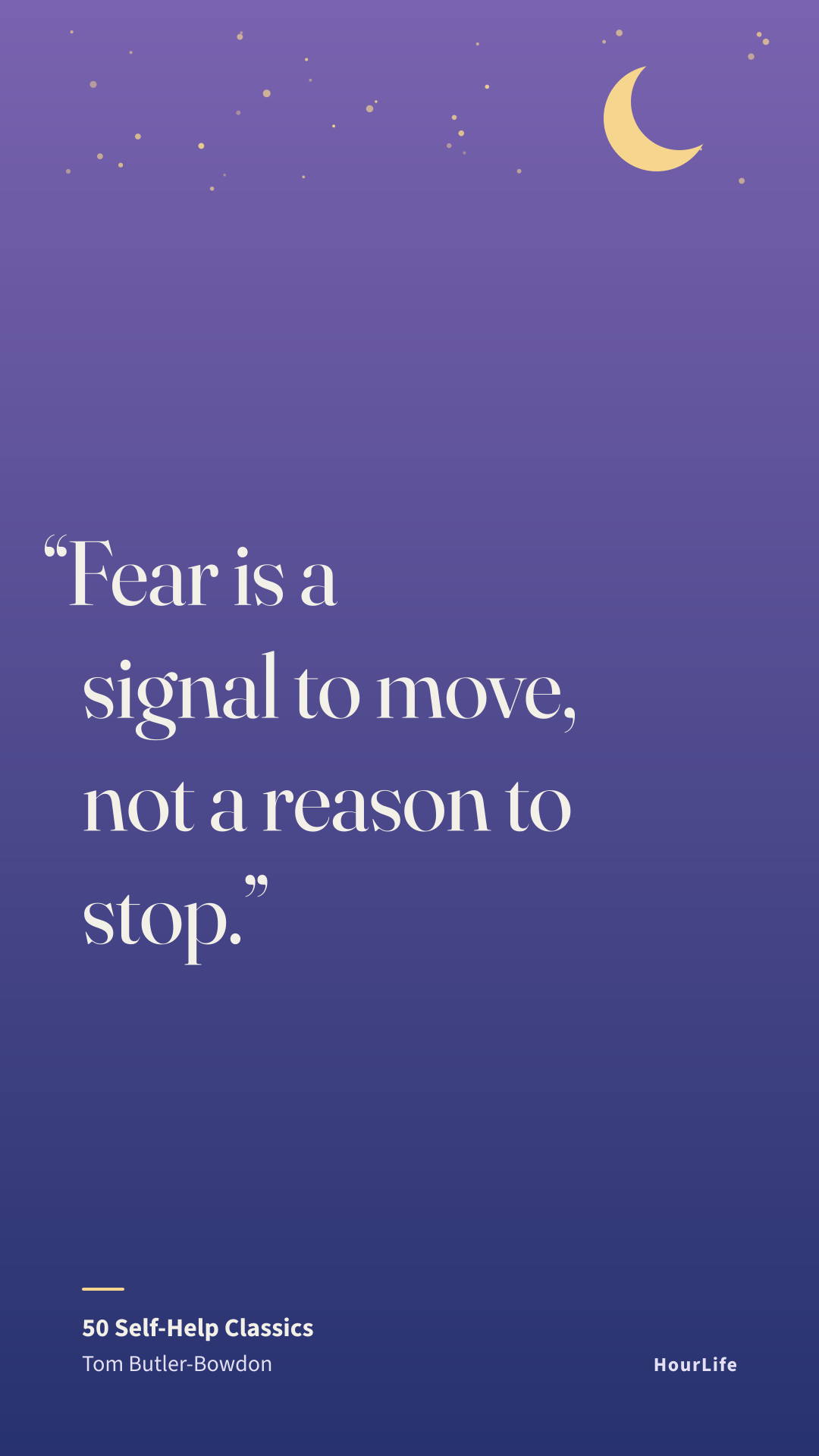
Fear is a signal to move, not a reason to stop.

50 Self-Help Classics Tom Butler-Bowdon HourLife takeaway

Susan Jeffers' title says it outright, and Brené Brown's Daring Greatly makes the case that vulnerability is where courage starts. Waiting until the fear goes means waiting for good.

Most of the value sits in a vital few.

50 Self-Help Classics Tom Butler-Bowdon HourLife takeaway

Richard Koch's 80/20 principle and Marie Kondo's tidying both ask you to find the small share of things that matter and let the rest go. The same goes for a reading list.

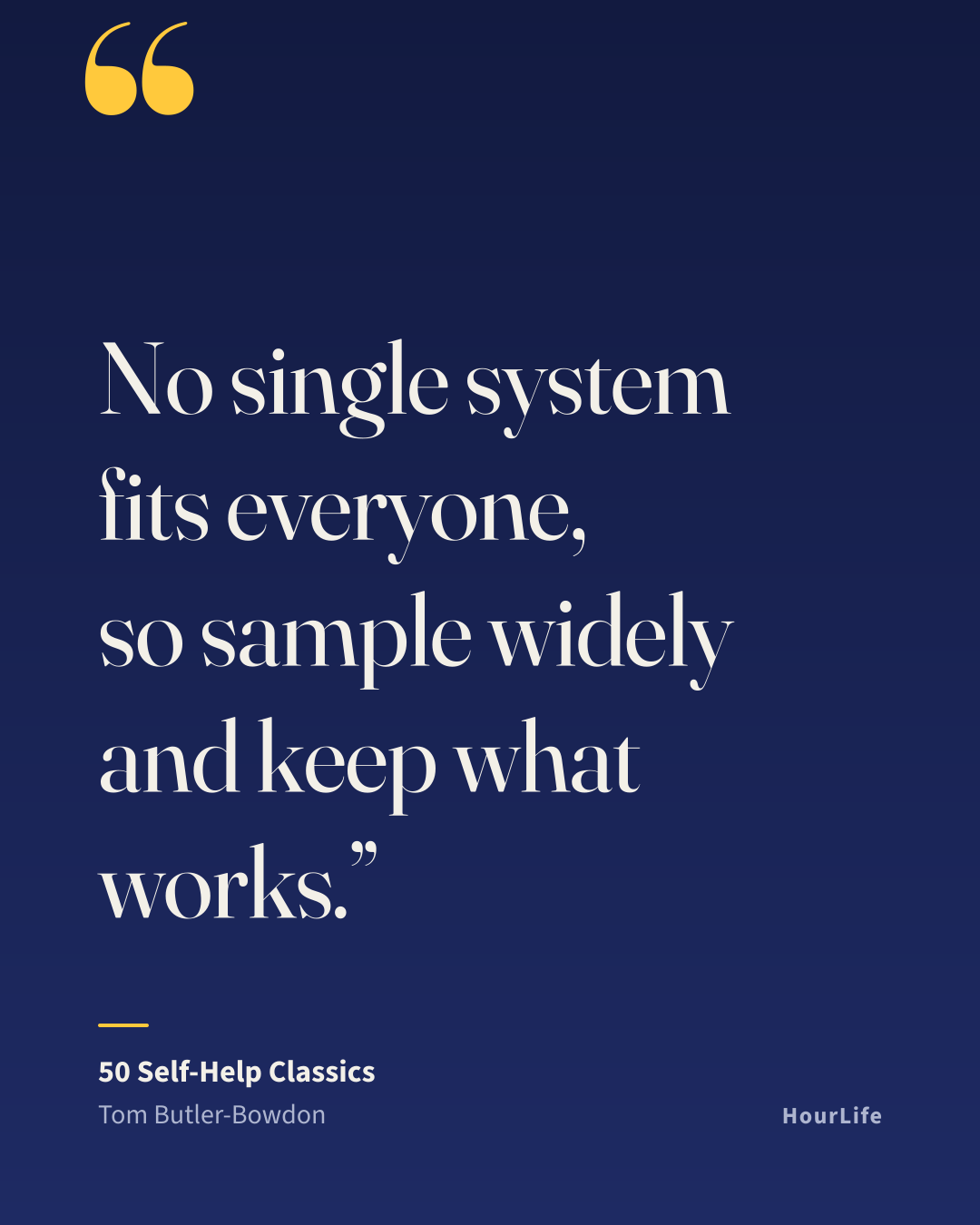
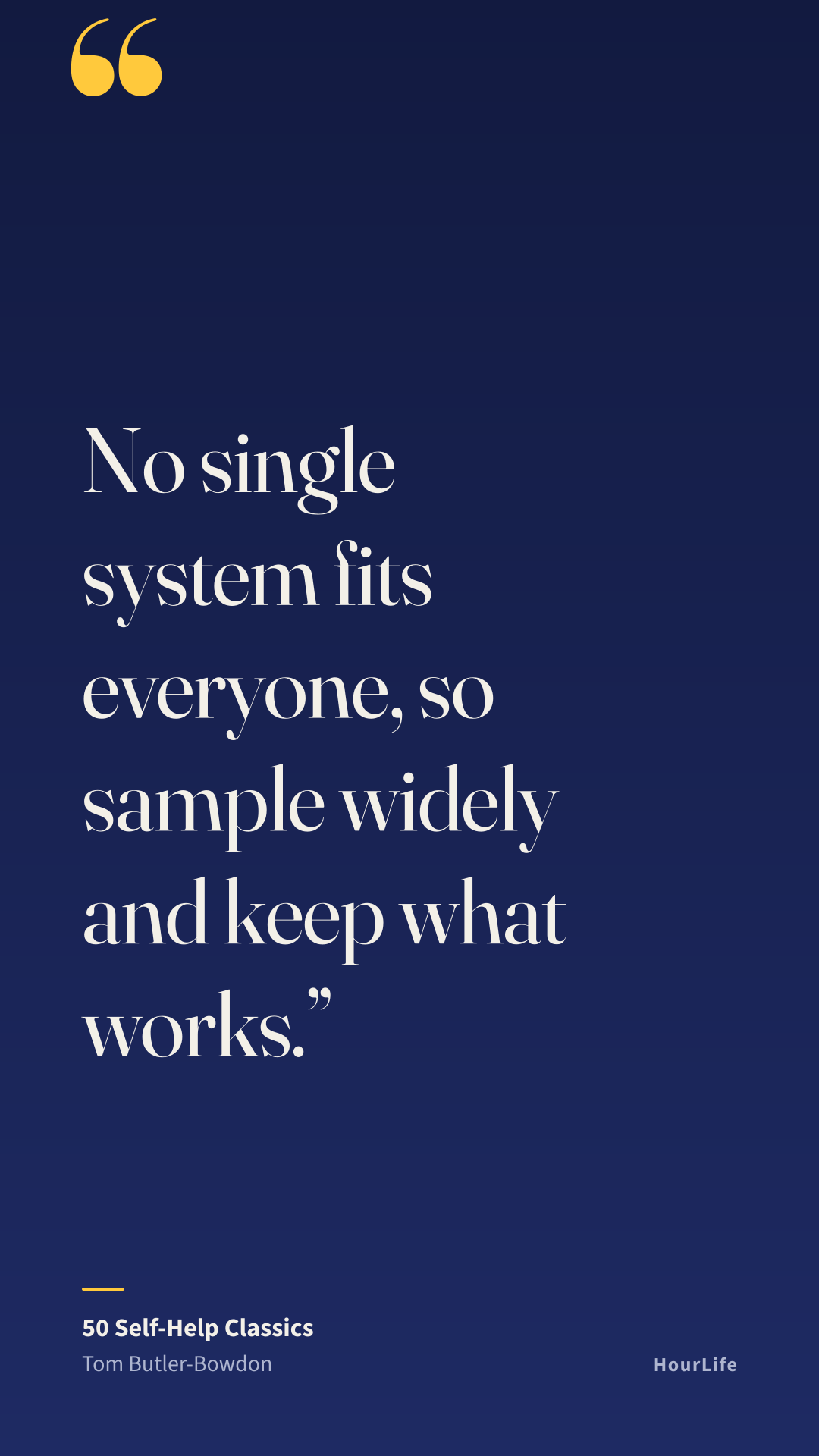
No single system fits everyone, so sample widely and keep what works.

50 Self-Help Classics Tom Butler-Bowdon HourLife takeaway

The book's own premise is that self-help is a conversation across centuries, not a single method. Read across traditions, notice which ideas you keep acting on, and drop the rest without guilt.

Keep this going in the app.

HourLife turns these ideas into a daily system — goals, habits, focus, and reflection in one private place.