Two views are both true: we need to grow, and we are already free.
The developmental view works on the problem; the fruitional view relates to the experience as it is. Tift does not choose between them. Ask which one this moment needs.
8 memorable lines from Already Free: Buddhism Meets Psychotherapy on the Path of Liberation by Bruce Tift, each with the idea behind it.
As an Amazon Associate, HourLife earns from qualifying purchases.
Lines labelled “HourLife takeaway” are our wording of the book’s ideas and may paraphrase it. Only lines in quotation marks are the author’s own words, with where they appear. Check the book for exact wording before you quote it. Spot an error?
Two views are both true: we need to grow, and we are already free.
The developmental view works on the problem; the fruitional view relates to the experience as it is. Tift does not choose between them. Ask which one this moment needs.
Much of what we call neurosis is an intelligent strategy for not feeling something.
Patterns that look like problems often began as smart adaptations to what was overwhelming in childhood. Respect the strategy, then notice what it protects you from feeling.
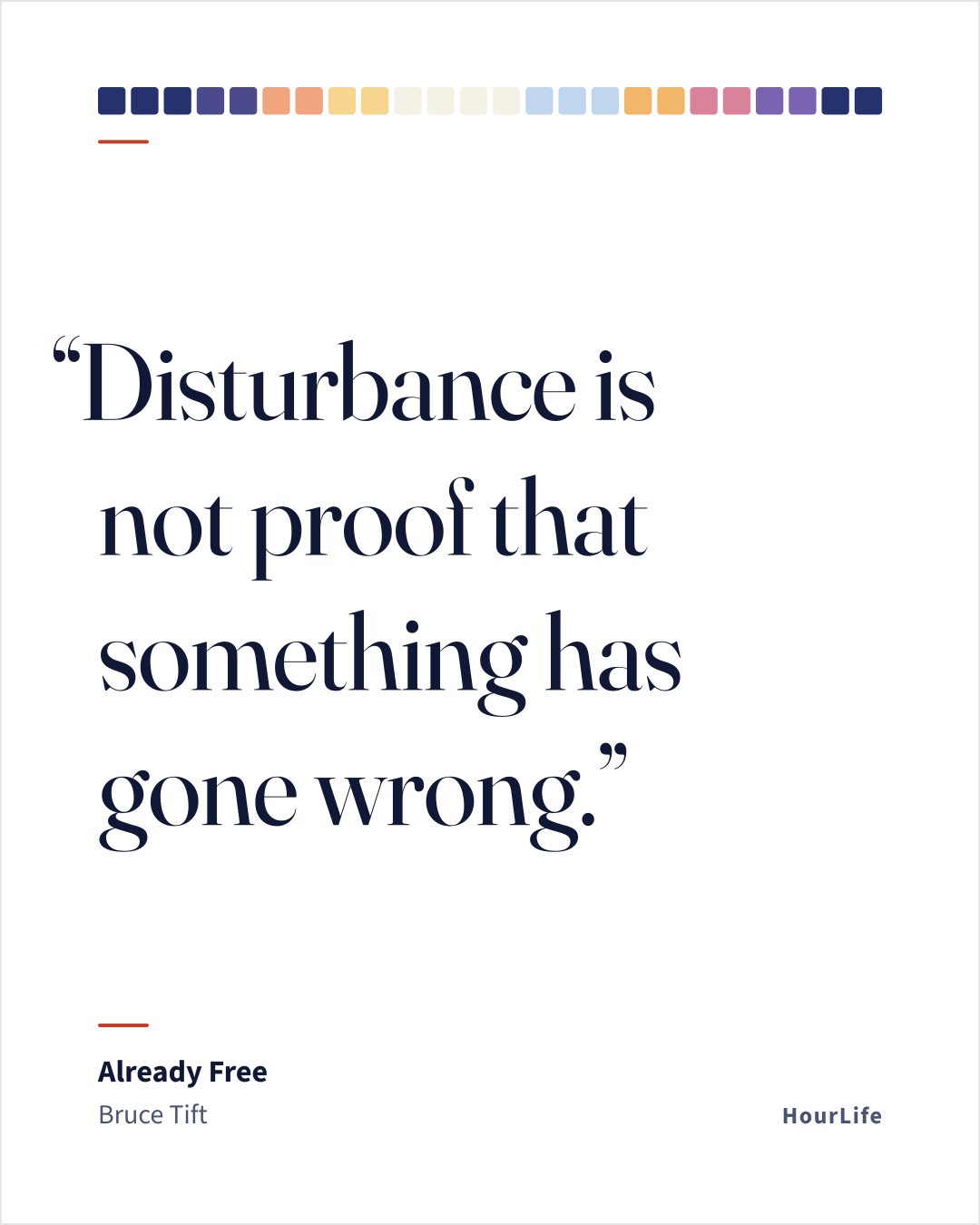
Disturbance is not proof that something has gone wrong.
From the fruitional view, anxiety, loneliness and uncertainty are part of being alive in a body. Treating them as emergencies adds a second layer of suffering on top of the first.
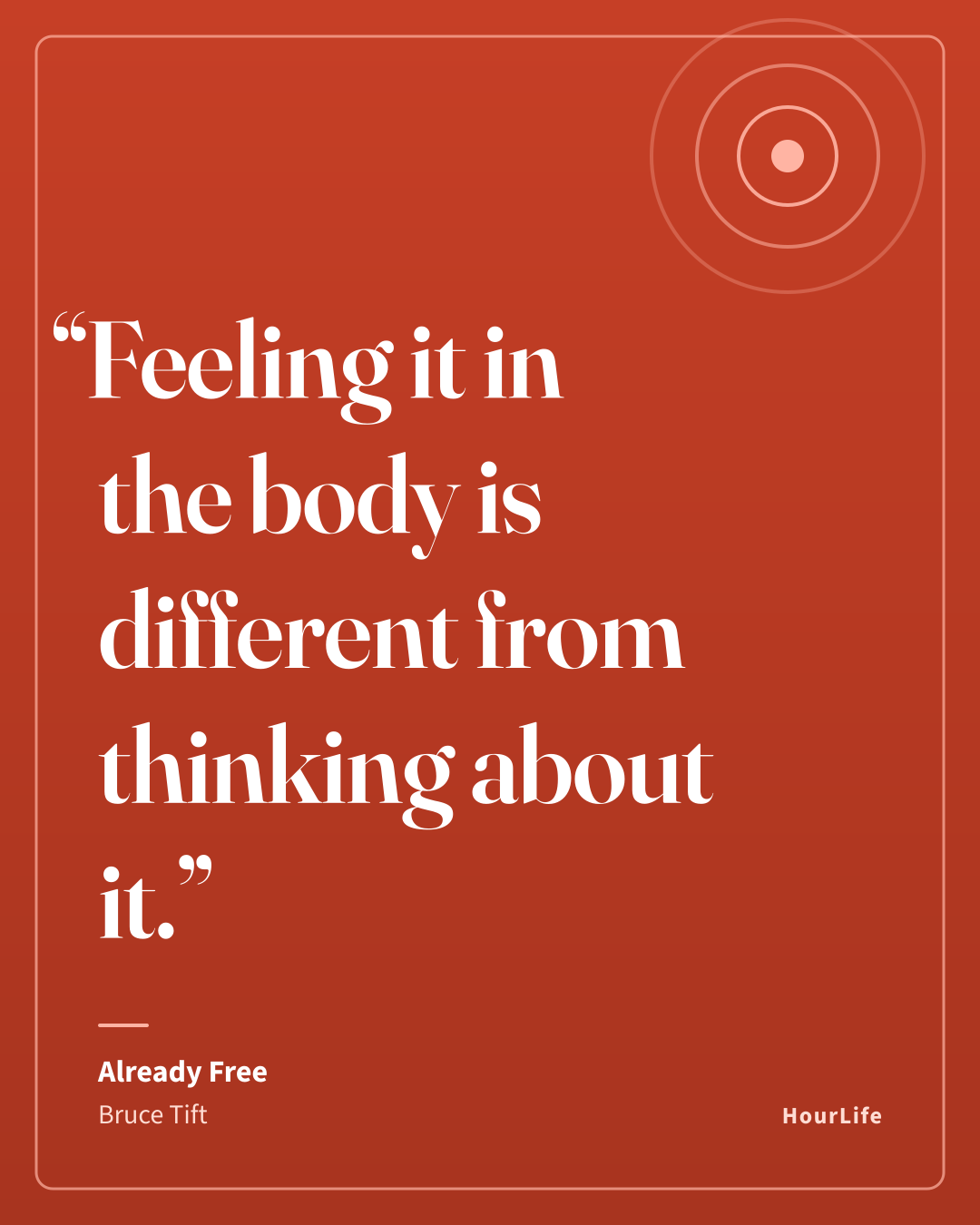
Feeling it in the body is different from thinking about it.
Tift keeps pointing to raw sensation: tightness, heat, hollowness. Staying with the sensation without the storyline is what lets it move.
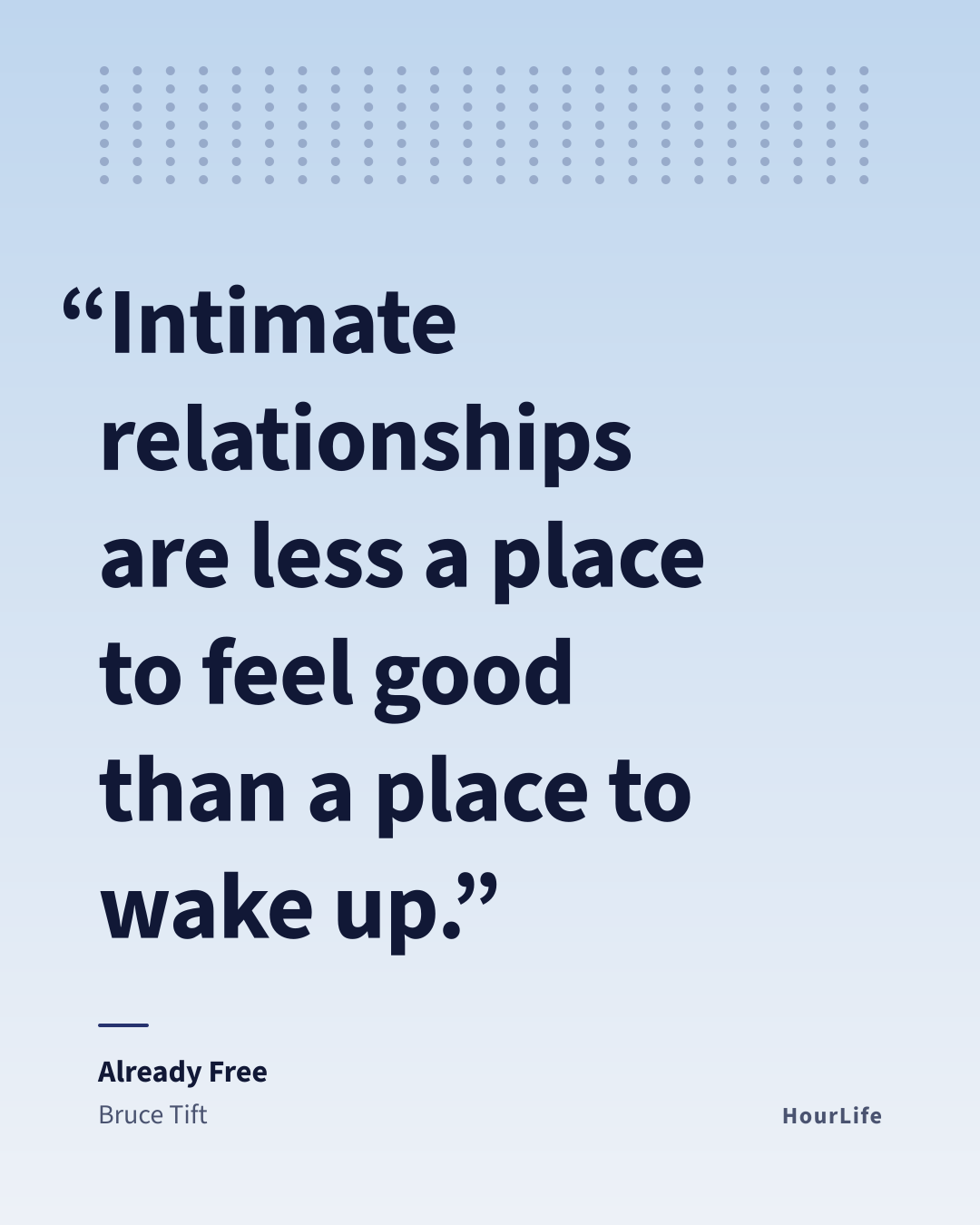
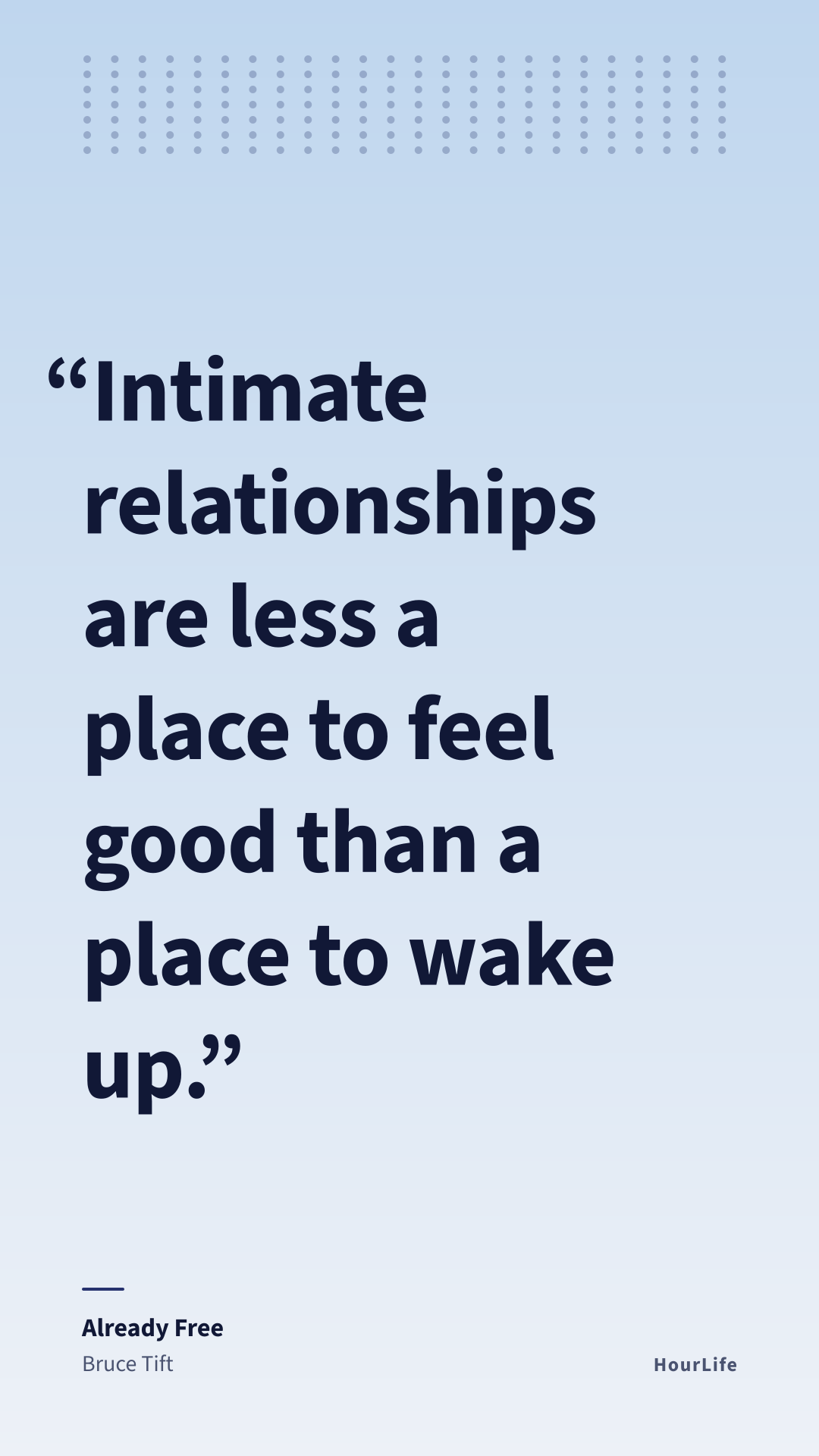
Intimate relationships are less a place to feel good than a place to wake up.
A partner will inevitably touch your oldest vulnerabilities. Tift suggests treating that friction as the path rather than as proof you chose wrong.
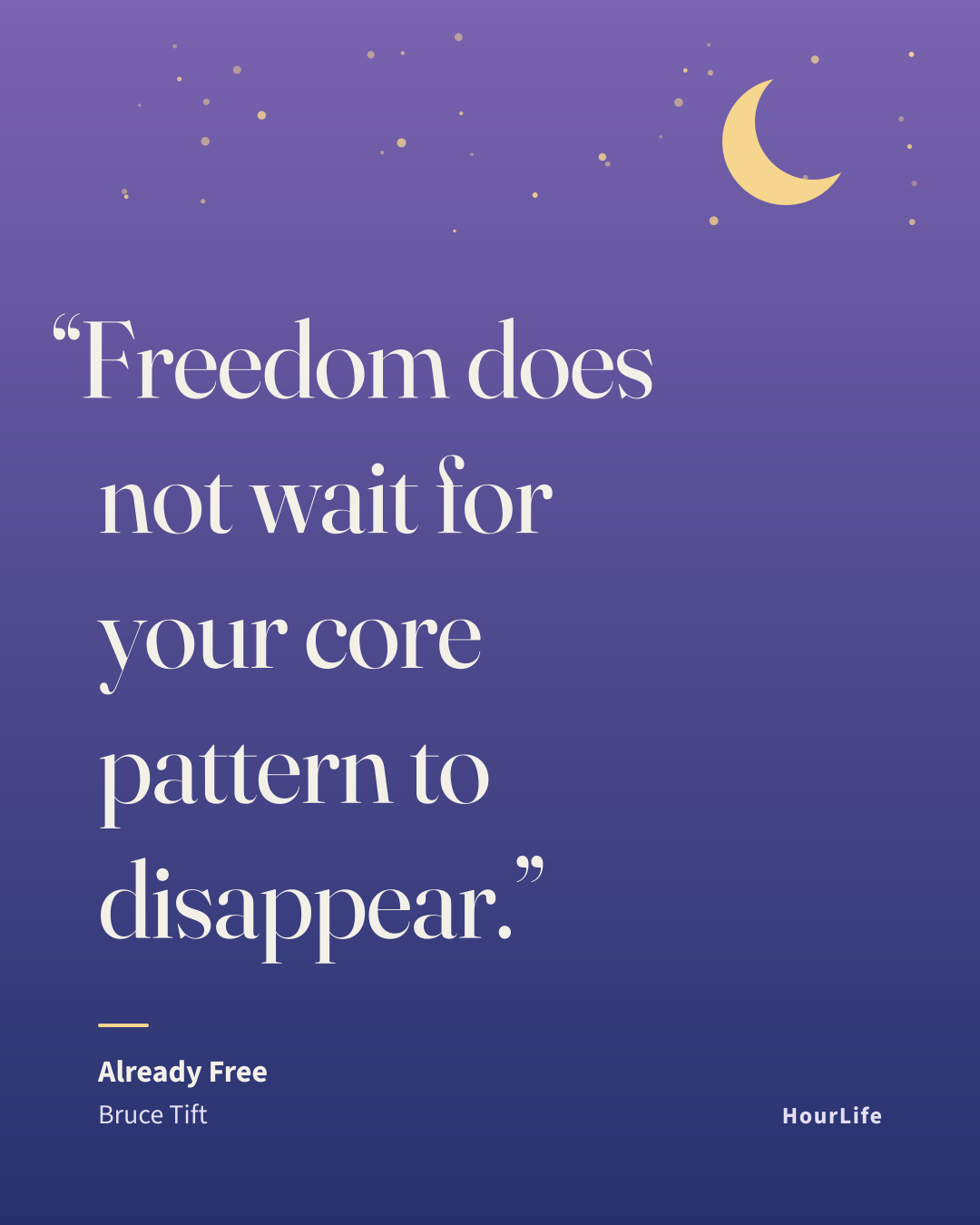
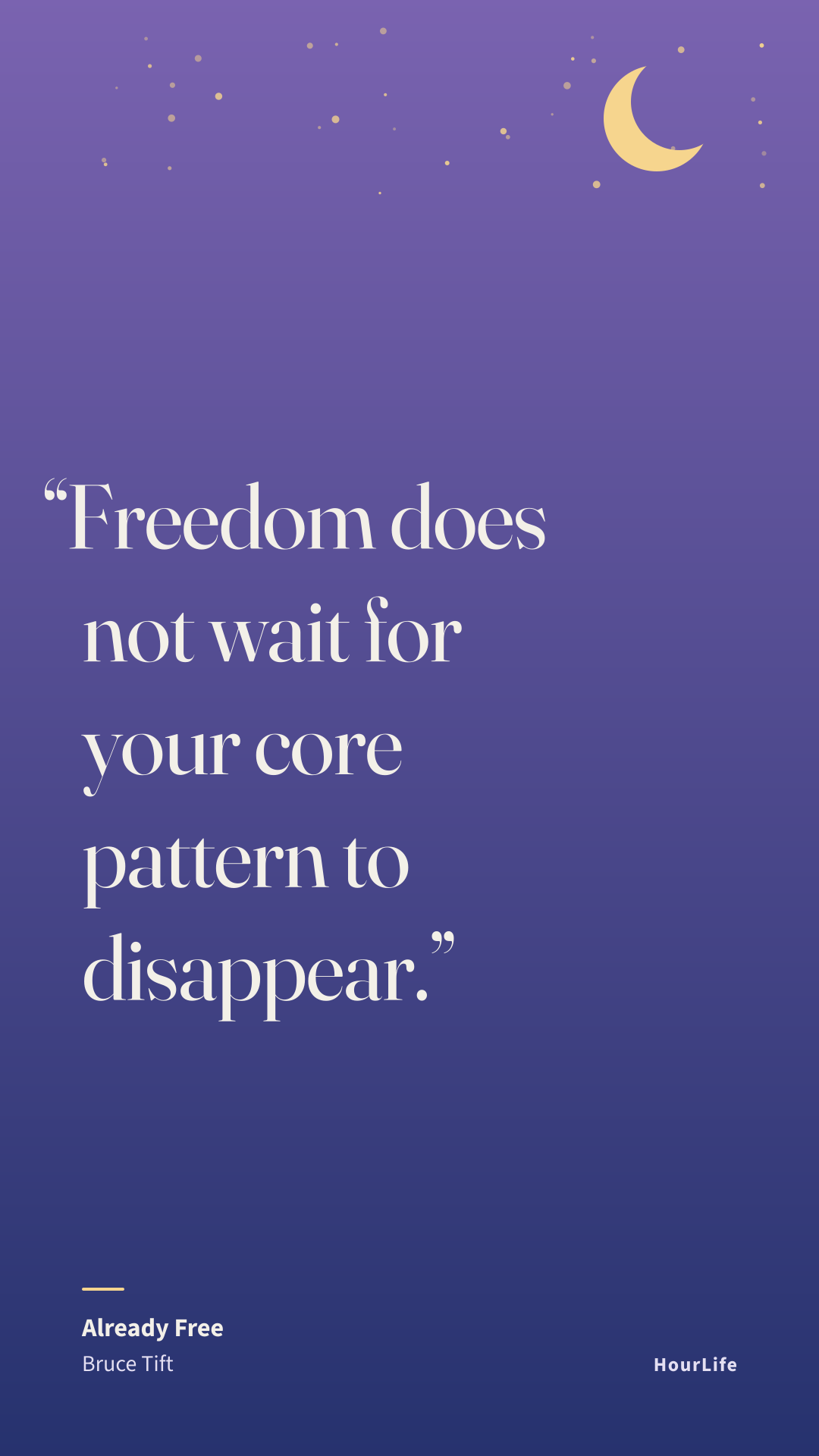
Freedom does not wait for your core pattern to disappear.
Your deepest reactions may never fully go away. Liberation is being able to be present with them, not having finally fixed them.
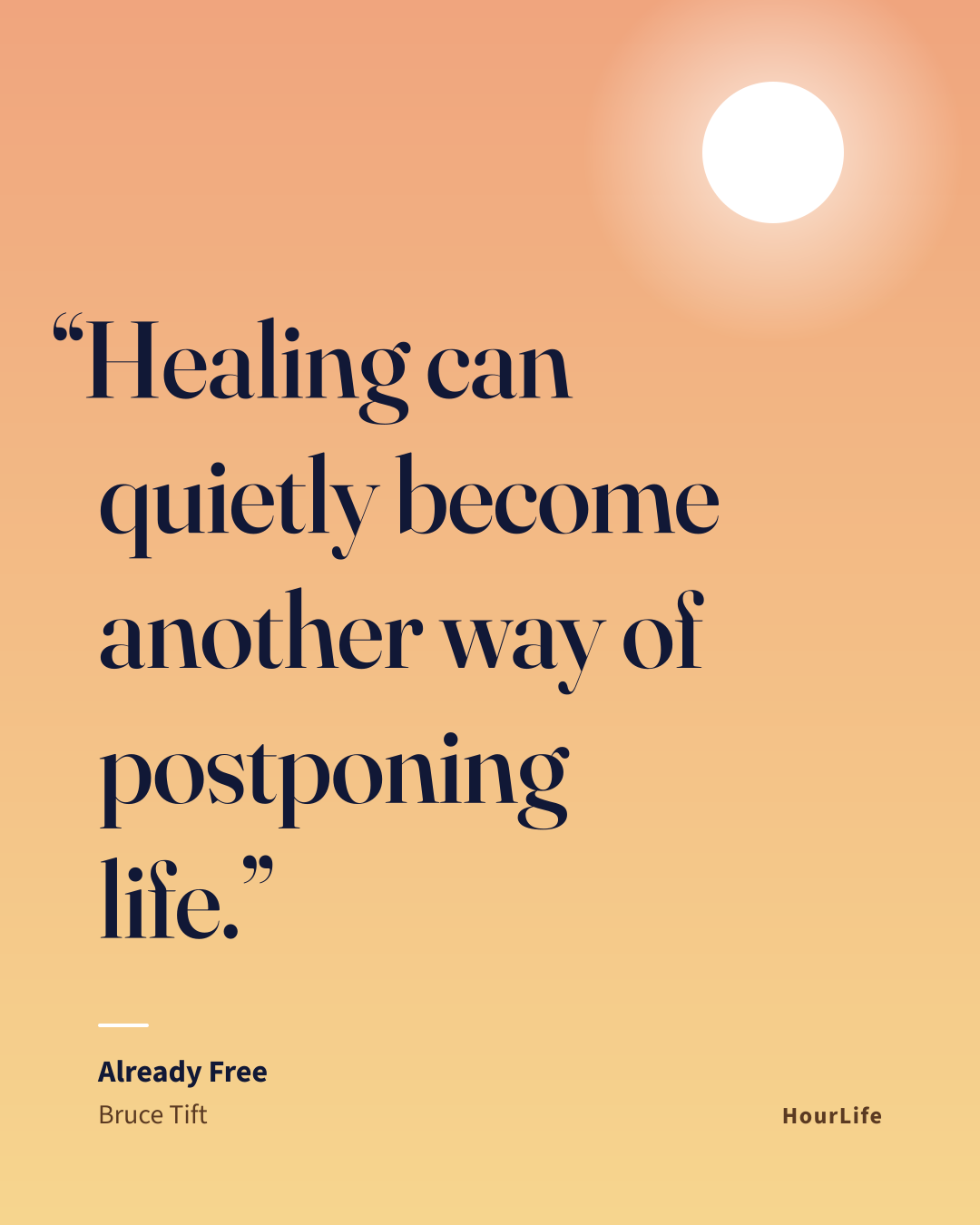
Healing can quietly become another way of postponing life.
If you wait to be fully healed before you show up, you never show up. The fruitional view invites presence now, with the problem still here.
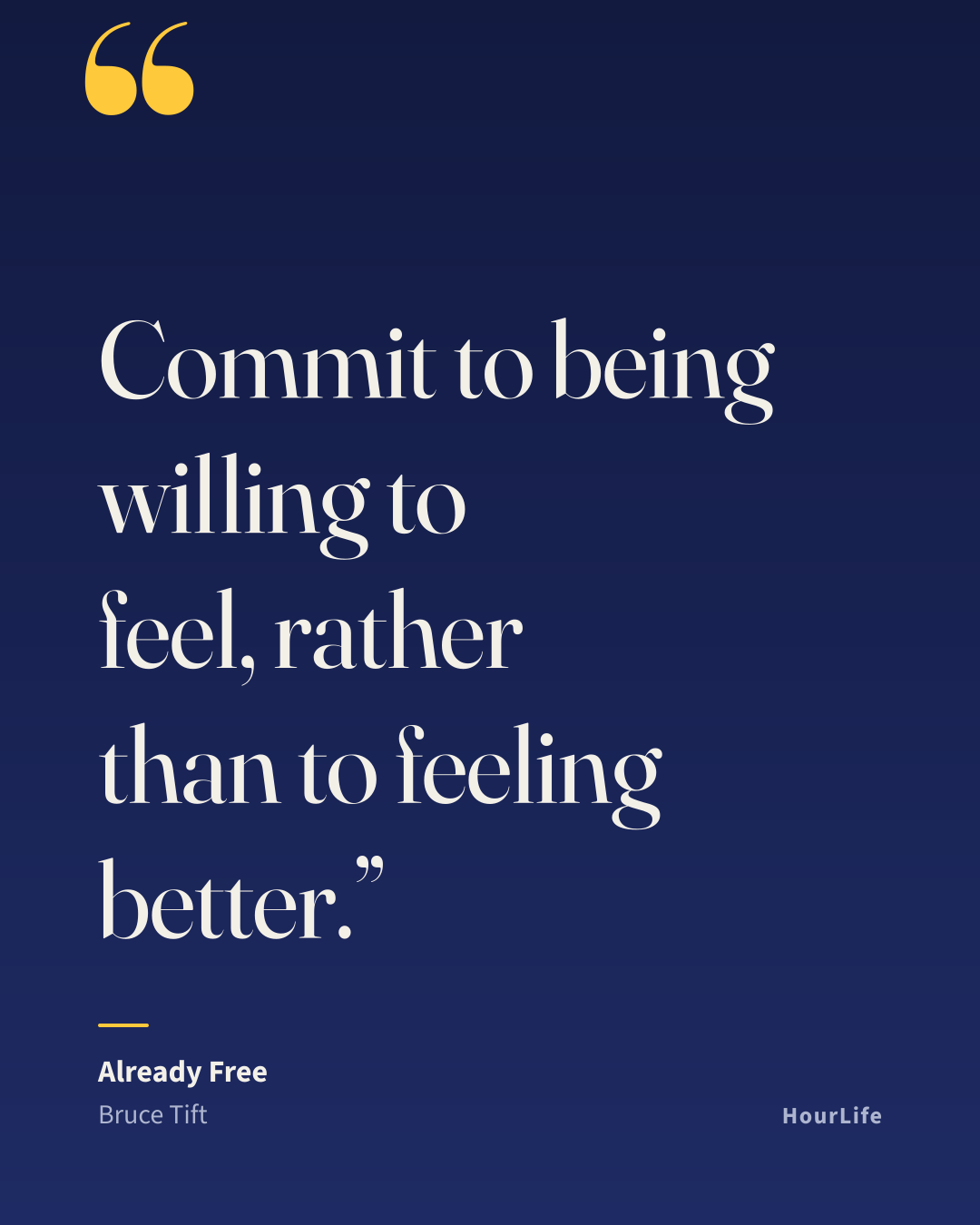
Commit to being willing to feel, rather than to feeling better.
Willingness is something you can practise; feeling better is not under your control. Ironically, the willingness is what often brings the relief.
HourLife turns these ideas into a daily system — goals, habits, focus, and reflection in one private place.