Keep this author quotes for later
Sign in to save

Alan Gordon

The most-loved lines from Alan Gordon, drawn from 1 book in the library.

Lines labelled “HourLife takeaway” are our wording of the book’s ideas and may paraphrase it. Only lines in quotation marks are the author’s own words, with where they appear. Check the book for exact wording before you quote it. Spot an error?

Chronic pain can be real pain with no damage behind it: the brain’s alarm, stuck on.

The Way Out Alan Gordon and Alon Ziv HourLife takeaway

Gordon calls this neuroplastic pain. Pain is a danger signal the brain sends, and most of the time it tracks an injury. Sometimes the brain learns the pain and keeps sending it after the tissues have healed, or when there was never an injury at all. The pain is just as real either way.


Fear is the fuel: the more the brain worries about the pain, the louder it plays it.

The Way Out Alan Gordon and Alon Ziv HourLife takeaway

The book describes a pain-fear cycle. Pain makes you afraid, fear tells the brain you are in danger, and a brain in danger mode turns the pain up. Breaking the cycle starts with the fear, because that is the part you can work on directly.

Watch the sensation with curiosity instead of dread, and the alarm starts to quiet.

The Way Out Alan Gordon and Alon Ziv HourLife takeaway

Somatic tracking is the core skill of the method. For a few minutes you pay attention to the pain itself, noticing where it is and what it feels like, while reminding yourself that it is safe to feel. The aim is to send the brain a message of safety from the very place it expects danger.

Your own evidence persuades your brain more than anyone’s reassurance.

The Way Out Alan Gordon and Alon Ziv HourLife takeaway

Gordon asks readers to gather clues that their pain is neuroplastic: pain that came on without an injury, comes and goes, moves around, or flares with stress rather than movement. A list of real examples from your own life is harder for a worried brain to dismiss than a general promise.

Don’t try to make the pain stop while you watch it. Trying tells the brain it is dangerous.

The Way Out Alan Gordon and Alon Ziv HourLife takeaway

The book calls this outcome independence. If every tracking session is a test of whether the pain went away, the brain stays on guard. Watching without needing a result is what makes the safety message believable.

Feeling good is part of the treatment, not a reward for finishing it.

The Way Out Alan Gordon and Alon Ziv HourLife takeaway

Pleasant sensations and emotions are signals of safety too. Gordon encourages readers to notice warmth, comfort and enjoyment on purpose, because a brain that feels safe has less reason to sound the alarm.

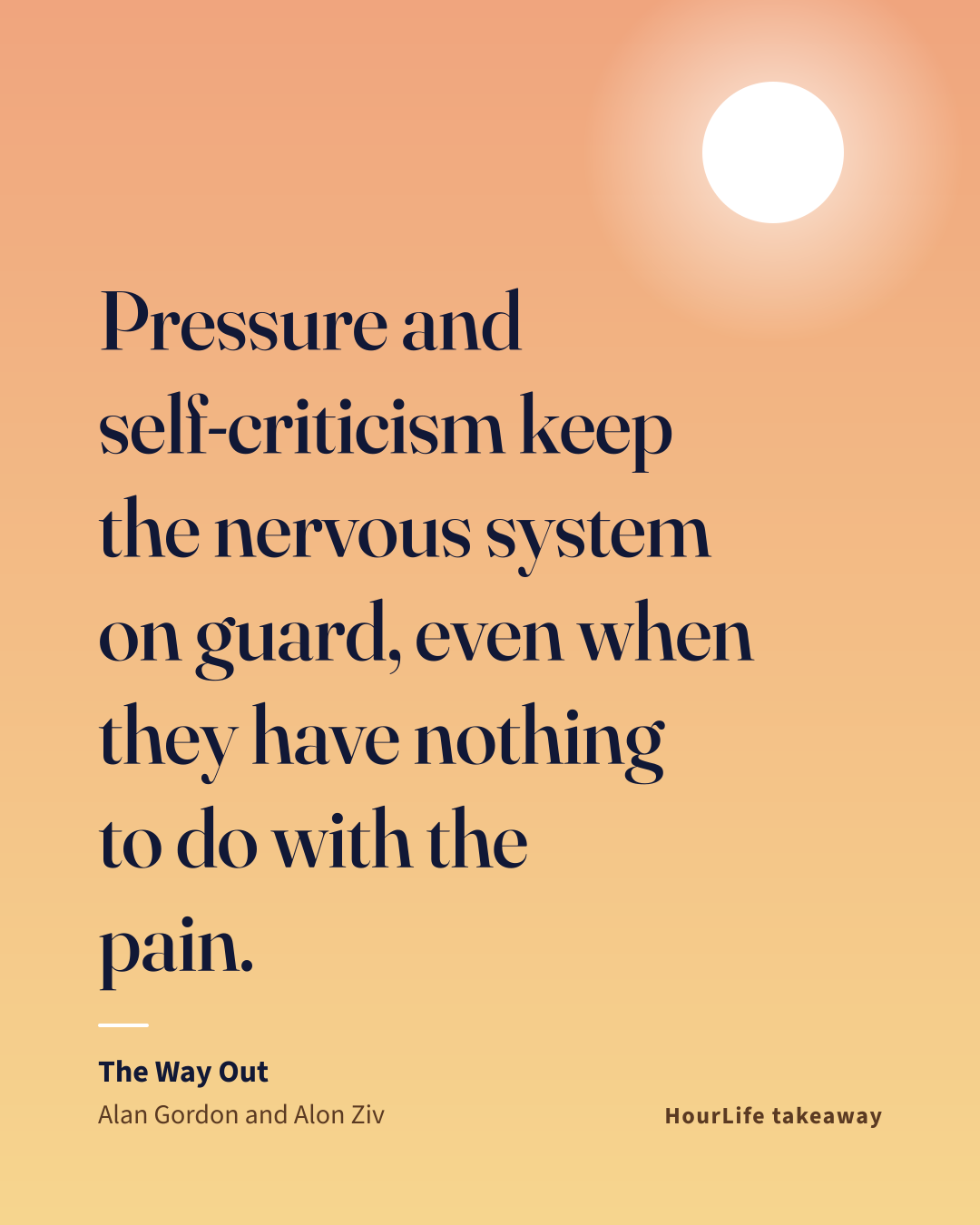
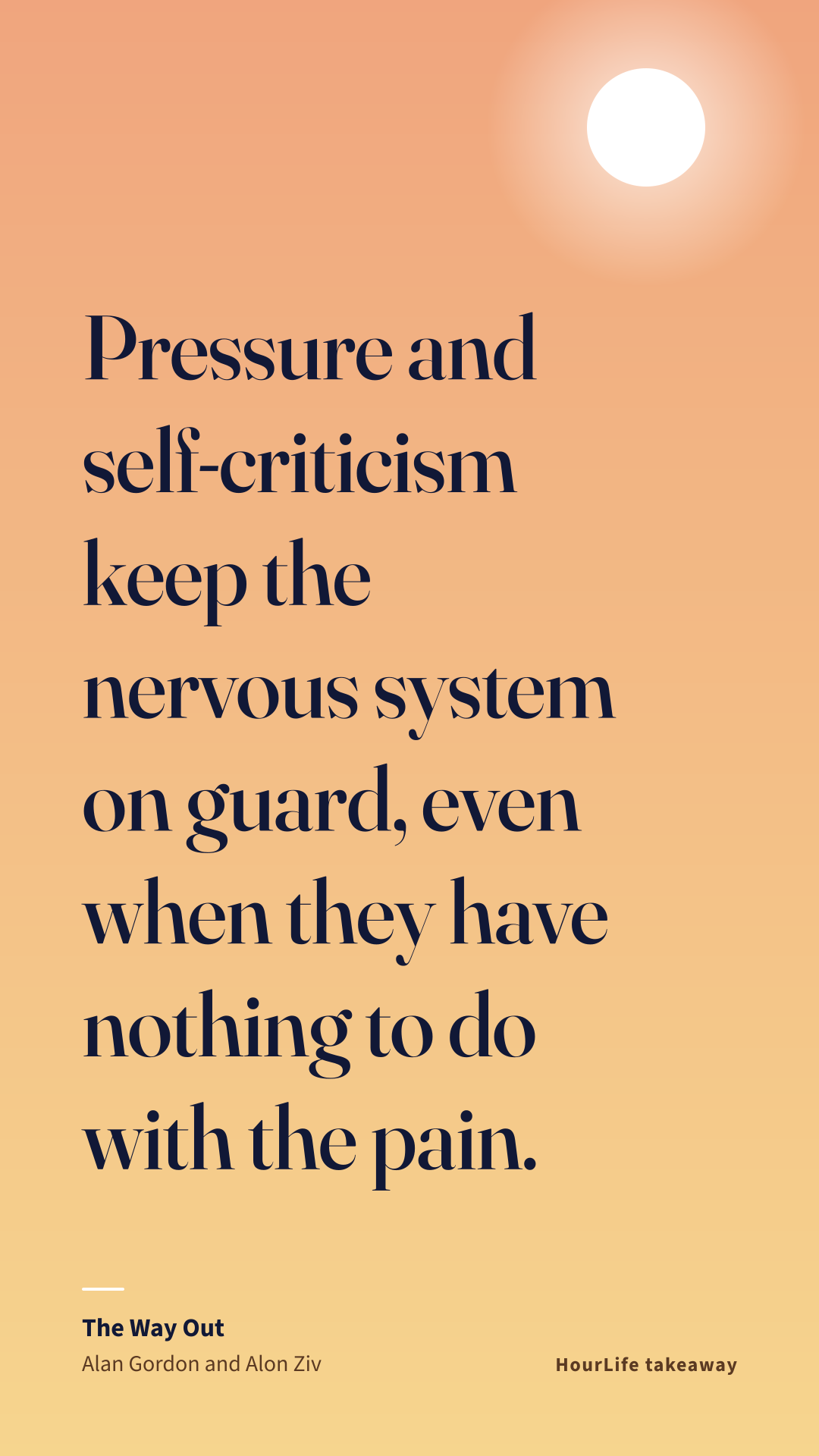
Pressure and self-criticism keep the nervous system on guard, even when they have nothing to do with the pain.

The Way Out Alan Gordon and Alon Ziv HourLife takeaway

The danger the brain reacts to is not only physical. Constant worry, harsh self-talk and pushing yourself to be perfect all tell the body that something is wrong. Easing those habits lowers the overall level of threat the alarm is responding to.

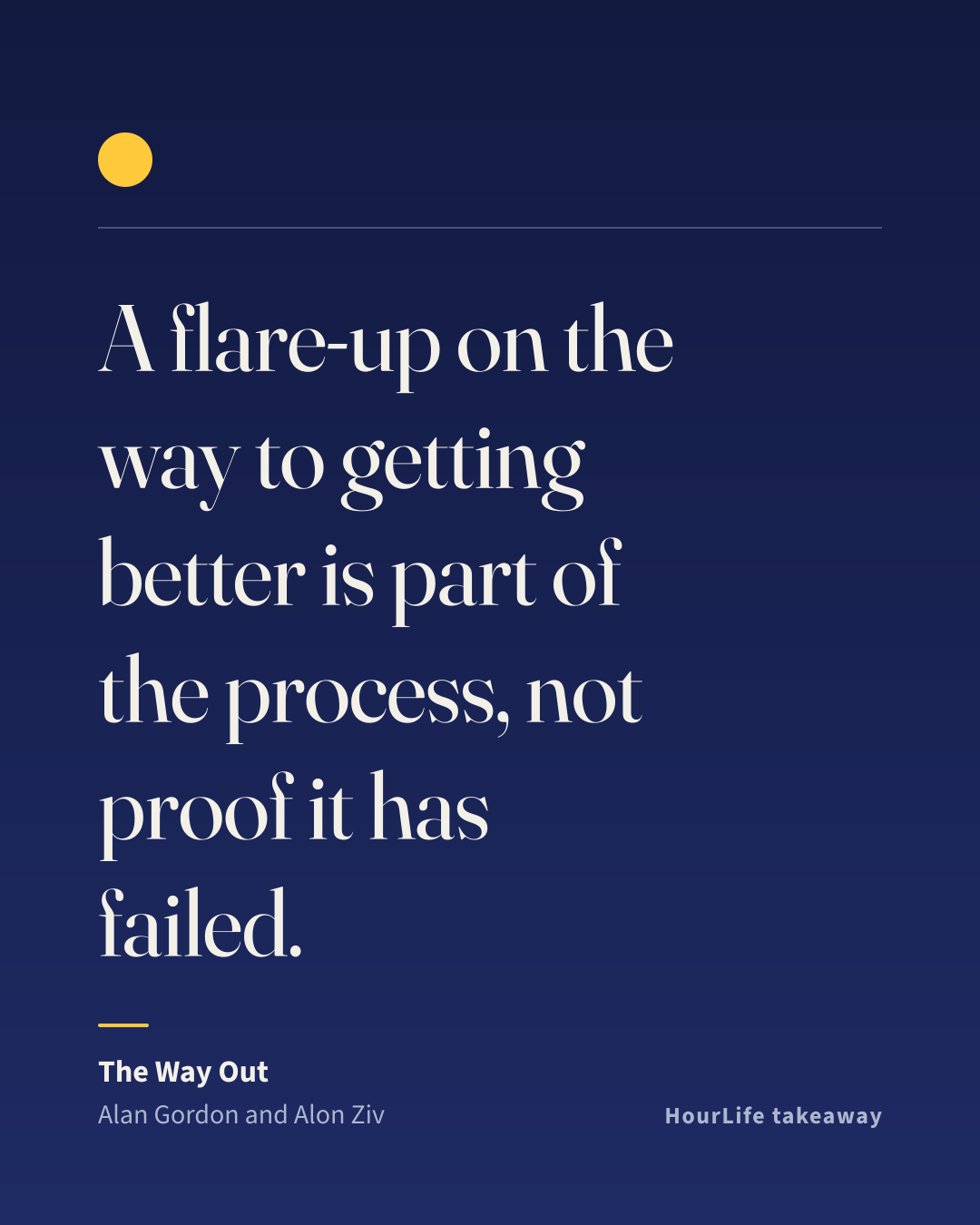
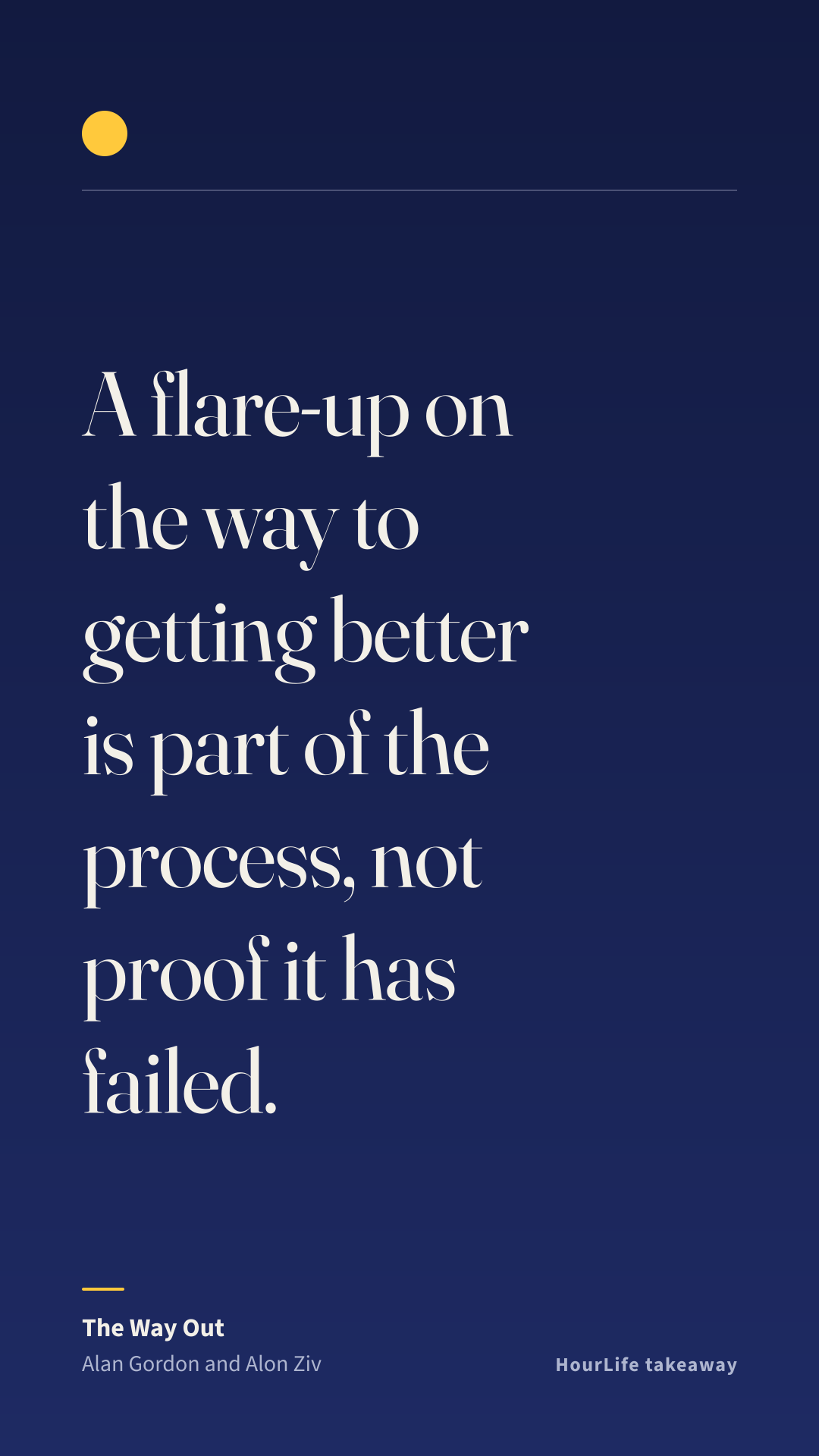
A flare-up on the way to getting better is part of the process, not proof it has failed.

The Way Out Alan Gordon and Alon Ziv HourLife takeaway

Recovery rarely runs in a straight line. When the pain returns after a good stretch, the book's advice is to treat it with the same calm you practise in tracking, rather than as a sign that the old fear was right all along.

Rule out the fire before you question the alarm.

The Way Out Alan Gordon and Alon Ziv HourLife takeaway

The approach is meant for pain that a doctor has examined and found no structural cause to explain. In the Boulder trial, everyone had a medical evaluation first. Getting checked is the first step, not a detour.

Keep this going in the app.

HourLife turns these ideas into a daily system — goals, habits, focus, and reflection in one private place.