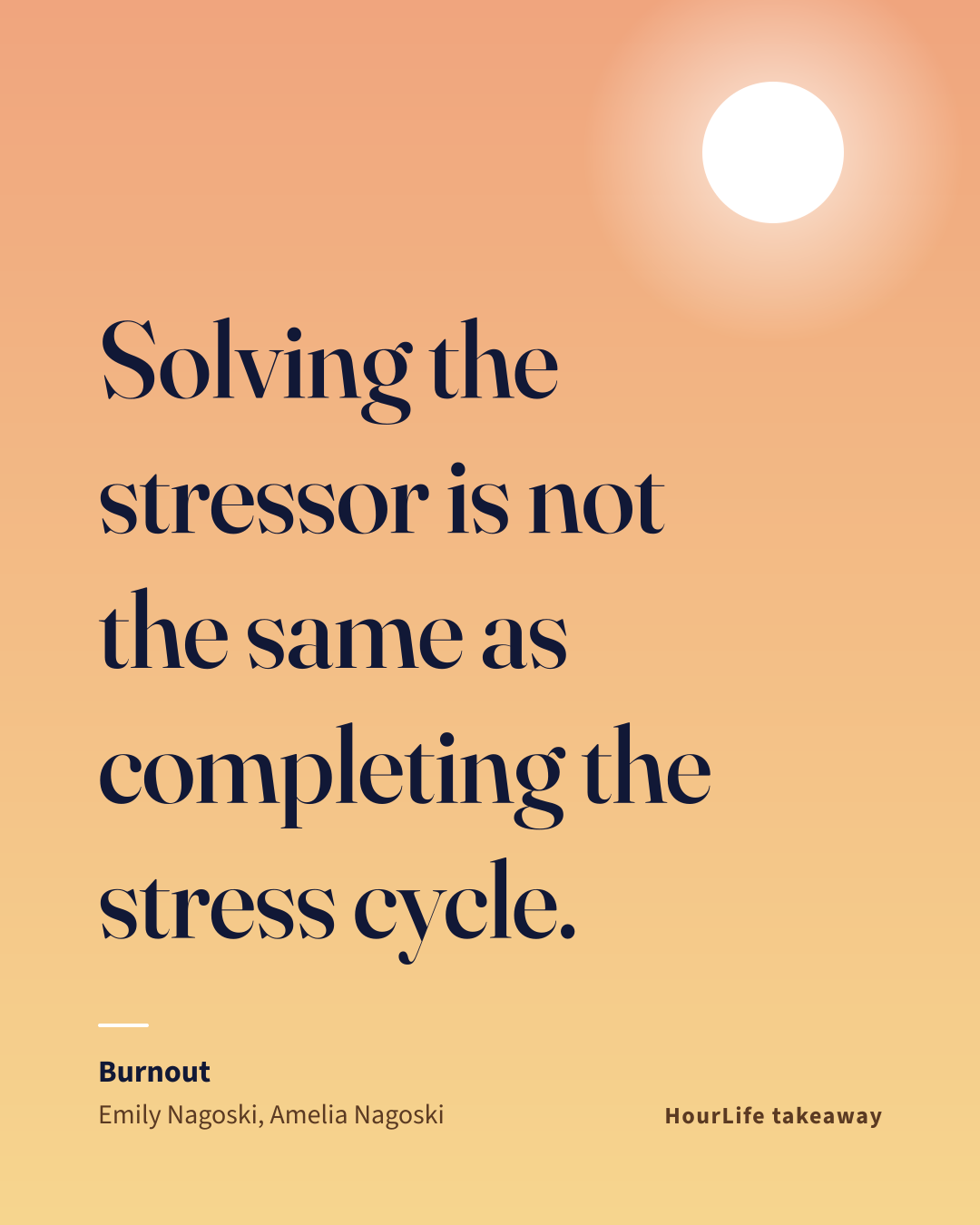
Solving the stressor is not the same as completing the stress cycle.
The book's core distinction: the inbox can be empty while the body is still running from danger.
The most-loved lines from Amelia Nagoski, drawn from 1 book in the library.
Lines labelled “HourLife takeaway” are our wording of the book’s ideas and may paraphrase it. Only lines in quotation marks are the author’s own words, with where they appear. Check the book for exact wording before you quote it. Spot an error?
Solving the stressor is not the same as completing the stress cycle.
The book's core distinction: the inbox can be empty while the body is still running from danger.
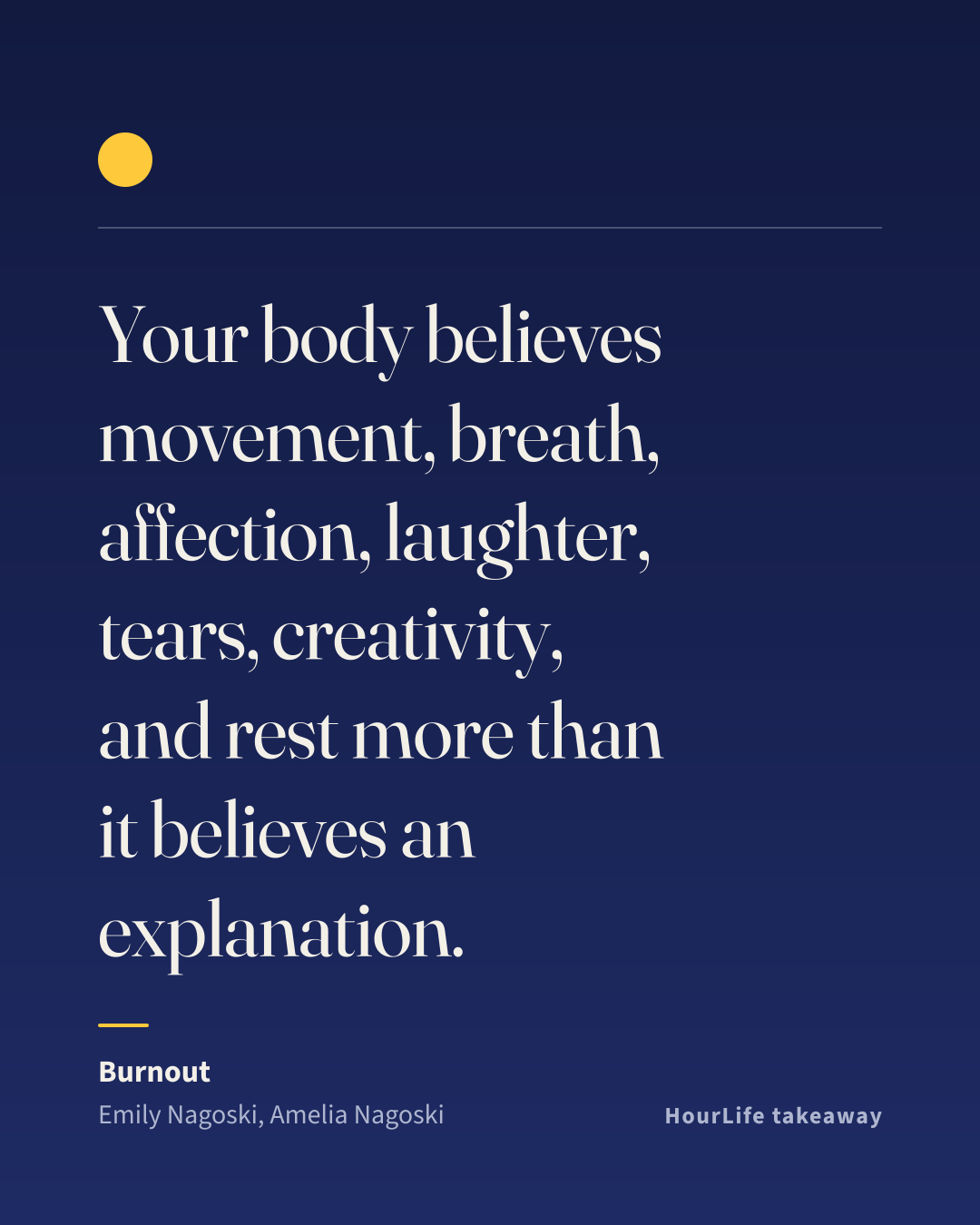
Your body believes movement, breath, affection, laughter, tears, creativity, and rest more than it believes an explanation.
Burnout treats recovery as embodied evidence of safety, not a productivity mindset.
Exhaustion becomes burnout when depletion meets isolation and a world that keeps demanding more care than it gives back.
The Nagoskis connect personal recovery to the social conditions that make recovery difficult.
Meaning is not supposed to cost your body its ability to feel alive.
Purpose helps people endure hard things, but it cannot replace rest, boundaries, or support.
Human Giver Syndrome turns generosity into a one-way contract.
The book names the cultural script that asks some people to offer endless care without needs of their own.
HourLife turns these ideas into a daily system — goals, habits, focus, and reflection in one private place.