Keep this author quotes for later
Sign in to save

Annie Grace

The most-loved lines from Annie Grace, drawn from 1 book in the library.

Lines labelled “HourLife takeaway” are our wording of the book’s ideas and may paraphrase it. Only lines in quotation marks are the author’s own words, with where they appear. Check the book for exact wording before you quote it. Spot an error?

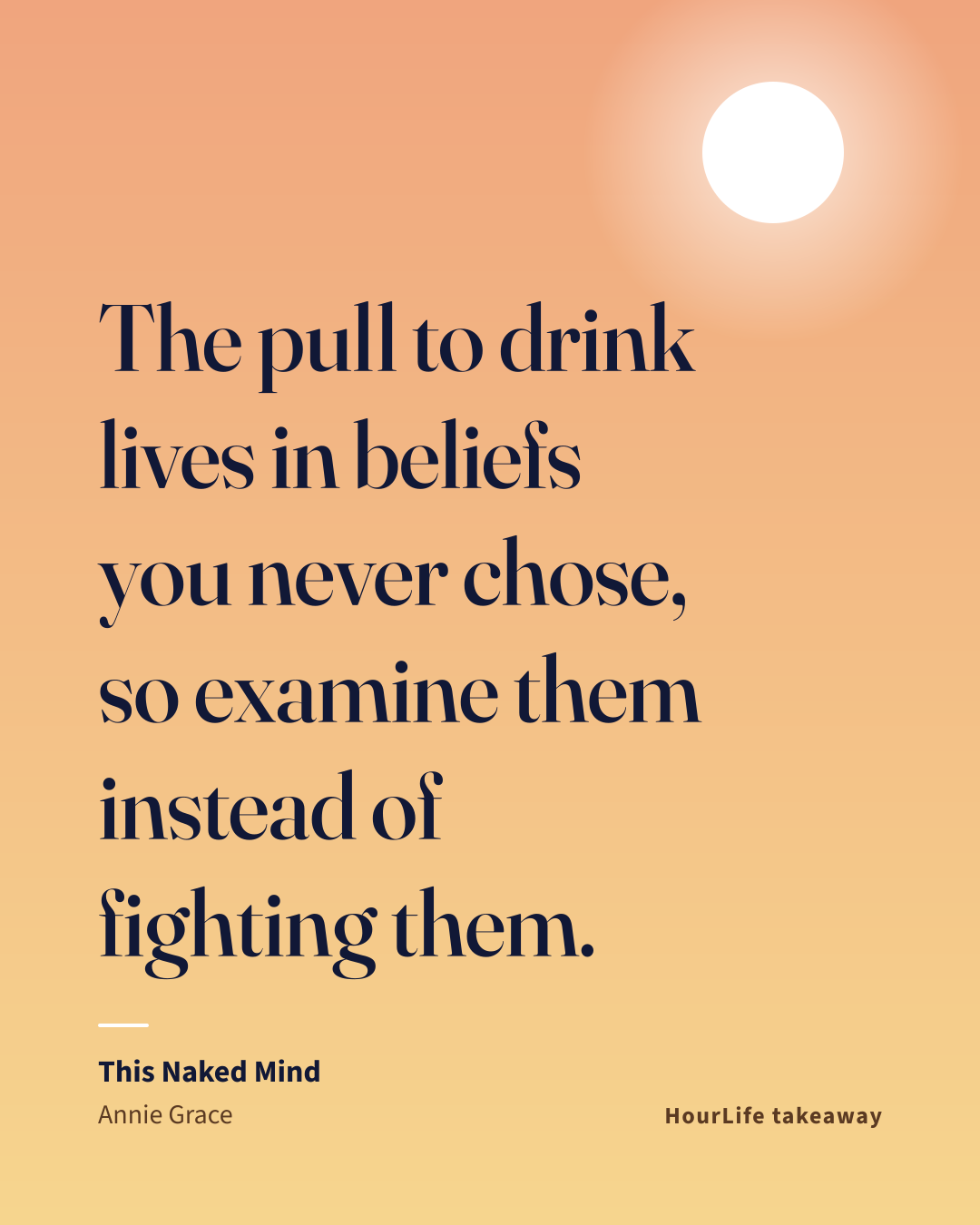
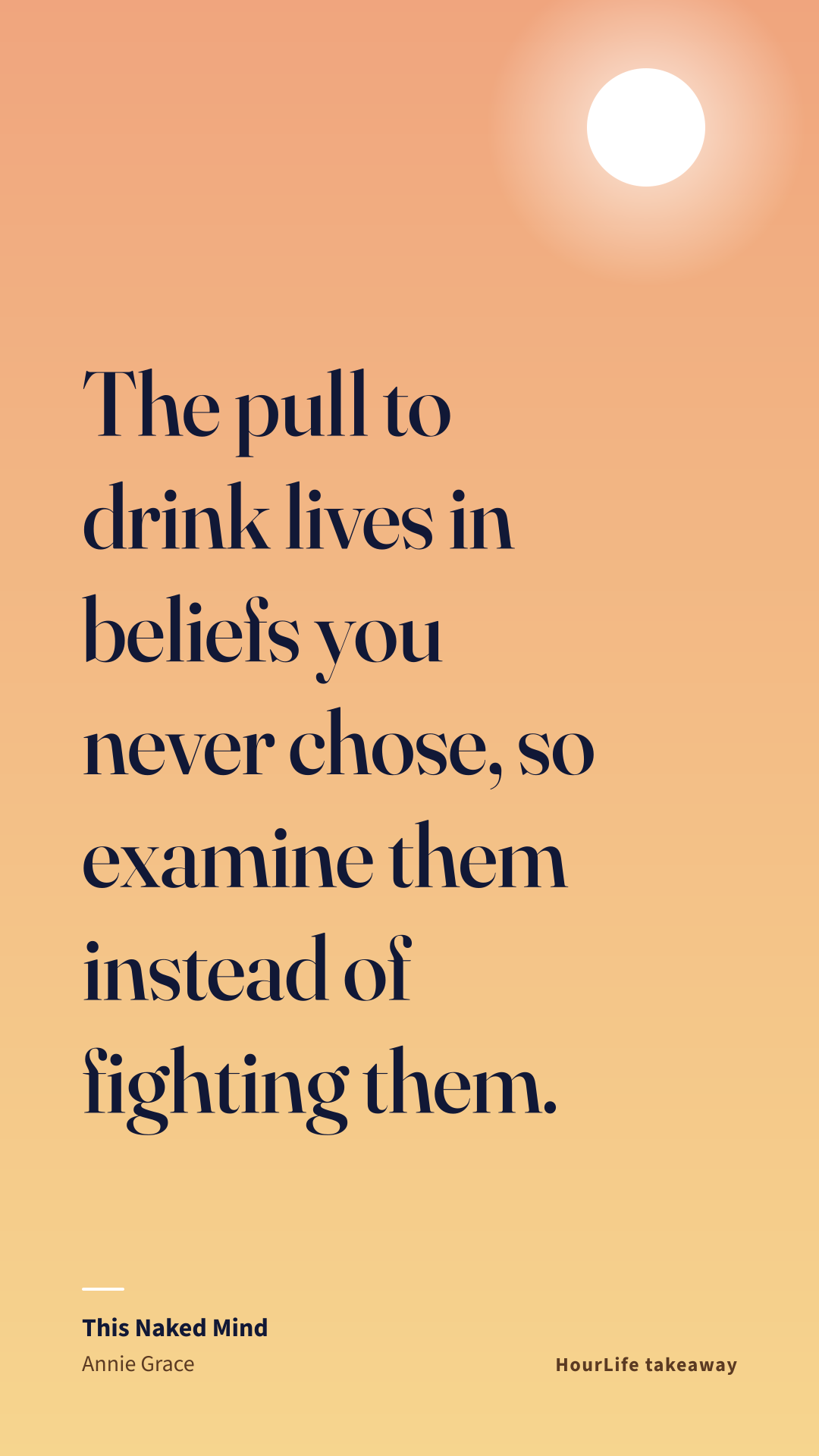
The pull to drink lives in beliefs you never chose, so examine them instead of fighting them.

This Naked Mind Annie Grace HourLife takeaway

Grace argues that most of what we think we know about alcohol was absorbed long before our first drink: from parents, films, adverts and the way adults around us behaved. Willpower fights the desire and leaves the belief untouched. Looking at the belief itself is what lets the desire fade.


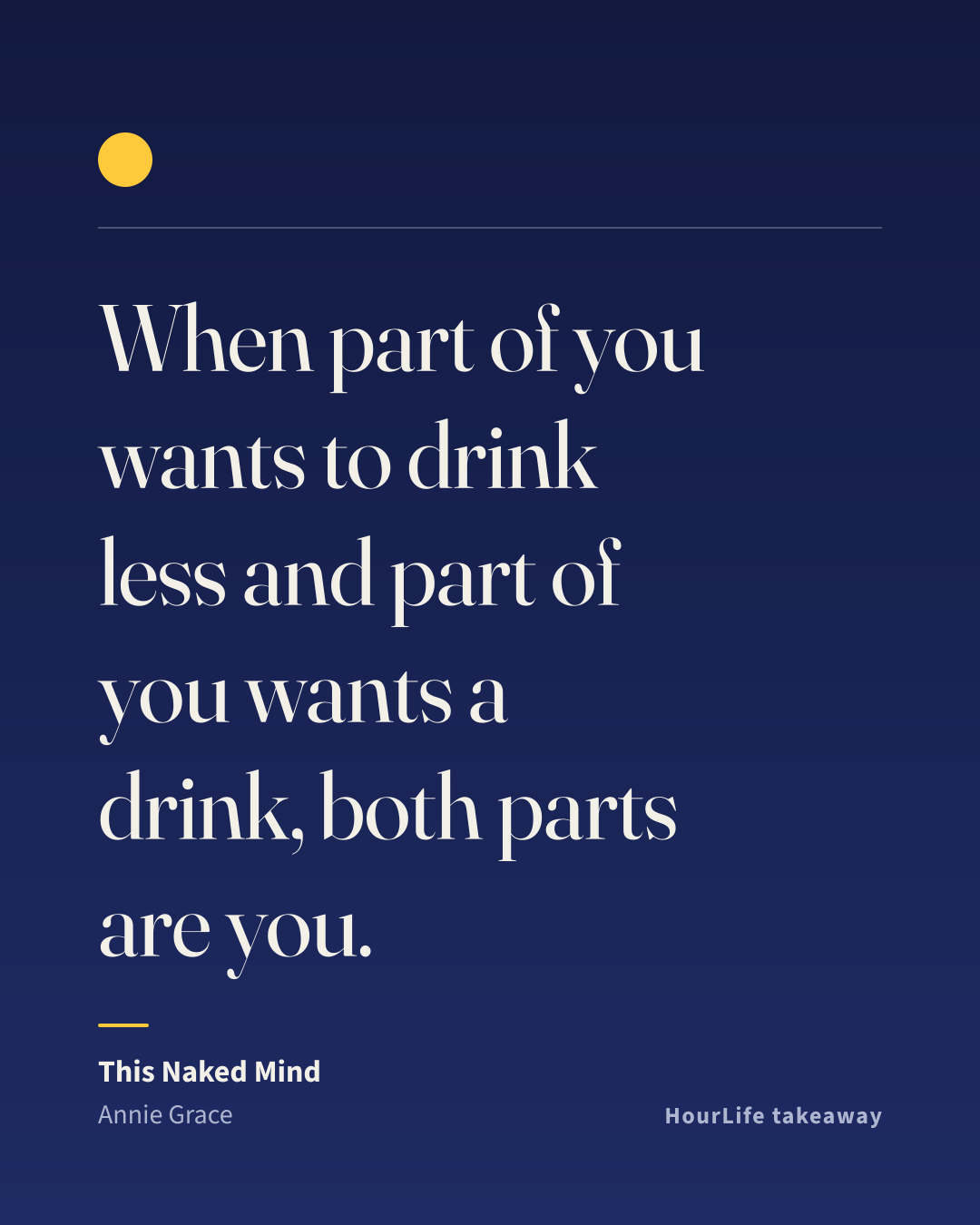
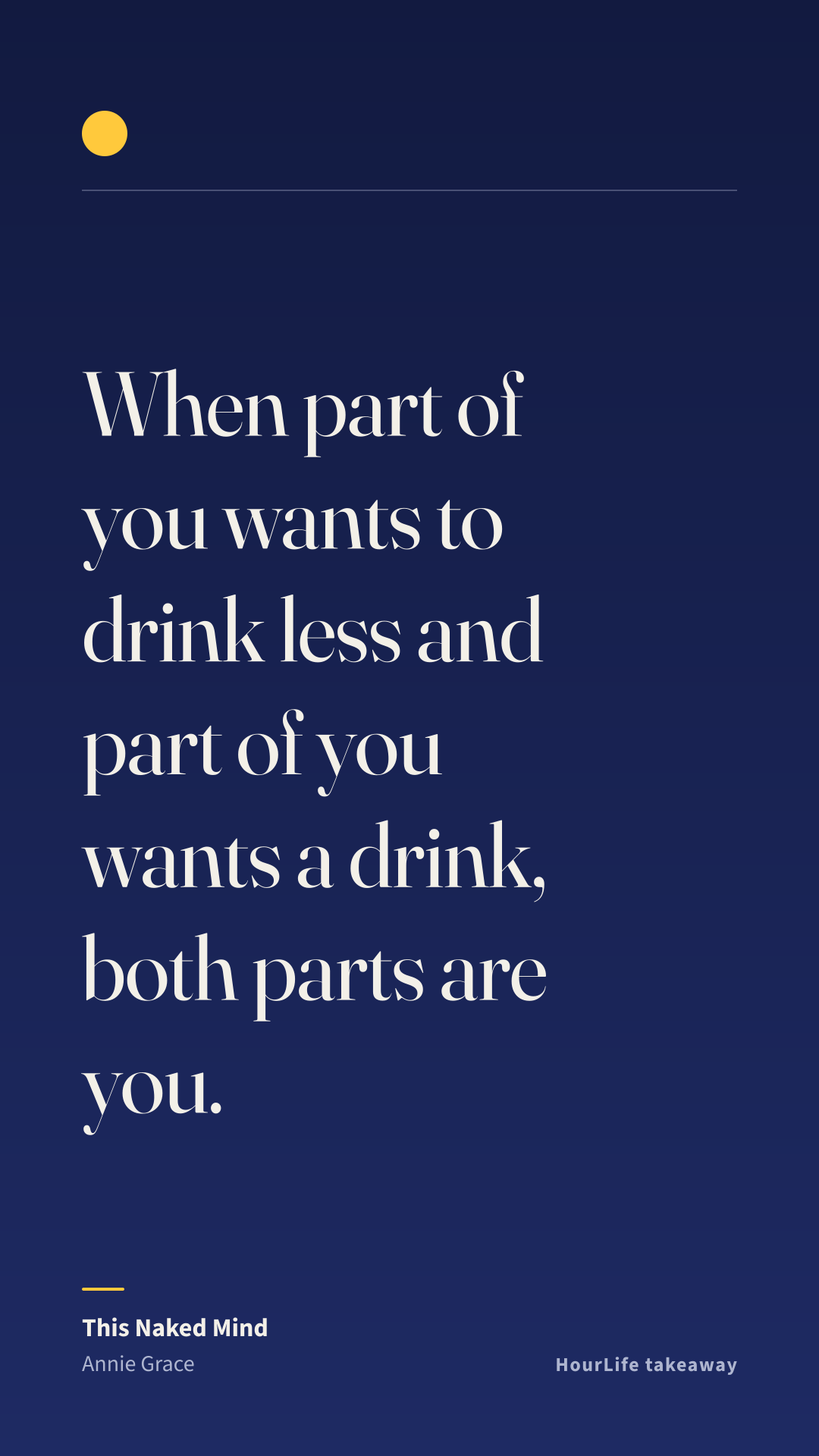
When part of you wants to drink less and part of you wants a drink, both parts are you.

This Naked Mind Annie Grace HourLife takeaway

The book describes a conflict between the conscious mind, which sees the costs, and the unconscious mind, which still believes drinking brings pleasure or relief. Trying to overpower the unconscious side is exhausting. Grace's method is to update what it believes, so the two stop pulling against each other.

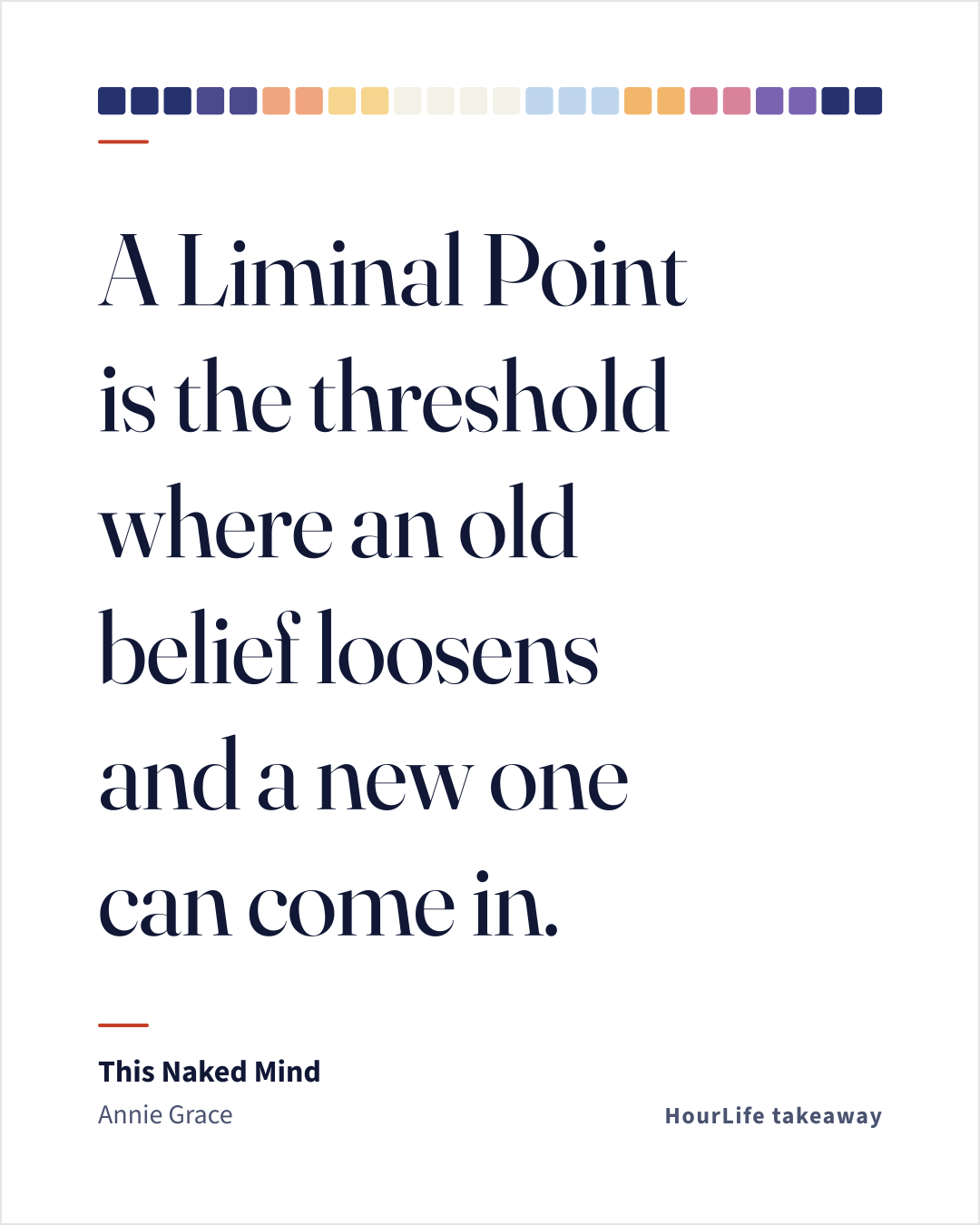
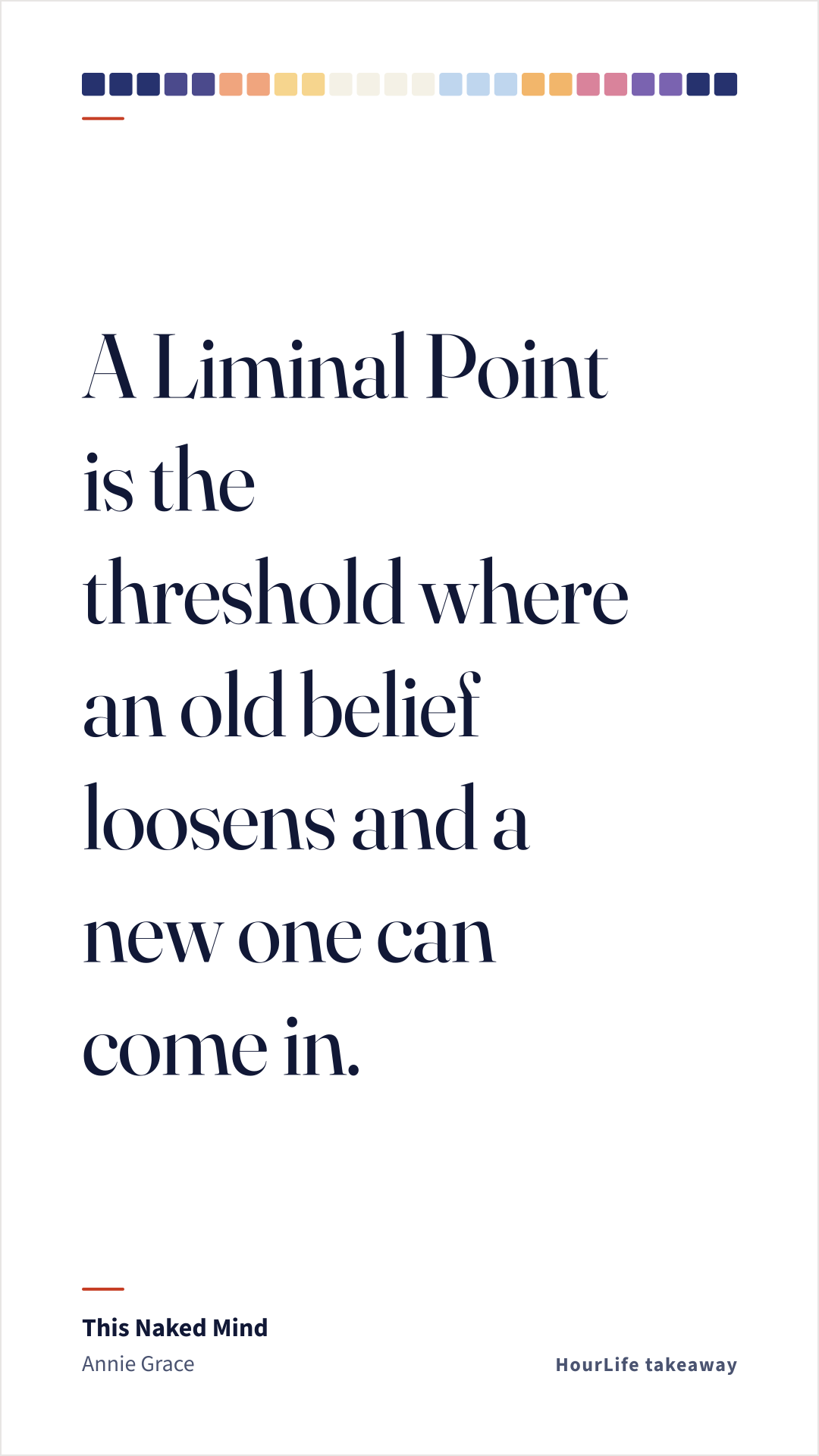
A Liminal Point is the threshold where an old belief loosens and a new one can come in.

This Naked Mind Annie Grace HourLife takeaway

Grace borrows the word liminal, meaning in between, for the moment when you are no longer sure the old story is true. The book is built to create those moments, one belief at a time. The discomfort of not being sure is a sign the change is happening, not that it is failing.

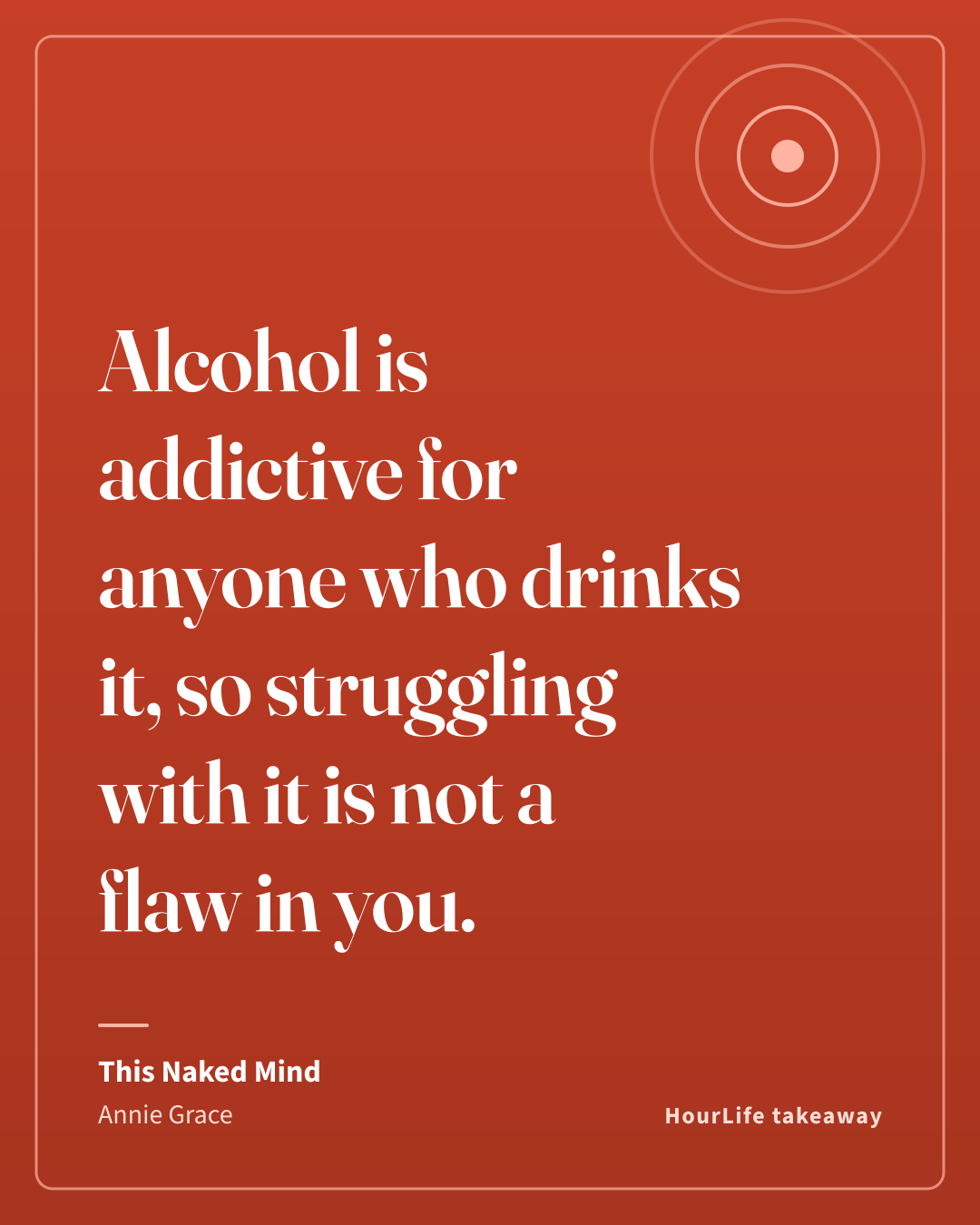
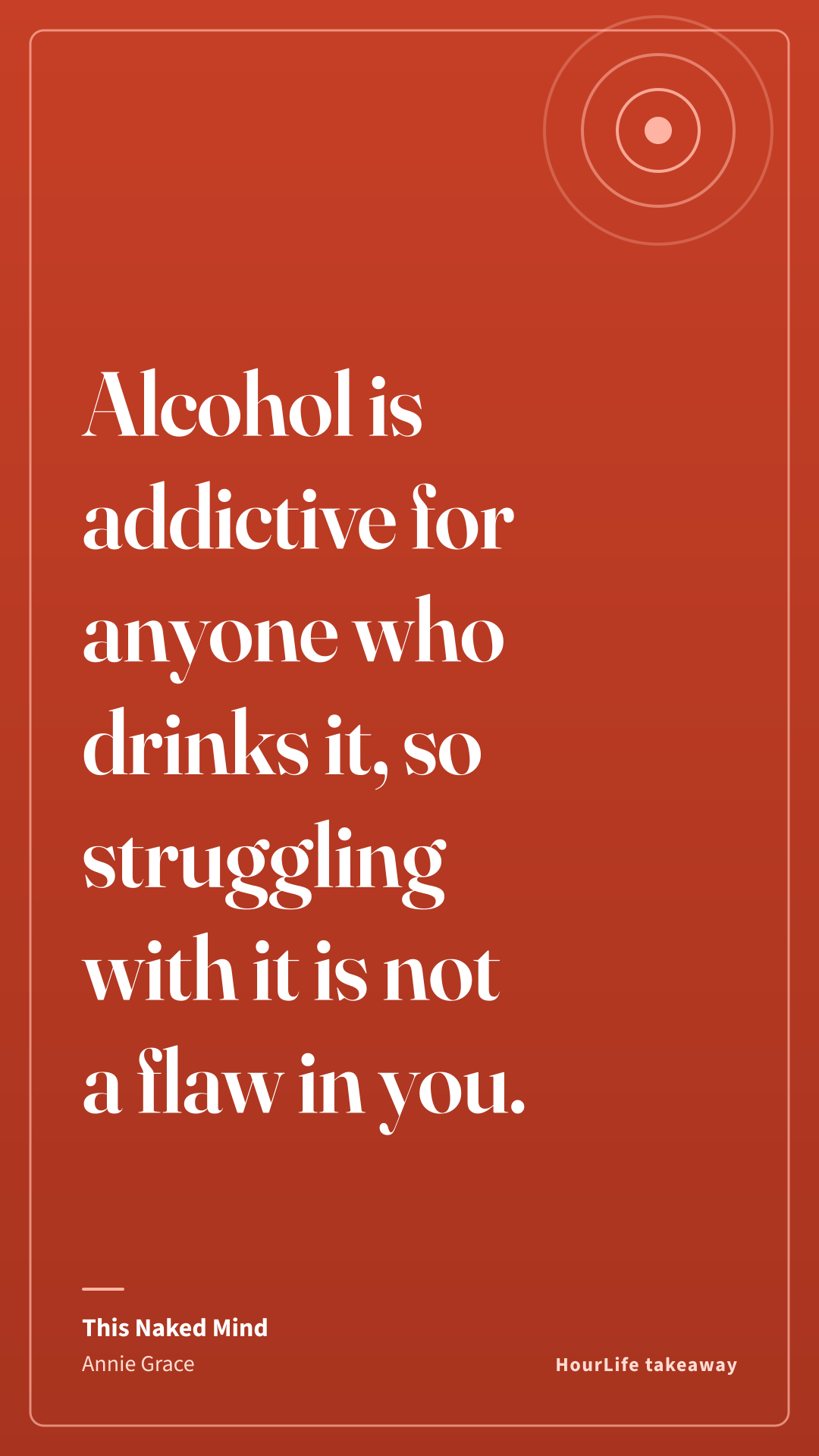
Alcohol is addictive for anyone who drinks it, so struggling with it is not a flaw in you.

This Naked Mind Annie Grace HourLife takeaway

Grace pushes back on the idea that a few broken people become alcoholics while everyone else is safe. She treats drinking as a slope that anyone can slide down, because of what the substance does. Moving the blame from the person to the chemistry makes it easier to look honestly at your own habits.

Part of the calm a drink brings can be relief from an unease that drinking helped create.

This Naked Mind Annie Grace HourLife takeaway

Alcohol is a depressant, and the body pushes back against it. As the effect wears off, many people feel more on edge than before they started, and the next drink then feels like relief. Seeing that loop makes the promise of a relaxing drink look different.

Few people loved their first sip; the taste for alcohol is usually learned.

This Naked Mind Annie Grace HourLife takeaway

Grace looks at the belief that we drink because we like the taste. Most first drinks taste harsh, and we persist because of what drinking means socially. Much of the pleasure turns out to be in the sugar, the mixer, the glass and the ritual.

Alcohol is sold as fun, sophistication and belonging, and noticing the sale weakens it.

This Naked Mind Annie Grace HourLife takeaway

Grace spent her career in marketing, and she reads alcohol adverts the way she would read any campaign. The product is rarely shown; the feeling is. Once you see how often you are being sold a mood, the link between the drink and the mood starts to come apart.

The ease you feel at a party comes from the people, not the glass.

This Naked Mind Annie Grace HourLife takeaway

The book examines the belief that we need a drink to socialise. Children make friends with no help at all, and plenty of people enjoy a night out sober. Lowered inhibition also dulls attention and memory, which are the parts of an evening worth keeping.

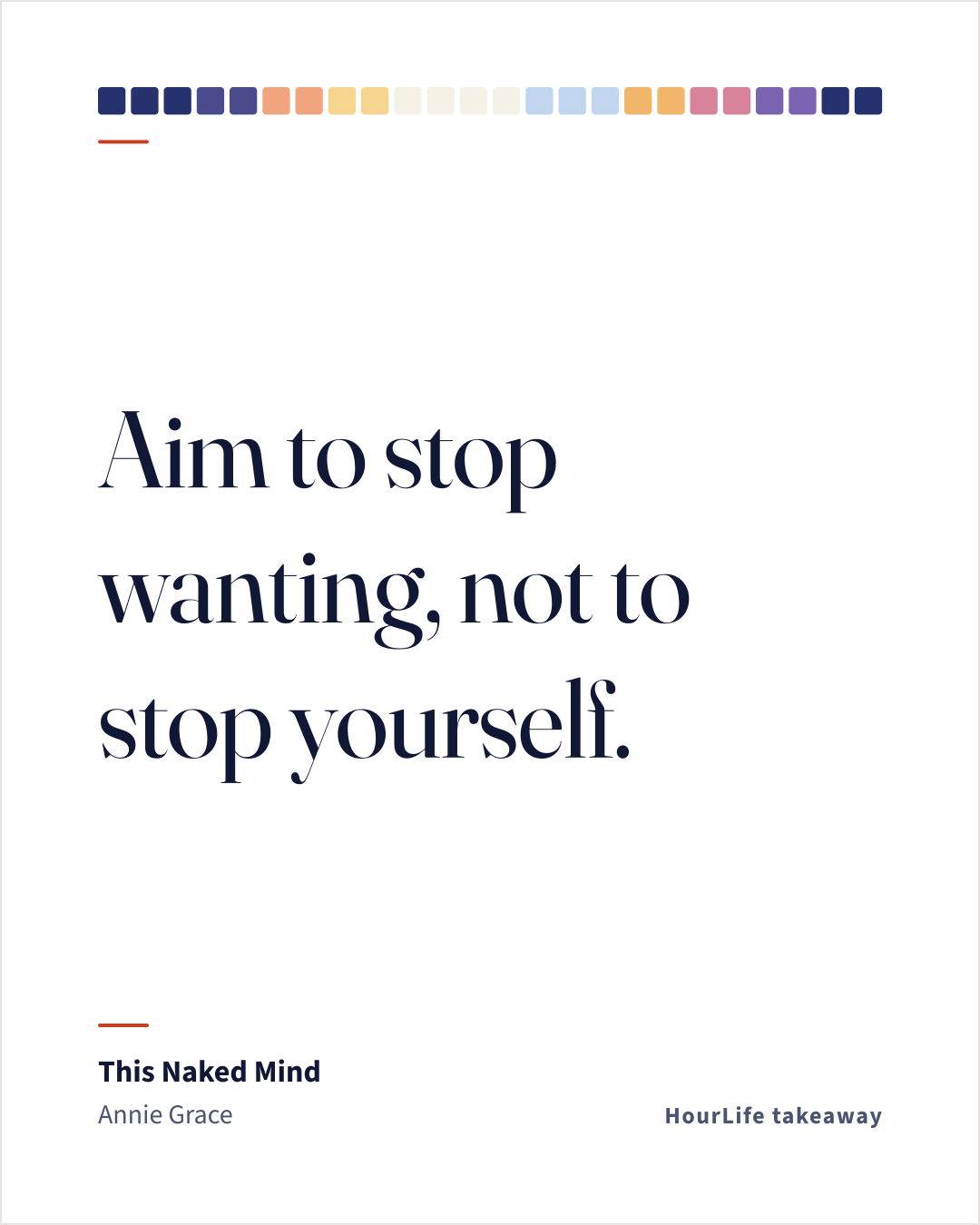
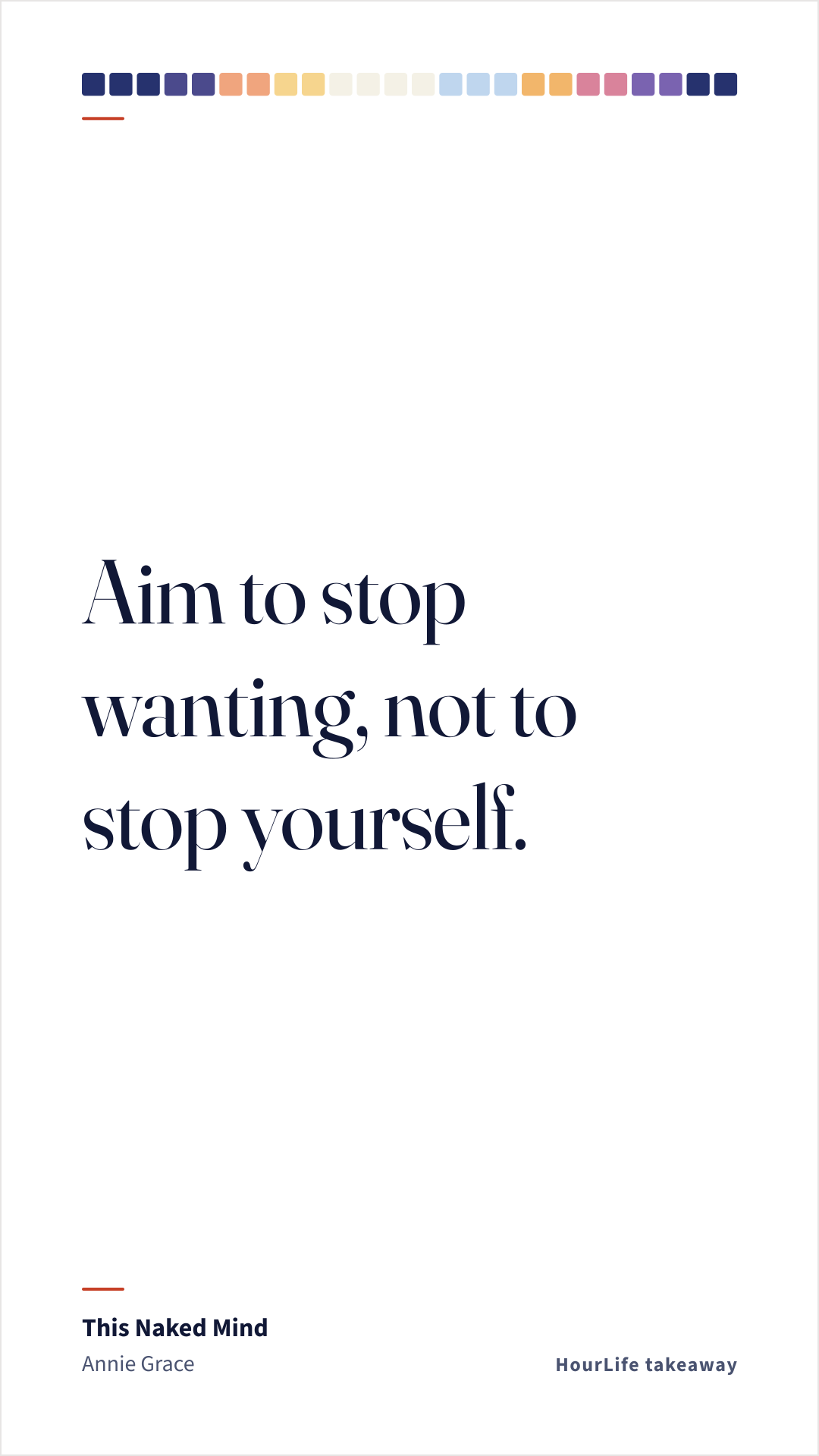
Aim to stop wanting, not to stop yourself.

This Naked Mind Annie Grace HourLife takeaway

Grace frames the goal as freedom rather than restriction. If you still believe you are giving something up, every evening without a drink feels like a loss. When the belief has changed, there is nothing left to resist.

Keep this going in the app.

HourLife turns these ideas into a daily system — goals, habits, focus, and reflection in one private place.