Attention is trainable, and it develops in recognisable stages.
Wallace lays out ten stages inherited from Indian and Tibetan contemplatives. Knowing which one you are in tells you what to practise now and what to stop worrying about.
The most-loved lines from B. Alan Wallace, drawn from 1 book in the library.
Attention is trainable, and it develops in recognisable stages.
Wallace lays out ten stages inherited from Indian and Tibetan contemplatives. Knowing which one you are in tells you what to practise now and what to stop worrying about.
Relaxation comes first, then stability, then vividness.
Forcing focus makes you tense, and tension breeds agitation. Begin every session by settling body and breath; sharpen your attention only once it is steady.
Almost every lapse is either laxity or excitation.
You either sink into dullness or get pulled away into thought. Each has its own remedy: brighten and re-engage for laxity, relax and release for excitation. First learn to tell which one you are in.
Introspection is the inner sentry that notices when attention slips.
Mindfulness holds the object; introspection watches the quality of that holding. What you are really training early on is how fast you notice.
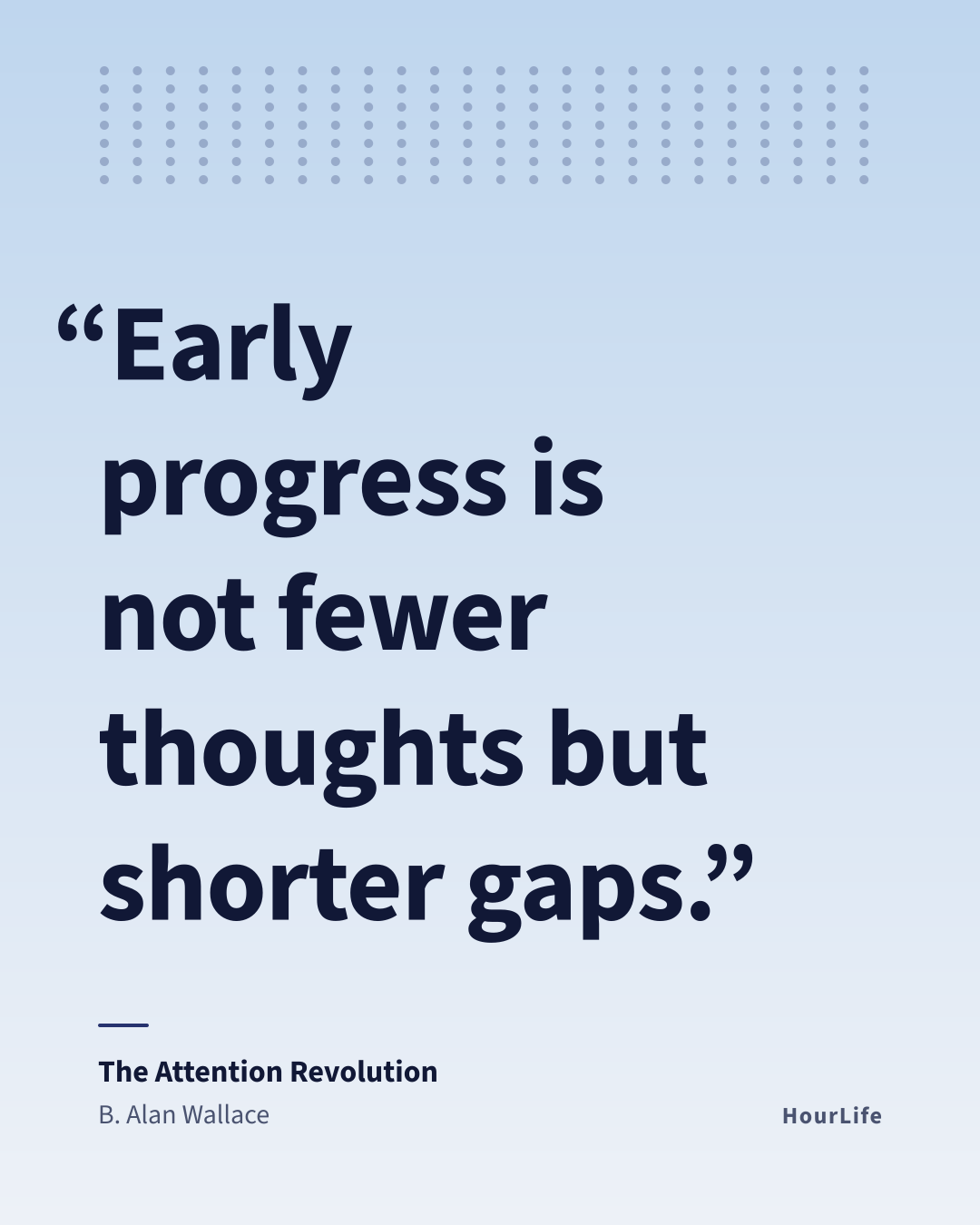
Early progress is not fewer thoughts but shorter gaps.
In the first stages attention keeps vanishing. The sign of growth is that the time between drifting off and catching it shrinks.
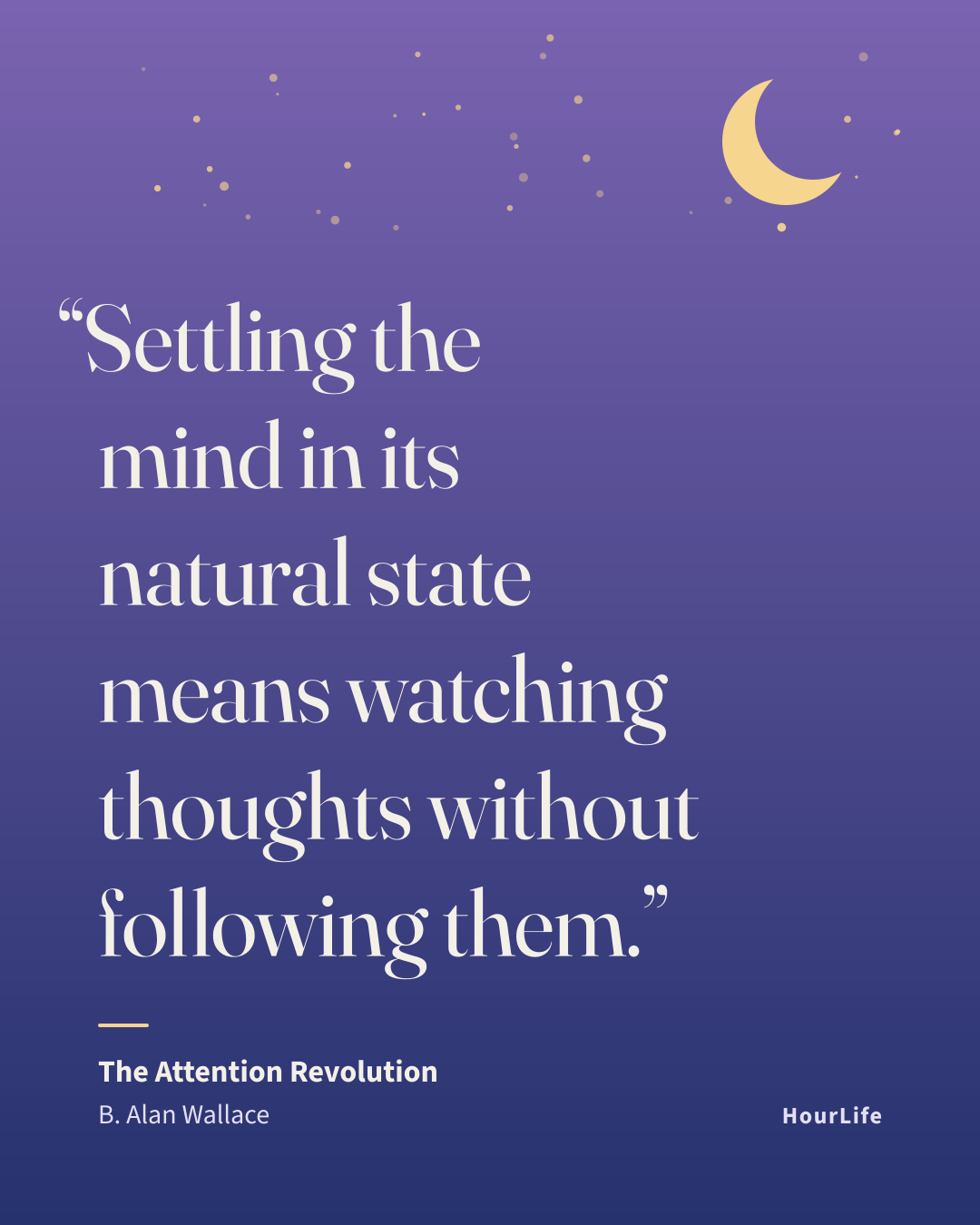
Settling the mind in its natural state means watching thoughts without following them.
After the breath, Wallace introduces taking the mind itself as the object: observing whatever arises without engaging it. It is harder, and it shows you how thoughts actually behave.
At the higher stages, effort itself becomes the obstacle.
The later stages come from letting go of striving until attention sustains itself. If you notice yourself gripping, loosen before you push.
A mind that cannot rest where it chooses is at the mercy of whatever grabs it.
Wallace ties attentional balance to wellbeing: stability is what lets you choose your response instead of being carried. That makes this training practical, not exotic.
HourLife turns these ideas into a daily system — goals, habits, focus, and reflection in one private place.