Keep this author quotes for later
Sign in to save

Carla Emery

The most-loved lines from Carla Emery, drawn from 1 book in the library.

Lines labelled “HourLife takeaway” are our wording of the book’s ideas and may paraphrase it. Only lines in quotation marks are the author’s own words, with where they appear. Check the book for exact wording before you quote it. Spot an error?

Country living is not one big skill but hundreds of small ones, learned a season at a time.

The Encyclopedia of Country Living Carla Emery HourLife takeaway

The book is huge because the life is: grain, goats, jam, soap, firewood, bees. Emery never expects anyone to do it all at once. Treat it as a reference you open when the season hands you a new job, not a course you have to finish.


Grow what your household will actually eat, then grow a little more to put by.

The Encyclopedia of Country Living Carla Emery HourLife takeaway

A bed full of vegetables nobody cooks is just weeding. Garden Vegetables is the longest chapter in the book, and it reads best from the kitchen backwards: start with the meals you make, then choose the plants.

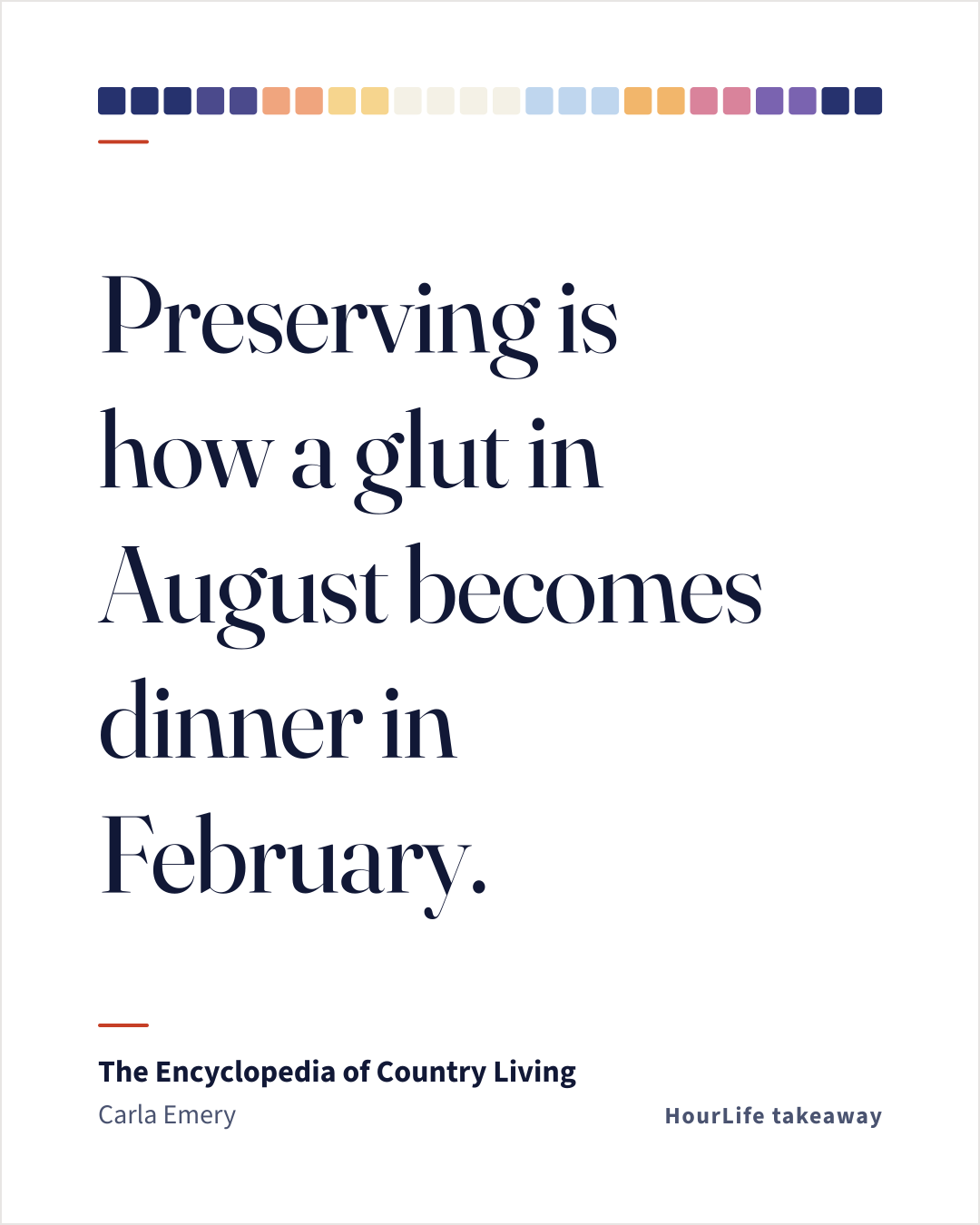
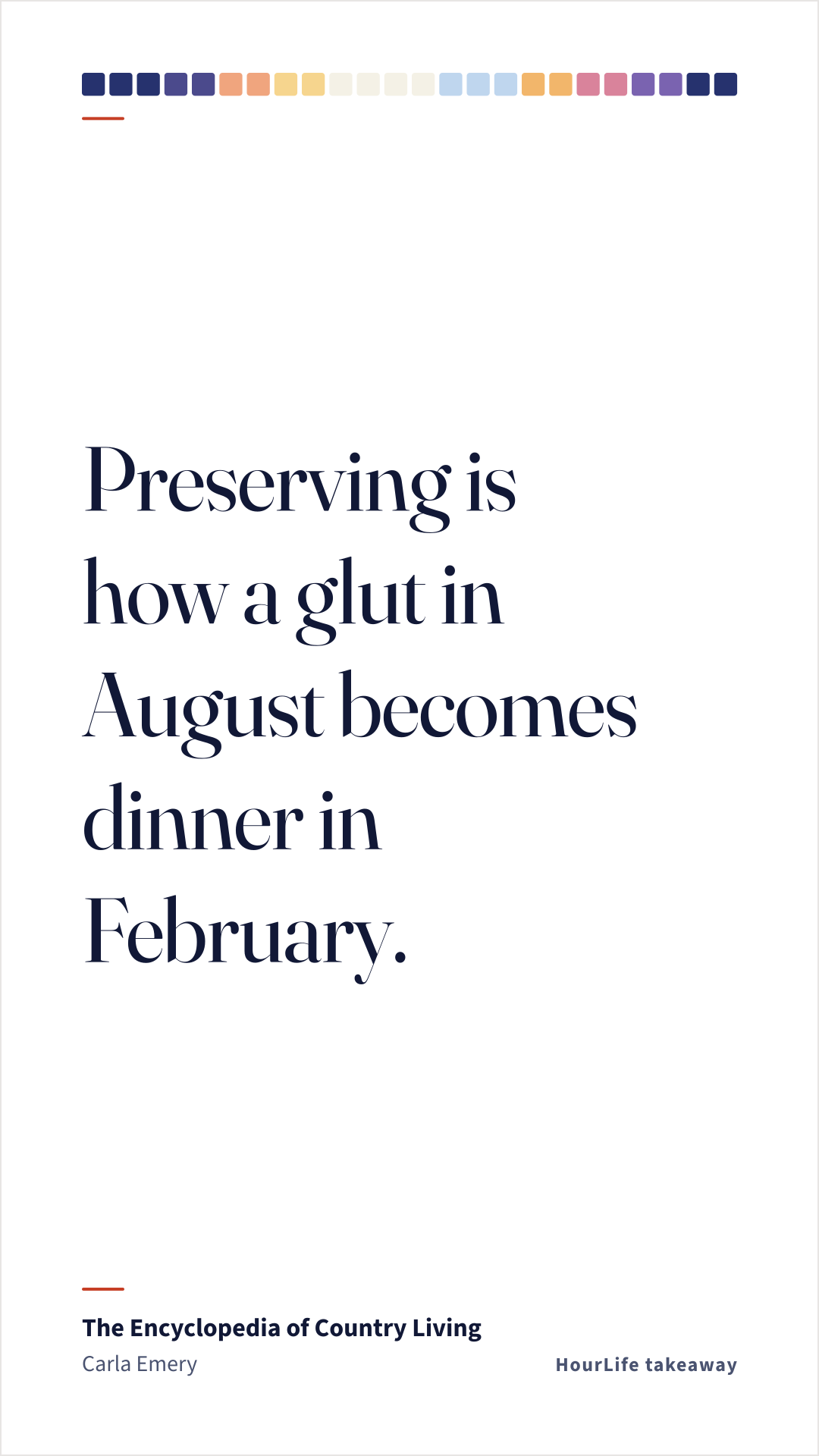
Preserving is how a glut in August becomes dinner in February.

The Encyclopedia of Country Living Carla Emery HourLife takeaway

Emery covers canning, drying, freezing and root cellars, and the right one depends on what you grow and where you can store it. Home canning advice has changed over the decades, so check processing times against a current tested guide.

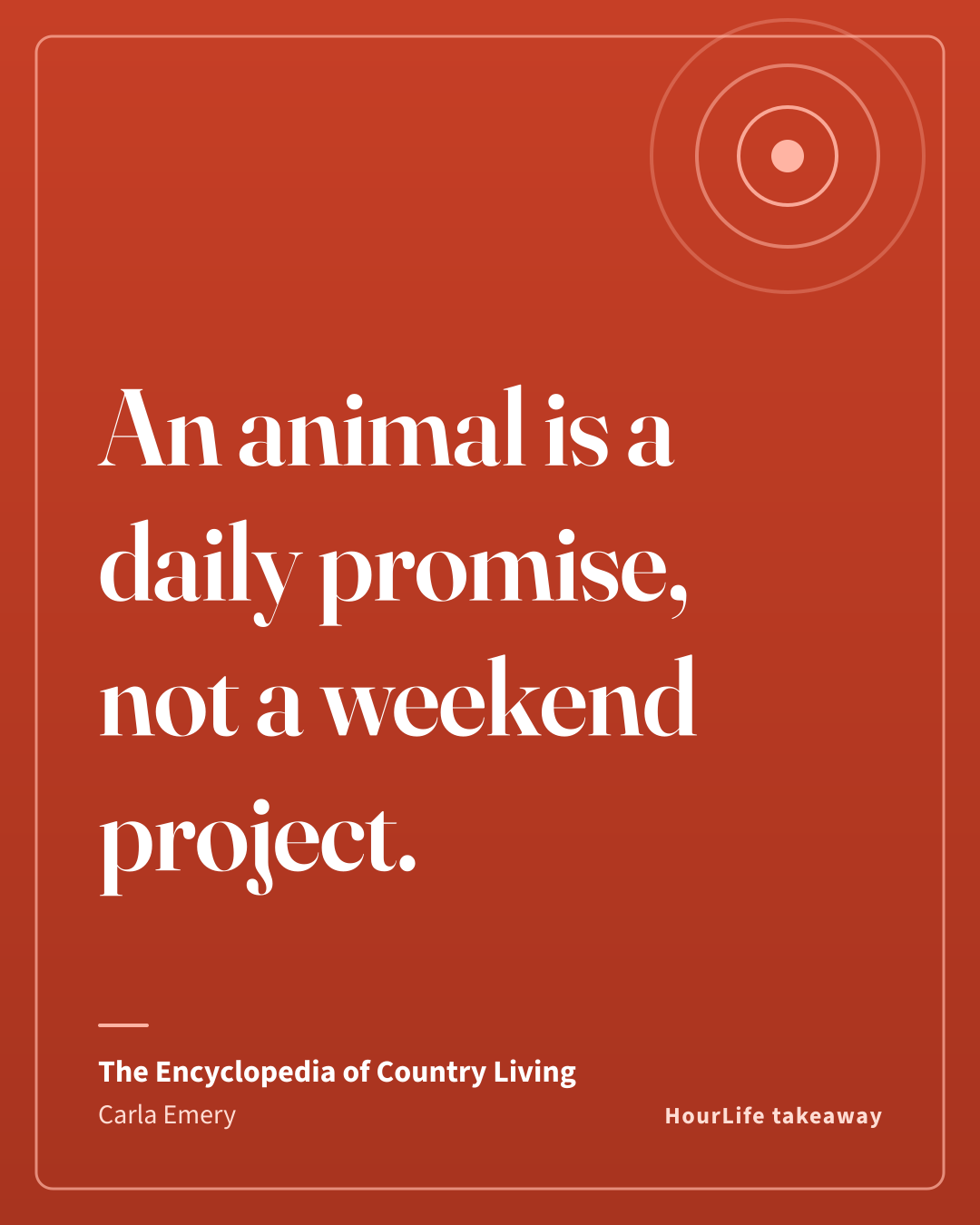
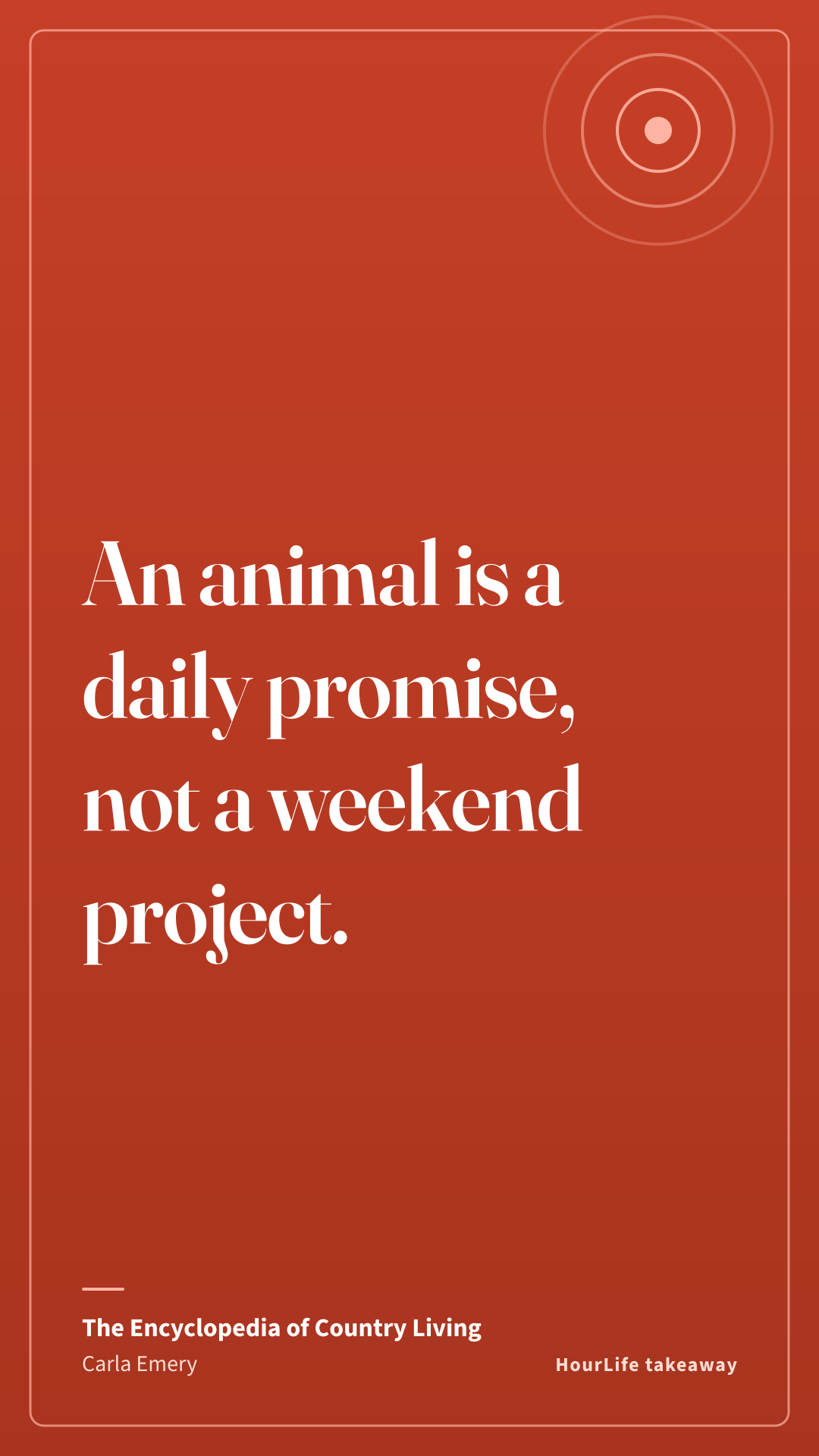
An animal is a daily promise, not a weekend project.

The Encyclopedia of Country Living Carla Emery HourLife takeaway

Before the chapters on poultry, milk animals, bees and pigs, the book has a whole chapter on the basics: choosing stock, barns, fences and what happens at the end. Pick animals for the time you really have, twice a day, in every kind of weather.

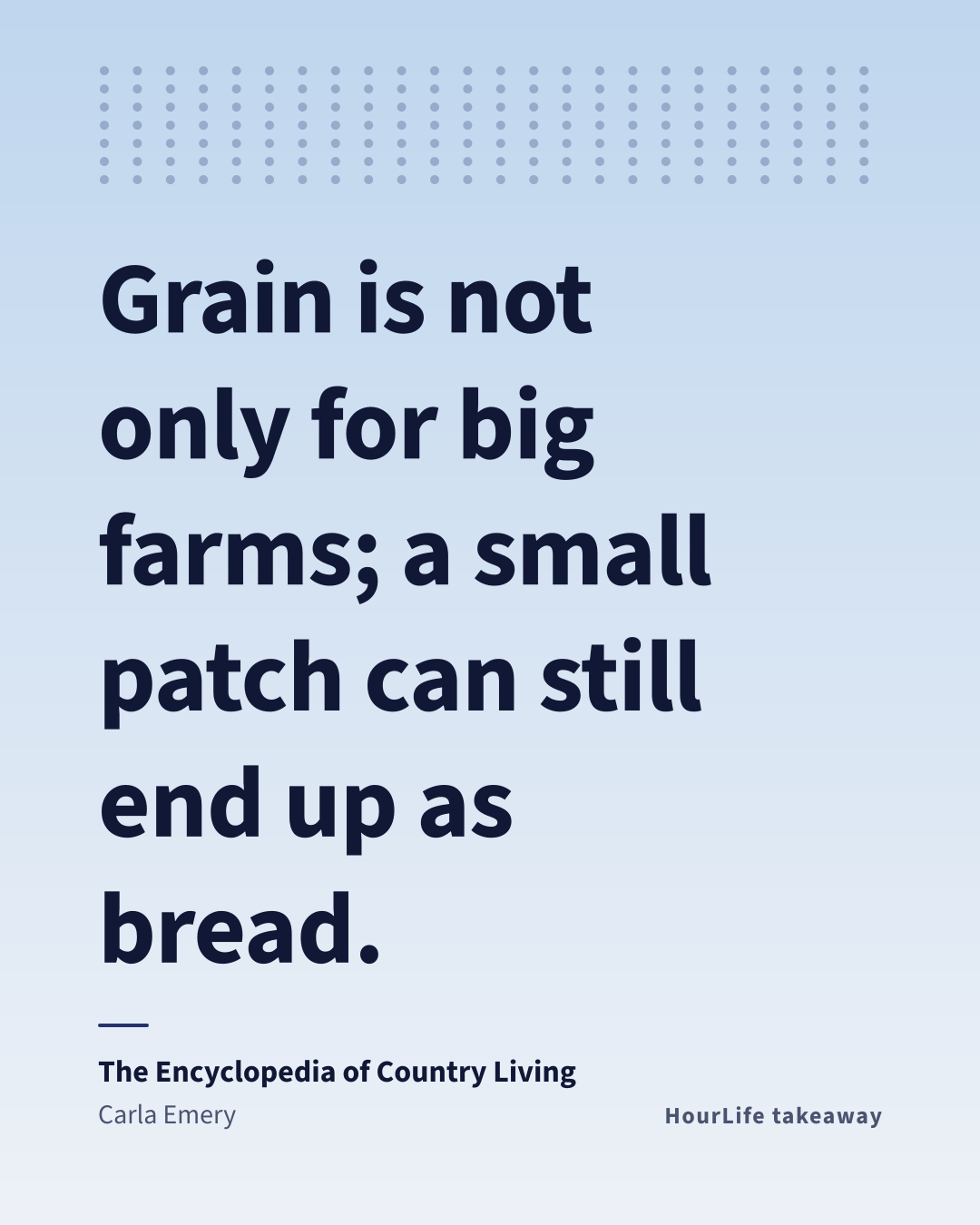
Grain is not only for big farms; a small patch can still end up as bread.

The Encyclopedia of Country Living Carla Emery HourLife takeaway

The Grasses, Grains & Canes chapter treats wheat, corn, barley, amaranth and their cousins at household scale, from growing them to cooking with them. Even if you never sow a row of wheat, knowing how it is grown and milled changes how you bake.

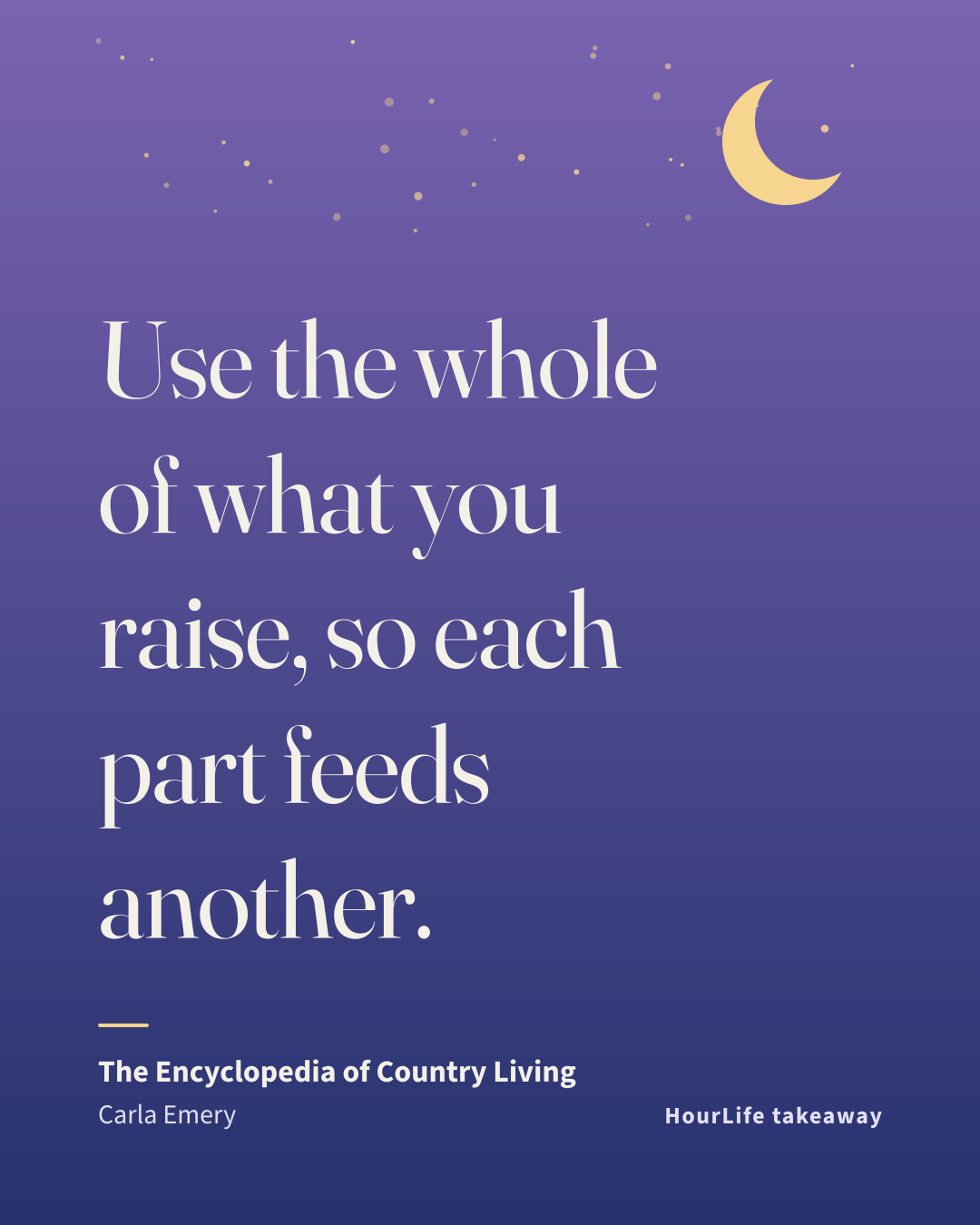
Use the whole of what you raise, so each part feeds another.

The Encyclopedia of Country Living Carla Emery HourLife takeaway

The chapters keep handing work to each other. Fat becomes soap, hides can be tanned, kitchen scraps feed the hens and manure feeds the garden. The loop is the point: less waste, and less to buy.

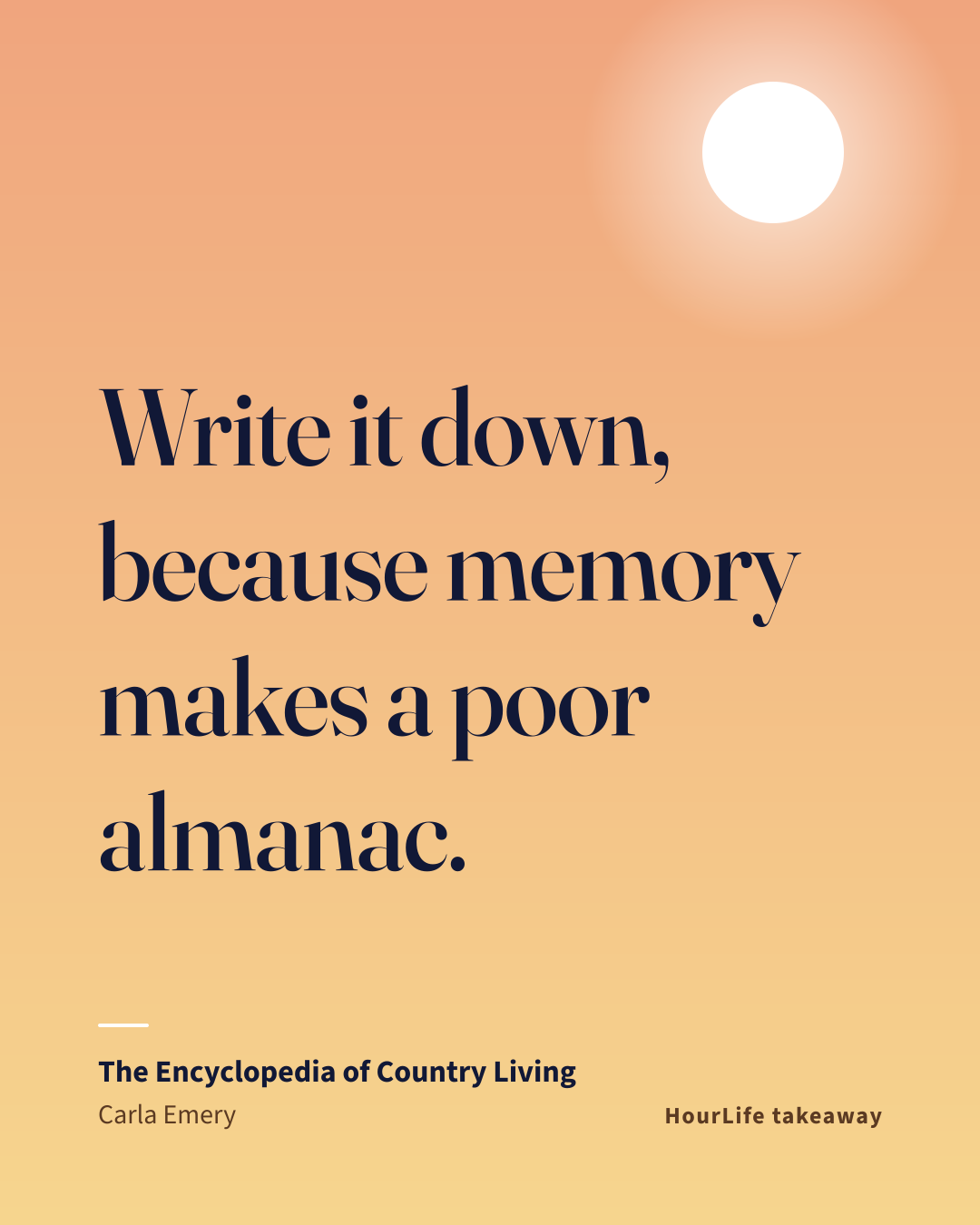
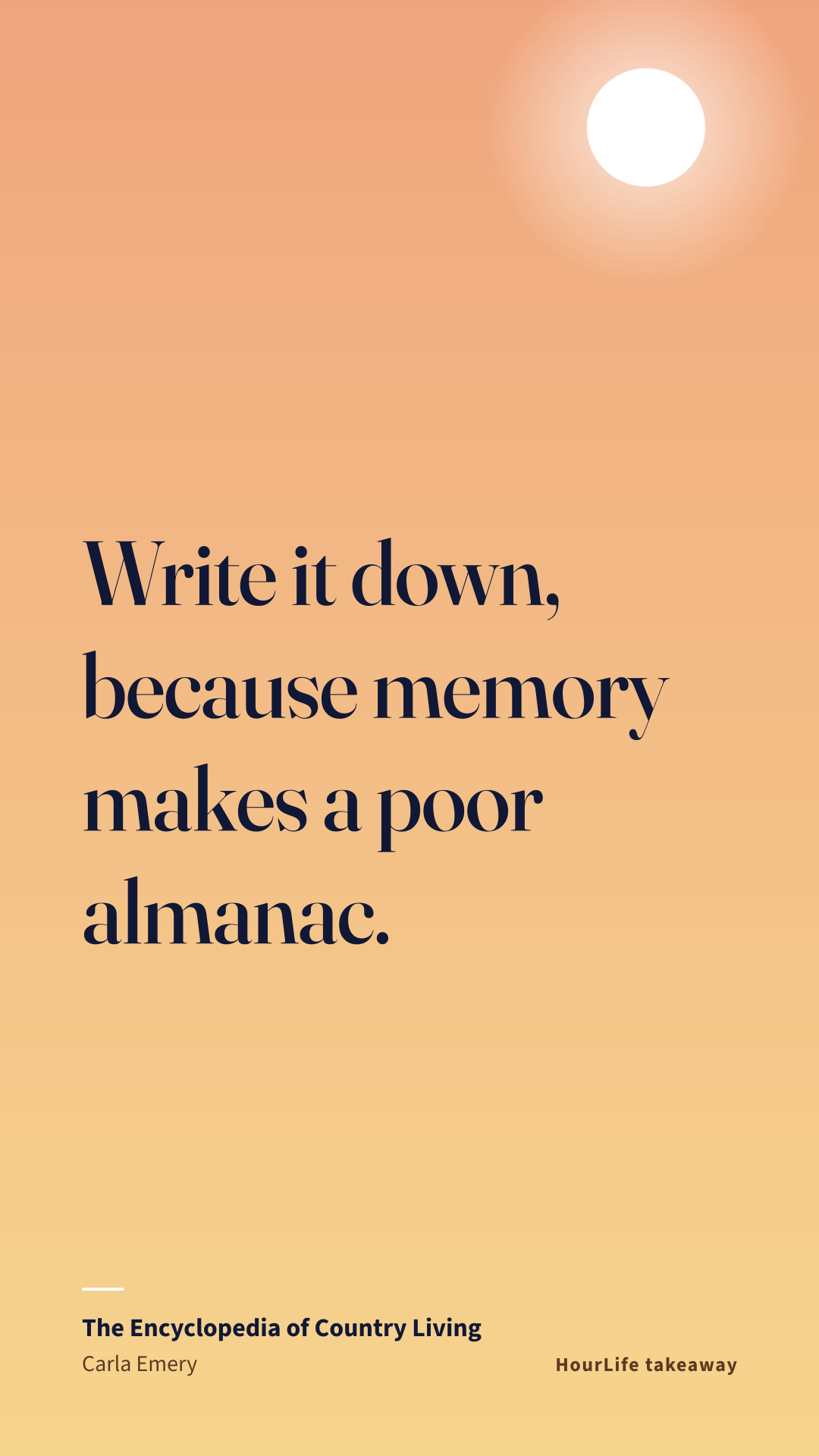
Write it down, because memory makes a poor almanac.

The Encyclopedia of Country Living Carla Emery HourLife takeaway

The book itself began as a mimeographed recipe book and was revised edition after edition for more than thirty years. Keep your own record of sowing dates, yields and mistakes, and it becomes the most useful book on your shelf.

A setback on the land is information for next year, not proof you chose wrong.

The Encyclopedia of Country Living Carla Emery HourLife takeaway

Emery's own path had hard turns. In 1976 a flood and mudslide wrecked the school of country living she had opened in Idaho, and she kept revising the book for decades afterwards. A lost crop or a bad winter tells you what to change.

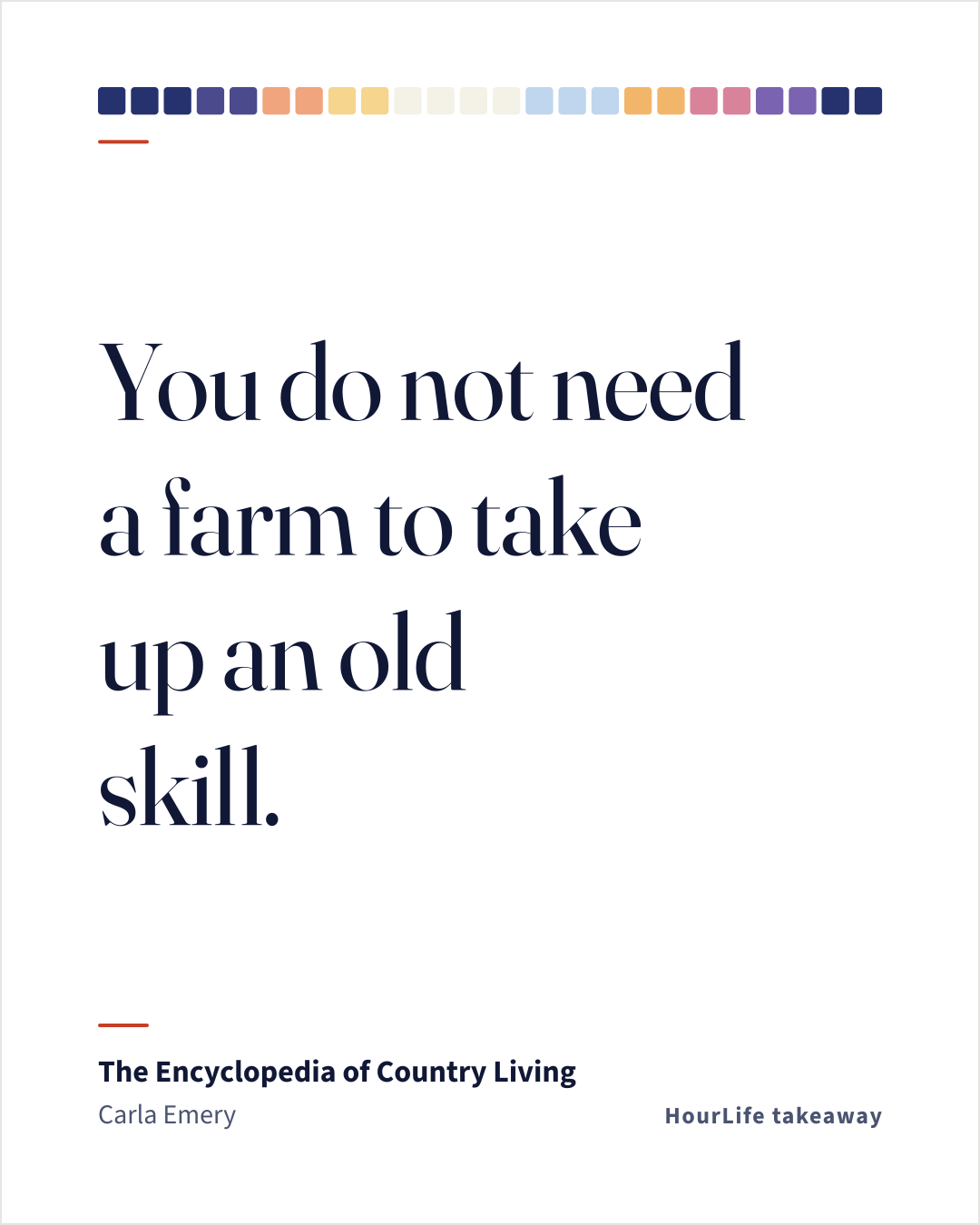
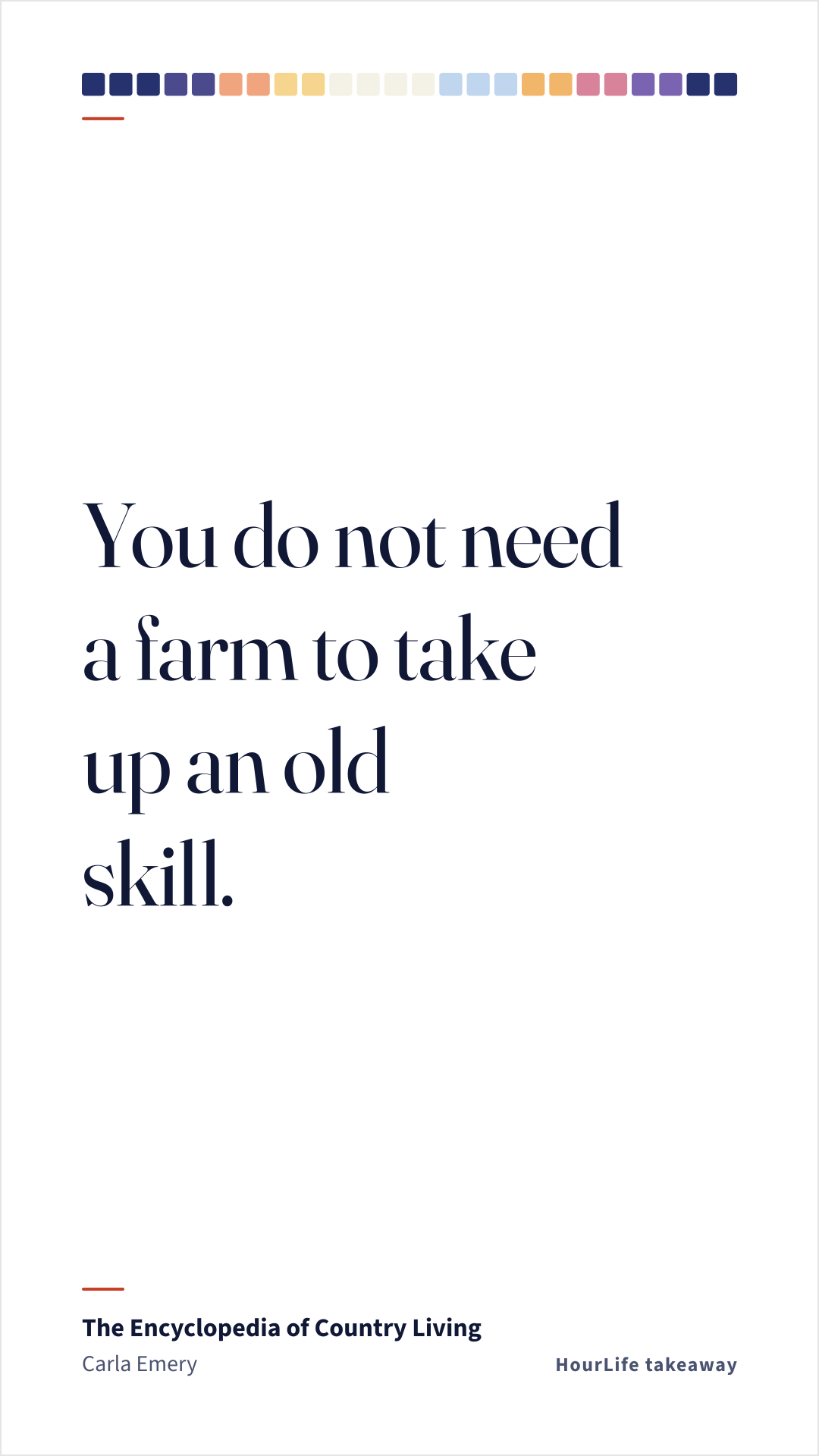
You do not need a farm to take up an old skill.

The Encyclopedia of Country Living Carla Emery HourLife takeaway

Baking bread, drying herbs and putting up one jar of jam all work in a city flat. The book even has an appendix on reading antique cookbooks. Take the skills that fit your life now and leave the rest on the shelf for later.

Keep this going in the app.

HourLife turns these ideas into a daily system — goals, habits, focus, and reflection in one private place.