Keep this author quotes for later
Sign in to save

Chloe Dalton

The most-loved lines from Chloe Dalton, drawn from 1 book in the library.

Lines labelled “HourLife takeaway” are our wording of the book’s ideas and may paraphrase it. Only lines in quotation marks are the author’s own words, with where they appear. Check the book for exact wording before you quote it. Spot an error?

You can help a wild animal without owning it, if you decide early what you will not do.

Raising Hare Chloe Dalton HourLife takeaway

Dalton set herself limits from the start. She did not name the hare, tried not to touch it, and kept it shut in only briefly. Those rules are what kept the rescue from becoming ownership.


A name is the first step towards a pet.

Raising Hare Chloe Dalton HourLife takeaway

Dalton chose not to name the leveret, because a name would have made it hers. It stays the hare. That small refusal keeps her attention, and ours, on the animal rather than on the person caring for it.

Sometimes the most useful help starts with waiting.

Raising Hare Chloe Dalton HourLife takeaway

Dalton did not pick the leveret up at once. When she came back hours later it was still there, alone, and only then did she take it in. Mother hares leave their young alone for most of the day, so a lone leveret is not always an orphan.

Fit your life around the animal, not the animal around your life.

Raising Hare Chloe Dalton HourLife takeaway

The house changed more than the hare did. Dalton hare-proofed her home, gave up her garden plants and had a flap made so the hare could come and go. Respect showed up as a list of small household changes.

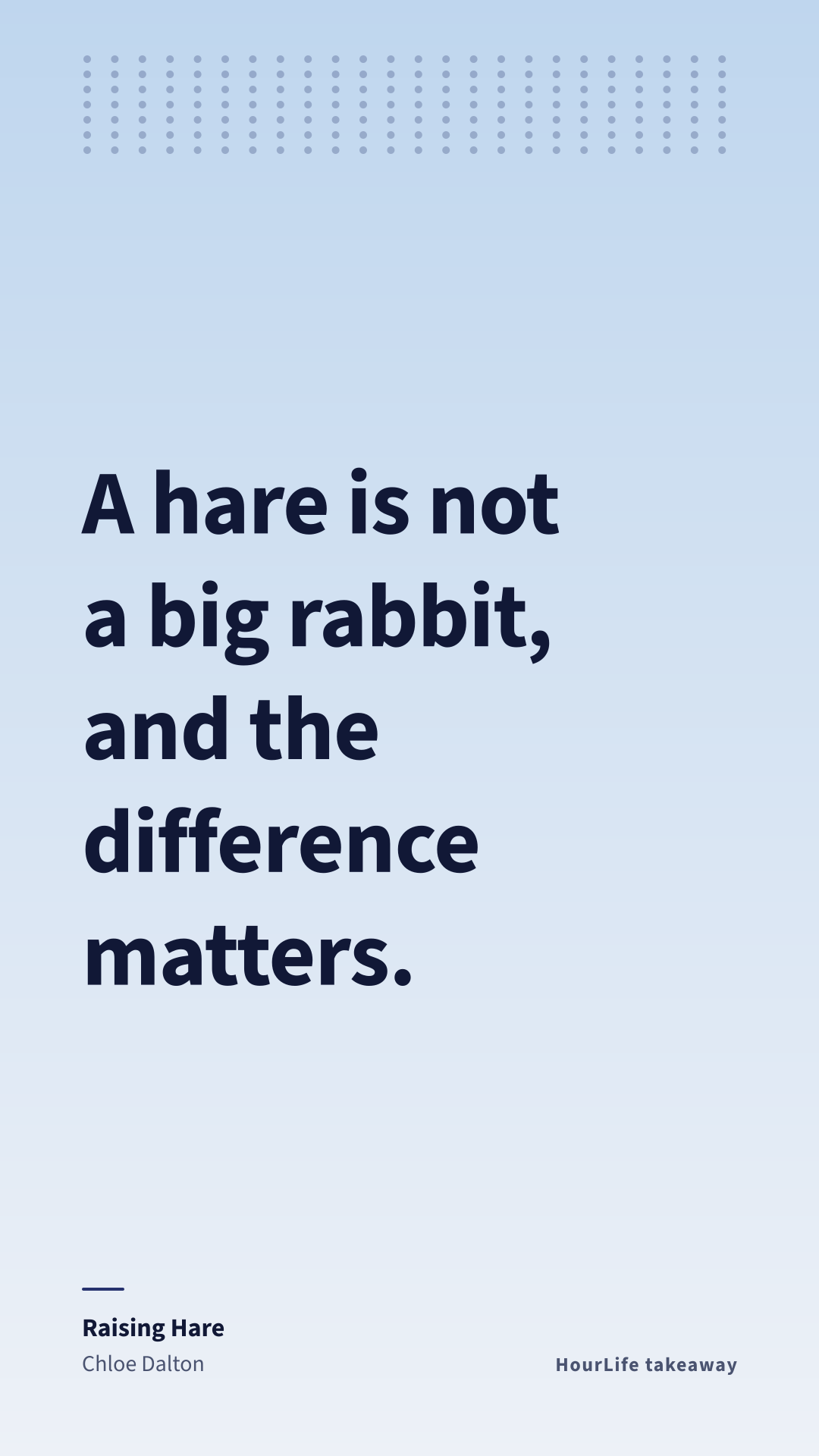
A hare is not a big rabbit, and the difference matters.

Raising Hare Chloe Dalton HourLife takeaway

Hares and rabbits share an order but not a way of life. Leverets are born furred and with their eyes open, in a shallow dip in the open rather than a burrow, and hares are not domesticated. Knowing what an animal actually is comes before knowing how to help it.

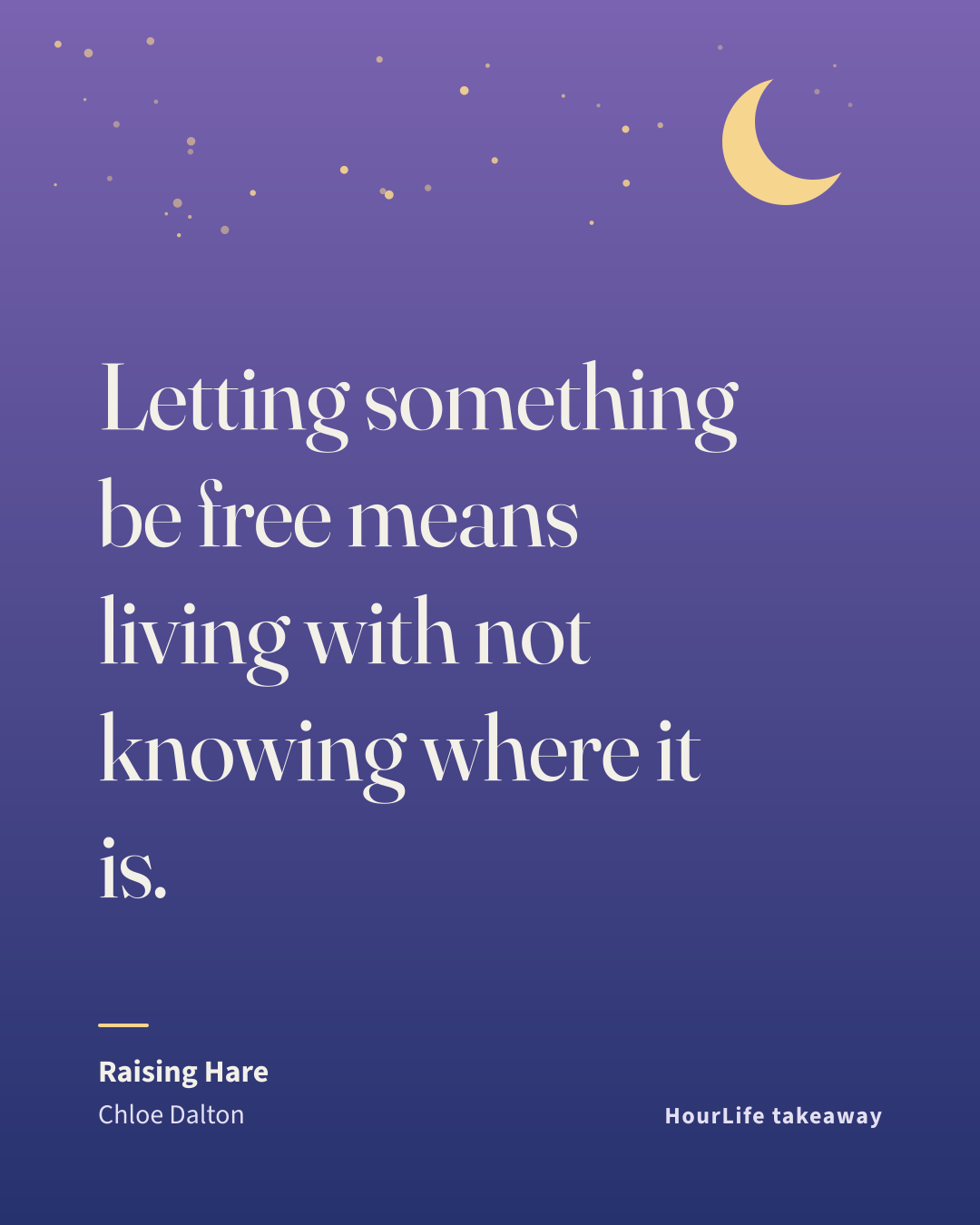
Letting something be free means living with not knowing where it is.

Raising Hare Chloe Dalton HourLife takeaway

As the hare grew, it came and went through its flap on its own schedule, and Dalton had to accept not knowing where it was. In HourLife's reading, care without control is the hard part of the book.

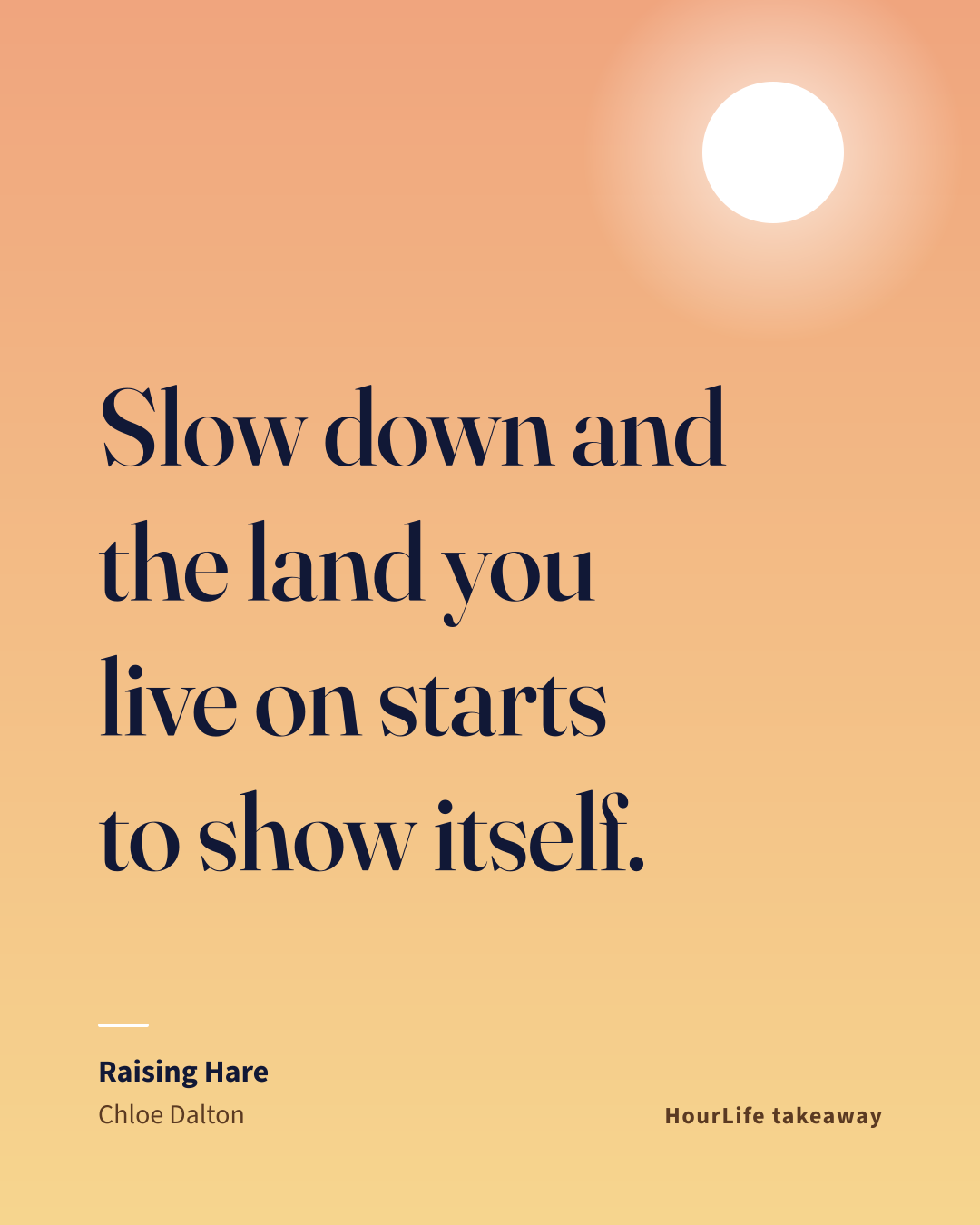
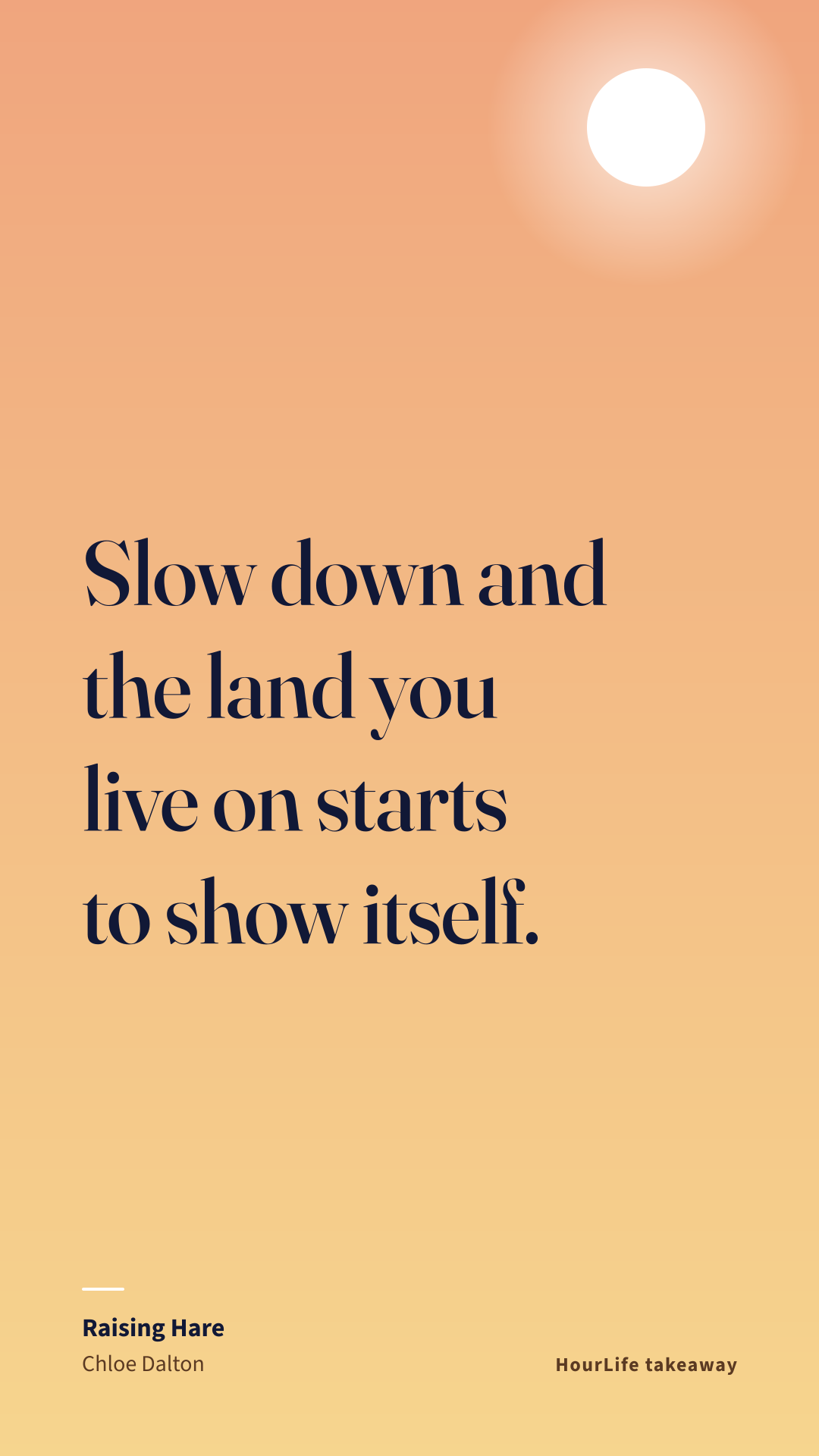
Slow down and the land you live on starts to show itself.

Raising Hare Chloe Dalton HourLife takeaway

Dalton had lived by flights and deadlines. Following a crepuscular animal pulled her into dawn and dusk, the seasons, and the fields and hedgerows around the barn. The book is partly about what that attention did to her.

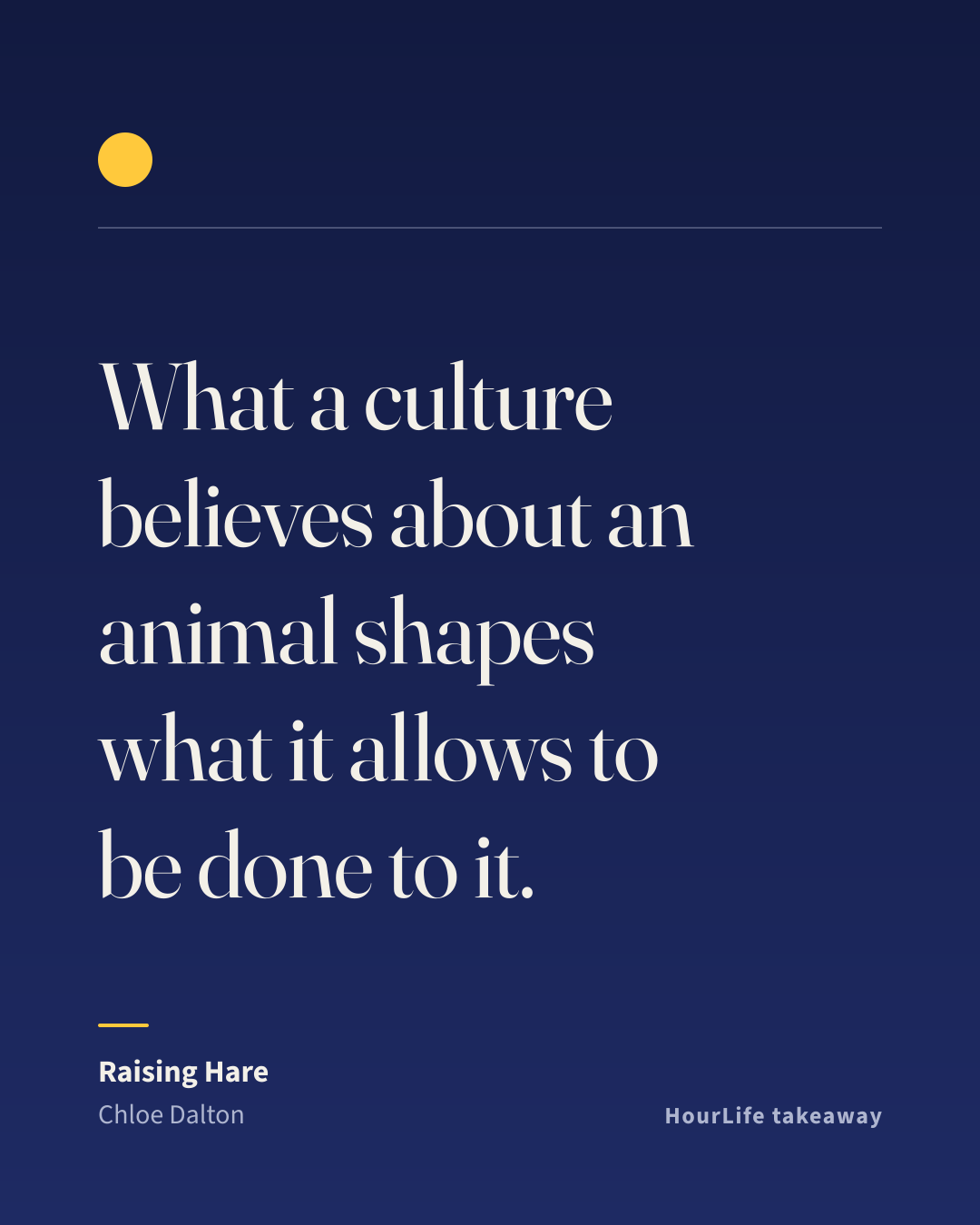
What a culture believes about an animal shapes what it allows to be done to it.

Raising Hare Chloe Dalton HourLife takeaway

Dalton reads myth, poetry and the history of hunting, including William Cowper, the 18th-century poet who kept hares. Hares have been omens, jokes, prey and sport. She sets those stories against the animal she actually lived beside.

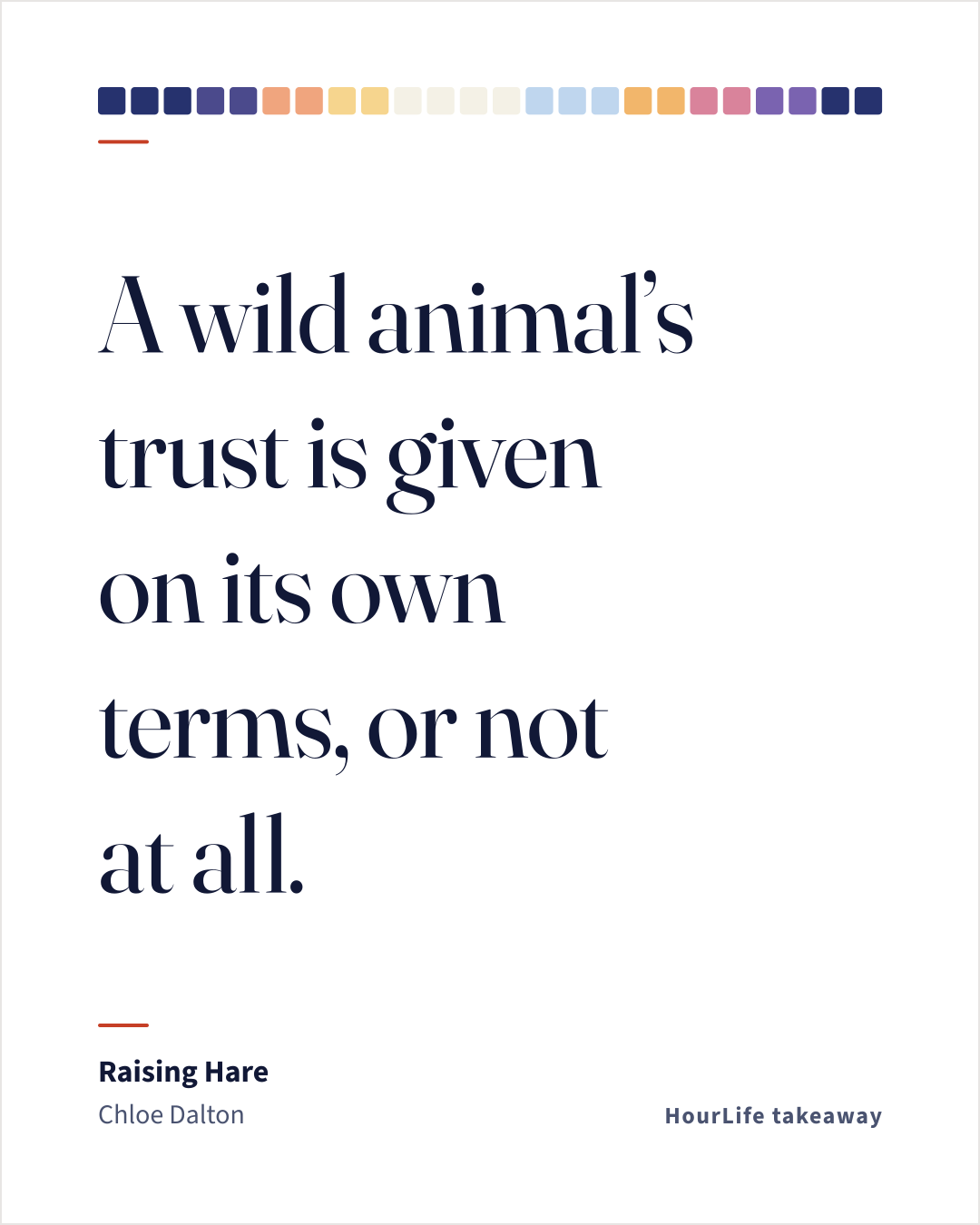
A wild animal’s trust is given on its own terms, or not at all.

Raising Hare Chloe Dalton HourLife takeaway

The hare was never trained or handled into closeness. Over months it chose when to come near and when to stay away. The book treats that choice as the whole point, and refuses to turn it into a pet story.

Keep this going in the app.

HourLife turns these ideas into a daily system — goals, habits, focus, and reflection in one private place.