Keep this author quotes for later
Sign in to save

Christopher Kerr with Carine Mardorossian

The most-loved lines from Christopher Kerr with Carine Mardorossian, drawn from 1 book in the library.

Lines labelled “HourLife takeaway” are our wording of the book’s ideas and may paraphrase it. Only lines in quotation marks are the author’s own words, with where they appear. Check the book for exact wording before you quote it. Spot an error?

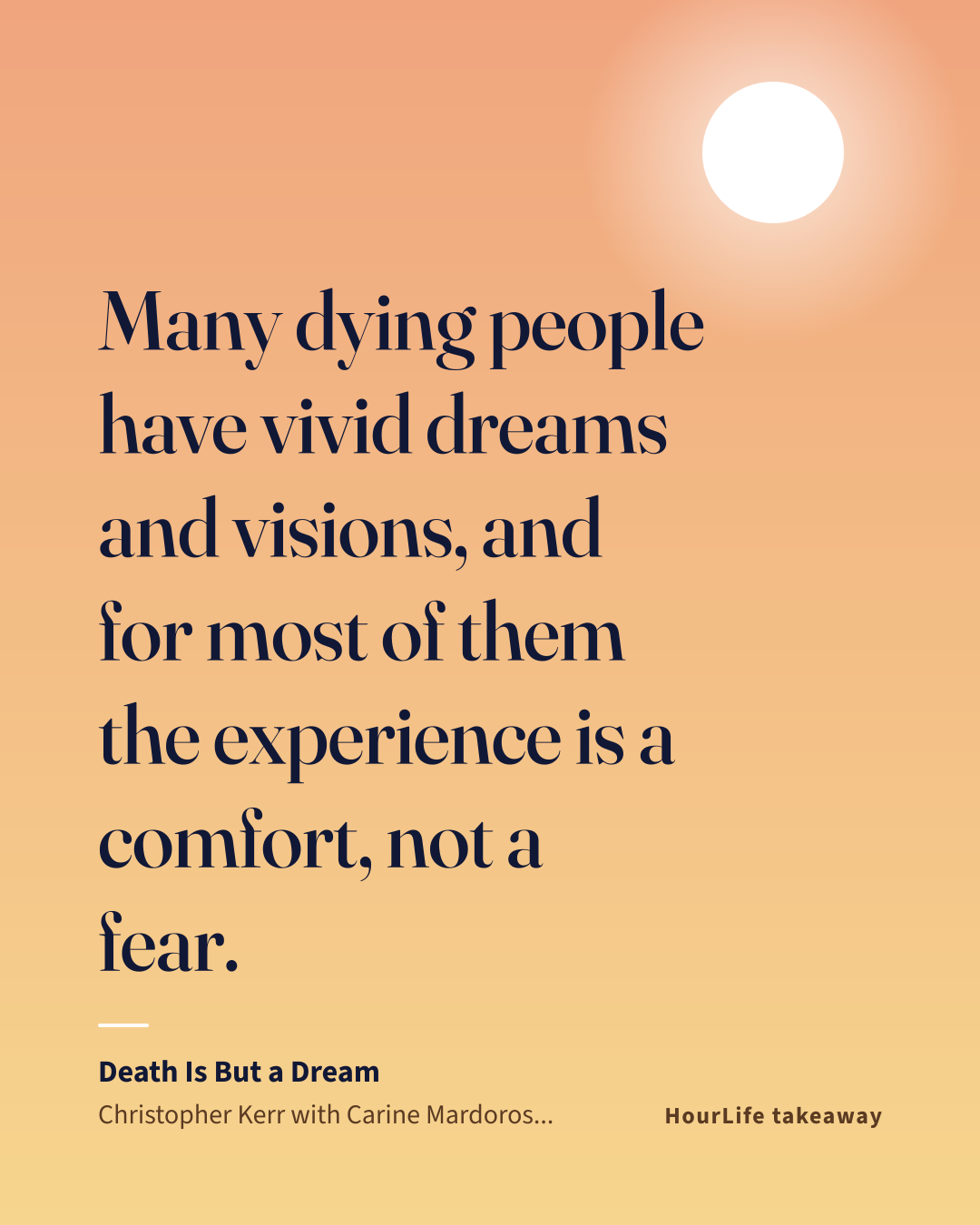
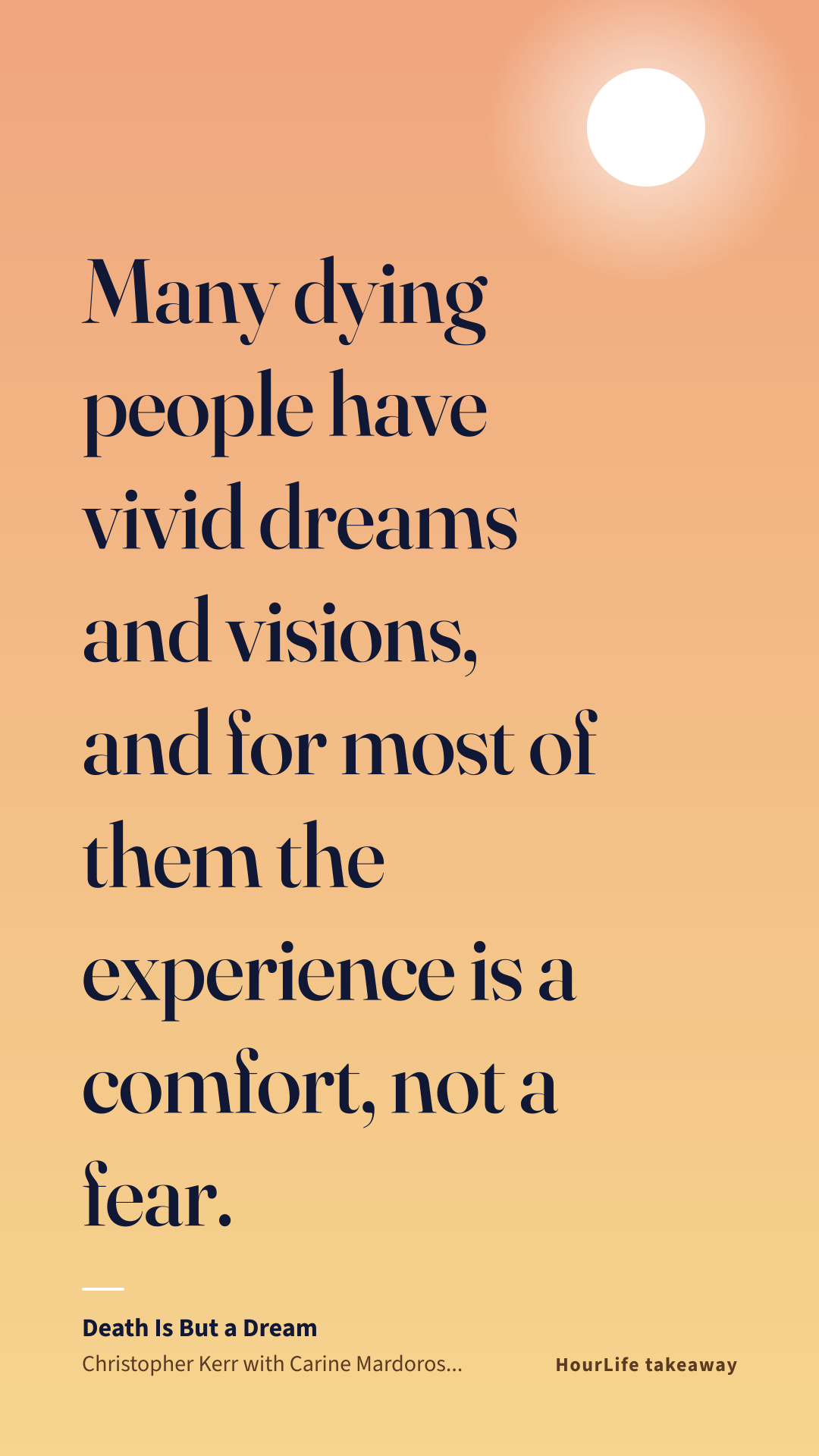
Many dying people have vivid dreams and visions, and for most of them the experience is a comfort, not a fear.

Death Is But a Dream Christopher Kerr with Carine Mardorossian HourLife takeaway

Kerr's team did something simple that medicine rarely does: they asked hospice patients what they were dreaming and wrote it down. Most described dreams or visions, and many said these felt more real than ordinary dreams. The book's starting point is that something so common, and so often calming, deserves attention.


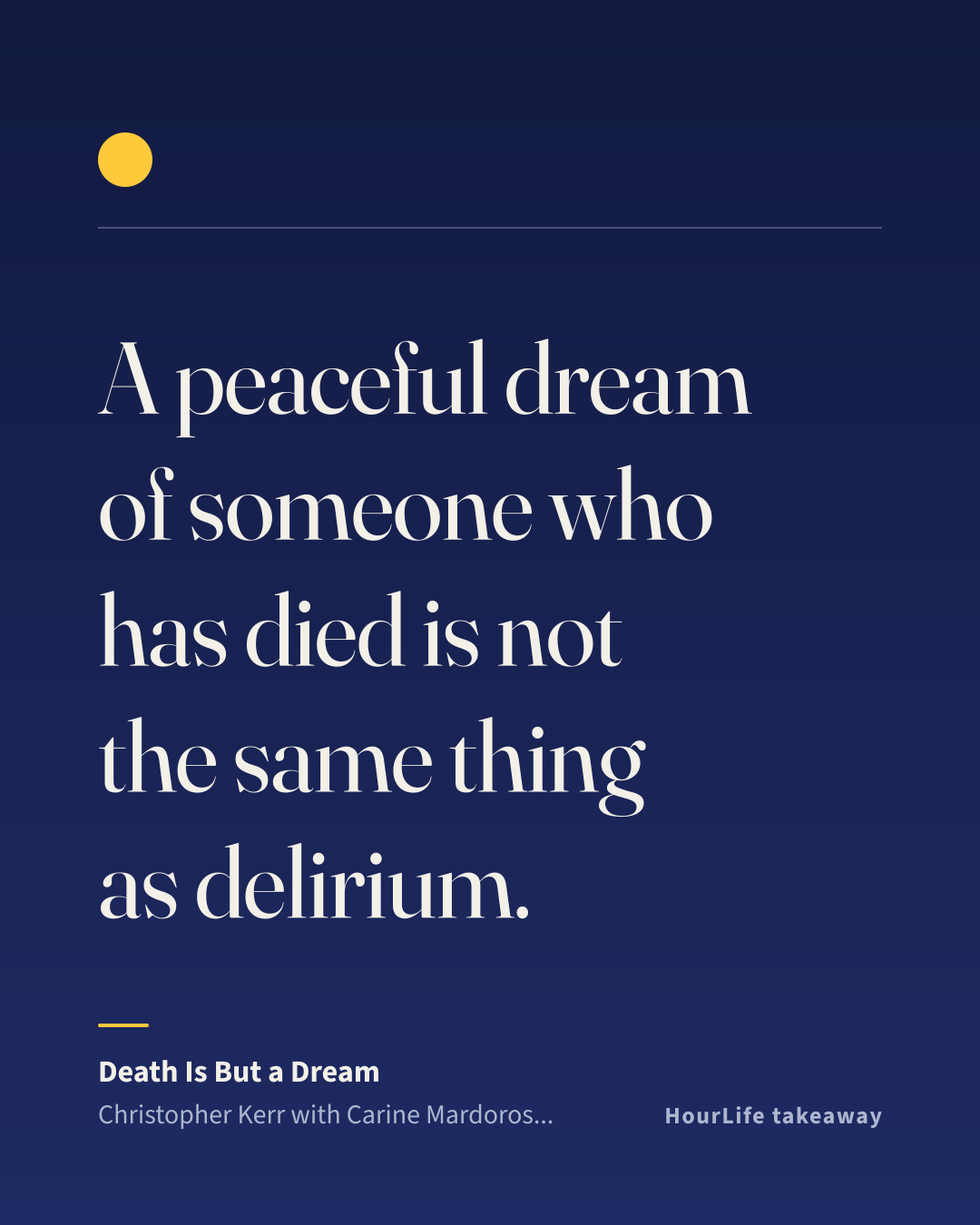
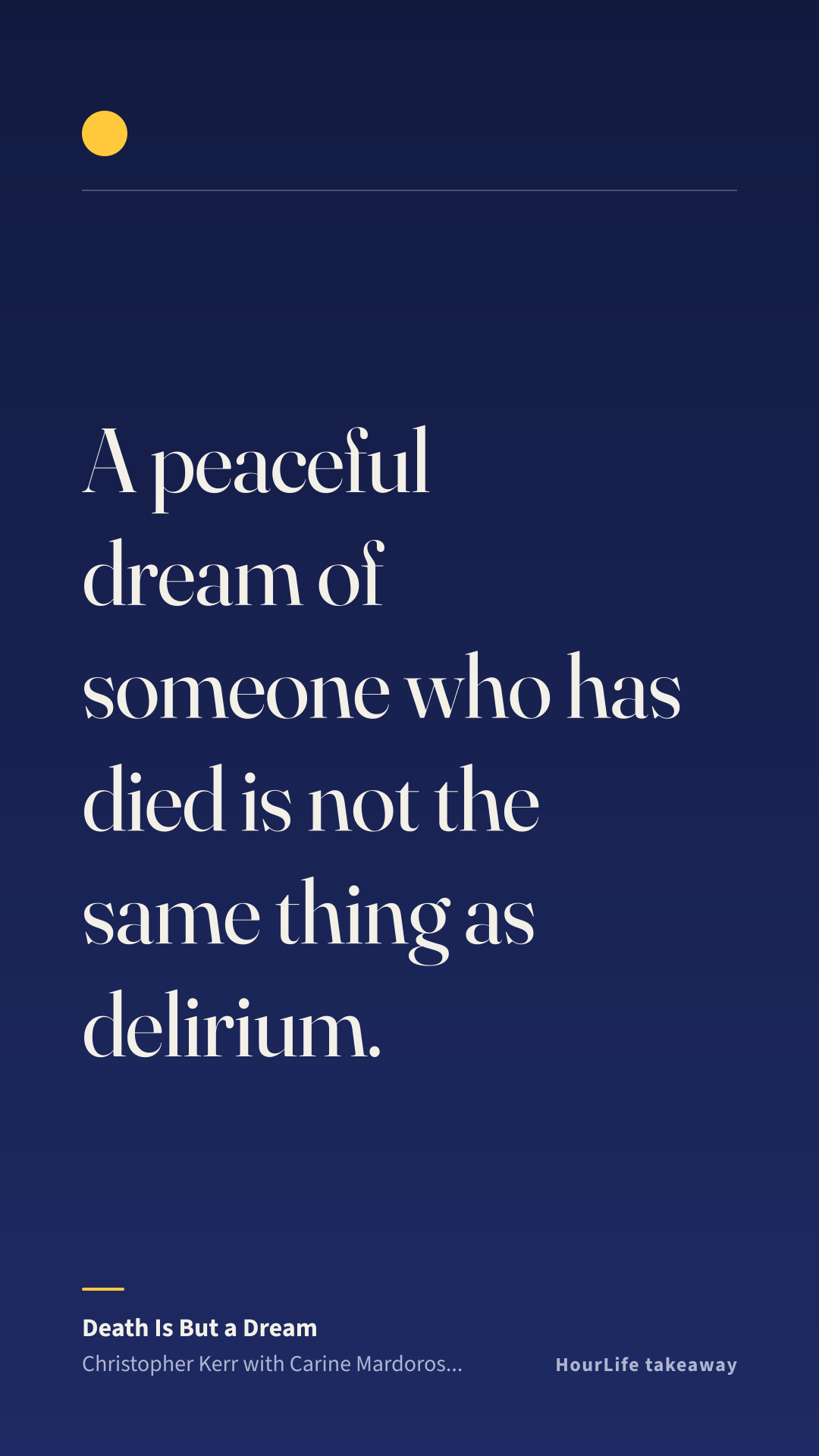
A peaceful dream of someone who has died is not the same thing as delirium.

Death Is But a Dream Christopher Kerr with Carine Mardorossian HourLife takeaway

Delirium tends to bring confusion, agitation and distress. The experiences Kerr describes are often clear, can be told in order, and leave the person calmer. He argues that filing them all under confusion means doctors miss something that matters to patients, while anything frightening still belongs with the care team.

Near the end, people often dream of the ones who loved them first.

Death Is But a Dream Christopher Kerr with Carine Mardorossian HourLife takeaway

Mothers, fathers, partners and children who died years before are among the most common figures in the book's stories. Patients often describe them as present and reassuring, as if waiting or keeping them company. For many families, hearing this changed how the last days felt.

Talk of packing, travelling and getting ready to leave can be a way of preparing.

Death Is But a Dream Christopher Kerr with Carine Mardorossian HourLife takeaway

Kerr describes patients who dream of journeys, of bags to pack, of a train or a car or a trip they need to be ready for. A family member's instinct may be to correct this or change the subject. The book suggests listening instead, and asking what the journey is like.

Old hurts can come back at the end to be settled, not only to haunt.

Death Is But a Dream Christopher Kerr with Carine Mardorossian HourLife takeaway

Not every dream is gentle. Some patients relive losses, guilt or painful memories. In the book's stories these dreams often move, over days, toward something like peace or forgiveness, which is part of why Kerr treats them as meaningful rather than as symptoms alone.

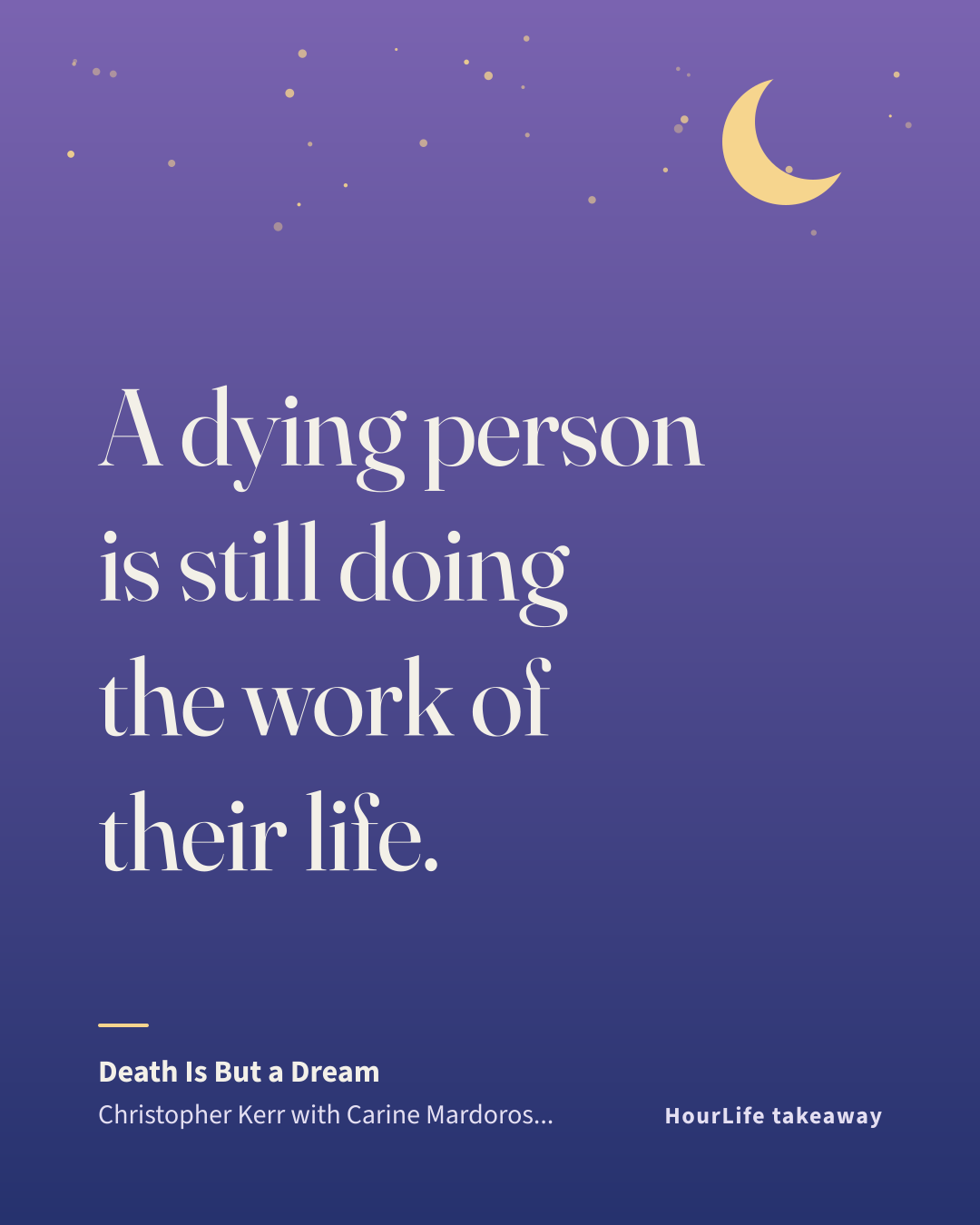
A dying person is still doing the work of their life.

Death Is But a Dream Christopher Kerr with Carine Mardorossian HourLife takeaway

Kerr pushes back on the idea that the end is only decline. In the dreams he records, people review their lives, reconnect with those they lost and make their peace. Seen that way, the last weeks are a time of meaning as well as loss.

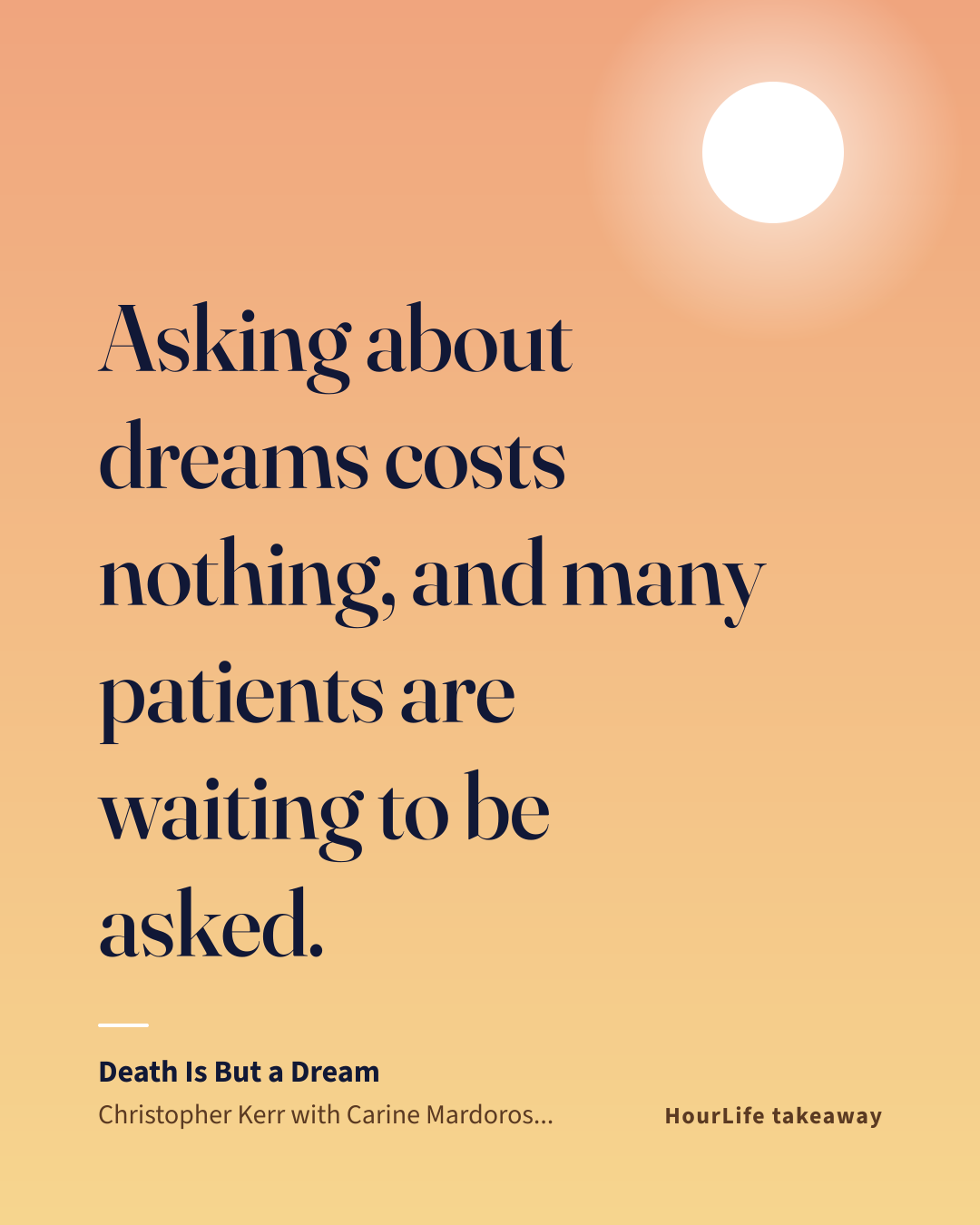
Asking about dreams costs nothing, and many patients are waiting to be asked.

Death Is But a Dream Christopher Kerr with Carine Mardorossian HourLife takeaway

Patients often keep these experiences to themselves for fear of being thought confused. A calm, open question gives them permission to talk. Kerr argues that this kind of listening is part of good care, not a distraction from it.

Children dream at the end of life too, and often speak about it plainly.

Death Is But a Dream Christopher Kerr with Carine Mardorossian HourLife takeaway

The book includes the experiences of dying children, which are among its hardest stories to read. They tend to describe what they see simply and without fuss. Their parents' accounts show how much those moments meant afterwards.

What comforts the dying can also comfort the people left behind.

Death Is But a Dream Christopher Kerr with Carine Mardorossian HourLife takeaway

Families who saw a loved one calmed by a dream often carried that memory into their grief. Kerr's point is that these experiences matter to the bereaved as well as the patient. Listening at the bedside can shape how a death is remembered.

Keep this going in the app.

HourLife turns these ideas into a daily system — goals, habits, focus, and reflection in one private place.