Keep this author quotes for later
Sign in to save

Danny Penman

The most-loved lines from Danny Penman, drawn from 1 book in the library.

Lines labelled “HourLife takeaway” are our wording of the book’s ideas and may paraphrase it. Only lines in quotation marks are the author’s own words, with where they appear. Check the book for exact wording before you quote it. Spot an error?

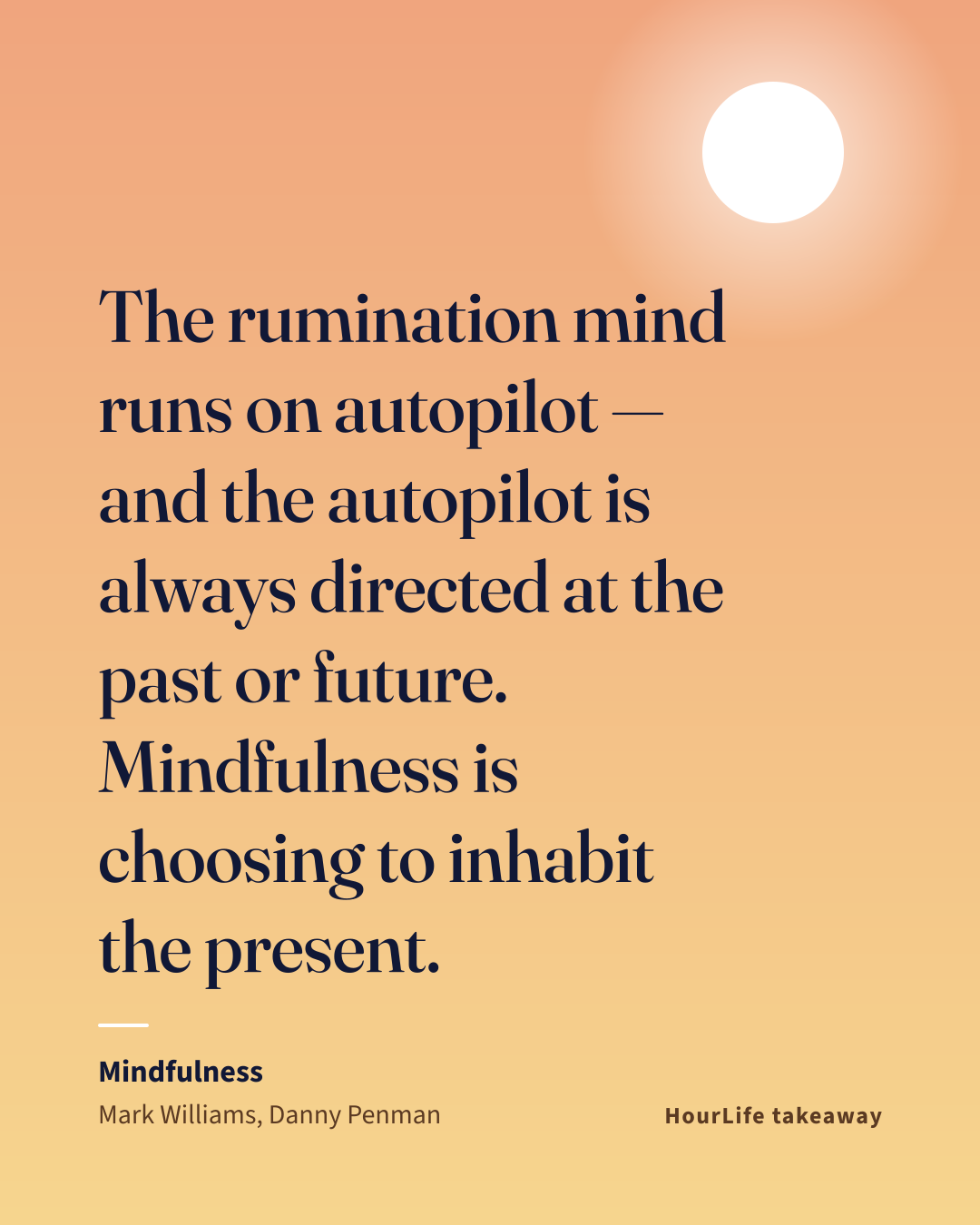
The rumination mind runs on autopilot — and the autopilot is always directed at the past or future. Mindfulness is choosing to inhabit the present.

Mindfulness Mark Williams, Danny Penman HourLife takeaway

Williams and Penman's framework: depression and anxiety are characterized by excessive past-focus (rumination) and future-focus (worry). Mindfulness is the intervention that breaks the loop.


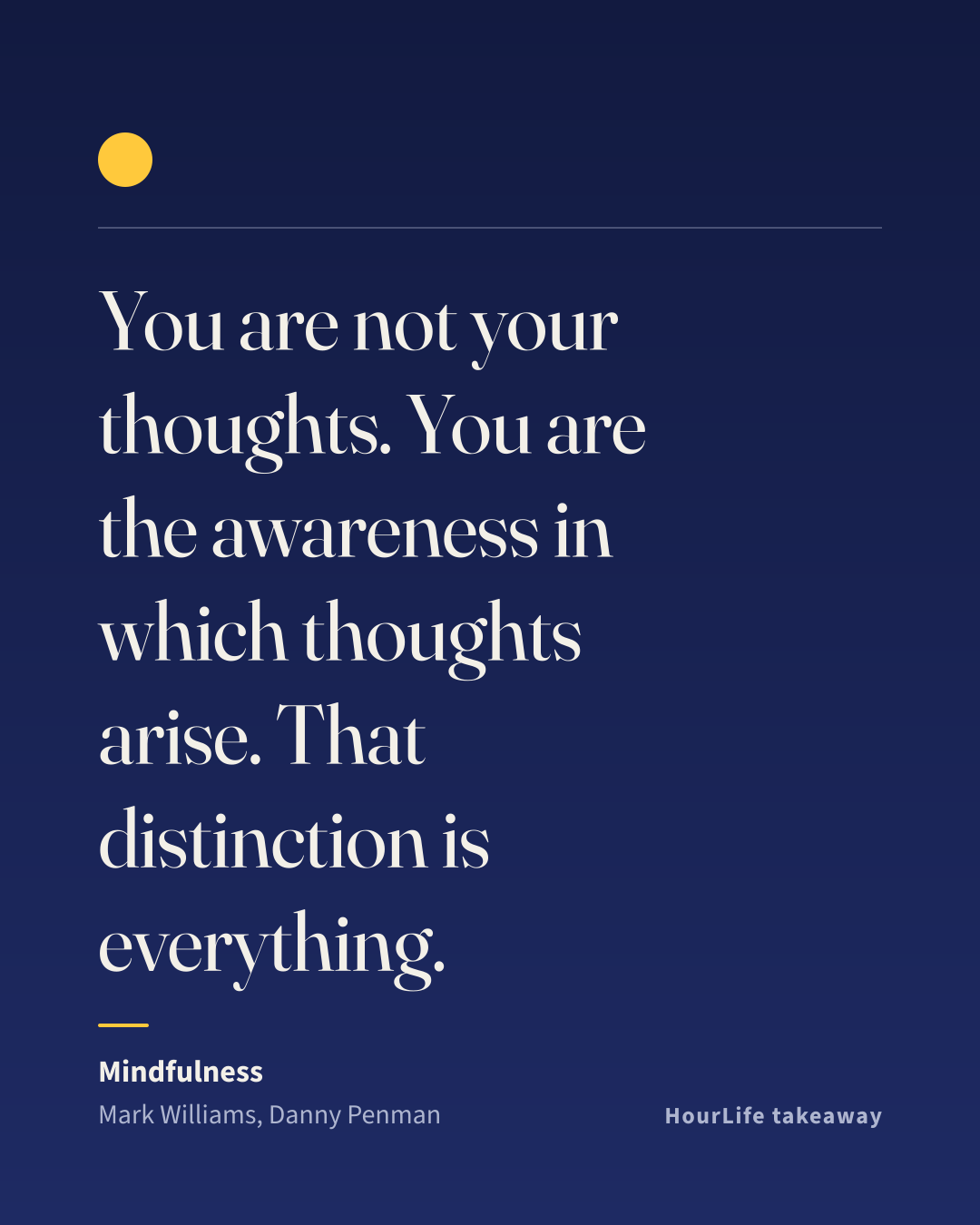
You are not your thoughts. You are the awareness in which thoughts arise. That distinction is everything.

Mindfulness Mark Williams, Danny Penman HourLife takeaway

This is the cognitive shift that mindfulness produces: the ability to observe thoughts without being consumed by them. You're not trying to stop thinking — you're changing your relationship to it.

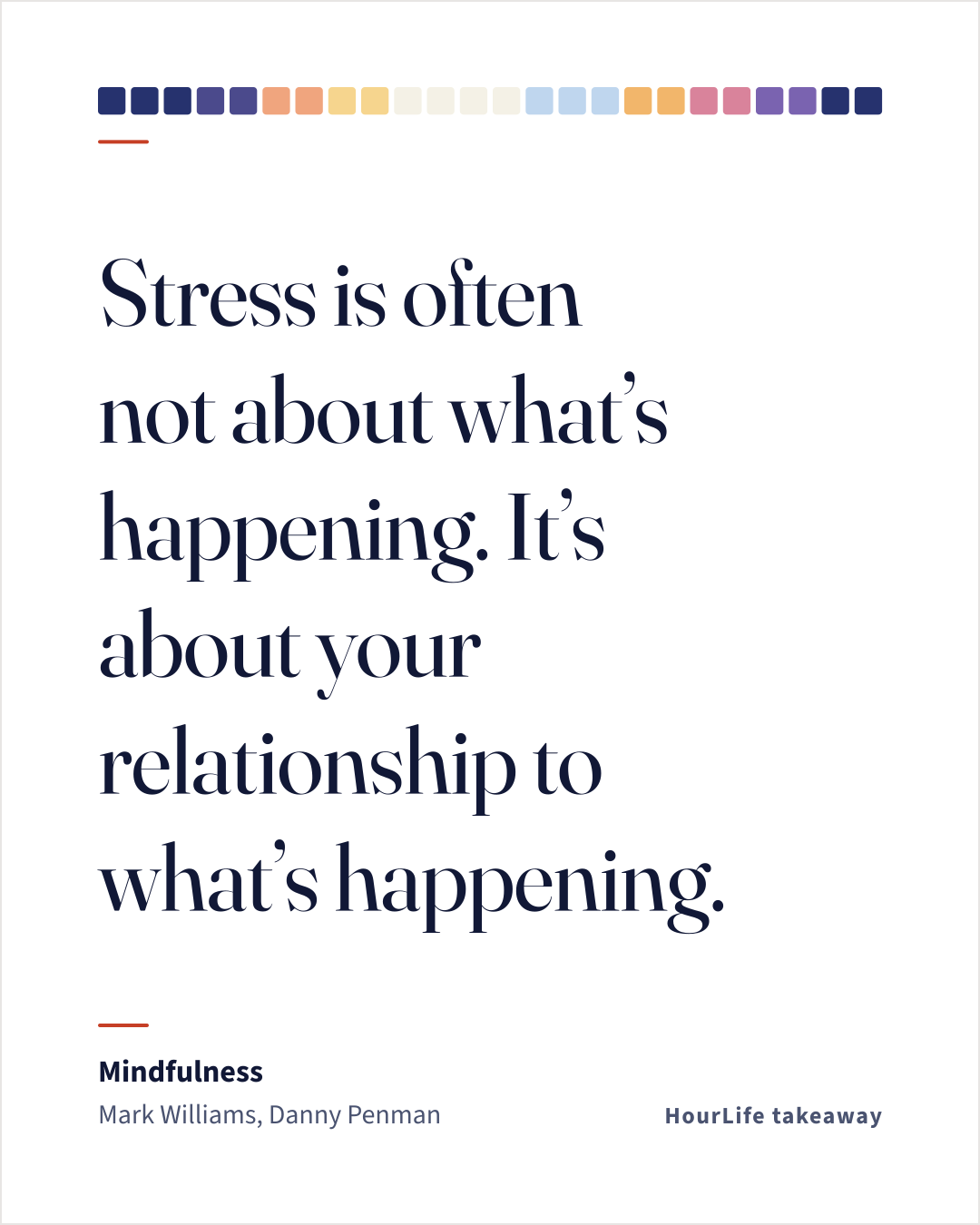
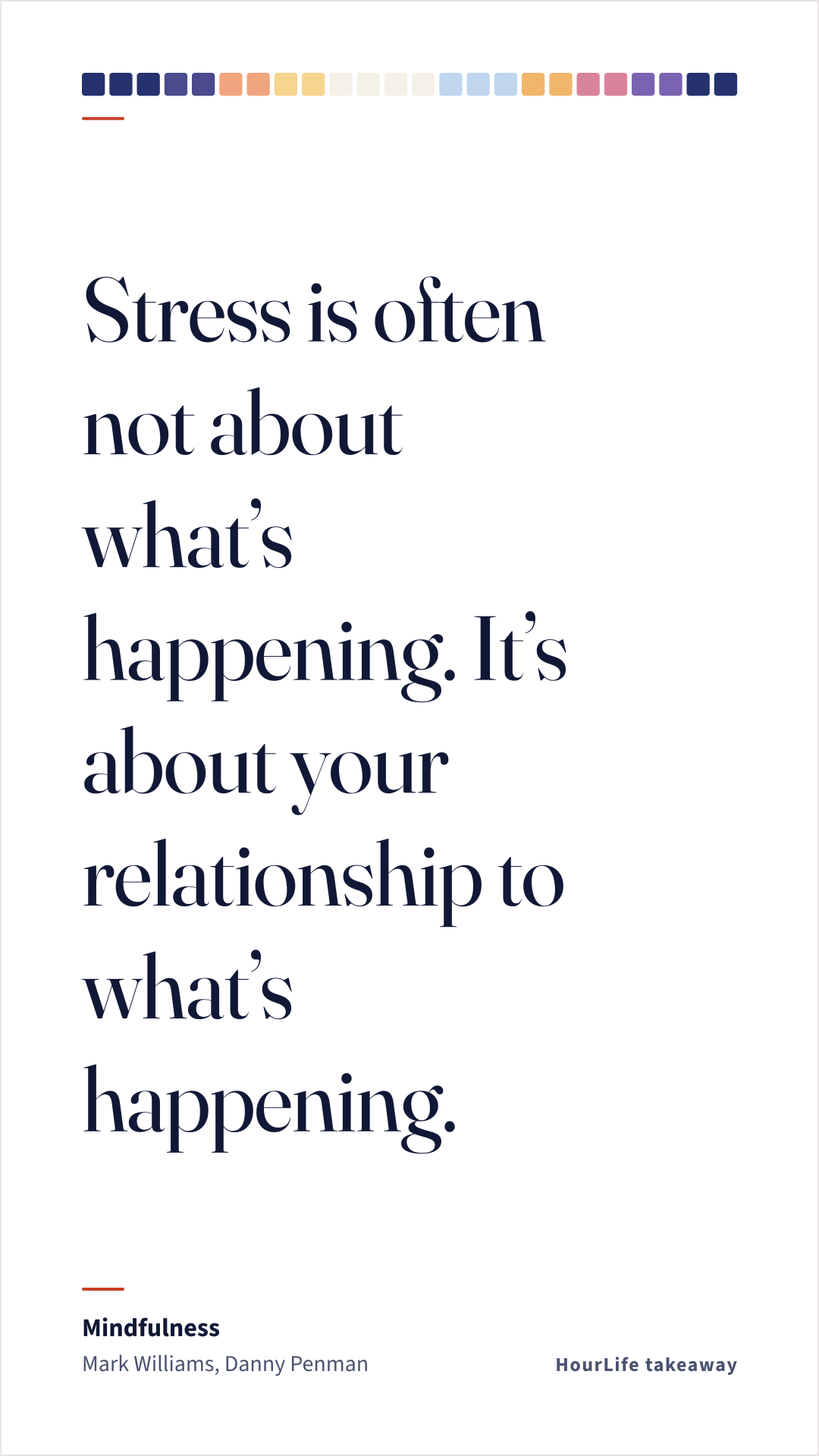
Stress is often not about what’s happening. It’s about your relationship to what’s happening.

Mindfulness Mark Williams, Danny Penman HourLife takeaway

Two people face the same stressor. One is consumed by it; the other is distressed but functional. The difference is not the stressor — it's the degree of presence and acceptance.

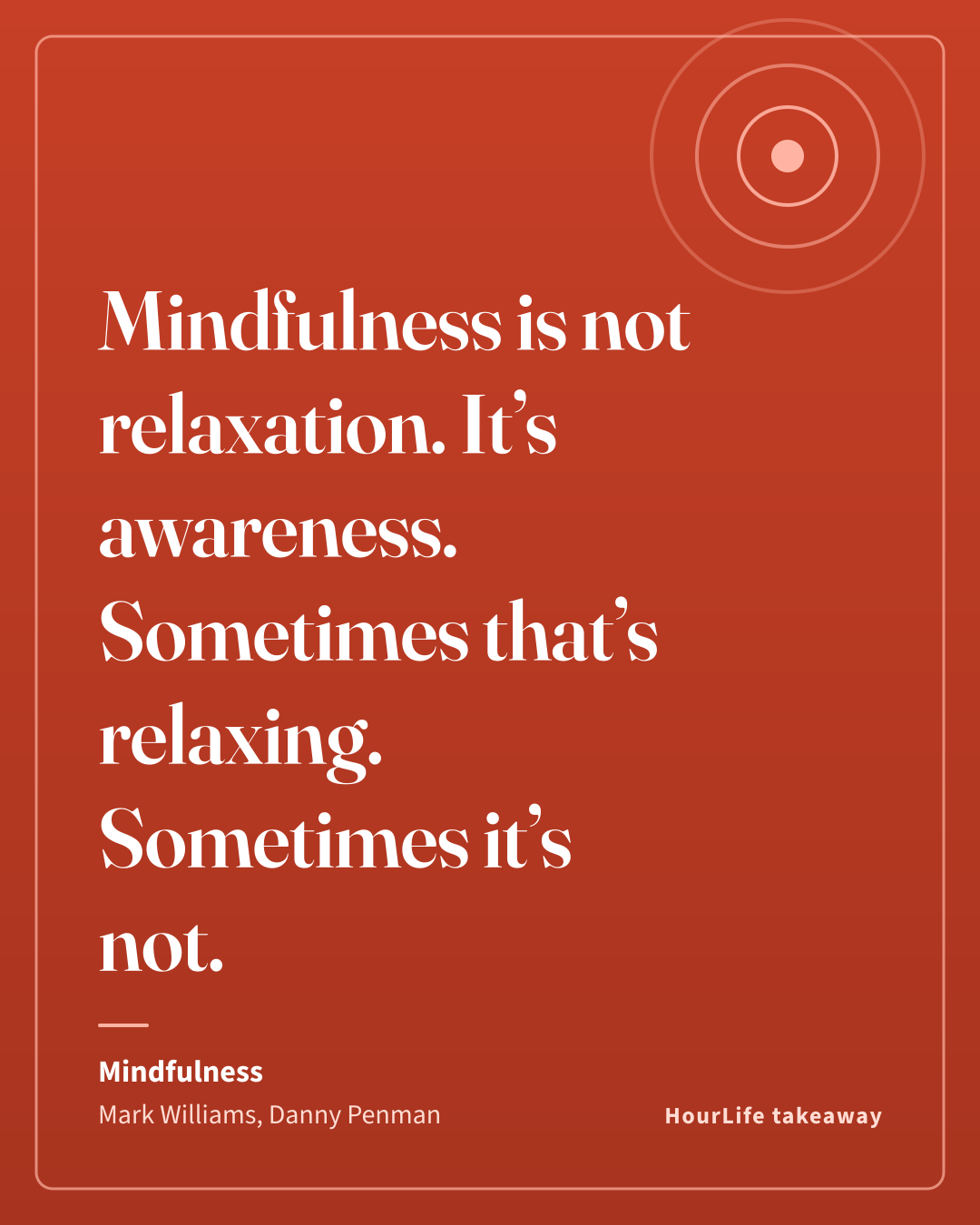
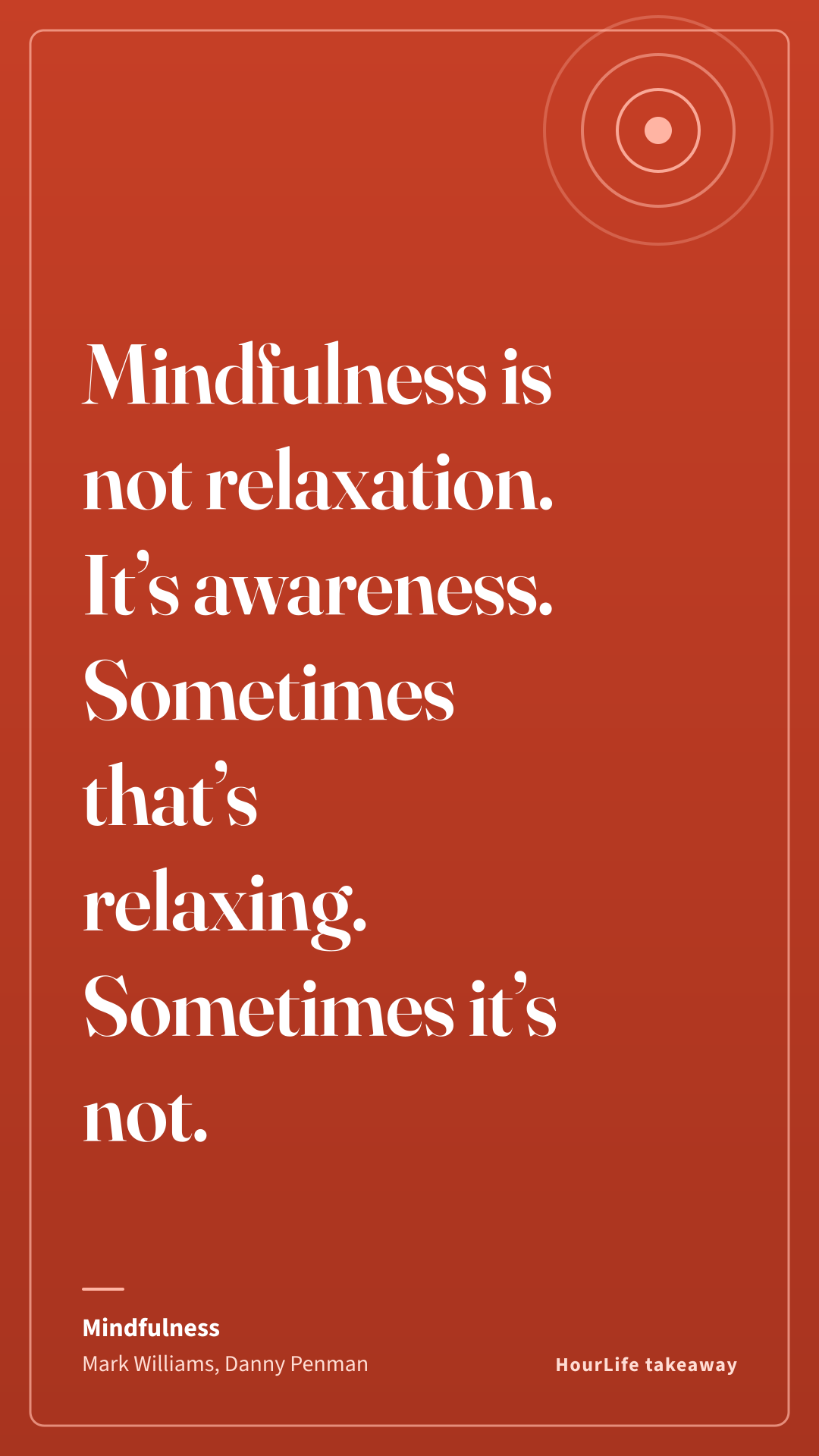
Mindfulness is not relaxation. It’s awareness. Sometimes that’s relaxing. Sometimes it’s not.

Mindfulness Mark Williams, Danny Penman HourLife takeaway

The goal of mindfulness is not to feel good. It's to see clearly. That often leads to better decision-making, emotional regulation, and — as a side effect — greater equanimity.

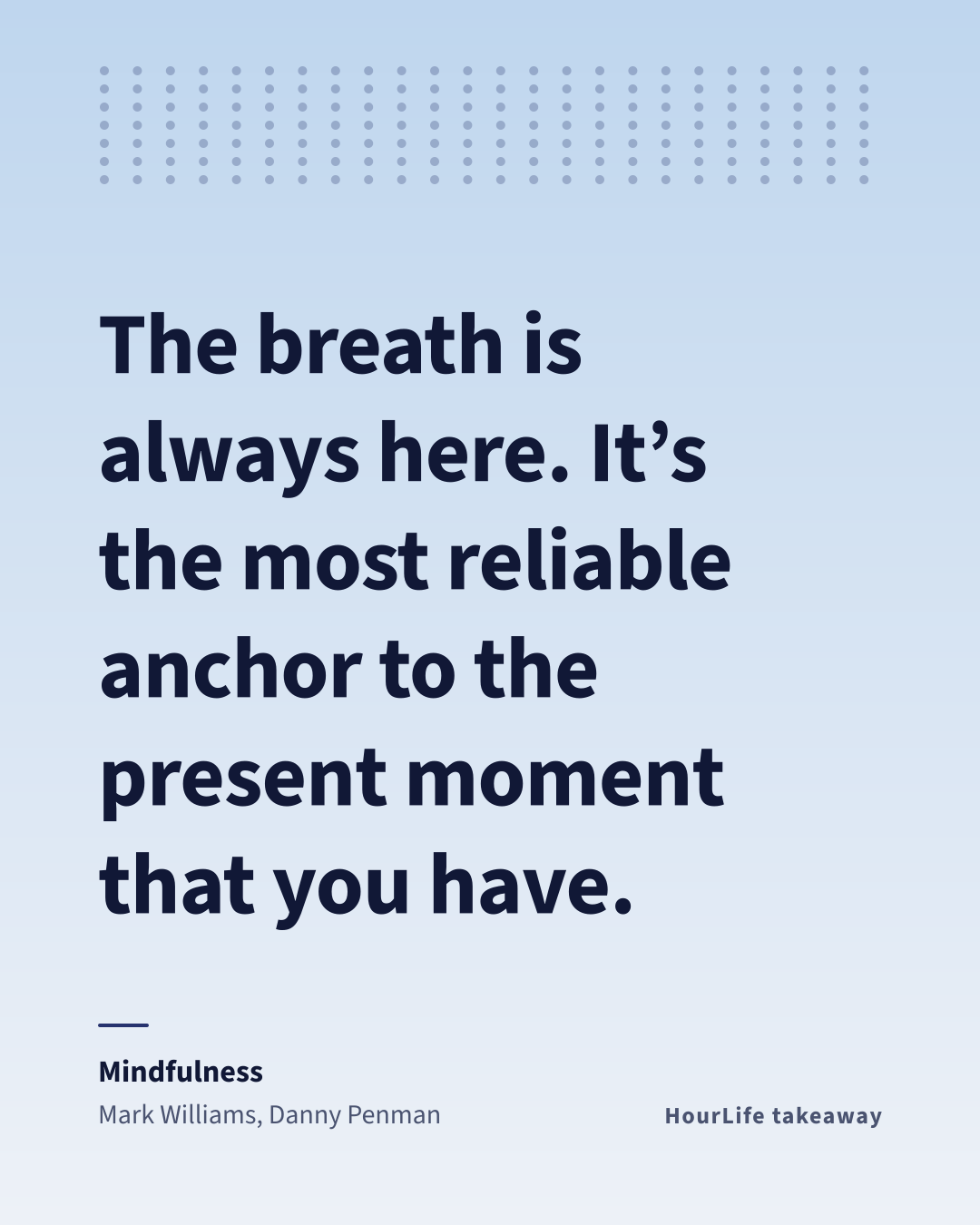
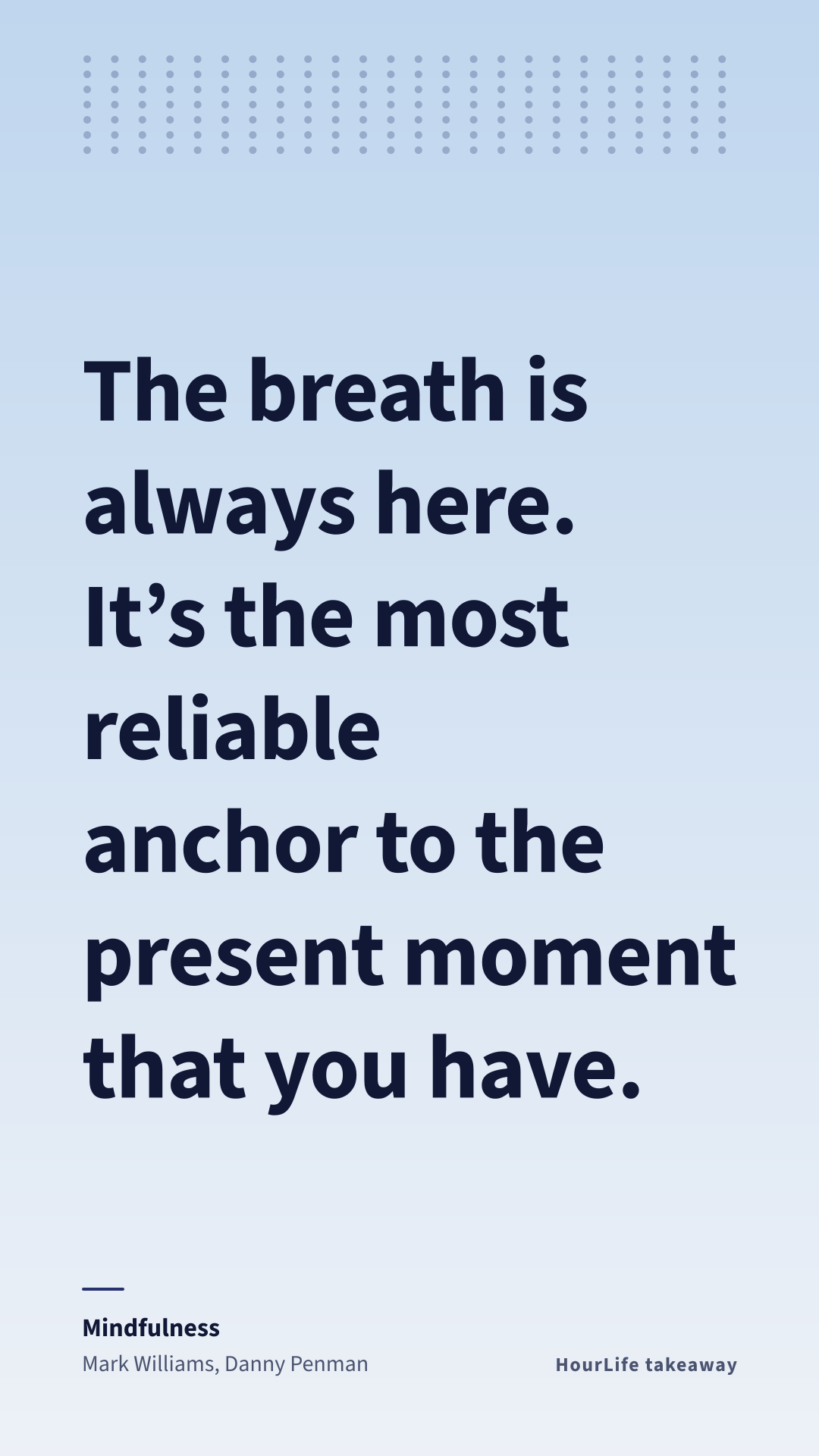
The breath is always here. It’s the most reliable anchor to the present moment that you have.

Mindfulness Mark Williams, Danny Penman HourLife takeaway

The breath is unique: it's the only autonomic function you can consciously control. And it's always happening in the present. This makes it the ideal anchor for attention training.

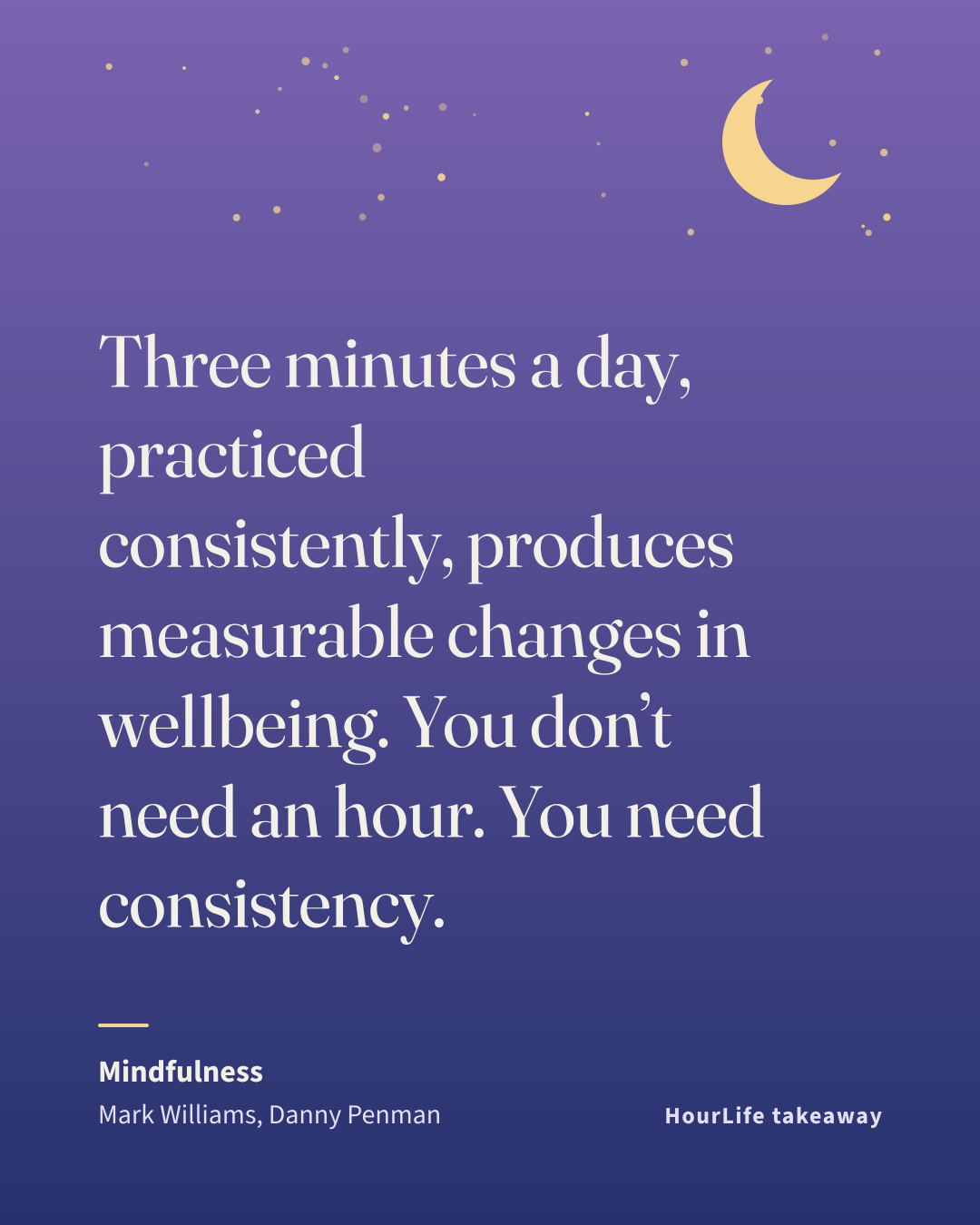
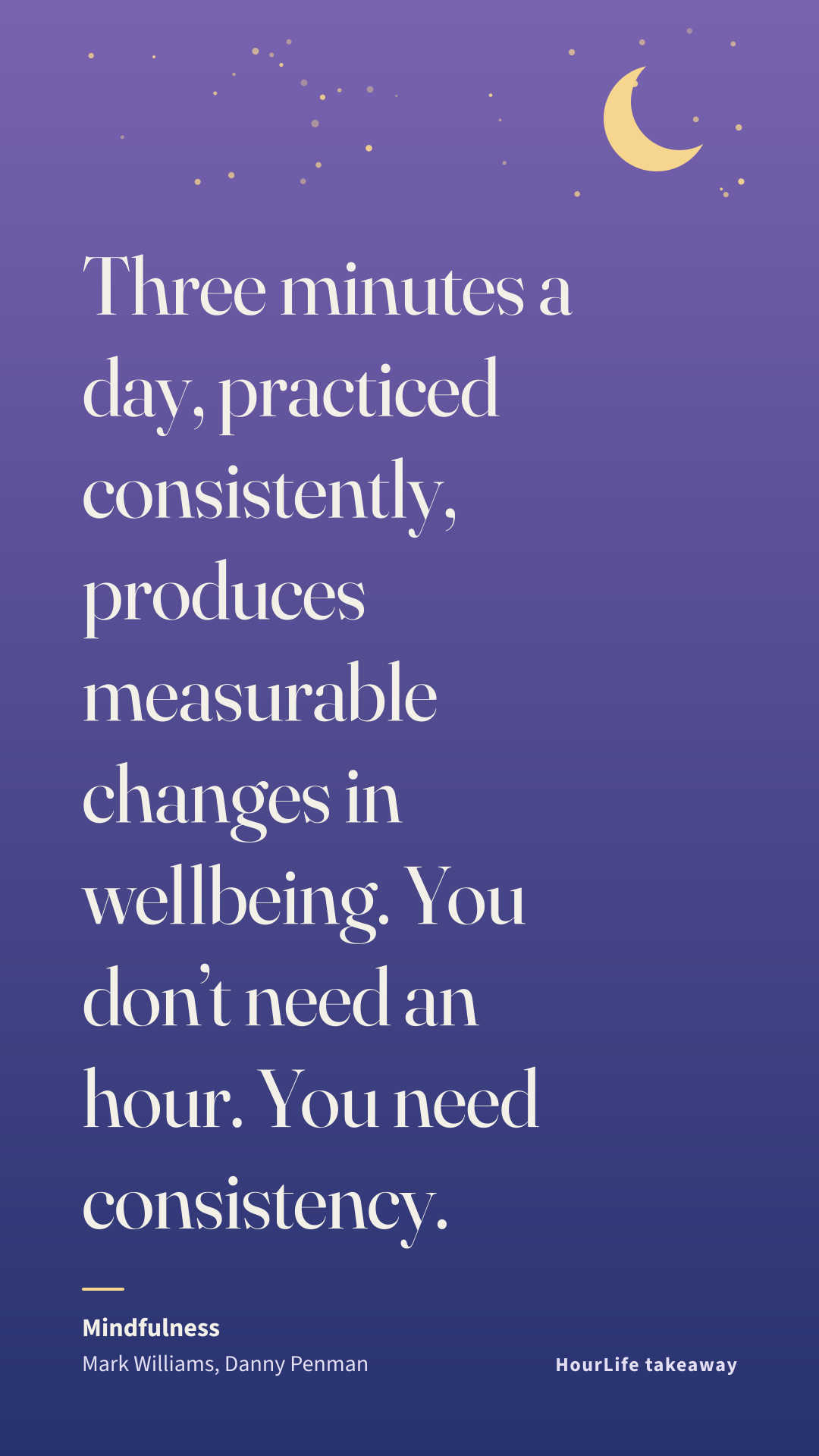
Three minutes a day, practiced consistently, produces measurable changes in wellbeing. You don’t need an hour. You need consistency.

Mindfulness Mark Williams, Danny Penman HourLife takeaway

MBCT (Mindfulness-Based Cognitive Therapy) research: the dose-response curve for mindfulness is surprisingly favorable. Small regular practice beats occasional marathons.

Keep this going in the app.

HourLife turns these ideas into a daily system — goals, habits, focus, and reflection in one private place.