Keep this author quotes for later
Sign in to save

David Byrne

The most-loved lines from David Byrne, drawn from 1 book in the library.

Lines labelled “HourLife takeaway” are our wording of the book’s ideas and may paraphrase it. Only lines in quotation marks are the author’s own words, with where they appear. Check the book for exact wording before you quote it. Spot an error?

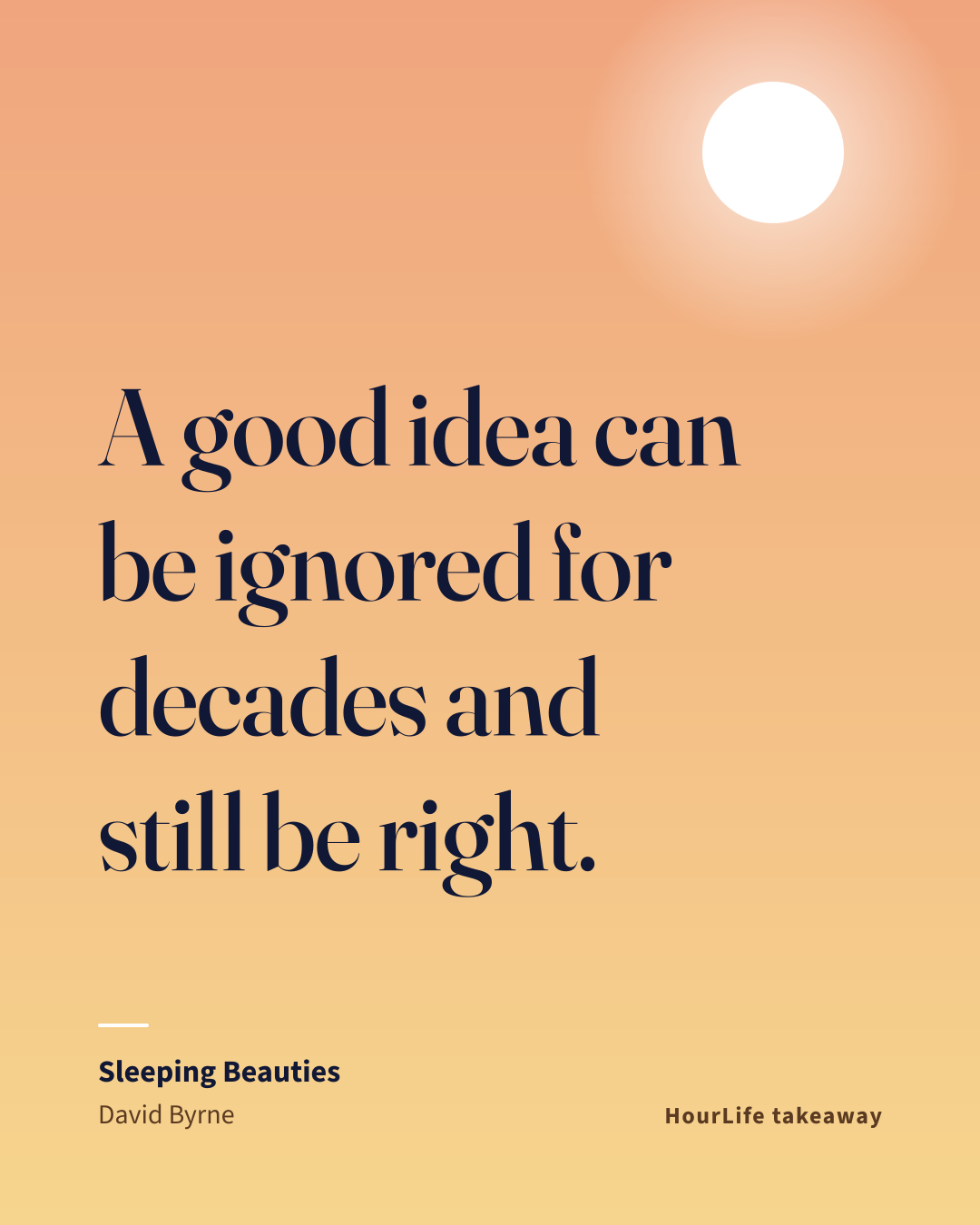
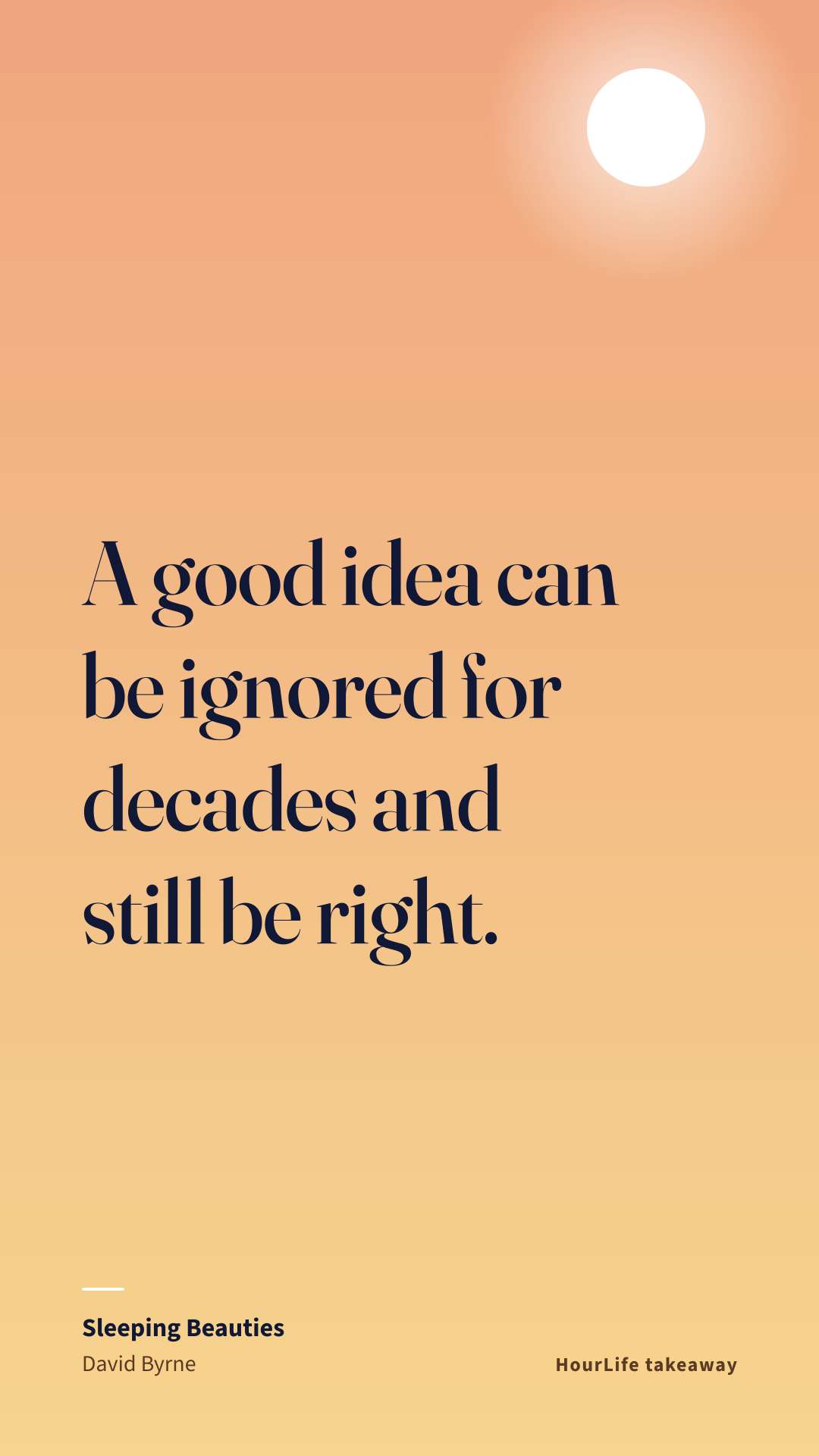
A good idea can be ignored for decades and still be right.

Sleeping Beauties David Byrne HourLife takeaway

Byrne borrows the name sleeping beauty from a 2004 paper by Anthony van Raan about scientific papers that sit almost uncited for years and then take off. Gregor Mendel's work on heredity is the classic case: published in 1866, it went largely unnoticed until later researchers doing similar work found it. Being overlooked tells you about the audience, not about the idea.


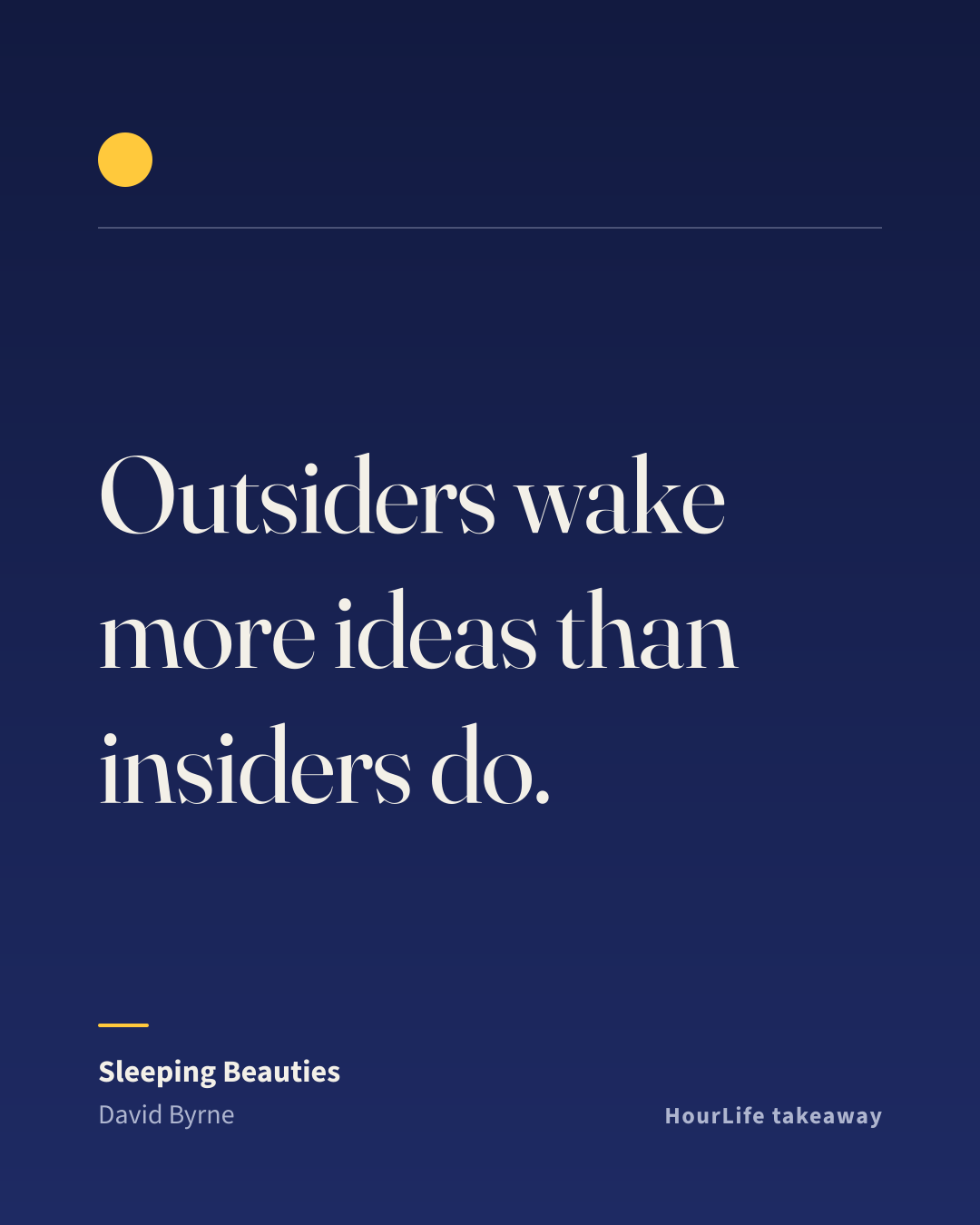
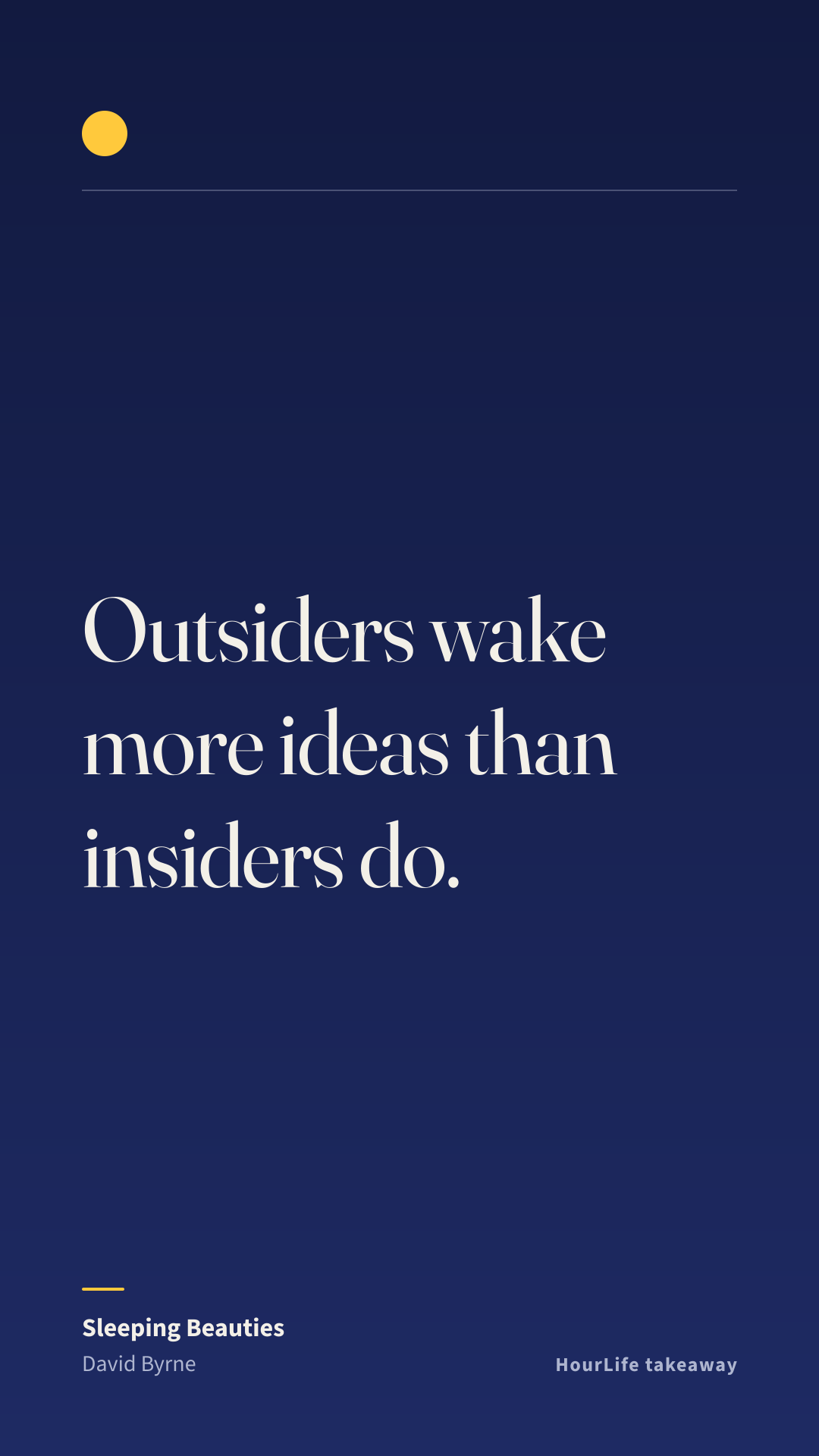
Outsiders wake more ideas than insiders do.

Sleeping Beauties David Byrne HourLife takeaway

The pattern Byrne returns to most is someone from a different discipline breaking into a closed field. Specialists can miss what is in plain sight, and hierarchies tend to favour the people already inside them. If your idea is stuck, the person who can unstick it may not work in your field at all.

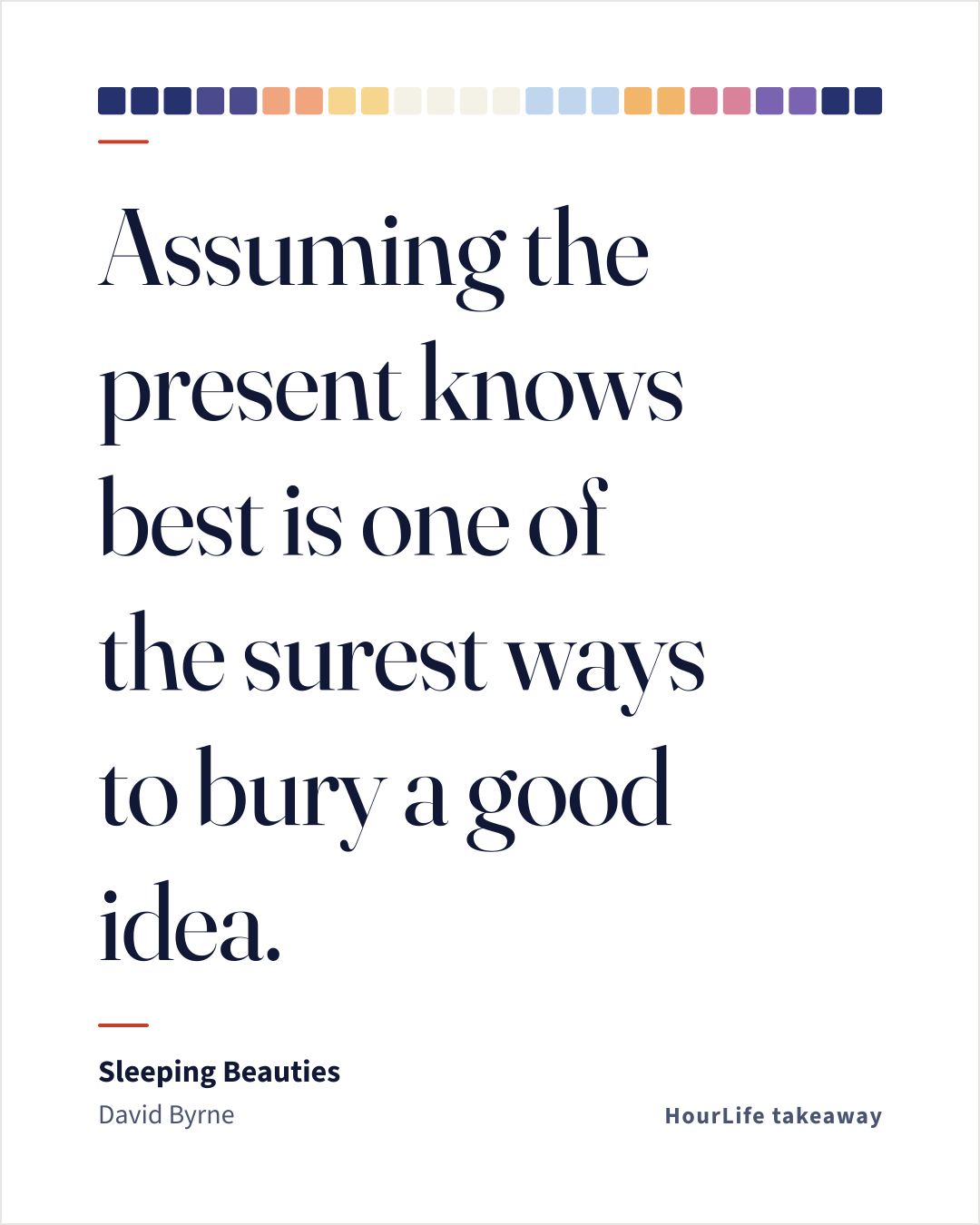
Assuming the present knows best is one of the surest ways to bury a good idea.

Sleeping Beauties David Byrne HourLife takeaway

Byrne points to Roman concrete. The Pantheon's unreinforced dome has stood for about two thousand years, yet the material was overlooked for centuries partly because people assumed modern methods must be better. Recency bias works the same way in research, where newer work tends to be favoured over older work by default.

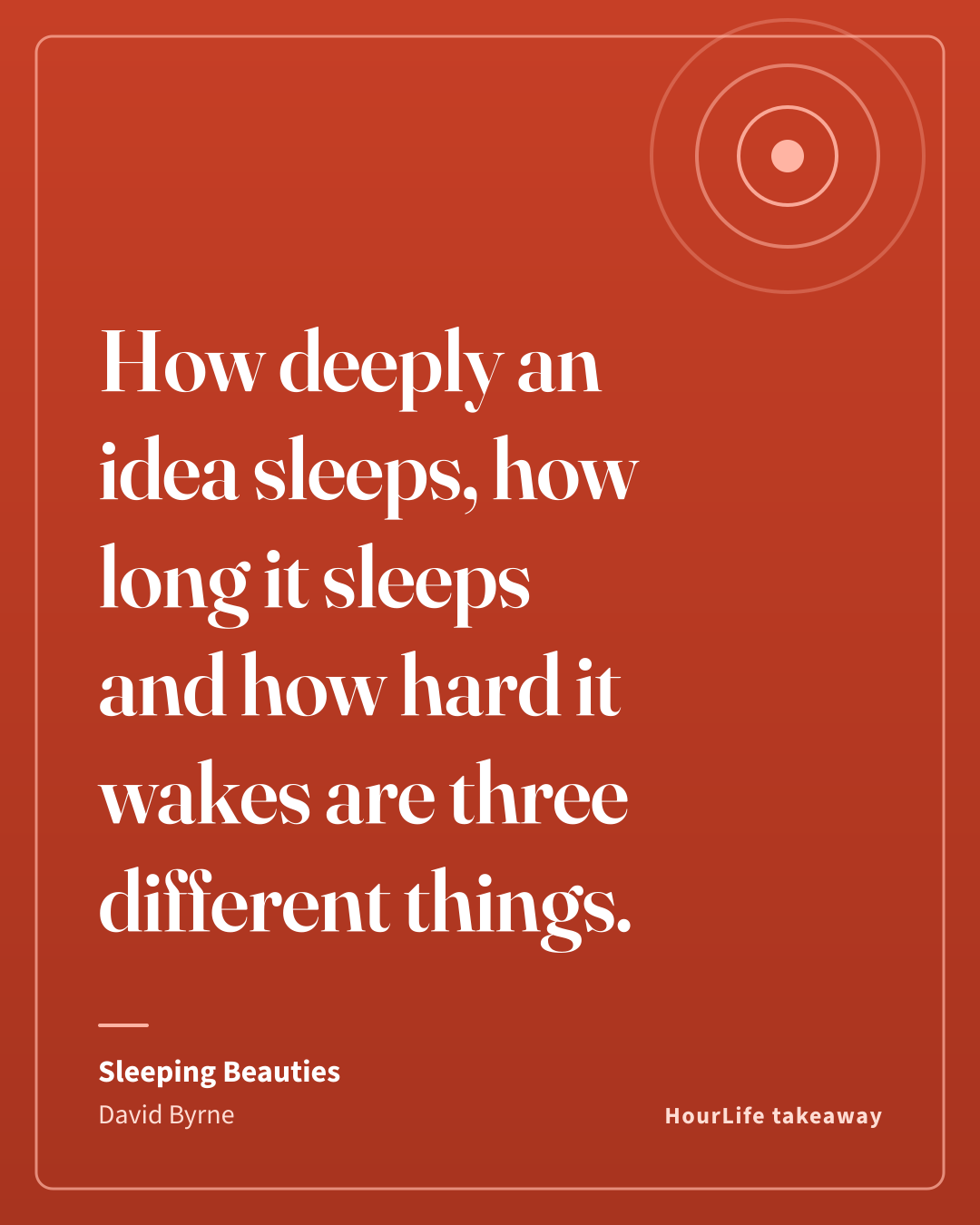
How deeply an idea sleeps, how long it sleeps and how hard it wakes are three different things.

Sleeping Beauties David Byrne HourLife takeaway

Van Raan measured sleeping papers along three lines: the depth of sleep (how few citations they got), the length of sleep (how long that lasted) and the intensity of the awakening. Byrne uses the same lens on art and inventions. It is a useful way to see that a long sleep and a quiet one are not a verdict on how much an idea will matter.

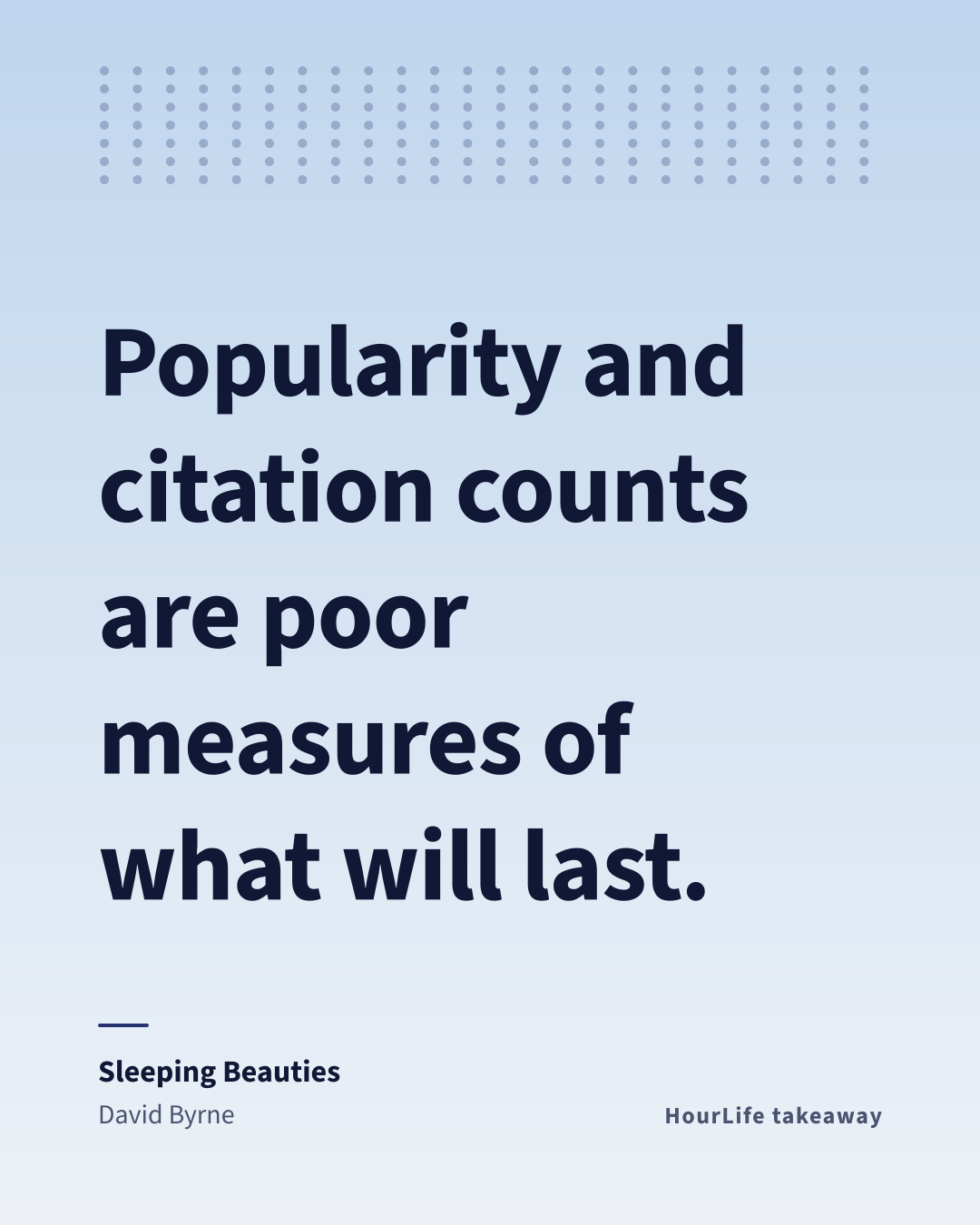
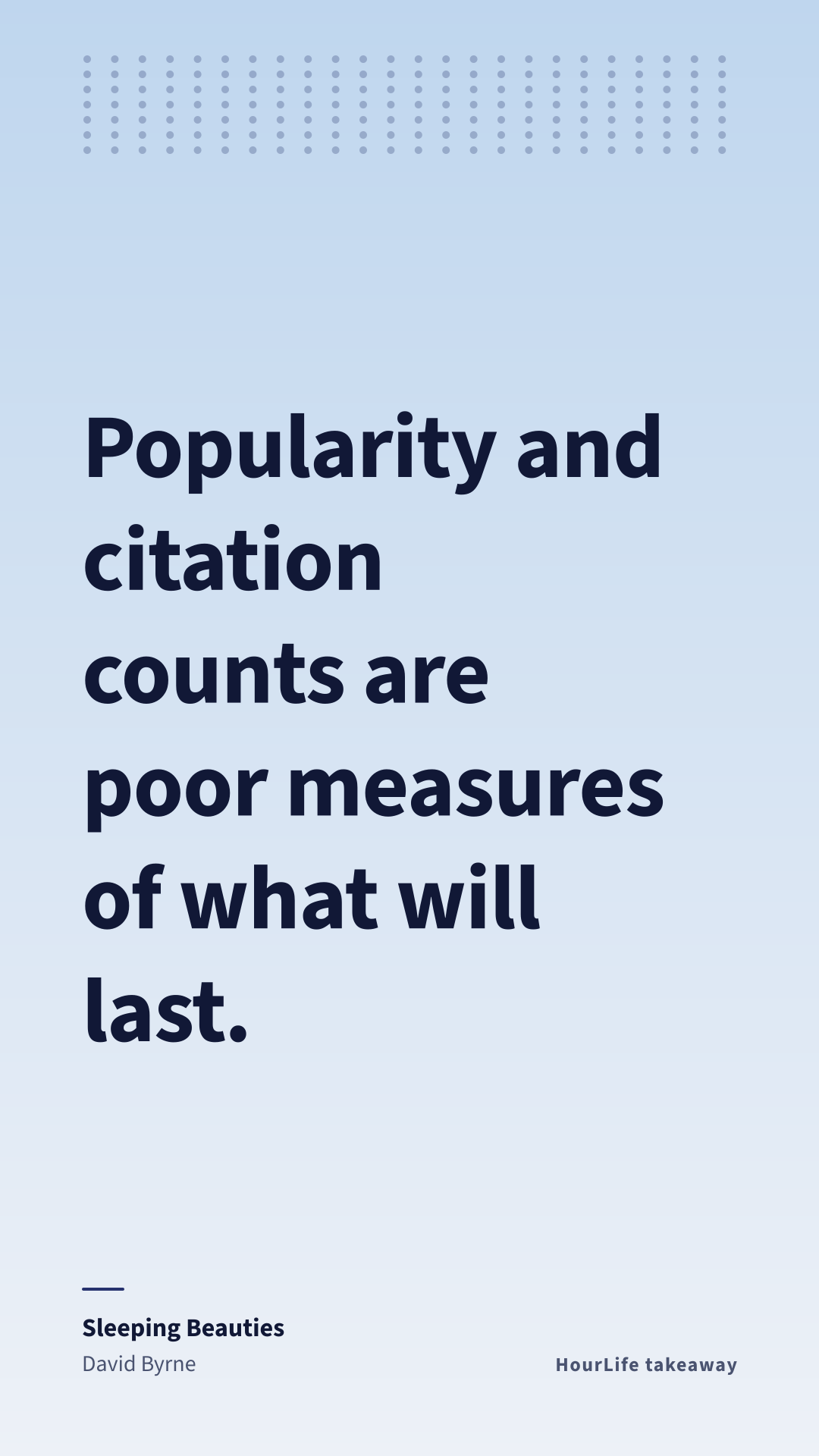
Popularity and citation counts are poor measures of what will last.

Sleeping Beauties David Byrne HourLife takeaway

Byrne argues that citations miss influence that never shows up in a count, and that leaning on such numbers can bend decisions about hiring, funding and what gets studied. Sales and attention at the time say little more. Judging lasting value often needs distance.

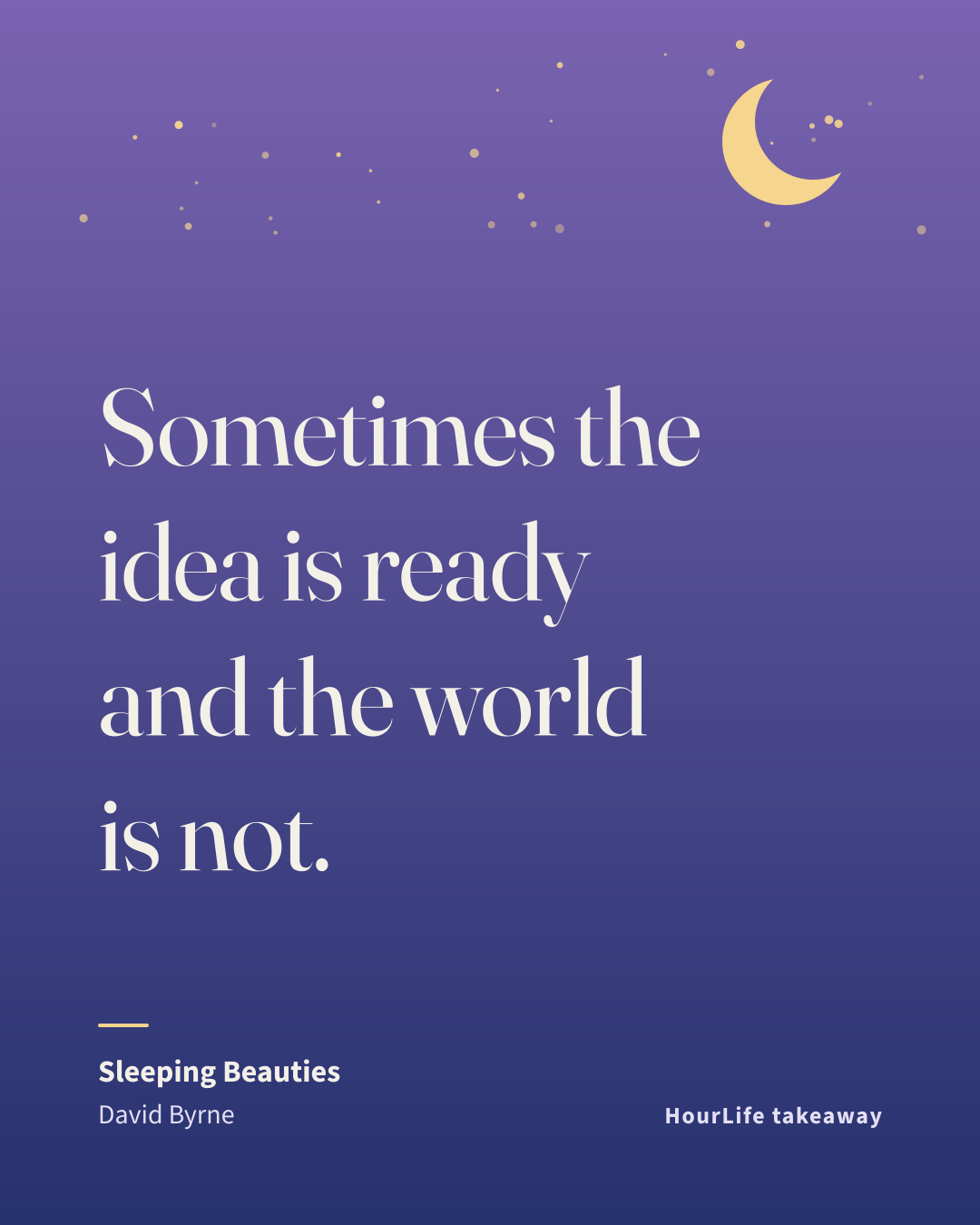
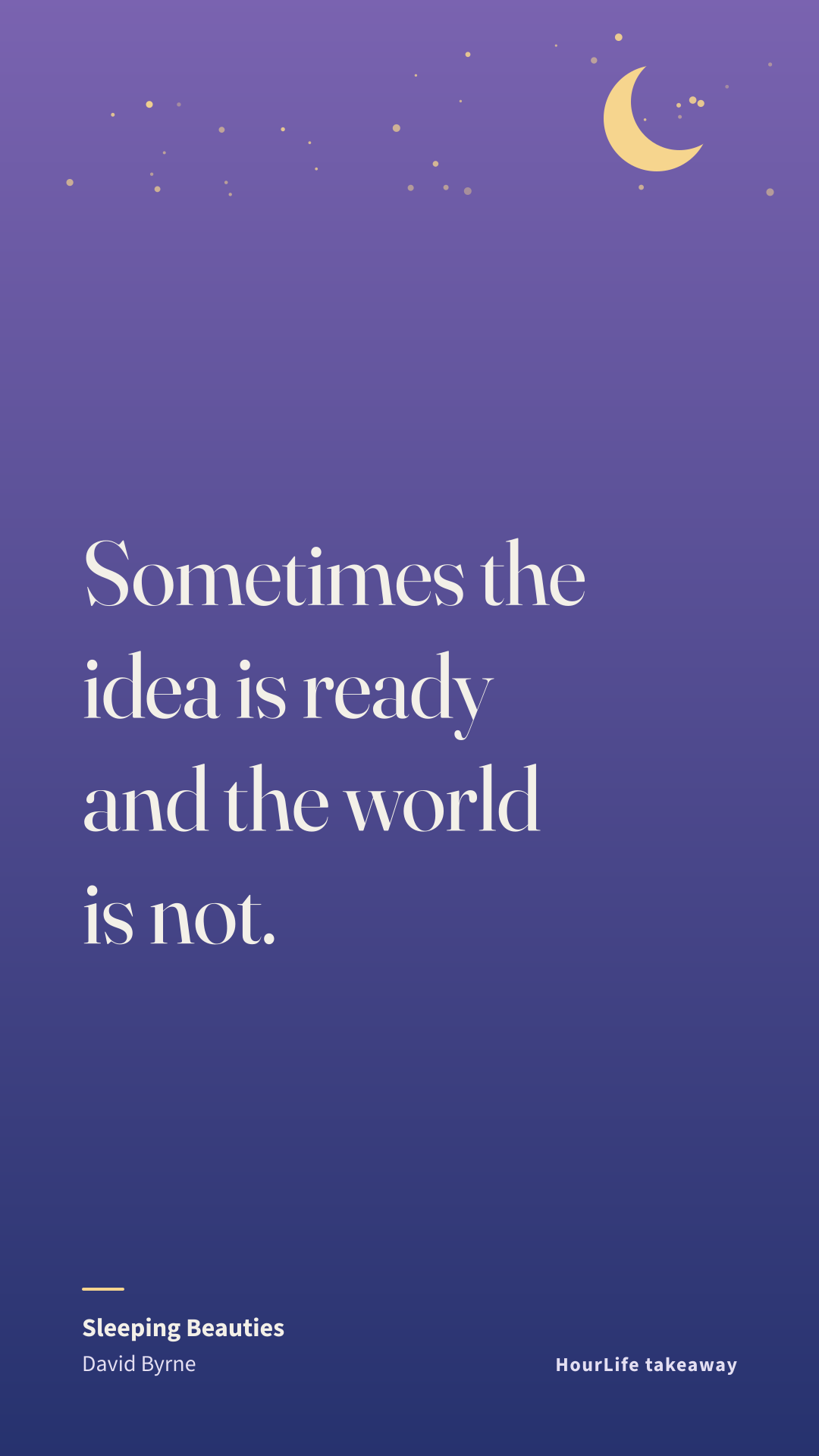
Sometimes the idea is ready and the world is not.

Sleeping Beauties David Byrne HourLife takeaway

Some ideas wait for the right tools or the right moment. Byrne's examples include theories like continental drift and black holes, which new technology helped bring back, and the submarine, which war made urgent again. When you shelve something, it is worth noting what would have to change for it to work.

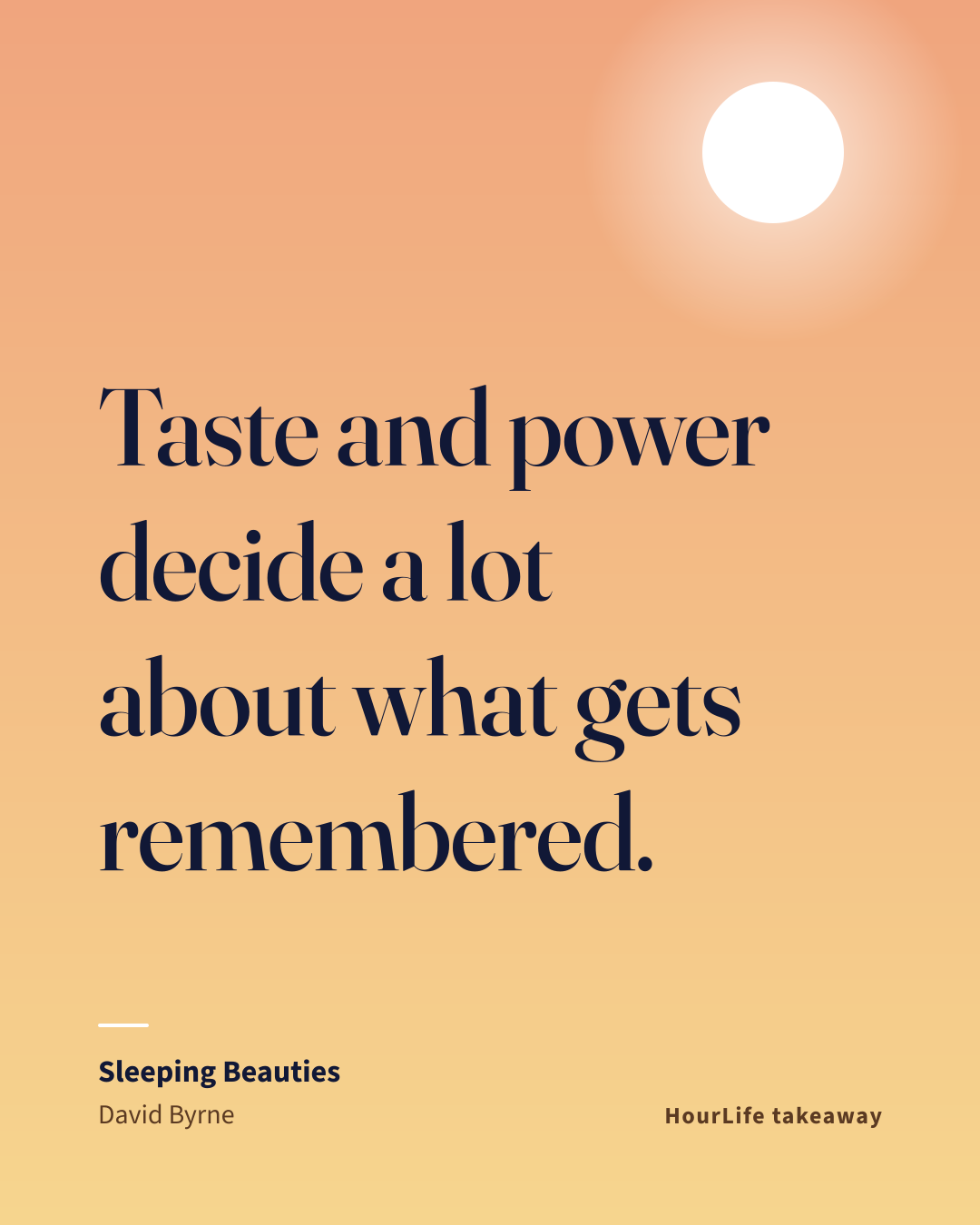
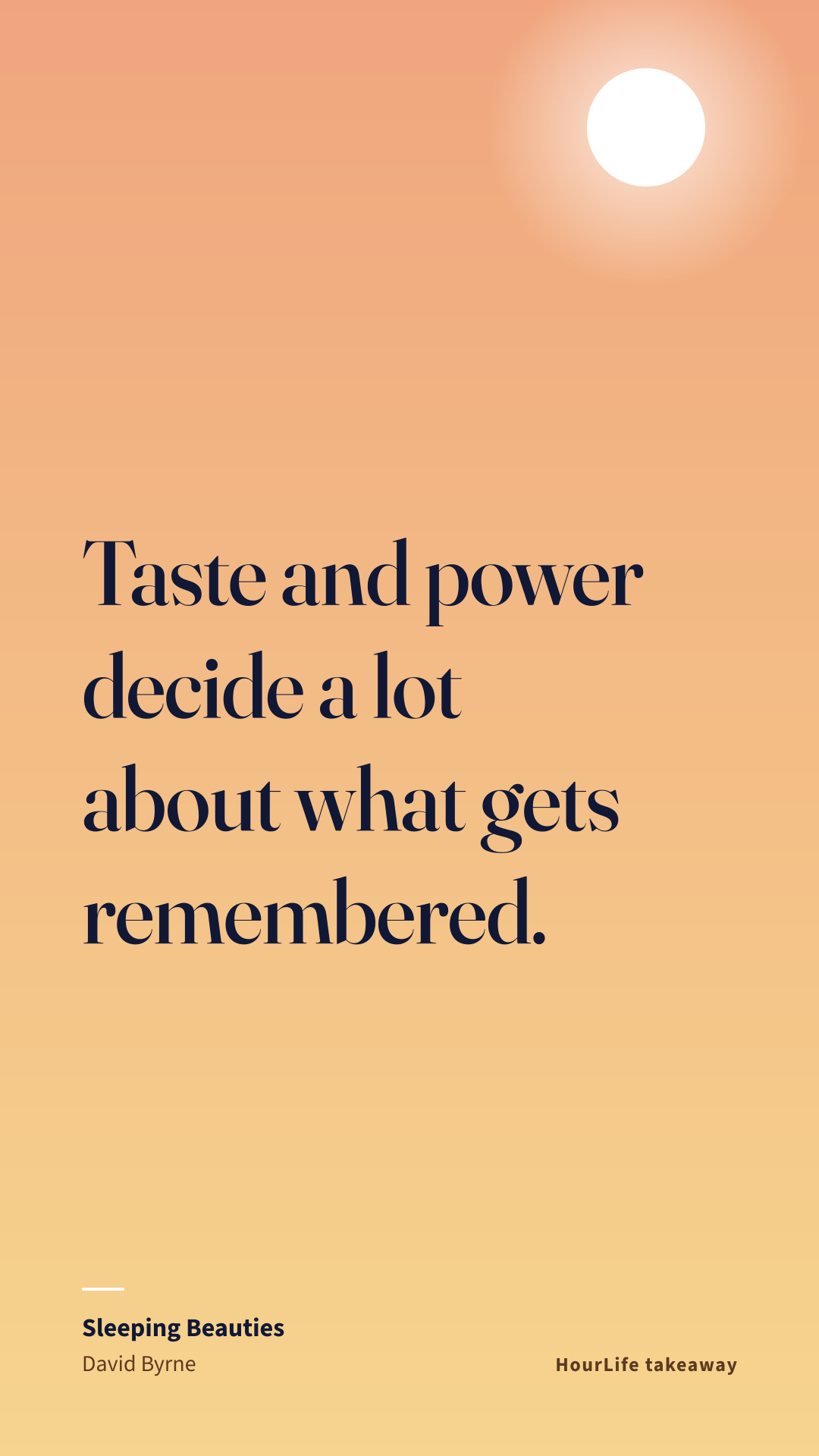
Taste and power decide a lot about what gets remembered.

Sleeping Beauties David Byrne HourLife takeaway

Botticelli fell out of favour for centuries after the preacher Savonarola's campaign against him and the art he stood for, and was rediscovered in the late nineteenth century. Byrne uses cases like this to show that what a culture keeps is partly a choice made by people with influence. Bach and Vermeer also had to wait a long time to be revived.

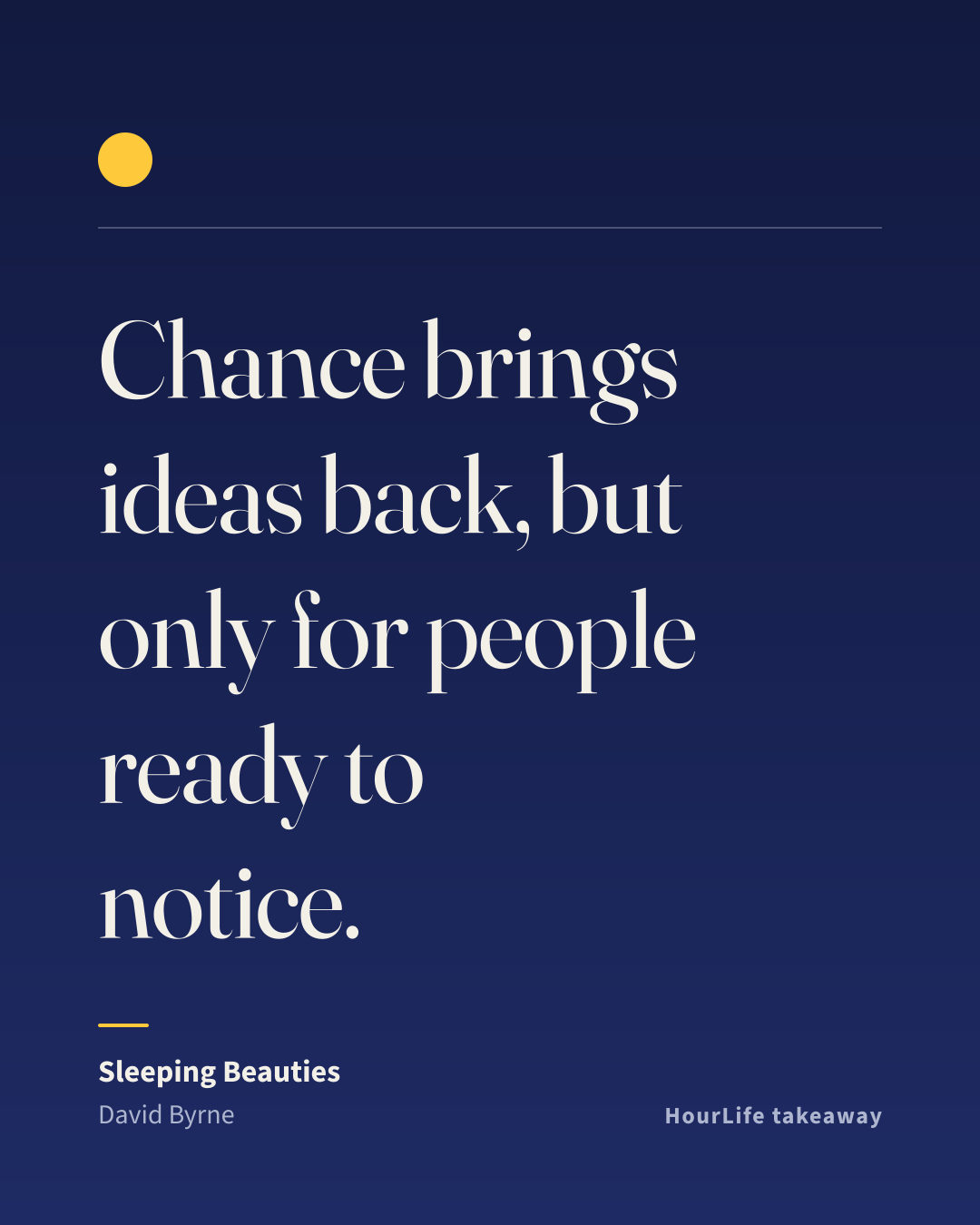
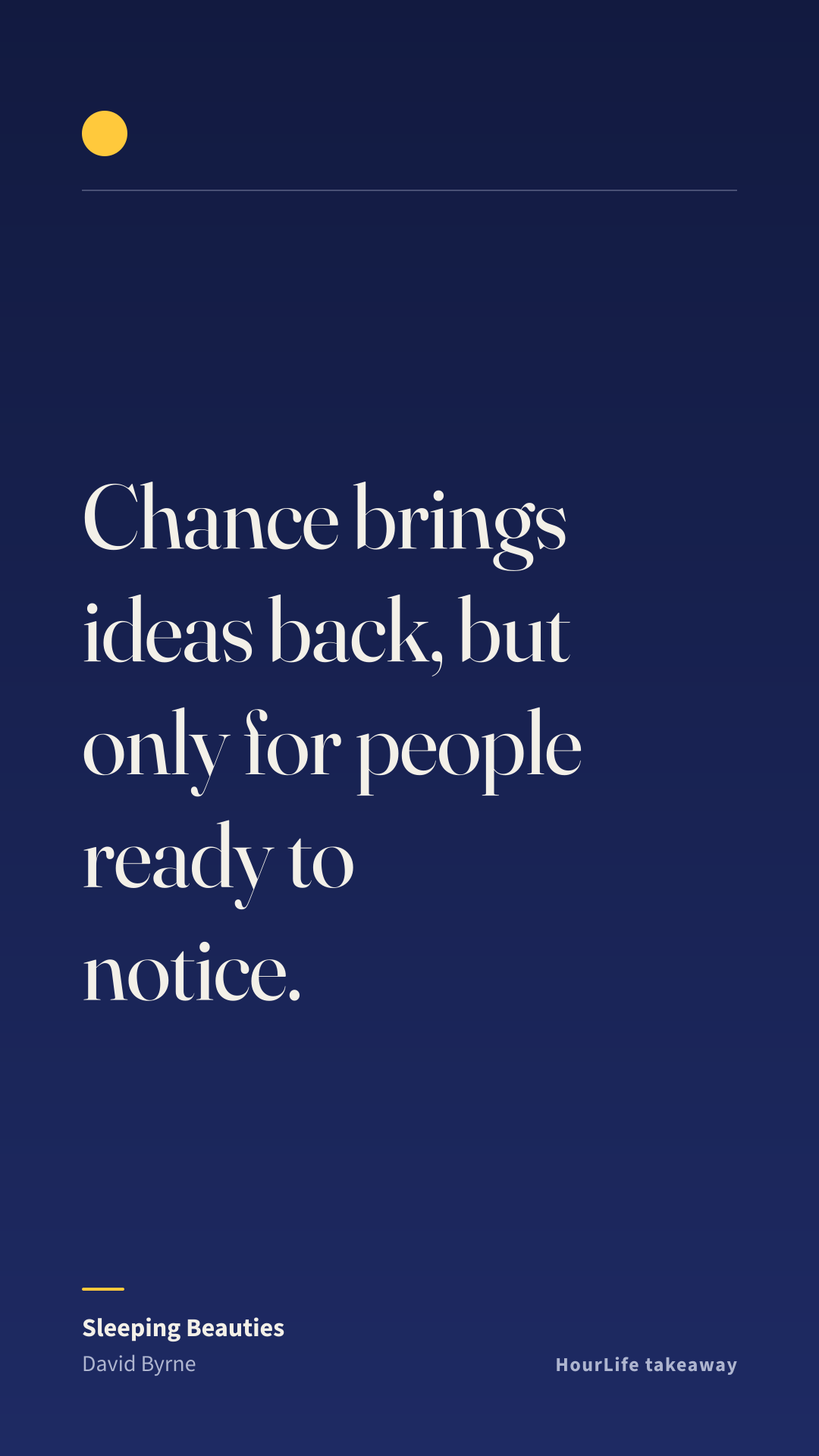
Chance brings ideas back, but only for people ready to notice.

Sleeping Beauties David Byrne HourLife takeaway

Byrne counts hand-washing and genetics among the ideas that returned partly through accident. An accident only matters if someone is curious enough to see what it means. Staying open to things that do not fit your plan is part of how old ideas wake up.

An idea that is asleep is not the same as one that is lost.

Sleeping Beauties David Byrne HourLife takeaway

Byrne separates sleeping beauties from works that were destroyed or vanished, such as much of Aristotle's writing or the Maya codices destroyed under colonial rule. Lost work may never come back. Sleeping work is still there, waiting for someone to look at it again, which is why it is worth keeping what you set aside.

Keep this going in the app.

HourLife turns these ideas into a daily system — goals, habits, focus, and reflection in one private place.