Keep this author quotes for later
Sign in to save

Donella H. Meadows

The most-loved lines from Donella H. Meadows, drawn from 1 book in the library.

Lines labelled “HourLife takeaway” are our wording of the book’s ideas and may paraphrase it. Only lines in quotation marks are the author’s own words, with where they appear. Check the book for exact wording before you quote it. Spot an error?

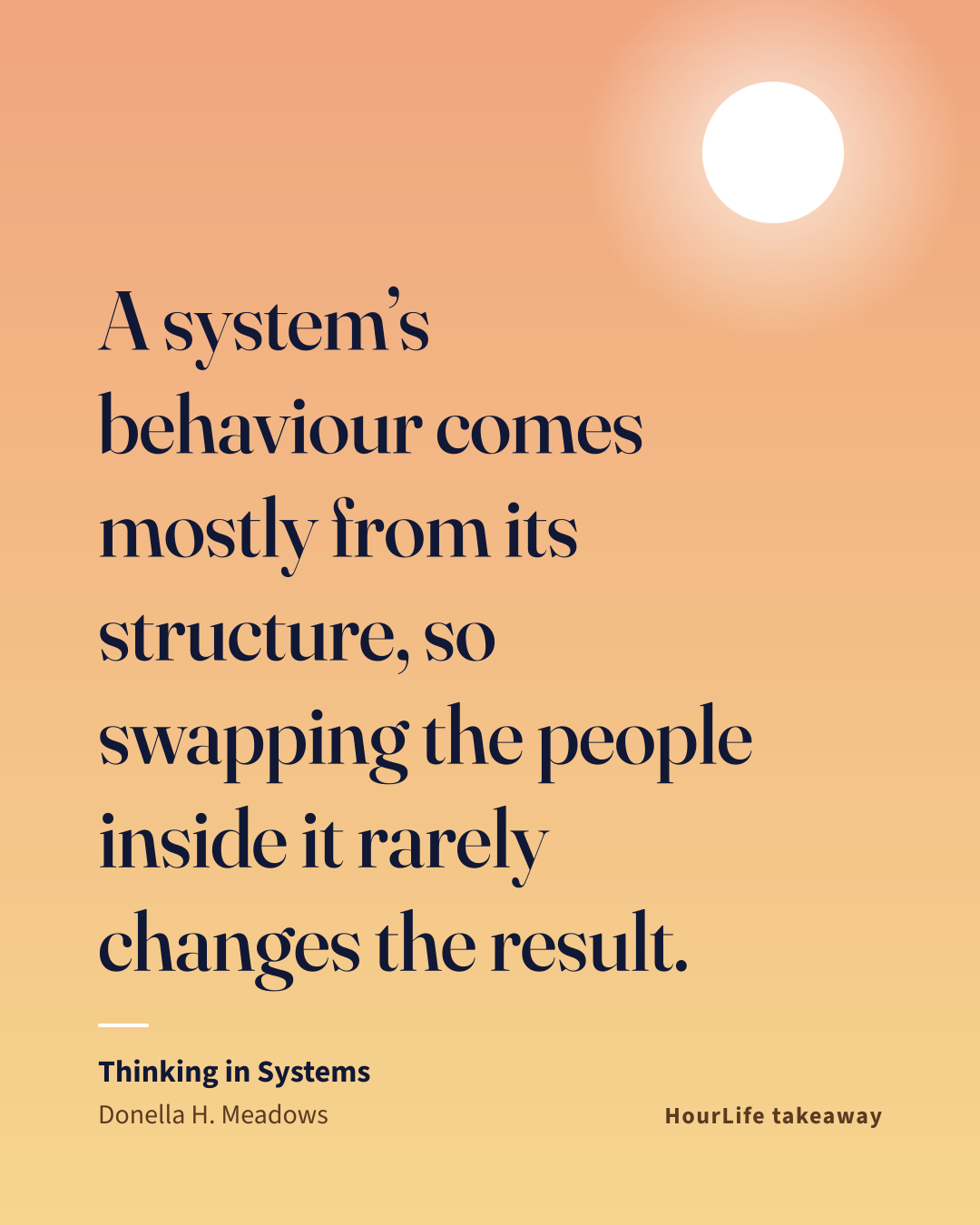
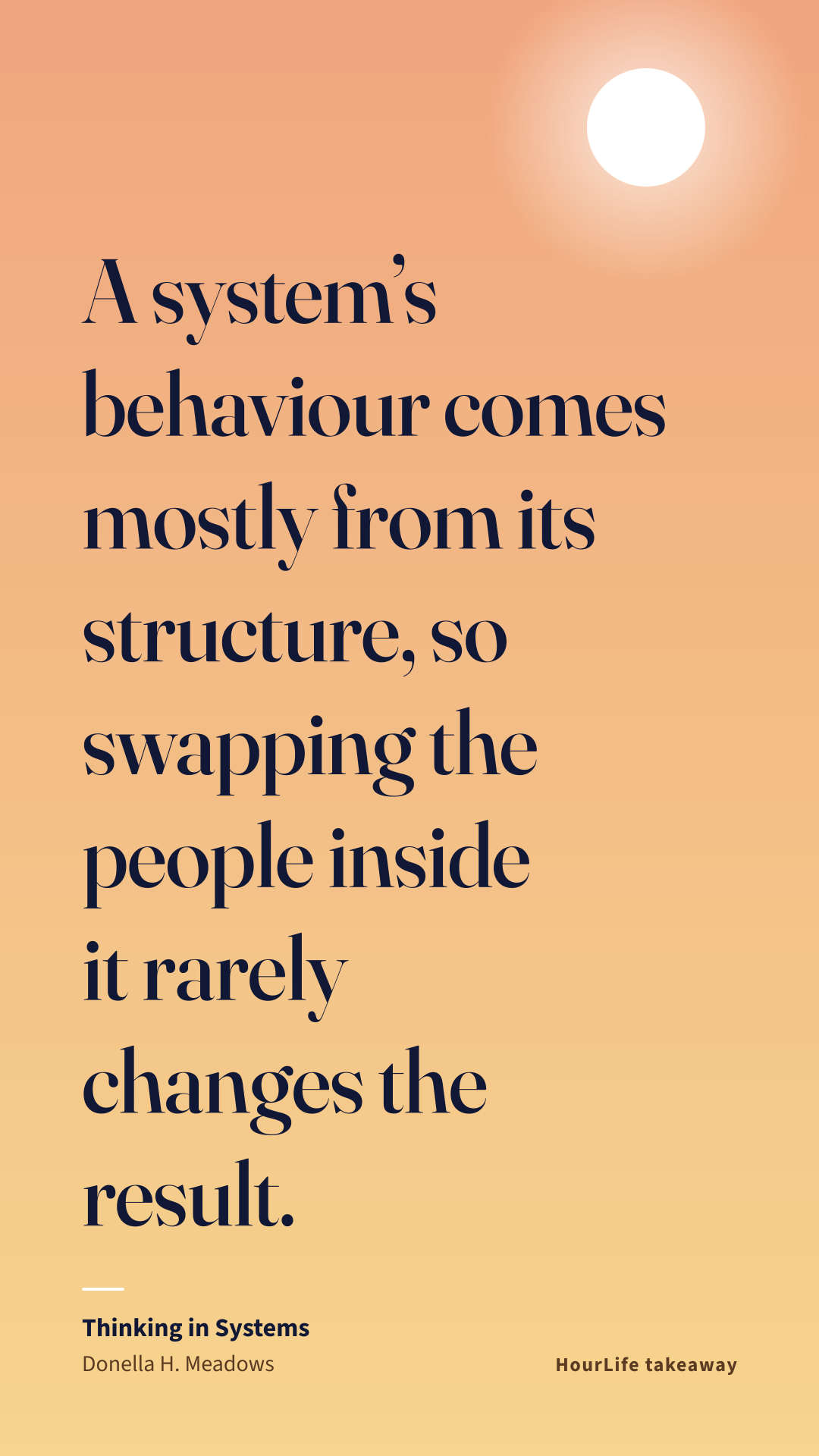
A system’s behaviour comes mostly from its structure, so swapping the people inside it rarely changes the result.

Thinking in Systems Donella H. Meadows HourLife takeaway

Meadows opens with a Slinky: the bounce is in the spring, not in the hand that lets it drop. The same holds for teams, markets and households. When different people keep producing the same problem, look at how the parts are connected before you look for someone to blame.


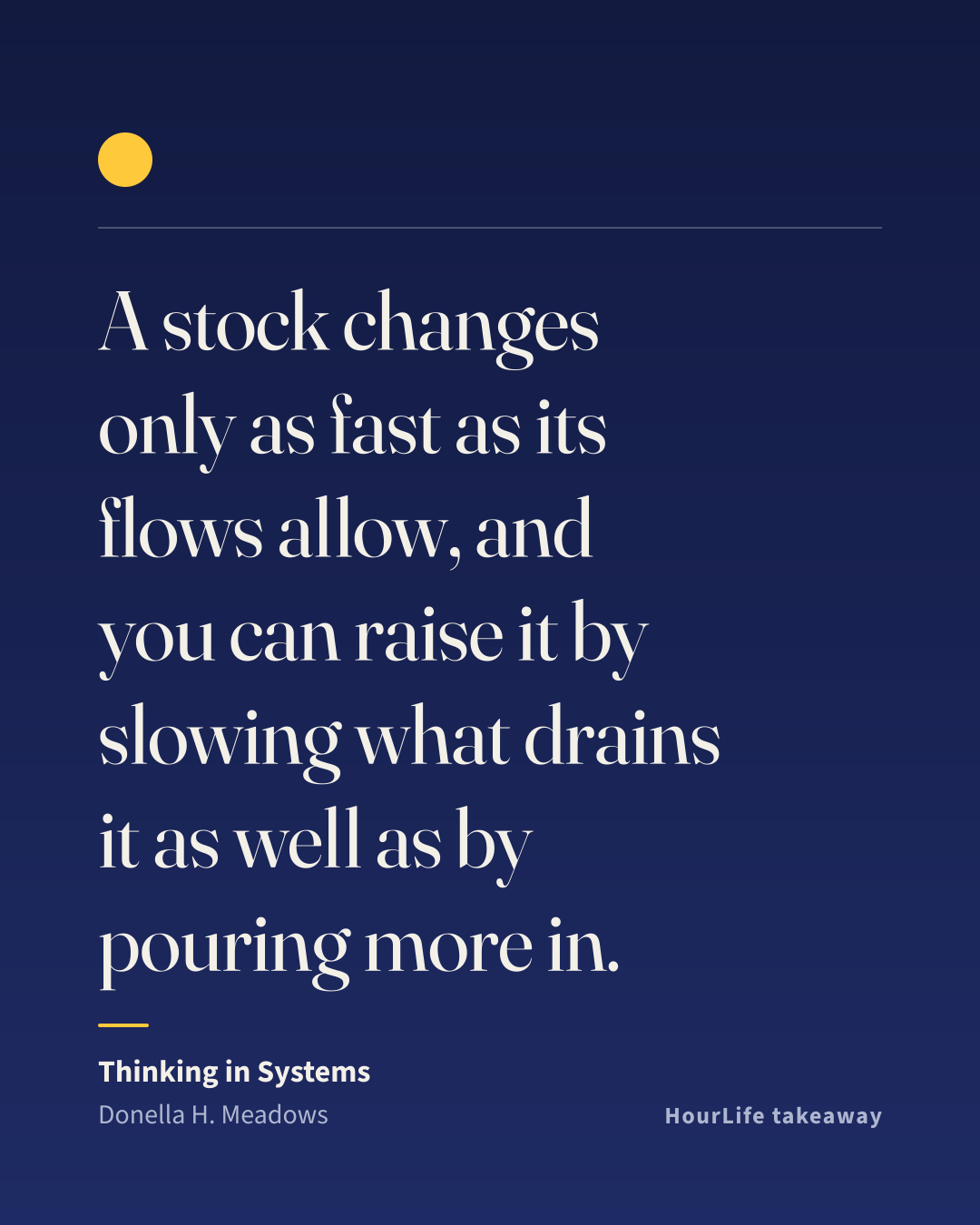
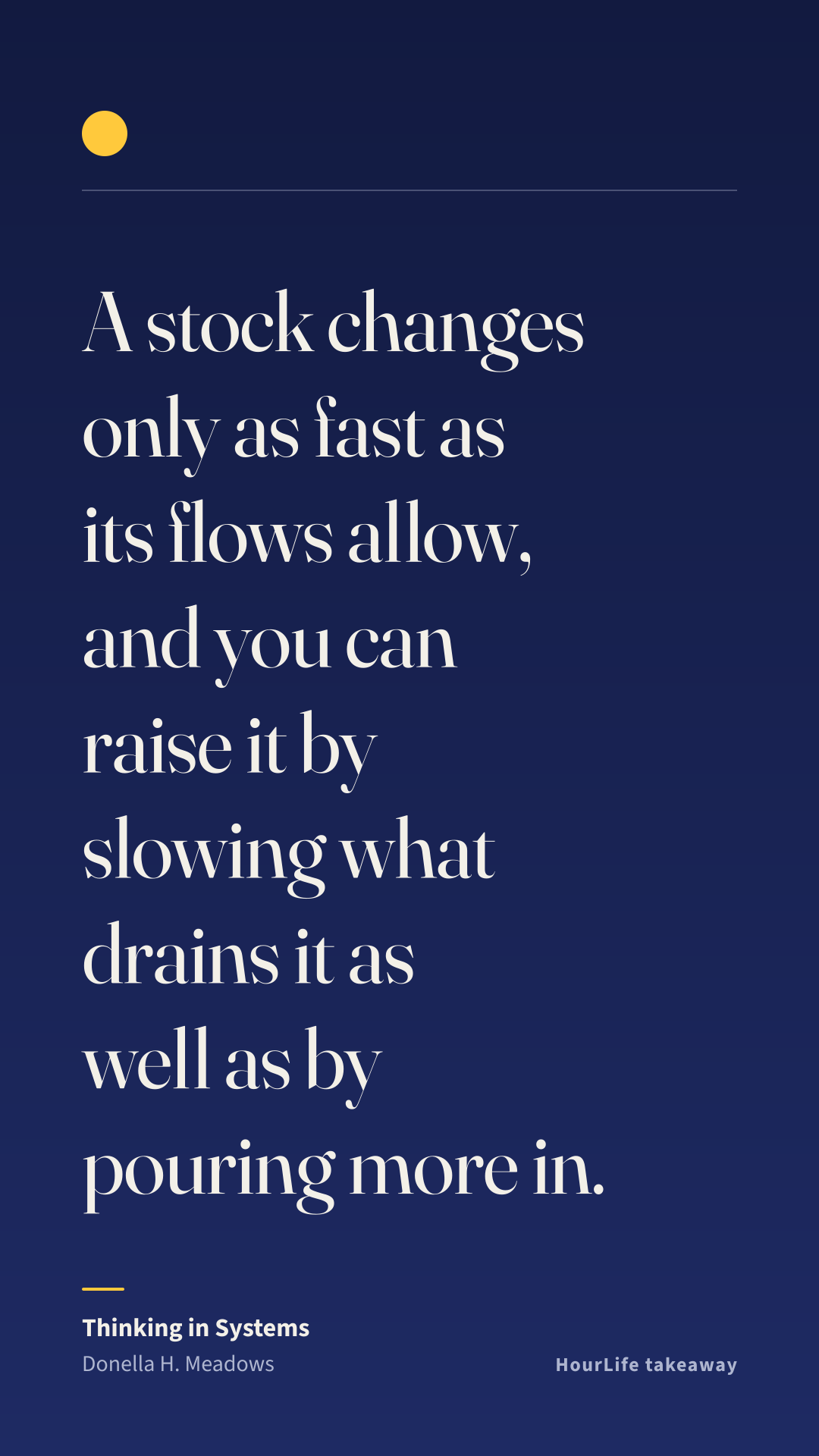
A stock changes only as fast as its flows allow, and you can raise it by slowing what drains it as well as by pouring more in.

Thinking in Systems Donella H. Meadows HourLife takeaway

The book's first picture is a bathtub. The water level is the stock; the tap and the drain are the flows. Savings, trust, skills and a backlog all work the same way, which is why they take time to build and time to empty, and why plugging a leak is often cheaper than turning up the tap.

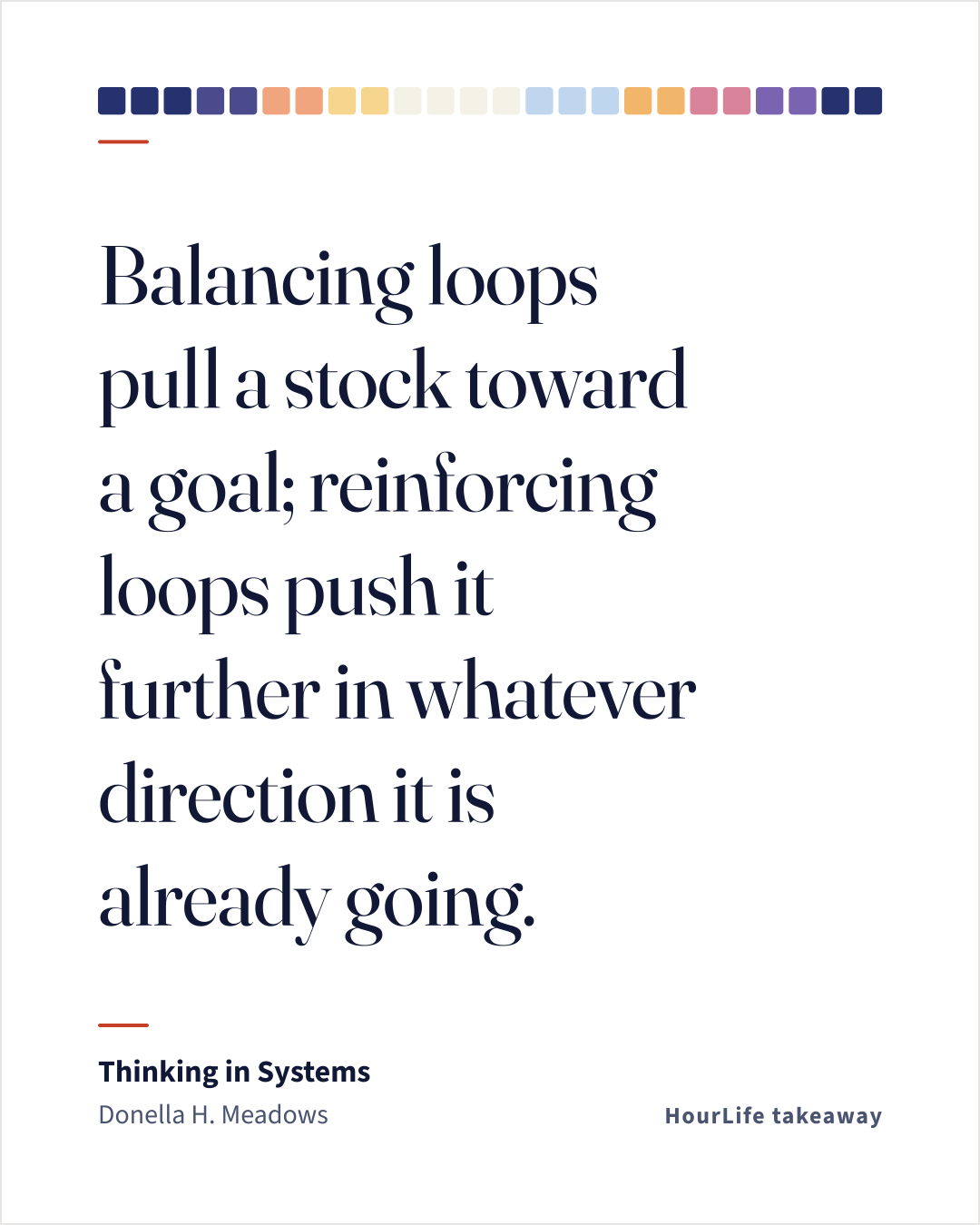
Balancing loops pull a stock toward a goal; reinforcing loops push it further in whatever direction it is already going.

Thinking in Systems Donella H. Meadows HourLife takeaway

A thermostat is the book's balancing loop: the gap from the setting switches the furnace on and off. Interest on savings and a growing population are reinforcing loops that grow faster the bigger they get. Most of what you see in a system is these two kinds of loop competing for control.

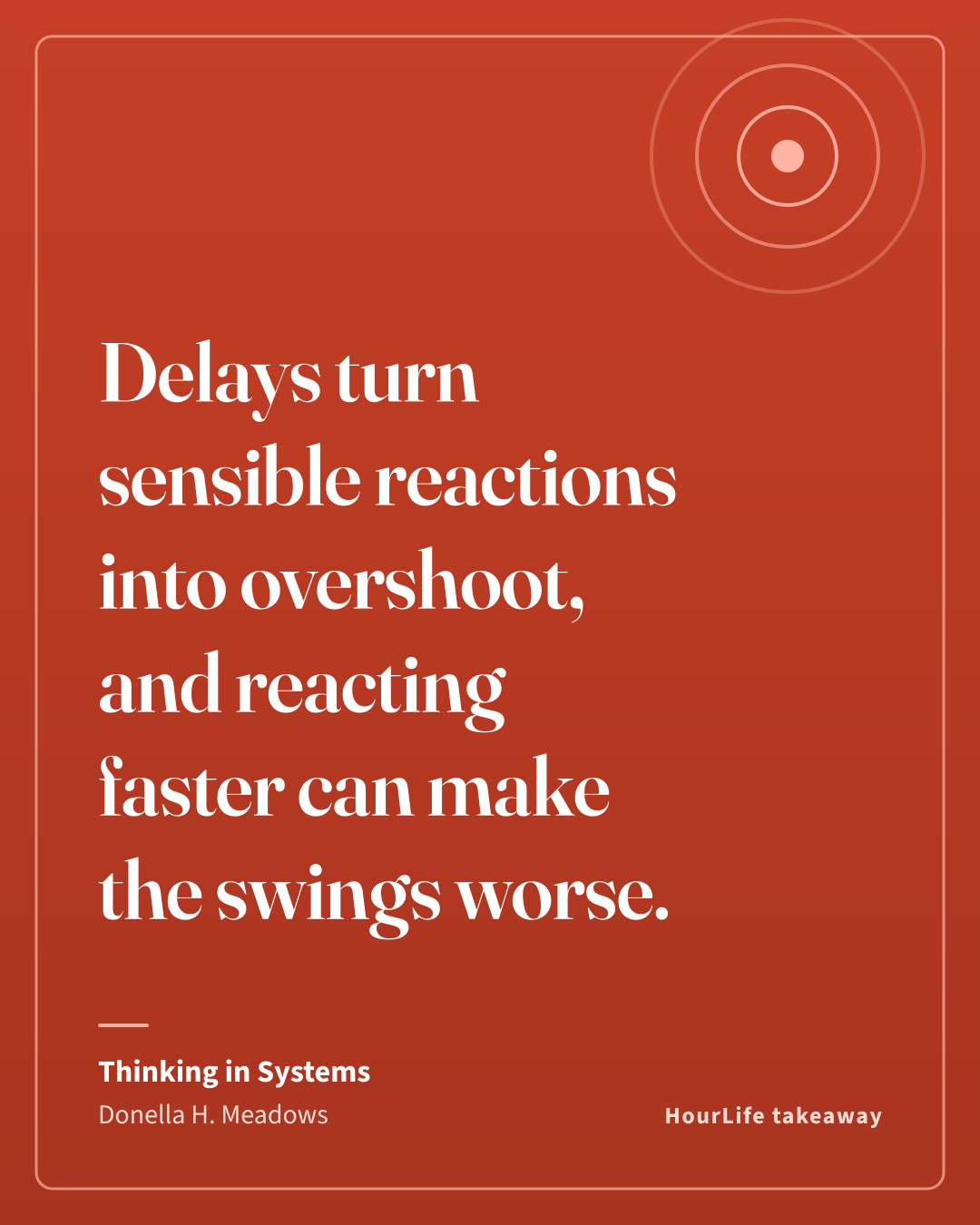
Delays turn sensible reactions into overshoot, and reacting faster can make the swings worse.

Thinking in Systems Donella H. Meadows HourLife takeaway

In the car-dealer example, the dealer orders more cars to rebuild stock after sales rise, but the cars take days to arrive, so the orders keep coming after the gap has closed. Inventory overshoots, then undershoots. Responding more slowly and steadily calms it down, which is the opposite of most people's instinct.

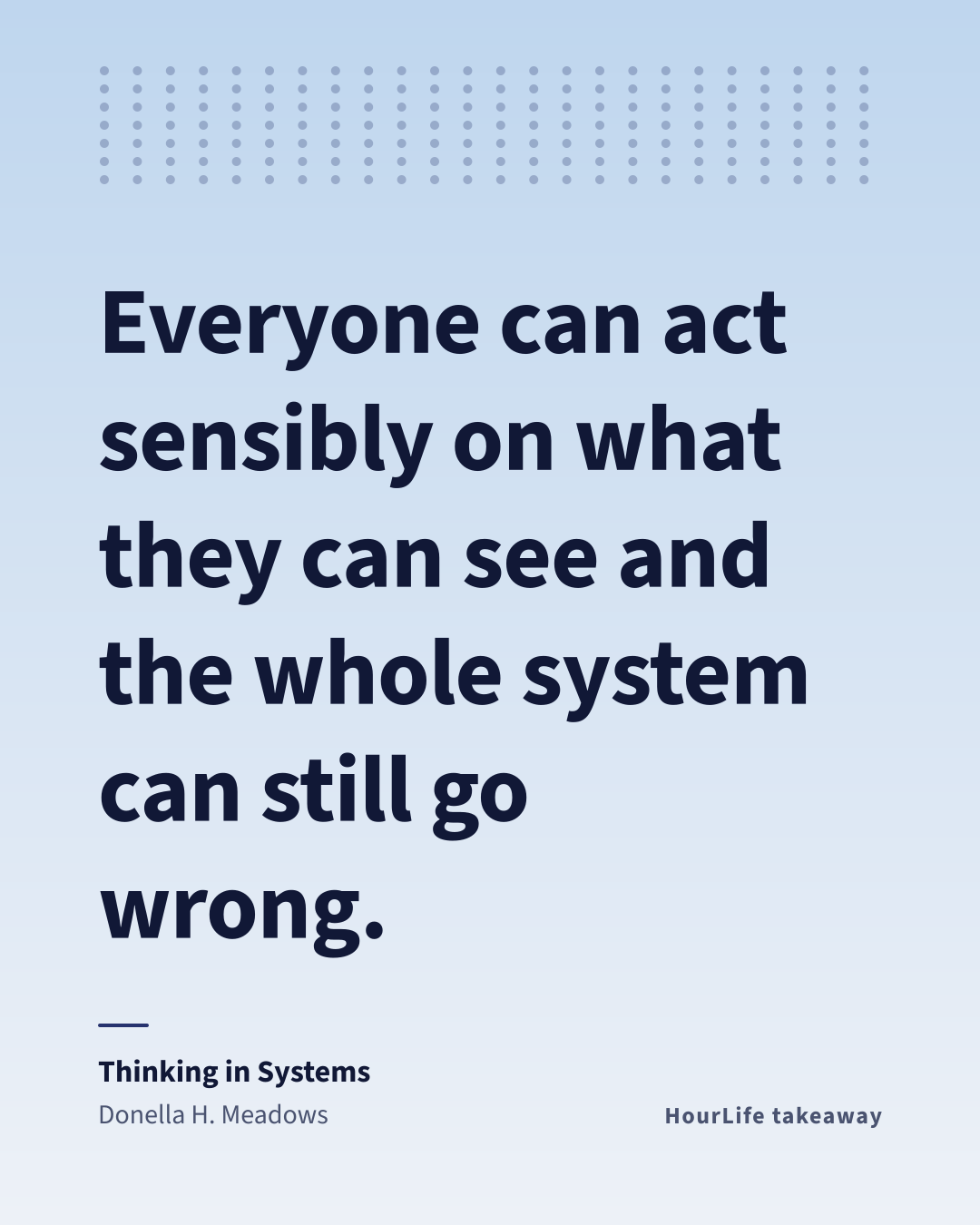
Everyone can act sensibly on what they can see and the whole system can still go wrong.

Thinking in Systems Donella H. Meadows HourLife takeaway

Meadows borrows Herbert Simon's idea of bounded rationality. A fisher who catches more fish this year is acting reasonably from where they stand, even as the stock collapses. Better behaviour usually comes from changing what people can see and what they are rewarded for, not from asking them to be better people.

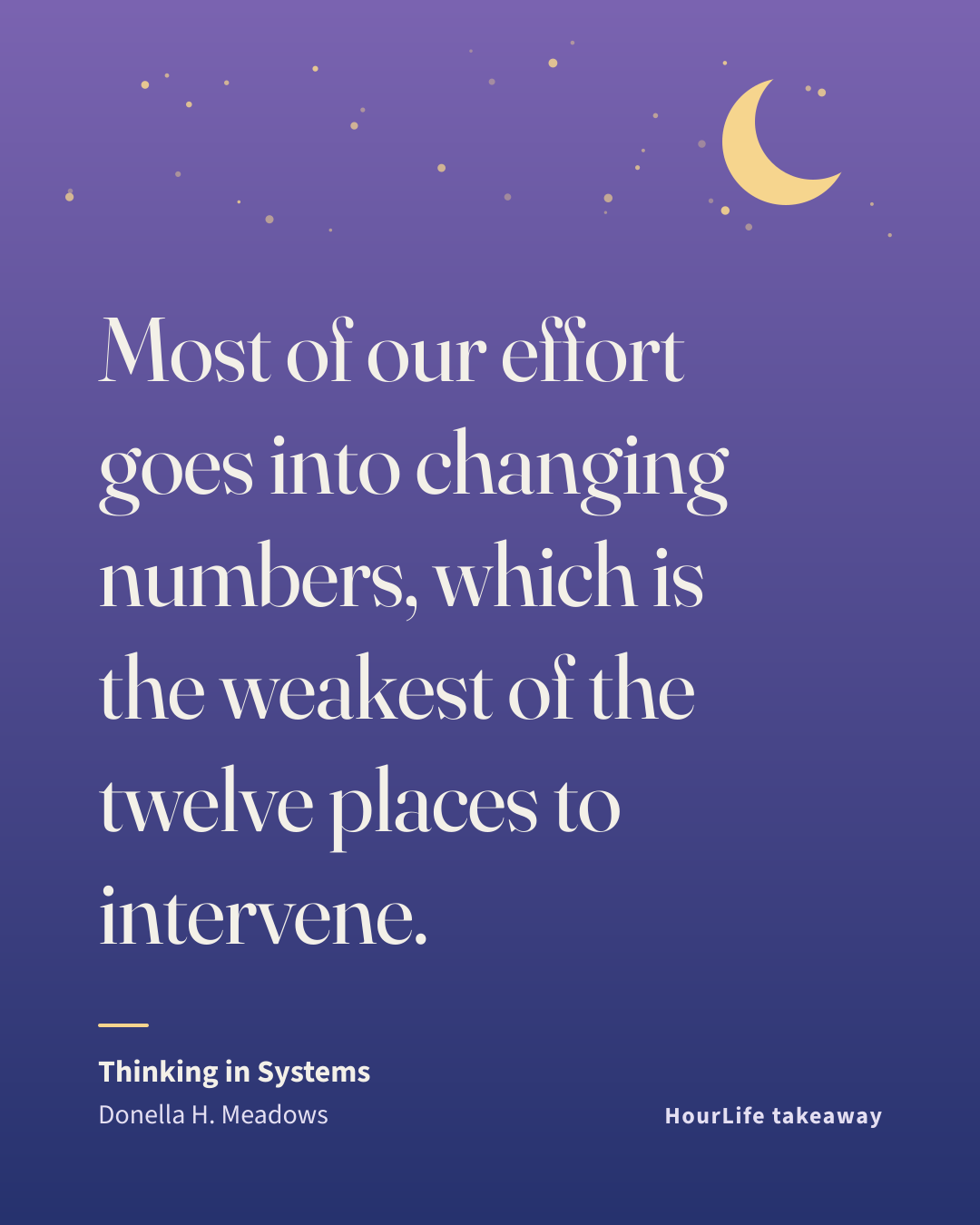
Most of our effort goes into changing numbers, which is the weakest of the twelve places to intervene.

Thinking in Systems Donella H. Meadows HourLife takeaway

Budgets, tax rates, targets and quotas sit at the bottom of the book's list of leverage points. They are easy to argue about and rarely change how a system behaves. Rules, information flows, goals and the paradigm the system grows out of sit higher, and are harder to move.

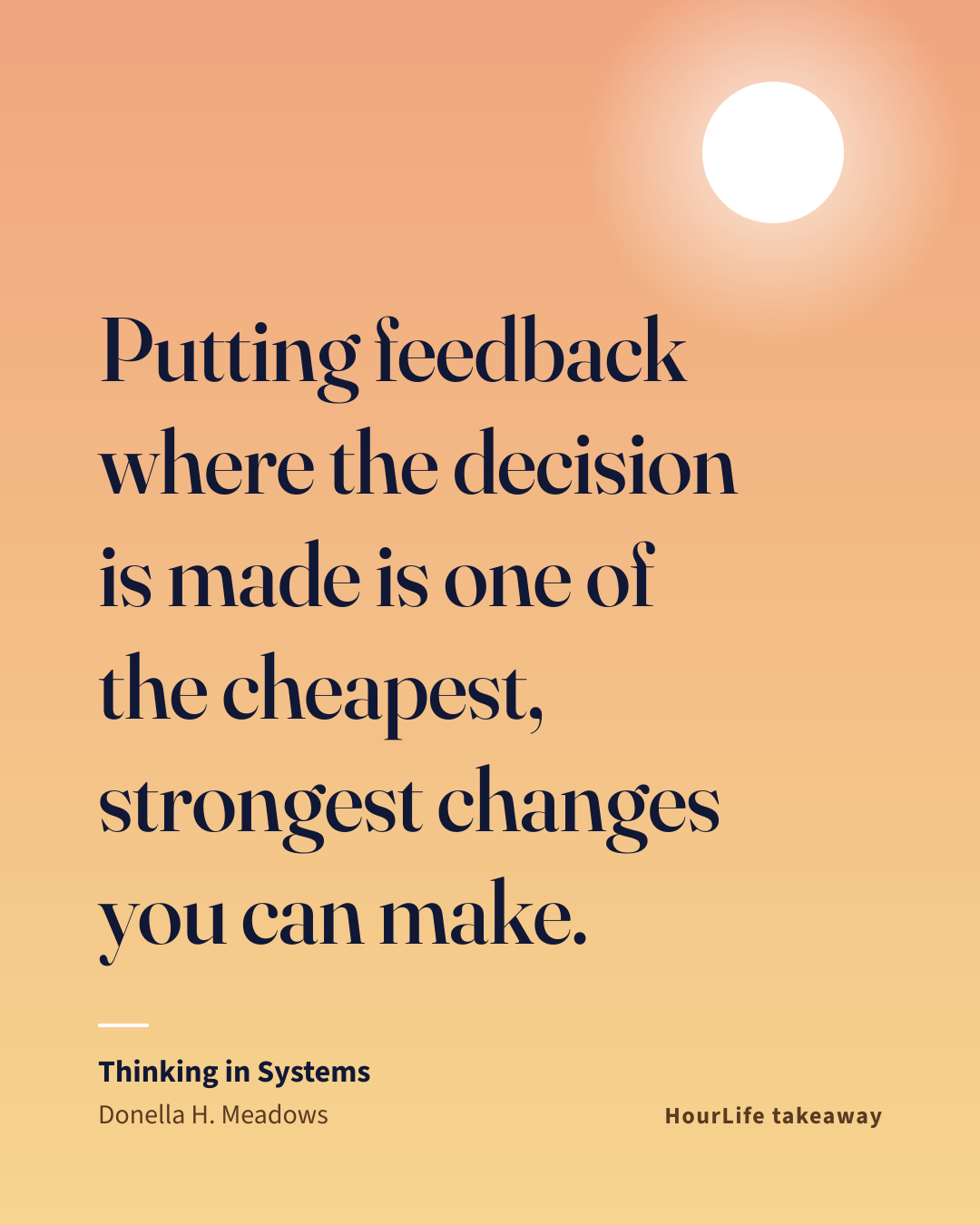
Putting feedback where the decision is made is one of the cheapest, strongest changes you can make.

Thinking in Systems Donella H. Meadows HourLife takeaway

The book tells of Dutch houses that were identical except for where the electricity meter sat. Households that could see the meter in the front hall used noticeably less power. Missing information is one of the most common reasons a system misbehaves, and adding it costs very little.

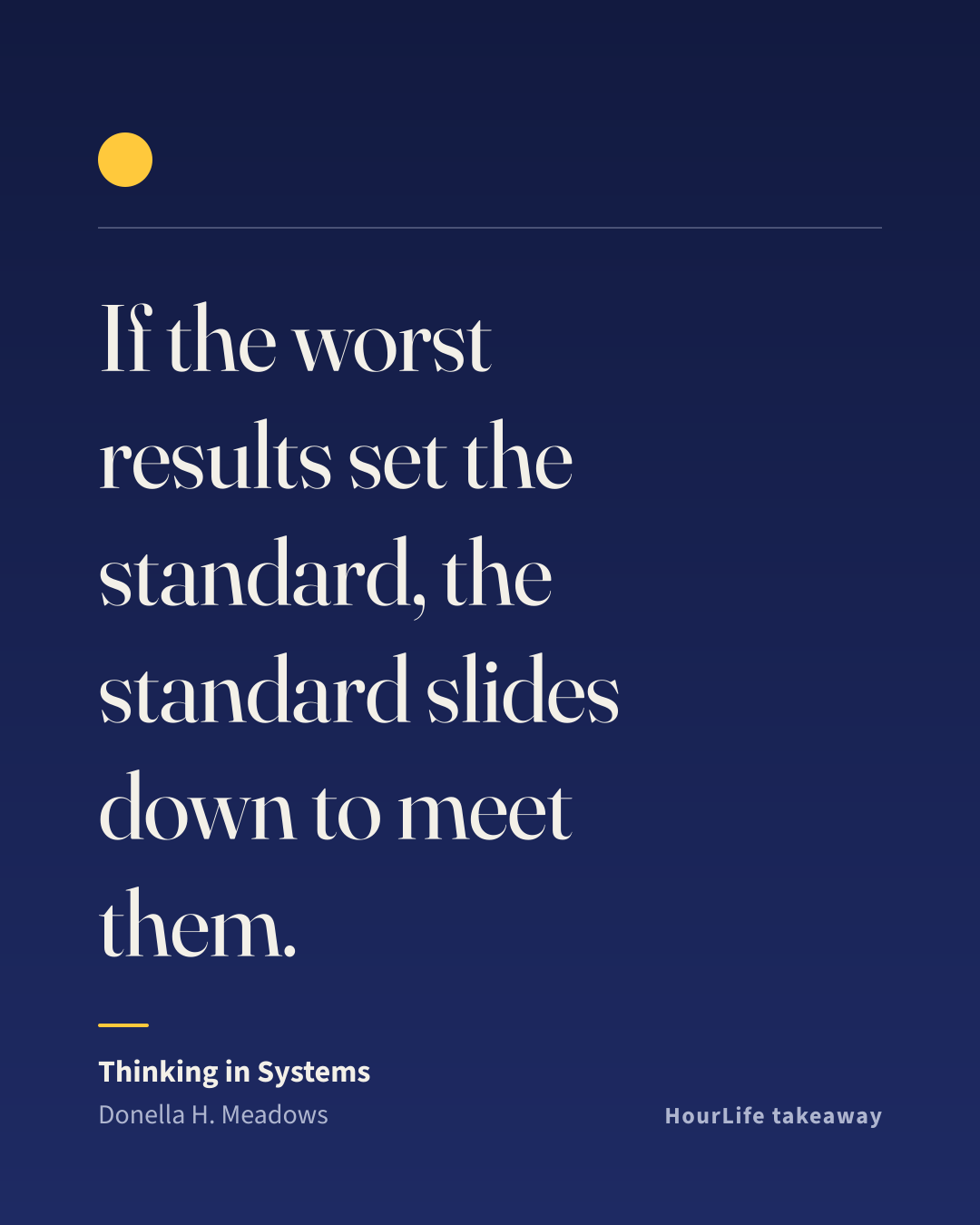
If the worst results set the standard, the standard slides down to meet them.

Thinking in Systems Donella H. Meadows HourLife takeaway

Meadows calls this trap drift to low performance. When a goal is adjusted to recent results, every bad stretch lowers what feels normal and the next bad stretch matters less. The way out is to keep the standard absolute, or to let the best results pull it up.

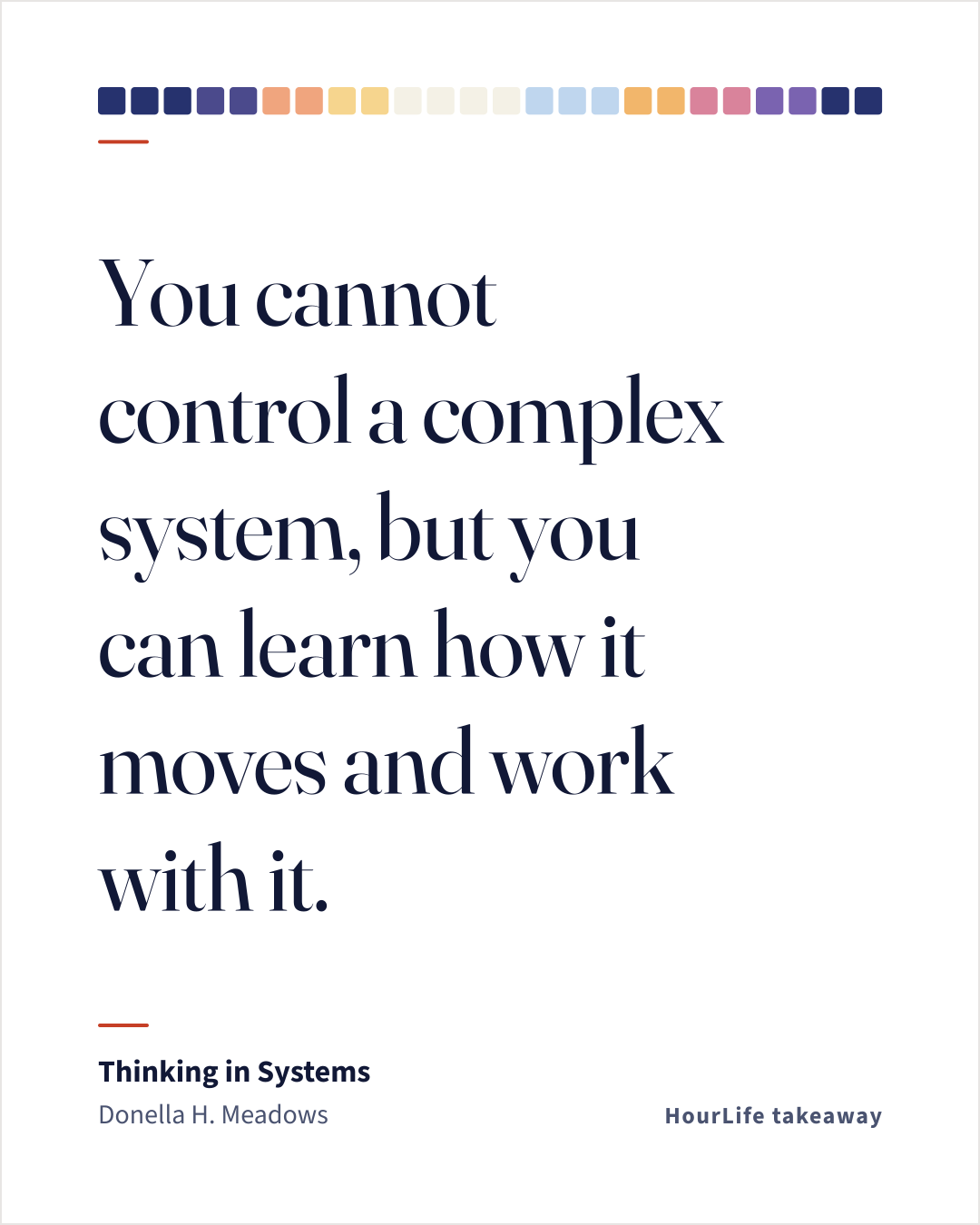
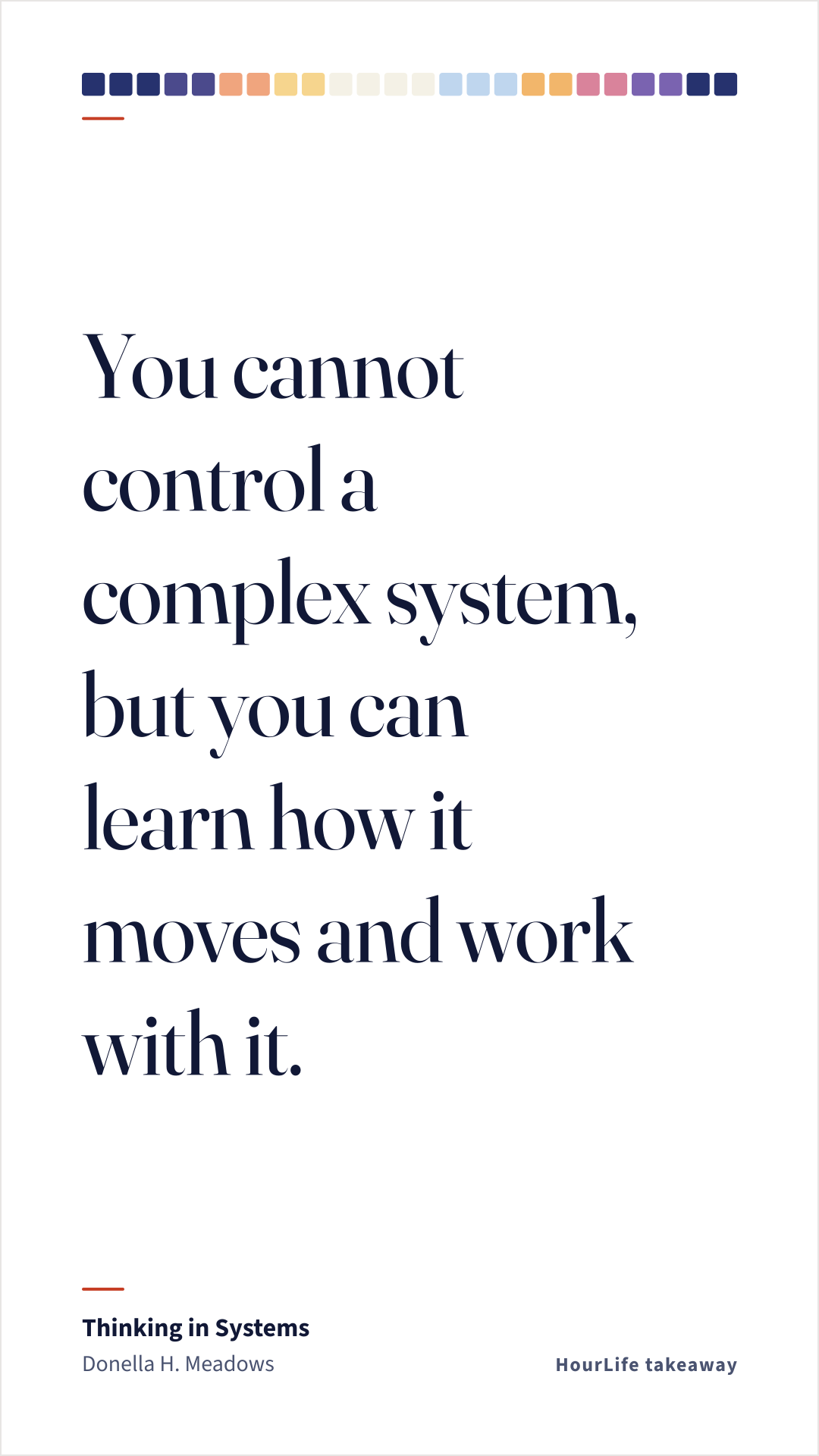
You cannot control a complex system, but you can learn how it moves and work with it.

Thinking in Systems Donella H. Meadows HourLife takeaway

The last chapter trades the idea of control for something closer to dancing. Watch how the system behaves before you act, bring your mental models into the open, respect information, and stay a learner. It is advice for living among systems, not a formula for fixing them.

Keep this going in the app.

HourLife turns these ideas into a daily system — goals, habits, focus, and reflection in one private place.