Keep this author quotes for later
Sign in to save

Edgar H. Schein

The most-loved lines from Edgar H. Schein, drawn from 1 book in the library.

Humble Inquiry is asking questions to which you do not already know the answer.

Humble Inquiry Edgar H. Schein

The test is honest: if the answer is already in your head, the question is a statement wearing a question mark. Real curiosity about the other person is what makes it work.


Telling puts the other person one step down; asking lifts them up.

Humble Inquiry Edgar H. Schein

Telling implies the other person does not know. Asking makes you, for a moment, dependent on them, and that small shift is what builds the relationship.

We live in a culture that values doing and telling over asking and relating.

Humble Inquiry Edgar H. Schein

In task-focused workplaces, being the one with the answer is rewarded, so asking can feel like weakness. Notice the pull to tell, and decide on purpose whether to follow it.

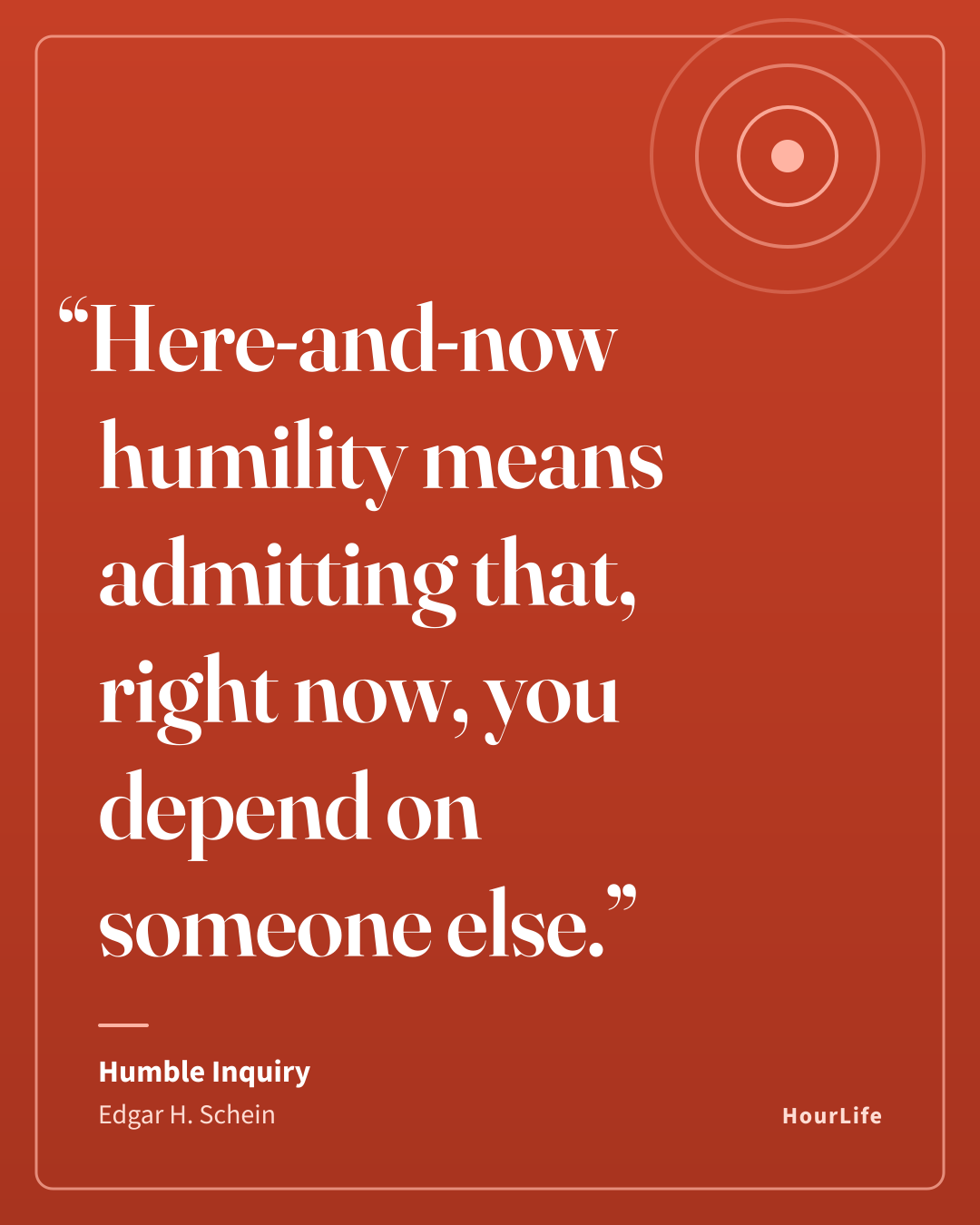
Here-and-now humility means admitting that, right now, you depend on someone else.

Humble Inquiry Edgar H. Schein

Rank does not change this: the surgeon depends on the nurse who notices something is wrong. Saying so out loud makes it safe for that person to speak up.

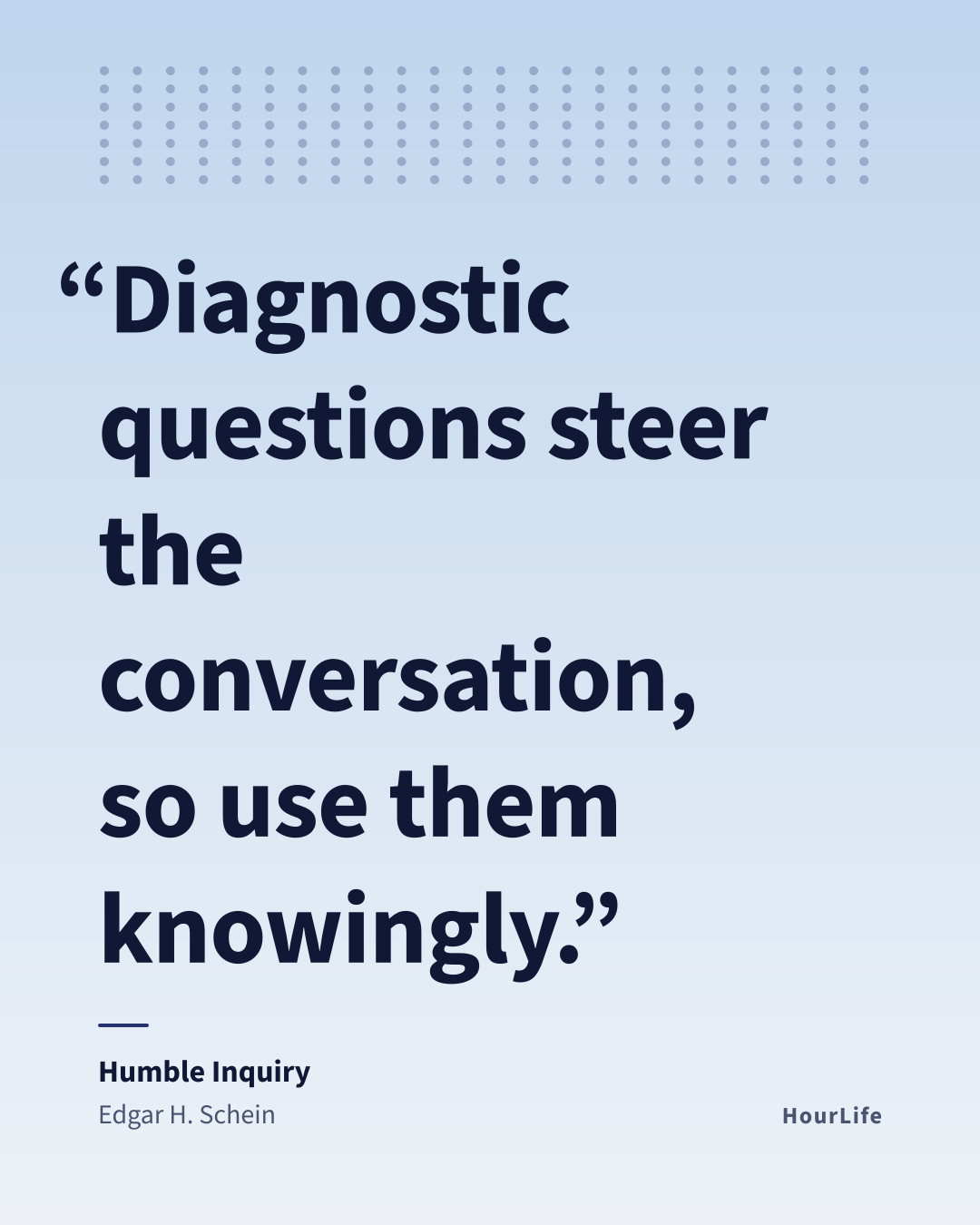
Diagnostic questions steer the conversation, so use them knowingly.

Humble Inquiry Edgar H. Schein

Asking about feelings, causes or next steps moves the talk toward your interests. That can be useful, but it is a choice; start humble, and steer only once you understand.

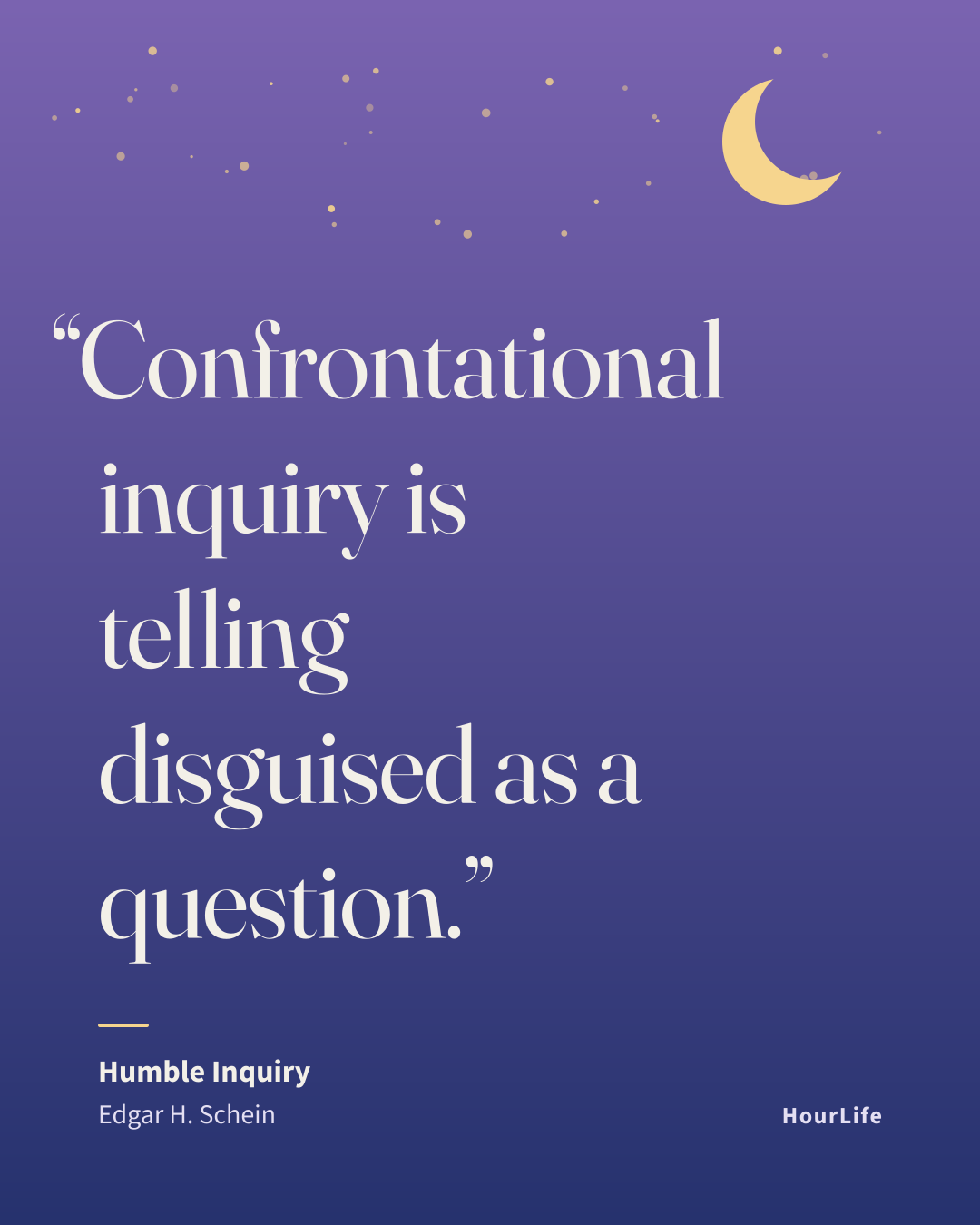
Confrontational inquiry is telling disguised as a question.

Humble Inquiry Edgar H. Schein

"Have you thought of..." and "Wouldn't it be better if..." carry your idea inside them. If you have an idea, it is more honest to offer it as one.

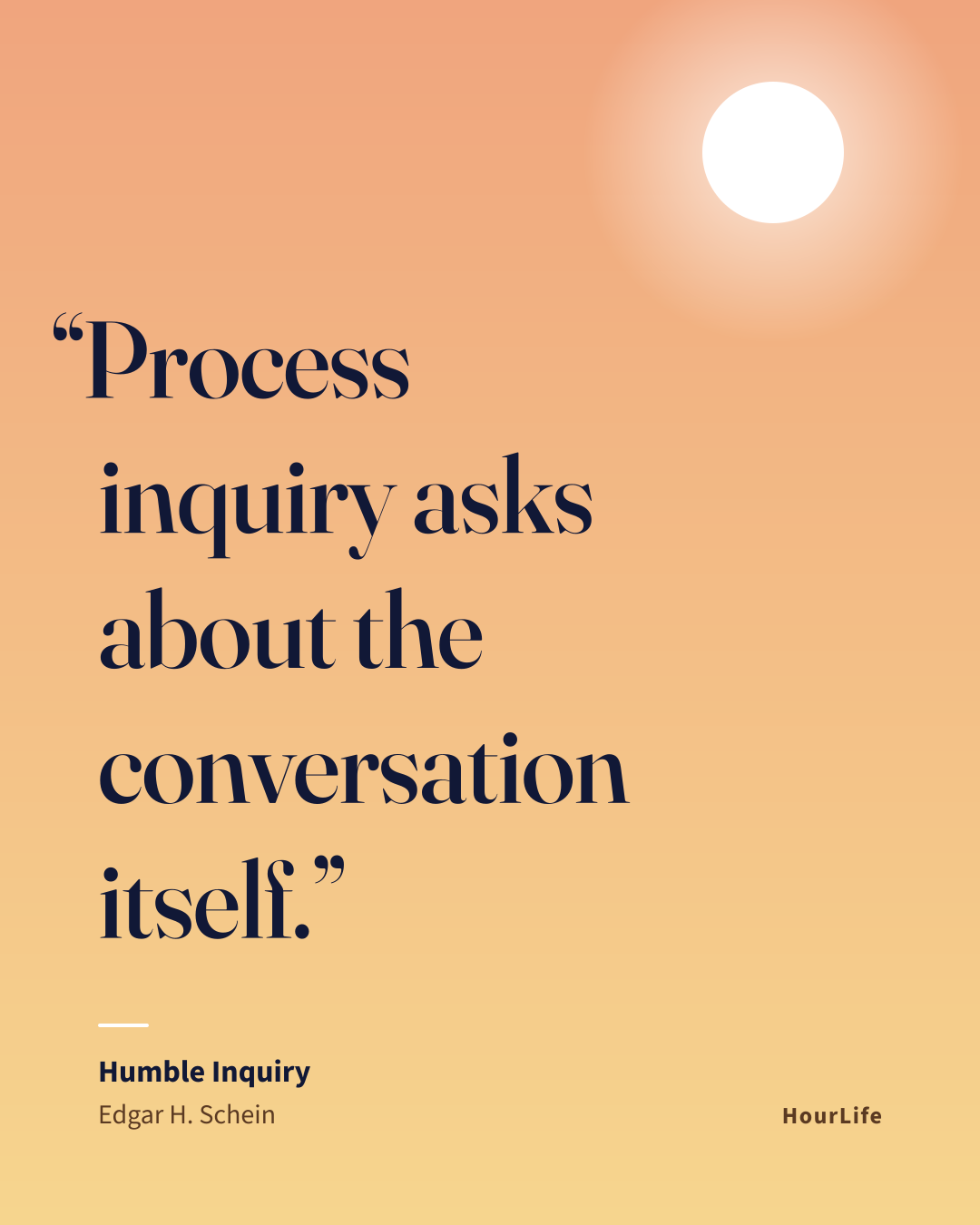
Process inquiry asks about the conversation itself.

Humble Inquiry Edgar H. Schein

Questions such as "Is this helpful?" or "Are we getting off track?" turn attention to how you are talking. They are a good reset when a conversation starts to go wrong.

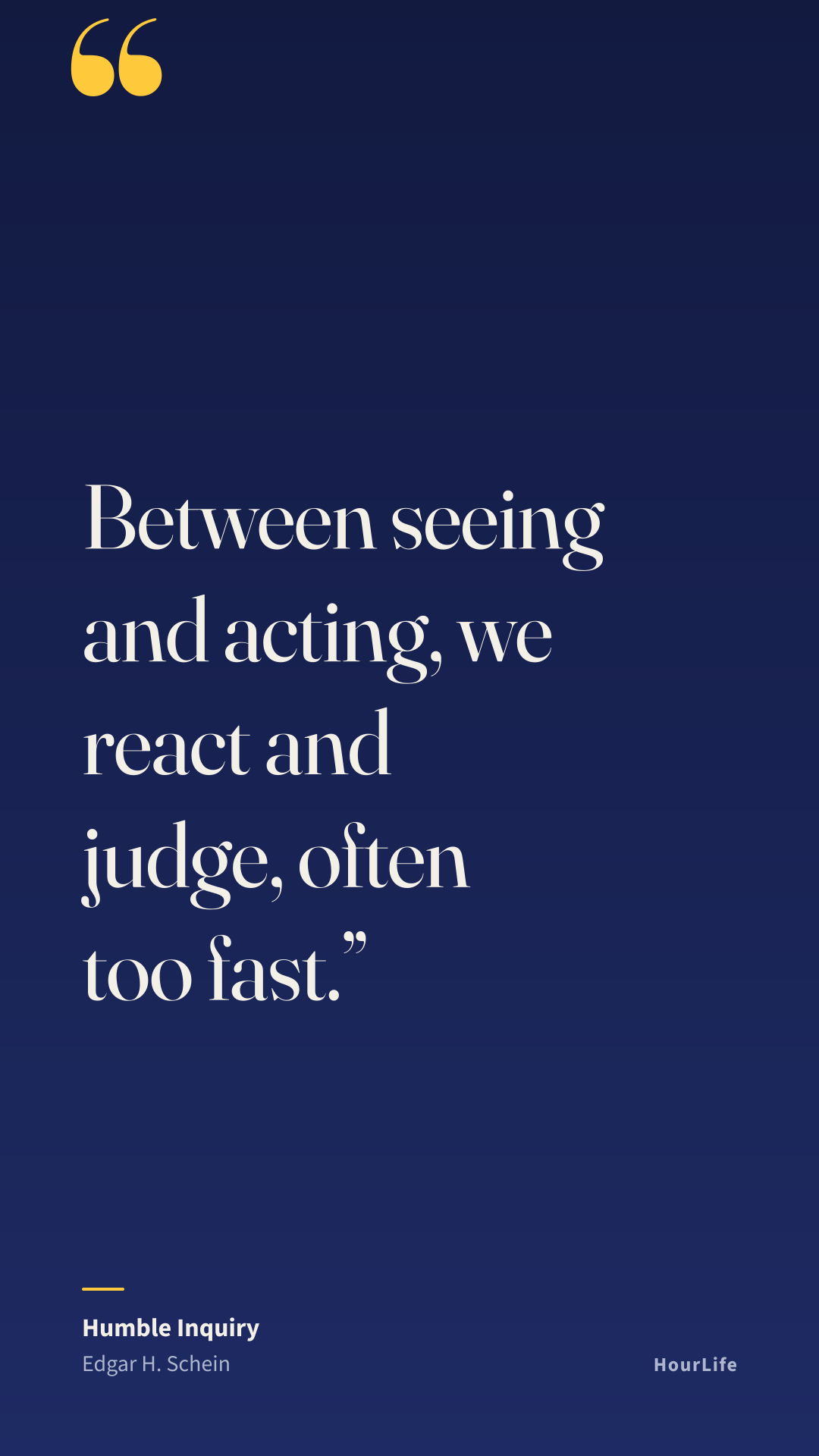
Between seeing and acting, we react and judge, often too fast.

Humble Inquiry Edgar H. Schein

Schein's ORJI cycle runs Observe, React, Judge, Intervene. Slowing down at the judging step and checking your reading with a question keeps you from acting on a mistake.

Keep this going in the app.

HourLife turns these ideas into a daily system — goals, habits, focus, and reflection in one private place.