Keep this author quotes for later
Sign in to save

Emeran Mayer

The most-loved lines from Emeran Mayer, drawn from 1 book in the library.

Lines labelled “HourLife takeaway” are our wording of the book’s ideas and may paraphrase it. Only lines in quotation marks are the author’s own words, with where they appear. Check the book for exact wording before you quote it. Spot an error?

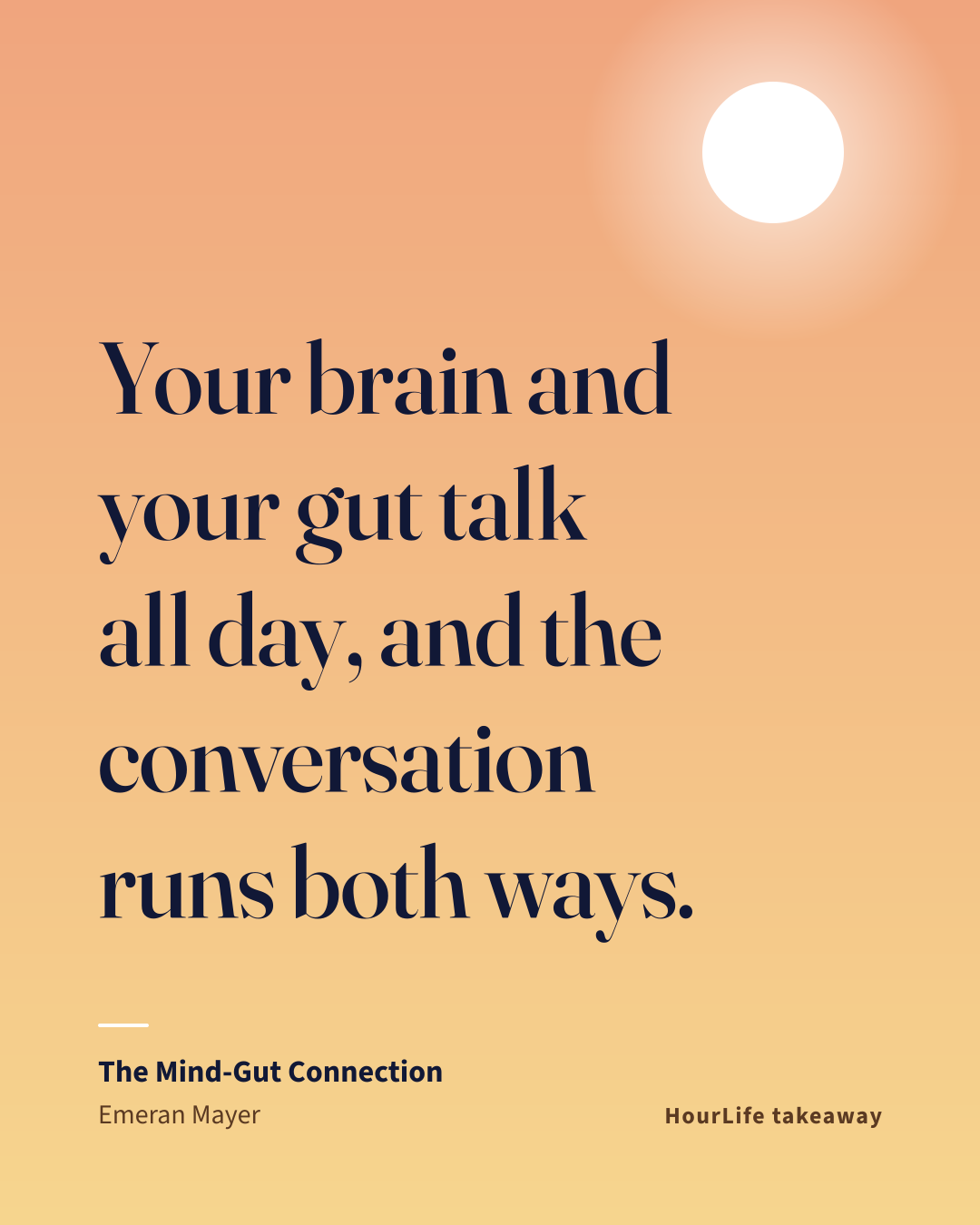
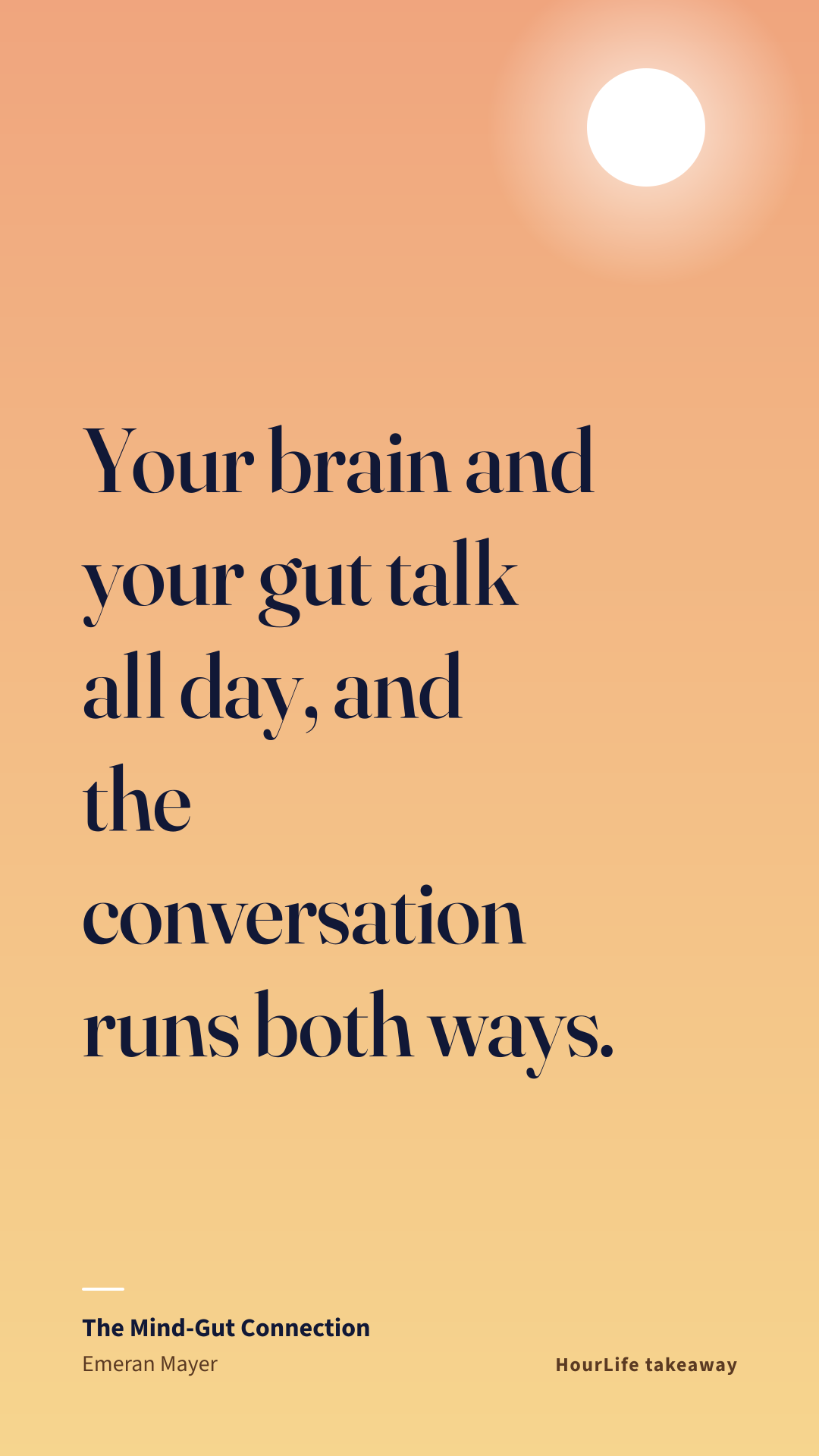
Your brain and your gut talk all day, and the conversation runs both ways.

The Mind-Gut Connection Emeran Mayer HourLife takeaway

Mayer treats the brain and the digestive system as one system rather than two organs. The brain sends signals down that change how the gut moves, squeezes and secretes. The gut sends even more back up, much of it along the vagus nerve, and most of it never reaches conscious thought.


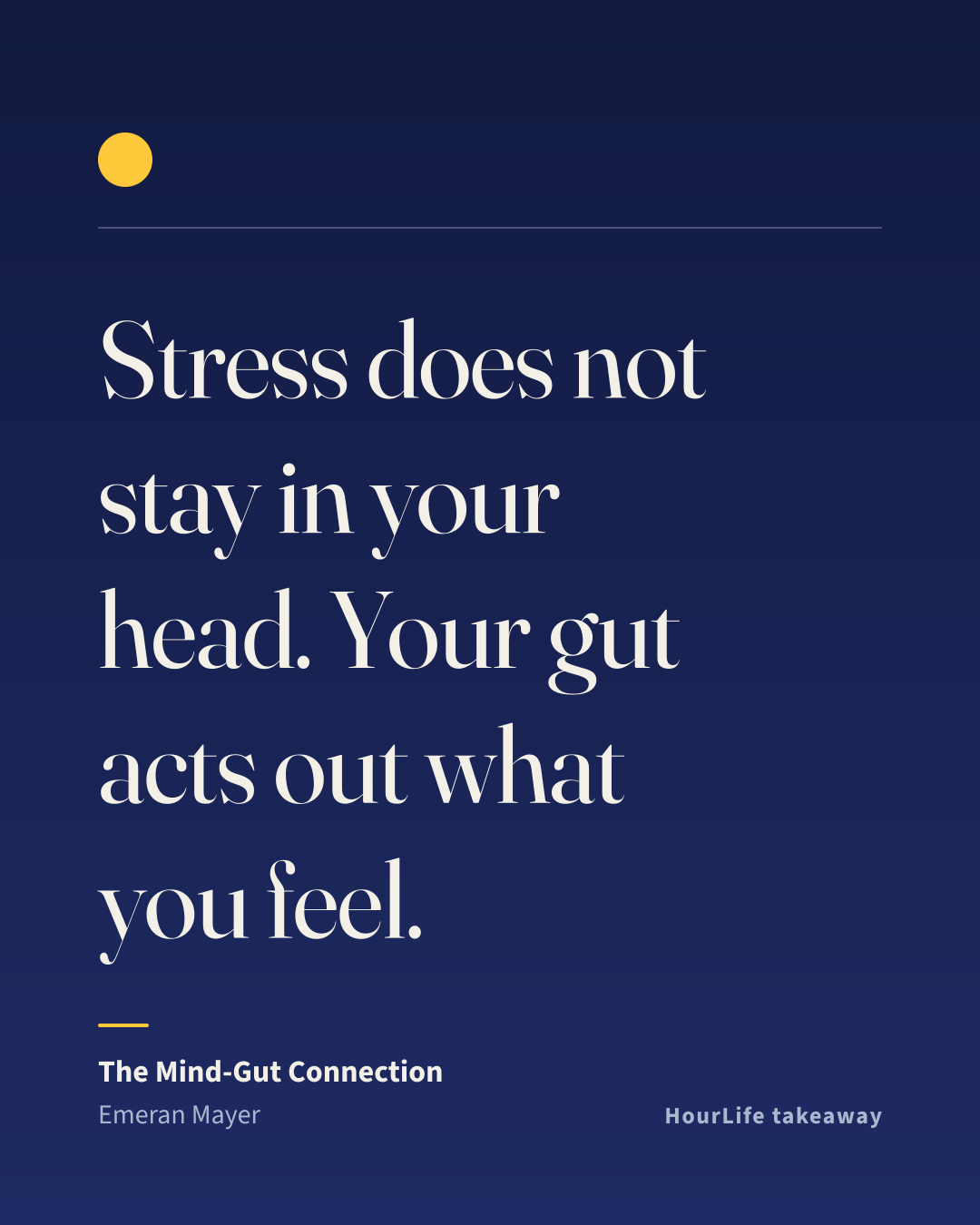
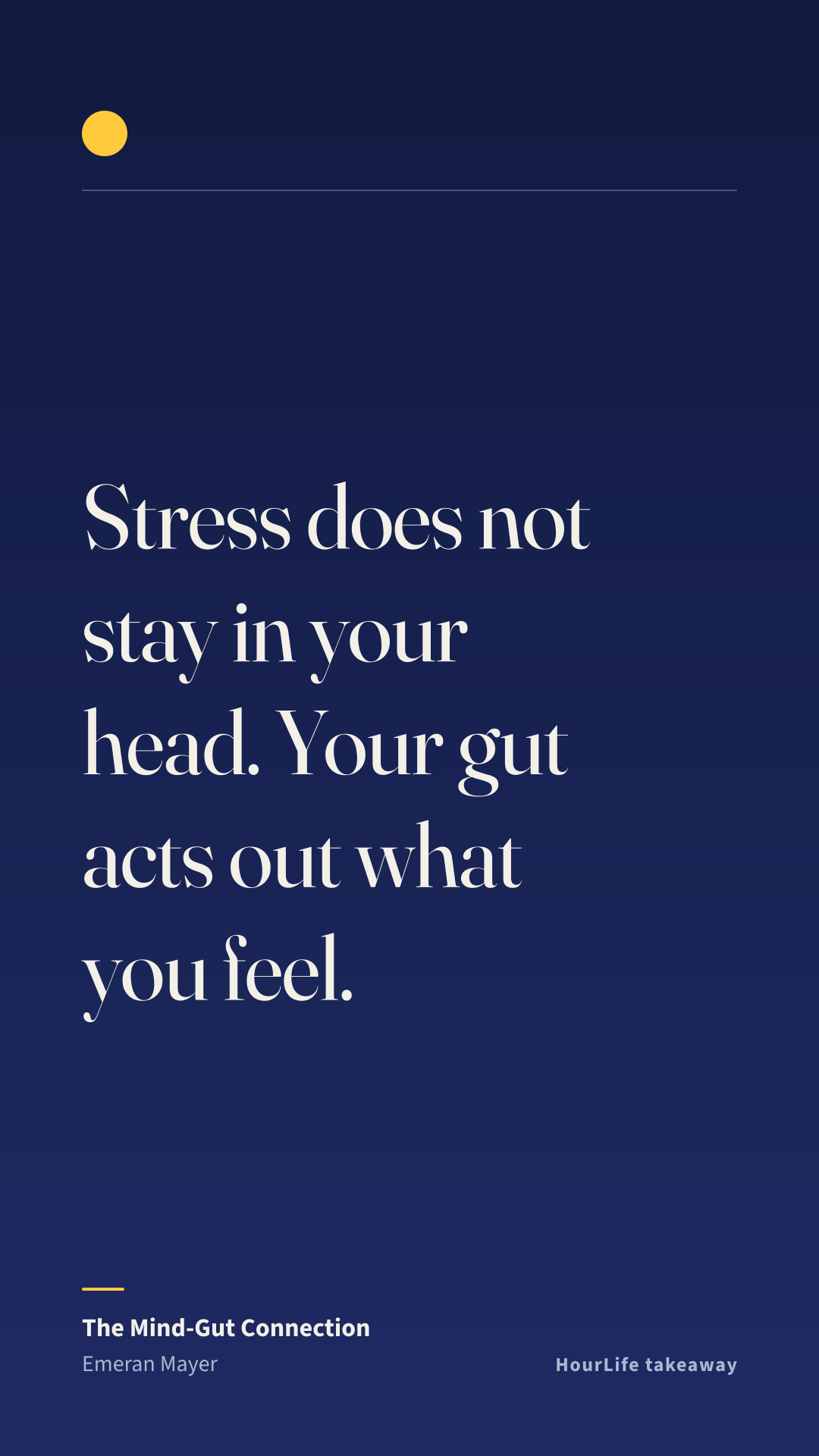
Stress does not stay in your head. Your gut acts out what you feel.

The Mind-Gut Connection Emeran Mayer HourLife takeaway

Mayer describes gut reactions: fear, anger and sadness each come with their own pattern of gut activity, from a clenched stomach to a gut that goes quiet. Many of his patients have irritable bowel syndrome, and he argues that the brain's part in their symptoms is real and physical, not imagined.

The microbes in your gut are a third voice in the conversation.

The Mind-Gut Connection Emeran Mayer HourLife takeaway

The bacteria in the gut make substances that act on gut cells, on the immune system and on nerves, so they can take part in brain-gut signalling. Much of the strongest evidence comes from mice, including experiments where moving gut microbes from one strain to another shifted how bold or anxious the animals behaved. Human studies are smaller and earlier.

A gut feeling may be partly made in the gut.

The Mind-Gut Connection Emeran Mayer HourLife takeaway

Mayer suggests that the brain keeps a lifelong record of signals from the body, including the gut, and draws on it when we make quick judgments. On this view, intuition is not magic but a summary of many past bodily experiences. It is a hypothesis worth knowing, not a settled finding.

Early life helps set how sensitive the gut-brain system will be.

The Mind-Gut Connection Emeran Mayer HourLife takeaway

The gut's microbes settle in during the first years of life, shaped by things like birth, feeding and surroundings. Mayer also describes how stress and adversity early on can leave the stress response more reactive, drawing on animal studies of early separation from the mother and on research into childhood adversity.

Feed your microbes fibre, and they make things that help you.

The Mind-Gut Connection Emeran Mayer HourLife takeaway

Much of the fibre in plants reaches the large intestine undigested, where microbes ferment it into compounds such as short-chain fatty acids that support the gut lining. A wider range of plants feeds a wider range of microbes. This is the part of the book that mainstream nutrition advice agrees with most.

Mass-produced food may change the conversation, not only your weight.

The Mind-Gut Connection Emeran Mayer HourLife takeaway

Mayer worries that diets heavy in sugar, fat and processed ingredients and low in fibre starve some microbes and may feed low-grade inflammation. He presents this as a likely link, and some of it is still being tested in people.

How you eat matters as well as what you eat.

The Mind-Gut Connection Emeran Mayer HourLife takeaway

If you eat while angry, anxious or rushed, your gut is already in stress mode. Mayer advises against eating when upset, and in favour of smaller portions and meals you can actually enjoy, ideally with other people.

Treat the microbiome-mood science as a promising start, not a settled answer.

The Mind-Gut Connection Emeran Mayer HourLife takeaway

The book came out in 2016 and the field has moved fast since. Many links between microbes and mood come from animal work and small human trials, including a study from Mayer's own UCLA group in which women who ate a fermented milk product for four weeks showed changes in brain responses to emotional faces. Interesting, but not a treatment.

Keep this going in the app.

HourLife turns these ideas into a daily system — goals, habits, focus, and reflection in one private place.