Keep this author quotes for later
Sign in to save

F. A. Hayek

The most-loved lines from F. A. Hayek, drawn from 1 book in the library.

Lines labelled “HourLife takeaway” are our wording of the book’s ideas and may paraphrase it. Only lines in quotation marks are the author’s own words, with where they appear. Check the book for exact wording before you quote it. Spot an error?

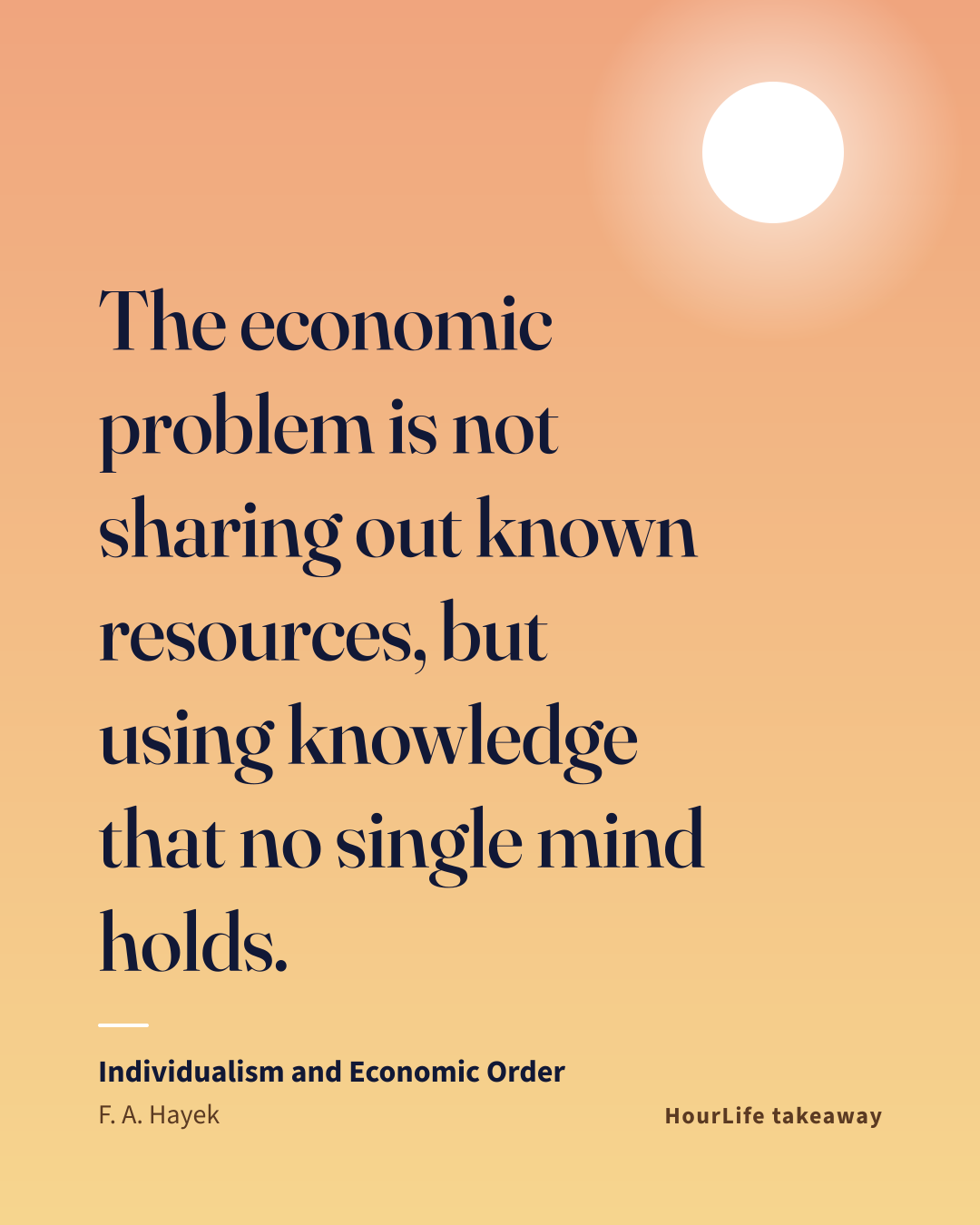
The economic problem is not sharing out known resources, but using knowledge that no single mind holds.

Individualism and Economic Order F. A. Hayek HourLife takeaway

In The Use of Knowledge in Society, Hayek argues that the facts an economy needs are never given to one planner or one model. They are scattered in pieces, each person holding a sliver that is local, short-lived and mostly unwritten. Any way of running things has to start from that.


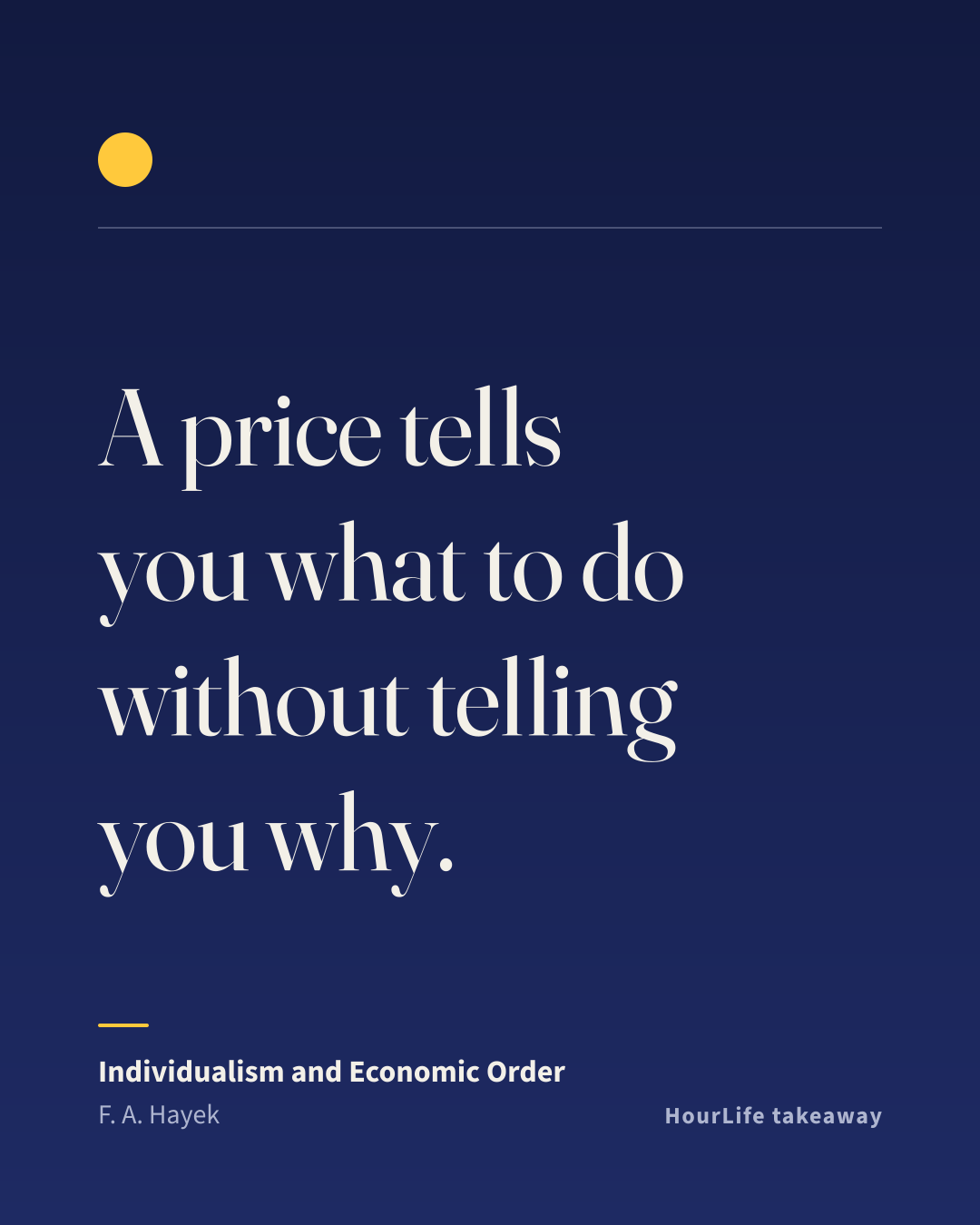
A price tells you what to do without telling you why.

Individualism and Economic Order F. A. Hayek HourLife takeaway

Hayek's example is tin. If tin becomes scarcer, because a source has closed or a new use has appeared, users do not need to know which. The higher price tells them to use less, and their switch to other materials passes the signal on to people who never heard of the cause.

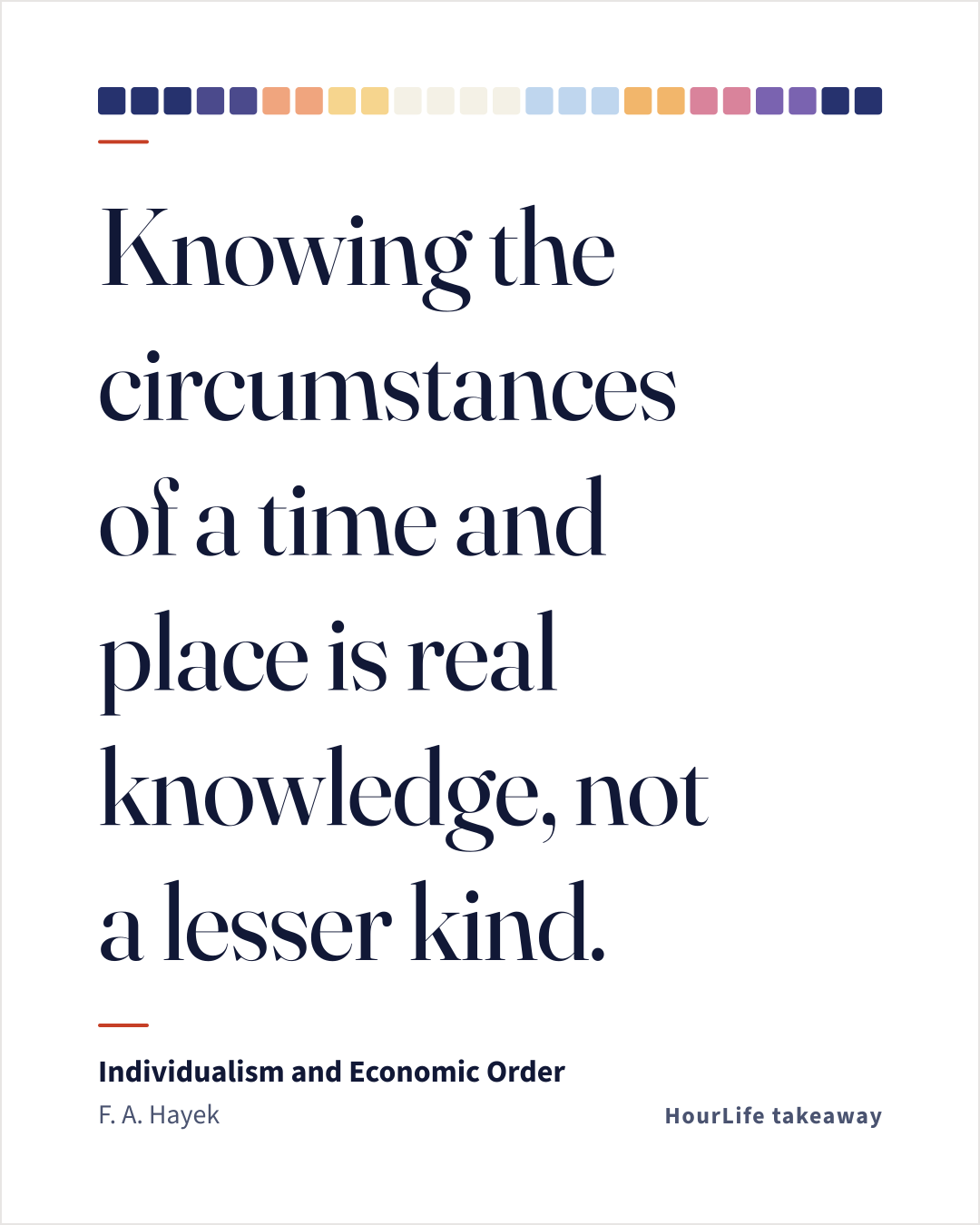
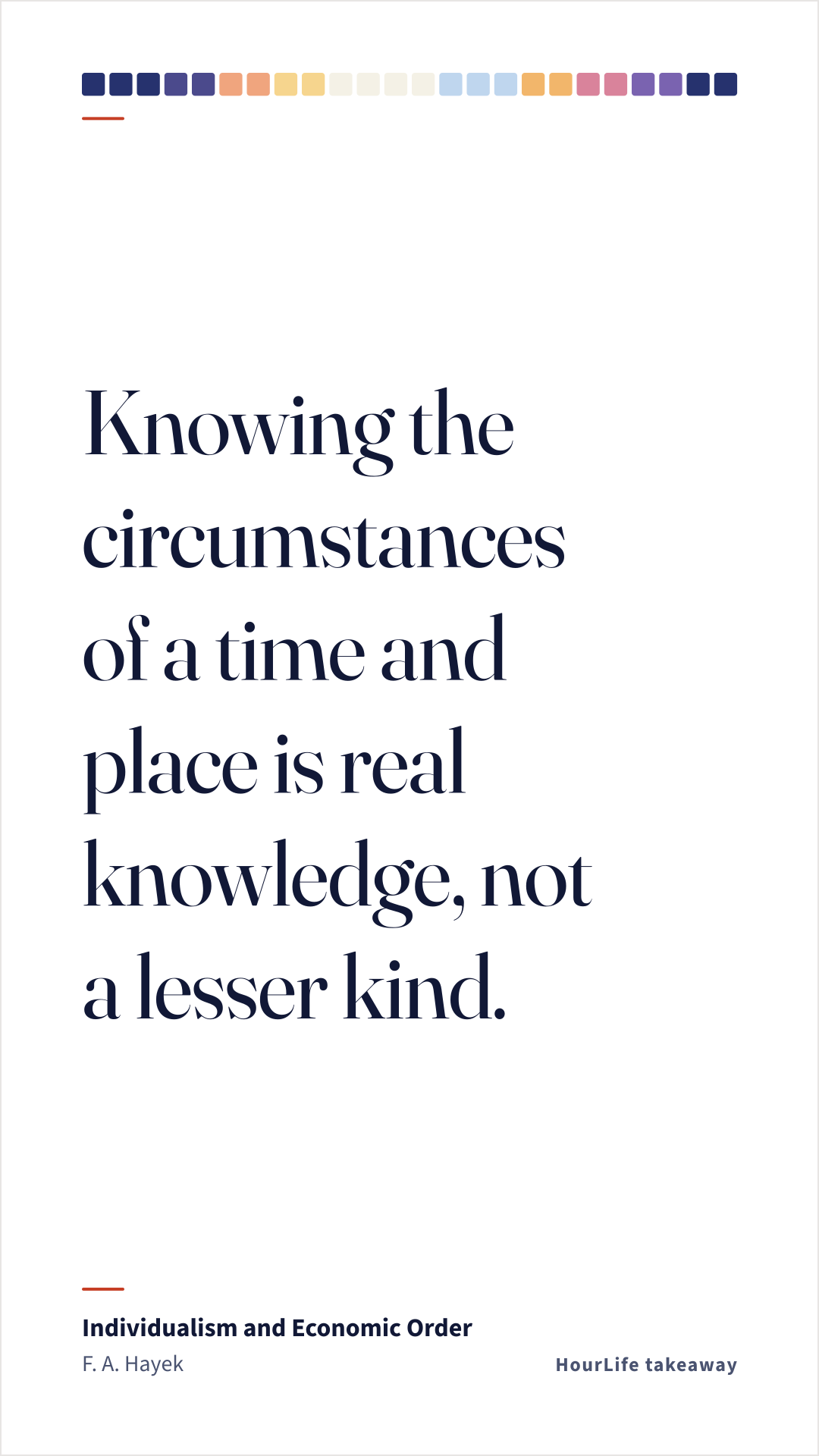
Knowing the circumstances of a time and place is real knowledge, not a lesser kind.

Individualism and Economic Order F. A. Hayek HourLife takeaway

Hayek points to the shipper who knows which ships are running half empty, the estate agent who knows about short-lived opportunities, and the trader who profits from small local price gaps. This practical knowledge is easy to look down on, yet no central office could collect it in time.

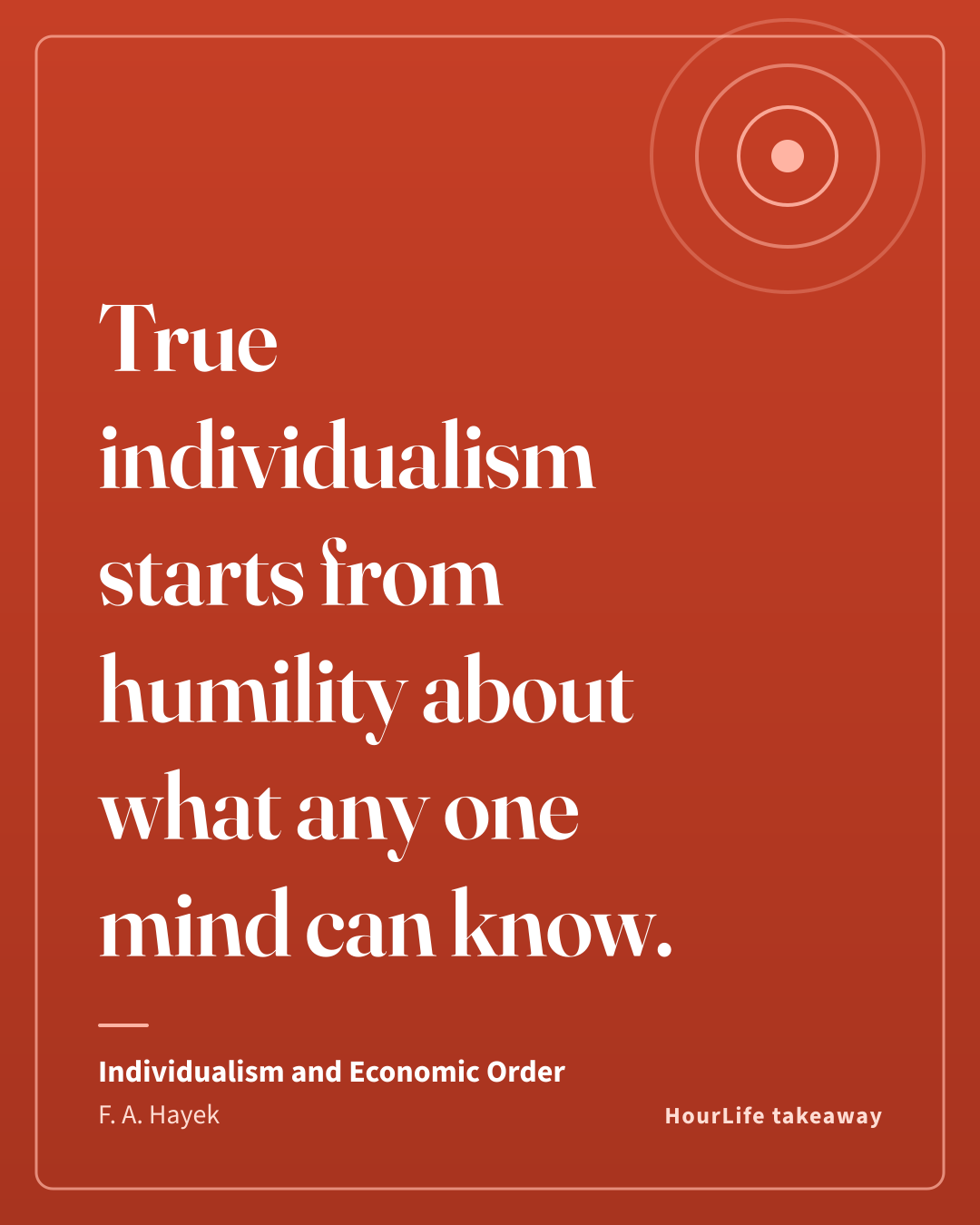
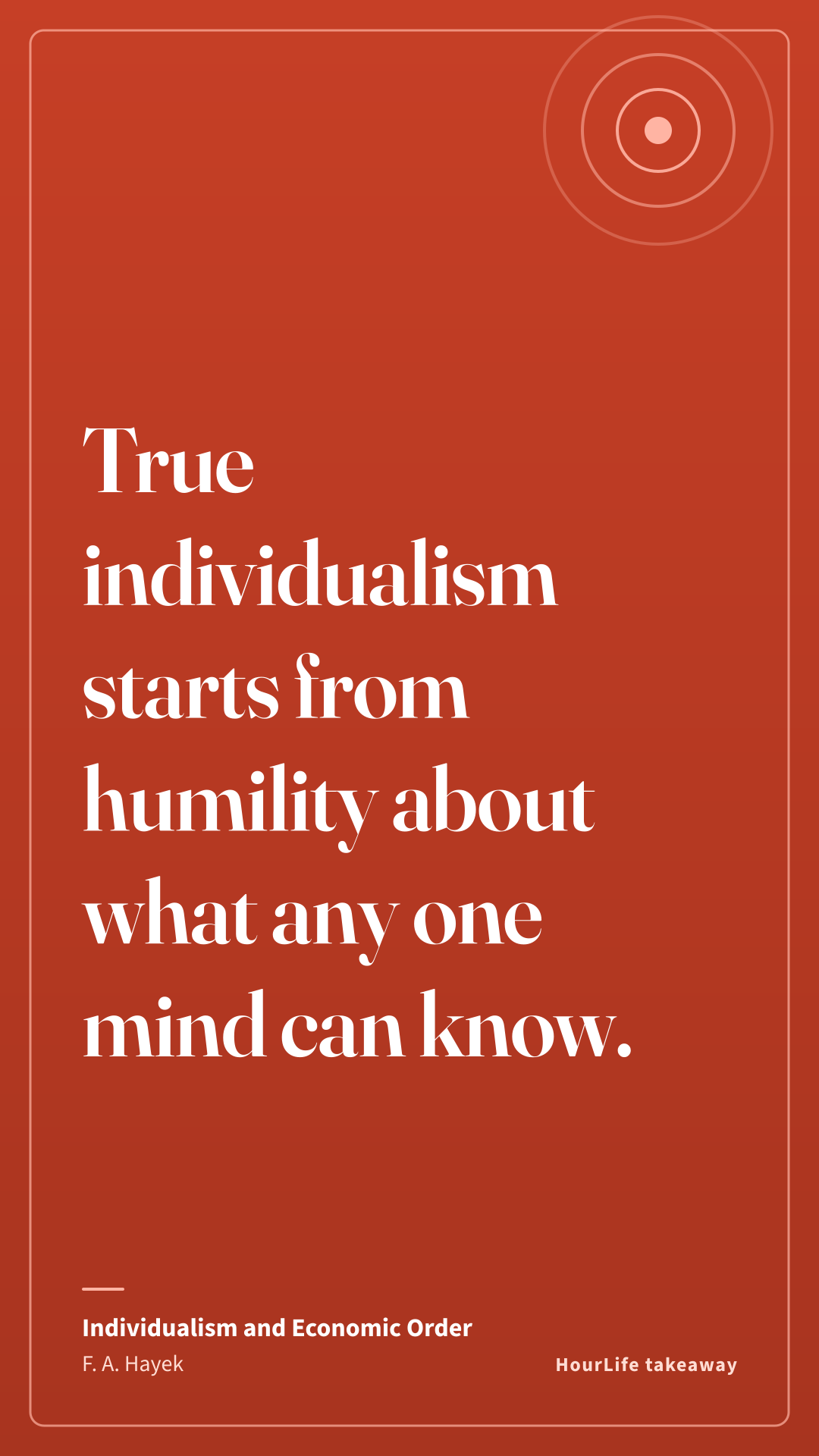
True individualism starts from humility about what any one mind can know.

Individualism and Economic Order F. A. Hayek HourLife takeaway

In Individualism: True and False, Hayek separates a tradition he traces through thinkers such as David Hume and Adam Smith, which sees society as the unplanned result of many people's actions, from a rationalist one that wants to design society from above. The first is a theory of how society works, not praise for selfish or isolated people.

Competition is a way of finding things out, not a finished state of affairs.

Individualism and Economic Order F. A. Hayek HourLife takeaway

In The Meaning of Competition, Hayek notes that the textbook model of perfect competition assumes everyone already knows everything, which leaves competition nothing to do. Real competition is the rivalry through which people learn what buyers want and what can be made more cheaply.

Equilibrium is really a question about how people’s plans come to fit together.

Individualism and Economic Order F. A. Hayek HourLife takeaway

Economics and Knowledge, from 1937, argues that equilibrium means people's plans are compatible with each other. The interesting question is how they learn enough for that to happen. Hayek compared this division of knowledge to Adam Smith's division of labour.

Social facts are made of what people believe about things.

Individualism and Economic Order F. A. Hayek HourLife takeaway

In The Facts of the Social Sciences, Hayek argues that a tool, a medicine or a coin is defined by what people think it can do, not by its physical make-up. So the study of society has to begin with the beliefs and intentions of the people in it.

The planner’s hardest problem is not the maths but getting the facts.

Individualism and Economic Order F. A. Hayek HourLife takeaway

The three essays on socialist calculation reply to economists such as Oskar Lange, who proposed that a central board could set prices by trial and error. Hayek's objection was that the board would need detailed, constantly changing knowledge it had no way to gather, so its prices would always lag behind events.

A free market still needs carefully designed rules.

Individualism and Economic Order F. A. Hayek HourLife takeaway

In Free Enterprise and Competitive Order, Hayek argues that markets depend on a legal framework, such as property, contract and company law, and that laissez-faire is too crude a slogan. Critics go further: prices miss costs nobody pays for, such as pollution, which is a case for rules of its own.

Keep this going in the app.

HourLife turns these ideas into a daily system — goals, habits, focus, and reflection in one private place.