The focusing question is a scalpel: what is the ONE Thing you can do such that by doing it everything else will be easier or unnecessary?
This captures the book's most useful move. It turns priority from a mood into a test of leverage.
The most-loved lines from Gary Keller, drawn from 1 book in the library.
Lines labelled “HourLife takeaway” are our wording of the book’s ideas and may paraphrase it. Only lines in quotation marks are the author’s own words, with where they appear. Check the book for exact wording before you quote it. Spot an error?
The focusing question is a scalpel: what is the ONE Thing you can do such that by doing it everything else will be easier or unnecessary?
This captures the book's most useful move. It turns priority from a mood into a test of leverage.
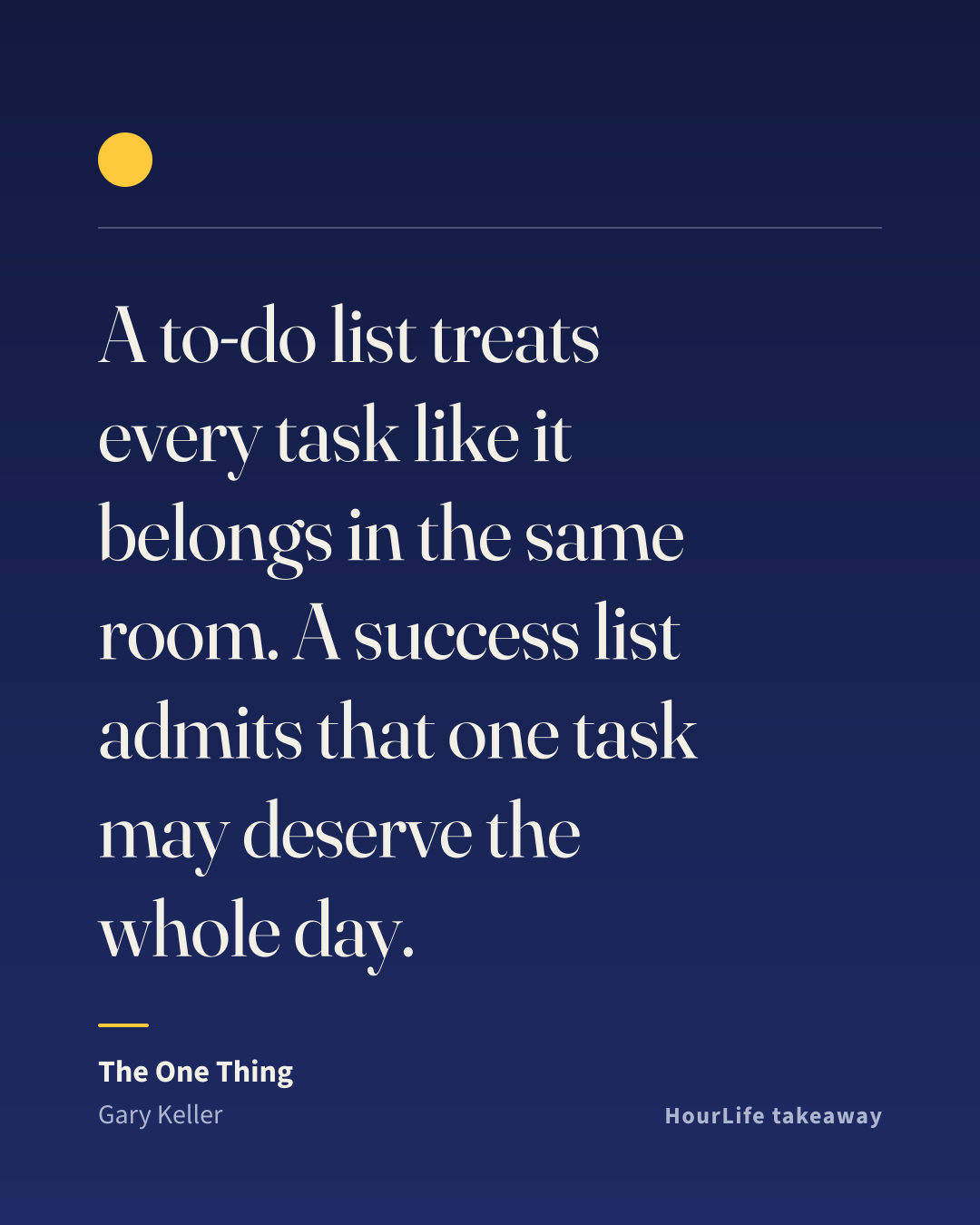
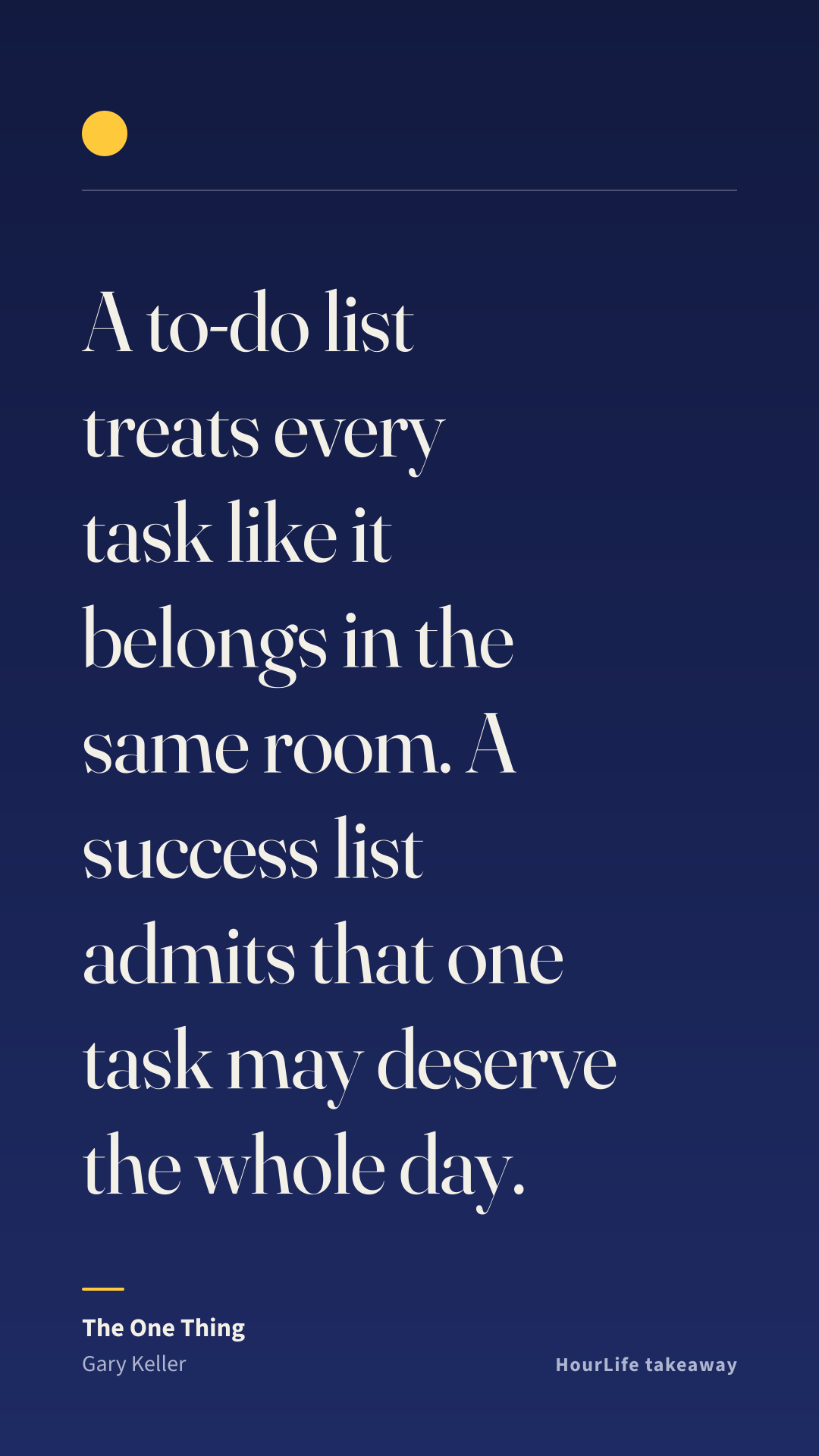
A to-do list treats every task like it belongs in the same room. A success list admits that one task may deserve the whole day.
Keller and Papasan are not anti-organization. They are against letting organization impersonate progress.
The domino effect begins with sequence. You do not need to knock everything down; you need to choose the first piece well.
The metaphor works because it reframes ambition as ordering, not volume.
Time blocking is the book’s promise made visible. If the one thing has no protected appointment, it is only a preference.
The calendar reveals whether priority is real. The rest is negotiation.
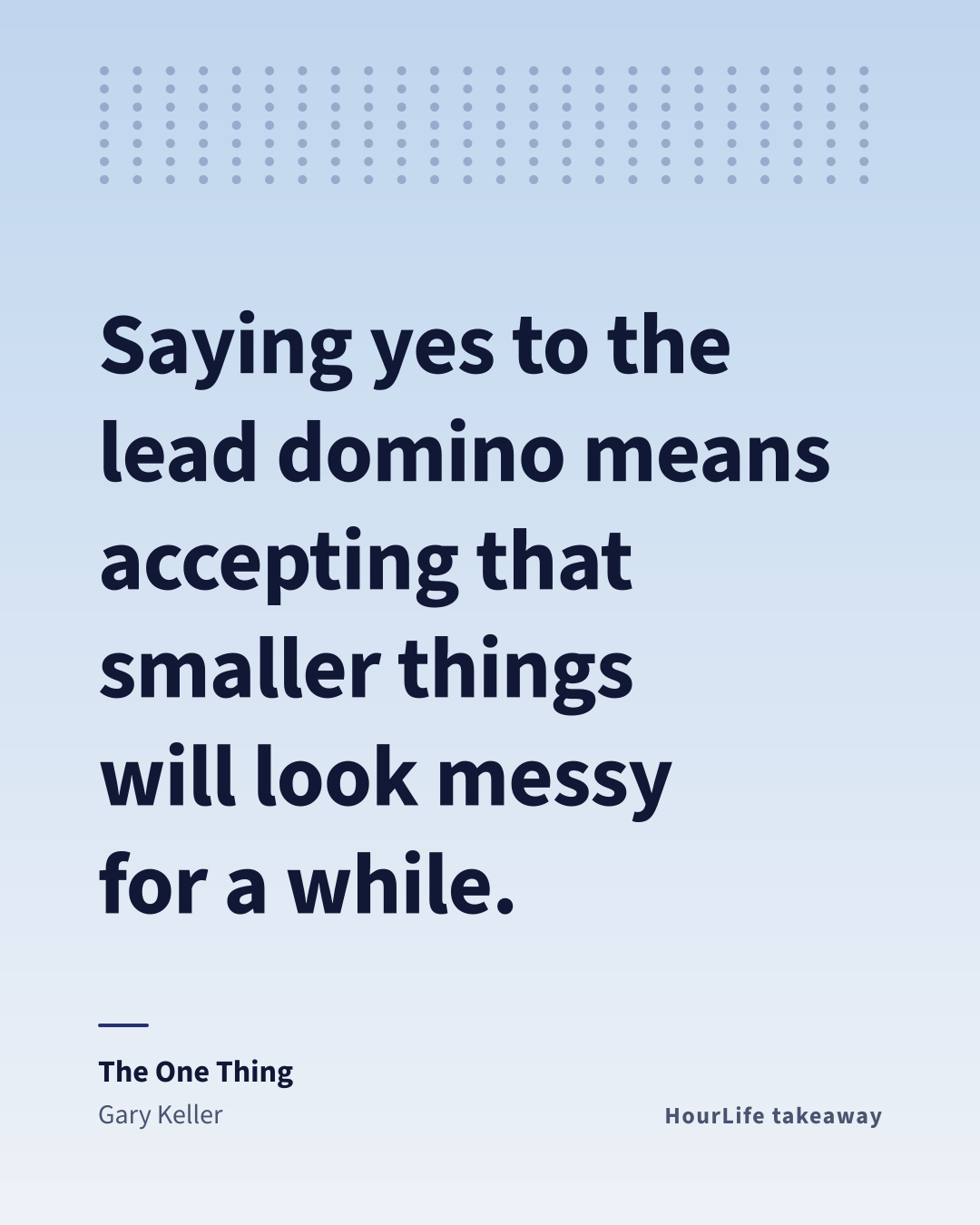
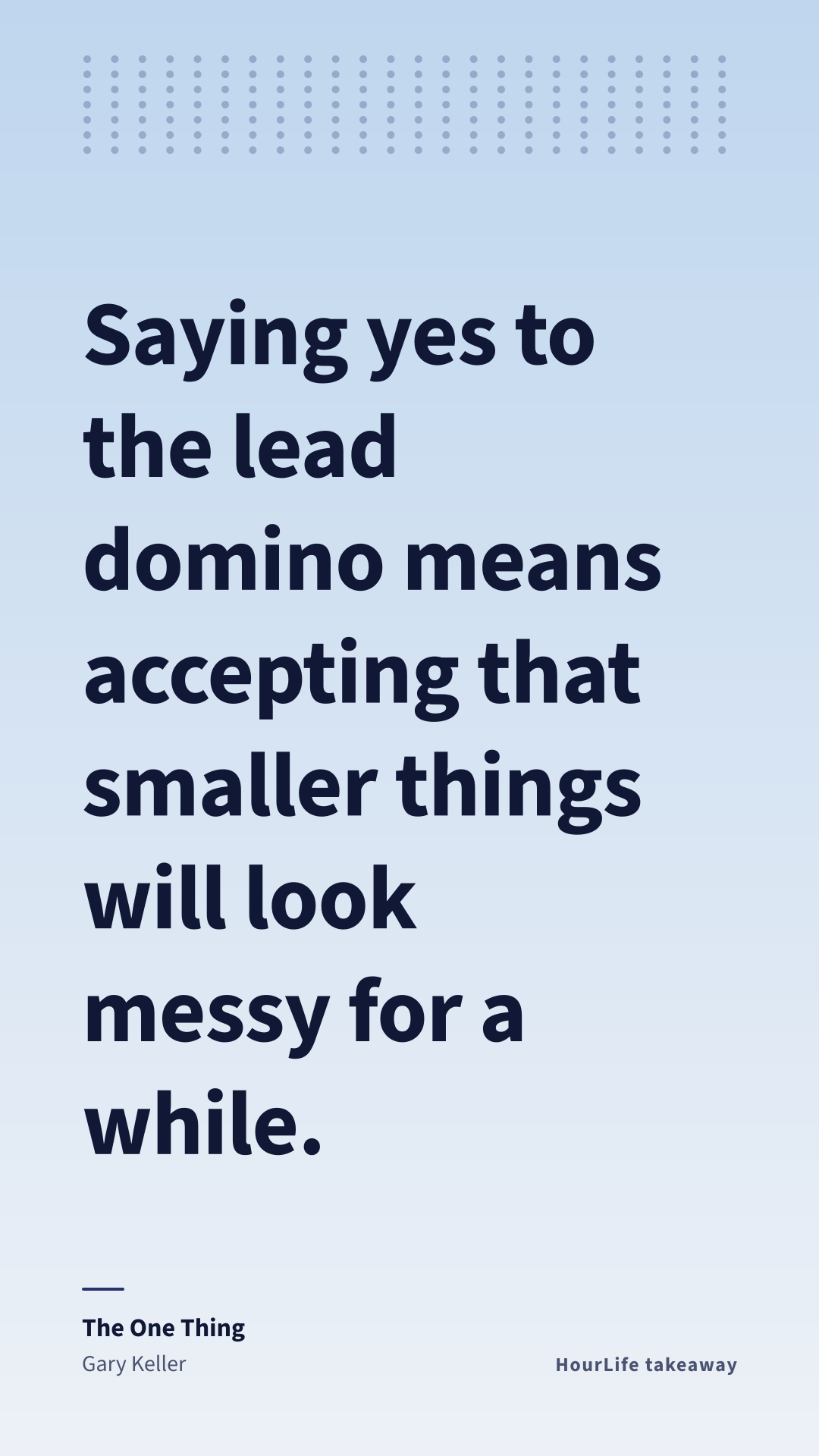
Saying yes to the lead domino means accepting that smaller things will look messy for a while.
This is the emotional cost of focus. The book is honest that extraordinary results require selective neglect.
HourLife turns these ideas into a daily system — goals, habits, focus, and reflection in one private place.