Keep this author quotes for later
Sign in to save

Hailey Magee

The most-loved lines from Hailey Magee, drawn from 1 book in the library.

Lines labelled “HourLife takeaway” are our wording of the book’s ideas and may paraphrase it. Only lines in quotation marks are the author’s own words, with where they appear. Check the book for exact wording before you quote it. Spot an error?

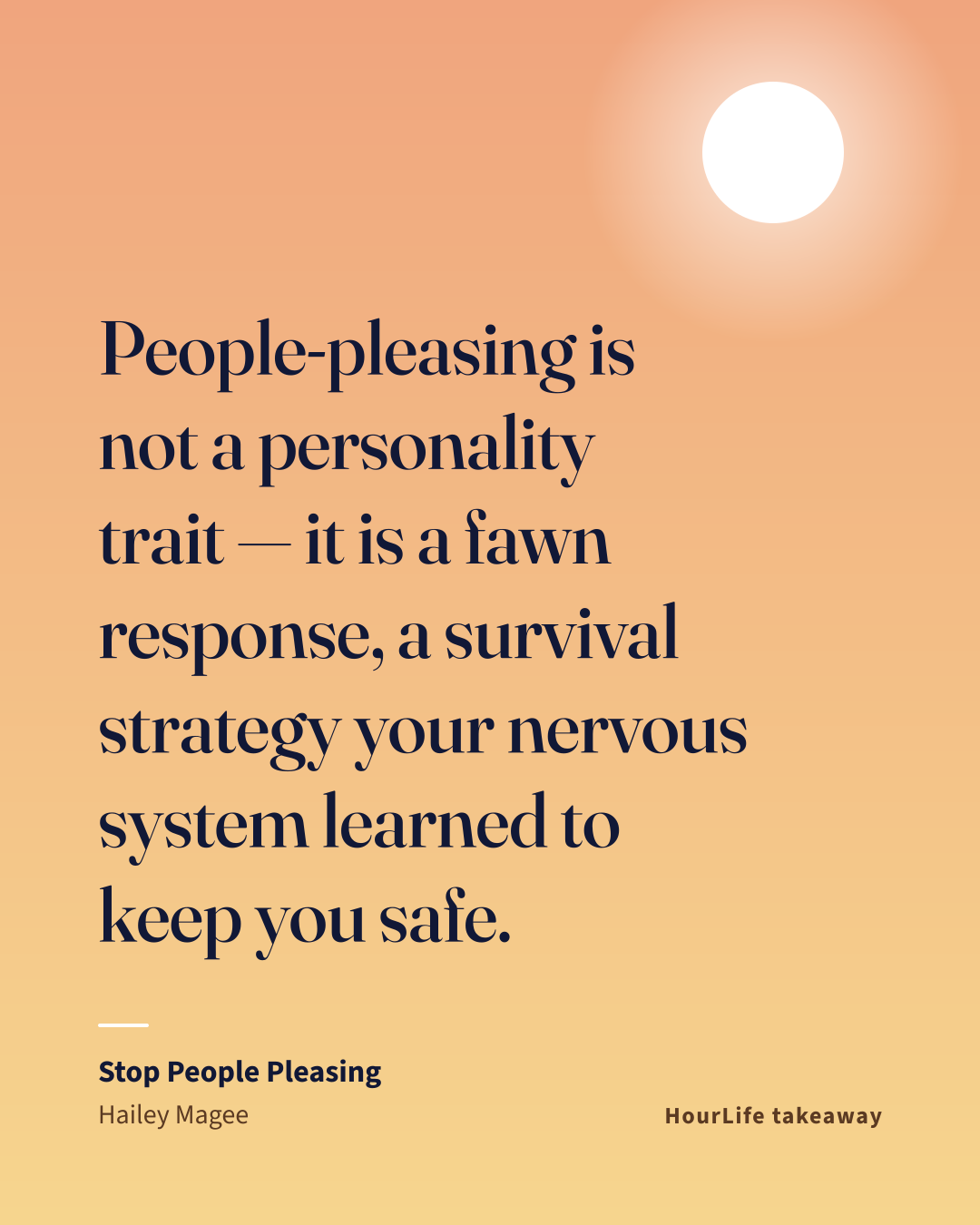
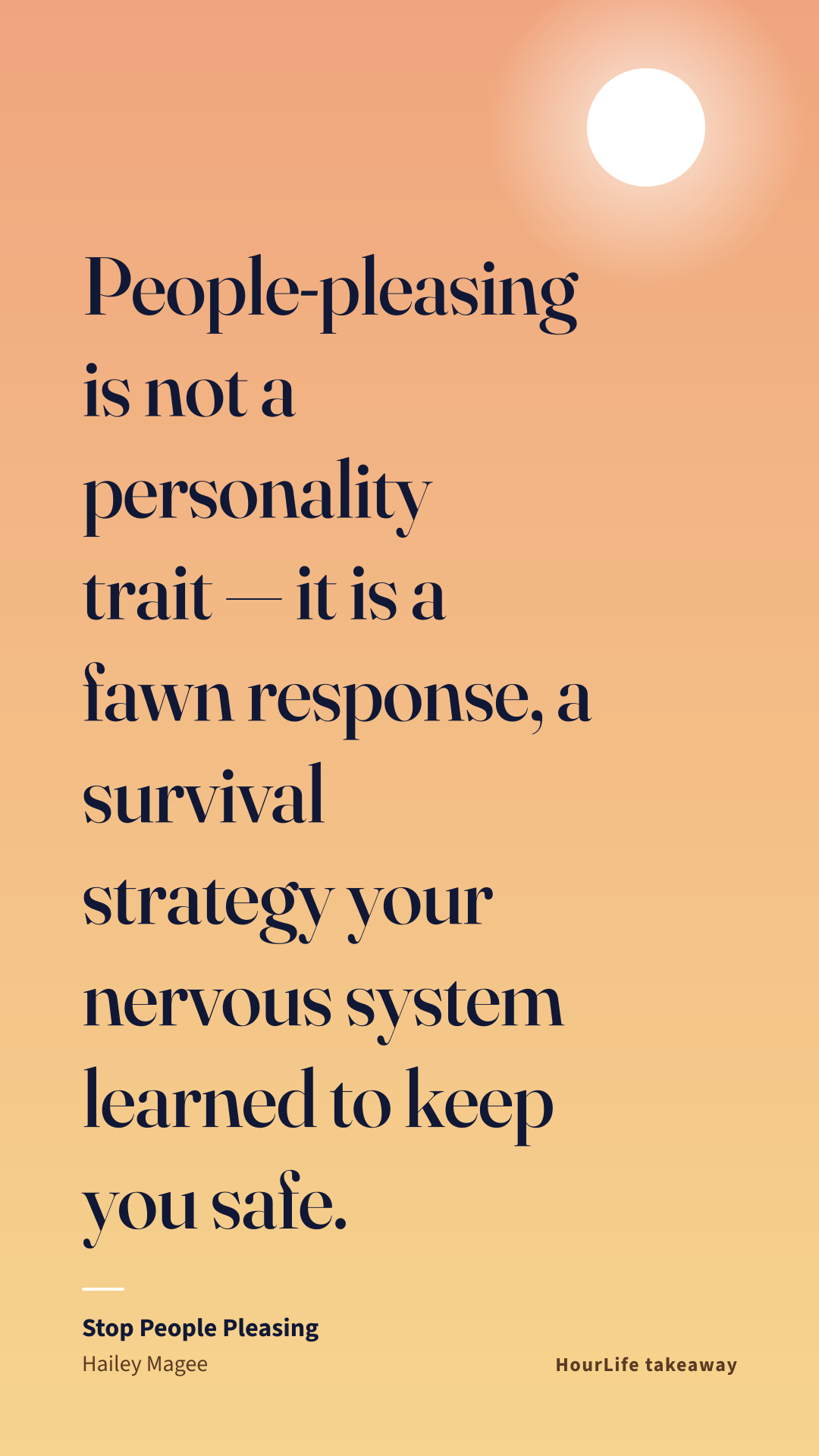
People-pleasing is not a personality trait — it is a fawn response, a survival strategy your nervous system learned to keep you safe.

Stop People Pleasing Hailey Magee HourLife takeaway

Magee's foundational reframe changes everything. The fawn response is one of four trauma adaptations (fight, flight, freeze, fawn). Naming it as a nervous system pattern — not a character flaw or moral failing — is the first act of recovery. You didn't choose this. But now you can.


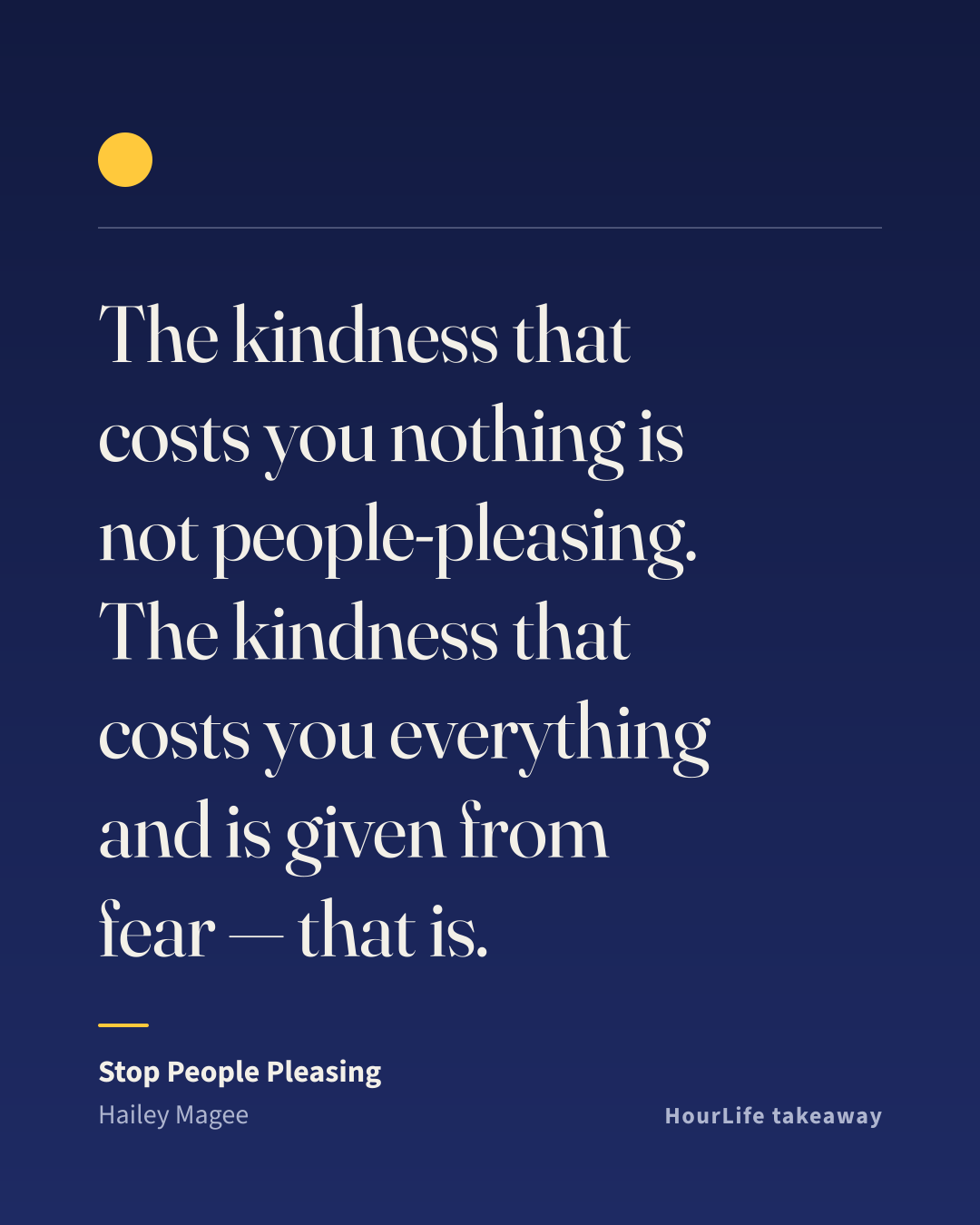
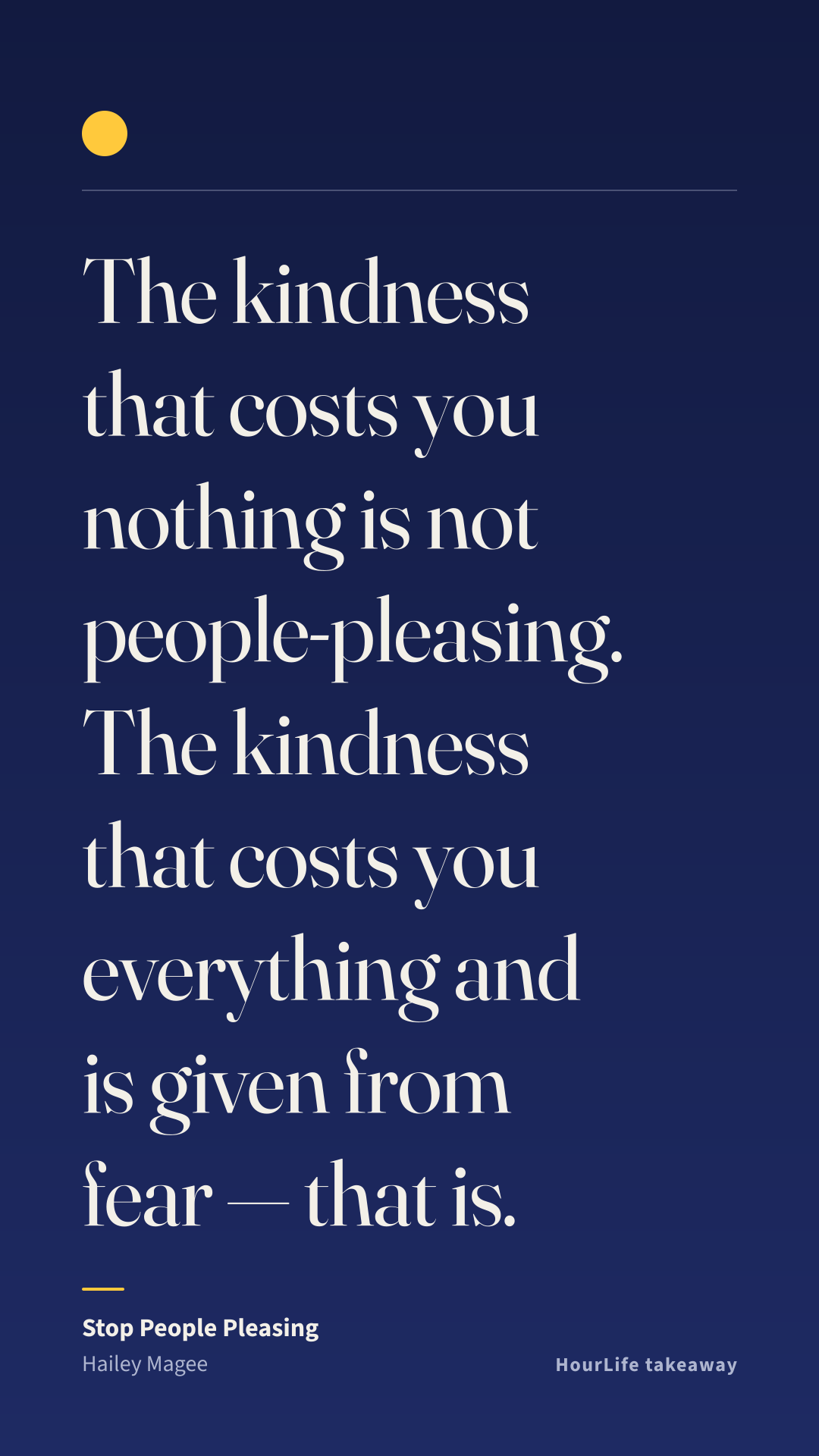
The kindness that costs you nothing is not people-pleasing. The kindness that costs you everything and is given from fear — that is.

Stop People Pleasing Hailey Magee HourLife takeaway

Magee draws a precise line between genuine generosity and compliance rooted in fear. Real kindness is chosen freely. People-pleasing is not kindness — it is managed anxiety. The question is always: am I doing this because I want to, or because I'm afraid of what happens if I don't?

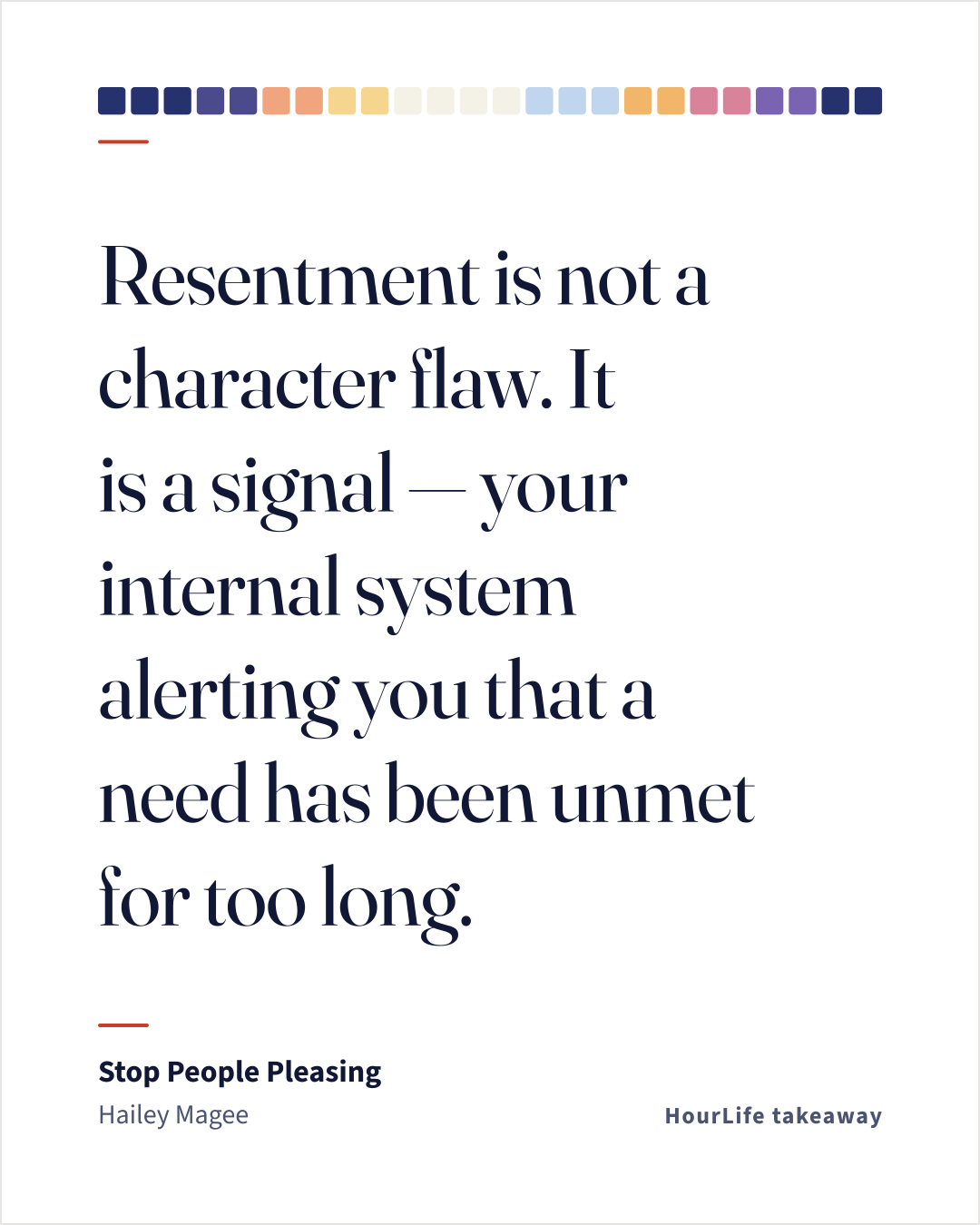
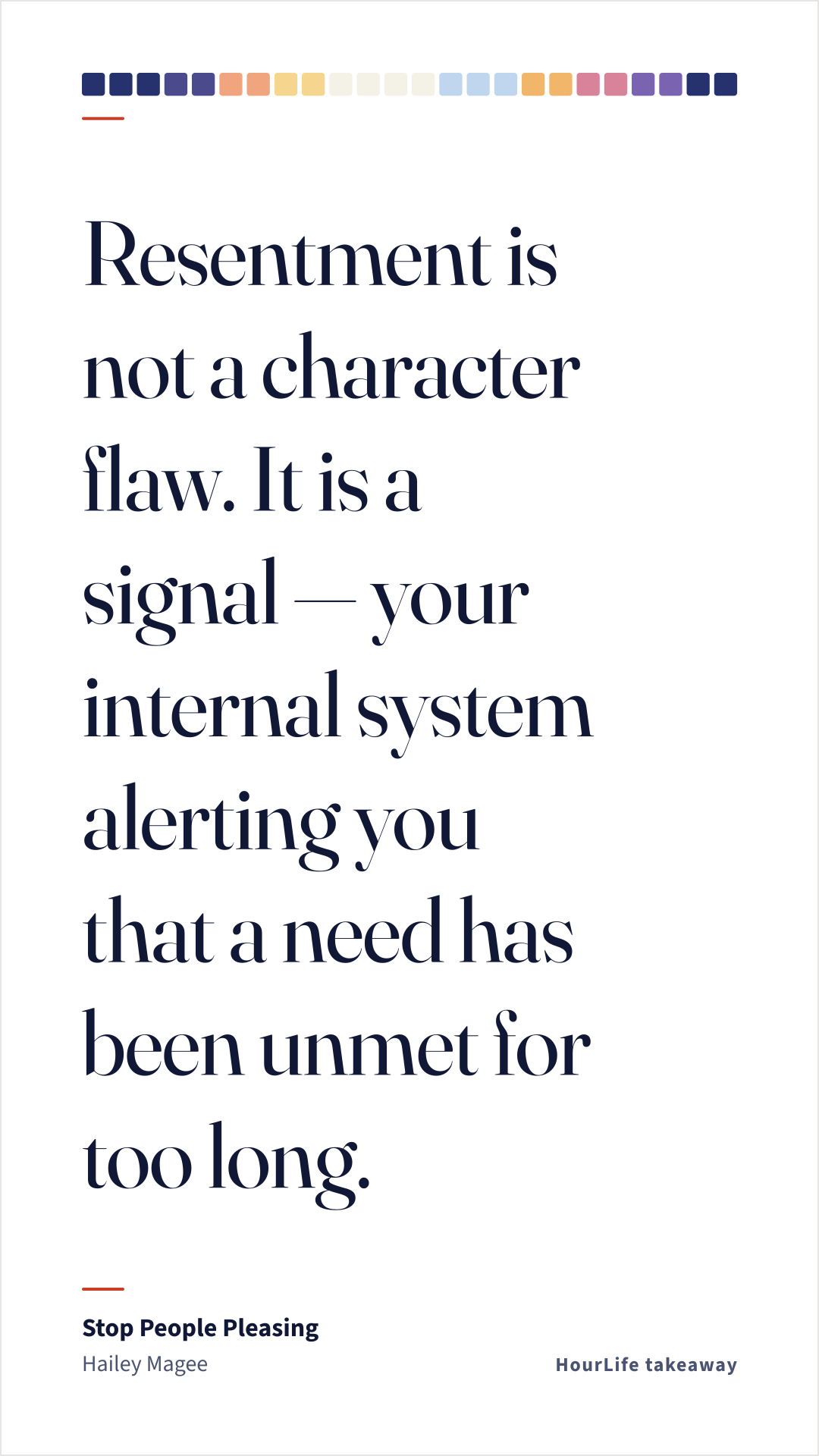
Resentment is not a character flaw. It is a signal — your internal system alerting you that a need has been unmet for too long.

Stop People Pleasing Hailey Magee HourLife takeaway

One of Magee's most liberating reframes. Most people who please feel ashamed of their resentment, which layers self-judgment on top of the original wound. Magee restores resentment to its proper function: not a moral failure but a data point pointing directly toward an unmet need.

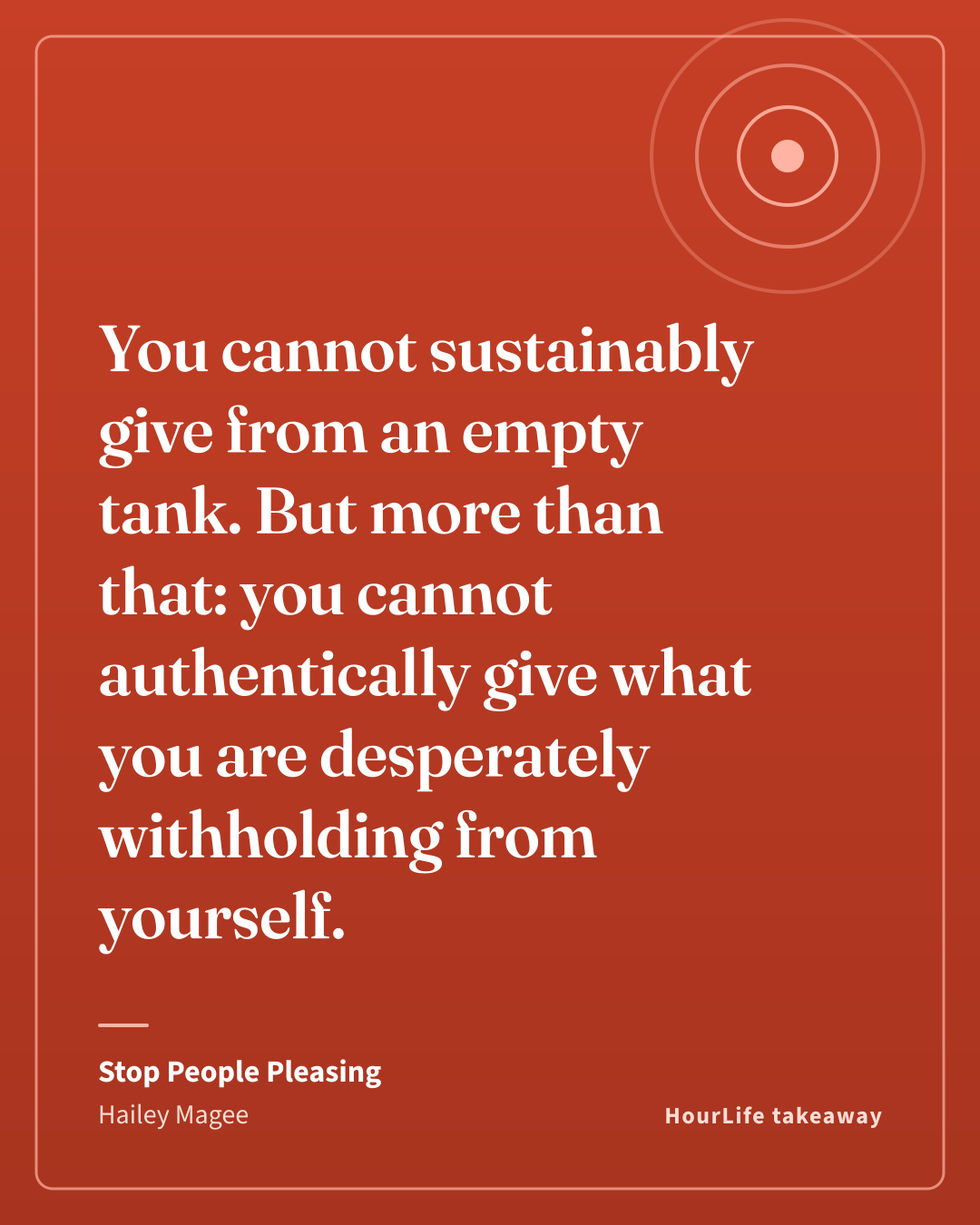
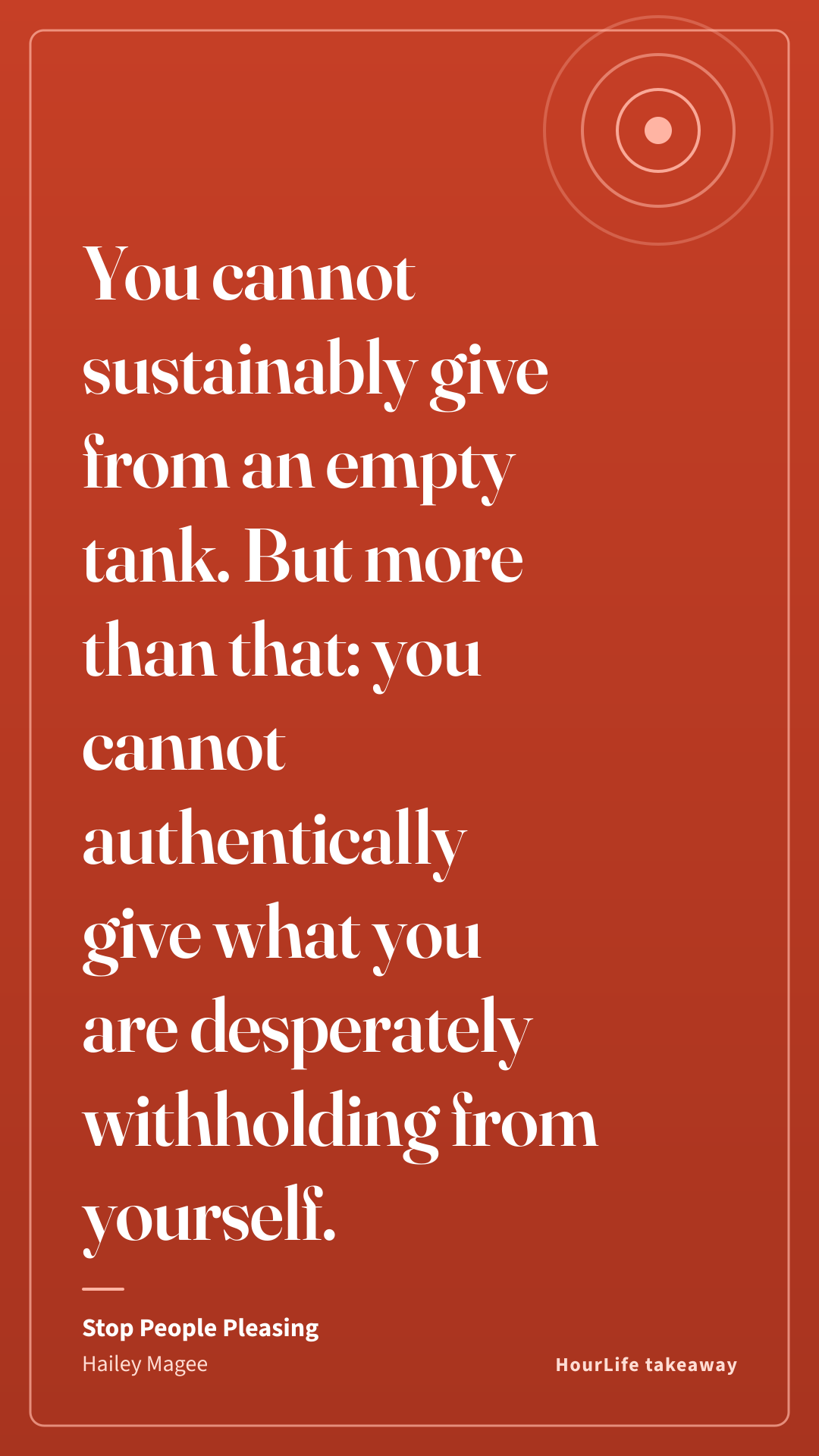
You cannot sustainably give from an empty tank. But more than that: you cannot authentically give what you are desperately withholding from yourself.

Stop People Pleasing Hailey Magee HourLife takeaway

The deeper problem with chronic self-sacrifice isn't depletion — it's inauthenticity. When you routinely deny your own needs, the help you offer others carries an invisible expectation of reciprocity. It stops being a gift and becomes a transaction you silently resent when it isn't returned.

The discomfort of saying no is acute and temporary. The cost of never saying no is chronic and cumulative.

Stop People Pleasing Hailey Magee HourLife takeaway

Magee on the asymmetry of short-term vs. long-term pain. The spike of guilt that follows a boundary is intense but brief. The dull erosion of self-trust, authentic identity, and genuine relationships that follows years of people-pleasing is far more costly — and most people never connect the two.

Recovery is not about becoming selfish. It is about discovering that your needs and others’ needs can both be true at the same time.

Stop People Pleasing Hailey Magee HourLife takeaway

The fear underneath most recovery resistance: that stopping people-pleasing means stopping caring. Magee dismantles this. The goal is not indifference to others — it is a both/and framework where your own reality is as valid as theirs. That's not selfishness; it's relational maturity.

Keep this going in the app.

HourLife turns these ideas into a daily system — goals, habits, focus, and reflection in one private place.