Keep this author quotes for later
Sign in to save

Irvin D. Yalom

The most-loved lines from Irvin D. Yalom, drawn from 1 book in the library.

Lines labelled “HourLife takeaway” are our wording of the book’s ideas and may paraphrase it. Only lines in quotation marks are the author’s own words, with where they appear. Check the book for exact wording before you quote it. Spot an error?

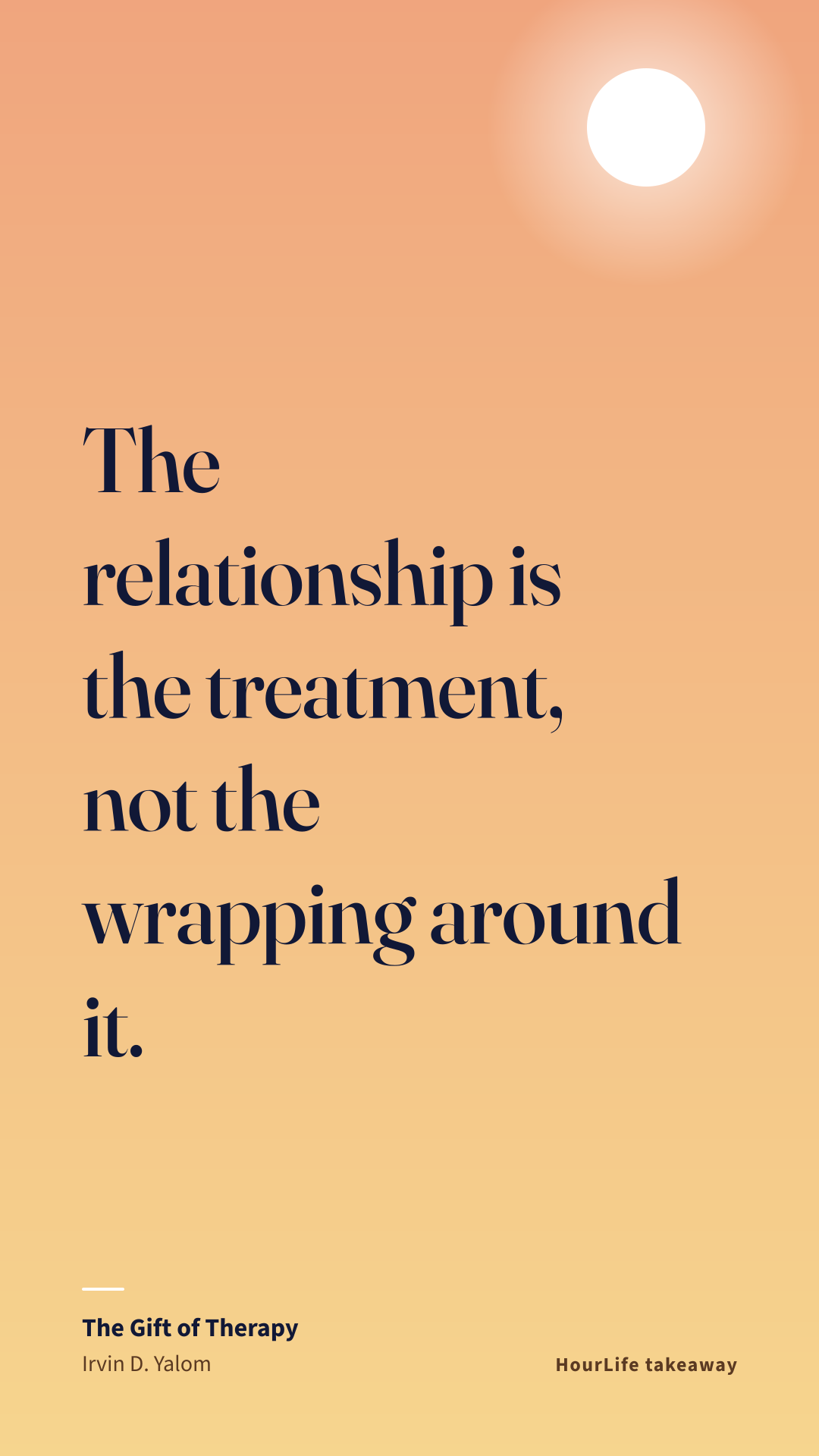
The relationship is the treatment, not the wrapping around it.

The Gift of Therapy Irvin D. Yalom HourLife takeaway

Yalom argues that what helps people most is the bond between therapist and patient, more than any single technique. Theory still matters, but it serves the relationship rather than the other way round. A good hour is one where two people are really present to each other.


Therapist and patient are fellow travellers, facing the same hard facts of life.

The Gift of Therapy Irvin D. Yalom HourLife takeaway

Yalom drops the picture of a healthy expert fixing a sick patient. Both people will die, both have to choose, and both are alone in some way. Seeing the patient as a fellow traveller makes the therapist humbler and the work more honest.

Build a new therapy for each person instead of fitting each person to one method.

The Gift of Therapy Irvin D. Yalom HourLife takeaway

Yalom says every patient needs a therapy made for them, and that the therapist should be ready to change course when something isn't working. A rigid method can become a way of not seeing the person in the other chair.

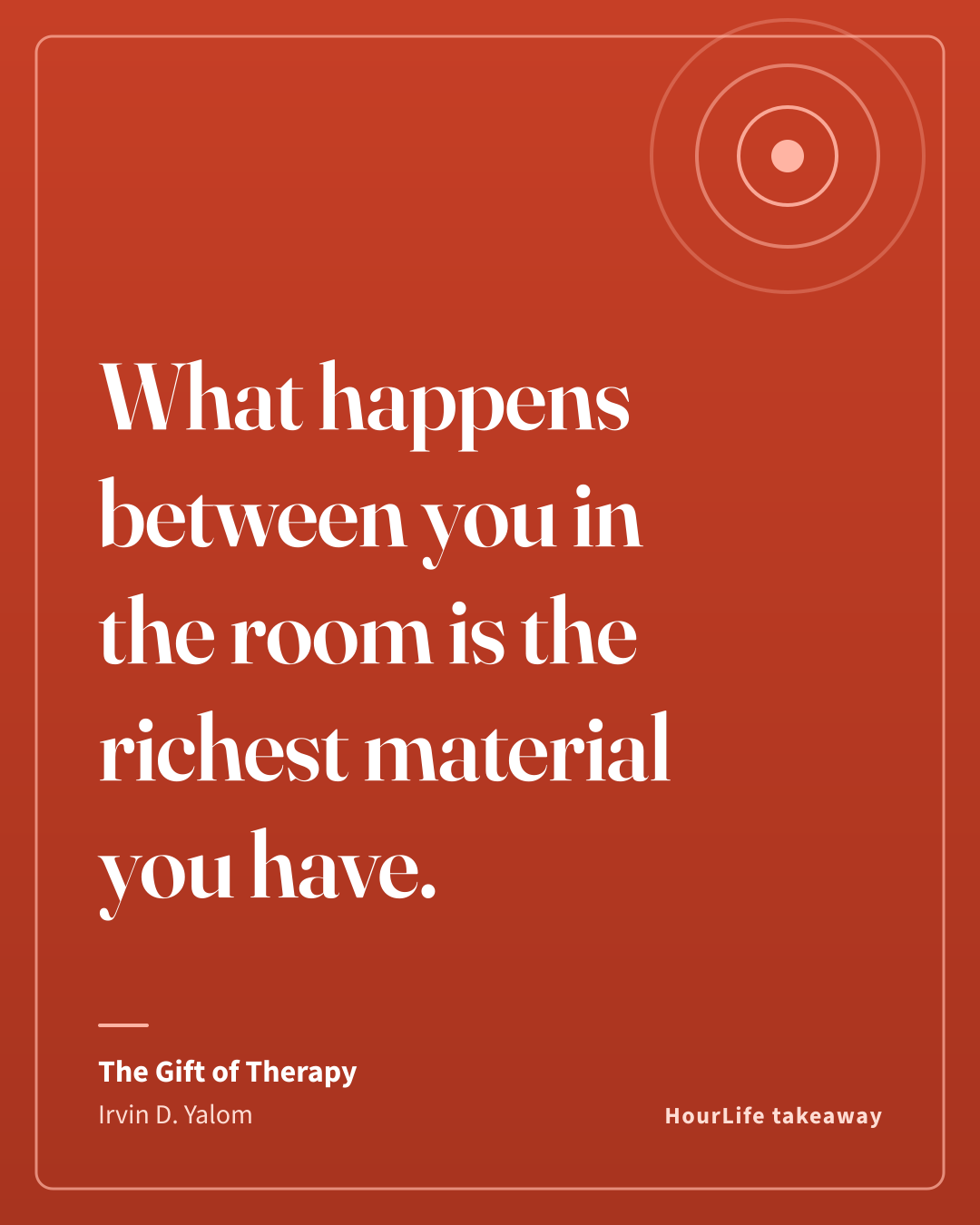
What happens between you in the room is the richest material you have.

The Gift of Therapy Irvin D. Yalom HourLife takeaway

This is the here-and-now, the idea Yalom returns to most. He suggests checking in on how the two people are doing together in nearly every session. The way someone treats their therapist often mirrors how they treat everyone else, and in the room it can be worked on live.

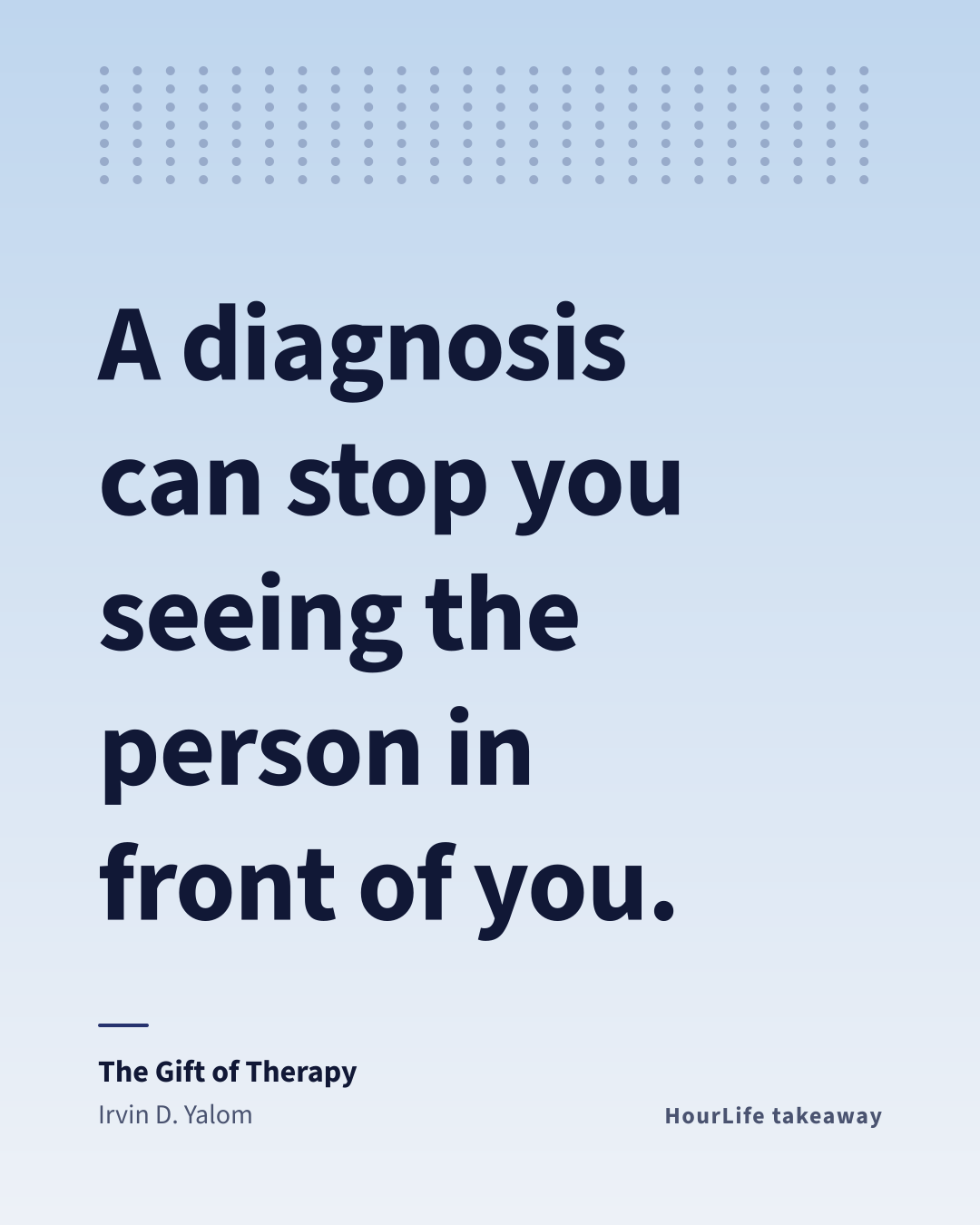
A diagnosis can stop you seeing the person in front of you.

The Gift of Therapy Irvin D. Yalom HourLife takeaway

Yalom warns that labels narrow attention, and that people are always more than any category. He leaves diagnosis to paperwork such as insurance forms and tries to stay curious about the person instead.

To understand someone, look out of their window, not yours.

The Gift of Therapy Irvin D. Yalom HourLife takeaway

Empathy means seeing the world from where the other person sits. Yalom tells of a patient who was hurt that, on a drive to college, her father only remarked on an ugly, littered stream while she saw a lovely one. Years later she drove the same road and saw there were two streams, one on each side.

Your own feelings in a session are information, not noise.

The Gift of Therapy Irvin D. Yalom HourLife takeaway

If the therapist feels bored, irritated or drawn in, other people in the patient's life probably feel the same. Yalom treats those reactions as data to use, carefully and kindly, rather than something to hide.

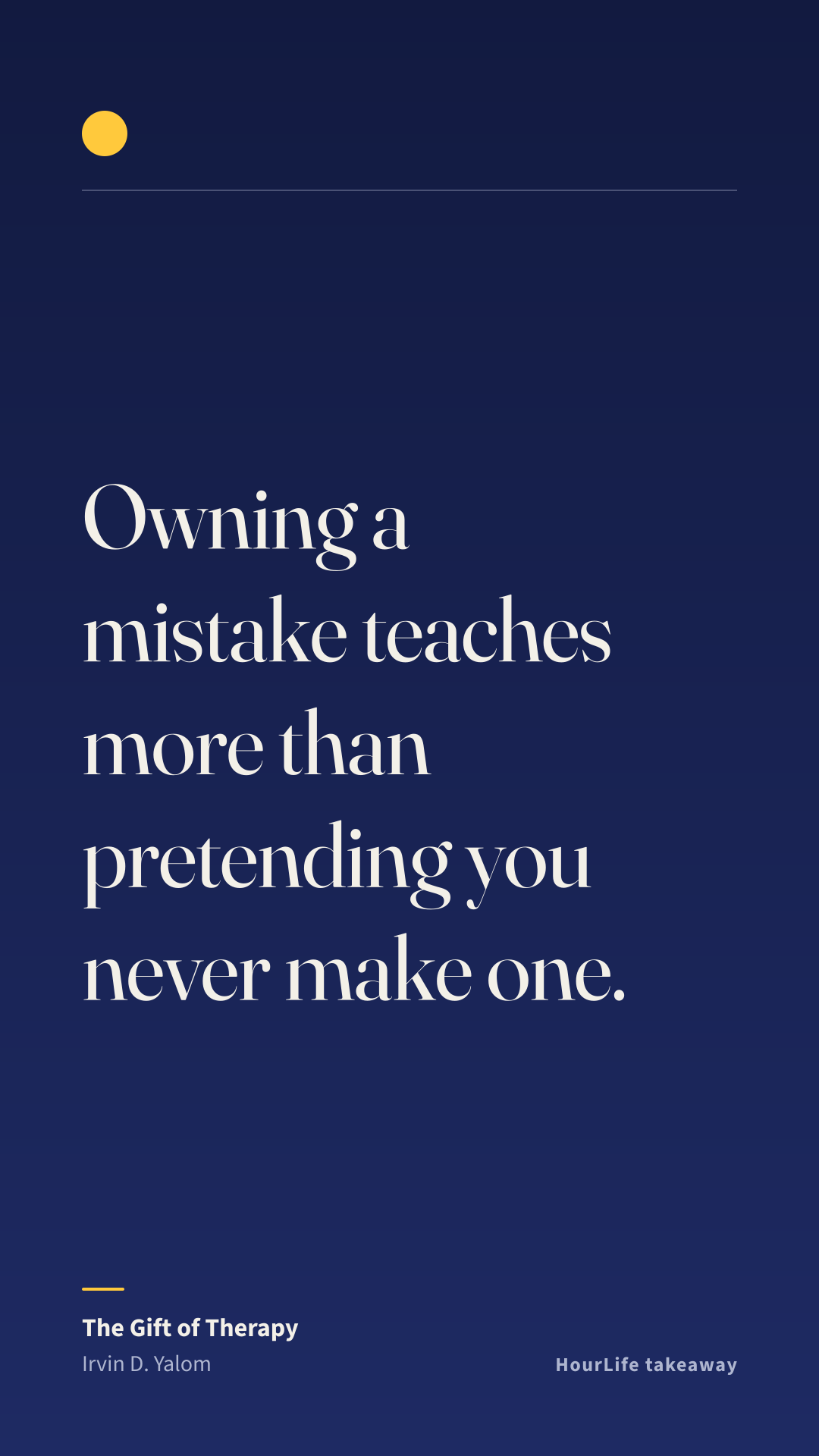
Owning a mistake teaches more than pretending you never make one.

The Gift of Therapy Irvin D. Yalom HourLife takeaway

Yalom writes that every therapist gets things wrong and should say so openly. Admitting an error models the honesty the therapist hopes to see in the patient, and it often deepens trust rather than weakening it.

Facing death can make a life more vivid, not less.

The Gift of Therapy Irvin D. Yalom HourLife takeaway

Yalom's work returns to four givens of existence: death, freedom, isolation and meaninglessness. He encourages therapists not to look away when these come up, because facing mortality often helps people sort what matters from what doesn't.

Keep this going in the app.

HourLife turns these ideas into a daily system — goals, habits, focus, and reflection in one private place.