Keep this author quotes for later
Sign in to save

Jill Weber

The most-loved lines from Jill Weber, drawn from 1 book in the library.

Lines labelled “HourLife takeaway” are our wording of the book’s ideas and may paraphrase it. Only lines in quotation marks are the author’s own words, with where they appear. Check the book for exact wording before you quote it. Spot an error?

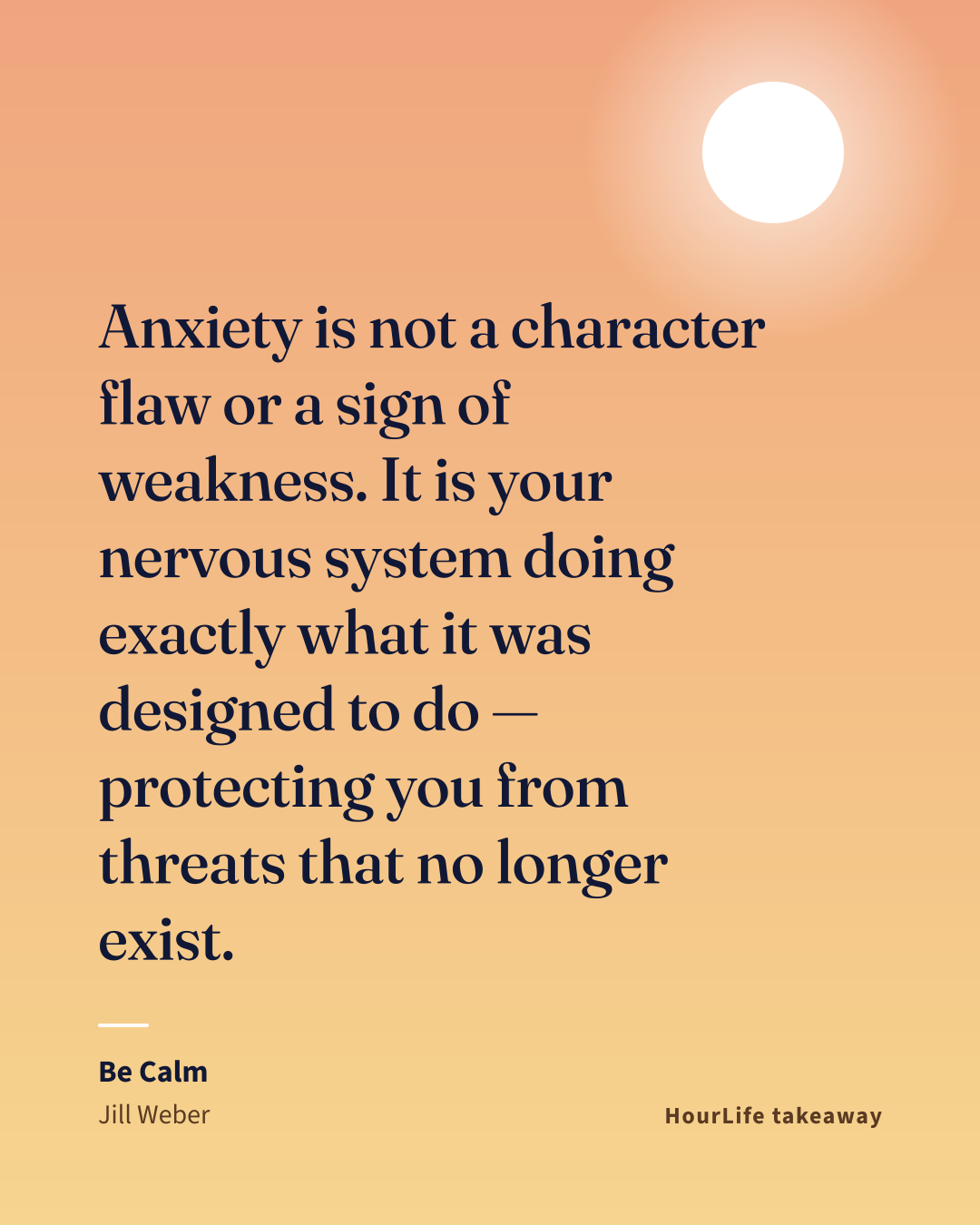
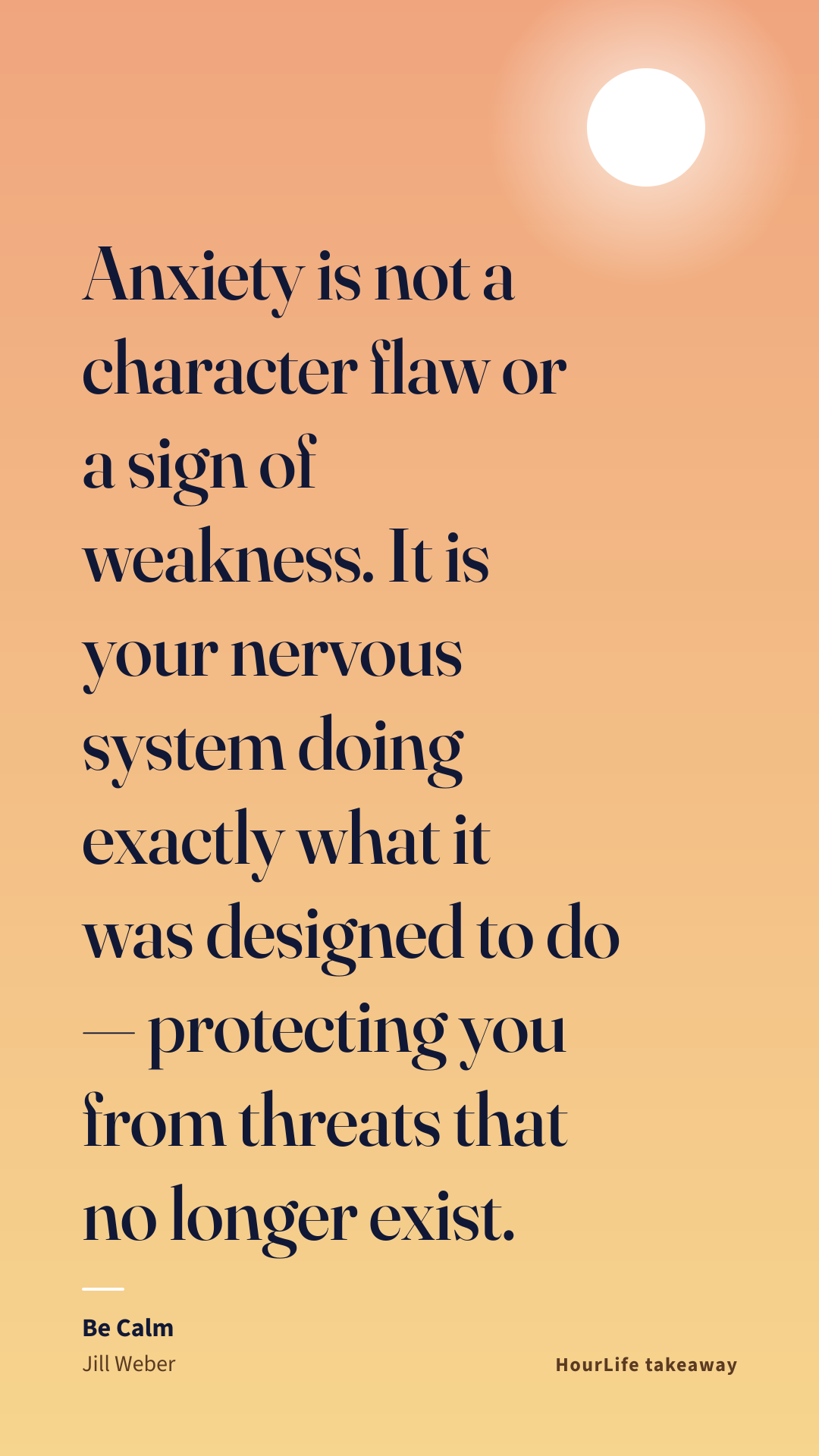
Anxiety is not a character flaw or a sign of weakness. It is your nervous system doing exactly what it was designed to do — protecting you from threats that no longer exist.

Be Calm Jill Weber HourLife takeaway

Weber reframes anxiety from personal failing to biological function. Your alarm system works perfectly — it is just calibrated to old data. This shift from shame to understanding is the foundation of every technique in the book.


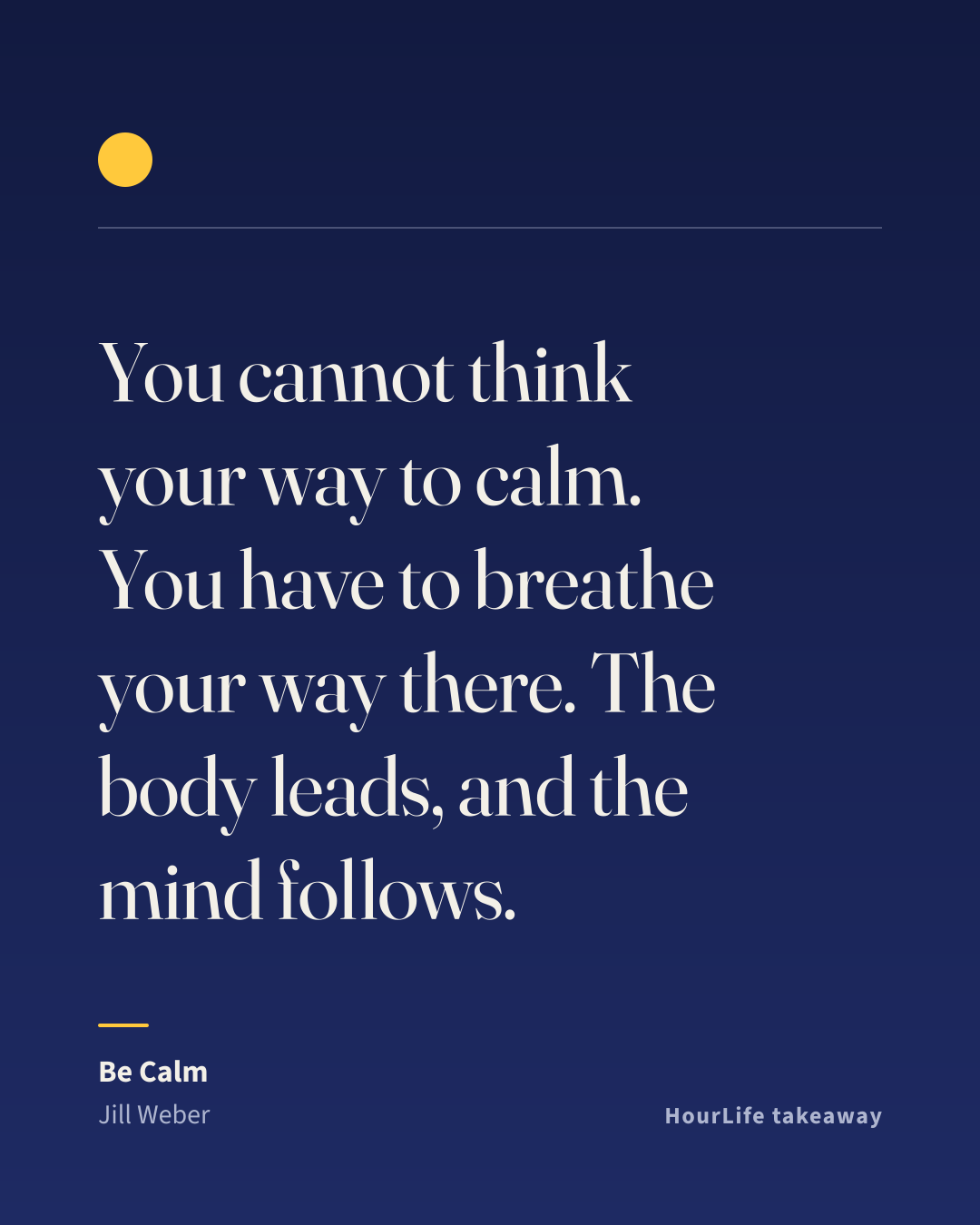
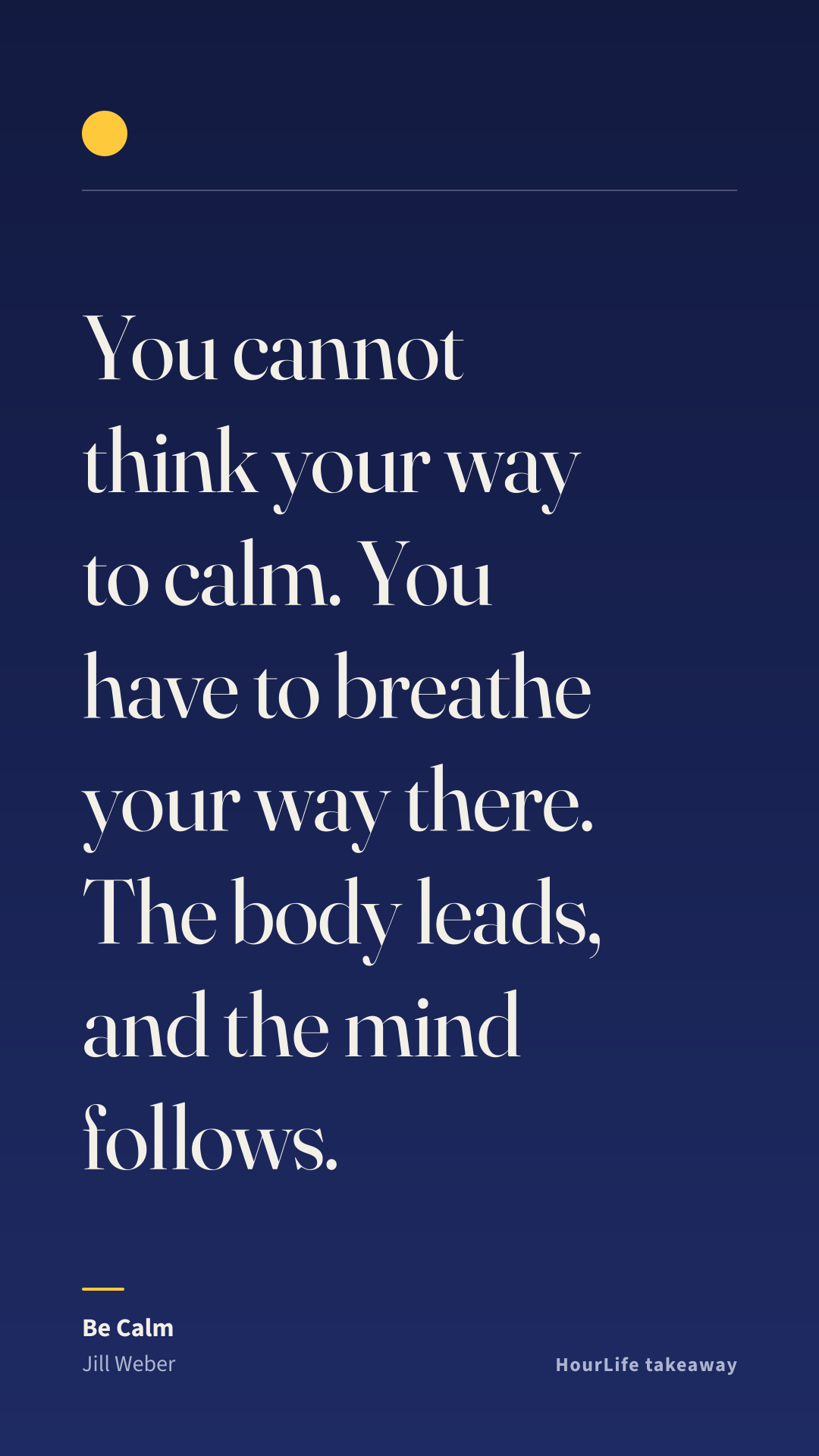
You cannot think your way to calm. You have to breathe your way there. The body leads, and the mind follows.

Be Calm Jill Weber HourLife takeaway

The most practical insight in the book. Cognitive strategies fail during acute anxiety because the thinking brain is offline. The breath is the one autonomic function you can consciously control — making it the master switch.

Anxiety grows in the gap between what is happening and the story you tell about what is happening. The gap is where all your power lives.

Be Calm Jill Weber HourLife takeaway

Weber identifies the critical distinction: sensation versus narration. The tight chest is data. The thought that you are dying is interpretation. Learning to separate the two is the core skill of becoming calm.

The goal is not to eliminate anxiety. It is to change your relationship with it — from enemy to informant.

Be Calm Jill Weber HourLife takeaway

This reframes the entire project. You will never be anxiety-free, and chasing that goal creates more anxiety. Instead, learn to receive the signal without being hijacked by it. Calm people are not people without anxiety — they are people who respond to it differently.

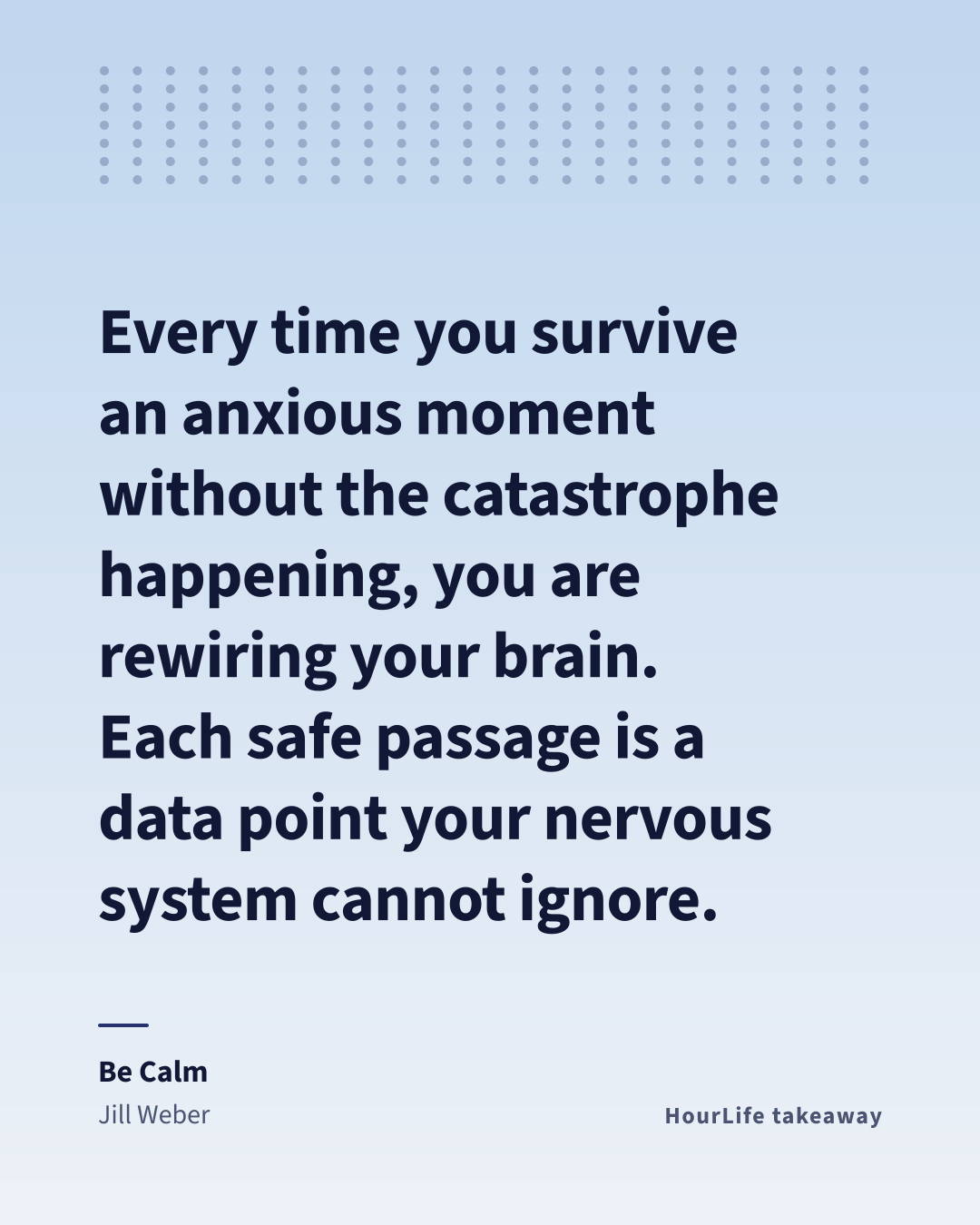
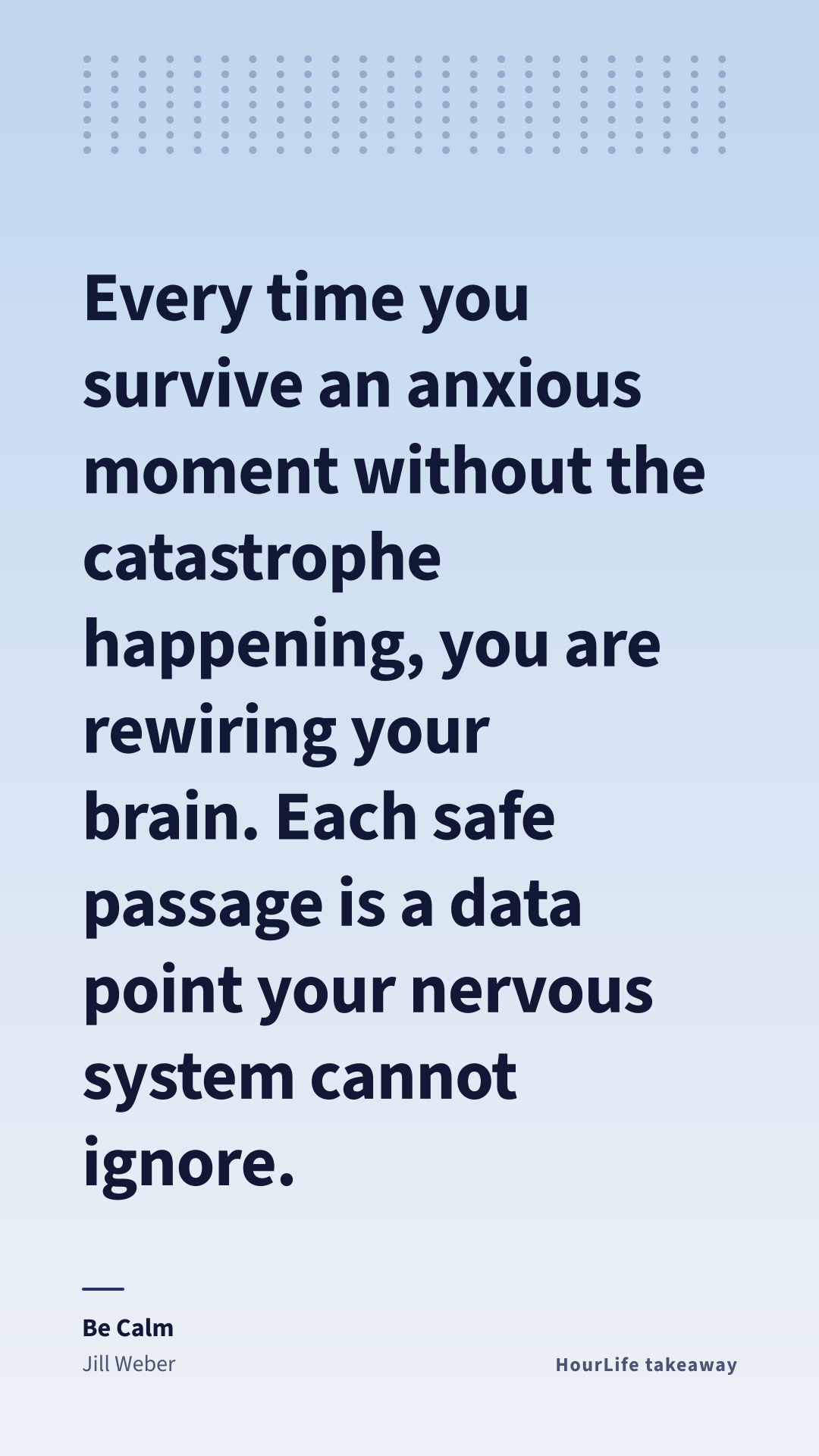
Every time you survive an anxious moment without the catastrophe happening, you are rewiring your brain. Each safe passage is a data point your nervous system cannot ignore.

Be Calm Jill Weber HourLife takeaway

Neuroplasticity is the hidden engine of calm. Your brain updates its threat model based on experience. Each time you feel anxiety and nothing bad happens, the alarm recalibrates slightly downward. This is why exposure — not avoidance — heals.

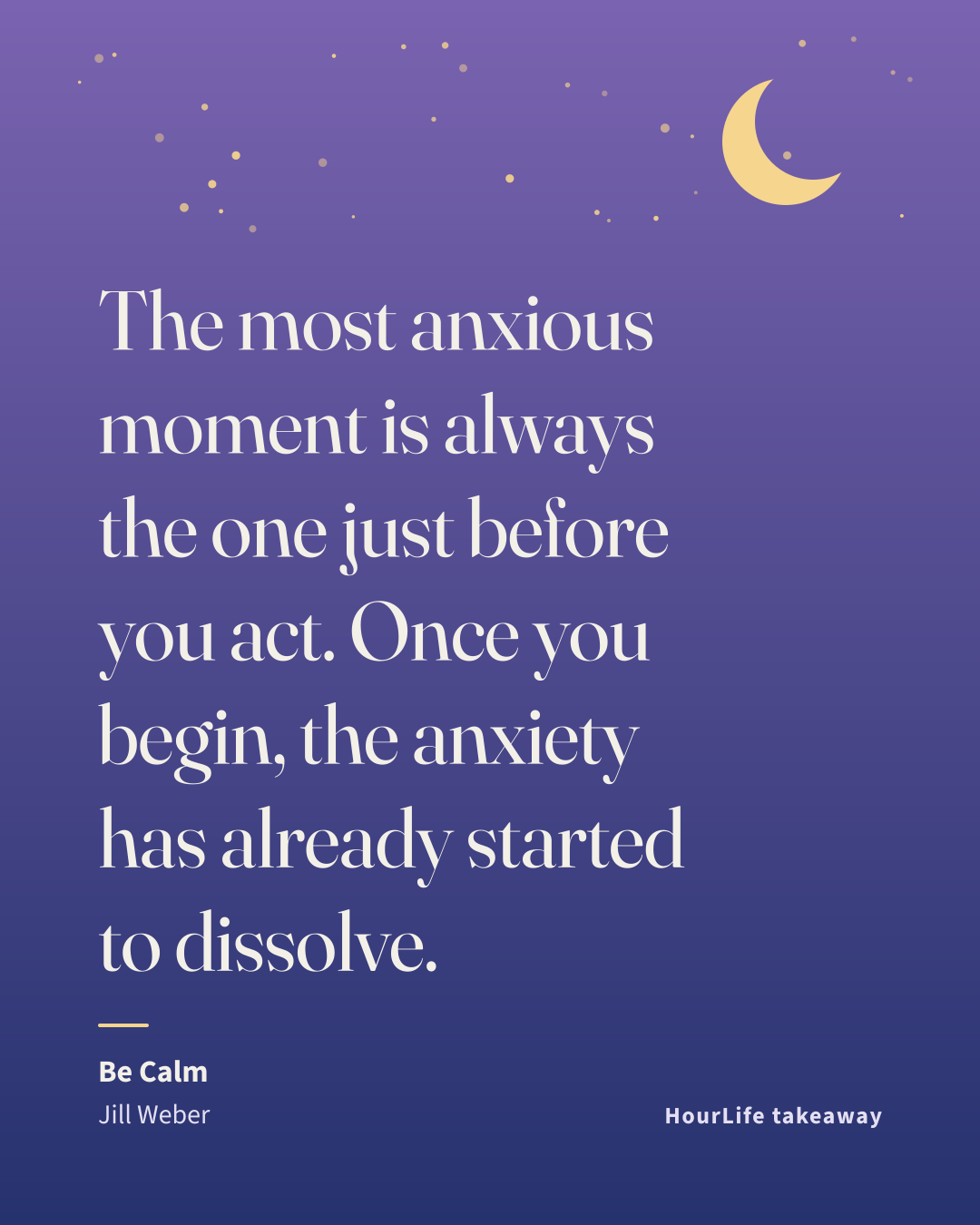
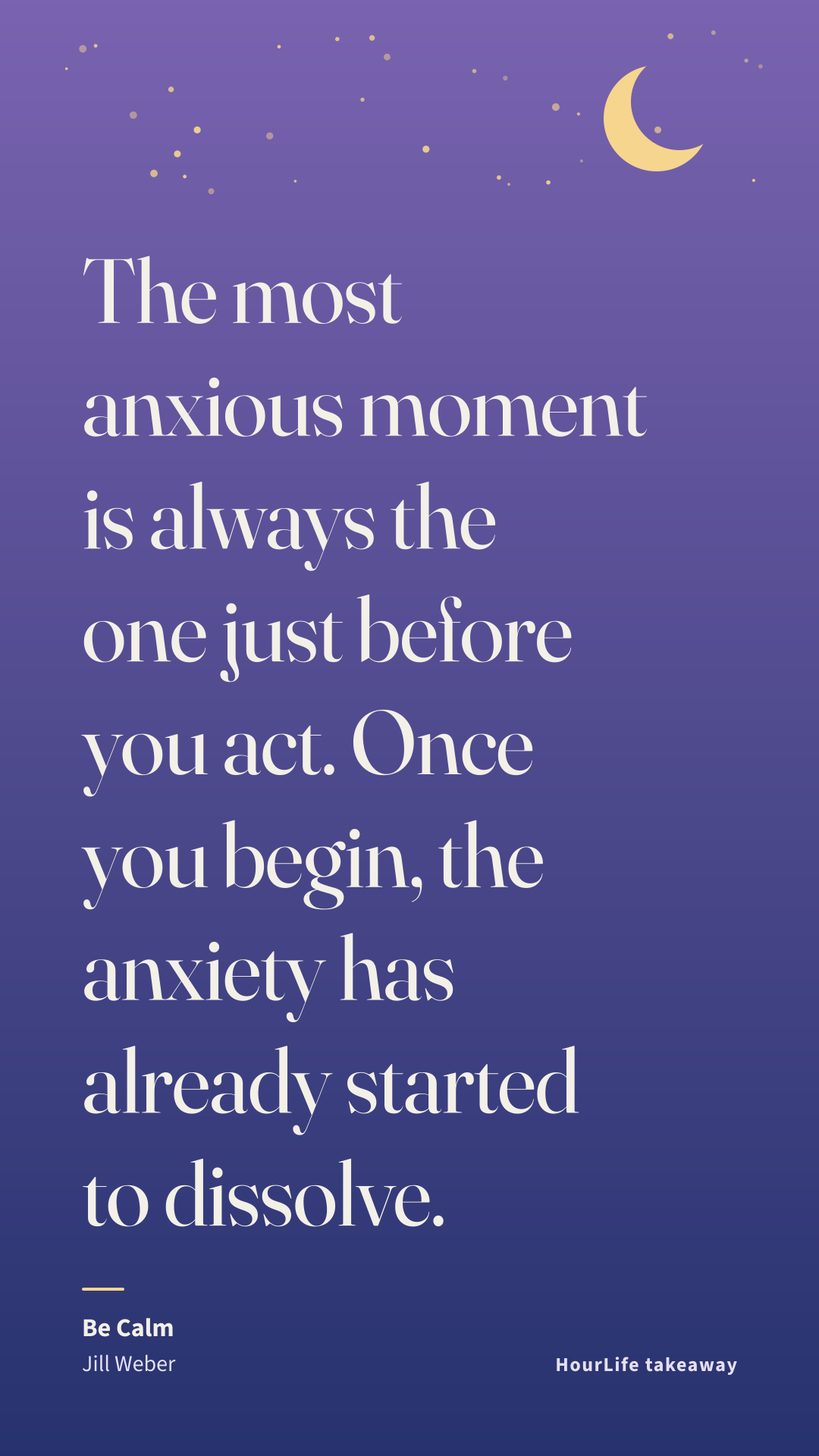
The most anxious moment is always the one just before you act. Once you begin, the anxiety has already started to dissolve.

Be Calm Jill Weber HourLife takeaway

Weber calls this the anticipation paradox. Anxiety peaks in the imagining, not the doing. This is why avoidance feels protective but actually amplifies fear. Action is the antidote — not because it is easy, but because it breaks the spell.

Keep this going in the app.

HourLife turns these ideas into a daily system — goals, habits, focus, and reflection in one private place.