Keep this author quotes for later
Sign in to save

Jimmy Chin

The most-loved lines from Jimmy Chin, drawn from 1 book in the library.

Lines labelled “HourLife takeaway” are our wording of the book’s ideas and may paraphrase it. Only lines in quotation marks are the author’s own words, with where they appear. Check the book for exact wording before you quote it. Spot an error?

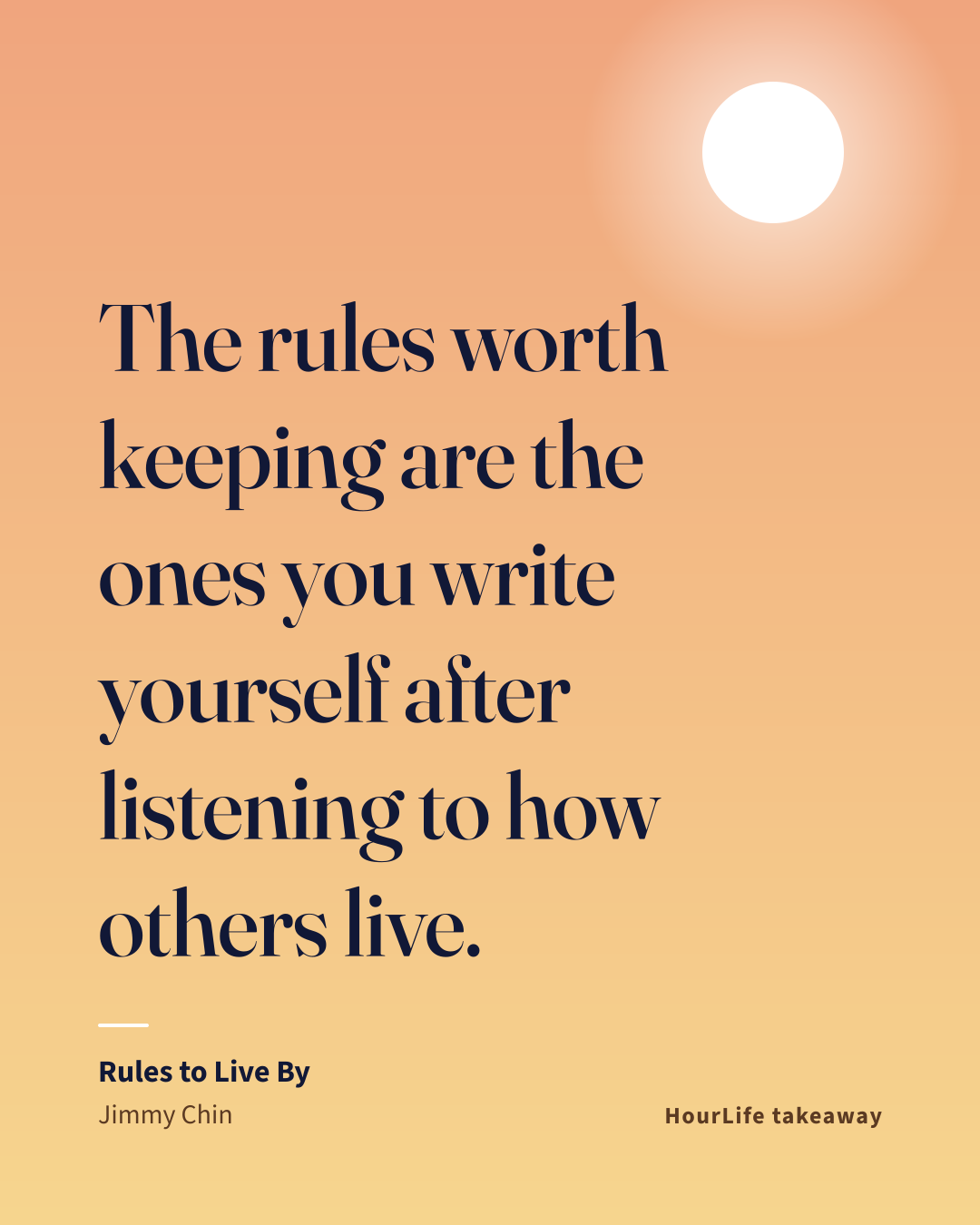
The rules worth keeping are the ones you write yourself after listening to how others live.

Rules to Live By Jimmy Chin HourLife takeaway

Chin is plain about it: none of the ten people he talked to gave him a list of rules. They gave him honest accounts of their lives. The book leaves the step from their answers to your rules with you, which is why it reads as a set of conversations rather than a manual.


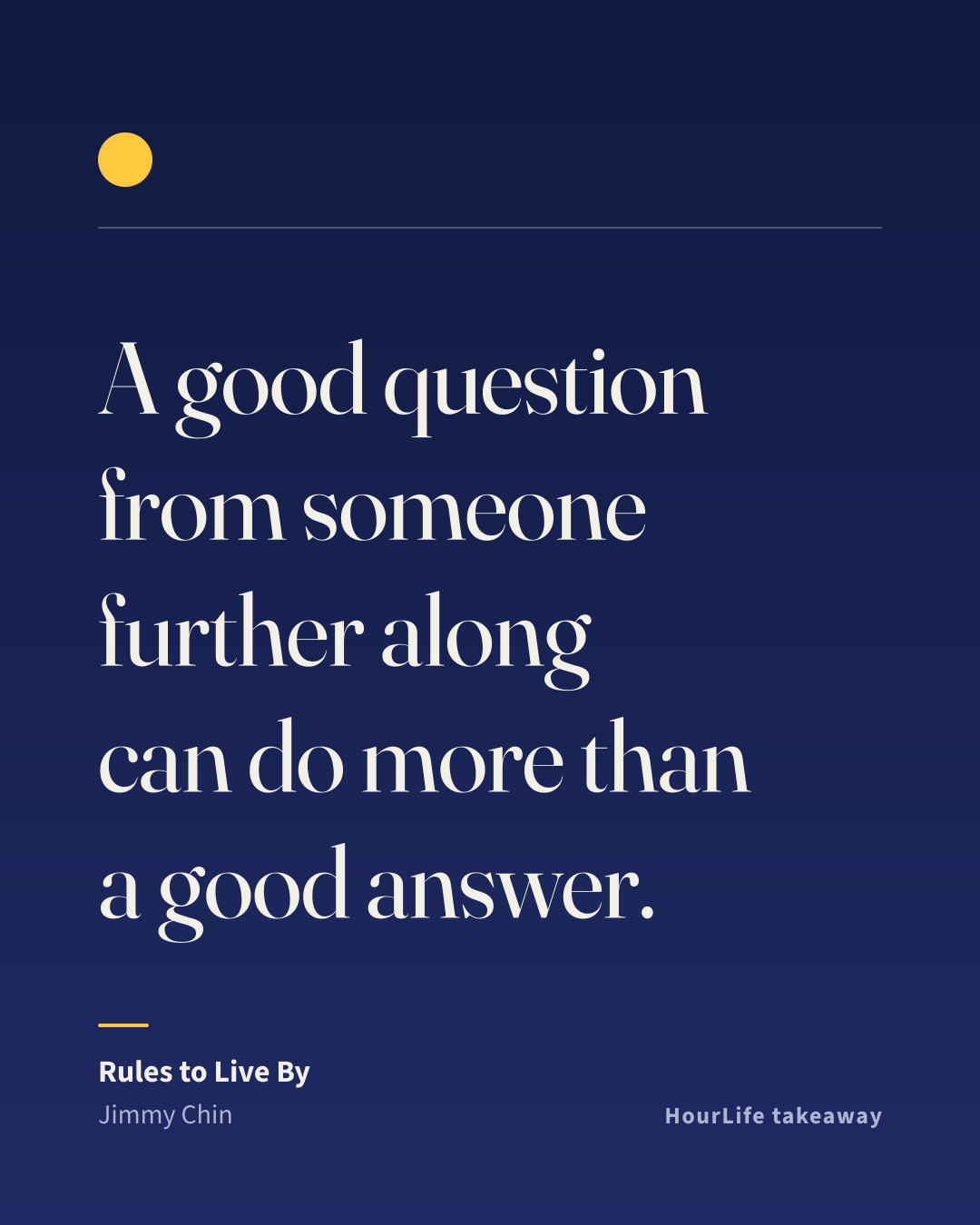
A good question from someone further along can do more than a good answer.

Rules to Live By Jimmy Chin HourLife takeaway

Chin describes mentors who tended to answer him with questions instead of advice. The book works the same way. He asks, they think out loud, and you are left with questions to put to your own life.

Getting through the hard stretch is a choice you make again and again, not a trait you are born with.

Rules to Live By Jimmy Chin HourLife takeaway

How people endure is one of the three questions under every conversation. The ten come from sport, music, film, war photography and conservation, so the hard stretches look very different. Seeing them side by side makes endurance look less like a gift and more like a practice.

Mastery is a long relationship with one craft, and over time it changes who you are.

Rules to Live By Jimmy Chin HourLife takeaway

Mastery runs through the book. A cellist, a gymnast, a surfer, an actor and two climbers talk about crafts they have practised for decades. Chin, who moved from climbing to photography to directing, sets their experience beside his own.

Success can be the start of a life of service rather than the end of the story.

Rules to Live By Jimmy Chin HourLife takeaway

The closing conversation is with Kristine Tompkins, who ran Patagonia and then, with her husband Doug Tompkins, turned to protecting and rewilding land in Chile. The talk with Yvon Chouinard also comes back to adventure and conservation. Both show a working life that bends toward giving something back.

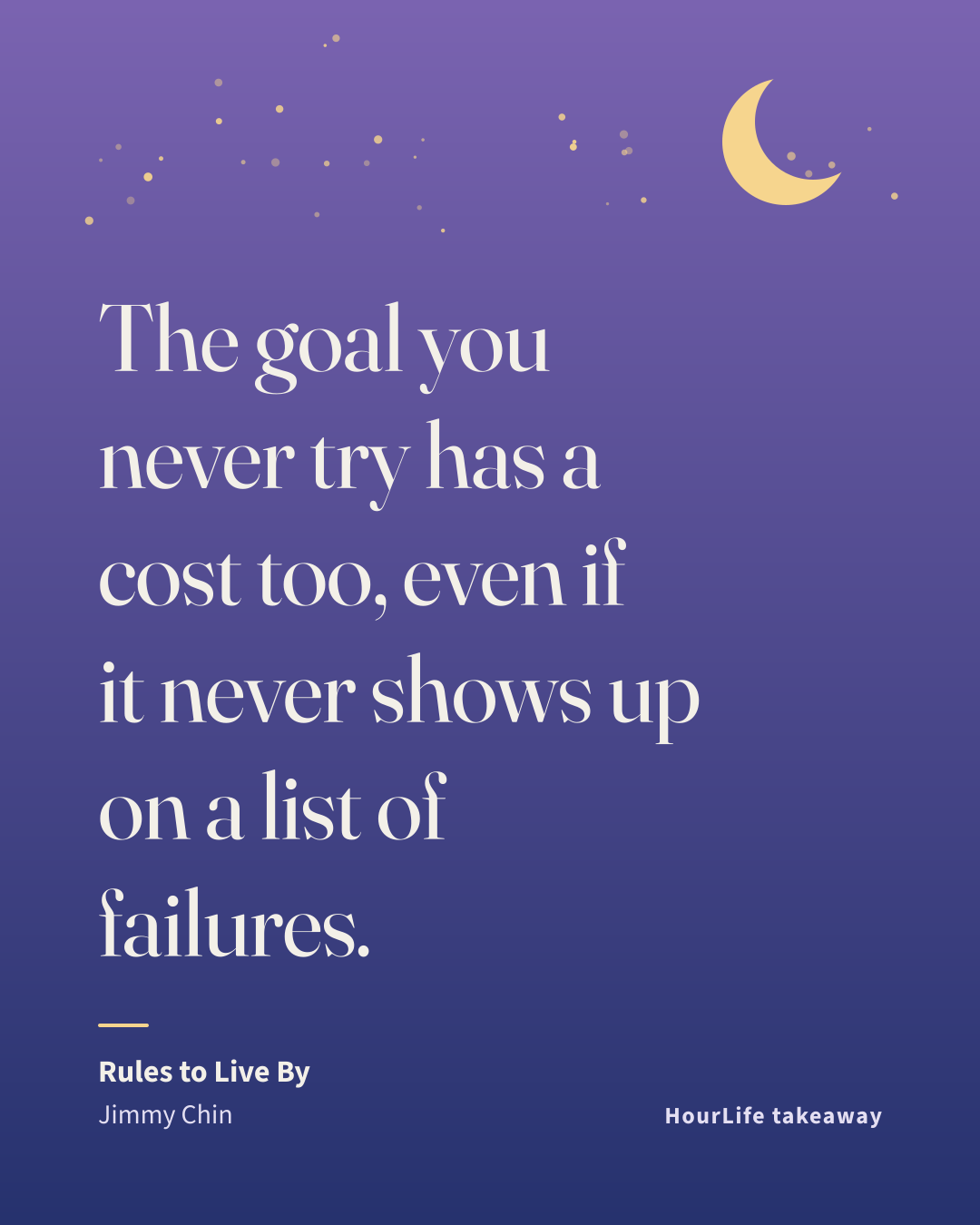
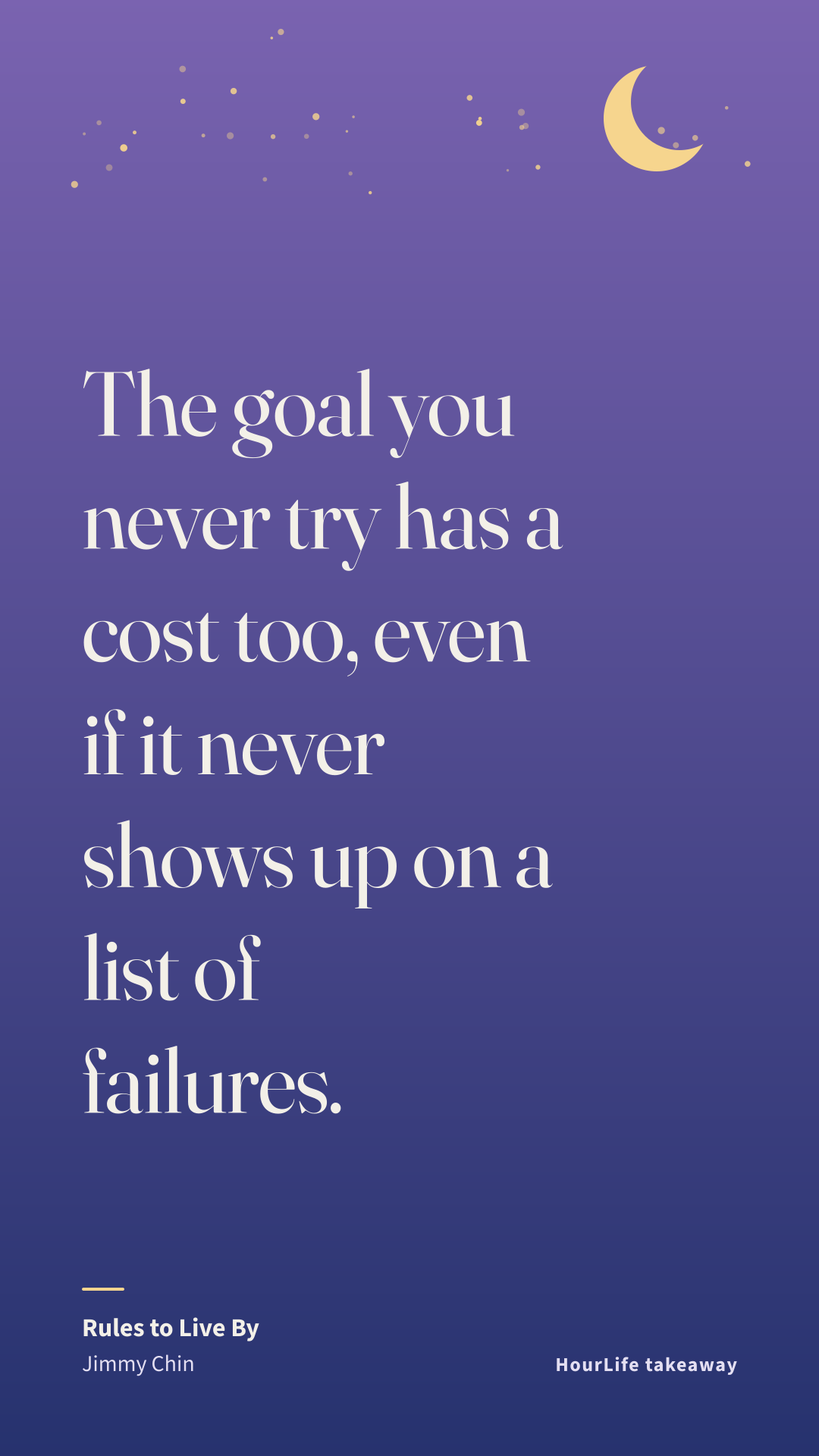
The goal you never try has a cost too, even if it never shows up on a list of failures.

Rules to Live By Jimmy Chin HourLife takeaway

The book weighs the obvious risk of failing against the quieter risk of leaving a goal untried. The conversation with Alex Honnold returns to the free solo climb of El Capitan that Chin filmed, and to the feelings behind it rather than only the feat.

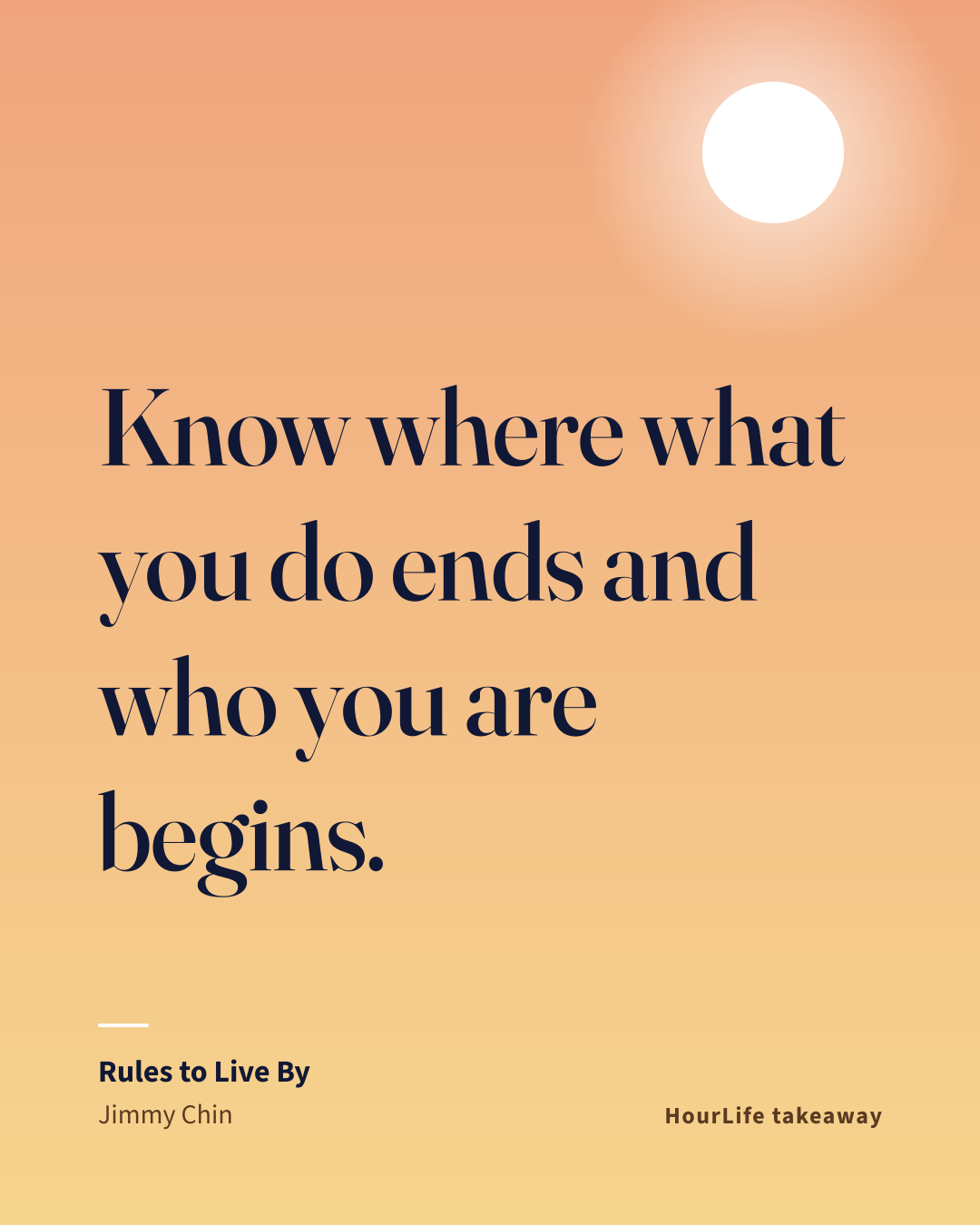
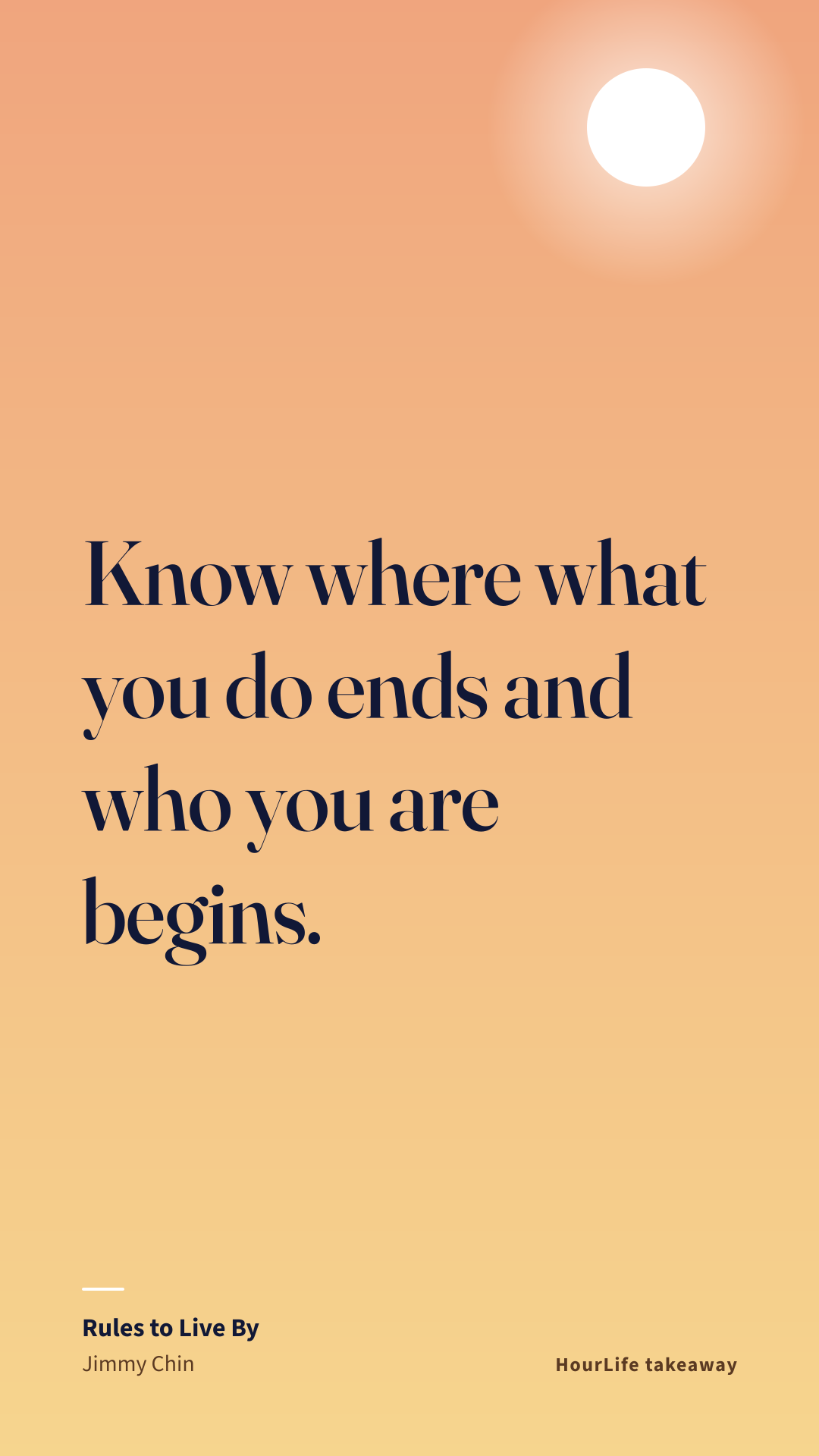
Know where what you do ends and who you are begins.

Rules to Live By Jimmy Chin HourLife takeaway

Identity is one of the threads in the book. Most of the ten are famous for one thing, and the conversations keep asking what is left when the role, the medal or the record is set aside. It is a useful question for anyone whose job has become their whole name.

Your own story belongs in the conversation, including the parts about family.

Rules to Live By Jimmy Chin HourLife takeaway

Chin does not stay behind the camera. His upbringing and family come up in the conversation with Yo-Yo Ma, and his move into directing films in the one with Annette Bening. Asking good questions of others goes better when you are willing to answer them yourself.

You will come back to the same big questions many times, and your answers should change.

Rules to Live By Jimmy Chin HourLife takeaway

Chin frames the book around a question he has carried since his early expeditions. He presents the conversations as a way to return to basic truths as your understanding grows, not to settle them once. Rules written at twenty-five are worth rereading at forty.

Keep this going in the app.

HourLife turns these ideas into a daily system — goals, habits, focus, and reflection in one private place.