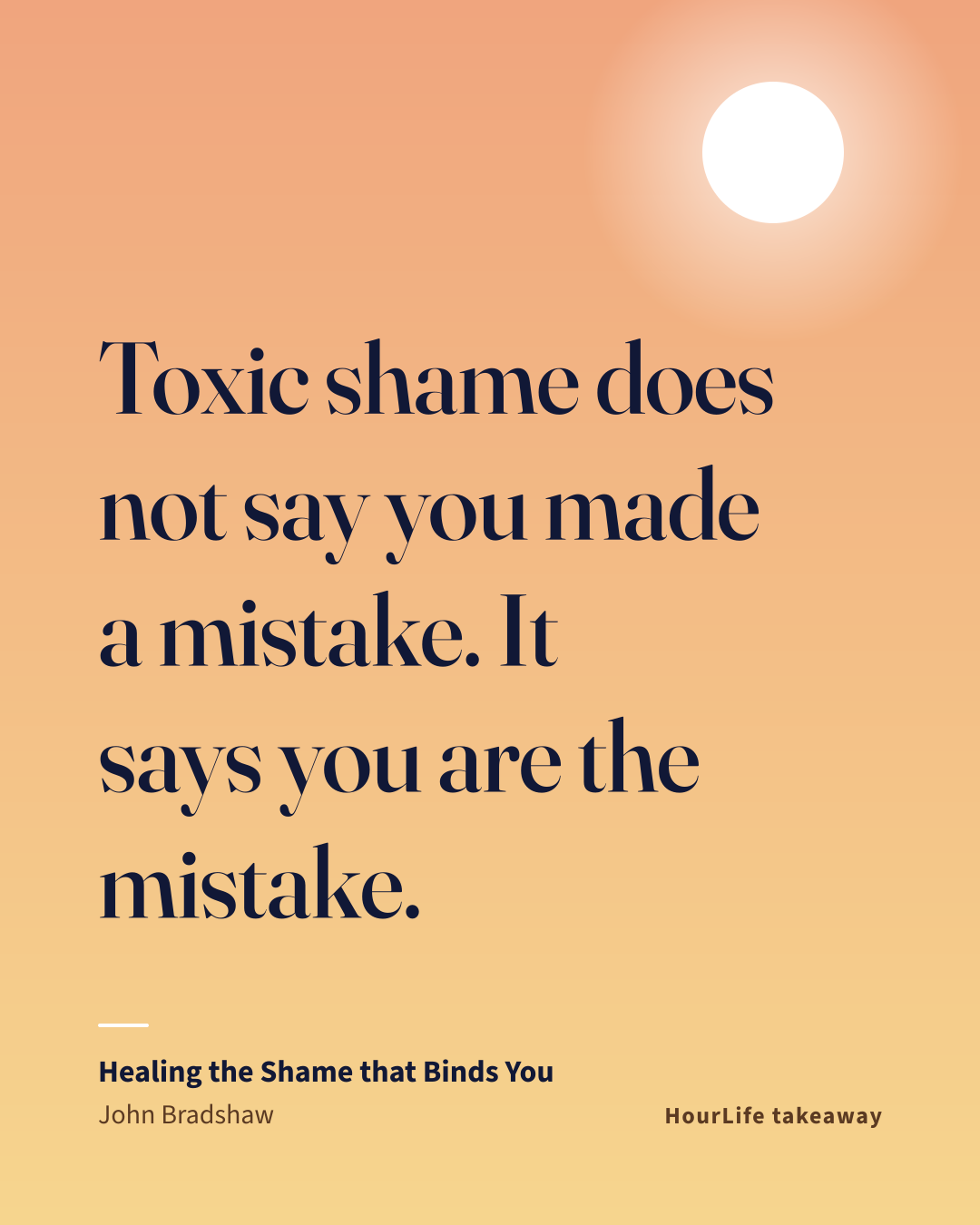
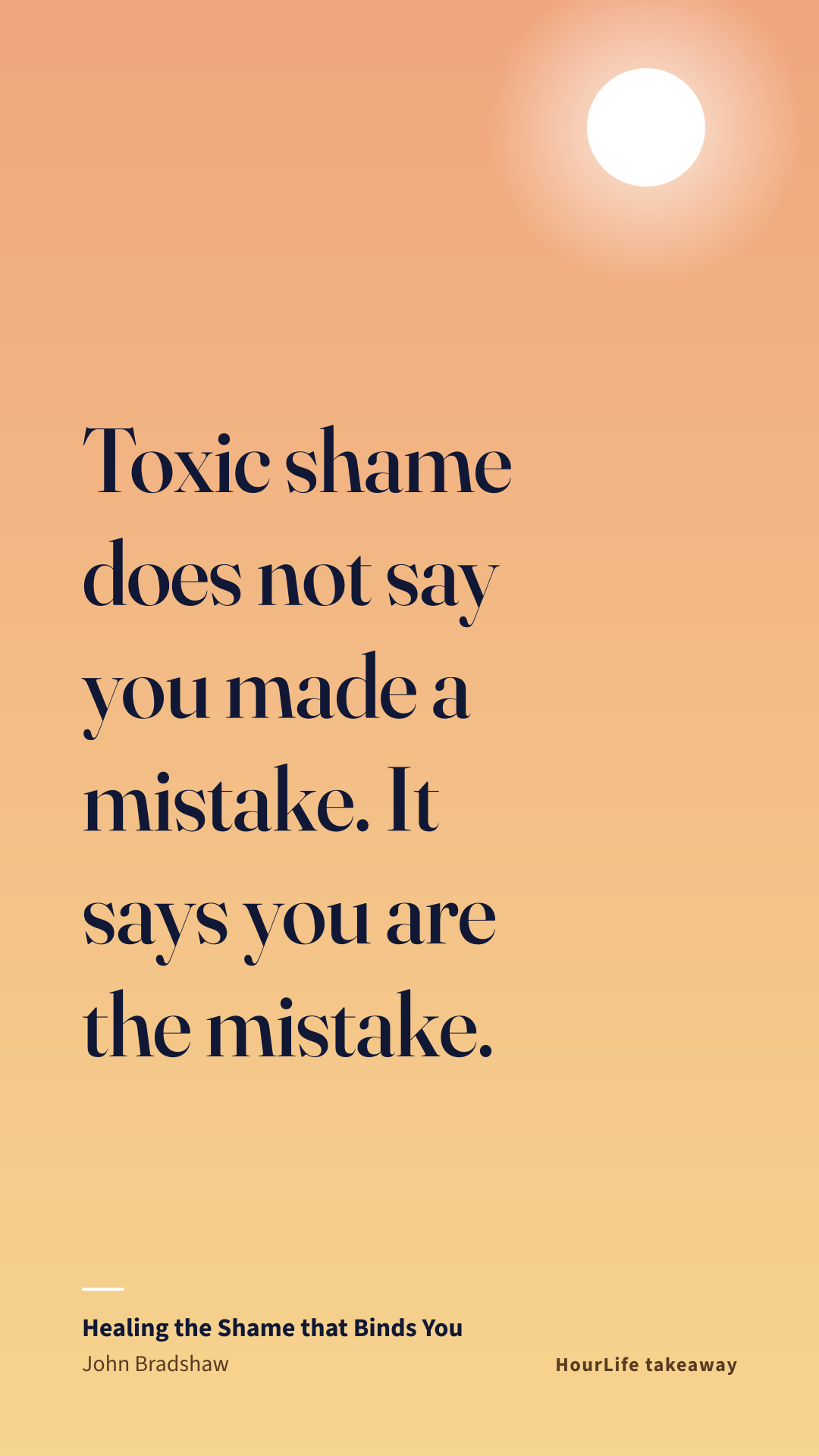
Toxic shame does not say you made a mistake. It says you are the mistake.
This is the book's central distinction: behavior can be repaired, but identity-level shame traps a person in hiding.
The most-loved lines from John Bradshaw, drawn from 1 book in the library.
Lines labelled “HourLife takeaway” are our wording of the book’s ideas and may paraphrase it. Only lines in quotation marks are the author’s own words, with where they appear. Check the book for exact wording before you quote it. Spot an error?
Toxic shame does not say you made a mistake. It says you are the mistake.
This is the book's central distinction: behavior can be repaired, but identity-level shame traps a person in hiding.
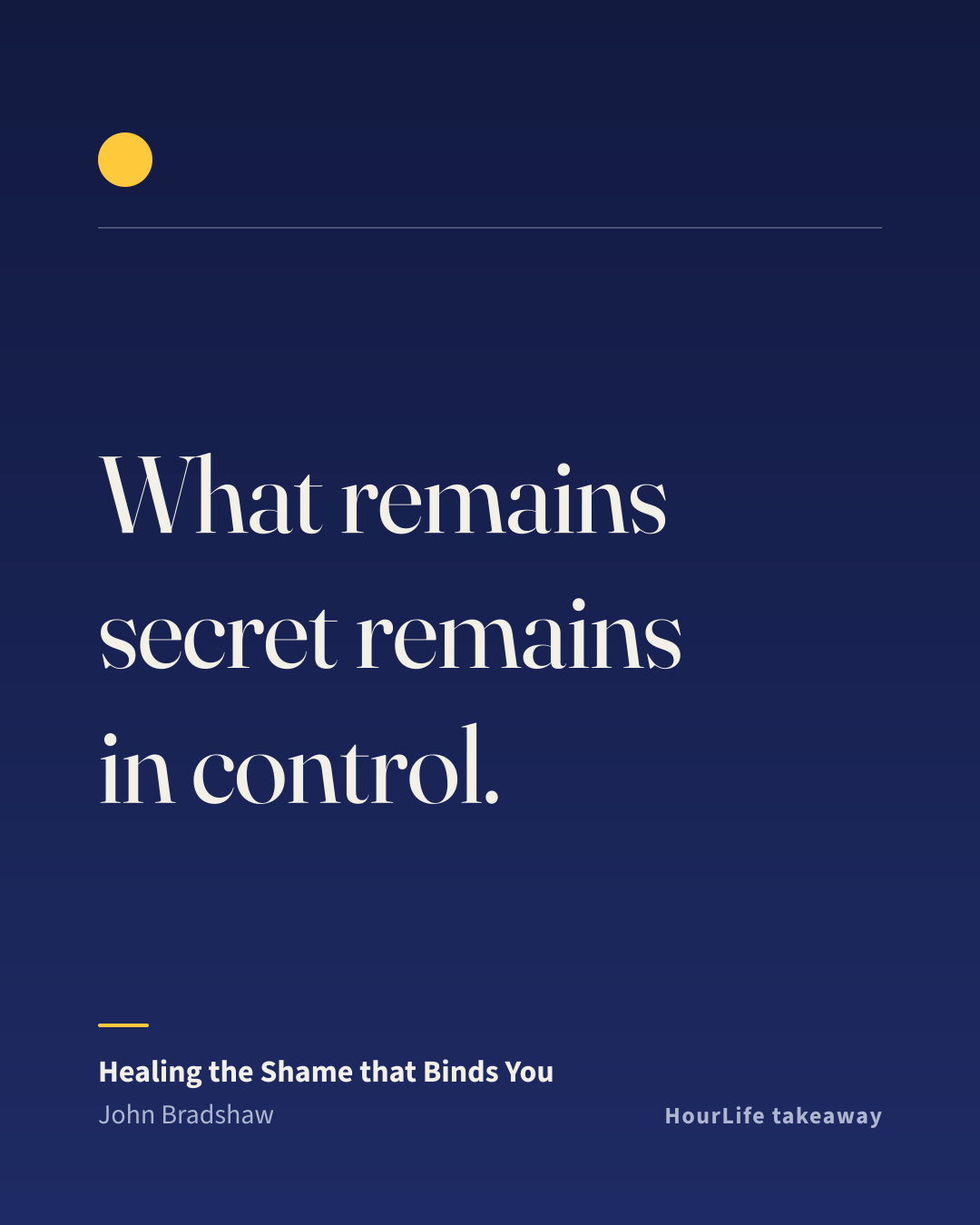
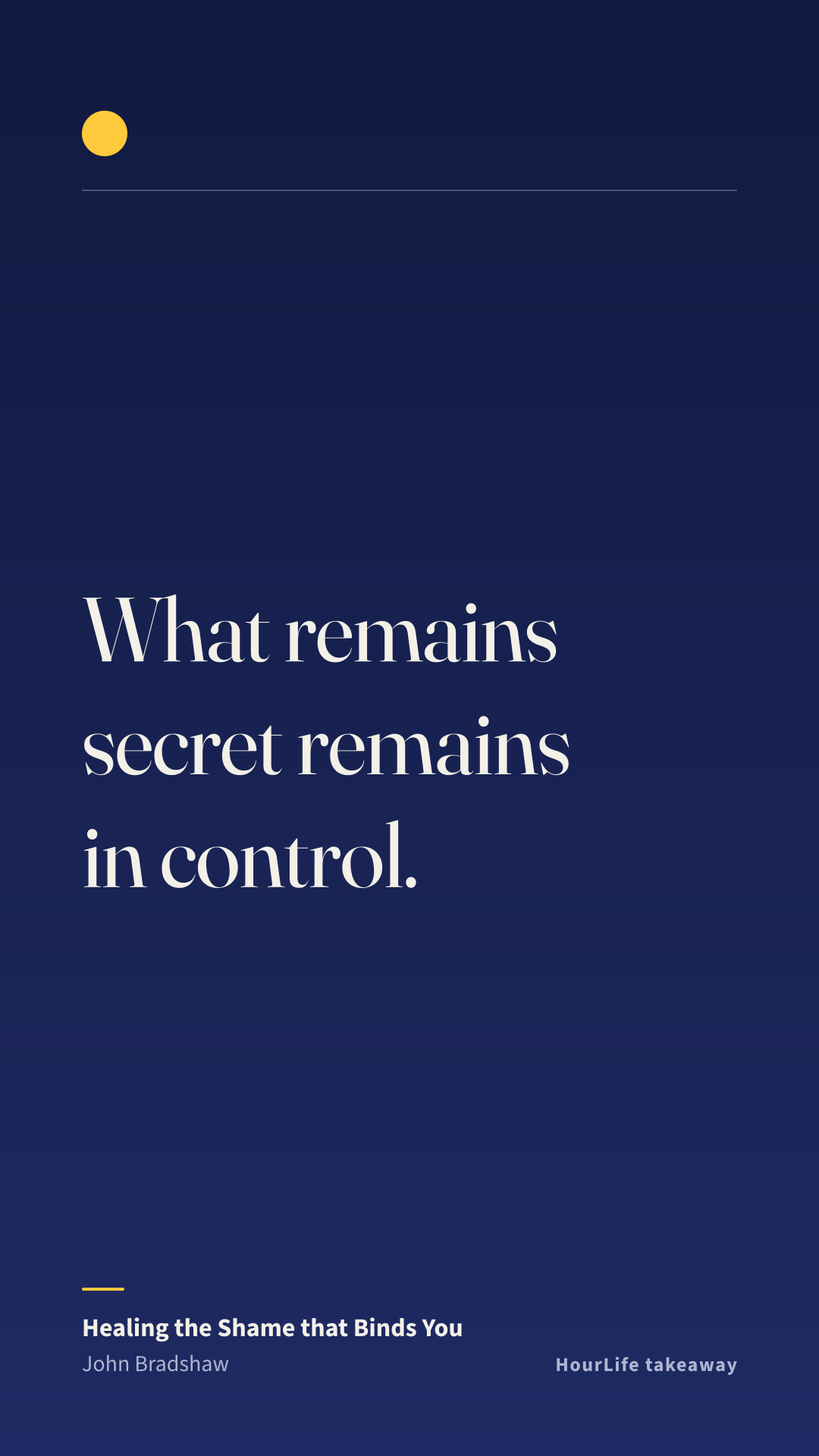
What remains secret remains in control.
Bradshaw returns again and again to the healing power of safe disclosure. Shame feeds on secrecy, silence, and judgment.
The wounded child inside us does not need another critic; it needs a protective adult.
Inner child work is not sentimentality here. It is a practical way to bring structure, tenderness, and boundaries to younger survival states.
Family rules become invisible until someone gives them language.
Naming the old system turns atmosphere into information. Once the rule is visible, it can be challenged.
Healing begins when the hidden self is met instead of managed.
The goal is not better performance. It is reconnection with the parts of the self that had to disappear to stay attached.
HourLife turns these ideas into a daily system — goals, habits, focus, and reflection in one private place.