Keep this author quotes for later
Sign in to save

Jon Krakauer

The most-loved lines from Jon Krakauer, drawn from 1 book in the library.

Lines labelled “HourLife takeaway” are our wording of the book’s ideas and may paraphrase it. Only lines in quotation marks are the author’s own words, with where they appear. Check the book for exact wording before you quote it. Spot an error?

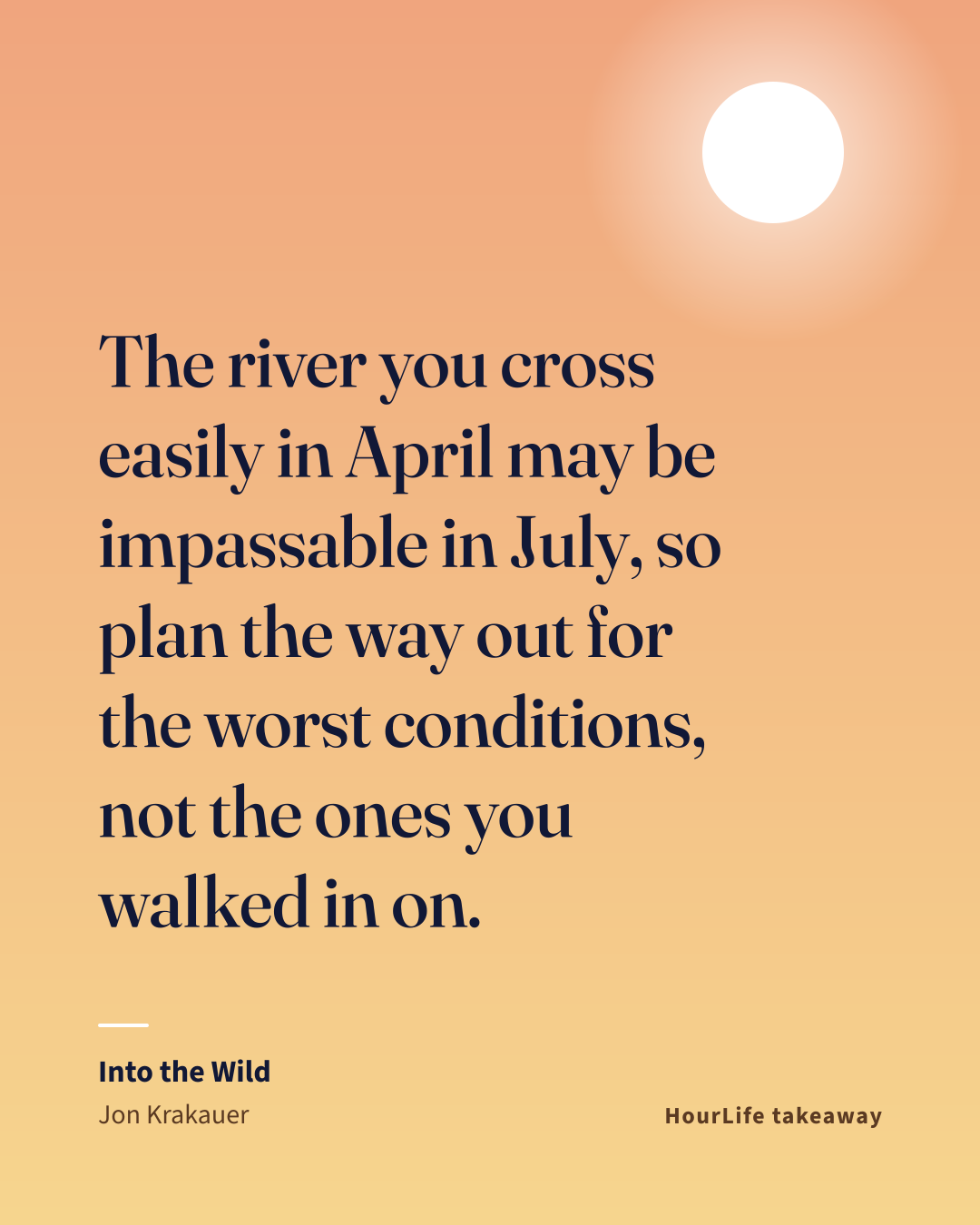
The river you cross easily in April may be impassable in July, so plan the way out for the worst conditions, not the ones you walked in on.

Into the Wild Jon Krakauer HourLife takeaway

McCandless crossed the Teklanika River without much trouble in spring. When he tried to walk out in July, it was running high with snowmelt and he turned back to the bus. The ground had not changed. The season had, and his plan had no answer for it.


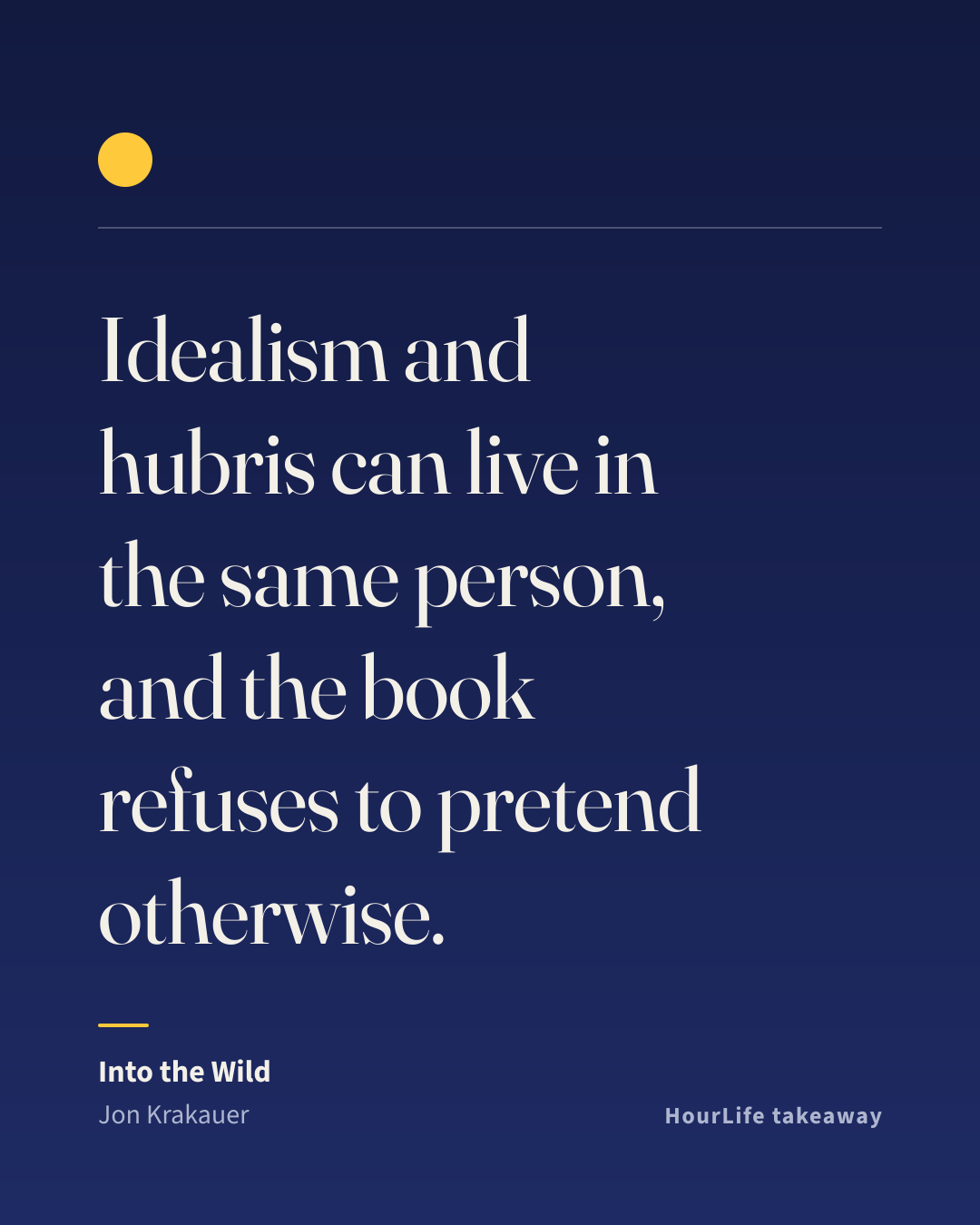
Idealism and hubris can live in the same person, and the book refuses to pretend otherwise.

Into the Wild Jon Krakauer HourLife takeaway

Many readers, especially in Alaska, saw McCandless as arrogant and unprepared. Others saw a serious young man living by his principles. Krakauer gives both views room and admits his own sympathy, which is why the book still starts arguments.

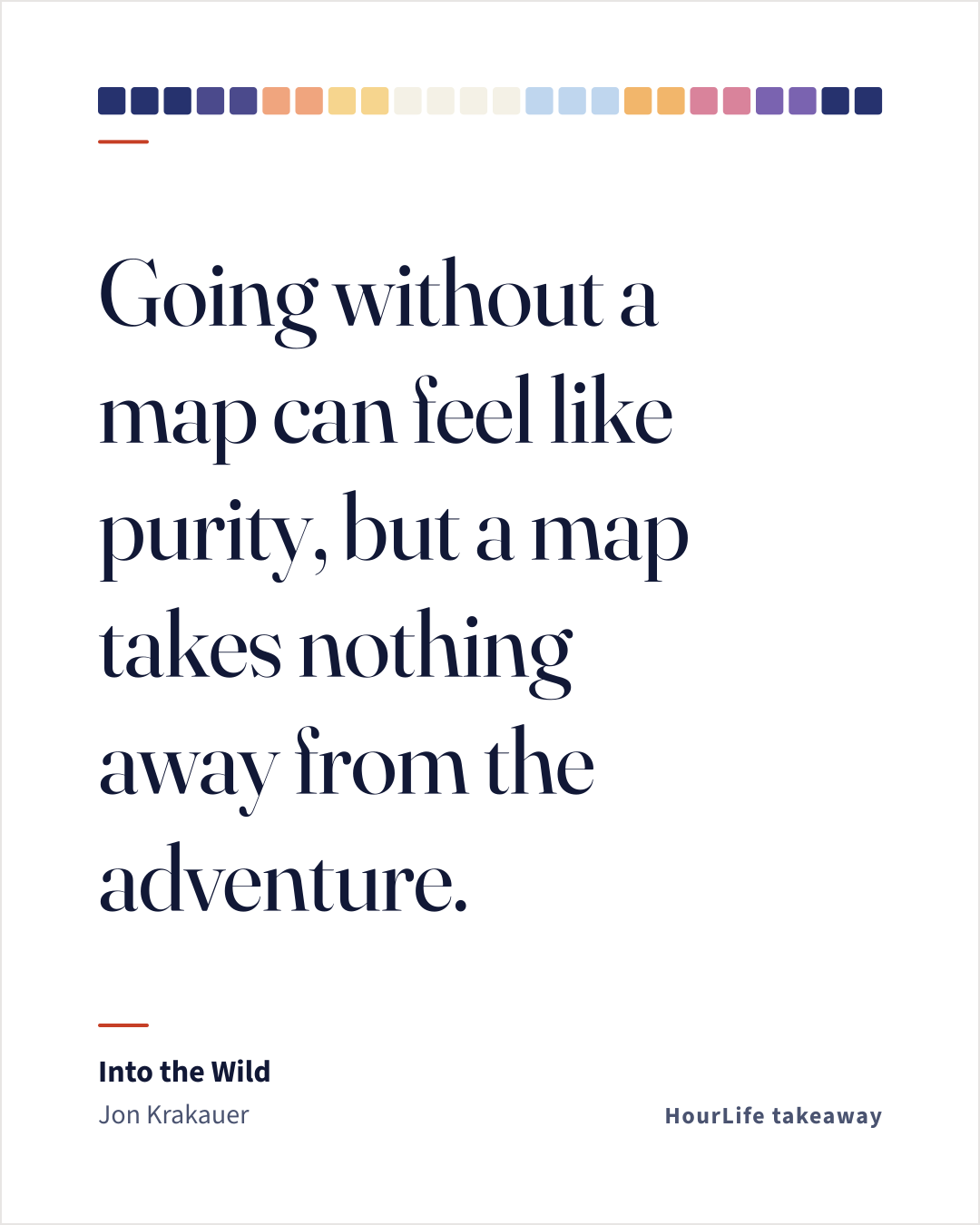
Going without a map can feel like purity, but a map takes nothing away from the adventure.

Into the Wild Jon Krakauer HourLife takeaway

McCandless chose to travel light and with little information. Krakauer notes that a detailed map of the area would have shown him other ways across the river. Knowing the ground is not the same as taming it.

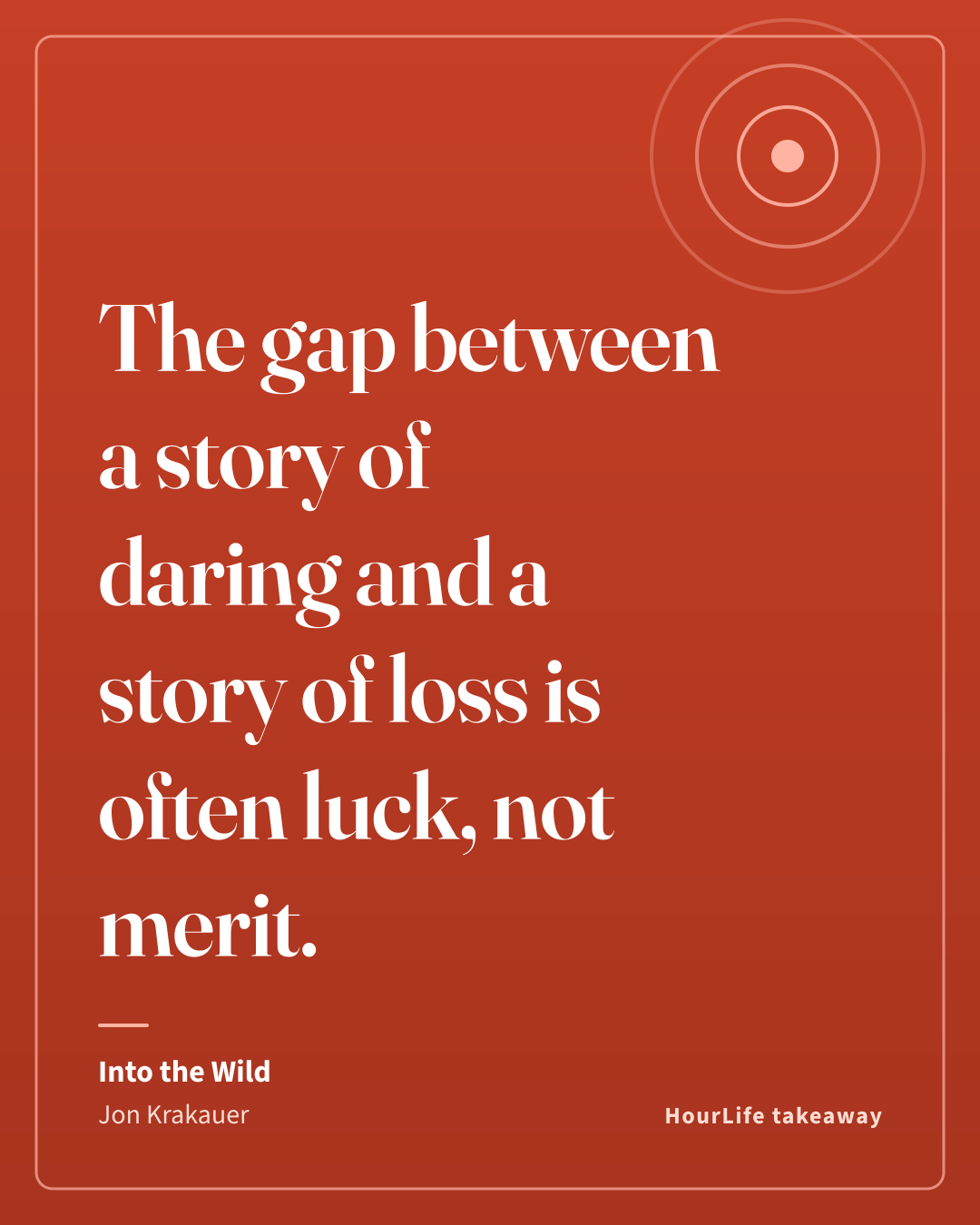
The gap between a story of daring and a story of loss is often luck, not merit.

Into the Wild Jon Krakauer HourLife takeaway

Krakauer tells of his own solo attempt on the Devils Thumb in Alaska in his early twenties, a climb he admits was reckless. He came home and McCandless did not. Reading the two side by side makes it harder to judge from a safe distance.

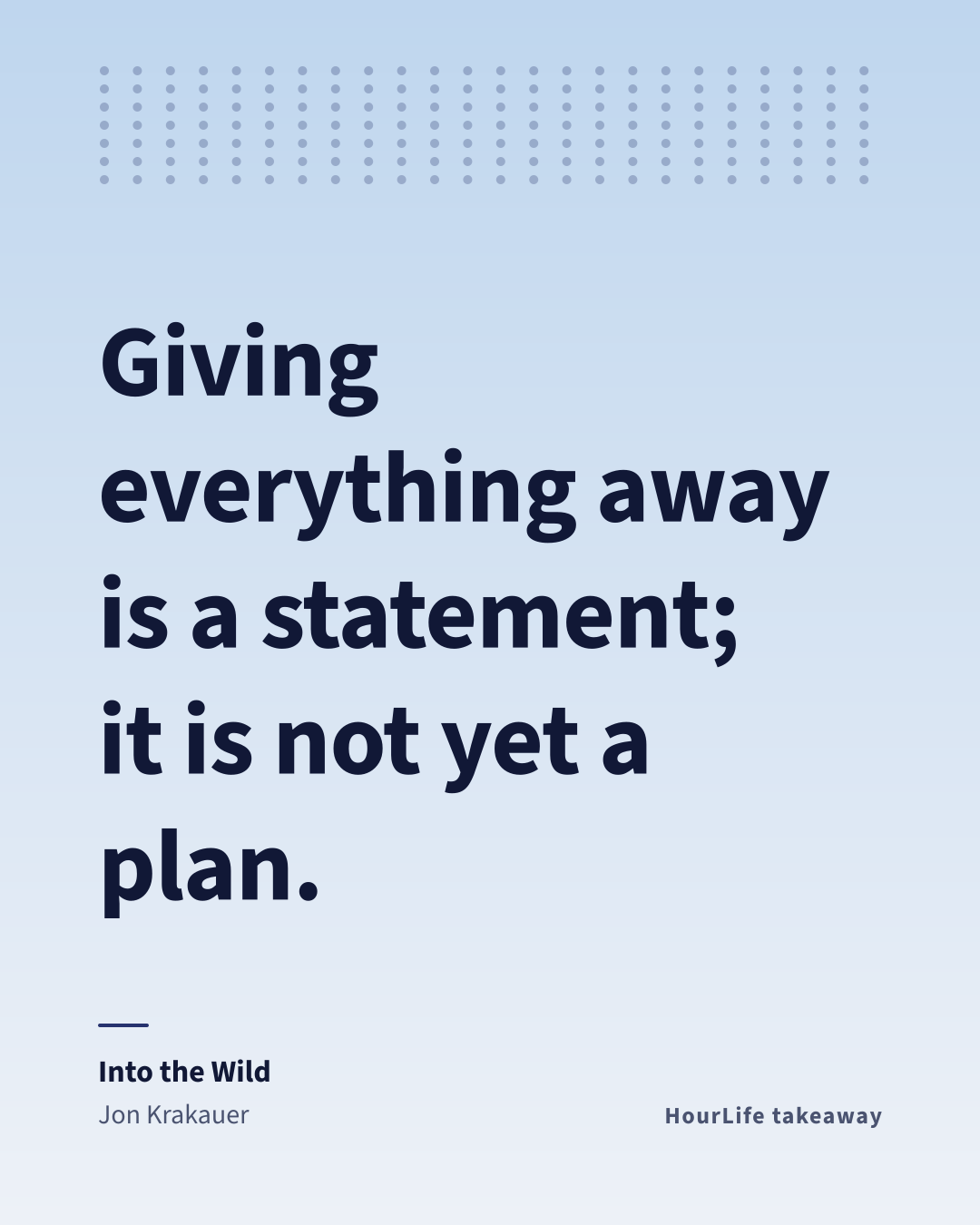
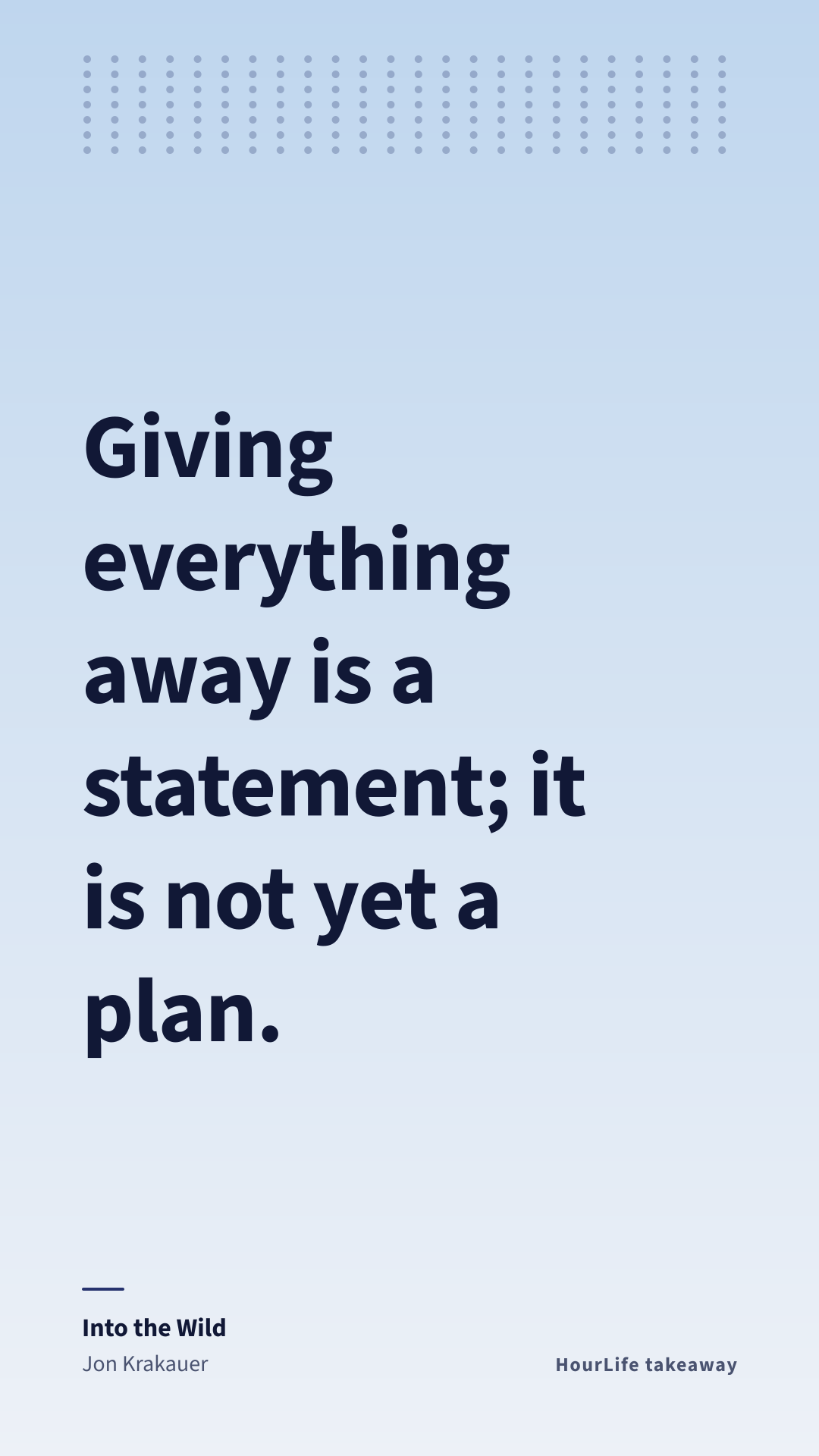
Giving everything away is a statement; it is not yet a plan.

Into the Wild Jon Krakauer HourLife takeaway

After Emory, McCandless gave his savings to charity and later left his car behind and burned the cash he had left. The gestures were sincere. They also removed the buffer that turns a hard week into an inconvenience instead of an emergency.

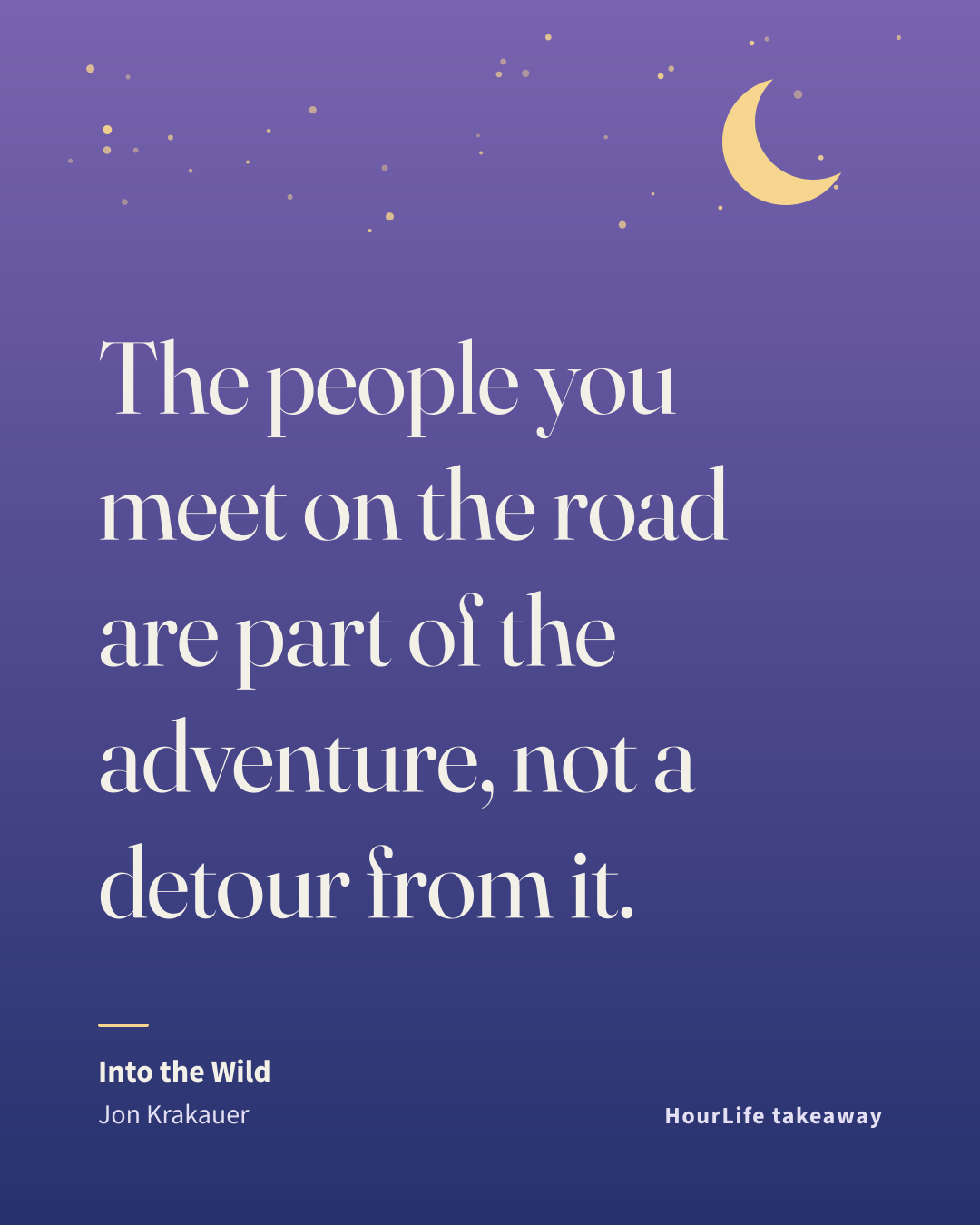
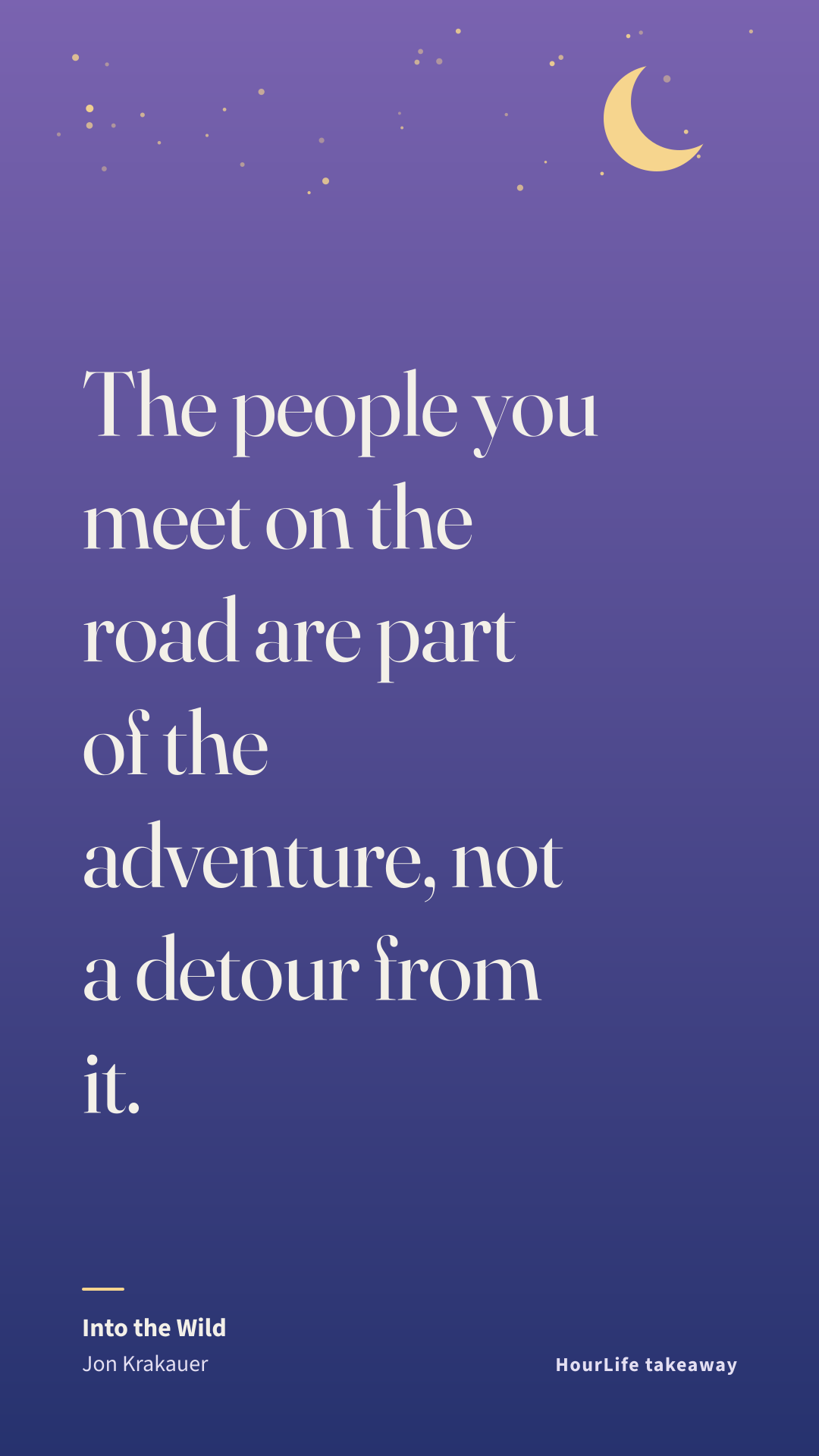
The people you meet on the road are part of the adventure, not a detour from it.

Into the Wild Jon Krakauer HourLife takeaway

Wayne Westerberg, Jan Burres and the older man the book calls Ronald Franz were all moved by McCandless, and some of them kept writing to him. Near the end, his marked-up books suggest he had come to value happiness shared with other people.

Running away from something and running toward something can feel identical from the inside.

Into the Wild Jon Krakauer HourLife takeaway

Krakauer traces the strain between McCandless and his parents with care and without blame. The book leaves open how much of the trip was a search for a truer life and how much was distance from home. Both can be true at once.

One young man’s choice belongs to a long line of people pulled toward the edge.

Into the Wild Jon Krakauer HourLife takeaway

Krakauer places McCandless beside other wanderers, including Everett Ruess, who vanished in the Utah desert in 1934. Seen in that company, the pull toward solitude and risk looks less like madness and more like something very human that needs handling with care.

How he died is still argued over; how ready you are is the part you control.

Into the Wild Jon Krakauer HourLife takeaway

Starvation, a toxin in wild potato seeds and mould have all been proposed, and Krakauer has revised his own view in later writing. The debate may never close. The useful lesson for a reader is the one that does not depend on it: a map, a margin, a way out, and someone who knows where you are.

Keep this going in the app.

HourLife turns these ideas into a daily system — goals, habits, focus, and reflection in one private place.