Keep this author quotes for later
Sign in to save

Judith Lewis Herman

The most-loved lines from Judith Lewis Herman, drawn from 1 book in the library.

Lines labelled “HourLife takeaway” are our wording of the book’s ideas and may paraphrase it. Only lines in quotation marks are the author’s own words, with where they appear. Check the book for exact wording before you quote it. Spot an error?

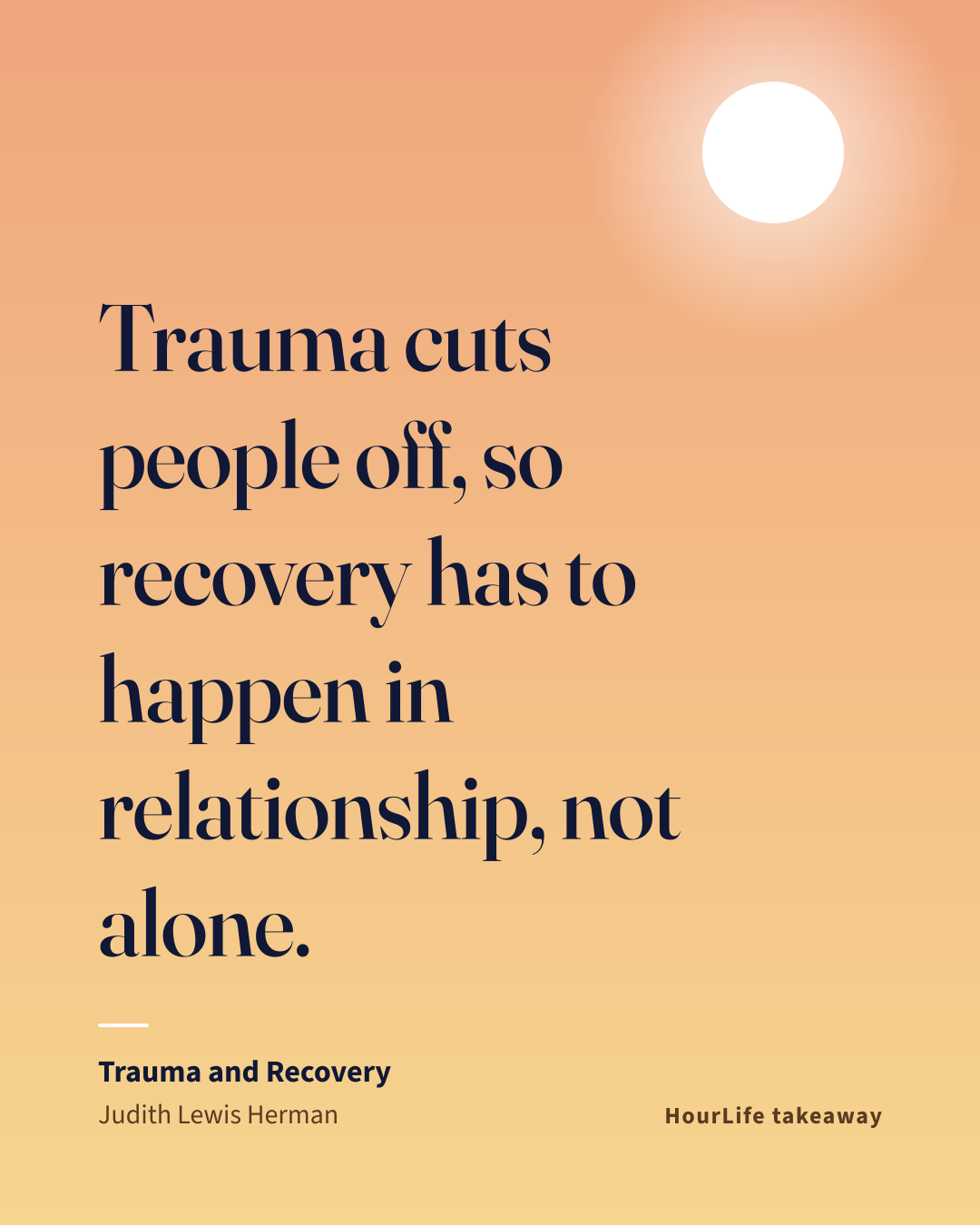
Trauma cuts people off, so recovery has to happen in relationship, not alone.

Trauma and Recovery Judith Lewis Herman HourLife takeaway

Herman names disempowerment and disconnection as the core of the injury, so recovery rests on regaining power and building new connections. A good therapist or group can help a great deal. But the survivor stays in charge of her own recovery; no one can heal on someone else's behalf.


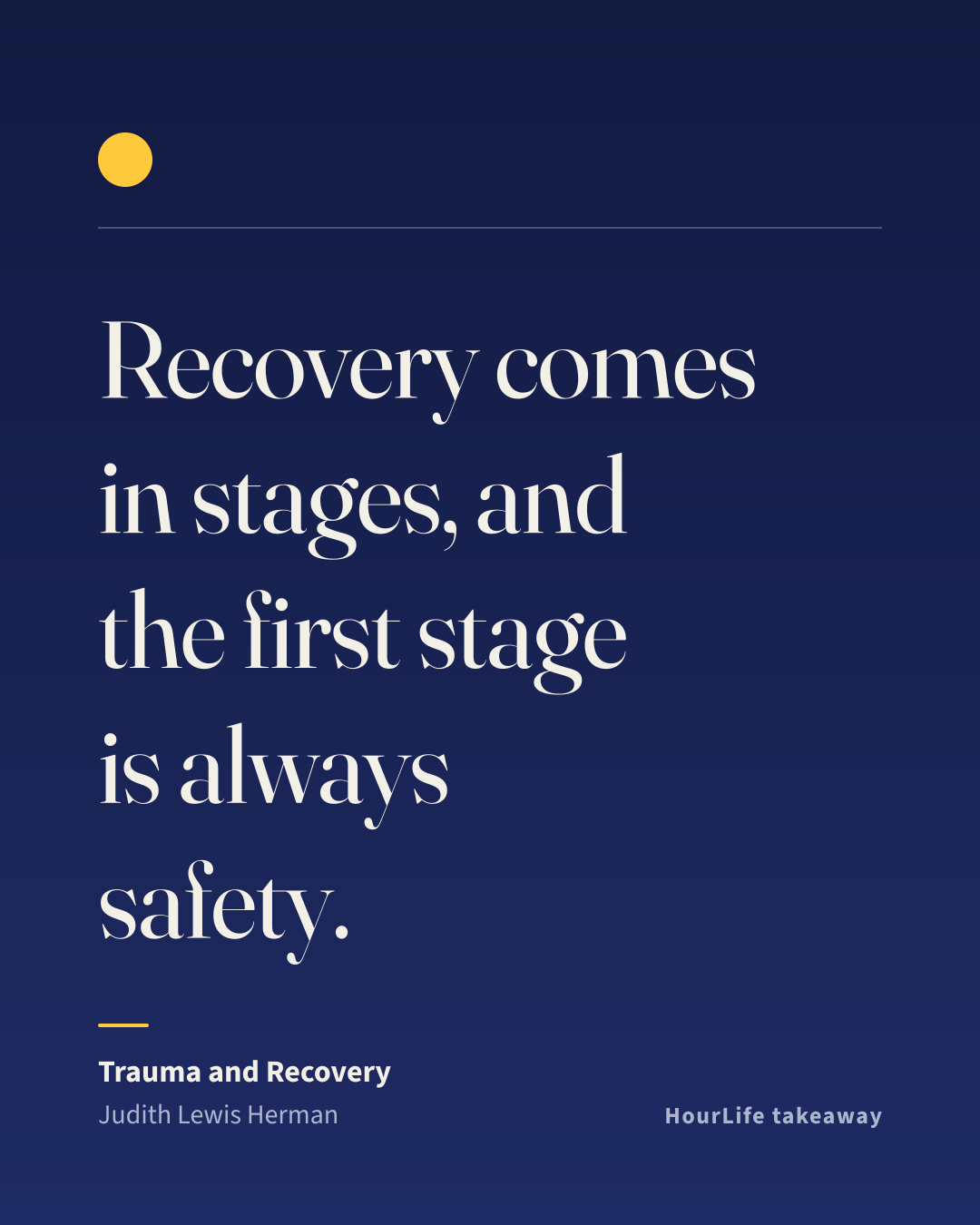
Recovery comes in stages, and the first stage is always safety.

Trauma and Recovery Judith Lewis Herman HourLife takeaway

Herman describes three stages: establishing safety, remembrance and mourning, and reconnection with ordinary life. Going over the past before a person is safe and steady can make things worse, not better. The stages are not a straight line, and people often return to earlier ones as life changes.

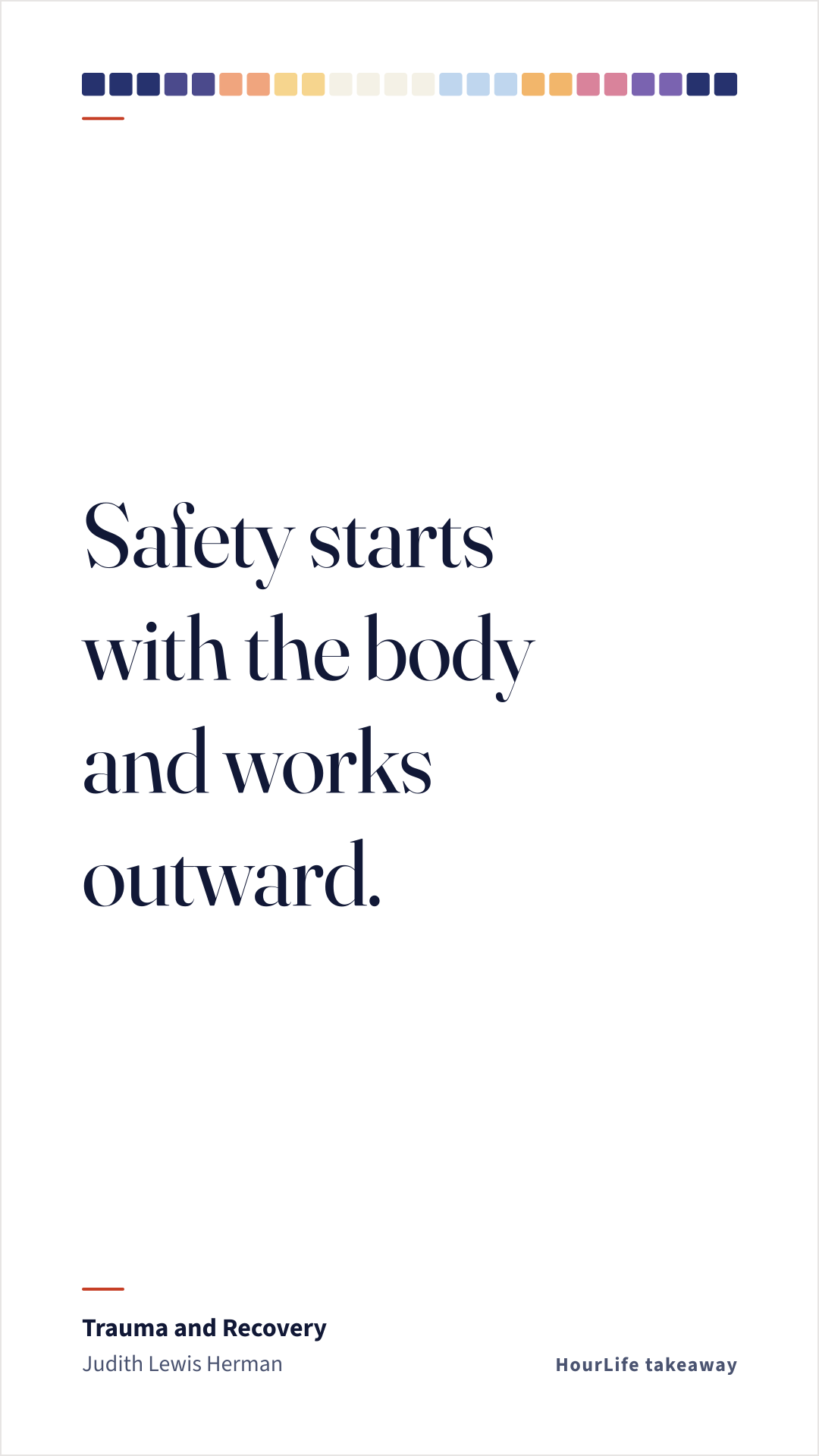
Safety starts with the body and works outward.

Trauma and Recovery Judith Lewis Herman HourLife takeaway

In her account the first tasks are basic ones: sleep, food, movement and care for yourself. From there safety extends to your surroundings, such as a safe place to live, enough money and people you can rely on. It is slow, practical work, and it matters more than any insight.

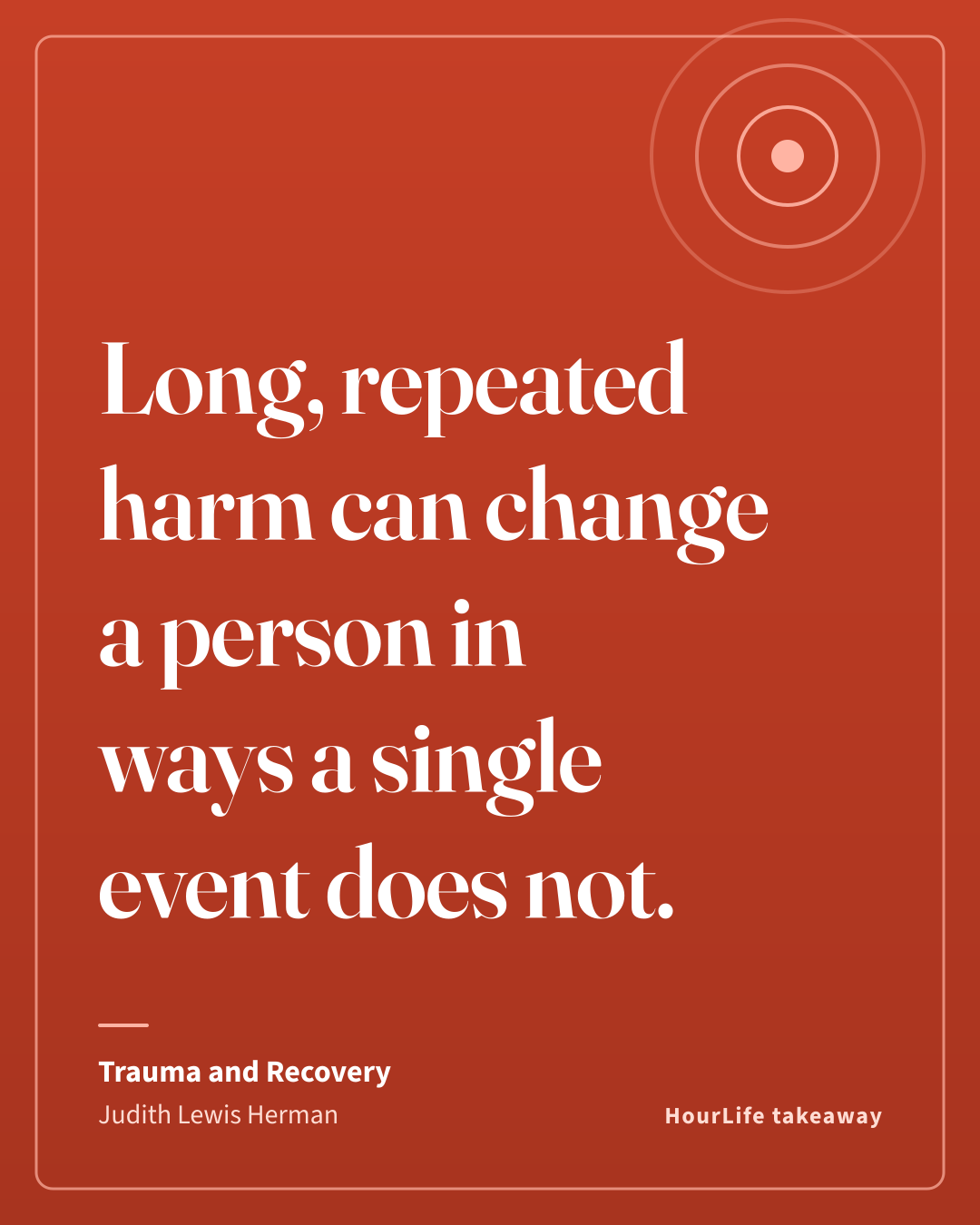
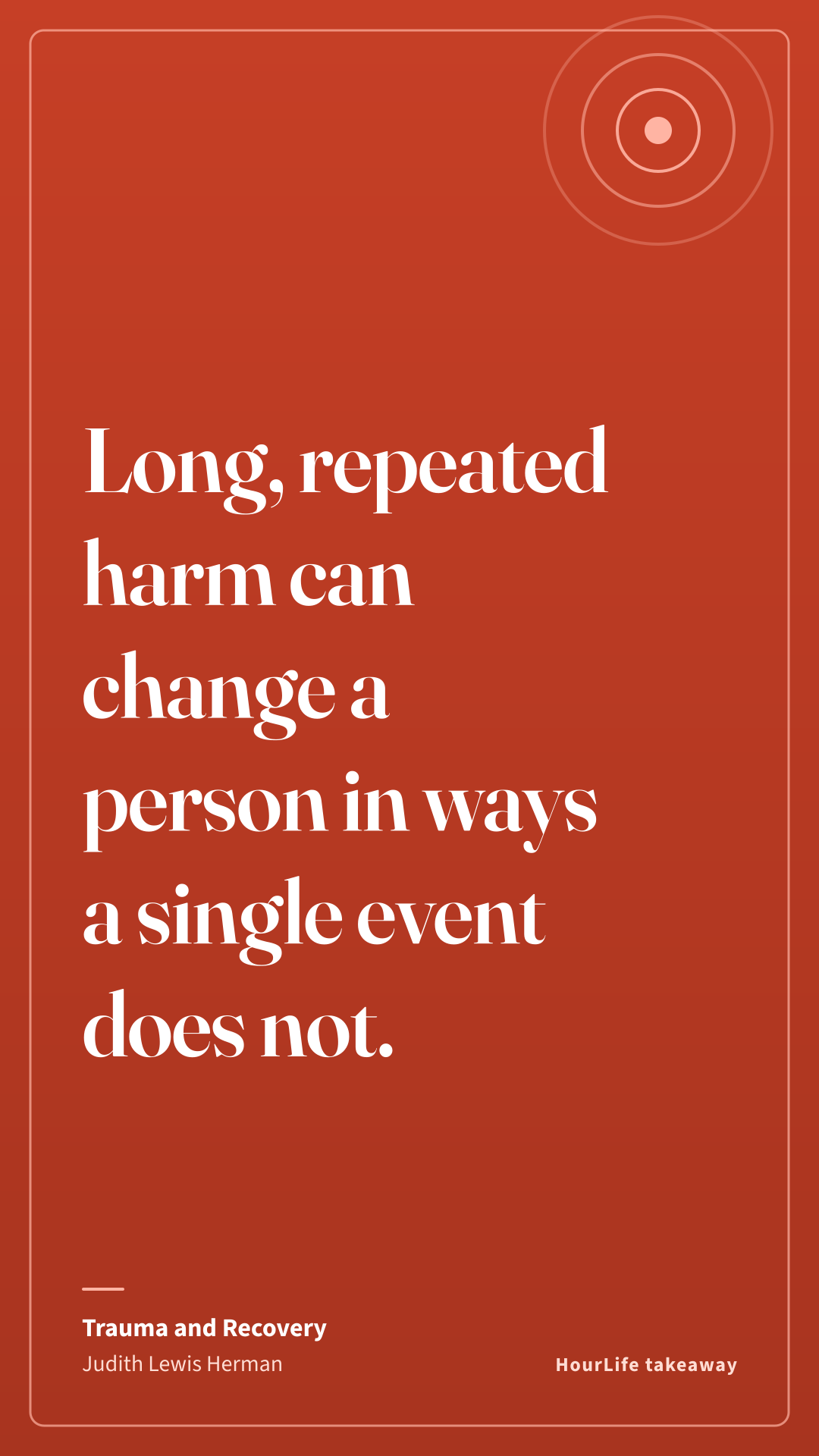
Long, repeated harm can change a person in ways a single event does not.

Trauma and Recovery Judith Lewis Herman HourLife takeaway

Herman proposed the term complex post-traumatic stress disorder for people who lived through long periods of captivity or control, in situations they could not easily leave. She argued that the standard diagnosis, built around single events, missed the changes she saw in these survivors' sense of self and in their relationships.

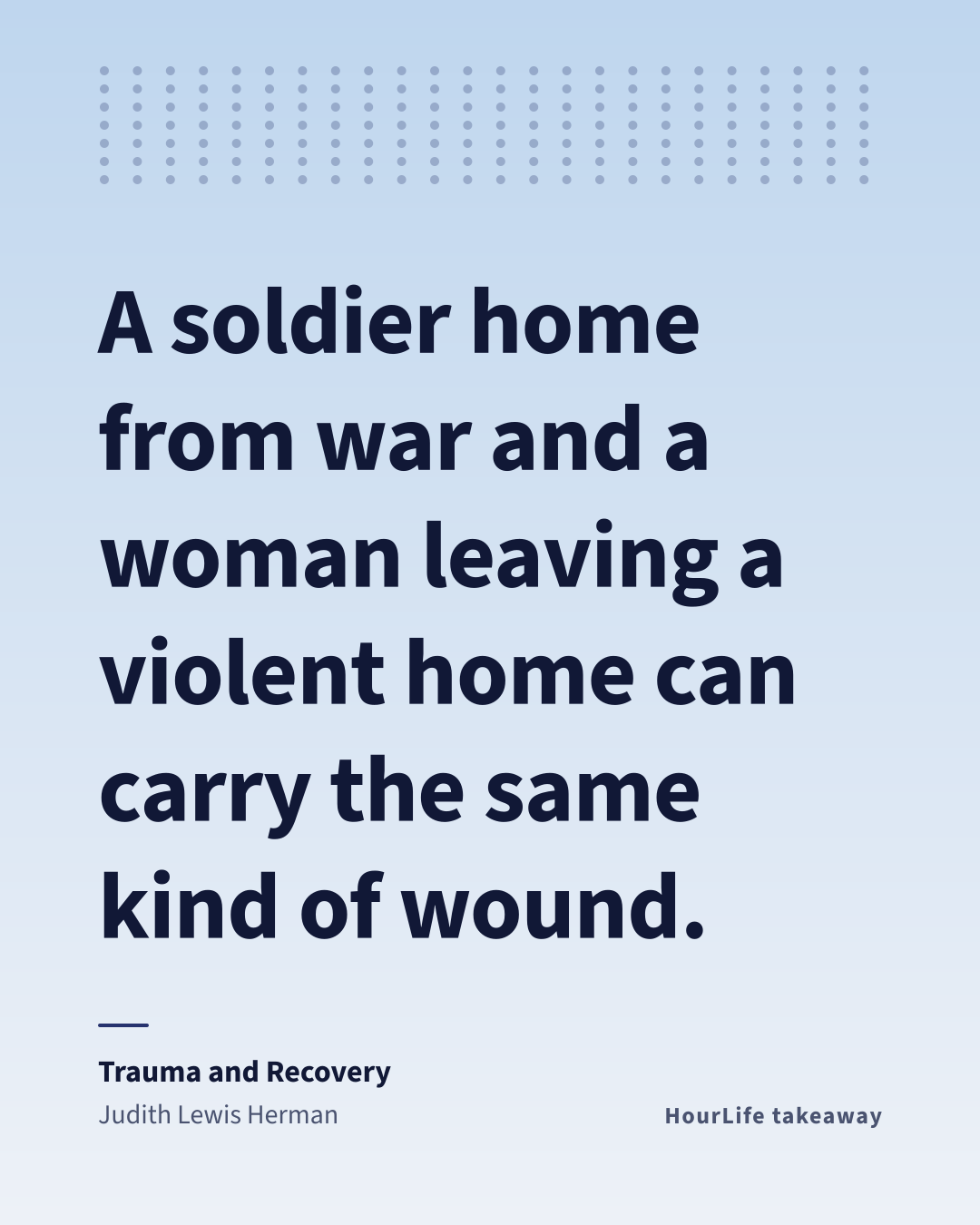
A soldier home from war and a woman leaving a violent home can carry the same kind of wound.

Trauma and Recovery Judith Lewis Herman HourLife takeaway

The book's boldest move is to put combat veterans, survivors of domestic and sexual abuse, and political prisoners in one frame. Herman shows how much their responses have in common. In doing so she ties private suffering to public life.

Societies keep forgetting trauma, and it takes a movement to bring it back into view.

Trauma and Recovery Judith Lewis Herman HourLife takeaway

Herman traces three times the study of trauma came to light: hysteria in the late nineteenth century, the trauma of combat after the world wars and Vietnam, and sexual and domestic violence with the women's movement. Each time, attention faded when the movement behind it lost strength.

A bystander cannot stay neutral: looking away helps the person who did the harm.

Trauma and Recovery Judith Lewis Herman HourLife takeaway

Herman points out that the person who did harm asks bystanders only to do nothing, while the person harmed asks them to share the weight of what happened. Bearing witness is uncomfortable, which is why it is so often avoided. For someone recovering, being believed matters.

Grieving what was lost is part of recovery, not a detour from it.

Trauma and Recovery Judith Lewis Herman HourLife takeaway

The second stage, remembrance and mourning, is about putting the story into words in a safe setting and grieving what was lost. Herman is clear that this happens with support, at the survivor's own pace, and only once safety is in place.

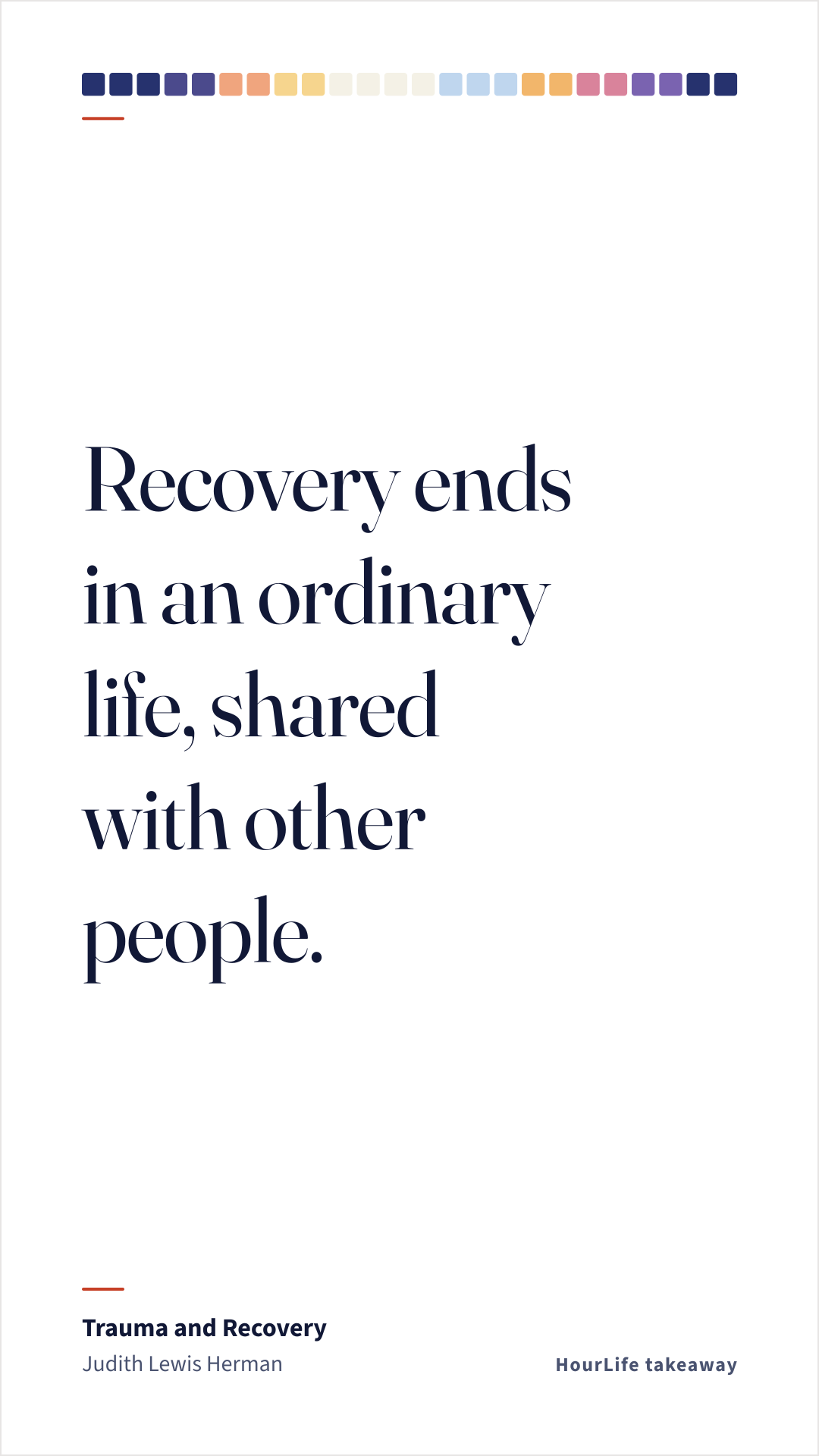
Recovery ends in an ordinary life, shared with other people.

Trauma and Recovery Judith Lewis Herman HourLife takeaway

The third stage, reconnection, turns toward the future: new relationships, new routines and a sense of self that is not defined by what happened. Herman also describes the value of groups, where survivors find that they are not alone.

Keep this going in the app.

HourLife turns these ideas into a daily system — goals, habits, focus, and reflection in one private place.