Keep this author quotes for later
Sign in to save

Lindsey Nyx Walker

The most-loved lines from Lindsey Nyx Walker, drawn from 1 book in the library.

Lines labelled “HourLife takeaway” are our wording of the book’s ideas and may paraphrase it. Only lines in quotation marks are the author’s own words, with where they appear. Check the book for exact wording before you quote it. Spot an error?

A fact sticks when you tie it to something you already care about.

Lost in Space Neil deGrasse Tyson and Lindsey Nyx Walker HourLife takeaway

Tyson says the facts were picked by asking three things: is it tasty, does it make you smile, and does it connect to something the reader cared about before opening the book. That is why so many entries lean on films and pop culture. His favourite example in interviews is the Hulk: grow a person that big without adding mass and he would be about as dense as a beach ball.


A number means little until you stand it next to something familiar.

Lost in Space Neil deGrasse Tyson and Lindsey Nyx Walker HourLife takeaway

Saying the Sun is 1.39 million kilometres across gives you nothing to hold. Saying about 109 Earths would fit side by side across its face gives you a picture you can keep. The book puts cosmic sizes next to everyday ones again and again, because the comparison is what you remember.

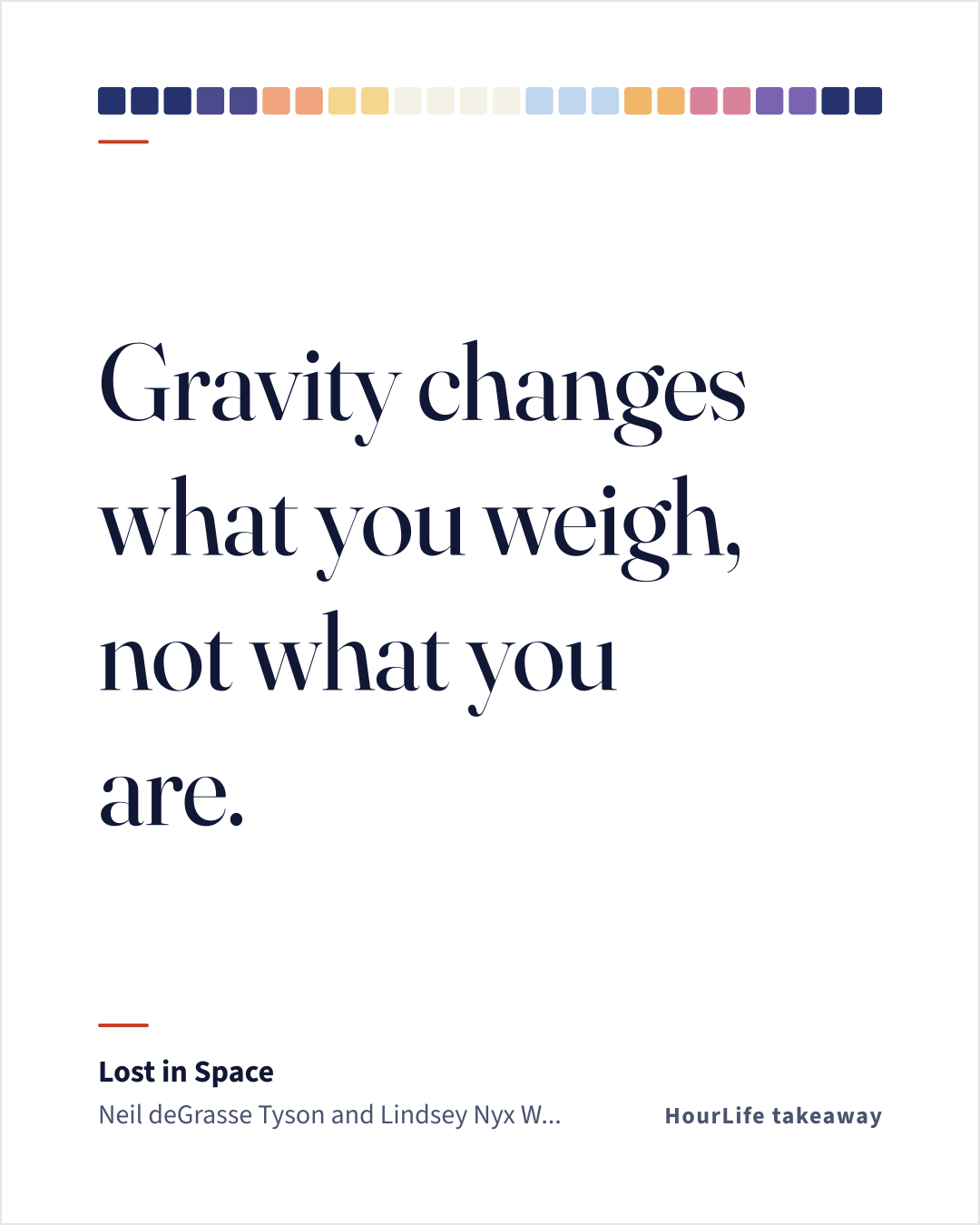
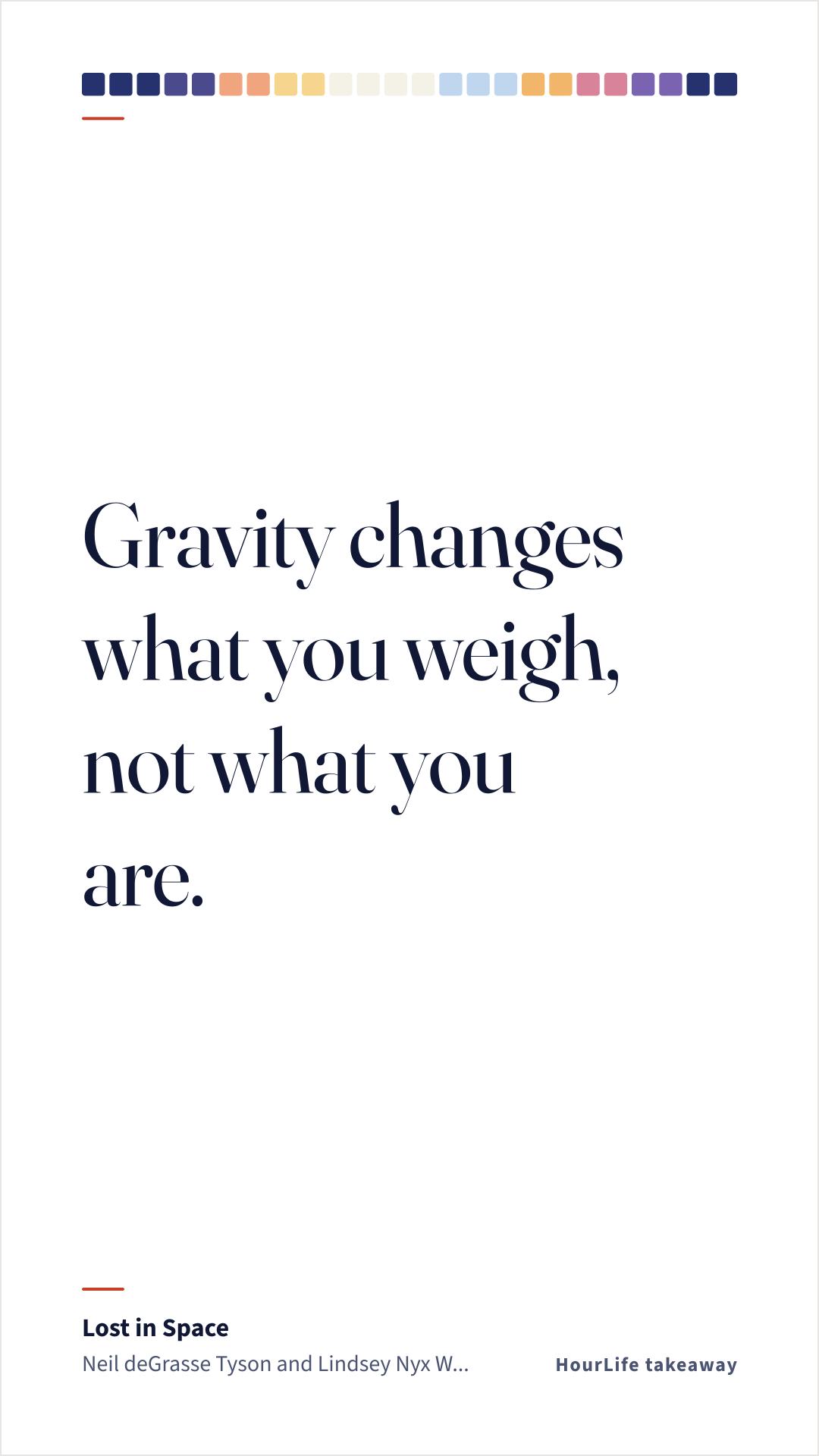
Gravity changes what you weigh, not what you are.

Lost in Space Neil deGrasse Tyson and Lindsey Nyx Walker HourLife takeaway

Your mass is the same everywhere. What a scale reads depends on the pull of the world you stand on. Someone who weighs 150 pounds on Earth would read about 380 pounds at Jupiter's cloud tops and about 25 pounds on the Moon.

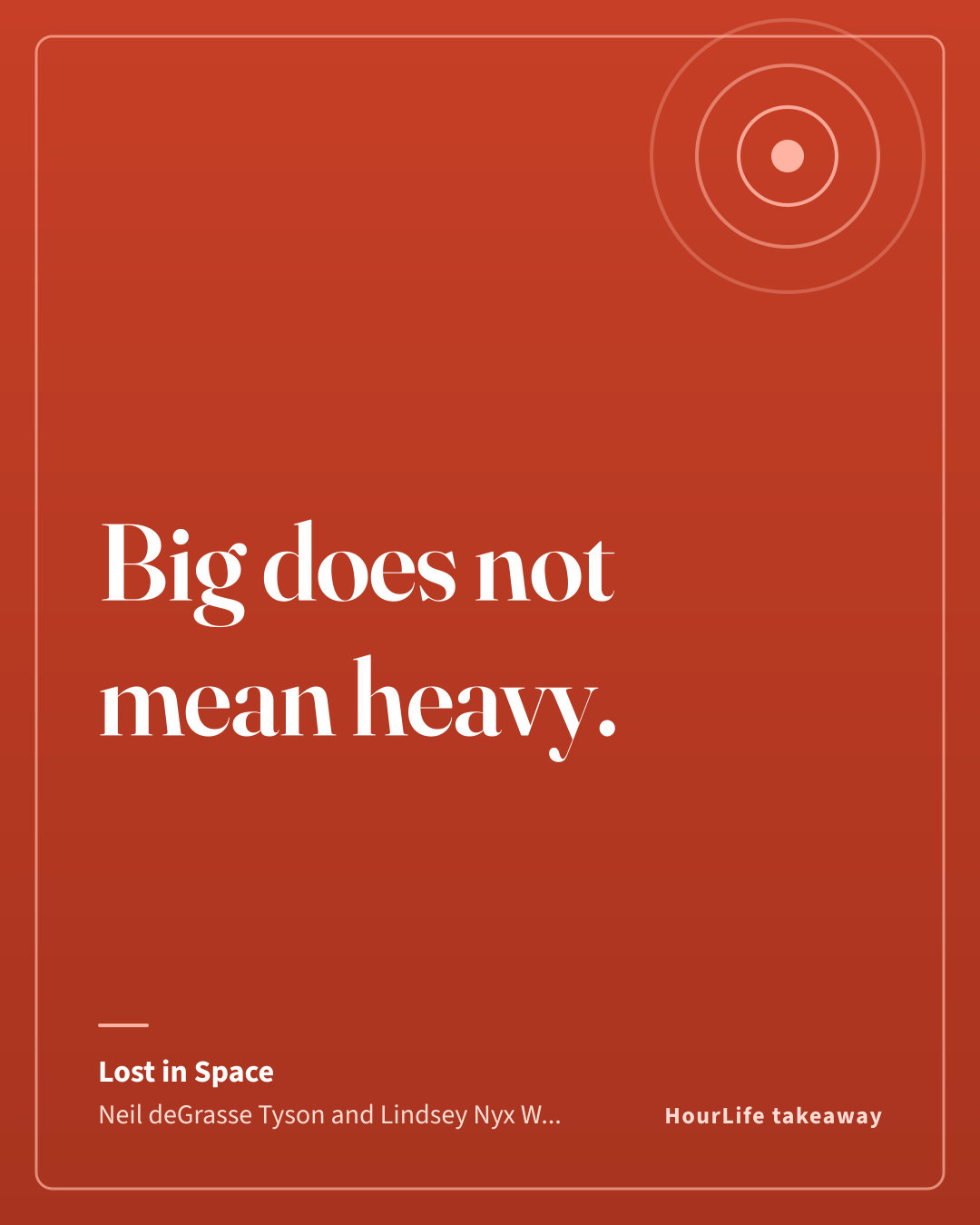
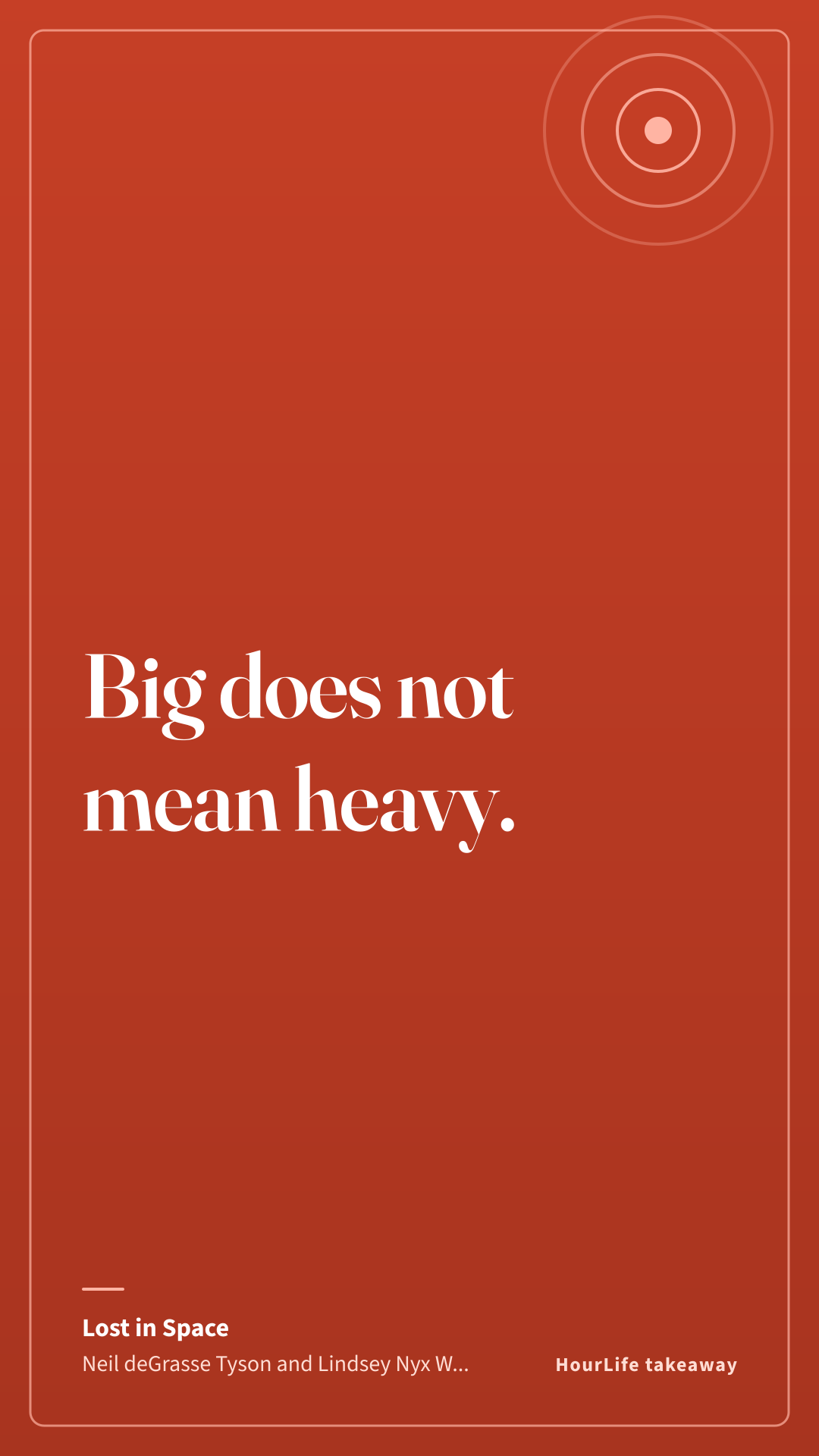
Big does not mean heavy.

Lost in Space Neil deGrasse Tyson and Lindsey Nyx Walker HourLife takeaway

Saturn has about 95 times the mass of Earth, yet its average density is lower than water's. In a bathtub large enough to hold it, it would float. The book uses pictures like this to make an abstract word like density stick.

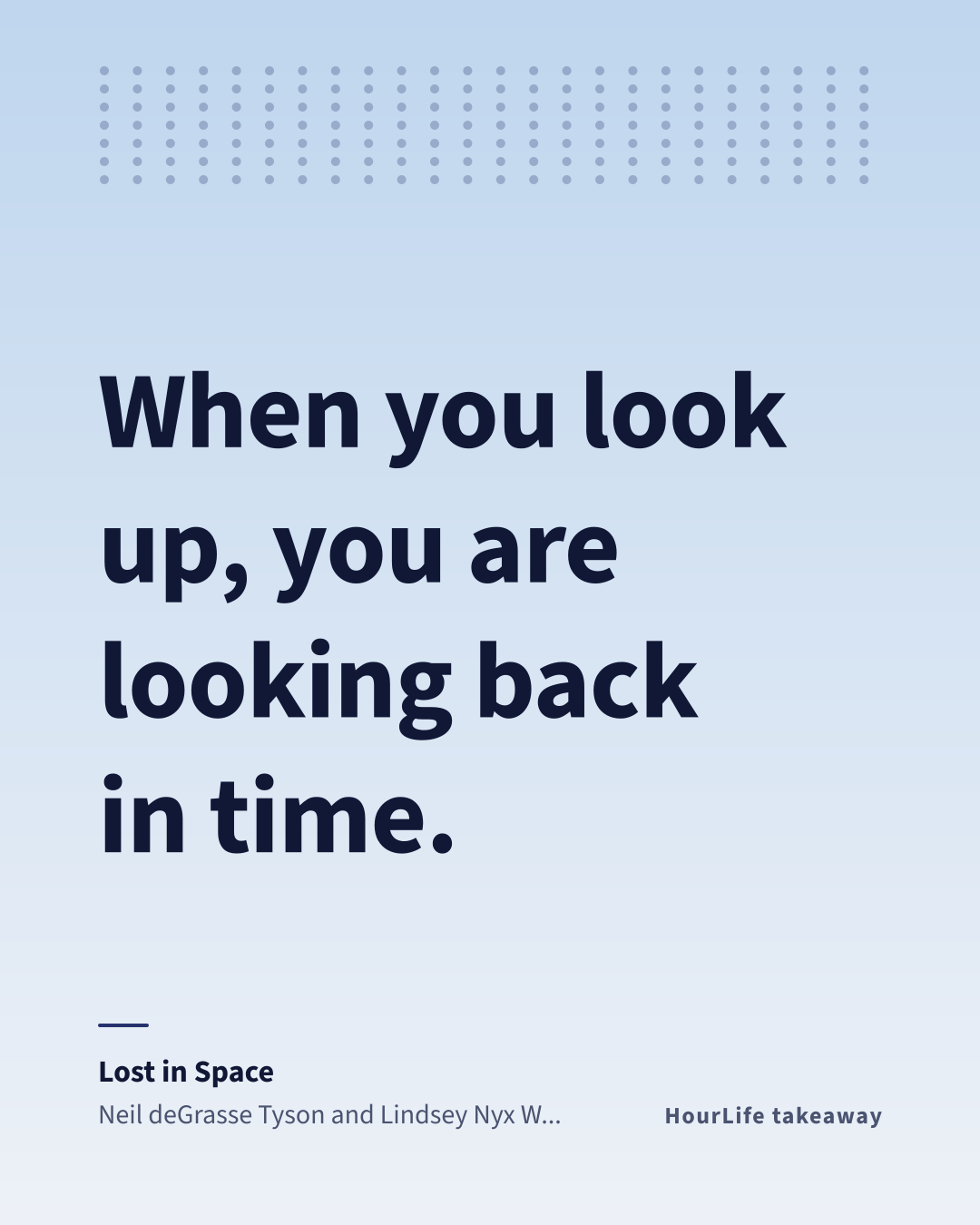
When you look up, you are looking back in time.

Lost in Space Neil deGrasse Tyson and Lindsey Nyx Walker HourLife takeaway

Light takes time to cross space, so the sky is never live. You see the Sun as it was about eight minutes ago and the Andromeda galaxy as it was about 2.5 million years ago. A guide to the sky is also a guide to the past.

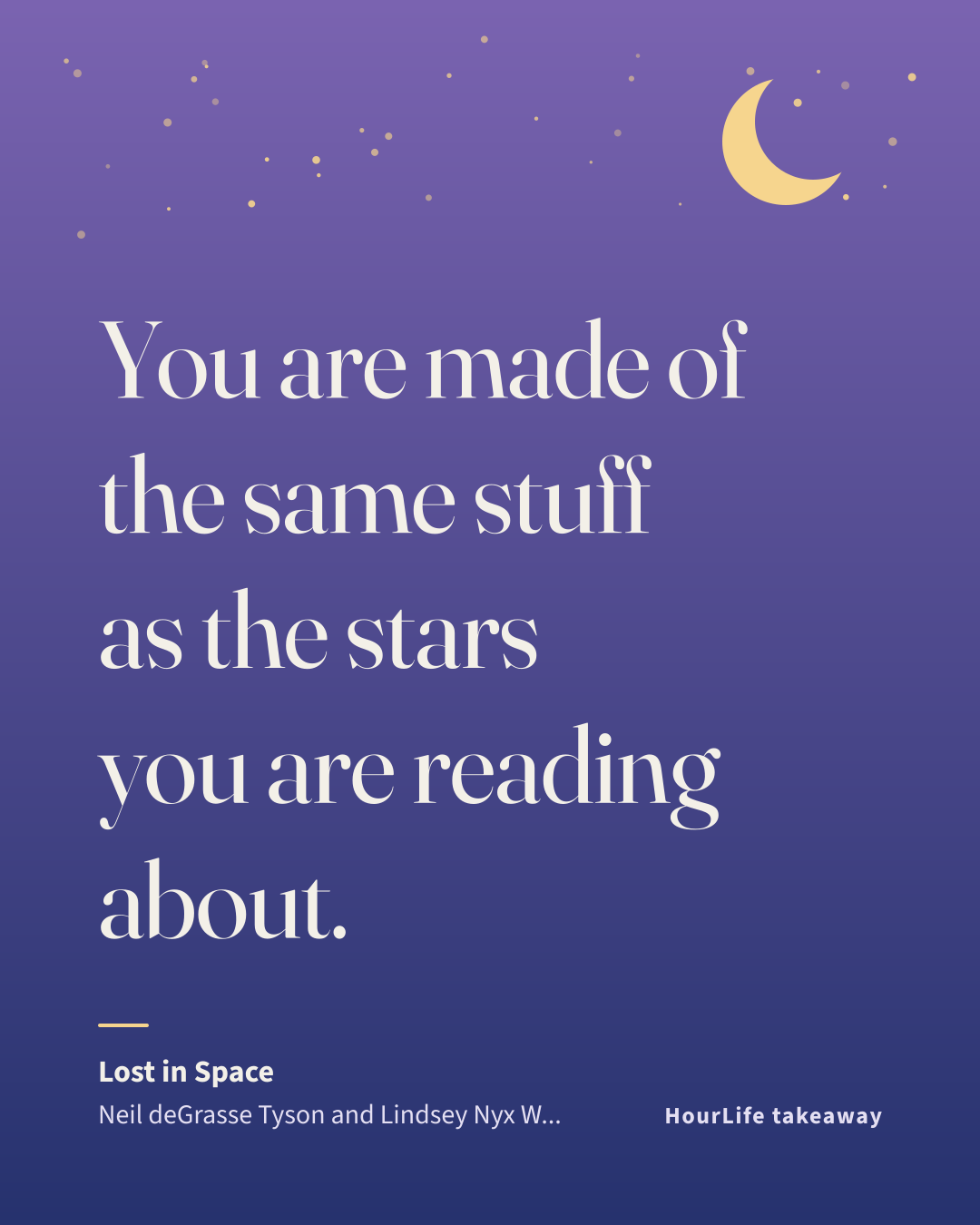
You are made of the same stuff as the stars you are reading about.

Lost in Space Neil deGrasse Tyson and Lindsey Nyx Walker HourLife takeaway

Apart from hydrogen, most of the atoms in your body were made inside stars or thrown out when stars exploded or collided. The book gives the periodic table its own section. Read it with that in mind and a school chart becomes a record of where your carbon, oxygen and iron were made.

You do not have to read it in order to learn from it.

Lost in Space Neil deGrasse Tyson and Lindsey Nyx Walker HourLife takeaway

Tyson describes the book as one you can open at any page and find something you had never thought about. Short entries make starting cheap. A few minutes a day with a book like this adds up faster than a long read you keep putting off.

Imagination and science have always borrowed from each other.

Lost in Space Neil deGrasse Tyson and Lindsey Nyx Walker HourLife takeaway

Frank Drake's Project Ozma, the first organised radio search for signals from other civilisations, ran in 1960 and took its name from the princess in L. Frank Baum's Oz books. Stories hand scientists names and questions, and science hands storytellers new worlds.

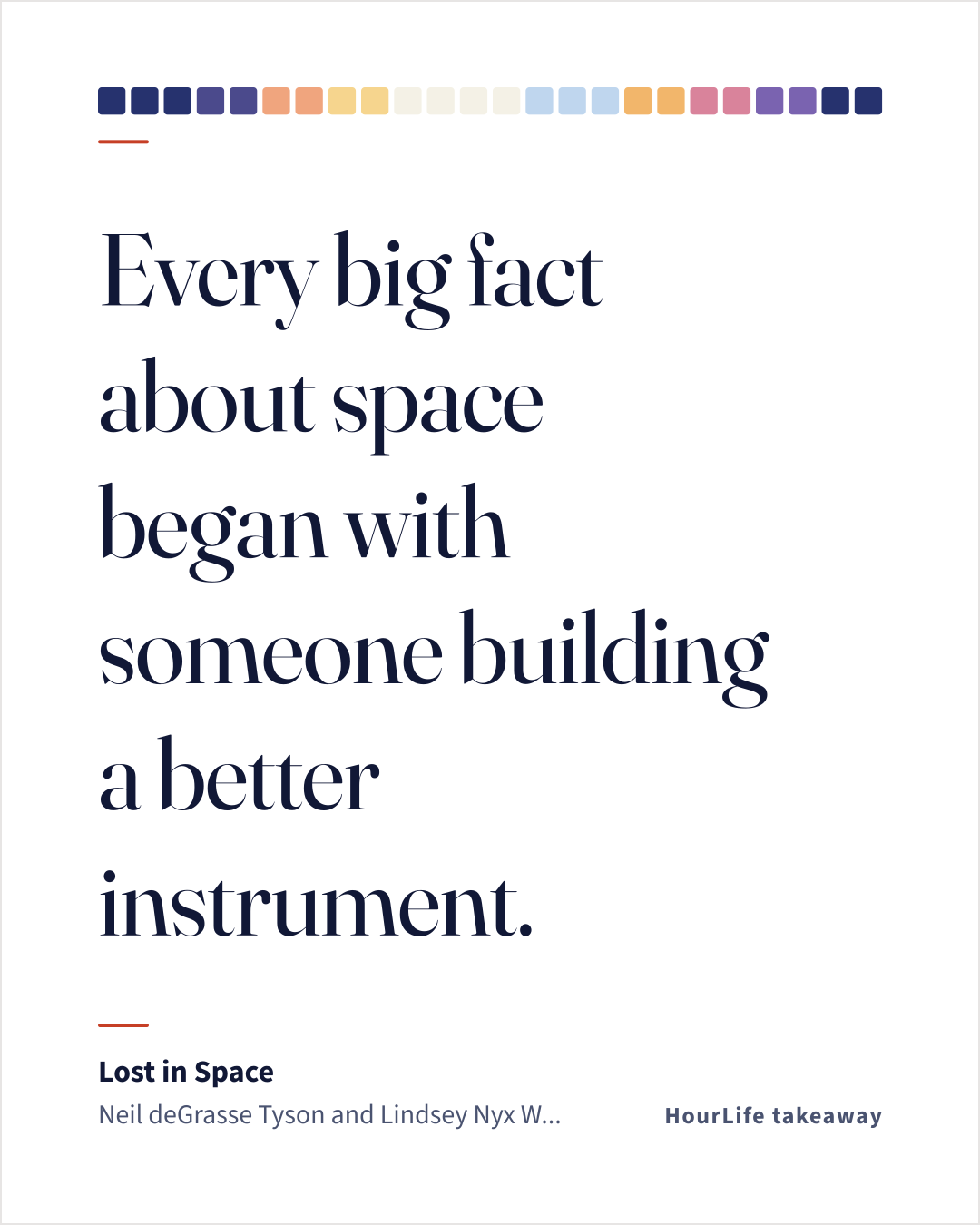
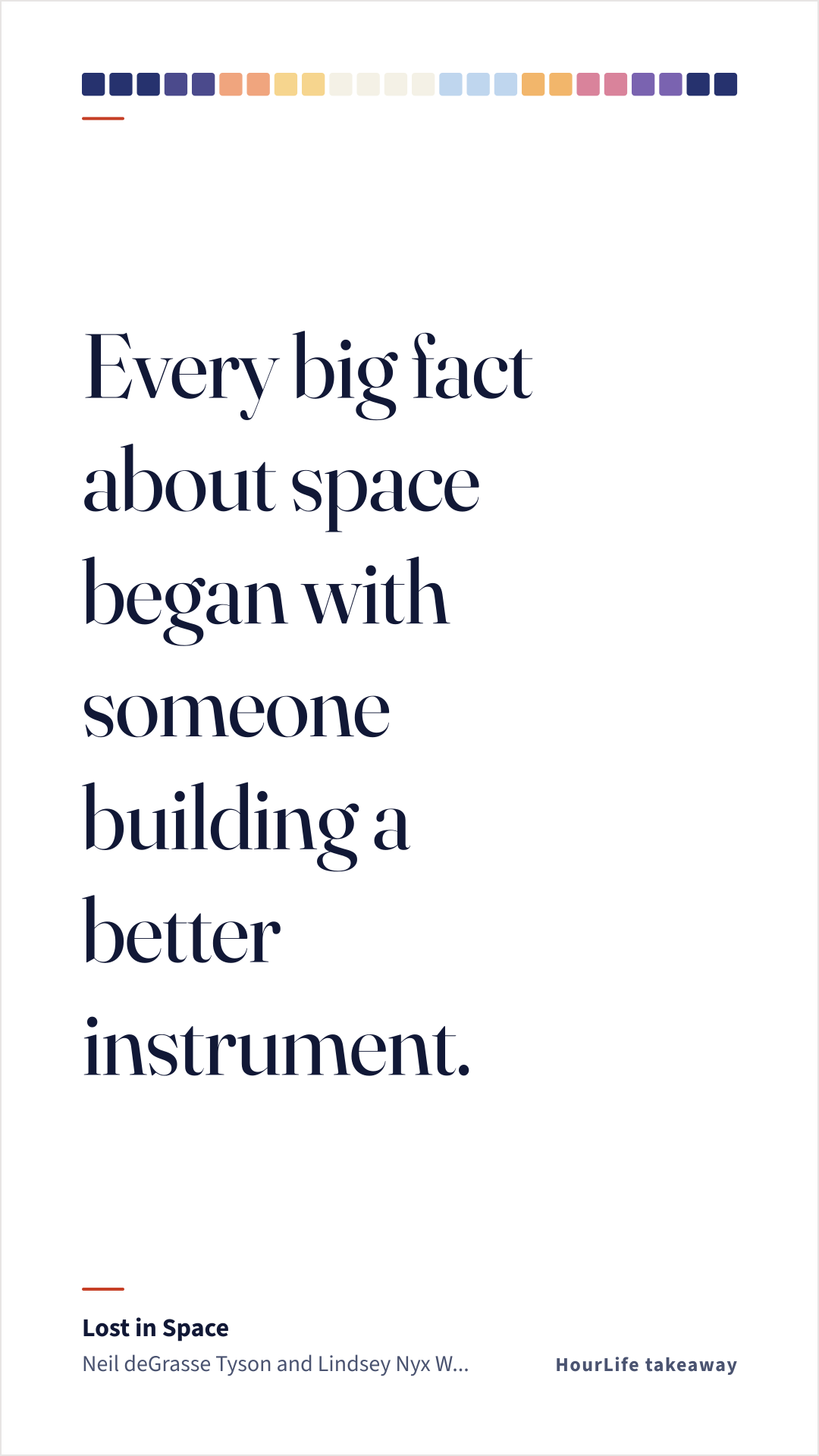
Every big fact about space began with someone building a better instrument.

Lost in Space Neil deGrasse Tyson and Lindsey Nyx Walker HourLife takeaway

The book covers telescopes and space missions alongside planets and galaxies, because what we know depends on what we can measure. Behind every space headline is a mirror, a detector or a probe that someone designed and launched.

Keep this going in the app.

HourLife turns these ideas into a daily system — goals, habits, focus, and reflection in one private place.