Keep this author quotes for later
Sign in to save

Mark Carney

The most-loved lines from Mark Carney, drawn from 1 book in the library.

Lines labelled “HourLife takeaway” are our wording of the book’s ideas and may paraphrase it. Only lines in quotation marks are the author’s own words, with where they appear. Check the book for exact wording before you quote it. Spot an error?

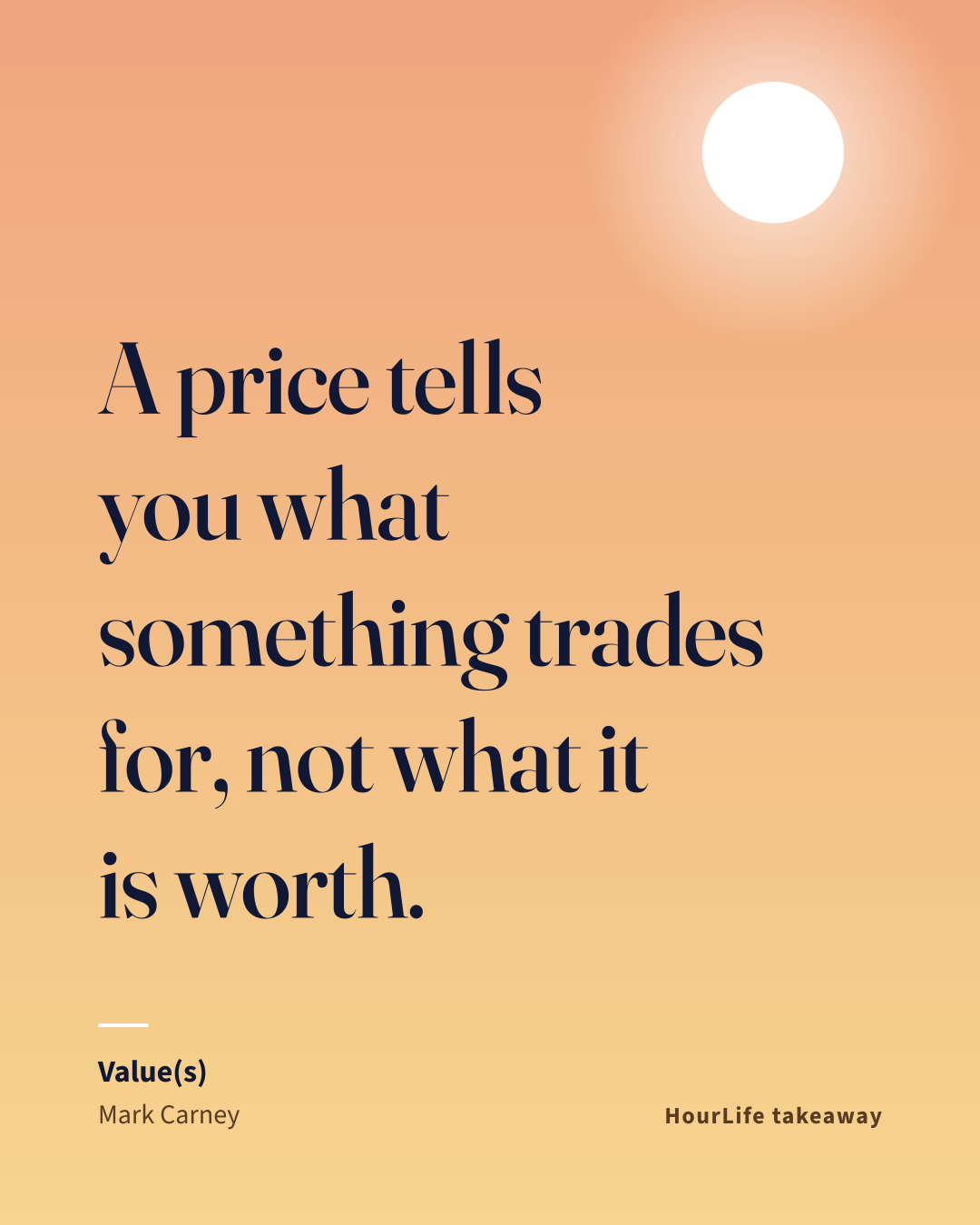
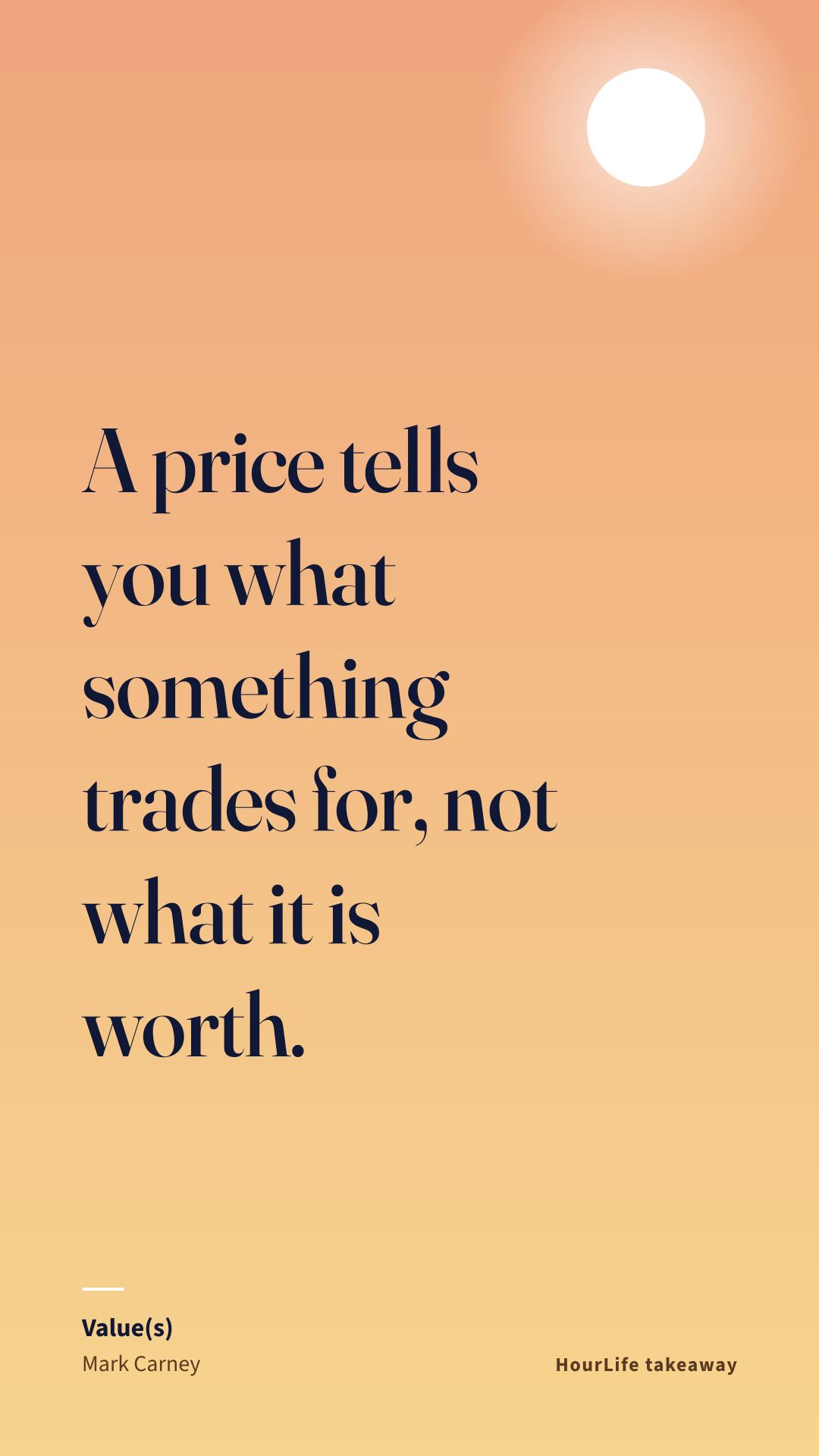
A price tells you what something trades for, not what it is worth.

Value(s) Mark Carney HourLife takeaway

This is the question the whole book circles. Carney traces how thinkers from philosophy to modern finance have tried to pin value down, and how, bit by bit, the market price became the default answer. The trouble starts when we forget that the price is only one way of measuring.


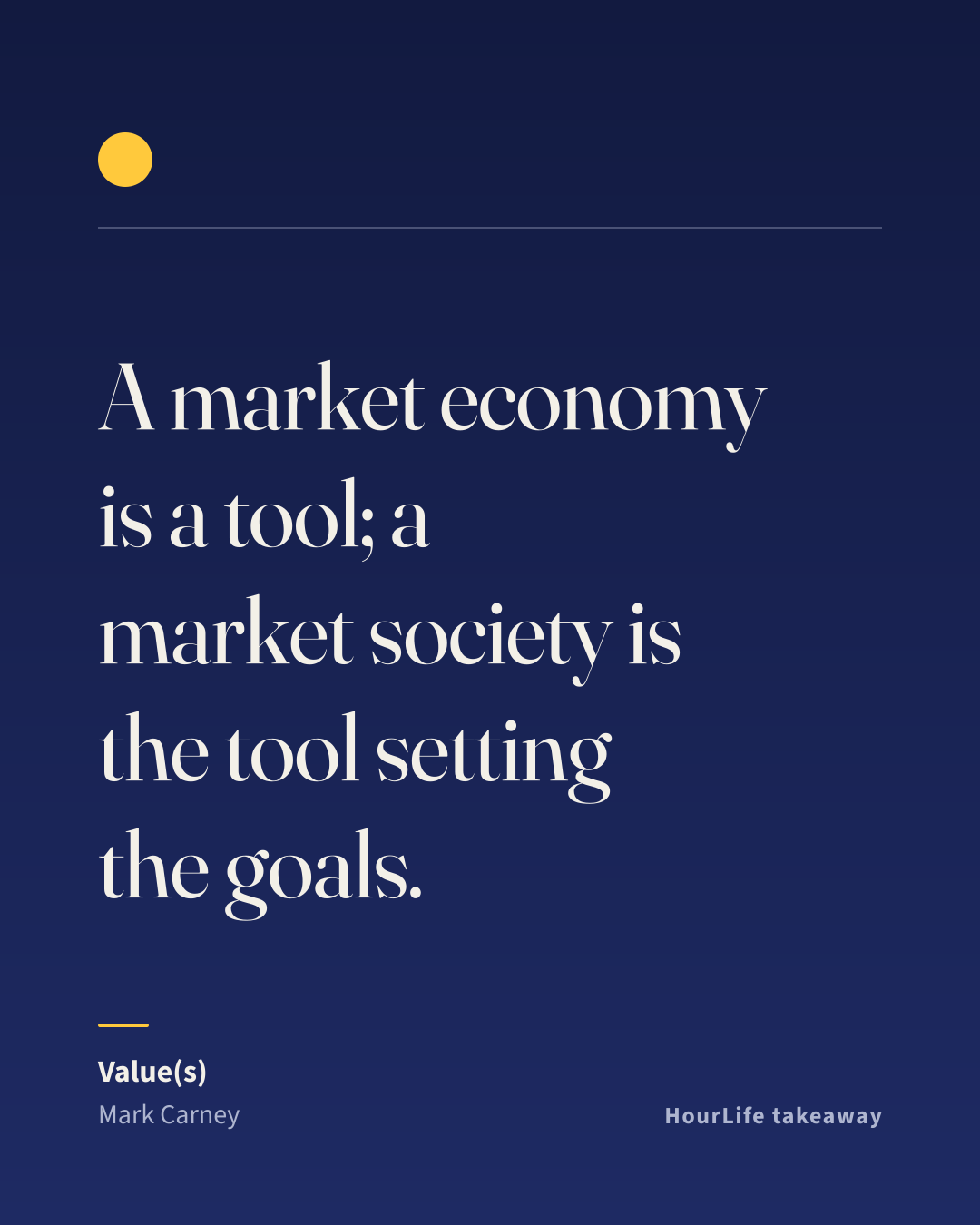
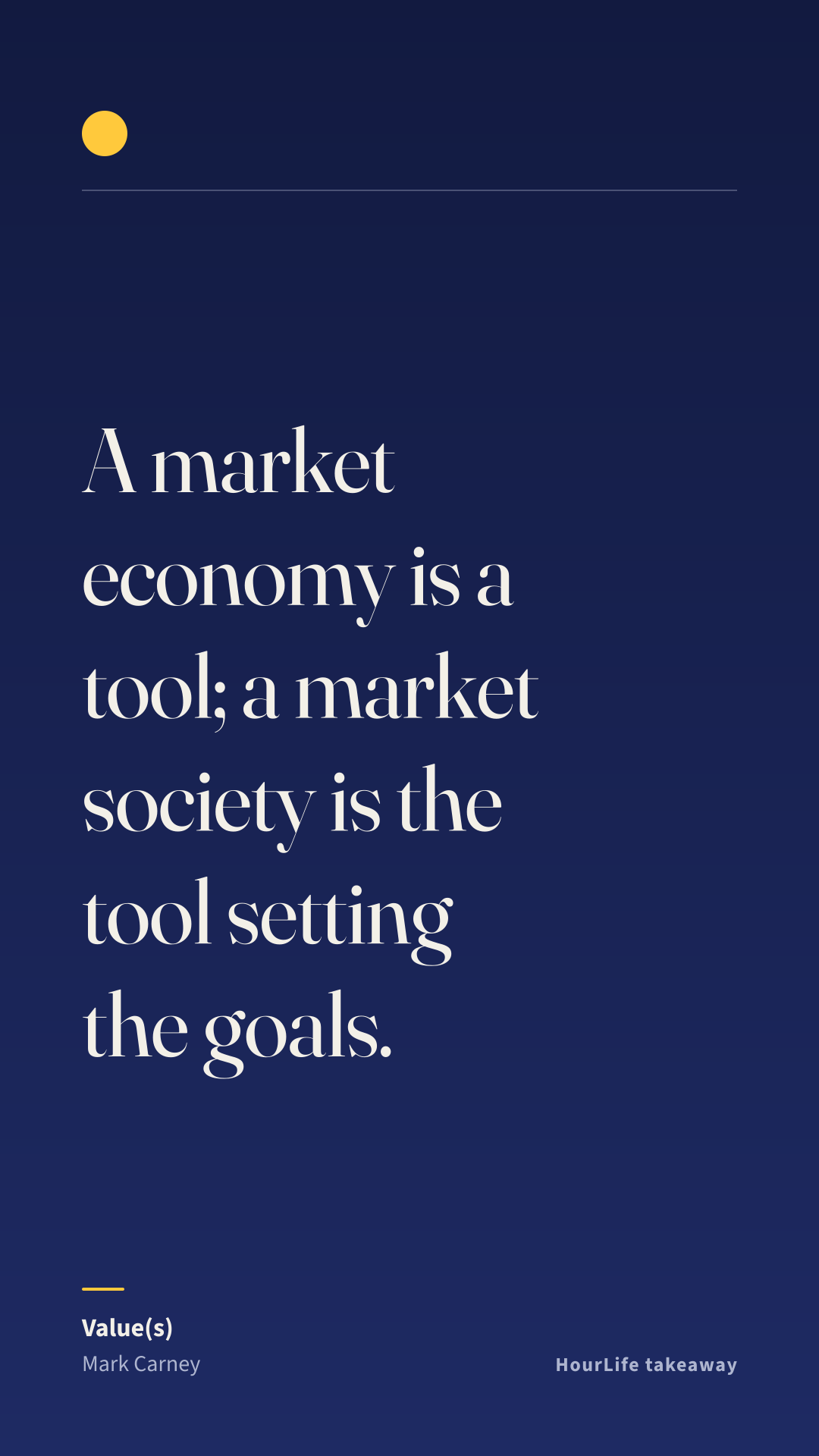
A market economy is a tool; a market society is the tool setting the goals.

Value(s) Mark Carney HourLife takeaway

Carney is not against markets. His worry is the drift from using markets to allocate goods to letting market logic decide what counts in health, education and public life. Once that happens, things without a price, like trust and care, start to look worthless.

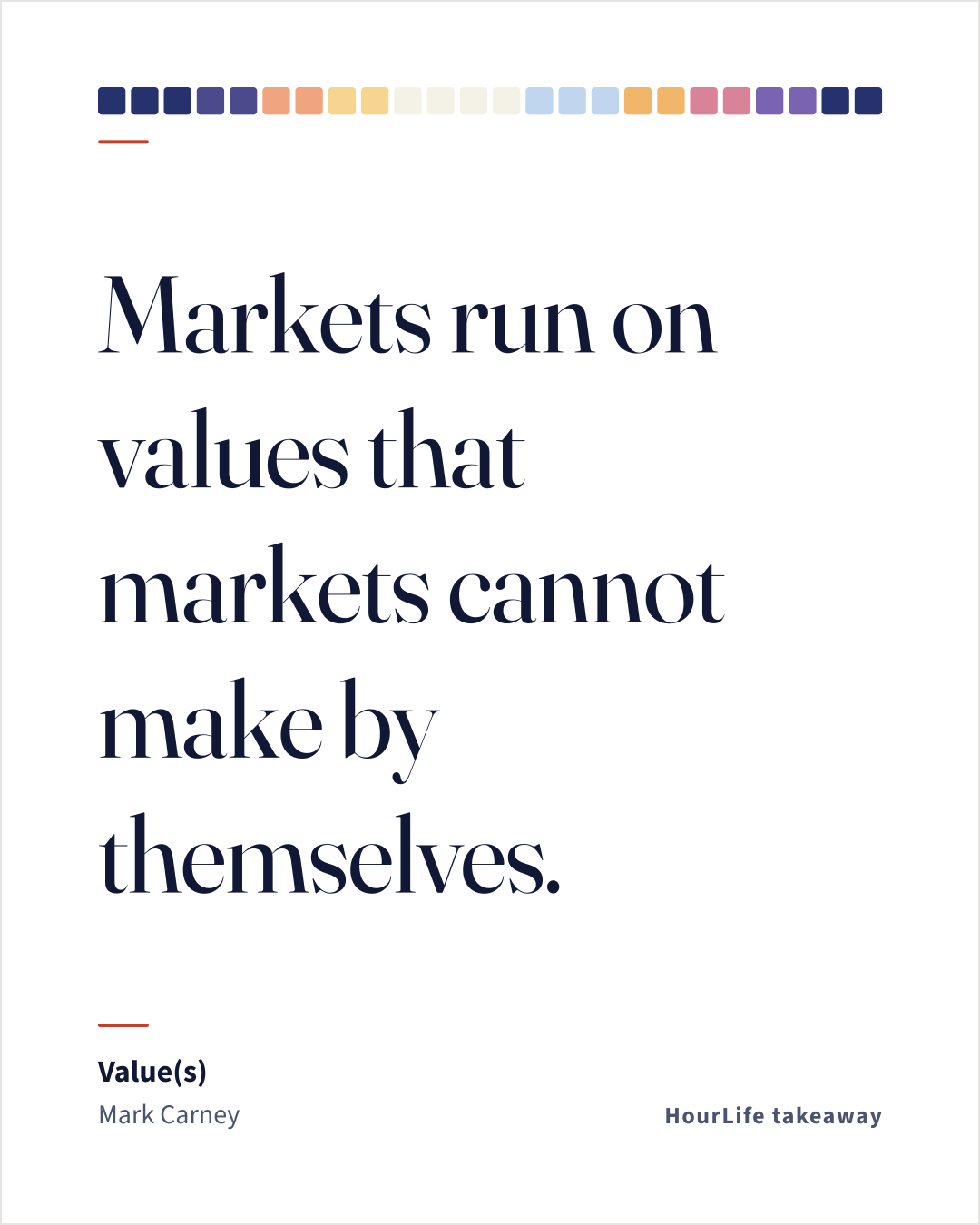
Markets run on values that markets cannot make by themselves.

Value(s) Mark Carney HourLife takeaway

Contracts need trust, competition needs fair rules, and long-term investment needs people who think past the next quarter. Carney argues that these social values come first and financial value is built on top of them. Spend them down and the market weakens too.

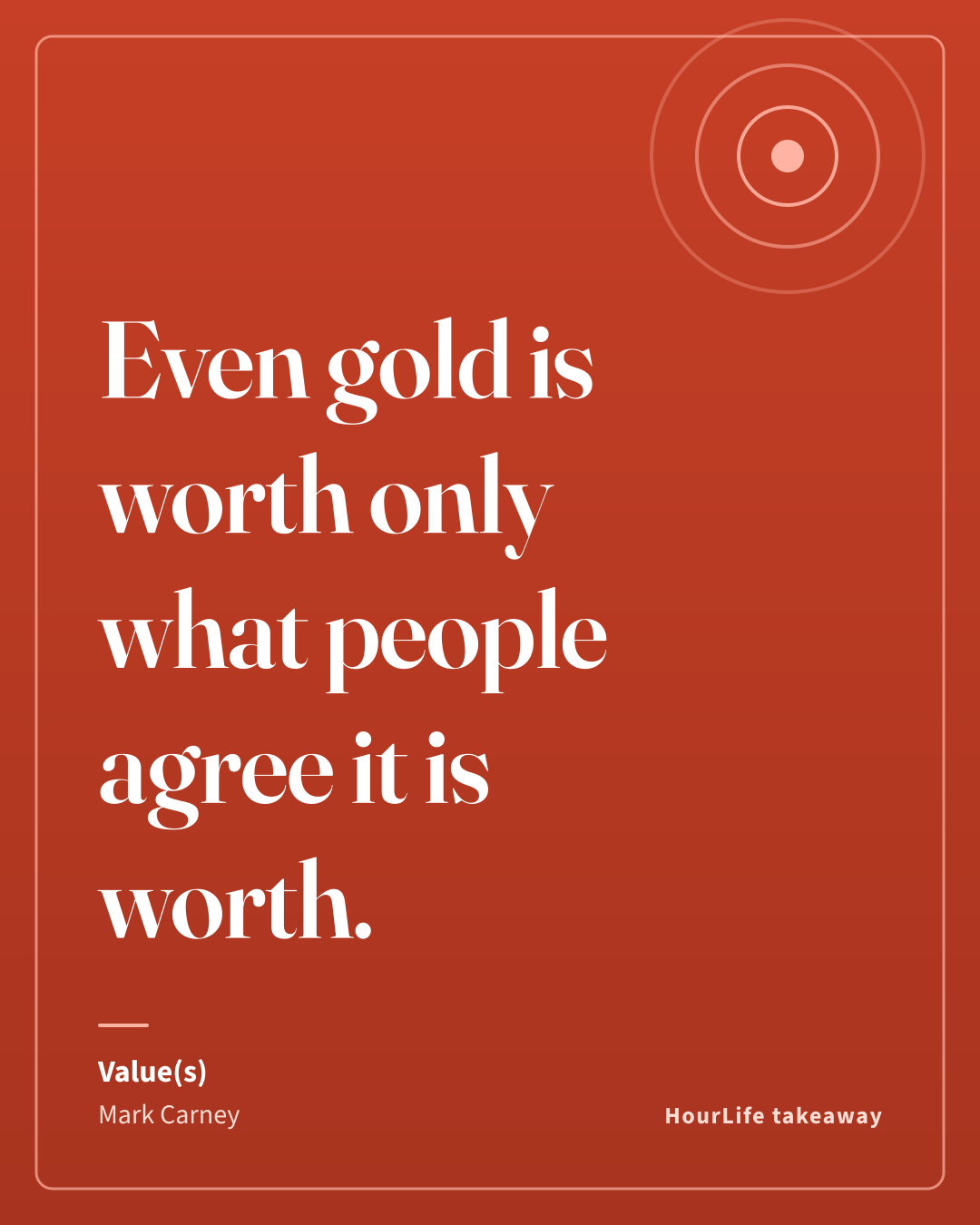
Even gold is worth only what people agree it is worth.

Value(s) Mark Carney HourLife takeaway

The book visits the Bank of England's vaults, where thousands of tonnes of gold sit in storage. The point is that money of every kind, metal included, rests on shared belief and on institutions people trust. Value is something a society keeps up, not something that sits there on its own.

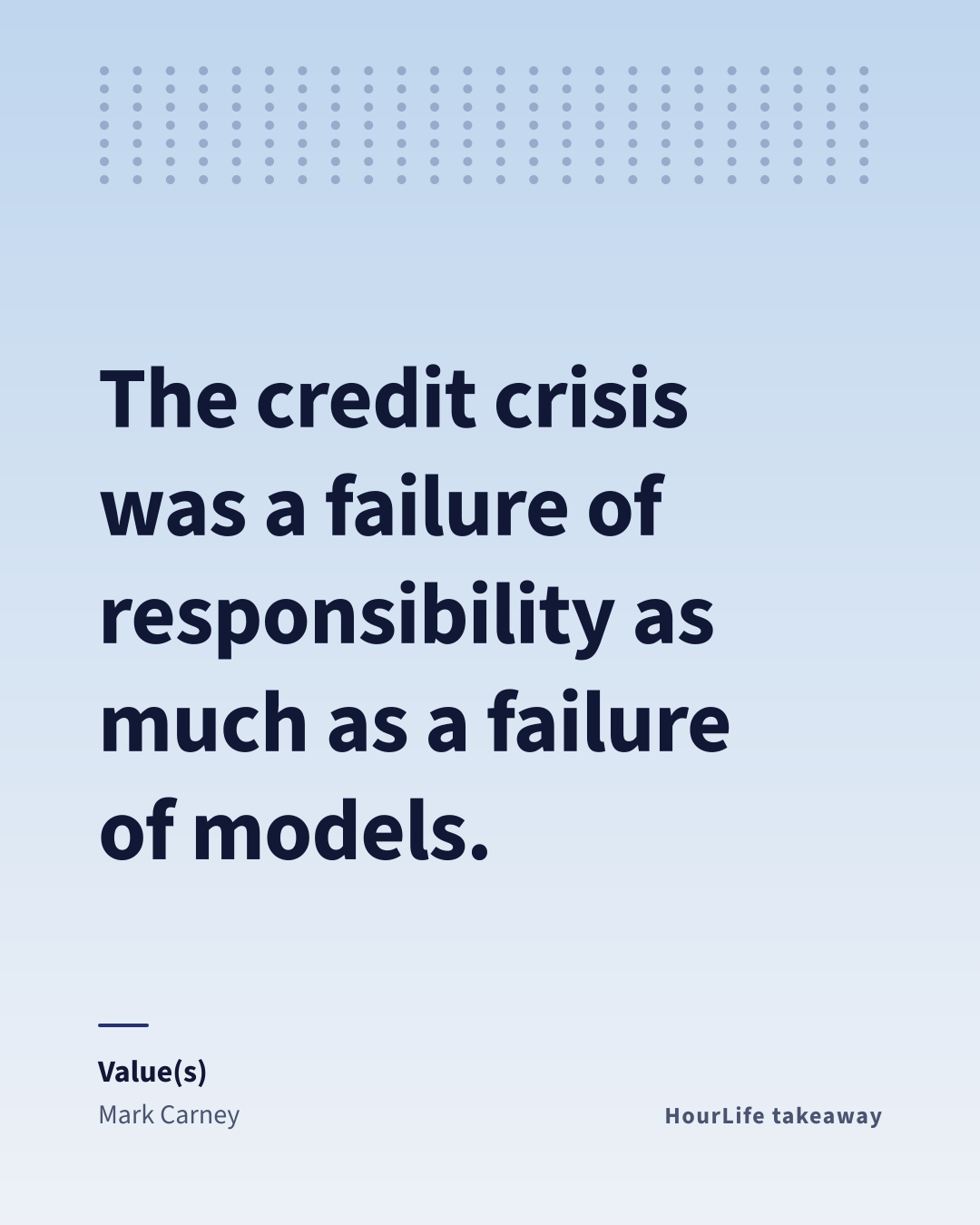
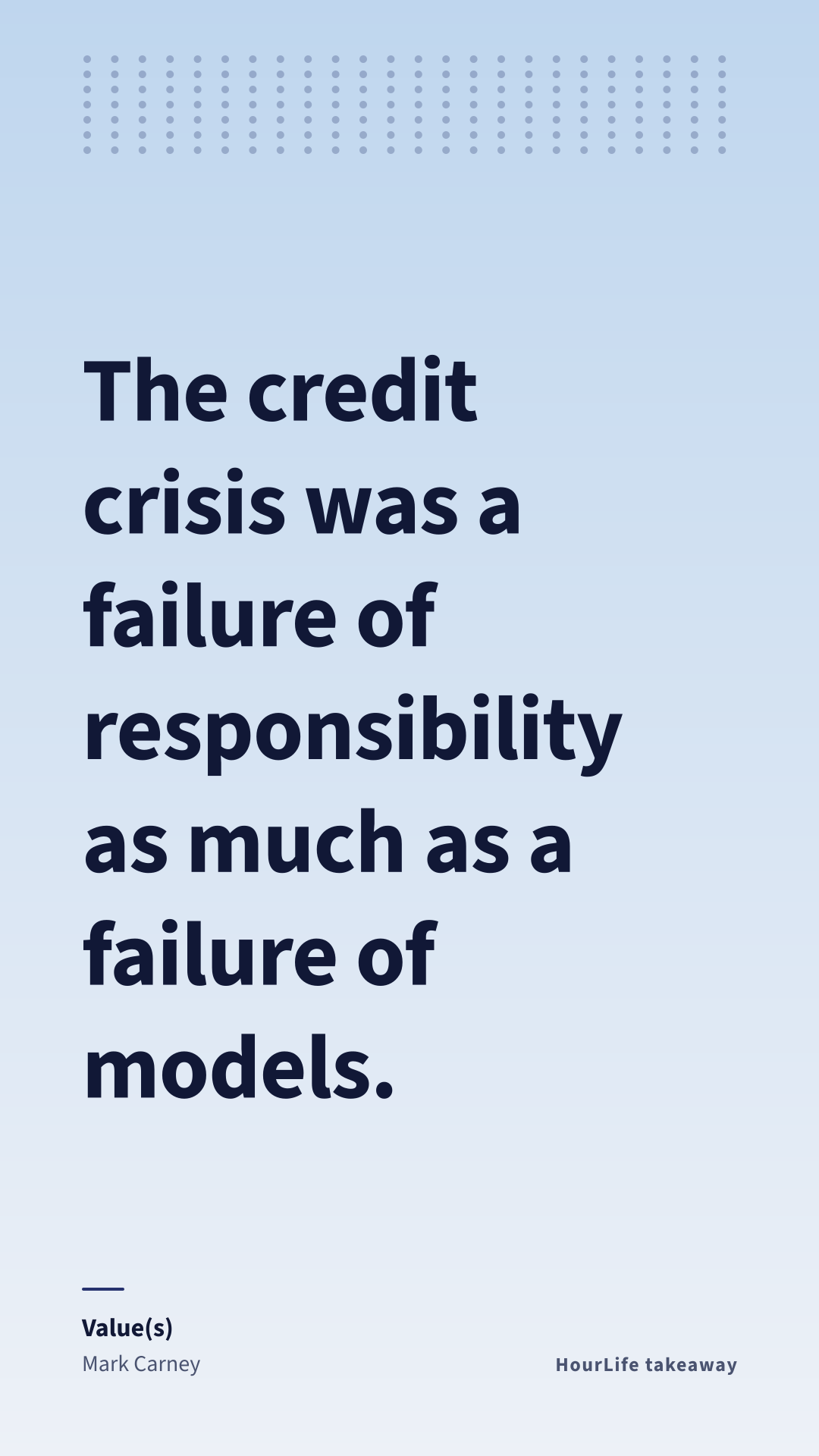
The credit crisis was a failure of responsibility as much as a failure of models.

Value(s) Mark Carney HourLife takeaway

Carney was governor of the Bank of Canada when the 2008 crisis hit, and later chaired the Financial Stability Board that rewrote the rules. He reads the crash as the result of people taking risks whose costs fell on others. Better rules help, but so does a culture where people own the consequences of what they sell.

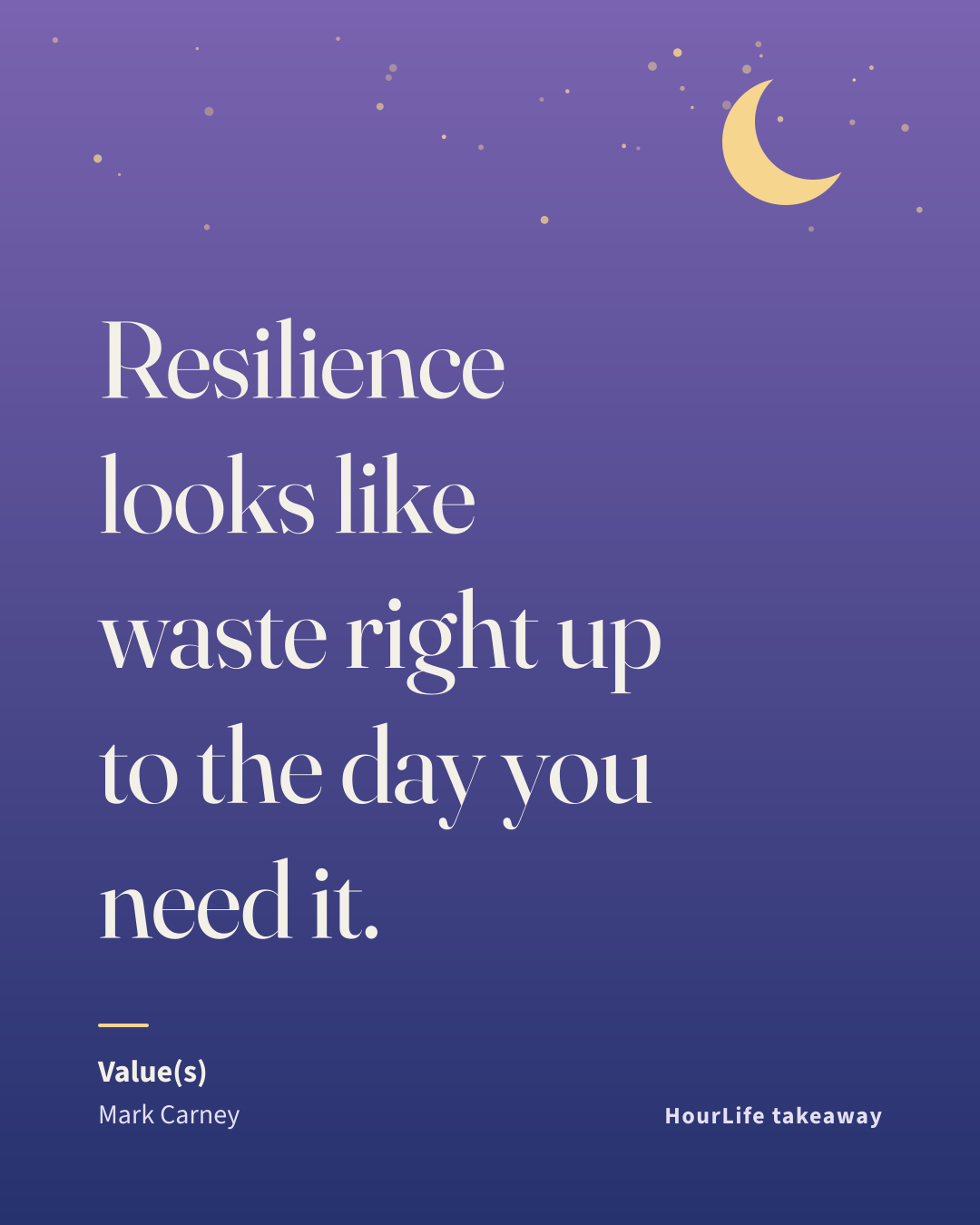
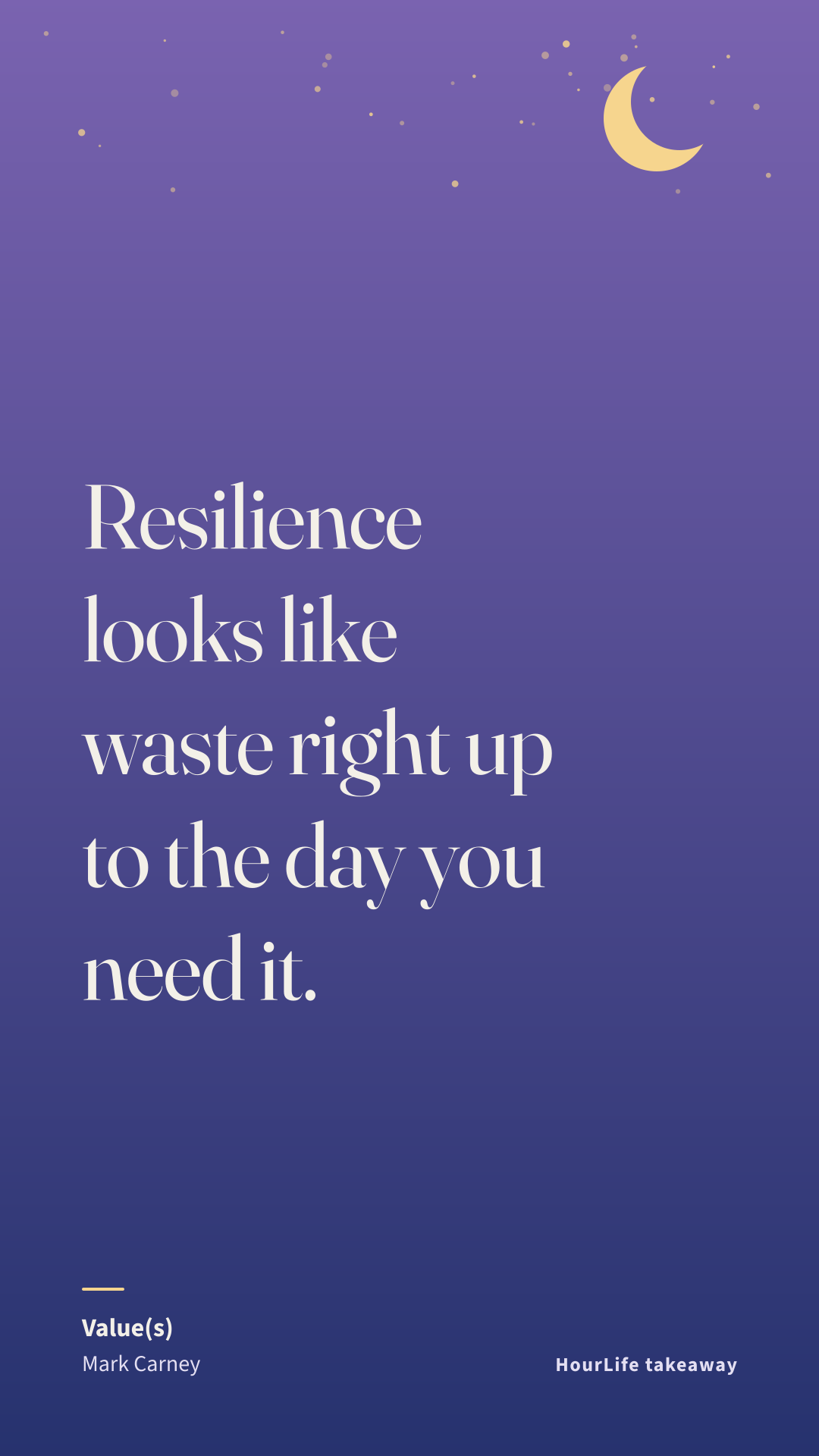
Resilience looks like waste right up to the day you need it.

Value(s) Mark Carney HourLife takeaway

Spare capital in banks, spare beds in hospitals and stockpiles of protective kit all look inefficient in good years. Covid showed what happens when a system is tuned only for the good years. The same is true of a household with no savings and a calendar with no slack.

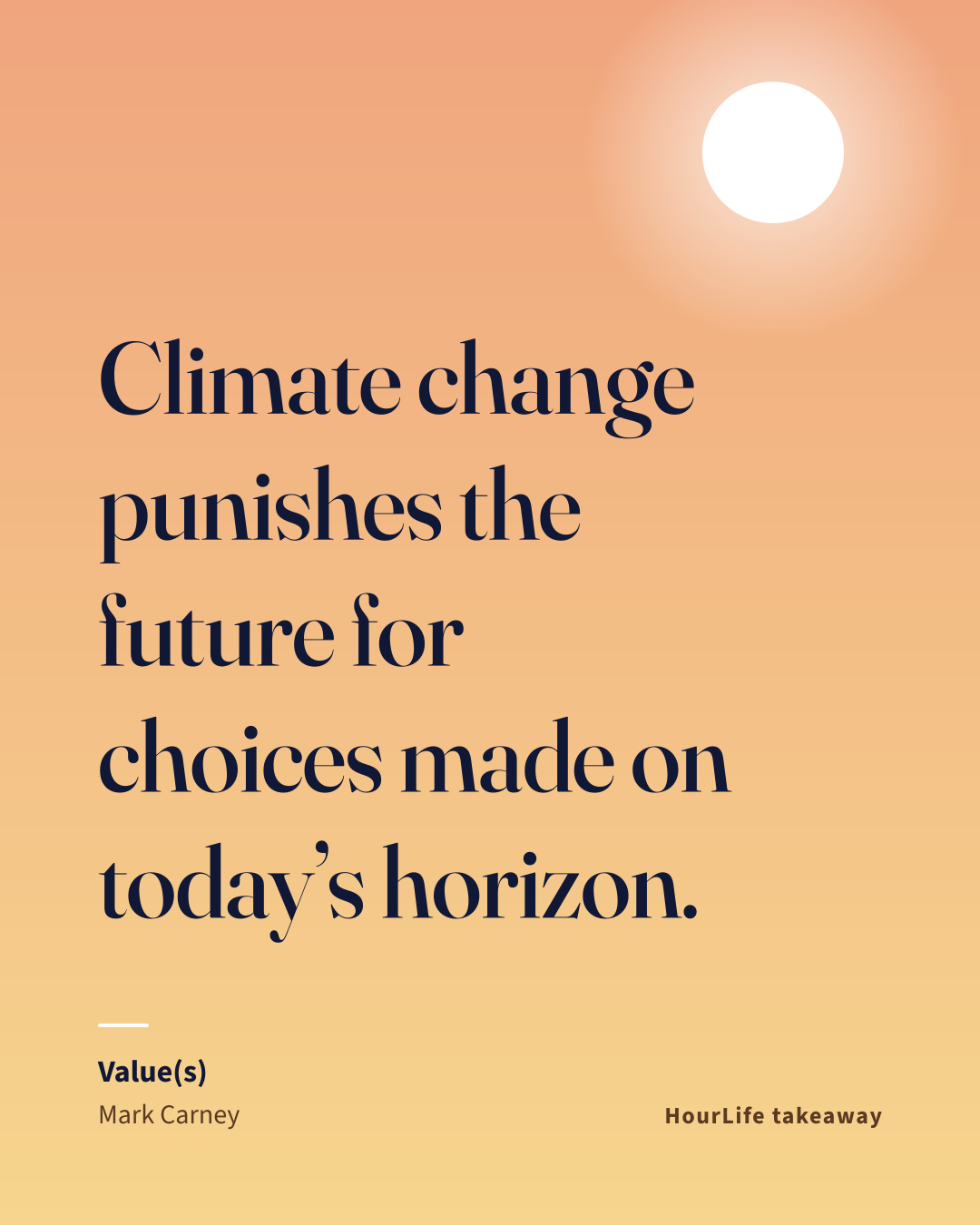
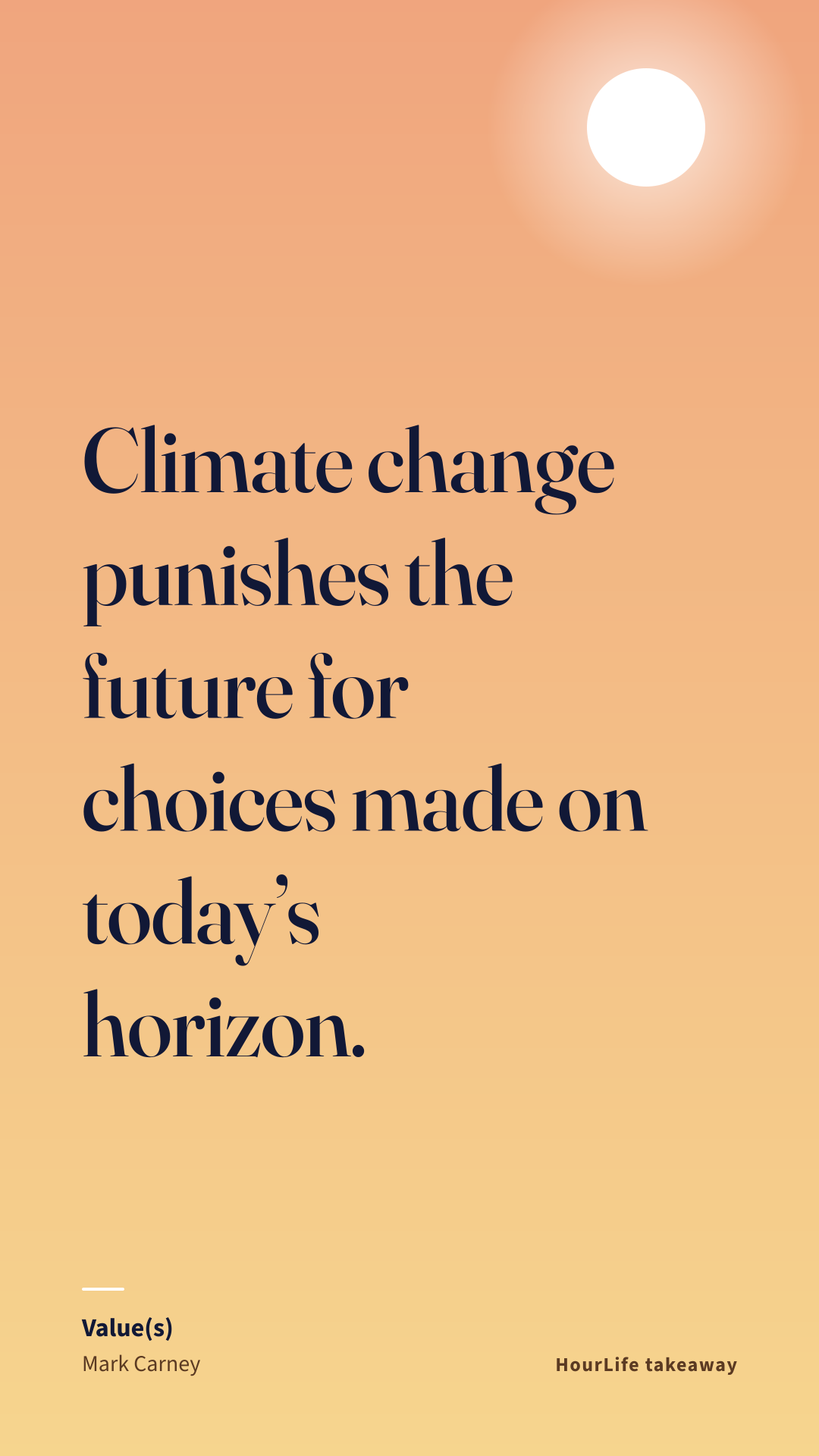
Climate change punishes the future for choices made on today’s horizon.

Value(s) Mark Carney HourLife takeaway

Carney's phrase for this, from a 2015 speech at Lloyd's of London, is the tragedy of the horizon: the worst costs fall beyond the time frame of the people making the decisions. His answer is to make those future costs visible now, through disclosure, pricing and plans to reach net zero.

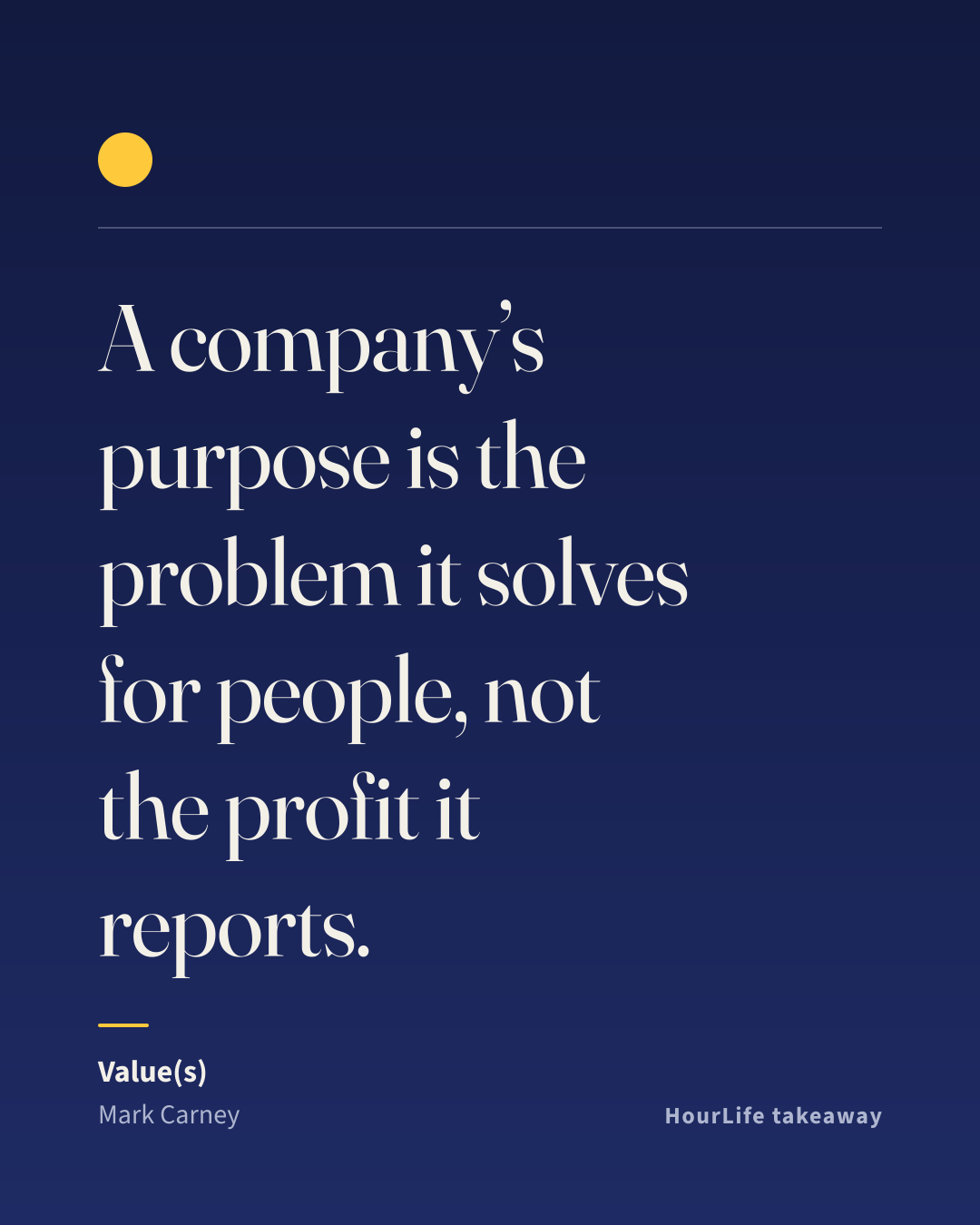
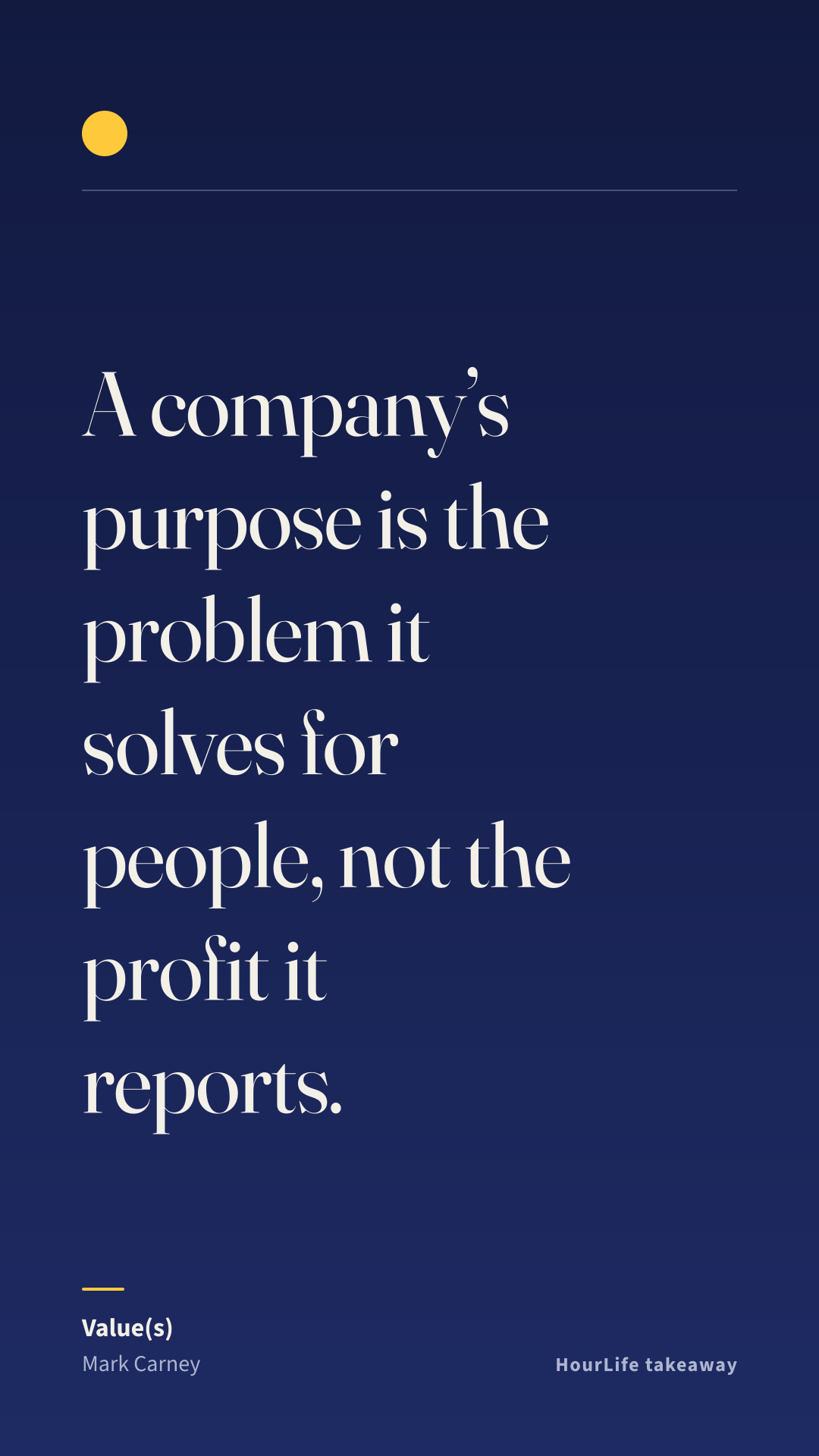
A company’s purpose is the problem it solves for people, not the profit it reports.

Value(s) Mark Carney HourLife takeaway

In the final part Carney turns to leaders and firms. He praises businesses with a clear social purpose and argues that profit should follow from solving real problems, not replace them. The same test works for a career: whose life is better because of your work?

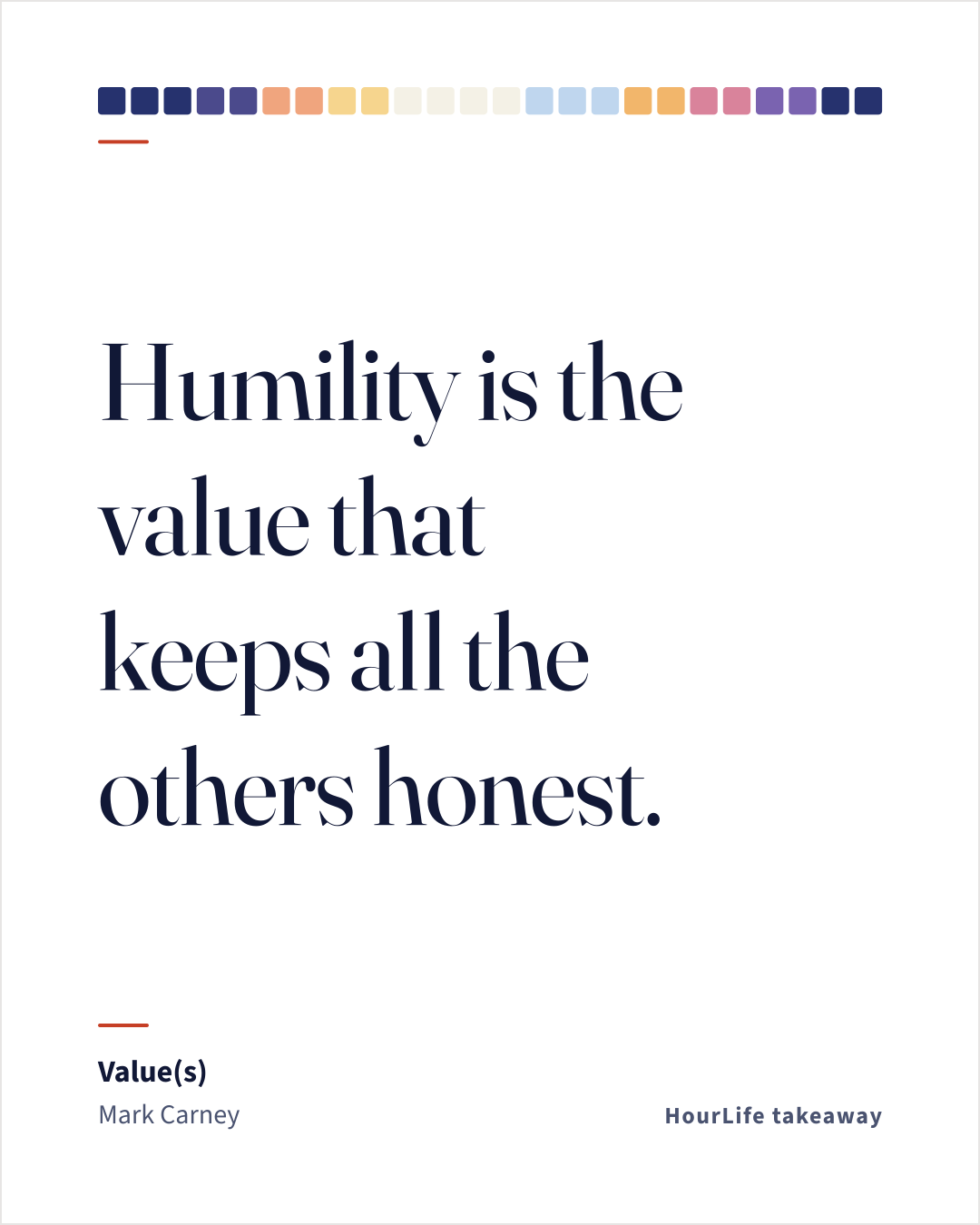
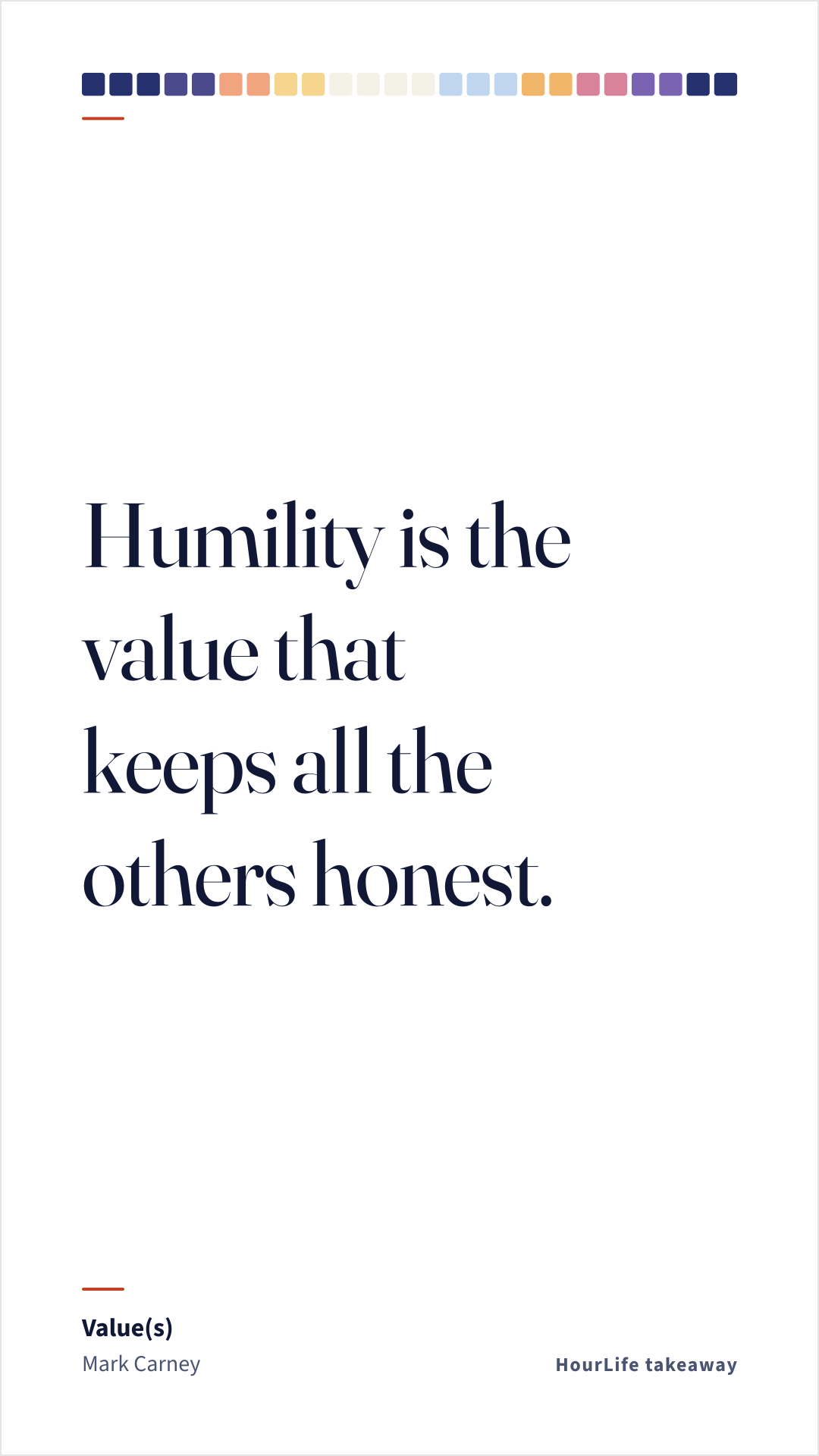
Humility is the value that keeps all the others honest.

Value(s) Mark Carney HourLife takeaway

Humility is the last of Carney's seven values. Models, markets and experts are all guides, and all can be wrong. Holding views firmly while checking them often is how institutions, and people, avoid repeating their mistakes.

Keep this going in the app.

HourLife turns these ideas into a daily system — goals, habits, focus, and reflection in one private place.