Keep this author quotes for later
Sign in to save

Mark Kurlansky

The most-loved lines from Mark Kurlansky, drawn from 1 book in the library.

Lines labelled “HourLife takeaway” are our wording of the book’s ideas and may paraphrase it. Only lines in quotation marks are the author’s own words, with where they appear. Check the book for exact wording before you quote it. Spot an error?

Follow one ordinary thing closely enough and it will tell you the history of the world.

Salt Mark Kurlansky HourLife takeaway

Kurlansky picks a mineral almost everyone owns and uses it as a thread through China, Egypt, Rome, Venice, France, India and America. Because every society needed salt, every society left a record of how it got it, guarded it and taxed it. The method works for other everyday things too.


Before refrigeration, salt was how food survived the journey.

Salt Mark Kurlansky HourLife takeaway

Salting was one of the main ways to keep meat and fish from rotting. Salted herring and salt cod could feed sailors, soldiers and cities far from the sea. The book shows whole fishing economies resting on a fish and the salt that kept it.

Whatever everyone needs, someone will try to control.

Salt Mark Kurlansky HourLife takeaway

No one can live without salt, which made it ideal to monopolise and tax. Chinese dynasties ran state salt monopolies, and a Han court debate over state control of salt and iron became a famous text, the Discourse on Salt and Iron. The same pattern turns up in country after country.

A tax on a necessity falls hardest on the poor, and people remember it.

Salt Mark Kurlansky HourLife takeaway

France's gabelle made salt dear and was among the most hated taxes of the old regime. It bred smugglers and lasting resentment, and the revolutionaries abolished it in 1790. A tax on something optional can be avoided. A tax on salt cannot.

The more ordinary the thing, the more people a protest about it can reach.

Salt Mark Kurlansky HourLife takeaway

In 1930 Gandhi walked to the sea at Dandi and made salt, breaking the British salt law in India. Everyone used salt, so everyone understood what the march meant. A small act about a common thing carried a large political message.

Salt decided where towns grew and which roads were worth building.

Salt Mark Kurlansky HourLife takeaway

Rome's Via Salaria was named for the salt carried along it, and Salzburg is named for salt. Springs, mines and sea pans drew settlements, and trade routes formed to carry what they produced. A map of old salt is partly a map of old power.

Cheap is a recent condition, and it hides a long history.

Salt Mark Kurlansky HourLife takeaway

Once geologists learned how widespread salt deposits are, and industry learned to drill and evaporate at scale, the price fell and the mystery went with it. Today most salt goes to industry and to roads, not to food. The book asks you to notice how strange that is after thousands of years of scarcity.

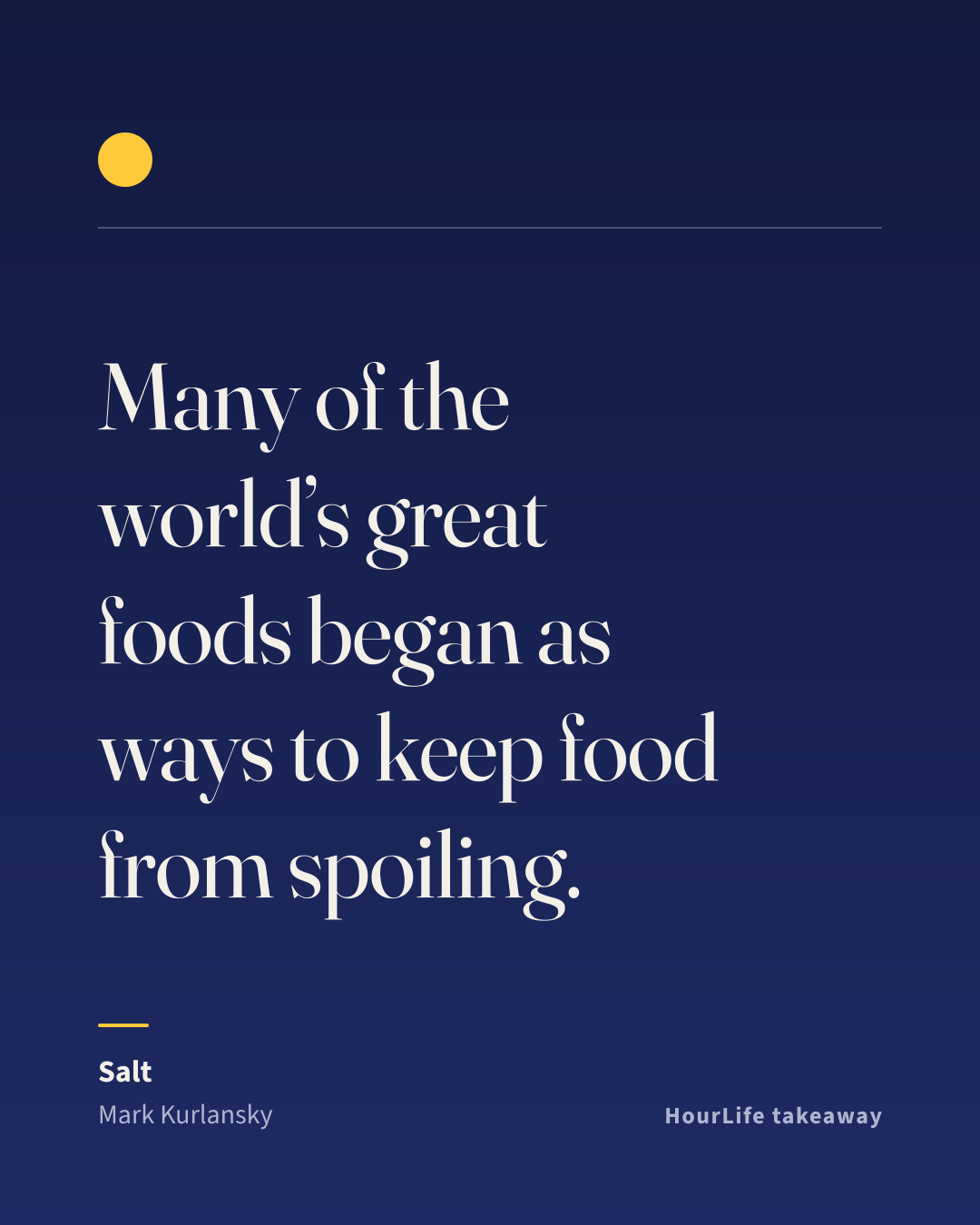
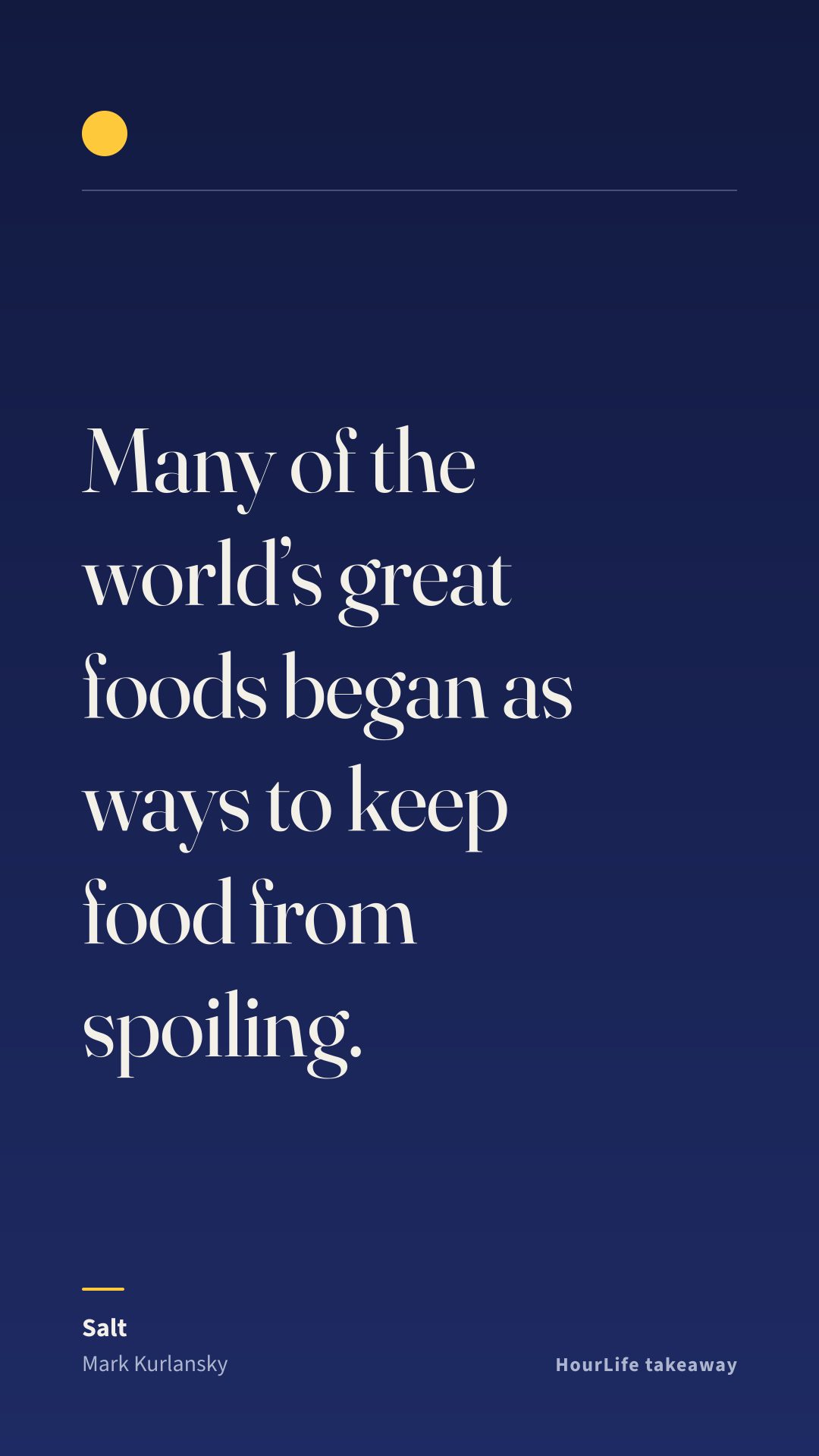
Many of the world’s great foods began as ways to keep food from spoiling.

Salt Mark Kurlansky HourLife takeaway

Soy sauce, fish sauce, cured ham, cheese and pickles all lean on salt. Kurlansky traces the Roman fermented fish sauce garum and the salted foods of many other cultures. Taste and preservation grew up together.

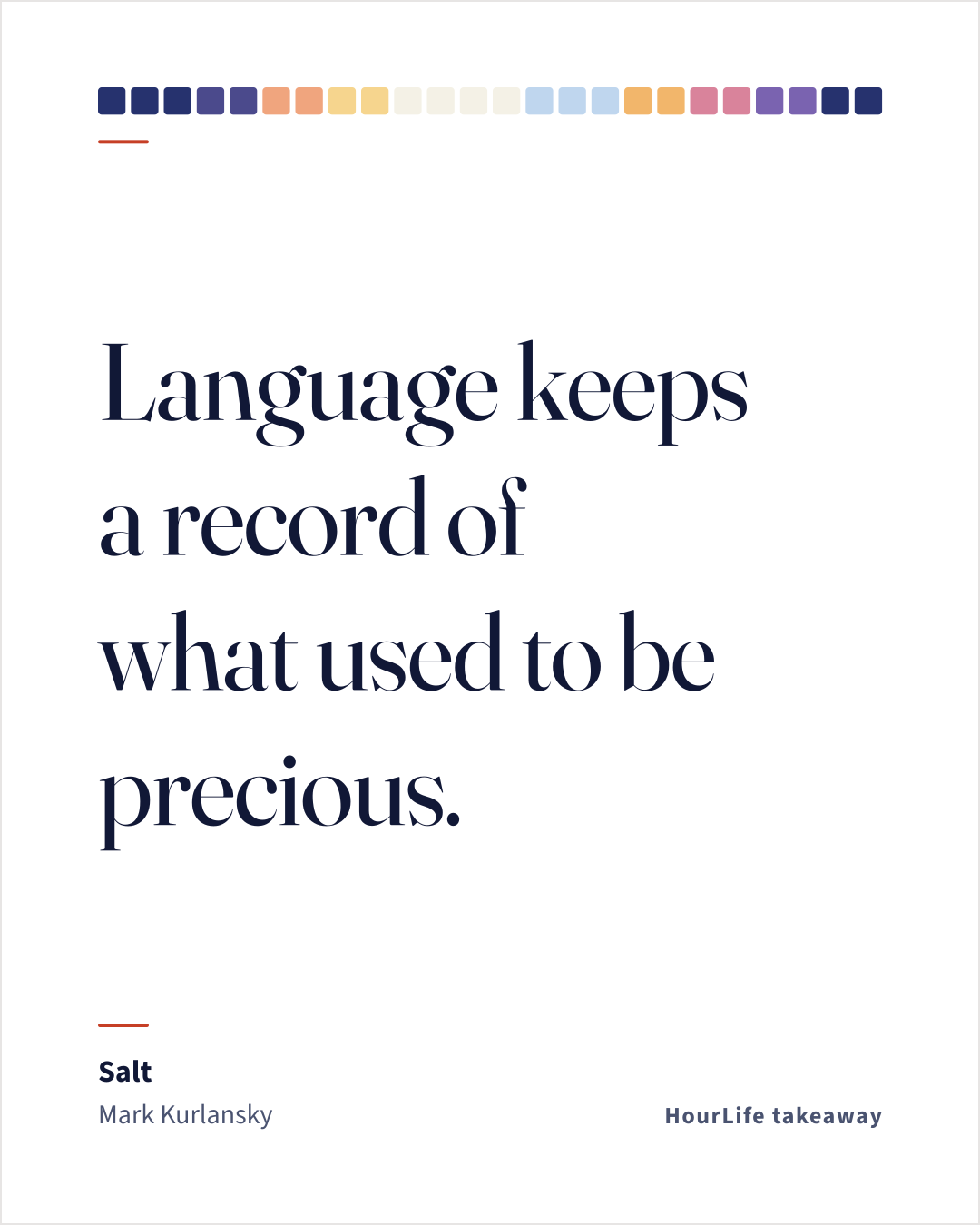
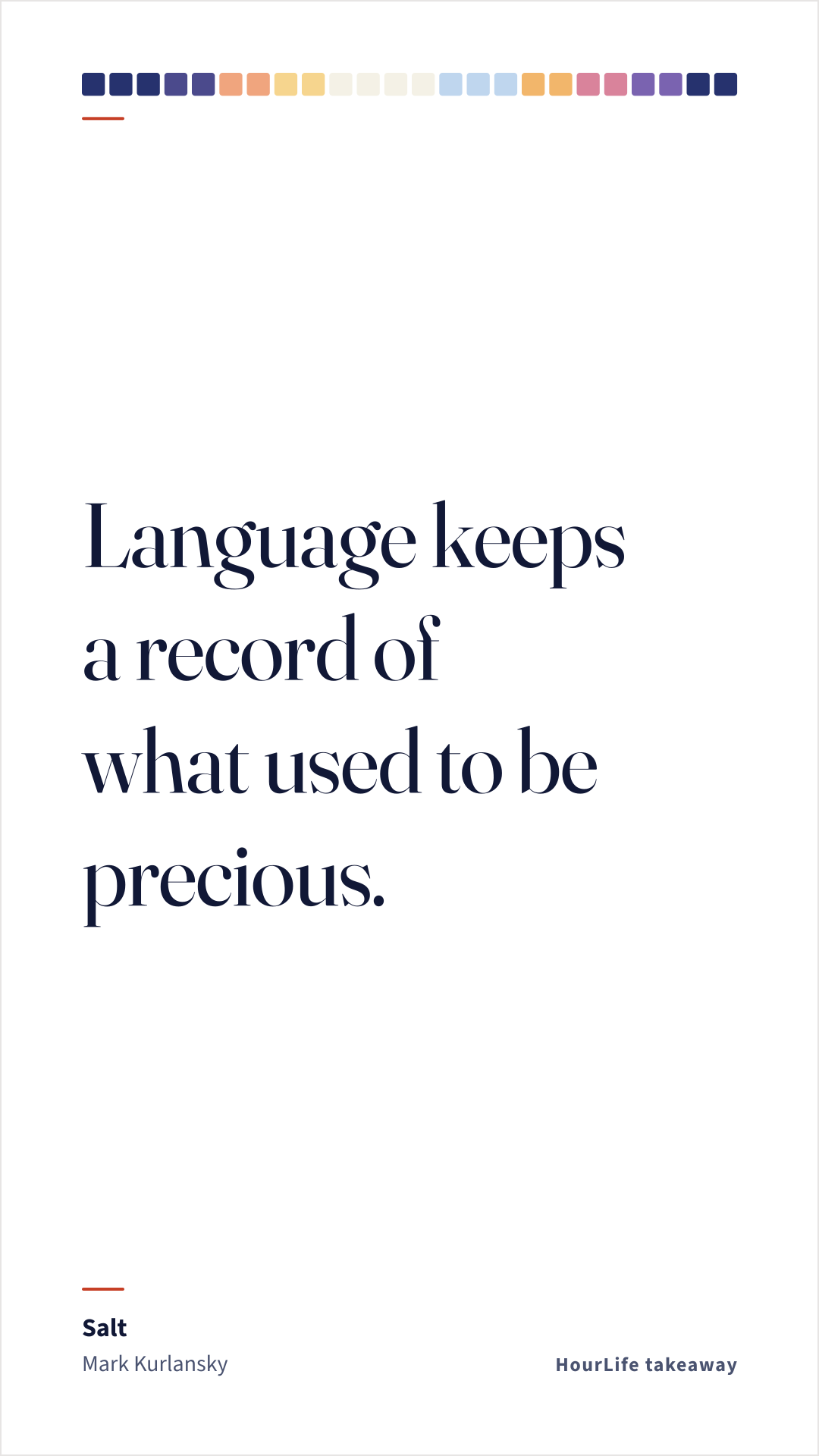
Language keeps a record of what used to be precious.

Salt Mark Kurlansky HourLife takeaway

Salad, sauce and sausage trace back to the Latin sal. Phrases like salt of the earth and worth your salt are left over from a time when salt was valuable. Old words and place names are a ledger of what mattered.

Keep this going in the app.

HourLife turns these ideas into a daily system — goals, habits, focus, and reflection in one private place.