Keep this author quotes for later
Sign in to save

Mark Olshaker

The most-loved lines from Mark Olshaker, drawn from 1 book in the library.

Lines labelled “HourLife takeaway” are our wording of the book’s ideas and may paraphrase it. Only lines in quotation marks are the author’s own words, with where they appear. Check the book for exact wording before you quote it. Spot an error?

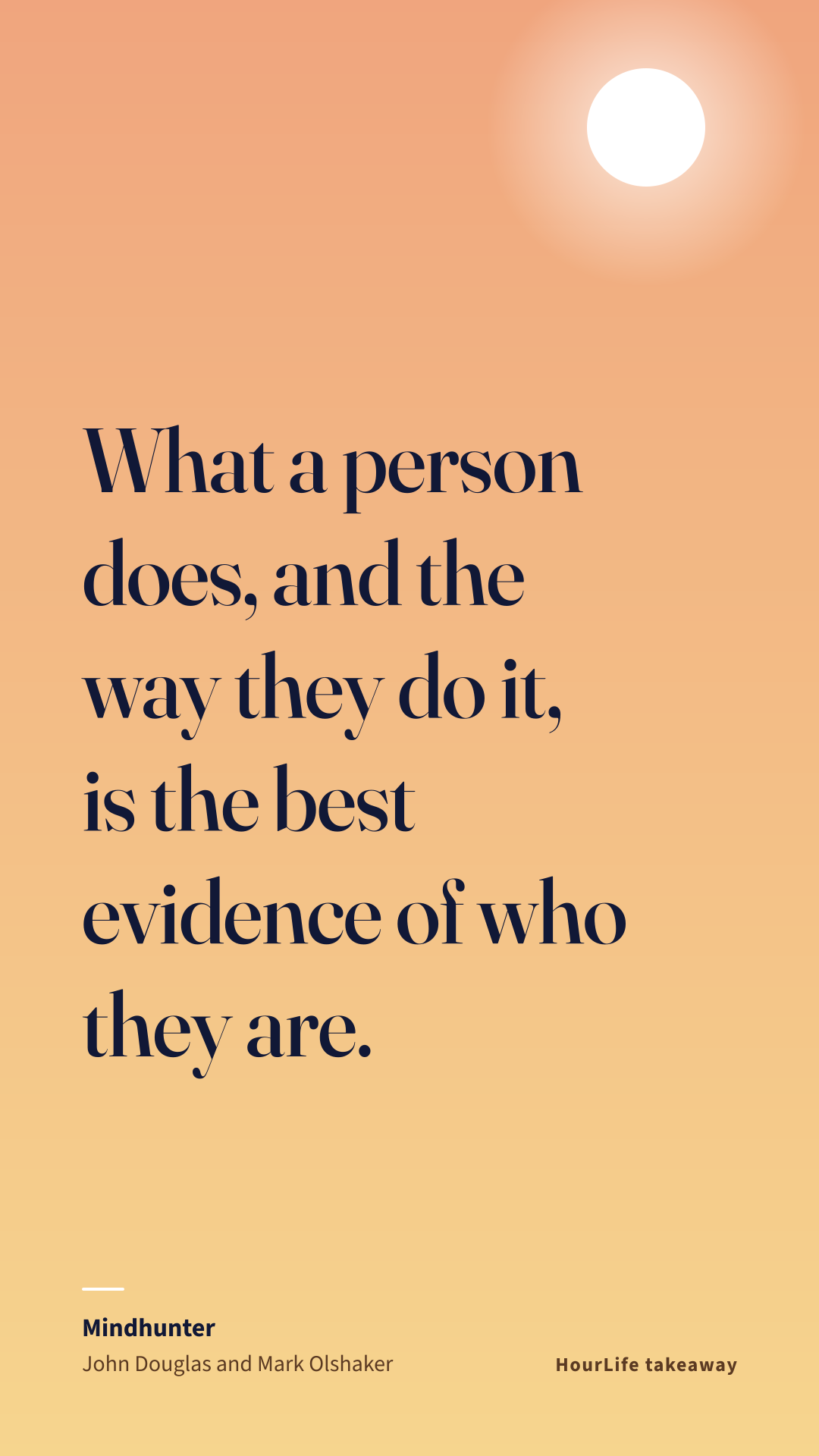
What a person does, and the way they do it, is the best evidence of who they are.

Mindhunter John Douglas and Mark Olshaker HourLife takeaway

Douglas works from the premise that behaviour reflects personality. The choices someone makes when nobody is watching carry their habits and their needs. In ordinary life the same rule holds: weigh what people do over what they say about themselves.


Ask why before you ask who.

Mindhunter John Douglas and Mark Olshaker HourLife takeaway

The book's shorthand is that why plus how points to who. Starting from motive narrows the field honestly. Starting from a suspect tempts you to bend every clue to fit, which is how most snap judgements go wrong at work and at home.

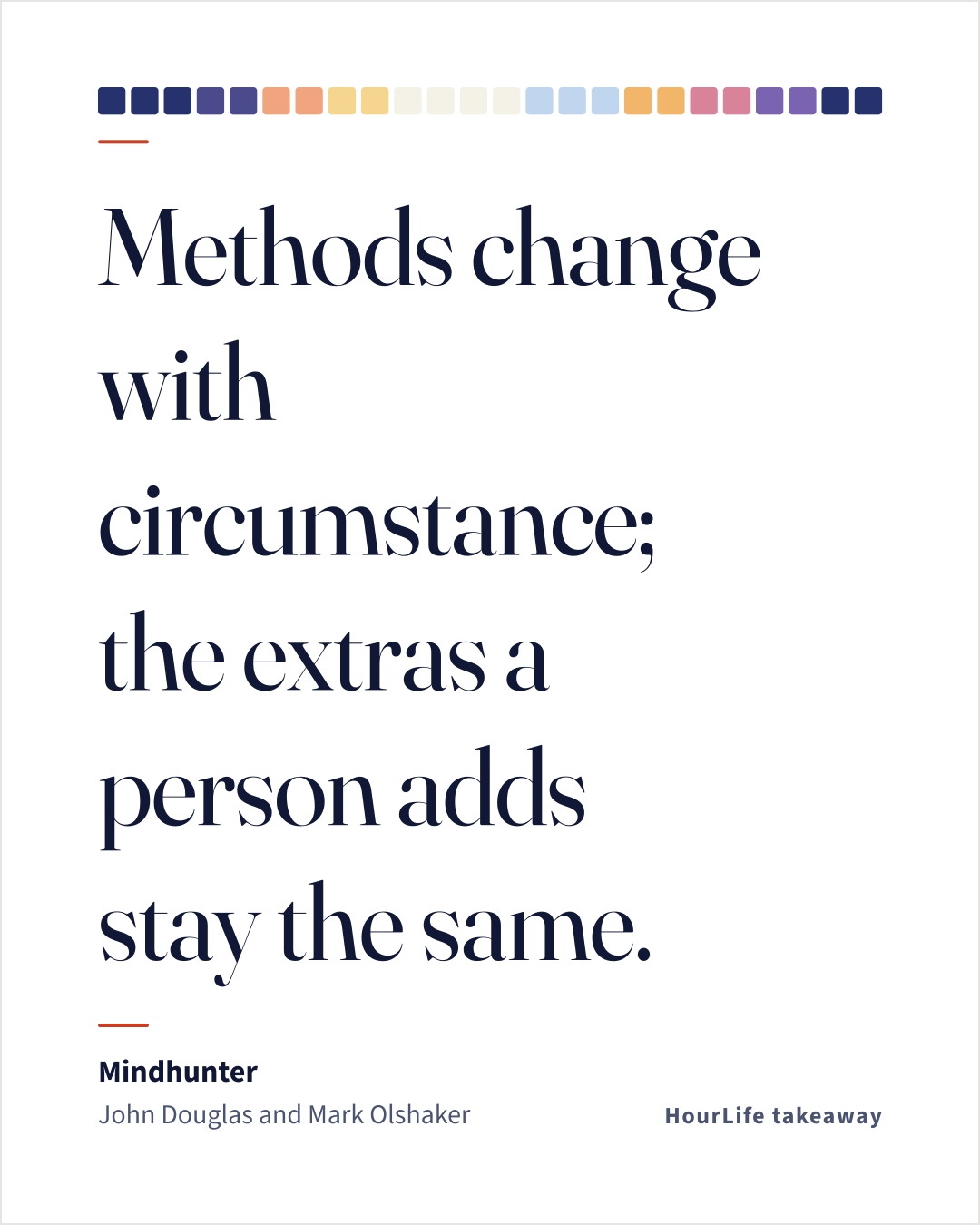
Methods change with circumstance; the extras a person adds stay the same.

Mindhunter John Douglas and Mark Olshaker HourLife takeaway

Douglas separates modus operandi, what someone does to get a thing done, from signature, what they do because they need to. The method is learned and shifts over time. The signature does not, which is why it says more about the person than the method ever can.

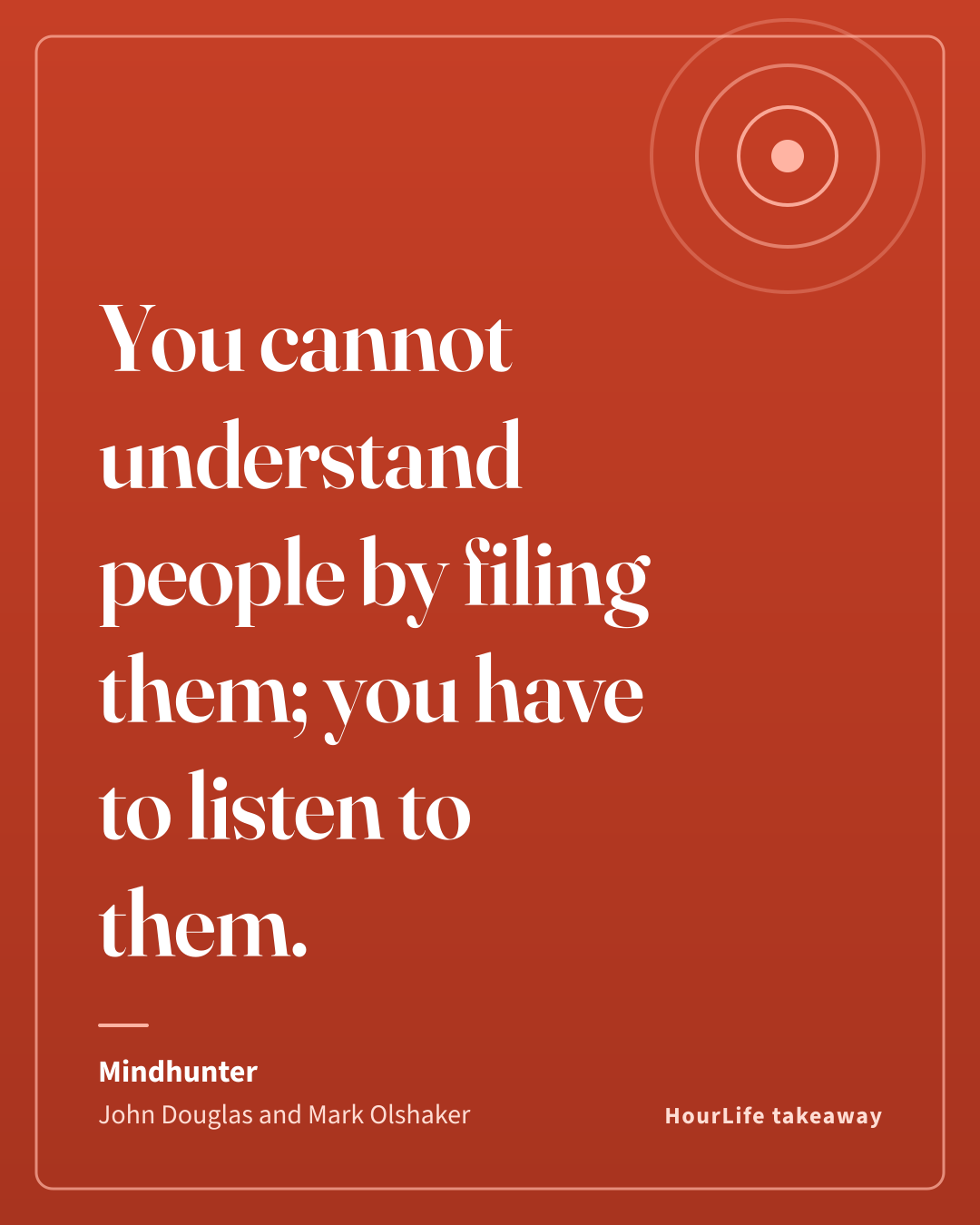
You cannot understand people by filing them; you have to listen to them.

Mindhunter John Douglas and Mark Olshaker HourLife takeaway

In the late 1970s Douglas and Robert Ressler began interviewing imprisoned offenders to learn, in their own words, why they had acted. It was an unusual idea at the Bureau then. The wider lesson is that careful, patient listening teaches more than a label does, even with people you dislike.

Look at the whole situation, including the person on the receiving end.

Mindhunter John Douglas and Mark Olshaker HourLife takeaway

Douglas puts weight on victimology: asking why this person, in this place, at this time. The everyday version is to study the context of a problem and who it landed on, not only the person who caused it.

Carrying other people’s darkness has a cost, even for experts.

Mindhunter John Douglas and Mark Olshaker HourLife takeaway

In 1983, working in Seattle under a crushing caseload, Douglas collapsed with viral encephalitis and nearly died. He writes plainly about the stress of the job and what it did to his health and family. Anyone whose work means absorbing other people's pain needs recovery built in, not saved for later.

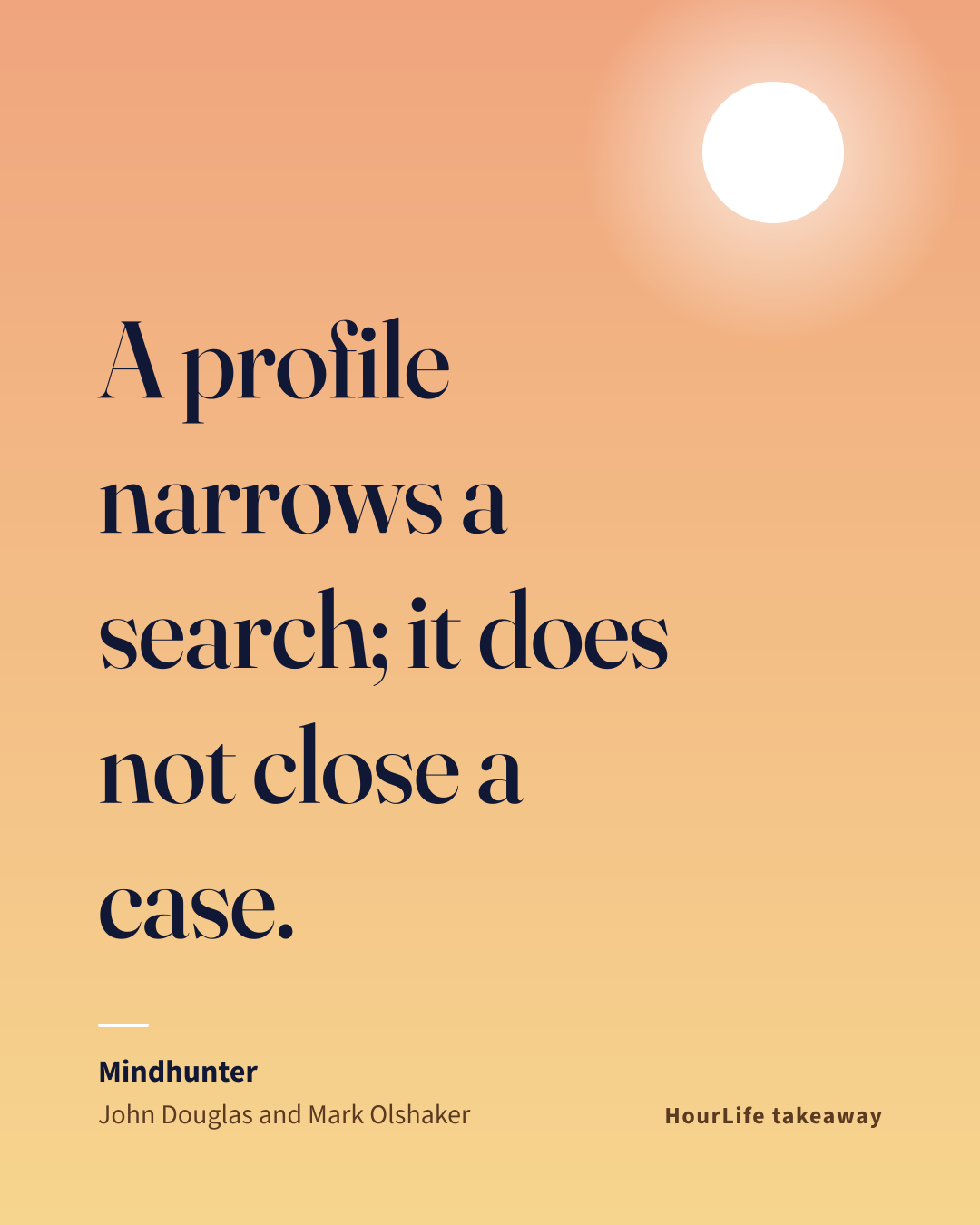
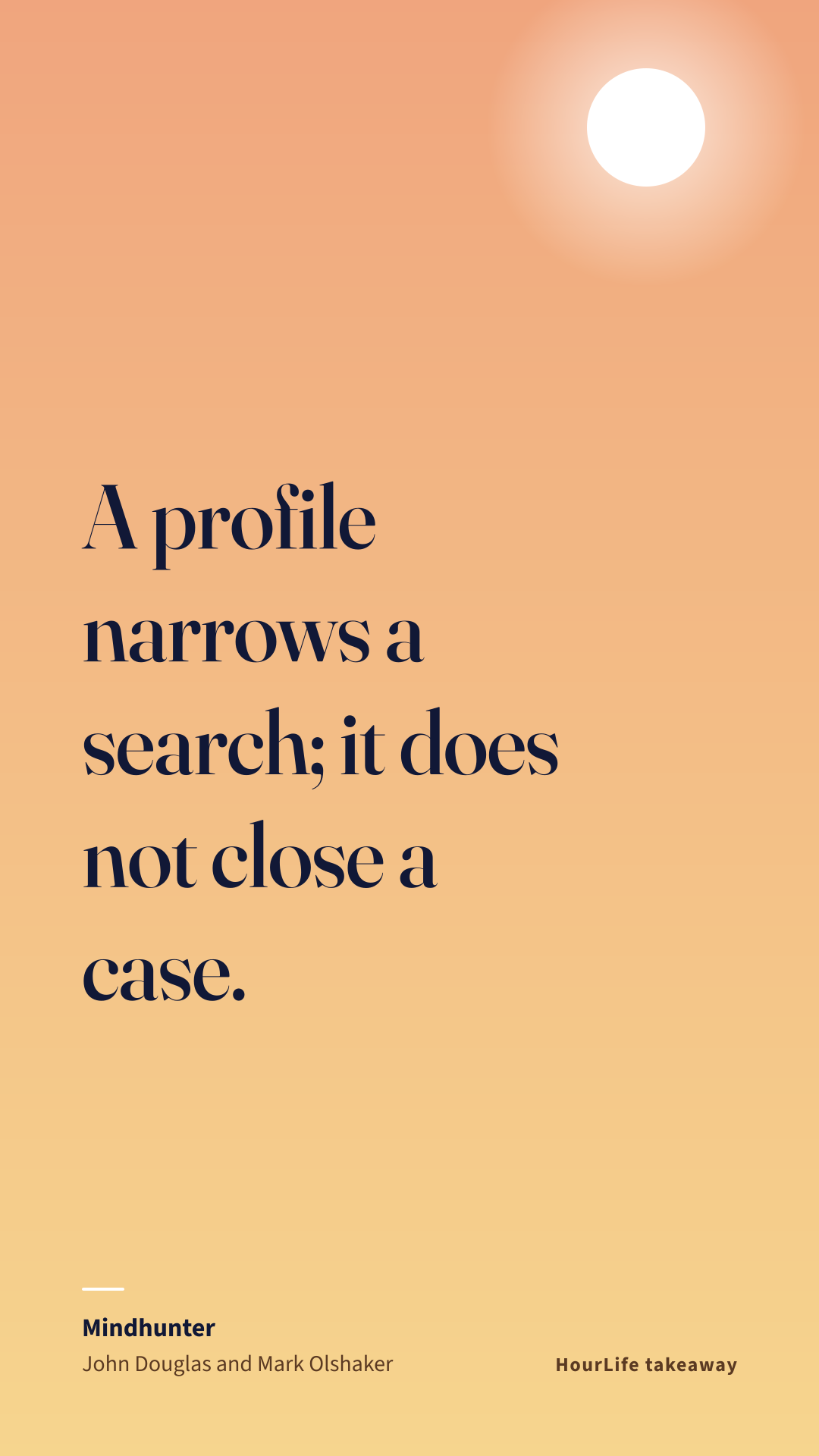
A profile narrows a search; it does not close a case.

Mindhunter John Douglas and Mark Olshaker HourLife takeaway

Douglas presents profiling as a tool that helps local investigators focus, while evidence and police work make the arrest. Researchers still debate how accurate profiling is. Treat any read of a person the same way: a lead to check, never a verdict.

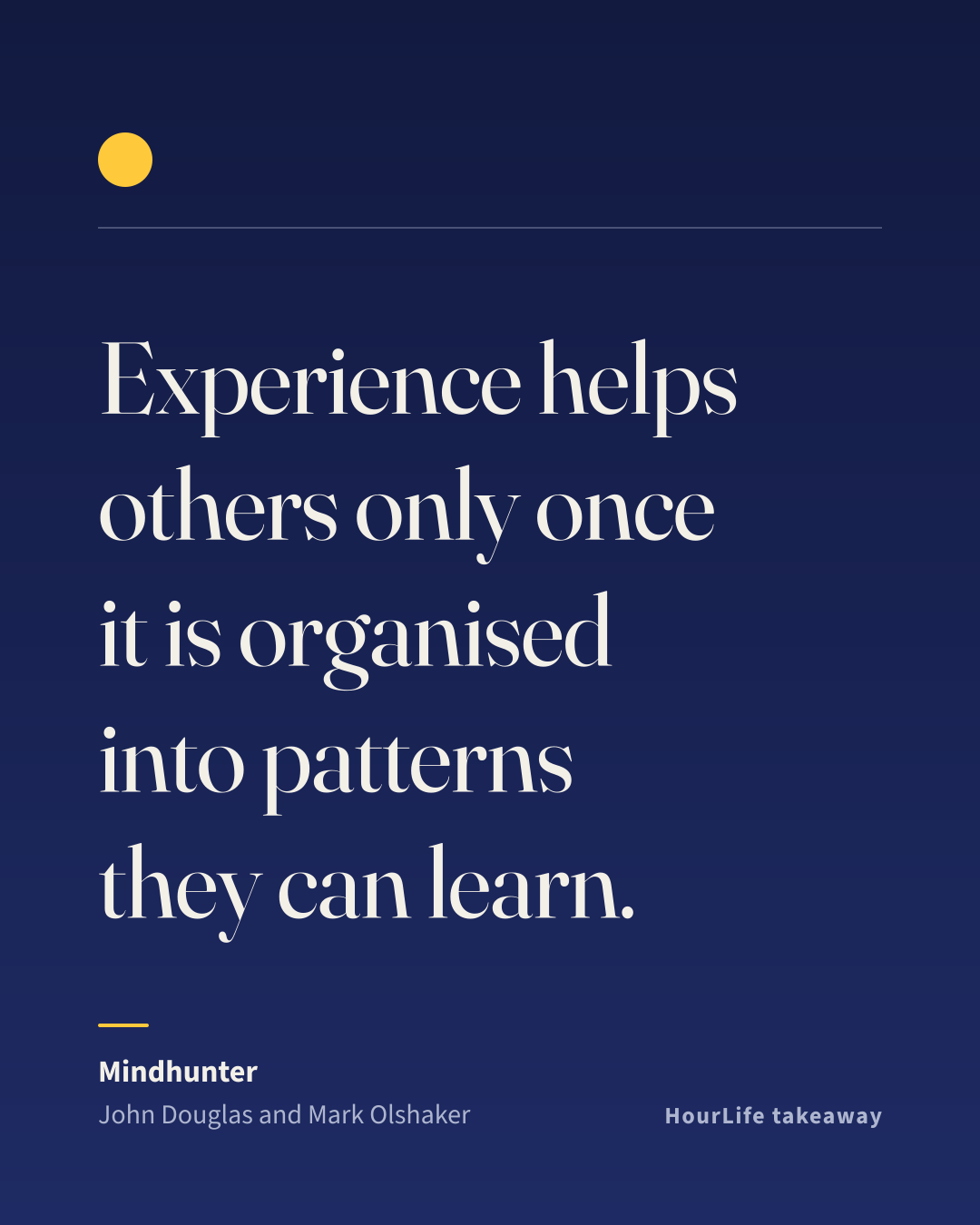
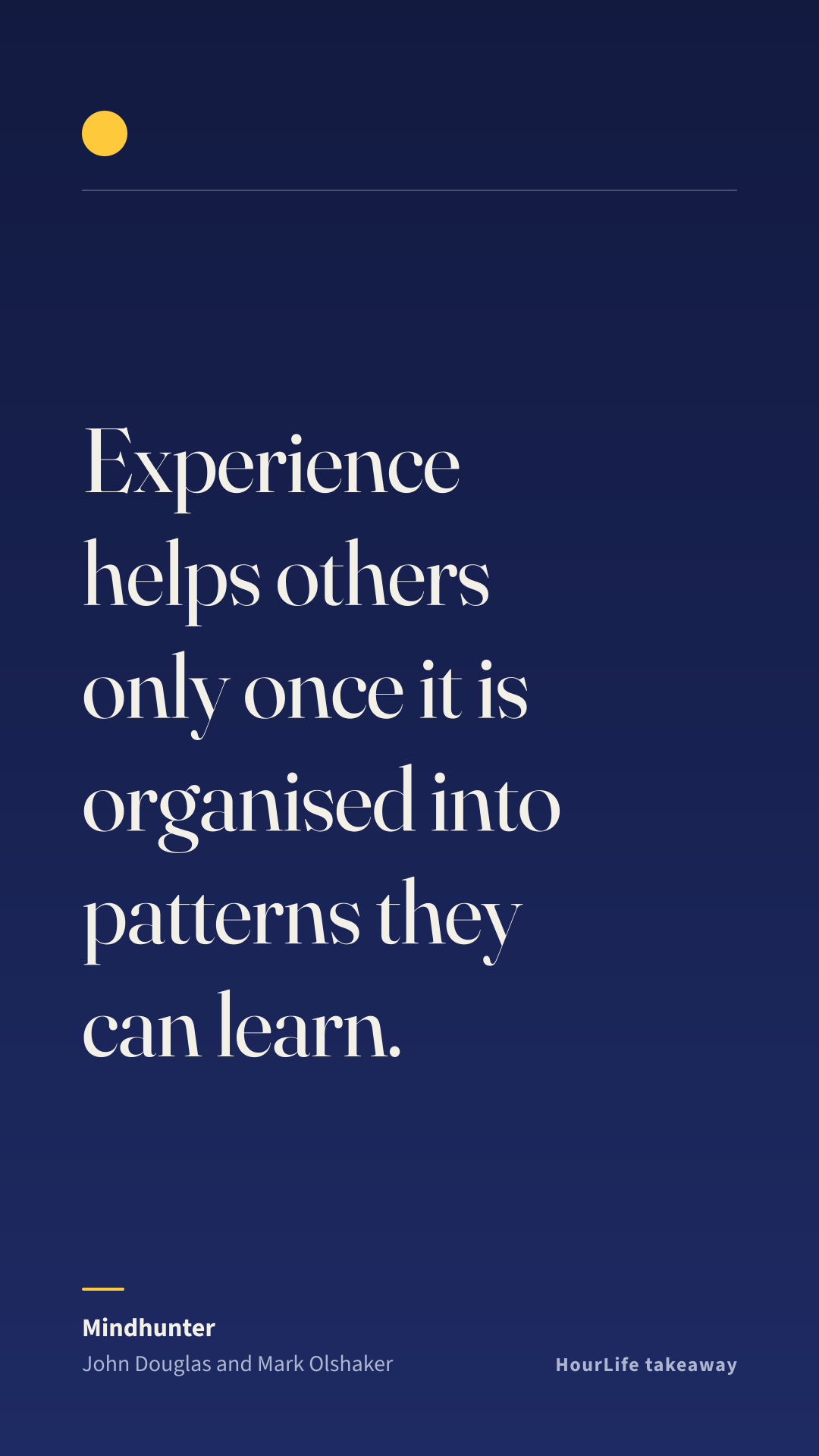
Experience helps others only once it is organised into patterns they can learn.

Mindhunter John Douglas and Mark Olshaker HourLife takeaway

The unit's early work turned scattered interviews and cases into something agents could teach and share. Your own hard-won judgement is worth the same treatment: write the patterns down so they outlast the moment.

A hunch is worth something only after you have tried to prove it wrong.

Mindhunter John Douglas and Mark Olshaker HourLife takeaway

Reading behaviour invites confident leaps. The discipline is to name what would contradict your guess and go looking for it. A theory that survives that test is worth acting on; one that never faces it is just a story.

Keep this going in the app.

HourLife turns these ideas into a daily system — goals, habits, focus, and reflection in one private place.