Keep this author quotes for later
Sign in to save

Mary-Frances O'Connor

The most-loved lines from Mary-Frances O'Connor, drawn from 1 book in the library.

Lines labelled “HourLife takeaway” are our wording of the book’s ideas and may paraphrase it. Only lines in quotation marks are the author’s own words, with where they appear. Check the book for exact wording before you quote it. Spot an error?

Your brain keeps a map of the people you love, and it marks them as here, now and close.

The Grieving Brain Mary-Frances O'Connor HourLife takeaway

O'Connor argues that the brain tracks loved ones along three dimensions: where they are, when they are, and how close they are to us. After a death the map still says they can be reached, so part of you keeps expecting them. Grieving is the slow work of updating that map.


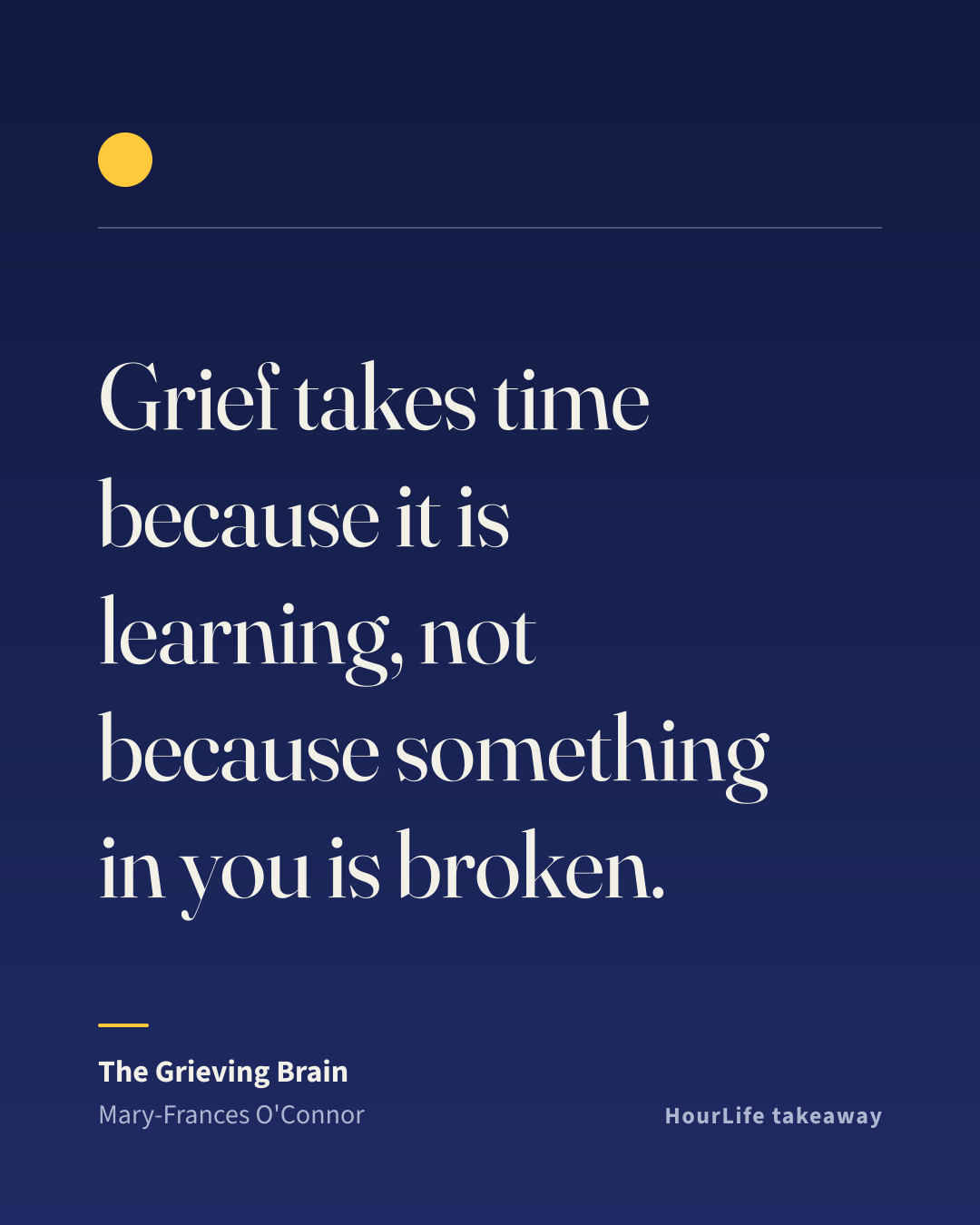
Grief takes time because it is learning, not because something in you is broken.

The Grieving Brain Mary-Frances O'Connor HourLife takeaway

Knowing a fact and having that fact reach the habits and predictions that run your day are two different things. The brain has years of evidence that the person is part of your world, and only a short time of evidence that they are not. Relearning that takes as long as it takes.

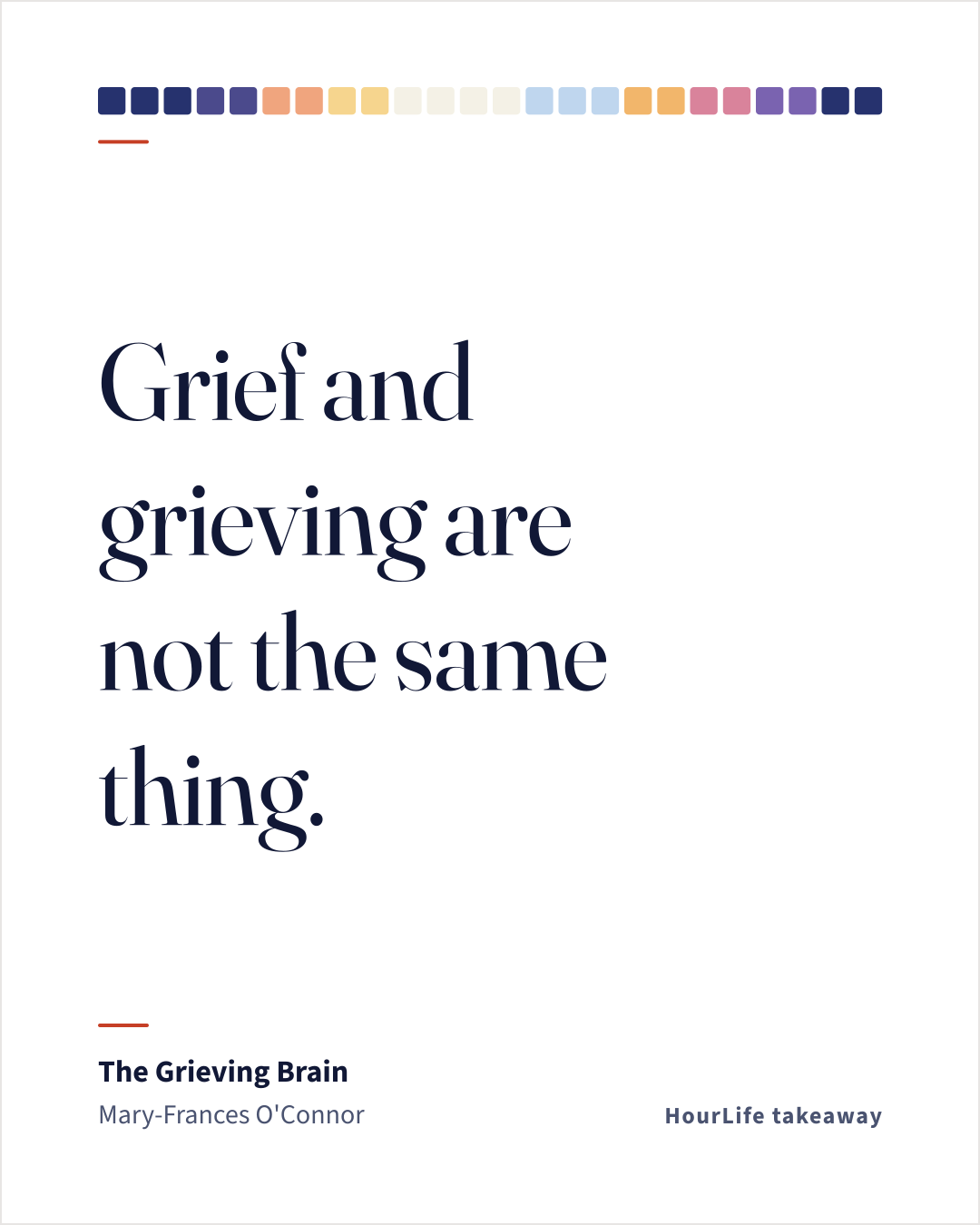
Grief and grieving are not the same thing.

The Grieving Brain Mary-Frances O'Connor HourLife takeaway

In the book's terms, grief is the wave of feeling that arrives, often without warning, and it may come for the rest of your life. Grieving is the process that changes over time as you learn to live with the loss. The waves can keep coming while the grieving moves on.

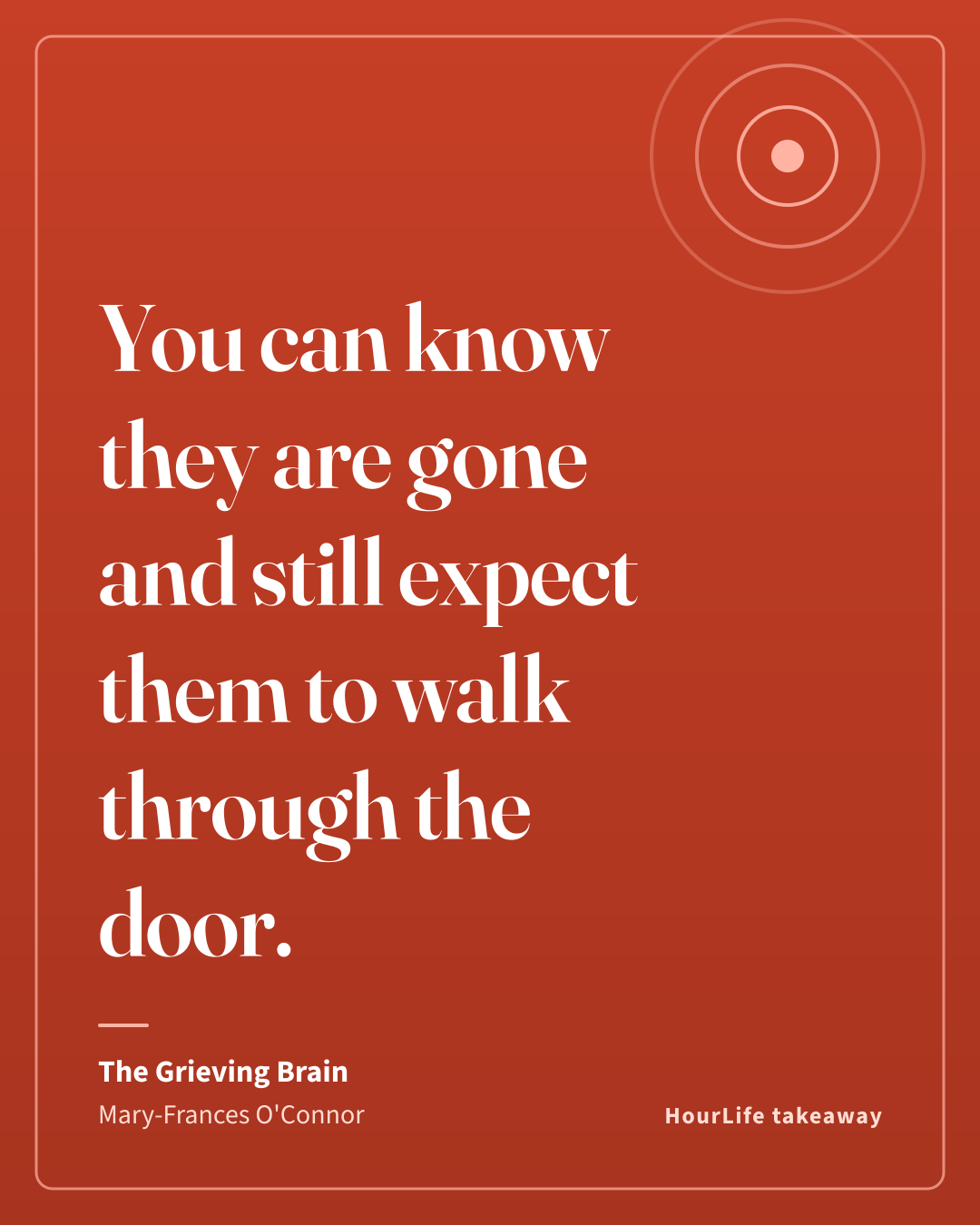
You can know they are gone and still expect them to walk through the door.

The Grieving Brain Mary-Frances O'Connor HourLife takeaway

O'Connor describes two kinds of knowing that run side by side: the clear fact of the death, and an older, deeper belief that the person is still out there somewhere. When they clash, reaching for the phone to call them is a normal result, not a sign you are losing your grip.

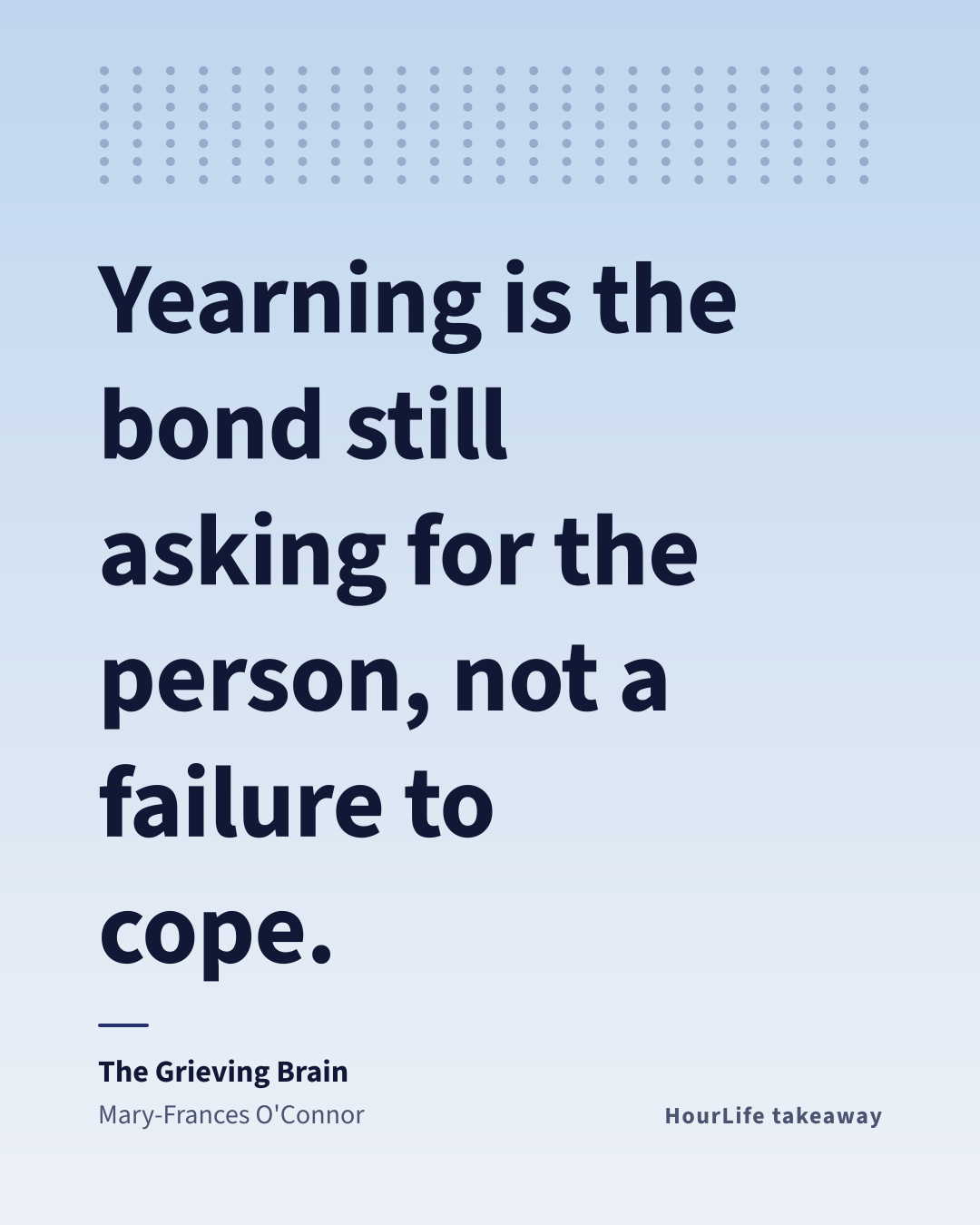
Yearning is the bond still asking for the person, not a failure to cope.

The Grieving Brain Mary-Frances O'Connor HourLife takeaway

In O'Connor's brain-imaging research, reminders of the person who died activated reward-related regions such as the nucleus accumbens in people with complicated grief. Her reading is that the attachment still promises a reward, so the brain keeps wanting the person back. Seen this way, longing is love without anywhere to go.

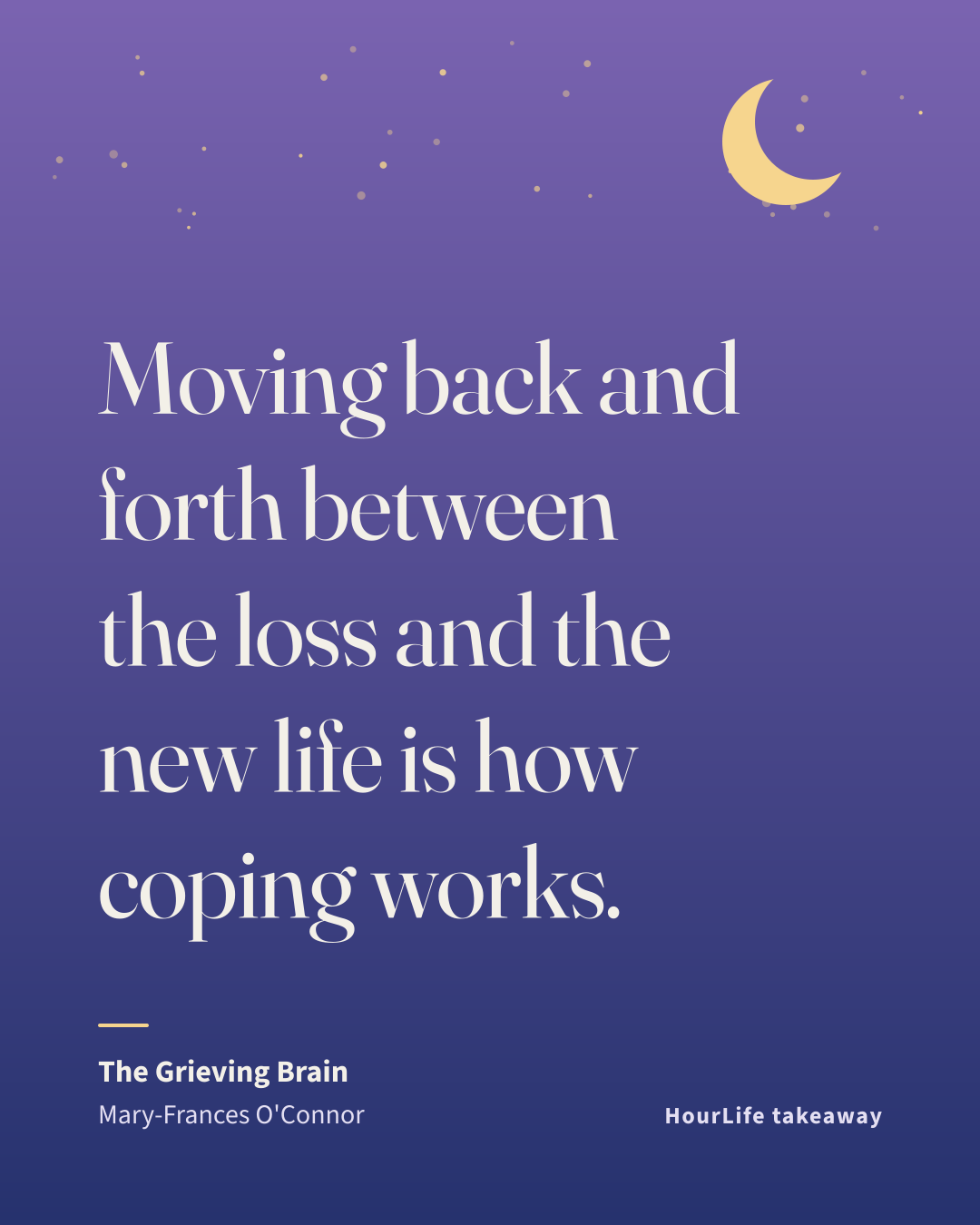
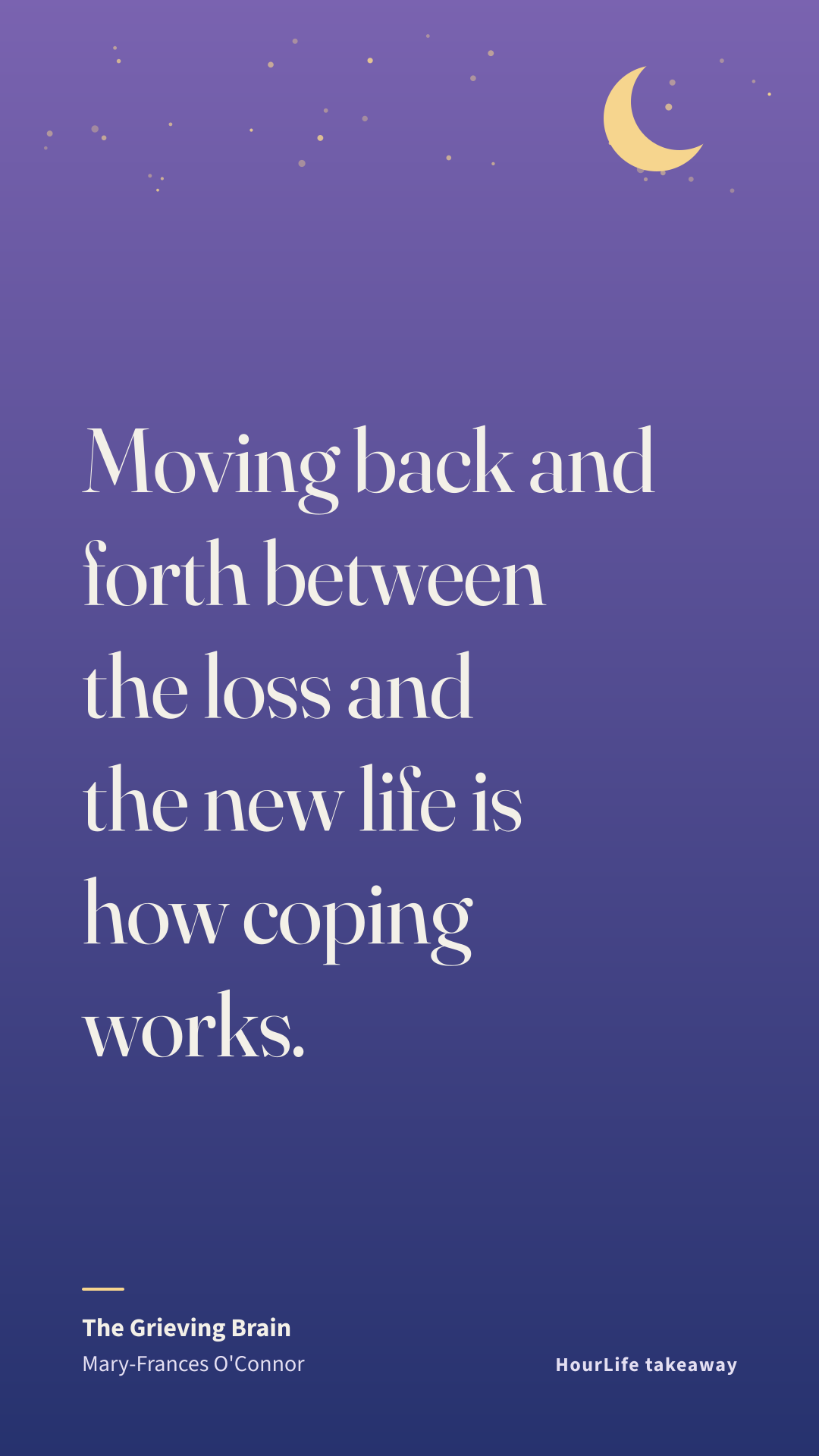
Moving back and forth between the loss and the new life is how coping works.

The Grieving Brain Mary-Frances O'Connor HourLife takeaway

The book draws on the dual process model from Margaret Stroebe and Henk Schut. Loss-oriented time faces the absence directly; restoration-oriented time deals with what is new, such as tasks, roles and relationships. Healthy grieving moves between the two rather than settling in one.

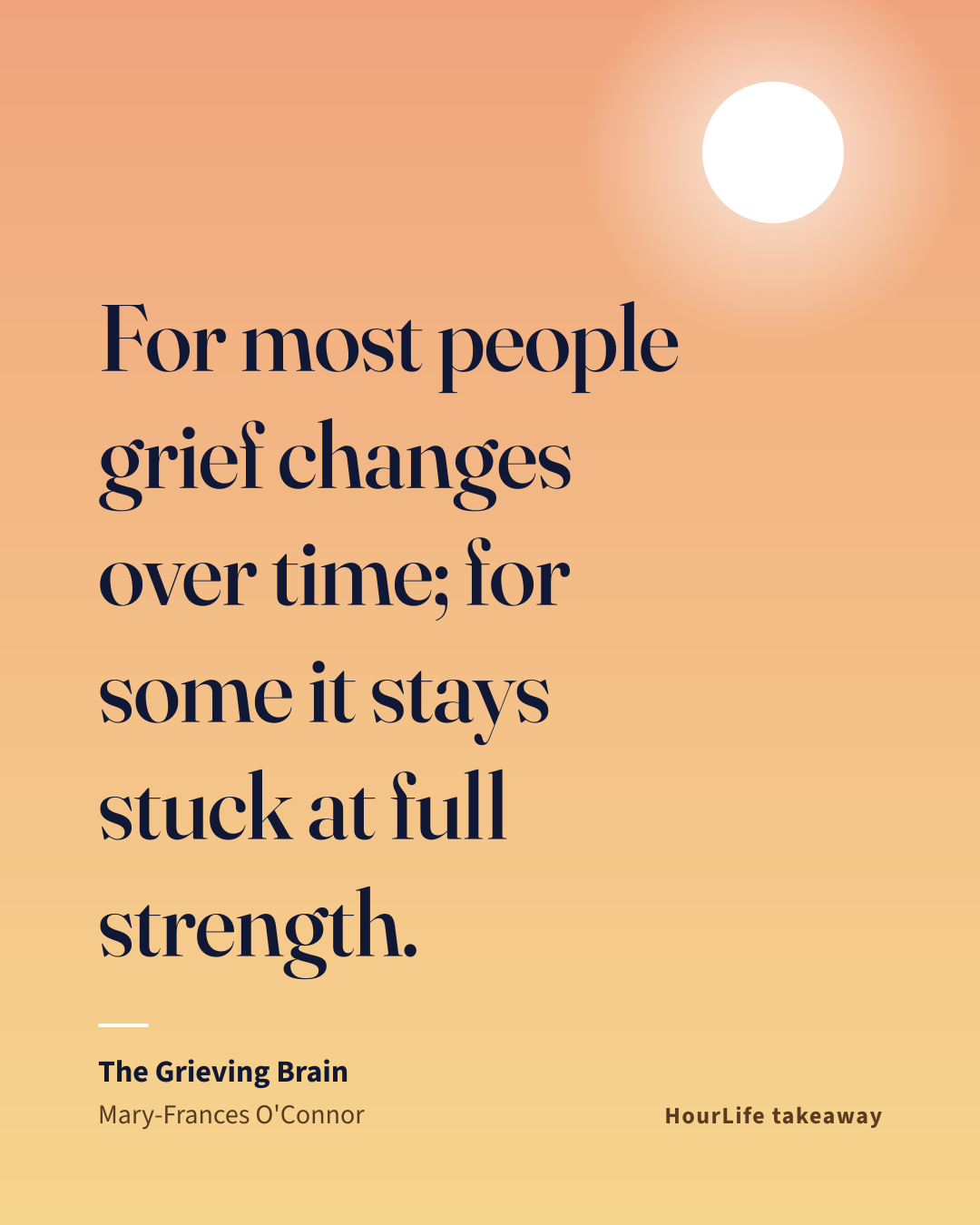
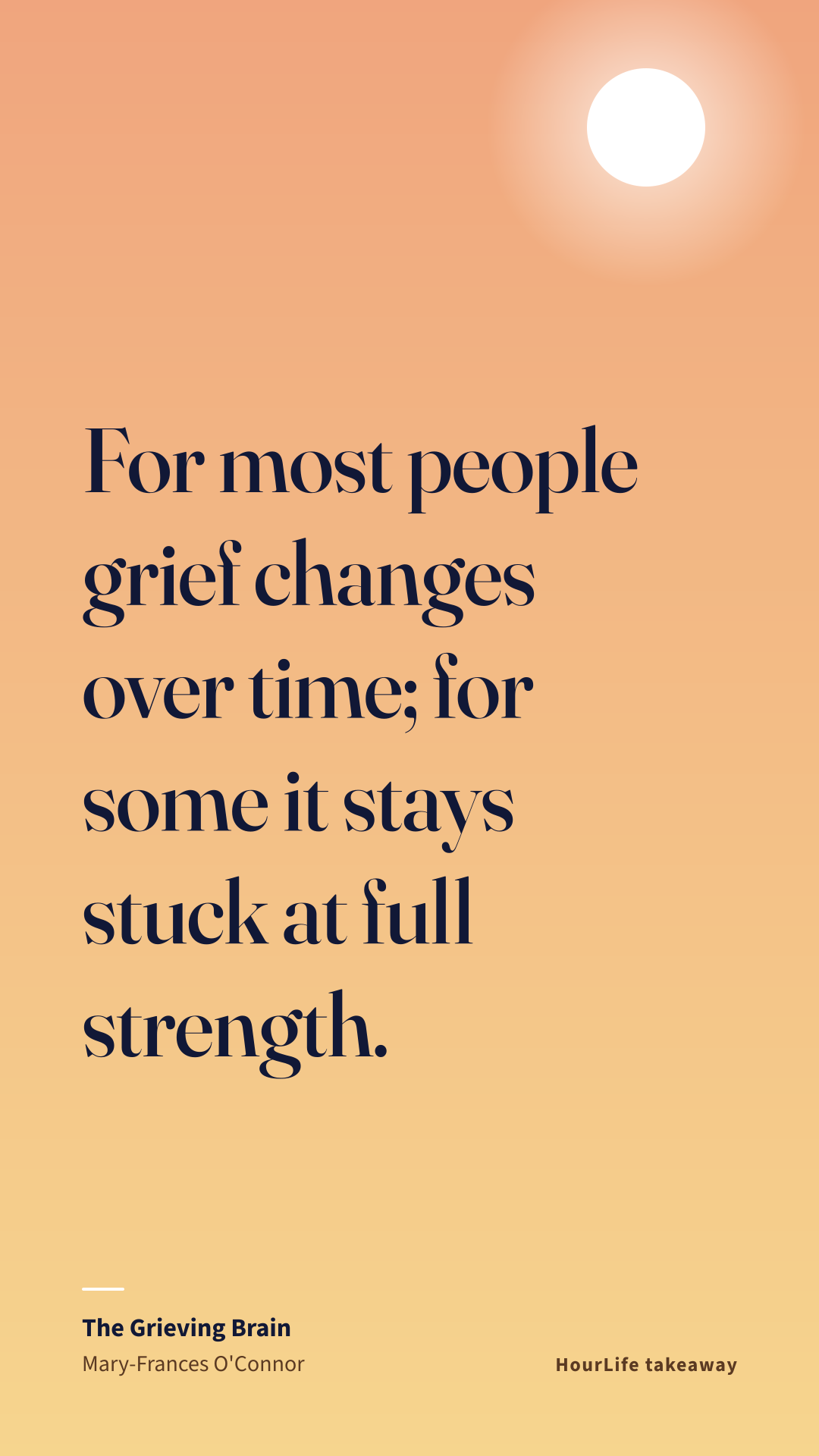
For most people grief changes over time; for some it stays stuck at full strength.

The Grieving Brain Mary-Frances O'Connor HourLife takeaway

O'Connor separates ordinary grief, which is painful but shifts, from complicated grief, now called prolonged grief disorder, where intense yearning and a life on hold carry on for a long time without easing. The distinction matters because there is treatment that helps, and only a professional can make that call.

Going over what if and if only can be a way of steering around the loss.

The Grieving Brain Mary-Frances O'Connor HourLife takeaway

Replaying how things could have gone differently feels like facing the death. The book suggests it often works the other way, keeping attention on an imagined alternative instead of the plain fact that the person is gone. Gentle contact with the real loss tends to help more than another lap of the loop.

The aim is not to forget them, but to live a meaningful life in the present with the bond changed.

The Grieving Brain Mary-Frances O'Connor HourLife takeaway

The book closes on restoration: building a life that still holds meaning, carrying the relationship in a new form, and being present with the people who are here now. Love does not stop when someone dies. What changes is how you hold it.

Keep this going in the app.

HourLife turns these ideas into a daily system — goals, habits, focus, and reflection in one private place.