Keep this author quotes for later
Sign in to save

Matt Abrahams

The most-loved lines from Matt Abrahams, drawn from 1 book in the library.

Lines labelled “HourLife takeaway” are our wording of the book’s ideas and may paraphrase it. Only lines in quotation marks are the author’s own words, with where they appear. Check the book for exact wording before you quote it. Spot an error?

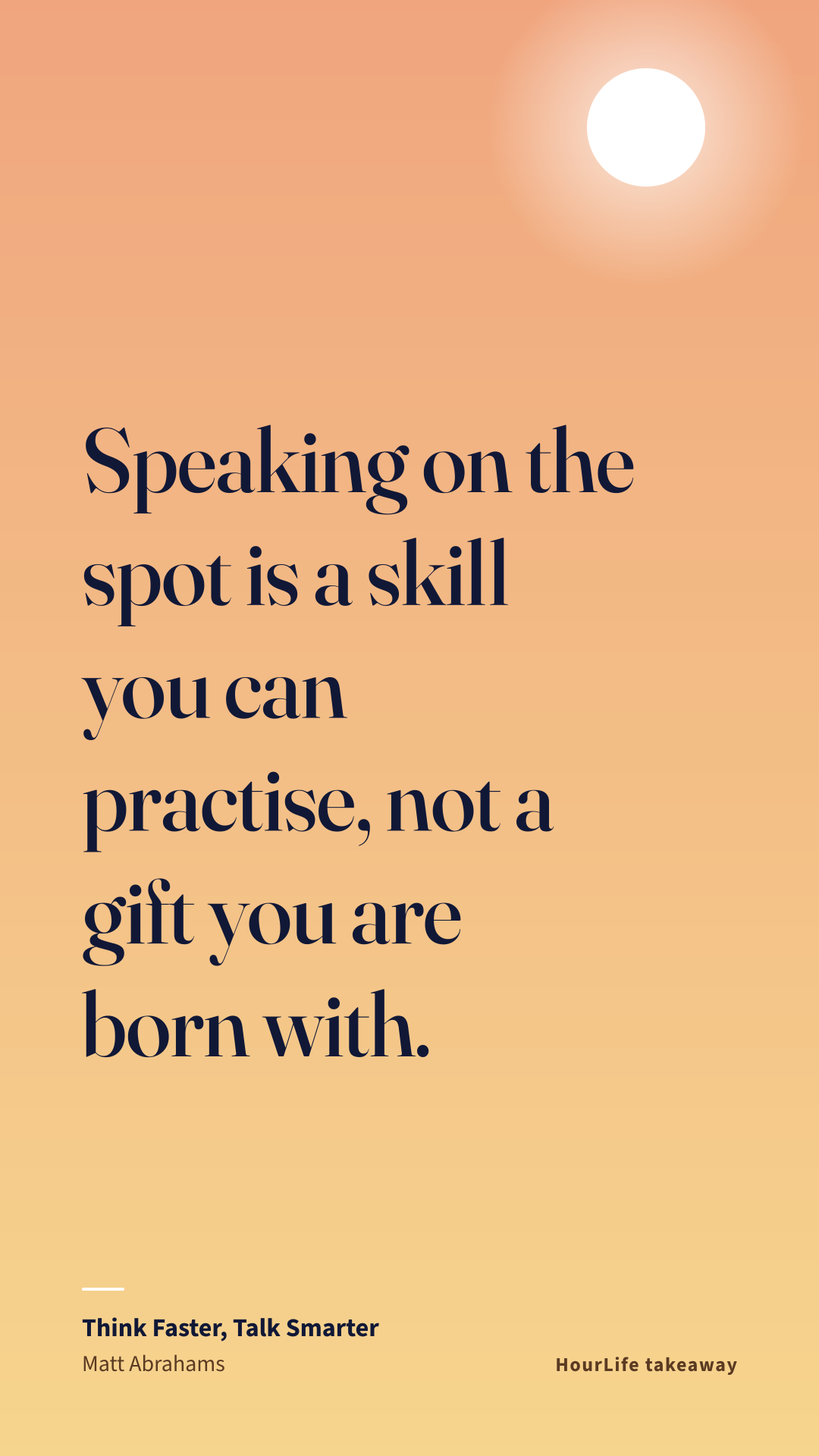
Speaking on the spot is a skill you can practise, not a gift you are born with.

Think Faster, Talk Smarter Matt Abrahams HourLife takeaway

Most of the talking we do is unplanned: a question in a meeting, a word at a leaving party, a reply to a hard email out loud. Abrahams builds the whole book on the idea that this kind of speaking can be trained like any other skill. His six steps are meant to be rehearsed in calm moments so they hold up in tense ones.


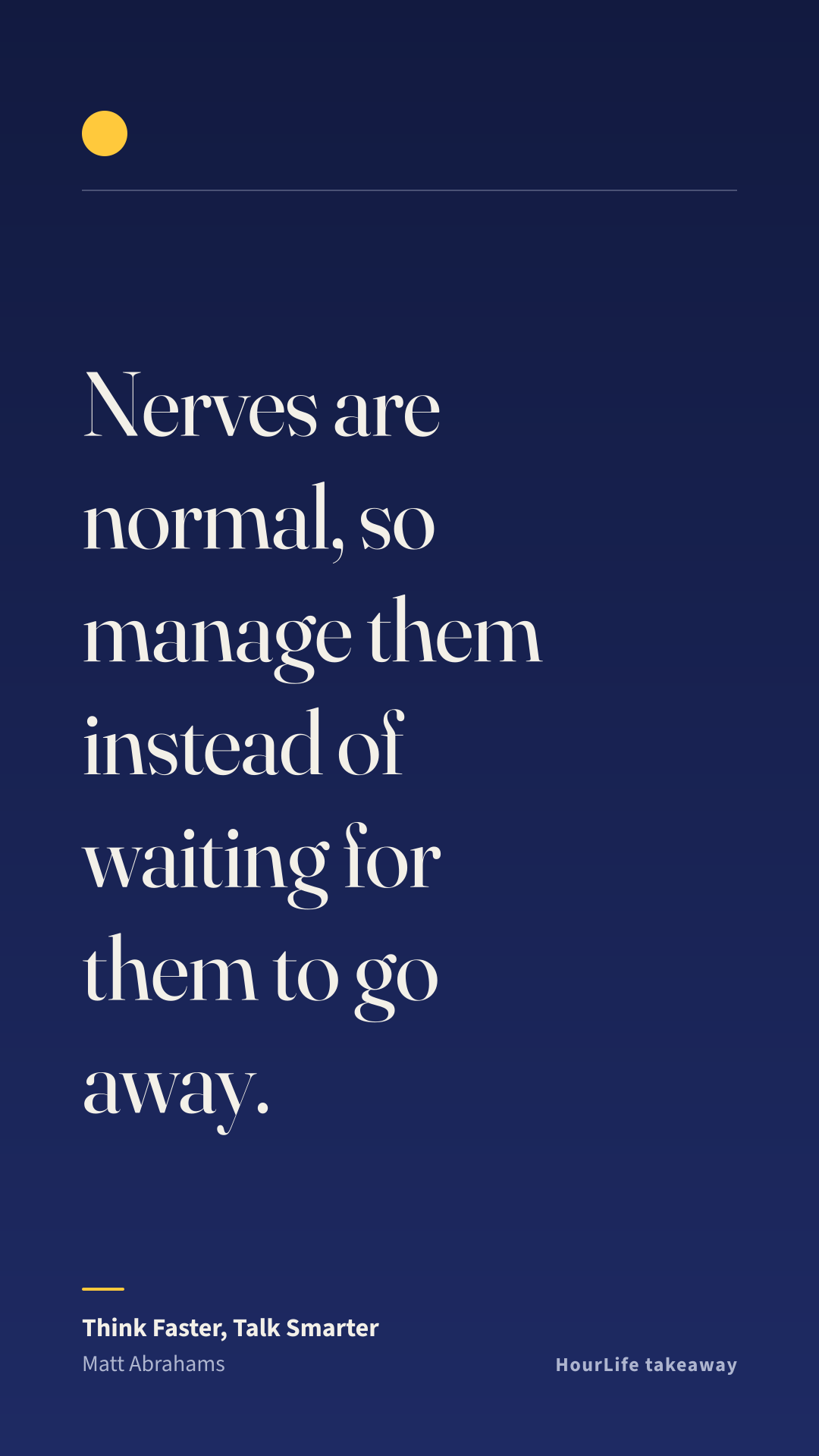
Nerves are normal, so manage them instead of waiting for them to go away.

Think Faster, Talk Smarter Matt Abrahams HourLife takeaway

The first step is Calm. Abrahams treats anxiety as something nearly everyone feels when put on the spot, and gives quick tools for the body and the mind. Slowing your breathing, with a longer breath out than in, is one of the simplest. The goal is to keep the nerves from running the show, not to feel nothing.

Aim for good enough, because the hunt for the perfect answer is what freezes you.

Think Faster, Talk Smarter Matt Abrahams HourLife takeaway

Abrahams calls this step maximizing mediocrity, and borrows the improv idea of daring to be dull. When you search for the brilliant line you stop listening and start judging yourself. A plain, useful answer said now usually beats a clever one that never arrives.

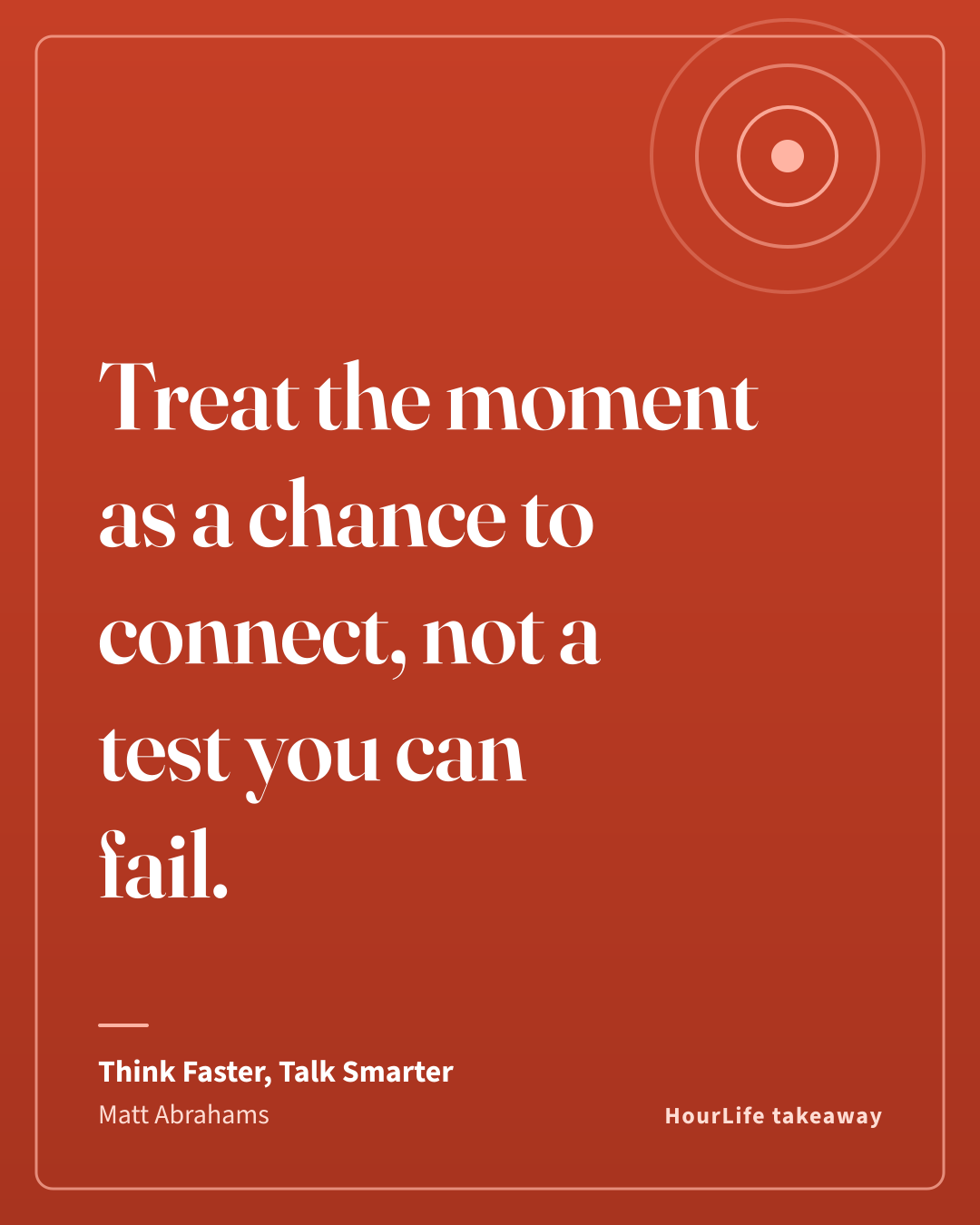
Treat the moment as a chance to connect, not a test you can fail.

Think Faster, Talk Smarter Matt Abrahams HourLife takeaway

The third step is about mindset. If you see a surprise question as a threat, you defend yourself. If you see it as an opening, you can be curious and even enjoy it. Abrahams also suggests thinking of a talk as a conversation with people rather than a performance in front of them.

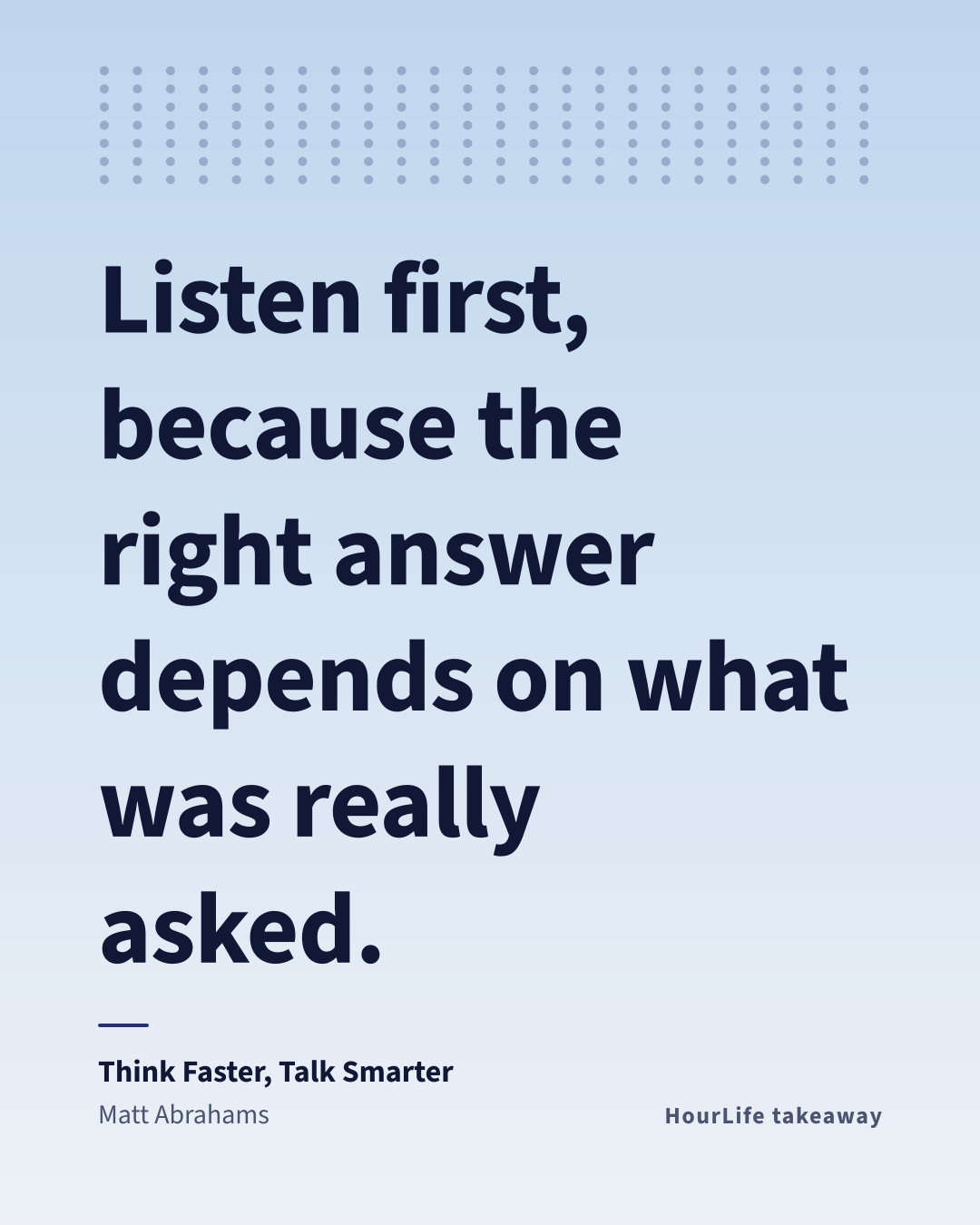
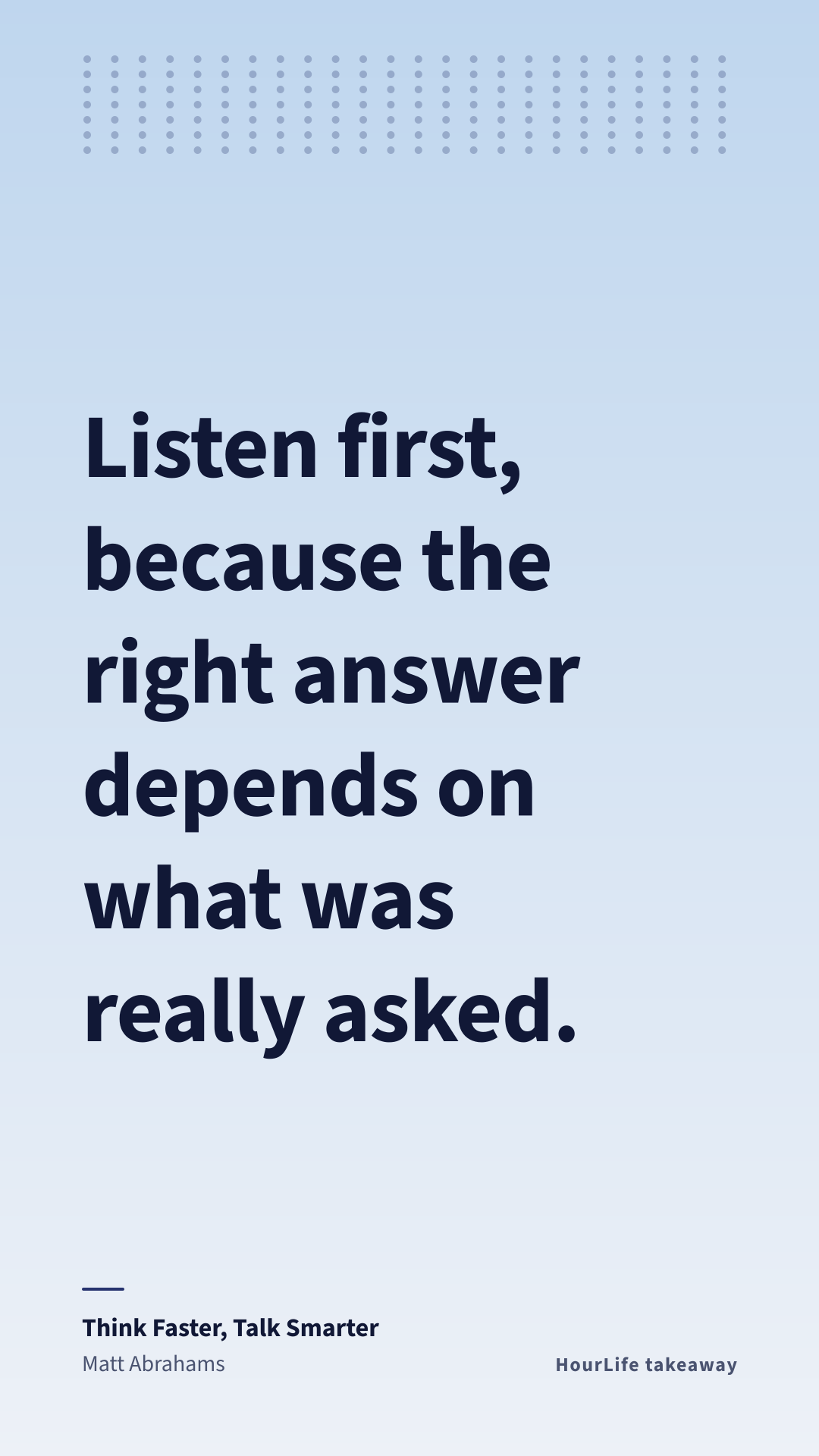
Listen first, because the right answer depends on what was really asked.

Think Faster, Talk Smarter Matt Abrahams HourLife takeaway

Under pressure we start building a reply while the other person is still talking. Abrahams turns the old saying around: don't just do something, stand there. Pausing to hear the question, and the need behind it, gives you a better answer and a few seconds to think.

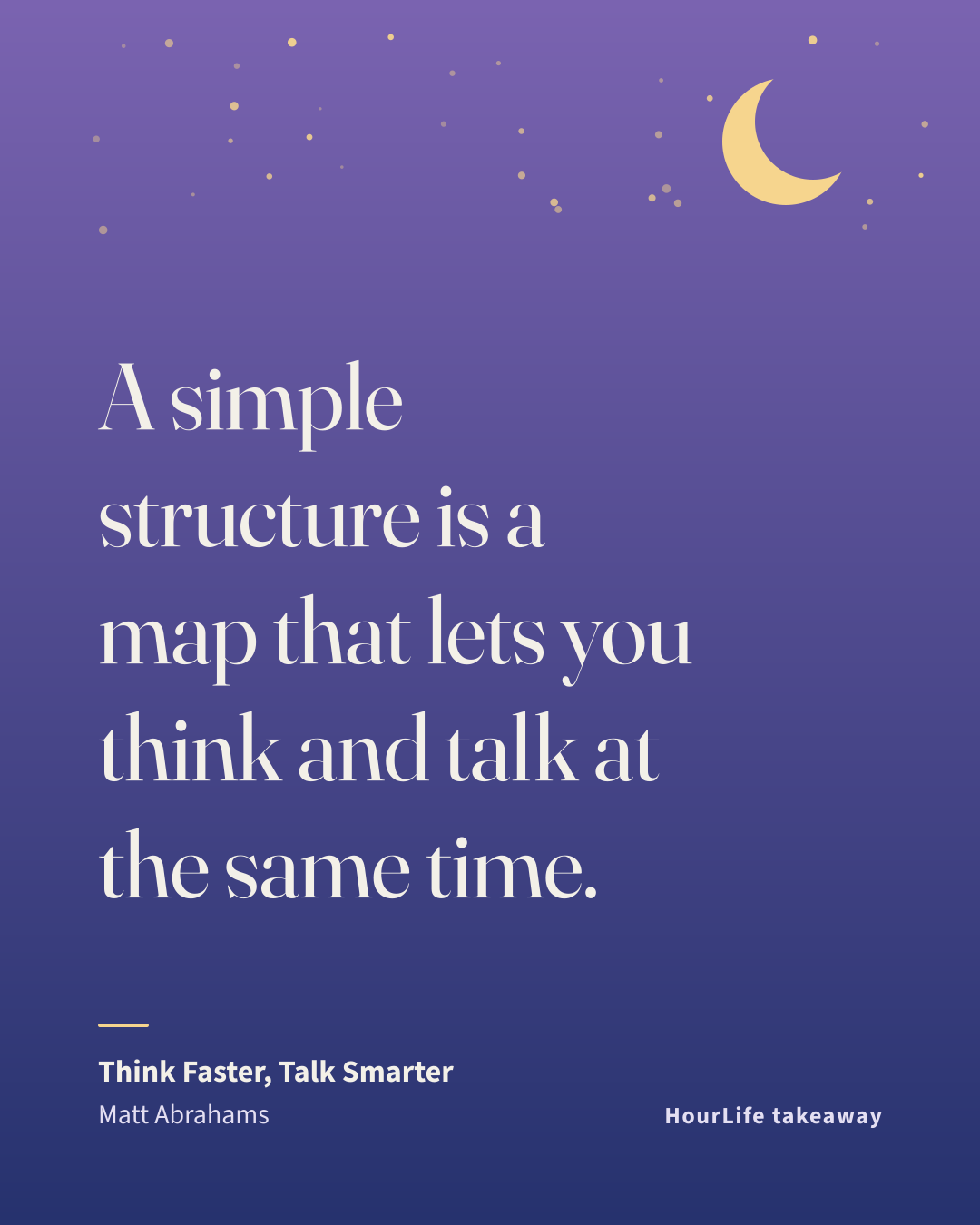
A simple structure is a map that lets you think and talk at the same time.

Think Faster, Talk Smarter Matt Abrahams HourLife takeaway

The fifth step, Respond, is to answer with a shape. What, so what, now what is the one Abrahams returns to most: say what it is, why it matters, and what happens next. With the shape in hand, you only have to fill three slots, not invent a whole answer from nothing.

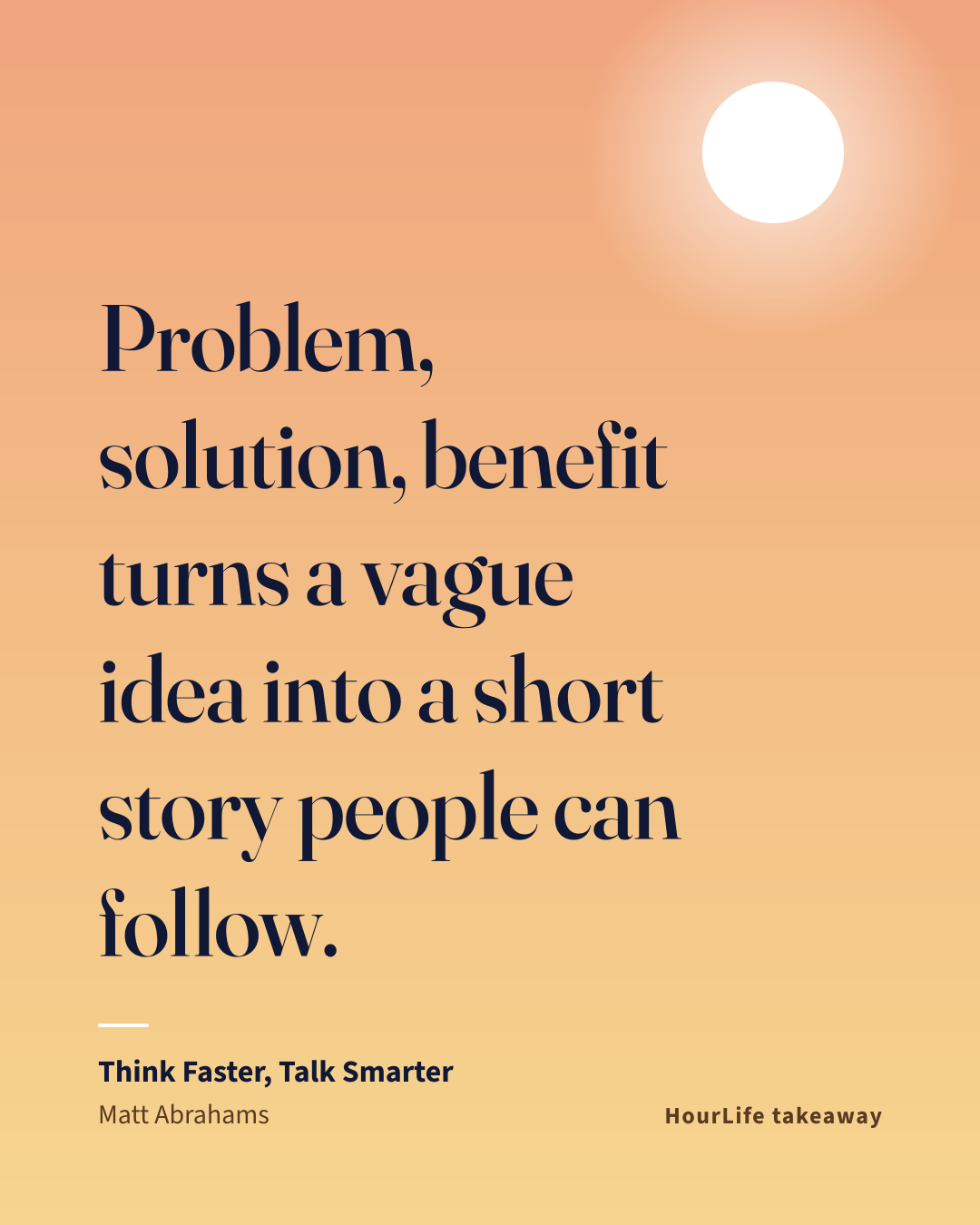
Problem, solution, benefit turns a vague idea into a short story people can follow.

Think Faster, Talk Smarter Matt Abrahams HourLife takeaway

The second structure the book leans on is built for persuading. Name the problem your listener has, give your solution, then show what they gain. It works for a pitch to a boss, a suggestion in a meeting or a case for where to go on holiday.

Focus means saying less: one clear point, in words your listener uses.

Think Faster, Talk Smarter Matt Abrahams HourLife takeaway

The last step is about getting to the point. Know what you want the listener to do or understand, drop the jargon, and stop when you have said it. Short answers feel riskier than long ones, but they are easier to follow and easier to remember.

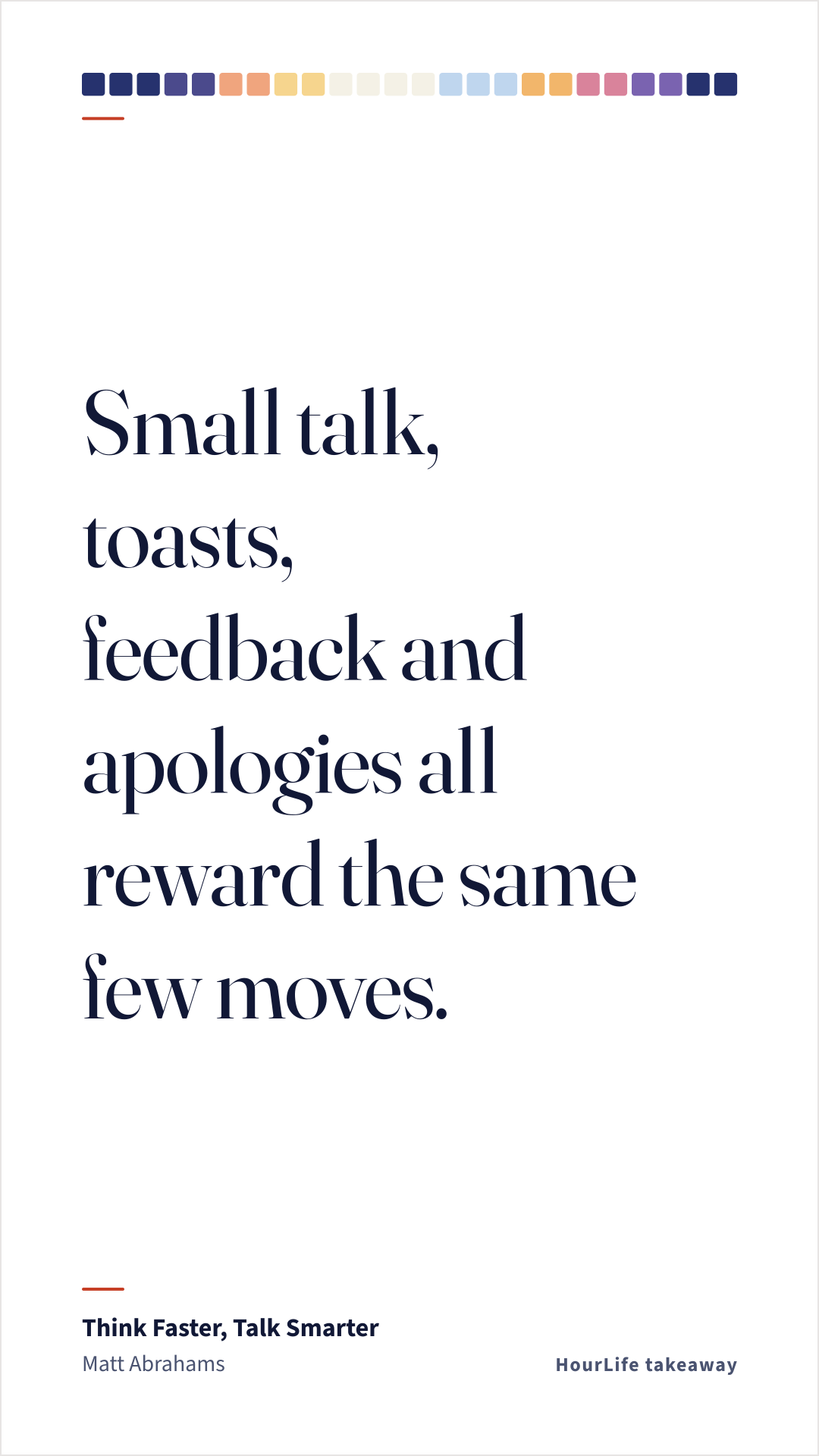
Small talk, toasts, feedback and apologies all reward the same few moves.

Think Faster, Talk Smarter Matt Abrahams HourLife takeaway

The second half of the book takes the method into everyday situations, from chatting with a stranger to answering questions after a talk to saying sorry. The details change with each one, but the core stays: calm down, listen, choose a shape and keep it short.

Keep this going in the app.

HourLife turns these ideas into a daily system — goals, habits, focus, and reflection in one private place.