Keep this author quotes for later
Sign in to save

Norman Doidge

The most-loved lines from Norman Doidge, drawn from 1 book in the library.

Lines labelled “HourLife takeaway” are our wording of the book’s ideas and may paraphrase it. Only lines in quotation marks are the author’s own words, with where they appear. Check the book for exact wording before you quote it. Spot an error?

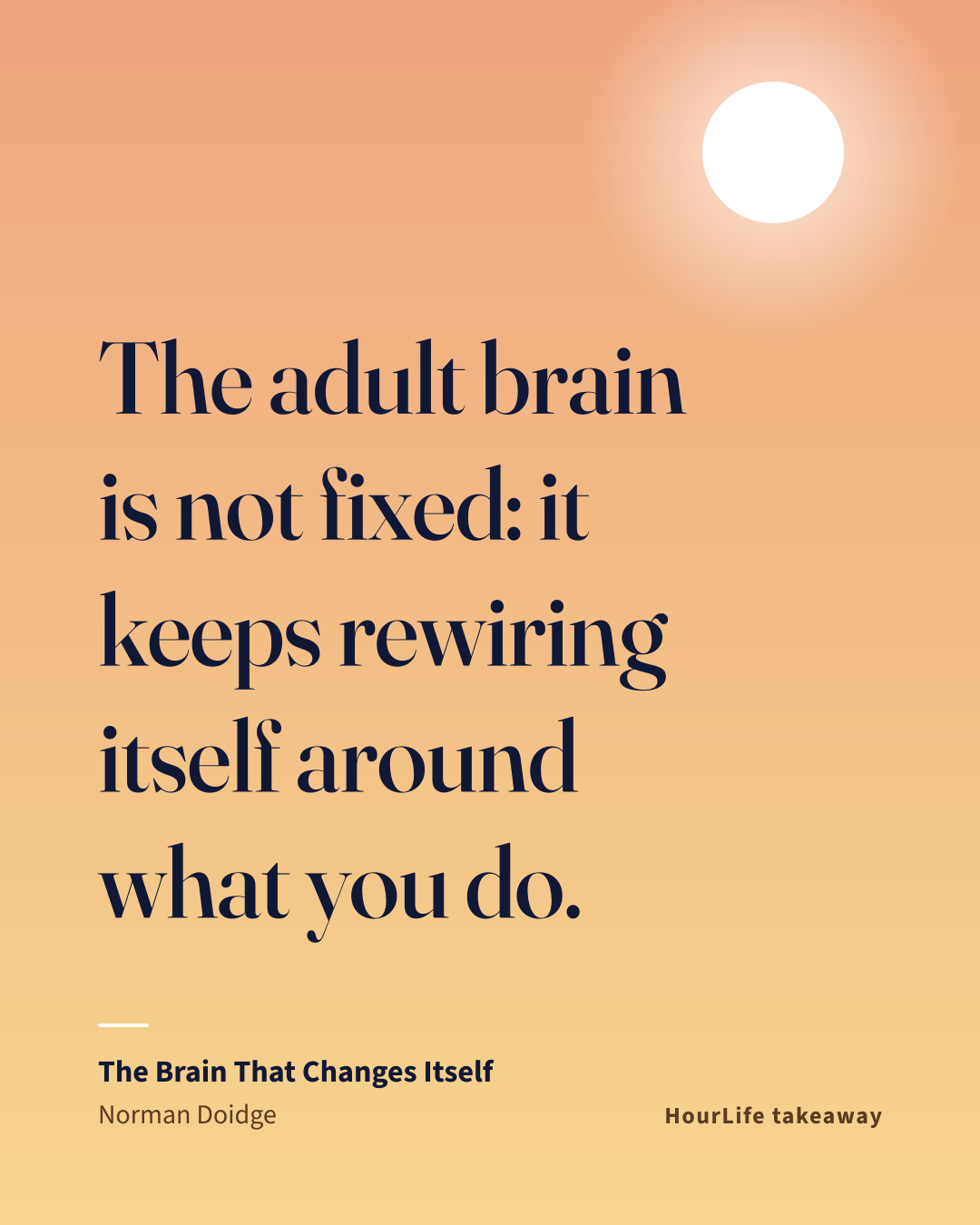
The adult brain is not fixed: it keeps rewiring itself around what you do.

The Brain That Changes Itself Norman Doidge HourLife takeaway

For most of the twentieth century, the standard view was that the brain's wiring was set in childhood and could only decline after that. Doidge gathers the researchers who showed otherwise. Practice, experience and even thought change the brain's maps, at any age.


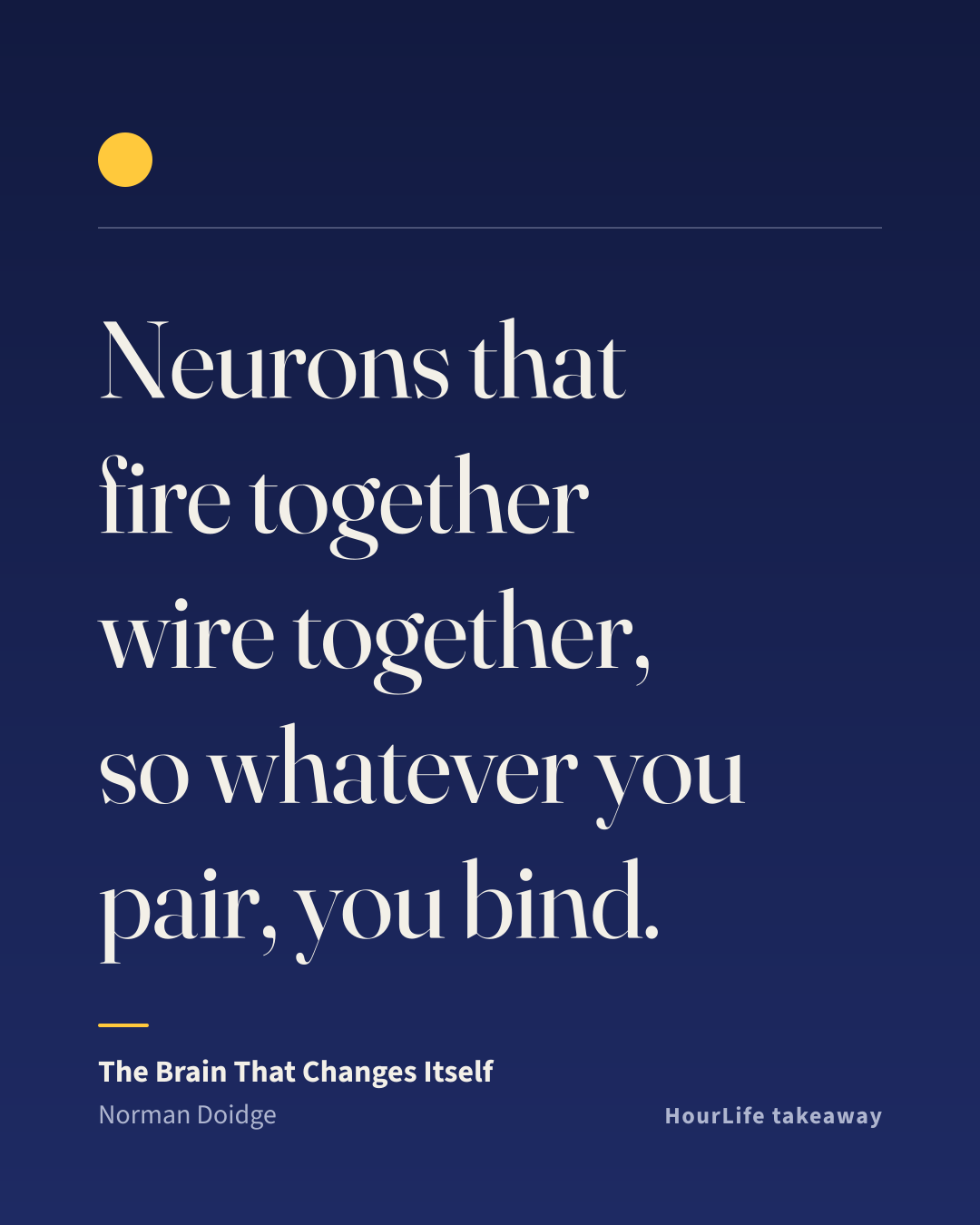
Neurons that fire together wire together, so whatever you pair, you bind.

The Brain That Changes Itself Norman Doidge HourLife takeaway

The book leans on Donald Hebb's rule: when two neurons fire at the same time, the link between them grows stronger. That is why a skill practised at the same cue turns automatic. It is also why a feeling and a thought that keep arriving together become hard to pull apart.

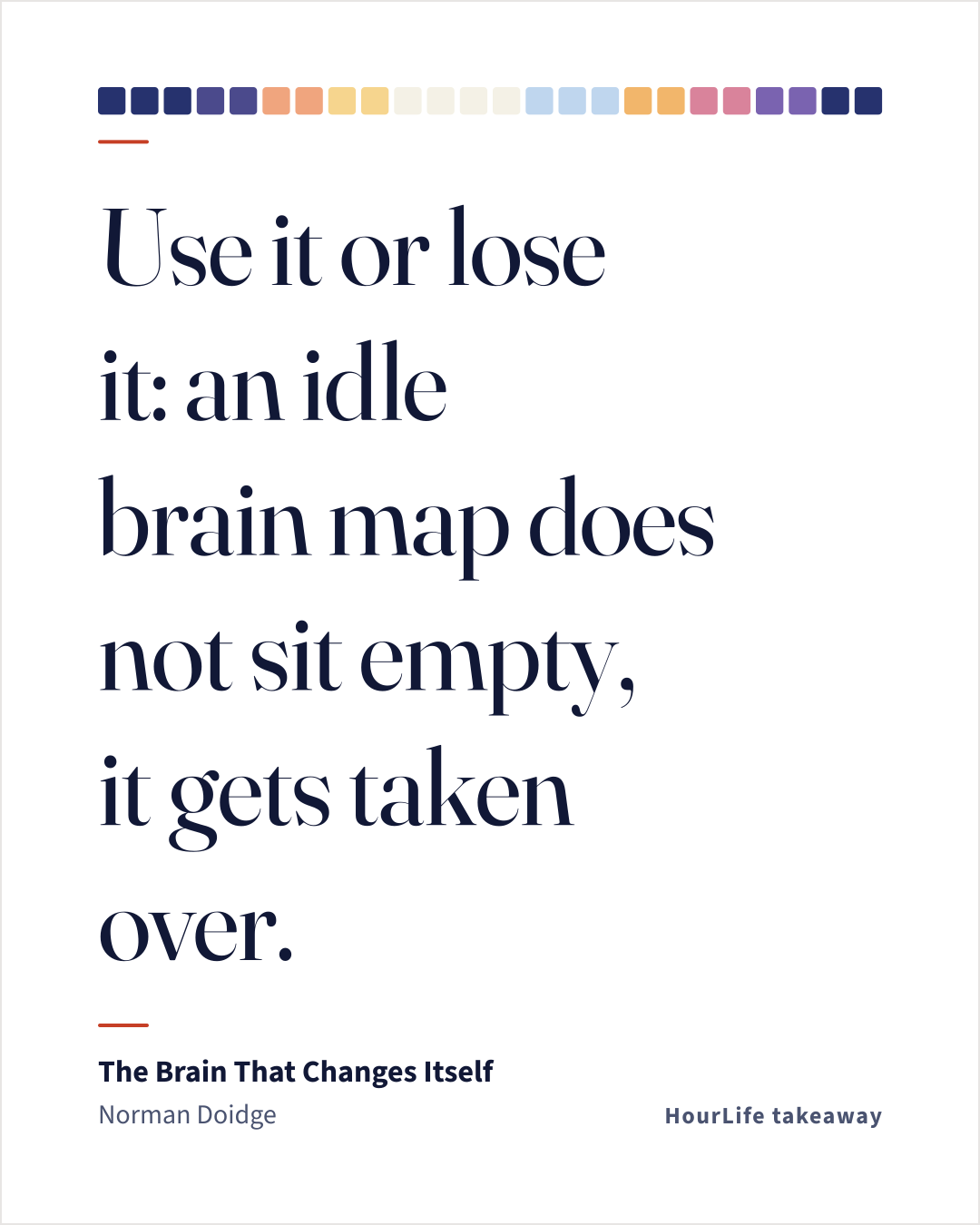
Use it or lose it: an idle brain map does not sit empty, it gets taken over.

The Brain That Changes Itself Norman Doidge HourLife takeaway

In Michael Merzenich's experiments with monkeys, the map area for a lost finger was taken over by the neighbouring fingers. Doidge calls this competitive plasticity. The same contest plays out in daily life: a skill you stop practising gives ground to whatever you practise instead.

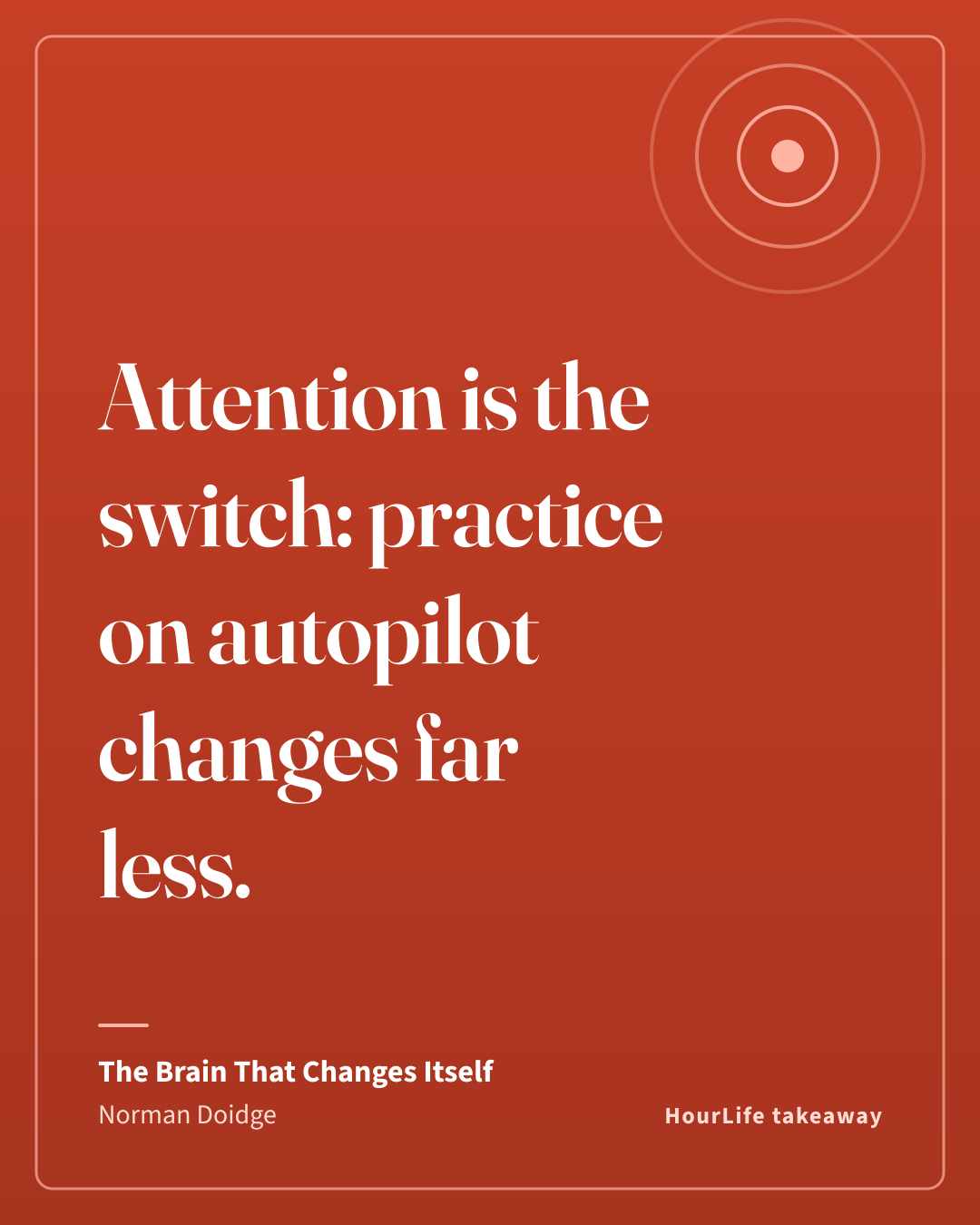
Attention is the switch: practice on autopilot changes far less.

The Brain That Changes Itself Norman Doidge HourLife takeaway

Merzenich found that lasting changes to a brain map depended on close attention to the task. Going through the motions while distracted did much less. Fewer reps done with full focus beat many done half-awake.

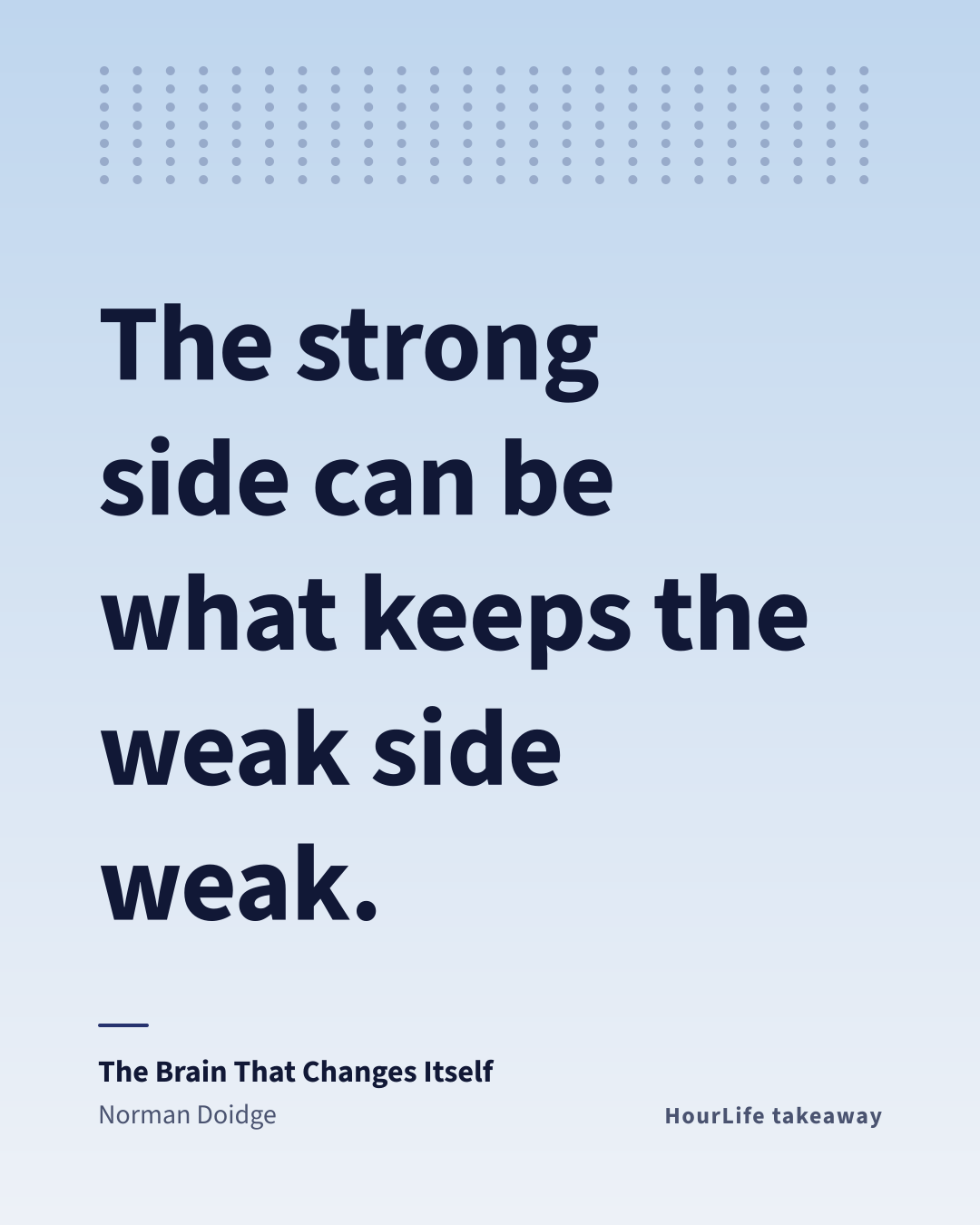
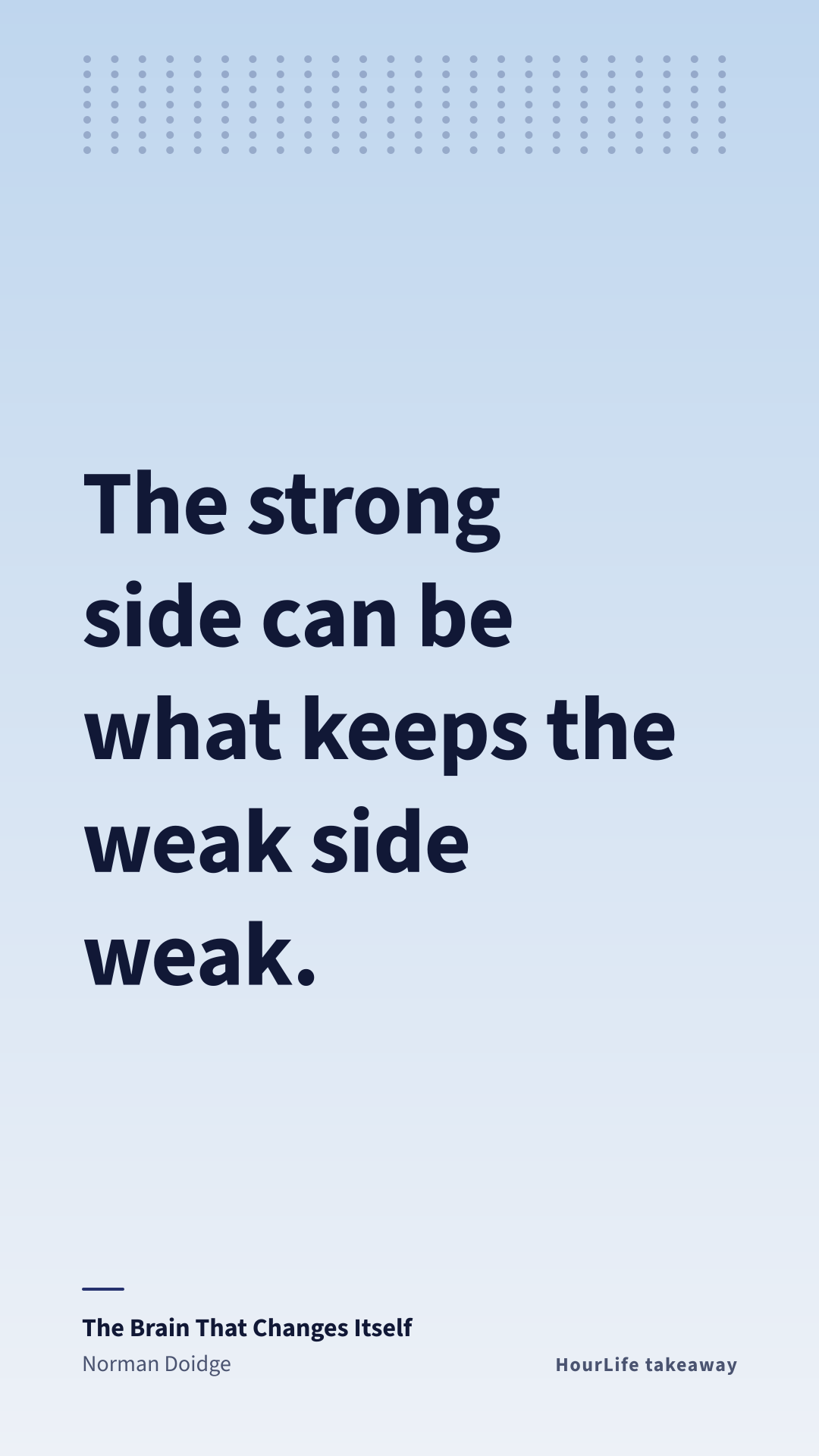
The strong side can be what keeps the weak side weak.

The Brain That Changes Itself Norman Doidge HourLife takeaway

Edward Taub called it learned non-use: after a stroke, people stop trying with the affected arm because the good arm is easier. His constraint-induced therapy restrains the good arm and asks for intensive practice with the weak one. The general lesson is that an easy workaround can stop a skill from coming back.

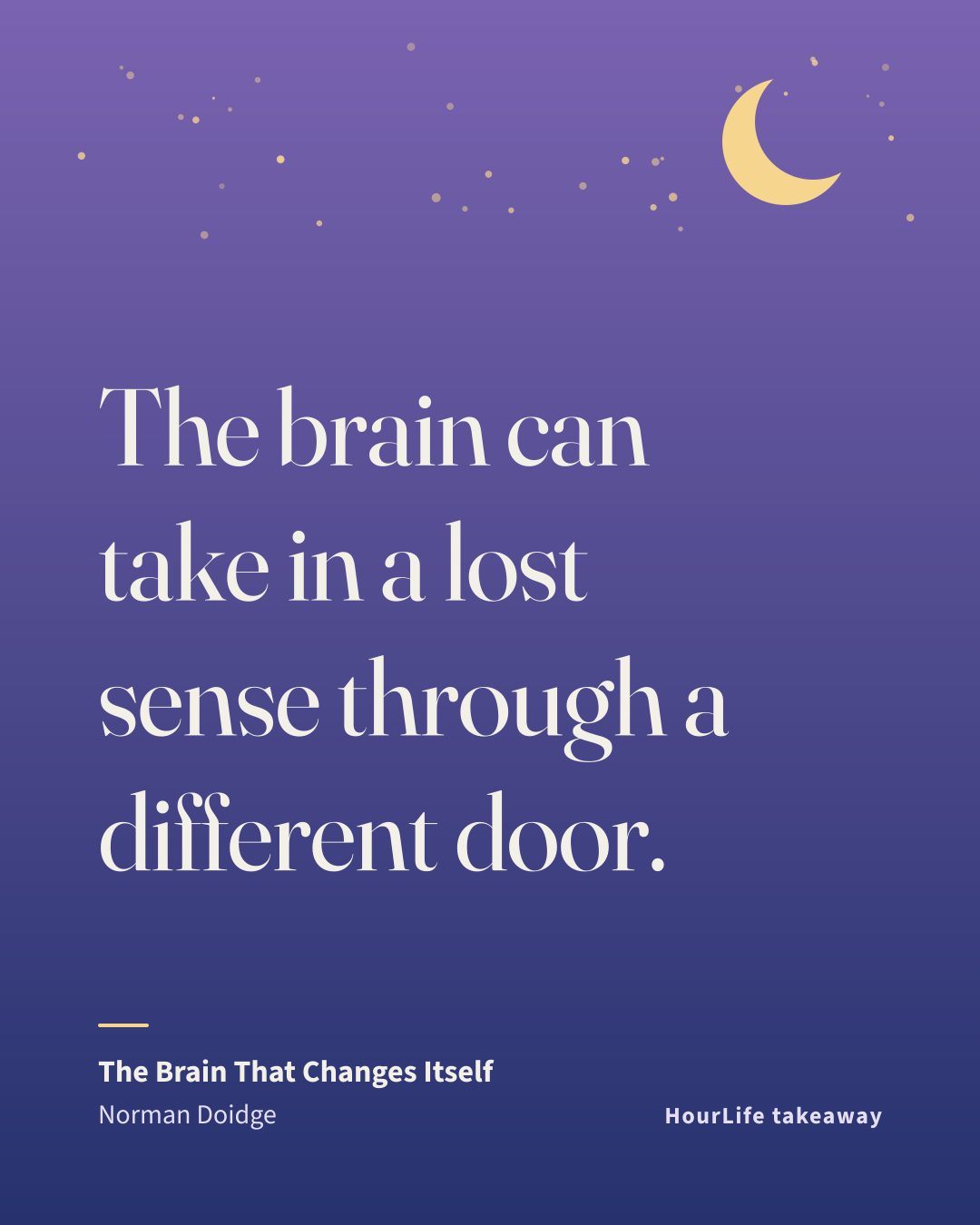
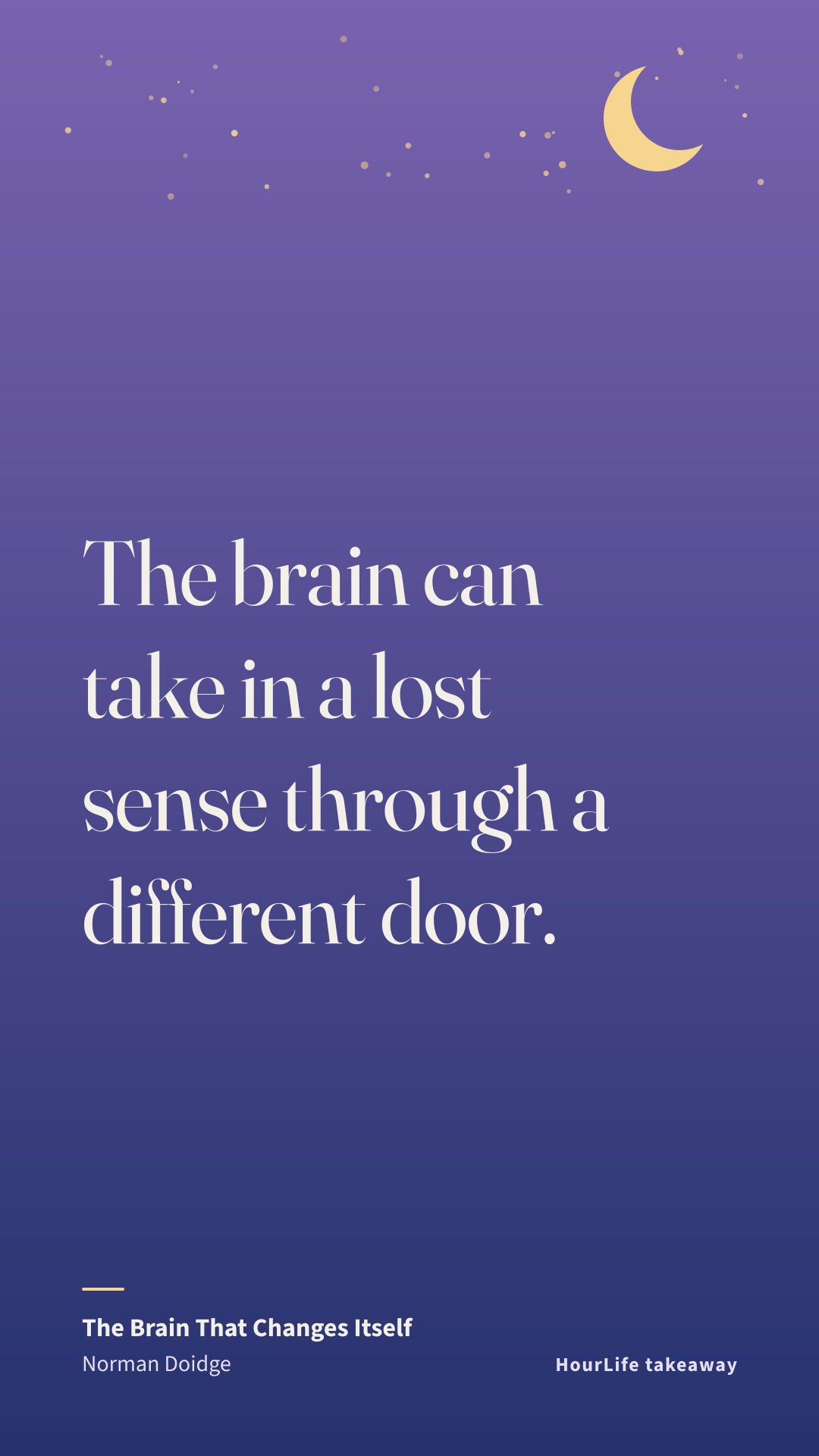
The brain can take in a lost sense through a different door.

The Brain That Changes Itself Norman Doidge HourLife takeaway

Paul Bach-y-Rita held that we see with the brain, not the eyes, and built devices that fed one sense through another. The book opens with a woman whose balance organs were damaged by a drug. A device that sent balance signals through her tongue helped her stand and walk steadily again.

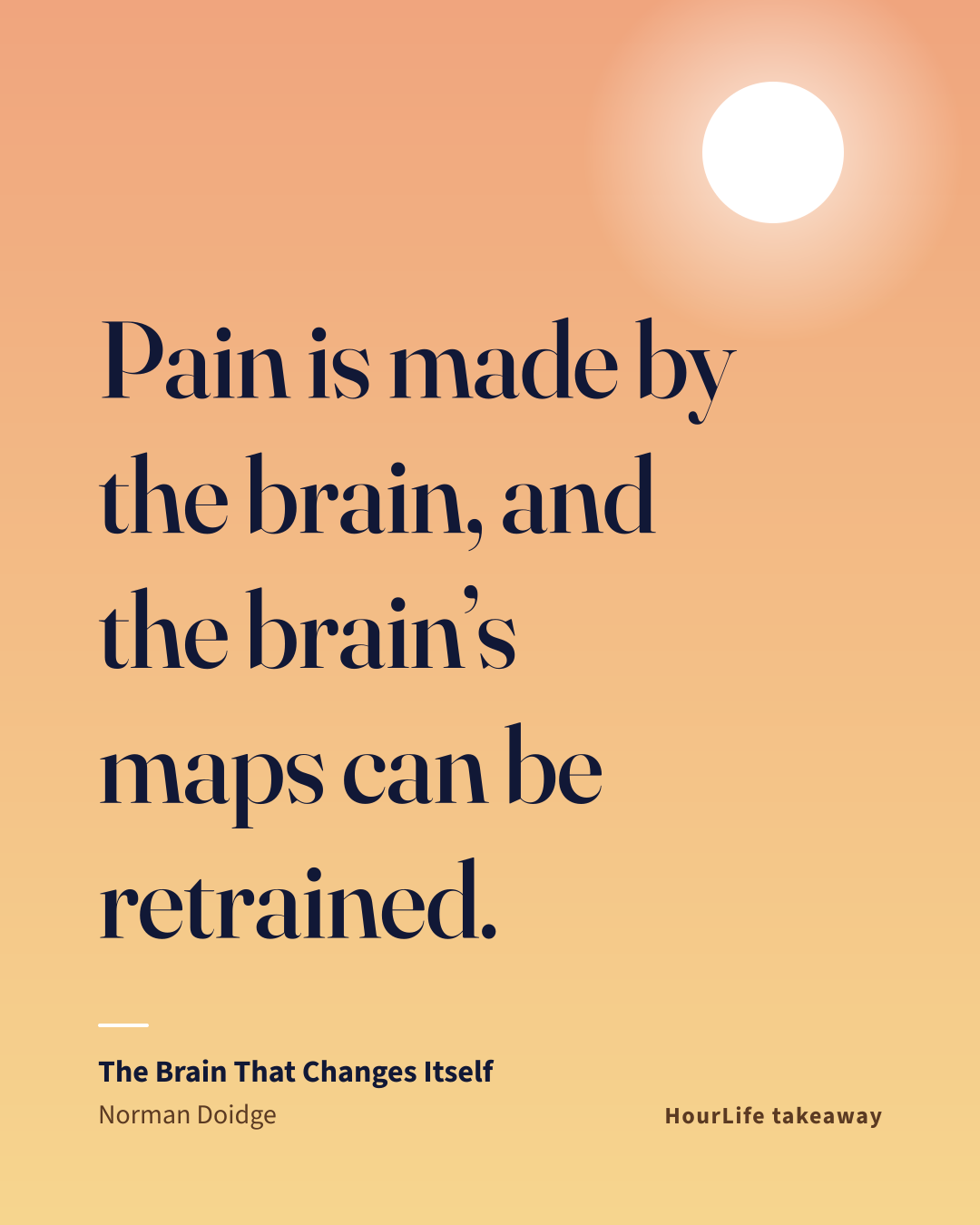
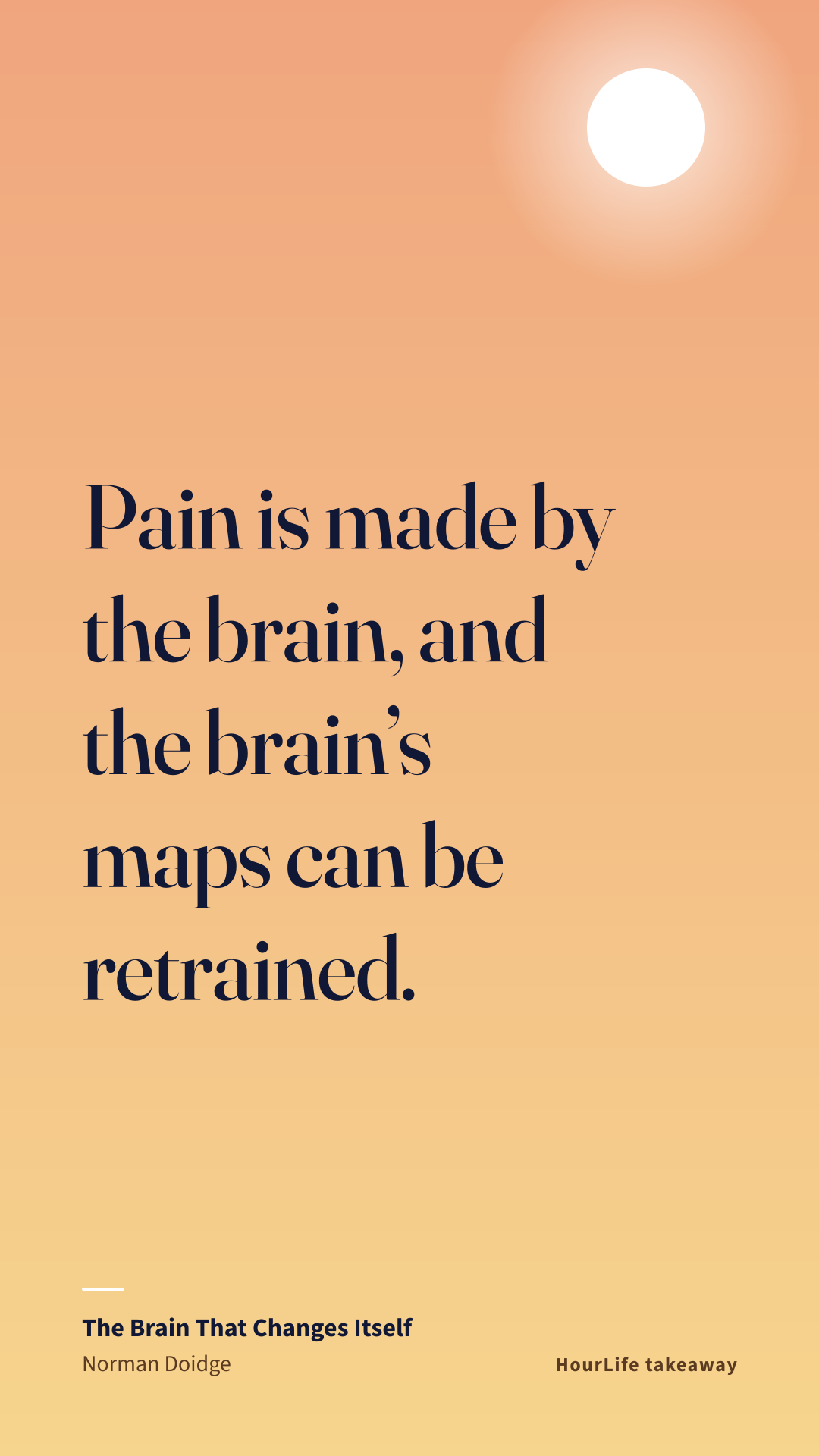
Pain is made by the brain, and the brain’s maps can be retrained.

The Brain That Changes Itself Norman Doidge HourLife takeaway

V. S. Ramachandran studied phantom limbs, where people feel and hurt in an arm that is gone. With his mirror box, a patient sees the intact hand reflected where the missing one should be, and some found their phantom pain eased. Doidge uses it to show that pain is a map the brain draws, not only a signal from the body.

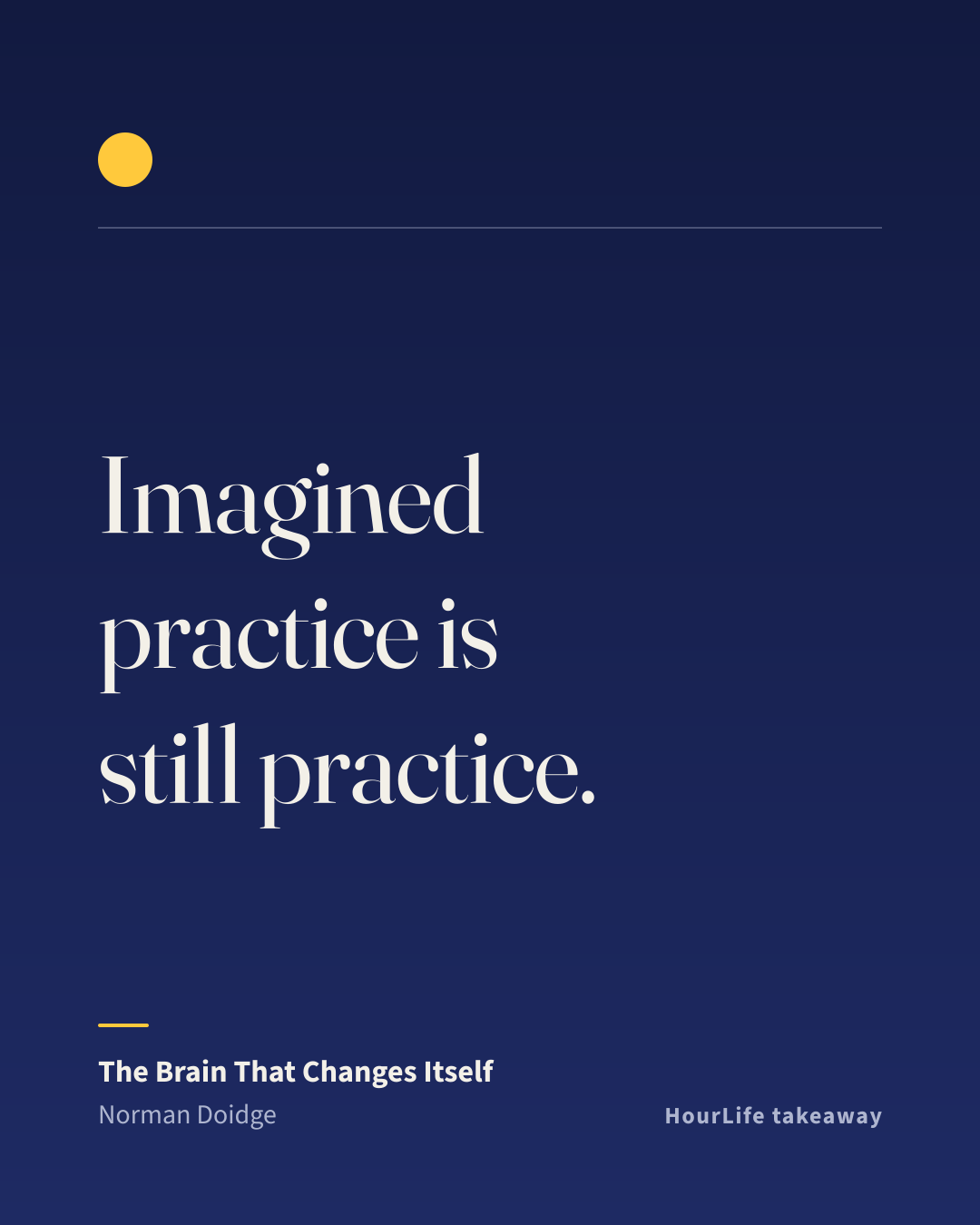
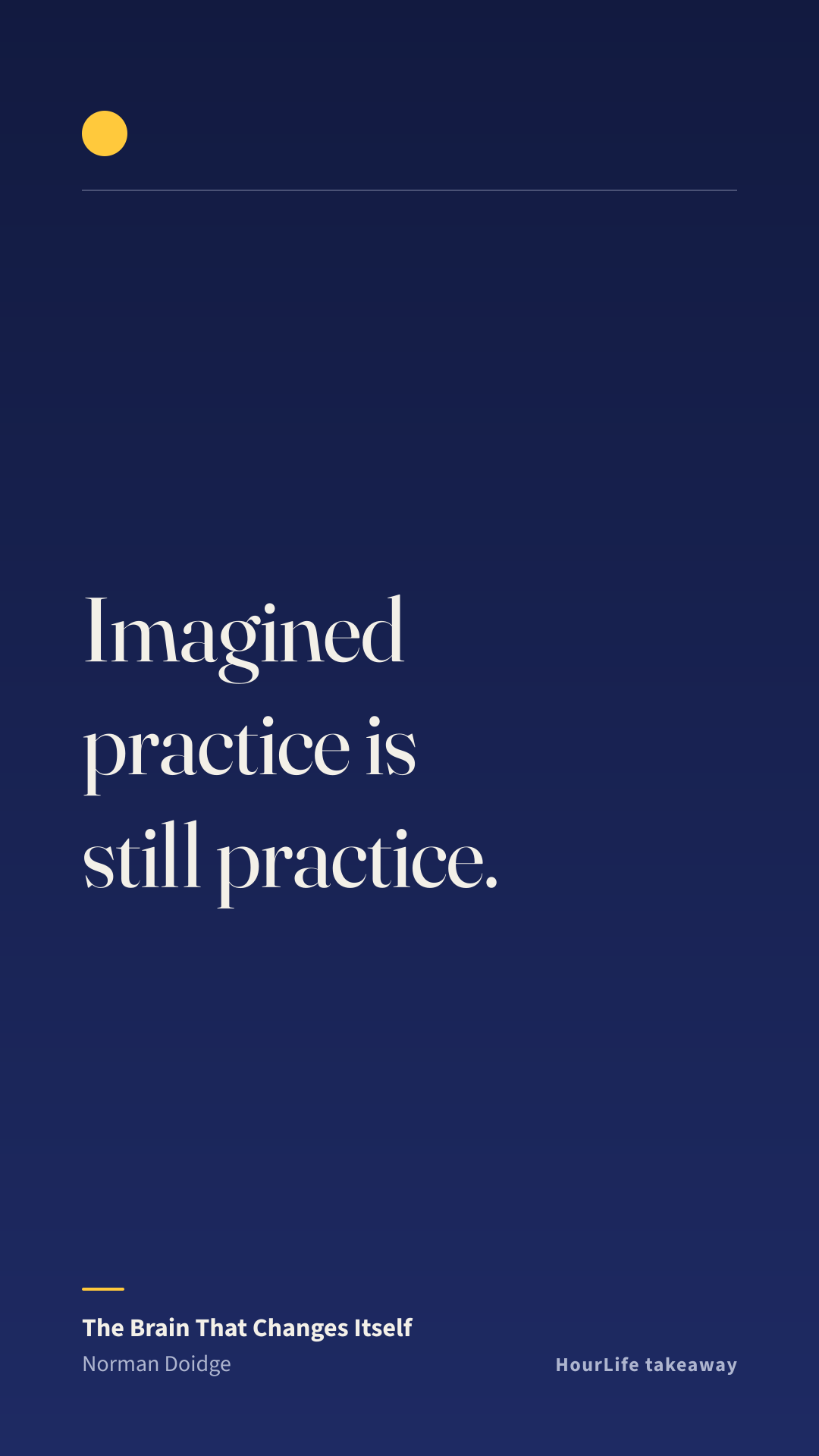
Imagined practice is still practice.

The Brain That Changes Itself Norman Doidge HourLife takeaway

Alvaro Pascual-Leone had one group practise a piano exercise and another only imagine playing it. Both showed similar changes in the brain's motor maps. Mental rehearsal will not replace real reps, but it counts on days you cannot play.

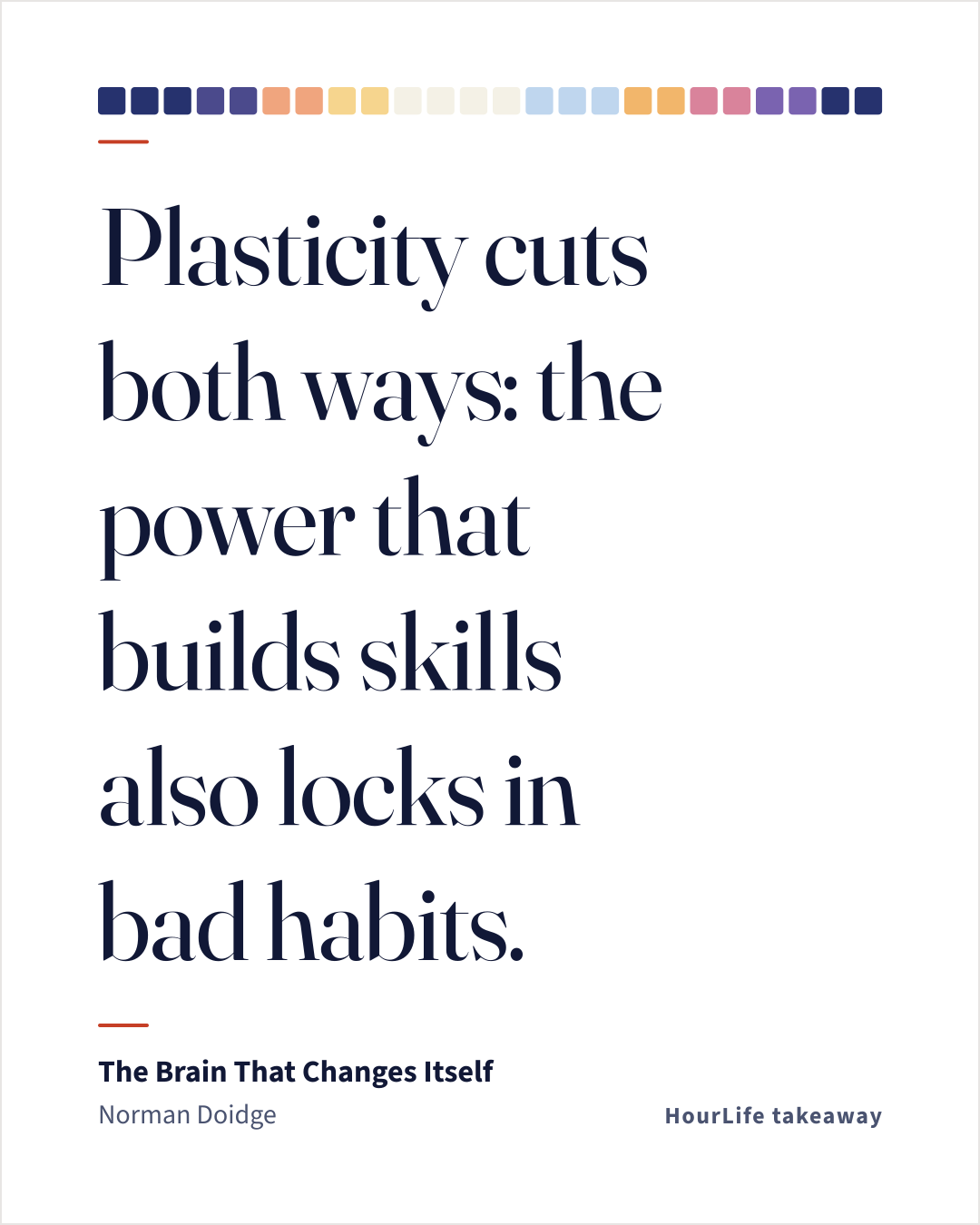
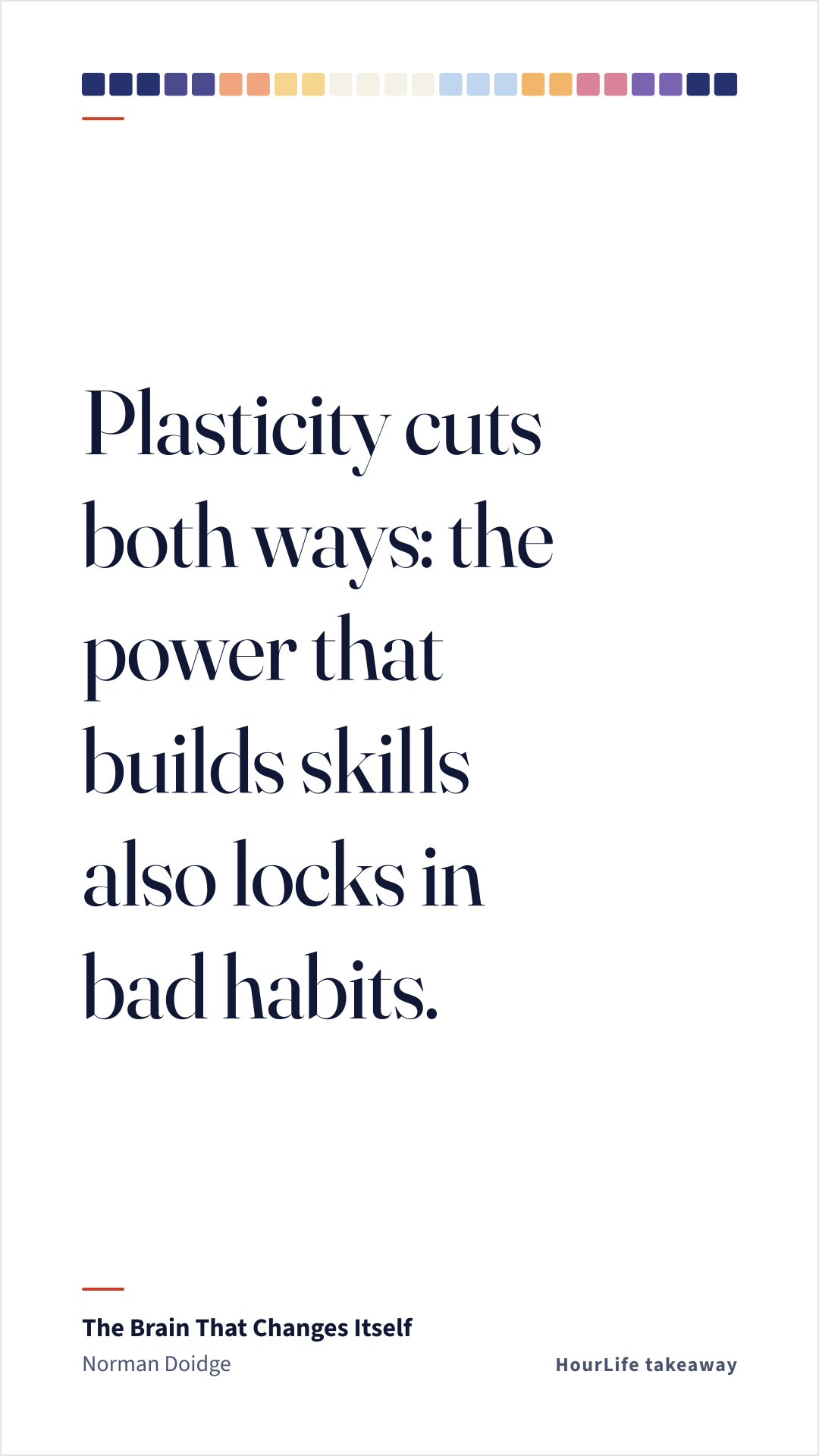
Plasticity cuts both ways: the power that builds skills also locks in bad habits.

The Brain That Changes Itself Norman Doidge HourLife takeaway

Doidge calls it the plastic paradox. The same change that makes us flexible can also leave us stuck, because a well-worn circuit is the easiest path to take again. Getting out usually means building a competing path, not only resisting the old one.

Keep this going in the app.

HourLife turns these ideas into a daily system — goals, habits, focus, and reflection in one private place.