Keep this author quotes for later
Sign in to save

Oscar Trimboli

The most-loved lines from Oscar Trimboli, drawn from 1 book in the library.

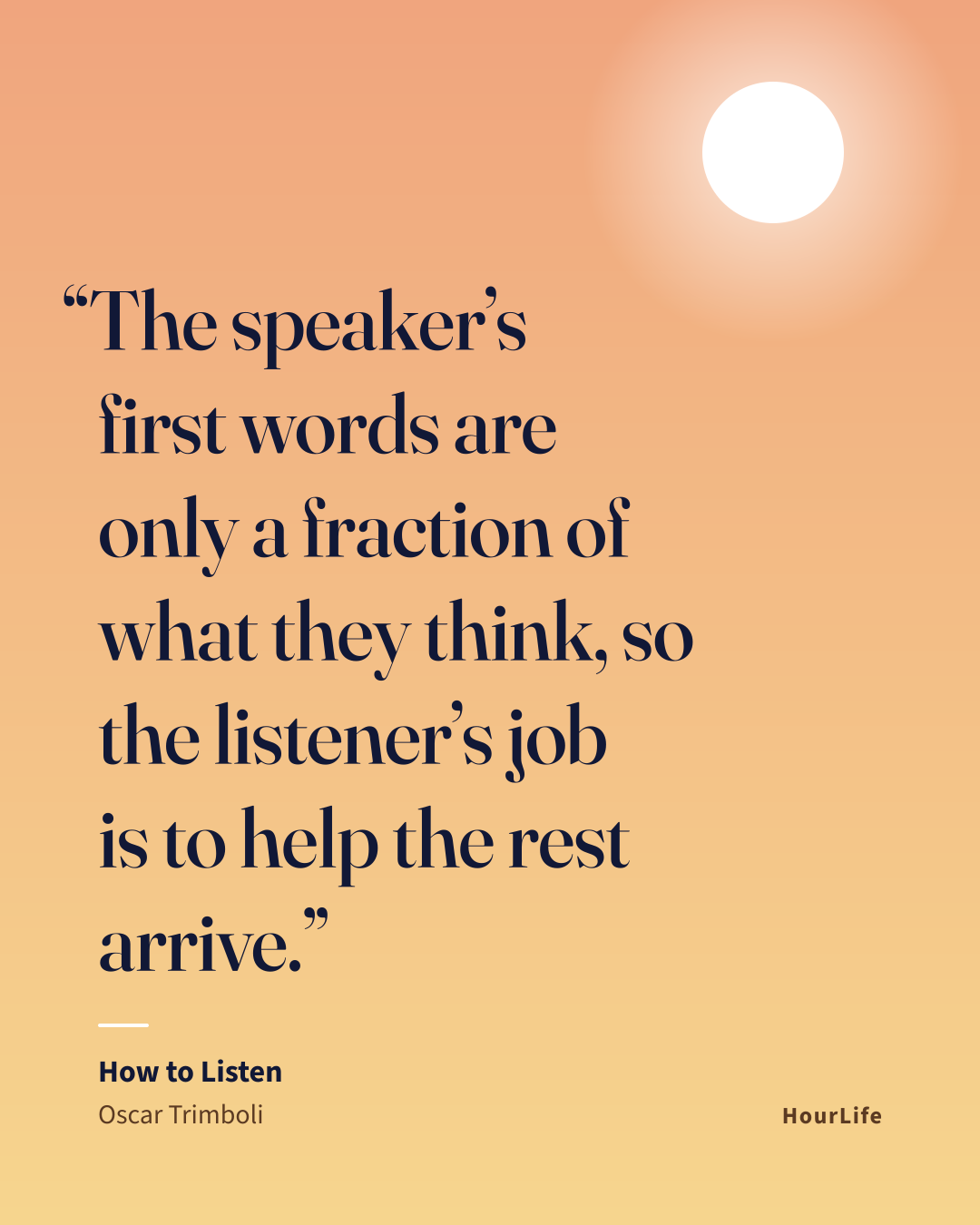
The speaker’s first words are only a fraction of what they think, so the listener’s job is to help the rest arrive.

How to Listen Oscar Trimboli

At roughly 125 words a minute out loud against 900 in the head, what you hear first is a draft. Treat it as an opening rather than the whole message, and resist answering it straight away.


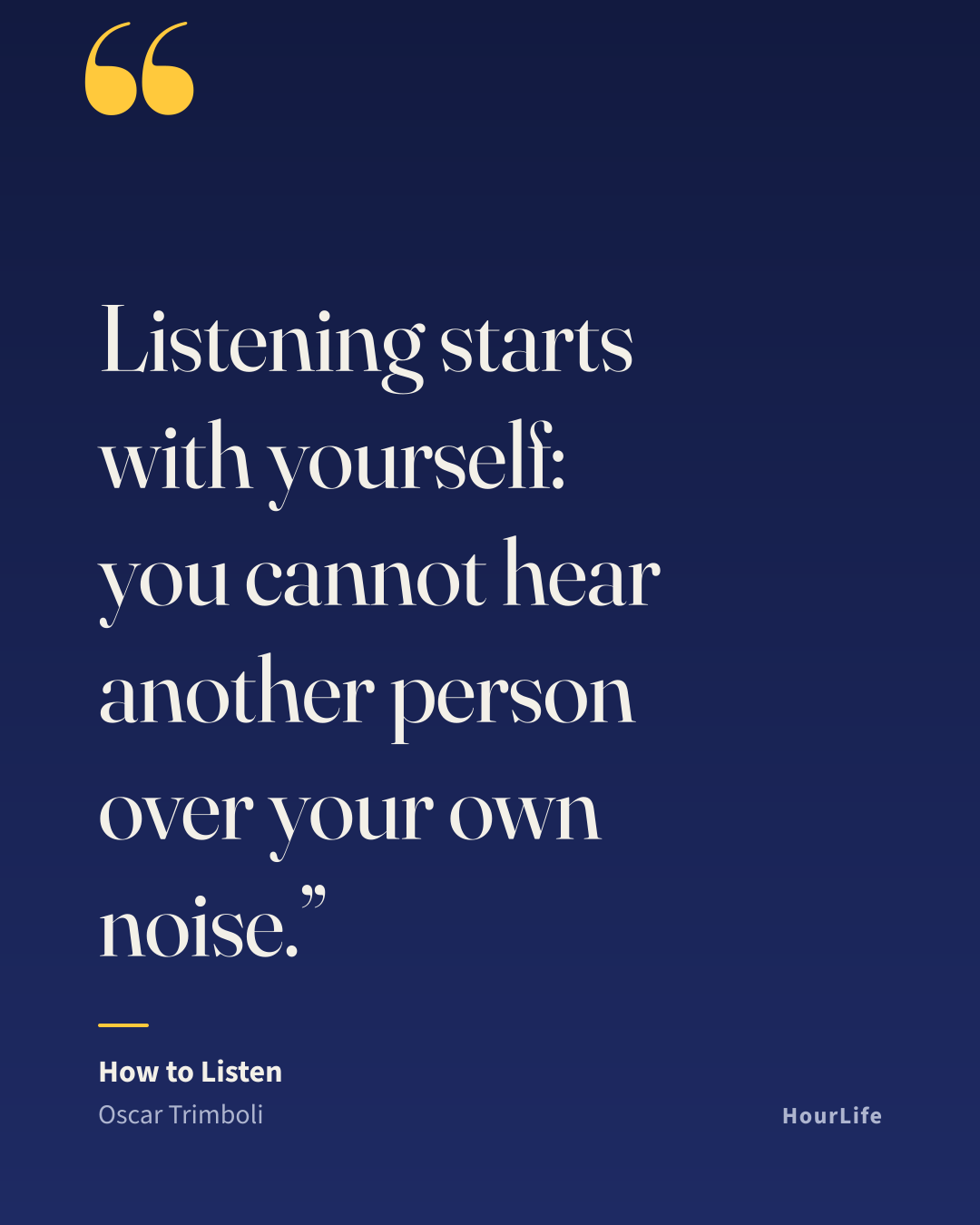
Listening starts with yourself: you cannot hear another person over your own noise.

How to Listen Oscar Trimboli

The first level is noticing what is going on in you: hunger, a buzzing phone, the reply you are already rehearsing. Before an important conversation, take a breath, put the phone away and decide to listen rather than to respond.

Content is what was said; context is why it is being said, to you, now.

How to Listen Oscar Trimboli

The same sentence means different things from a new hire and from a founder, on a Monday or the night before a launch. Ask about what happened before and who else is affected, and the words often change meaning.

What goes unsaid often matters more than what is said.

How to Listen Oscar Trimboli

The pause, the topic skipped, the change in tone are all part of the message. Note what is missing and ask about it gently, without accusing anyone of hiding it.

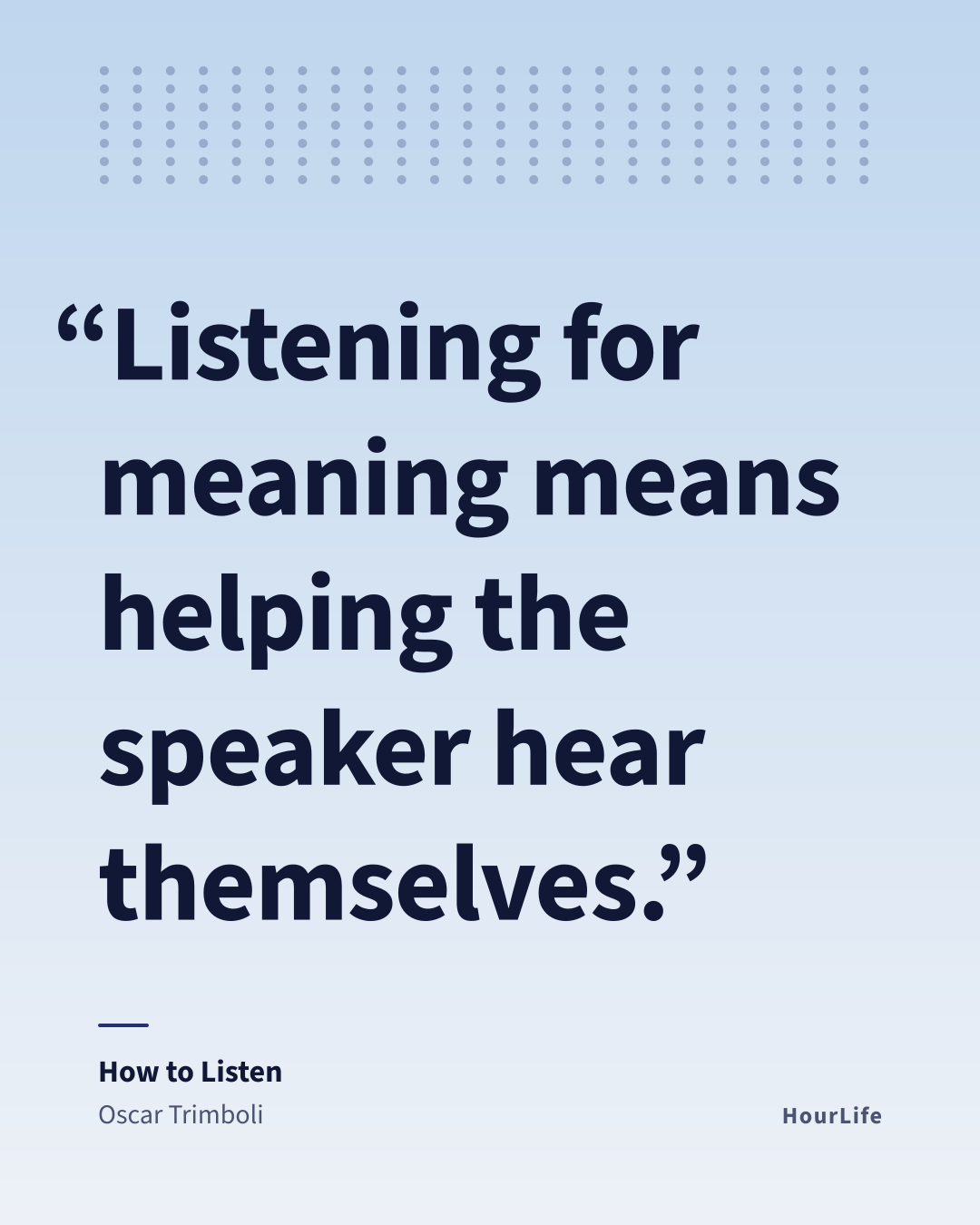
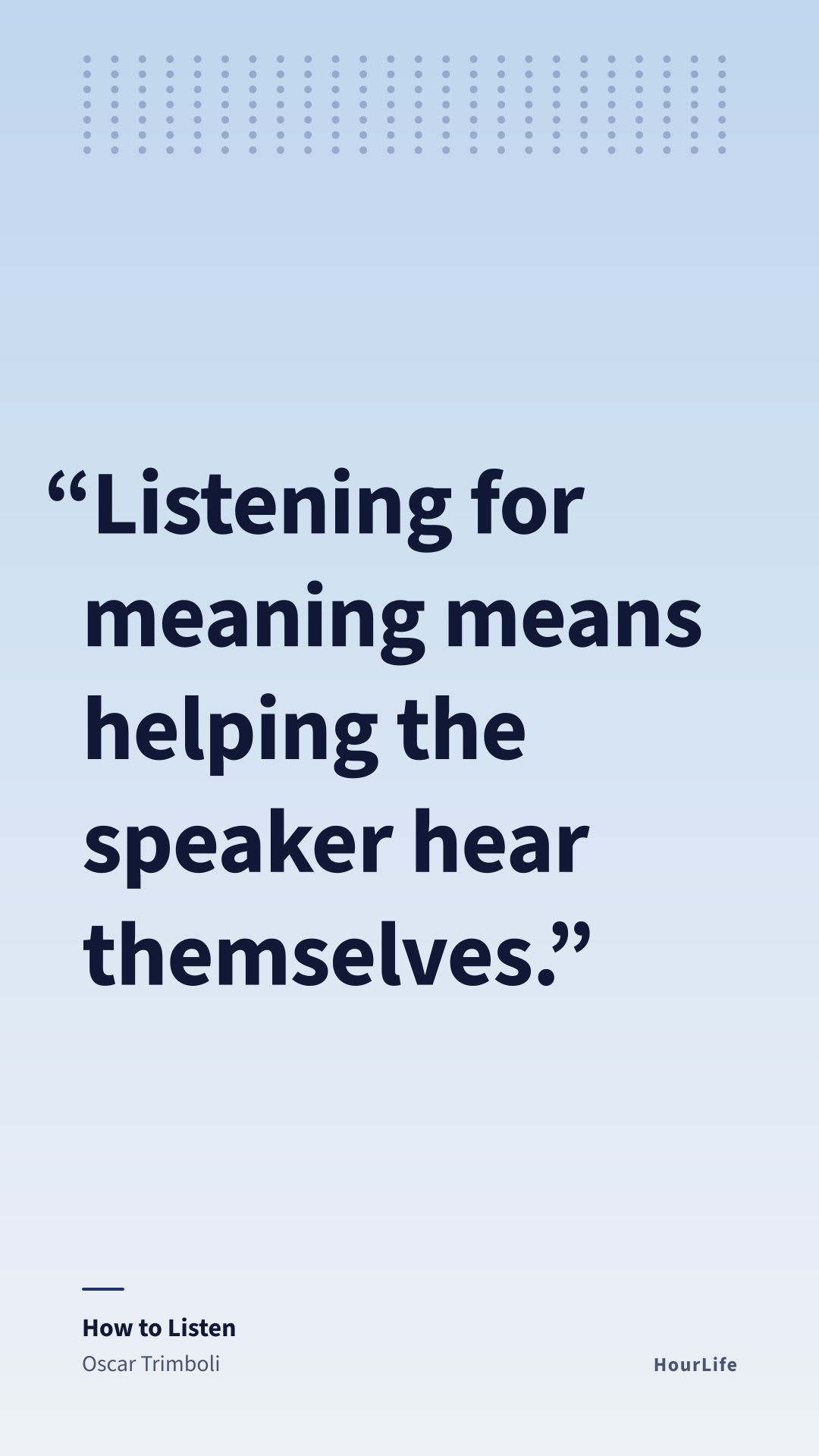
Listening for meaning means helping the speaker hear themselves.

How to Listen Oscar Trimboli

Many people do not know what they think until they have said it to someone who waited. The deepest level is reached when the speaker leaves understanding their own situation better, whether or not you said anything clever.

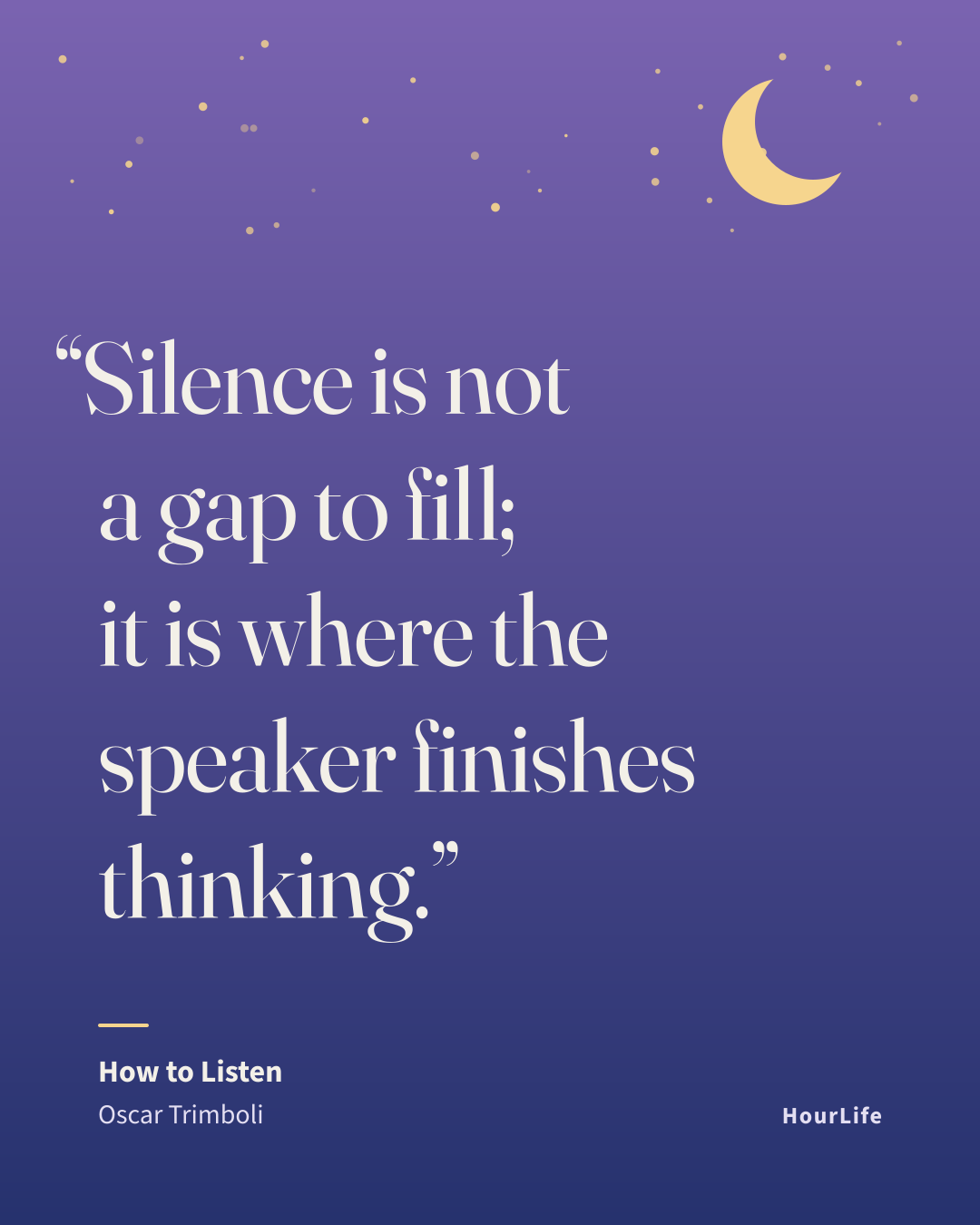
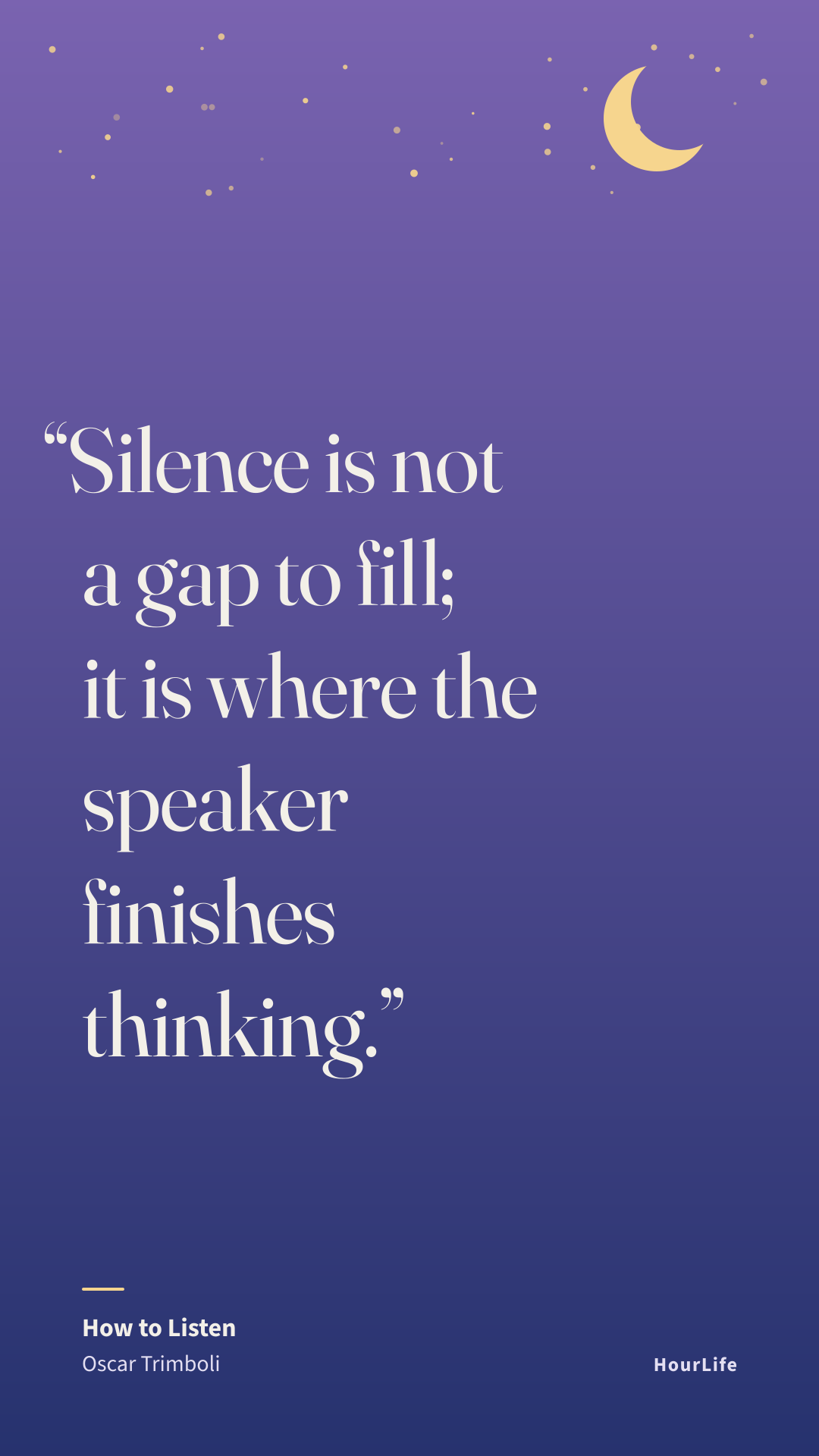
Silence is not a gap to fill; it is where the speaker finishes thinking.

How to Listen Oscar Trimboli

Most listeners jump in the moment a sentence ends. Let a few seconds pass before you reply, and the more important part of the message often follows.

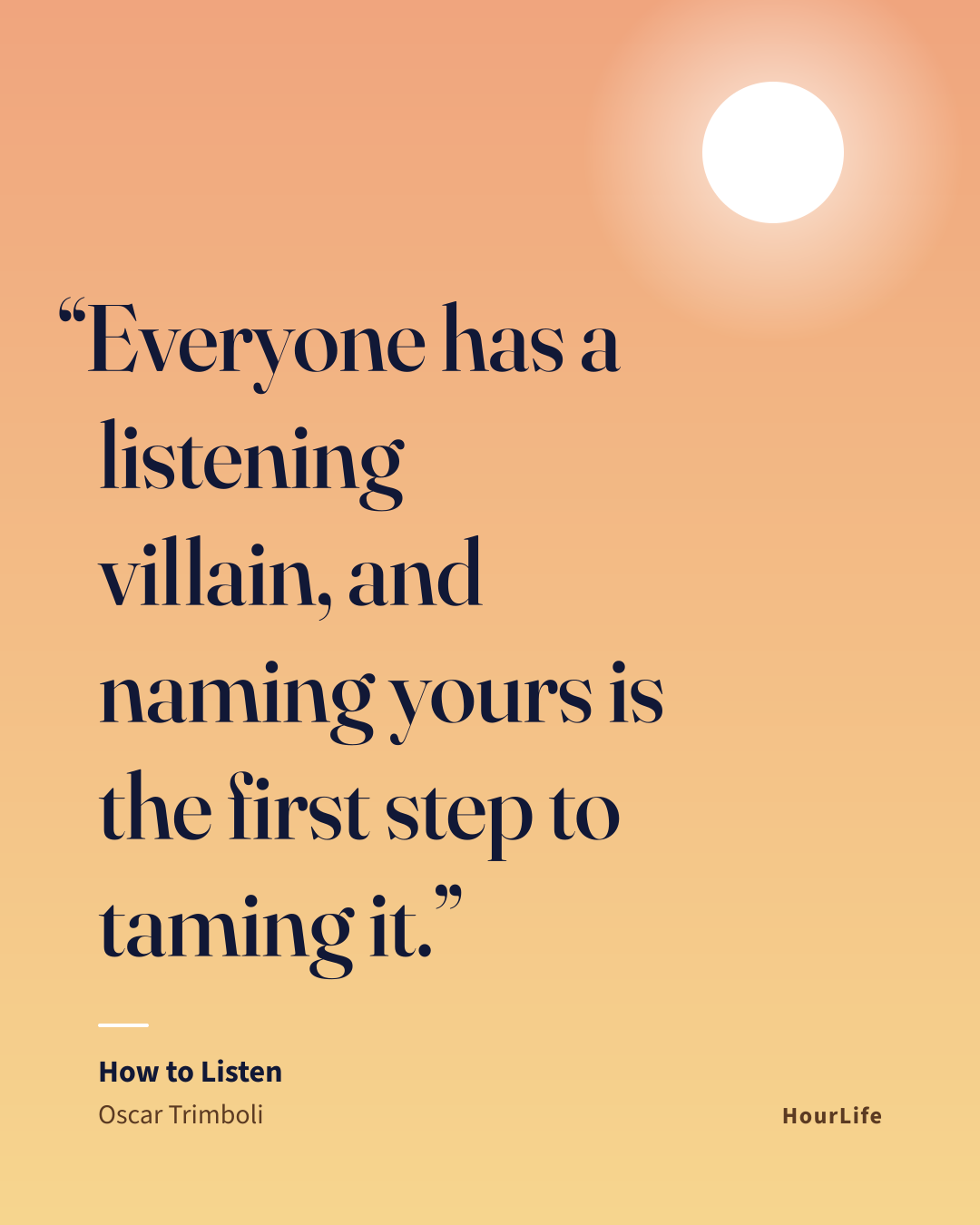
Everyone has a listening villain, and naming yours is the first step to taming it.

How to Listen Oscar Trimboli

Trimboli describes the Dramatic, Interrupting, Lost and Shrewd listener: hijacking the emotion, rushing to the answer, drifting off, or busy working out a solution. Different settings bring out different villains, so learn which one shows up where.

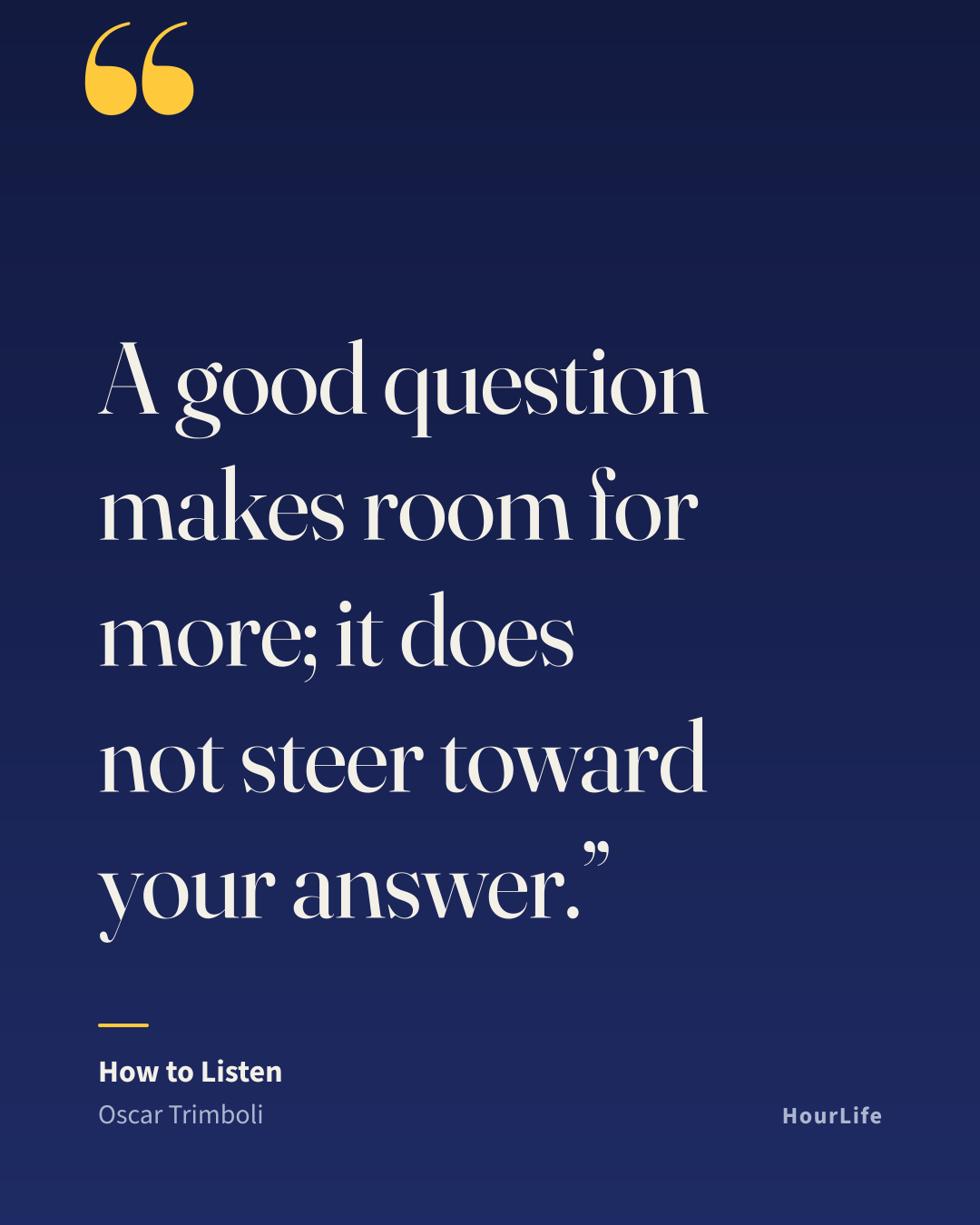
A good question makes room for more; it does not steer toward your answer.

How to Listen Oscar Trimboli

Short, open prompts such as "tell me more" leave the speaker in charge of where the conversation goes. A question that already contains your solution is advice in disguise, and it ends the listening.

Keep this going in the app.

HourLife turns these ideas into a daily system — goals, habits, focus, and reflection in one private place.