The foundation of a cohesive team is vulnerability-based trust.
Teams move faster when people can admit mistakes, ask for help, and stop protecting a polished image.
The most-loved lines from Patrick Lencioni, drawn from 1 book in the library.
Lines labelled “HourLife takeaway” are our wording of the book’s ideas and may paraphrase it. Only lines in quotation marks are the author’s own words, with where they appear. Check the book for exact wording before you quote it. Spot an error?
The foundation of a cohesive team is vulnerability-based trust.
Teams move faster when people can admit mistakes, ask for help, and stop protecting a polished image.
Artificial harmony is often more dangerous than open disagreement.
Lencioni reframes conflict as a sign of commitment to the work, not a failure of professionalism.
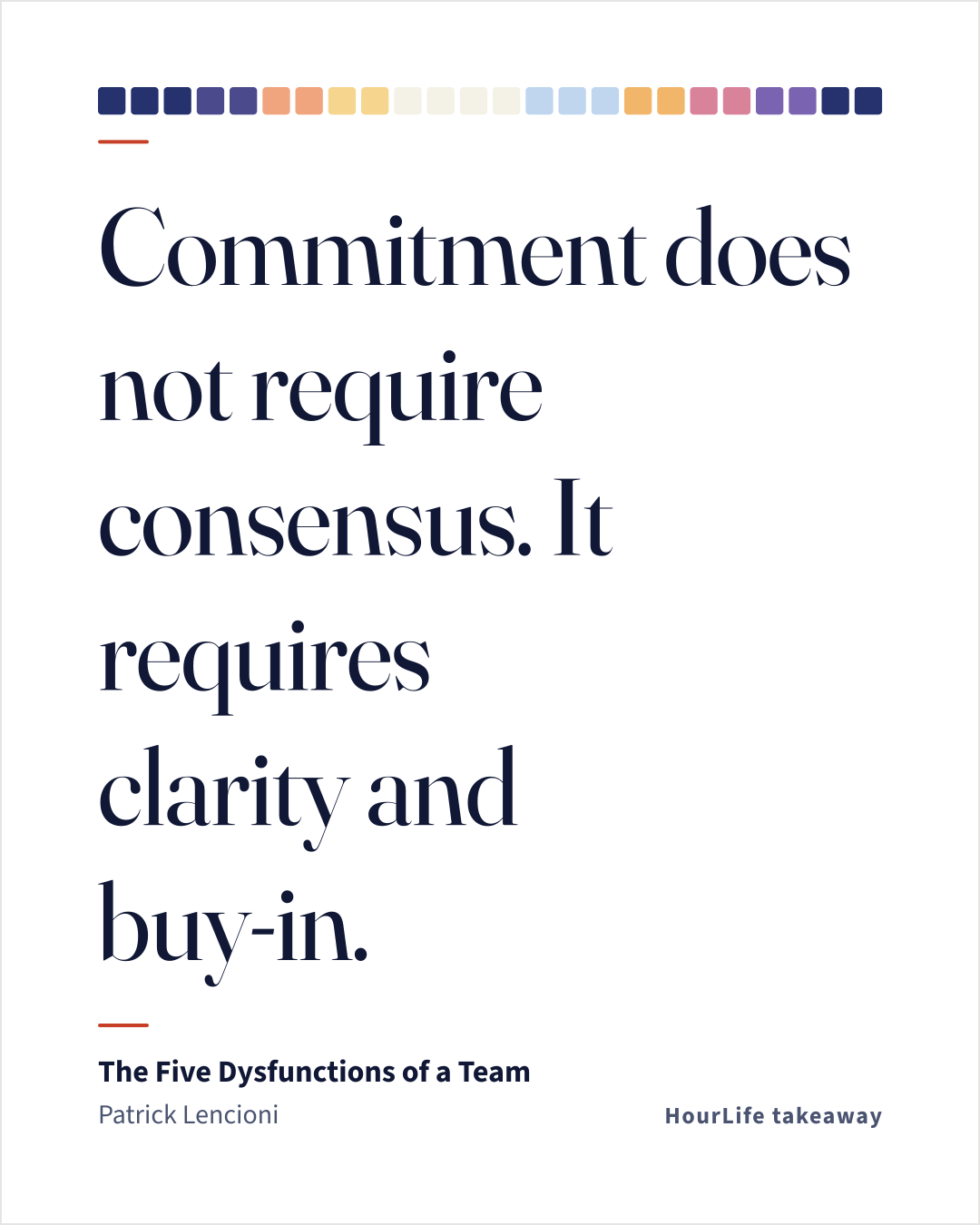
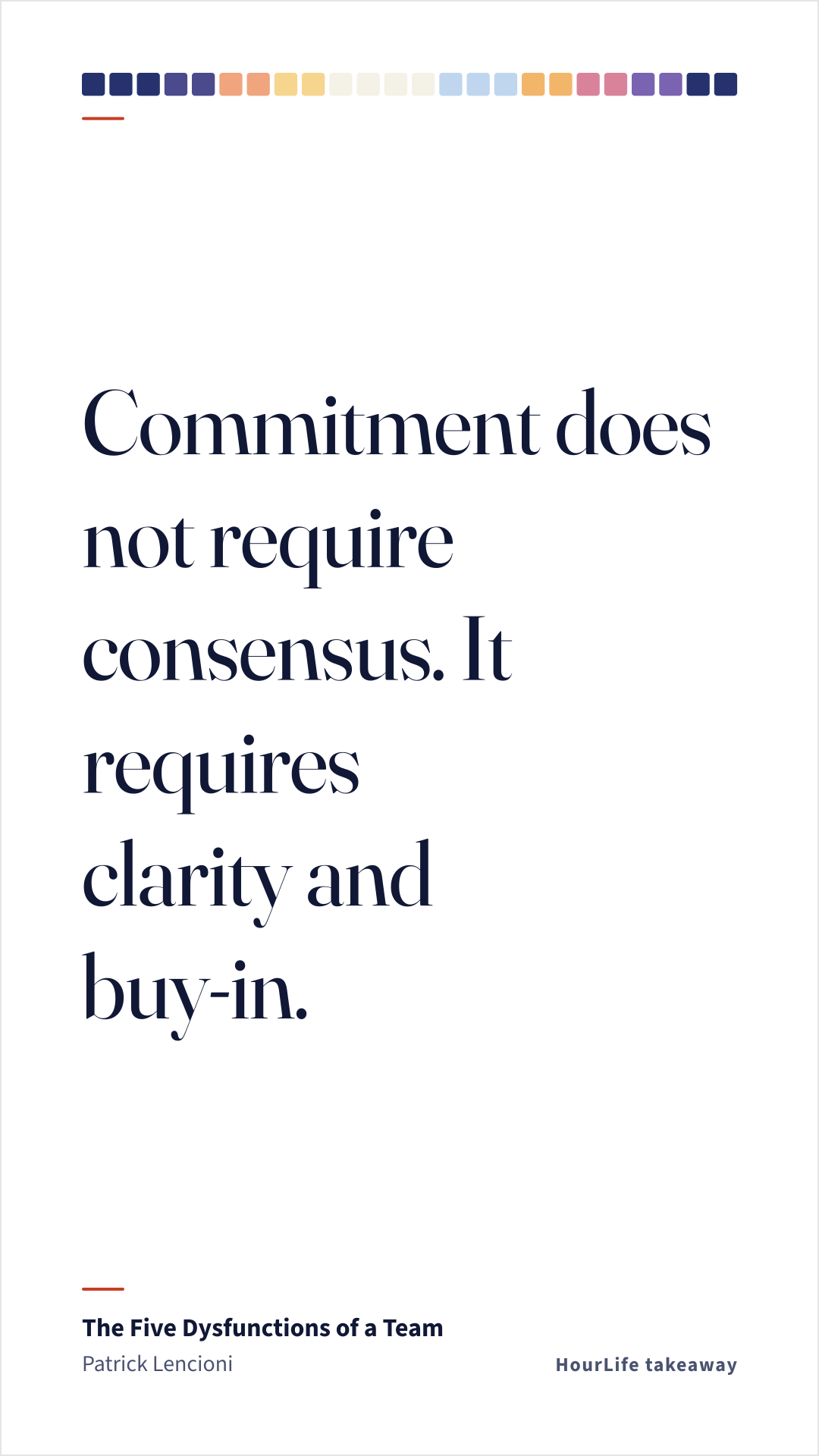
Commitment does not require consensus. It requires clarity and buy-in.
Once people have been heard, the team can leave the room aligned even when the decision was not everyone's first choice.
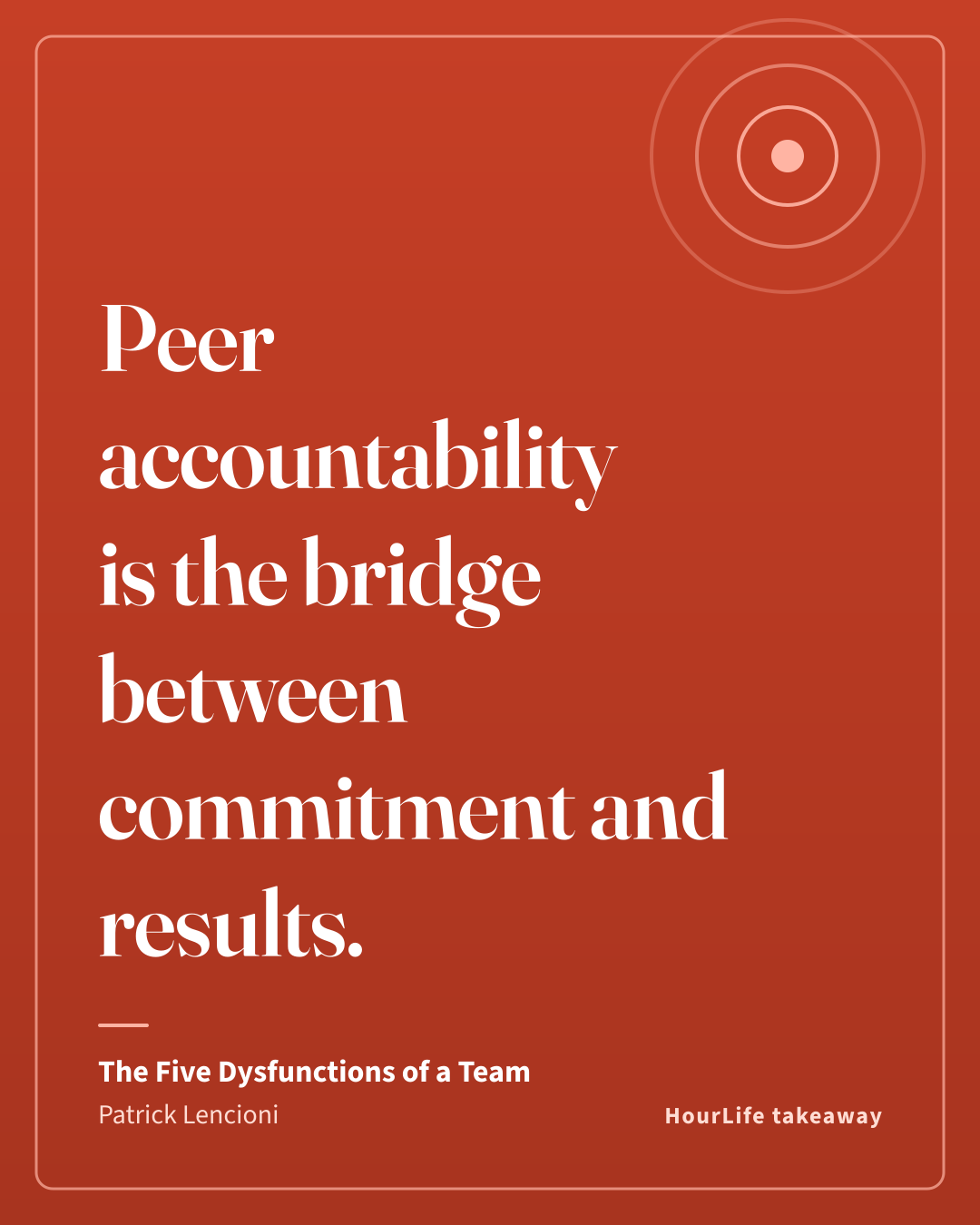
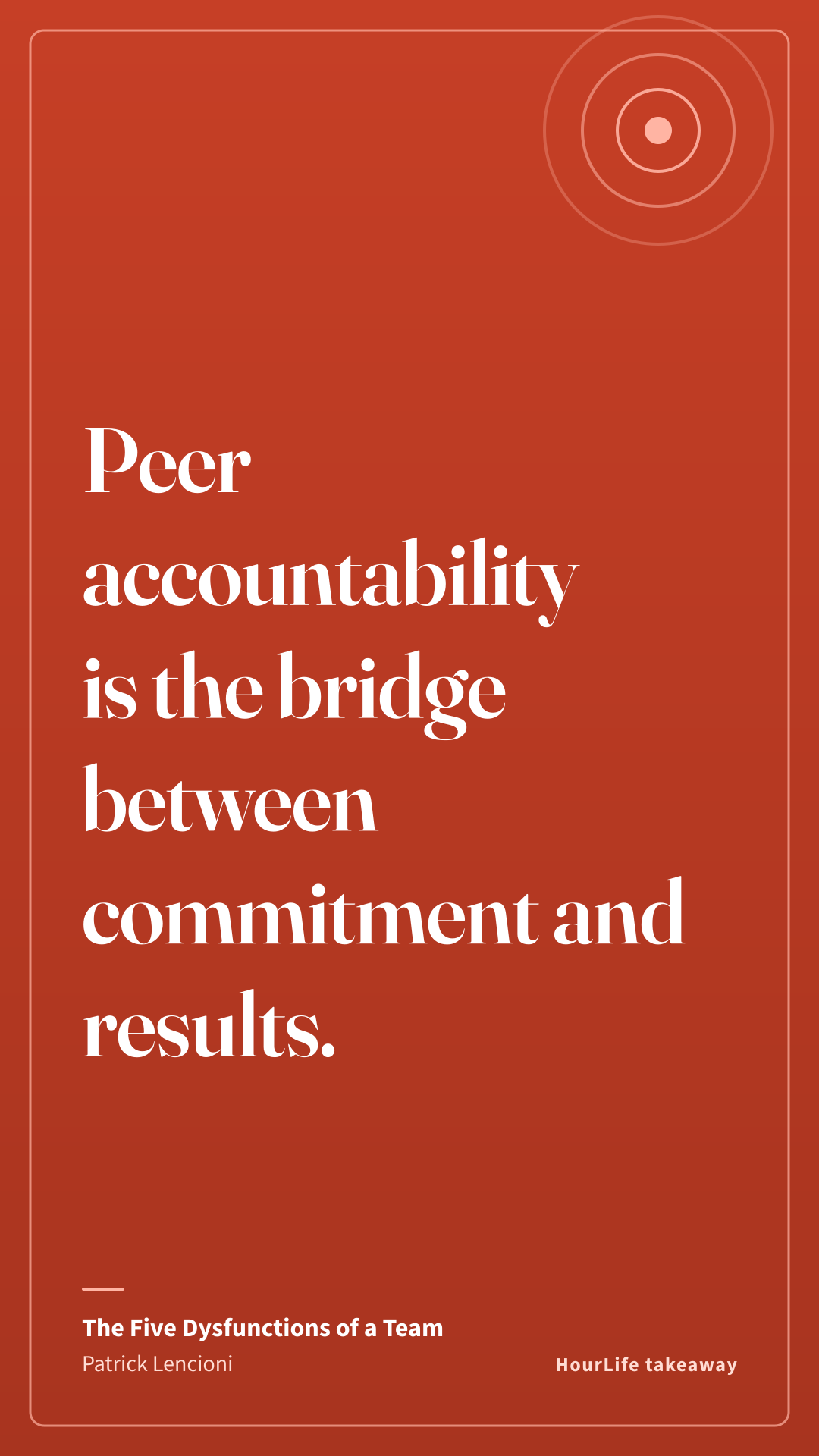
Peer accountability is the bridge between commitment and results.
Healthy teams do not force the leader to be the only keeper of standards; teammates challenge each other directly.
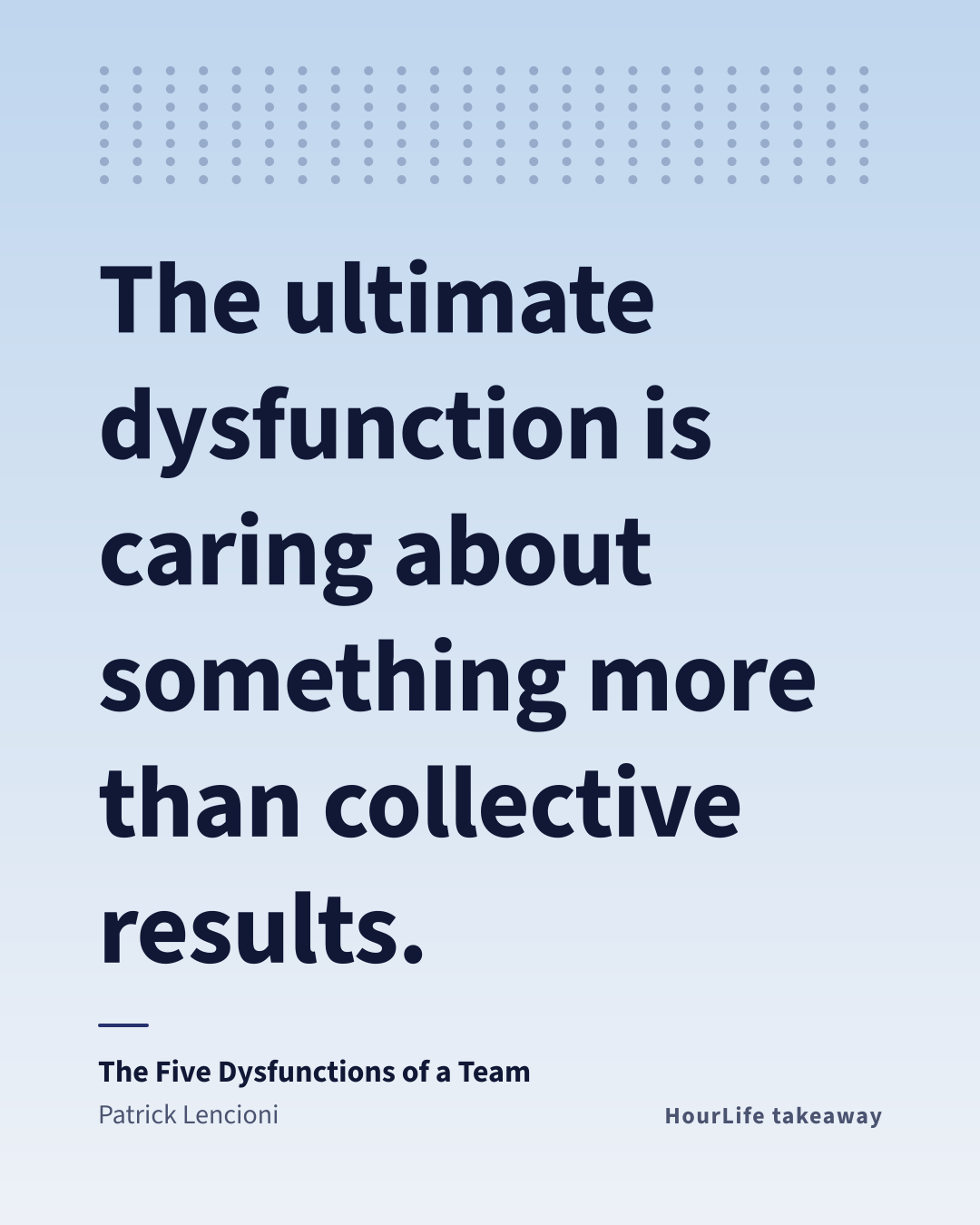
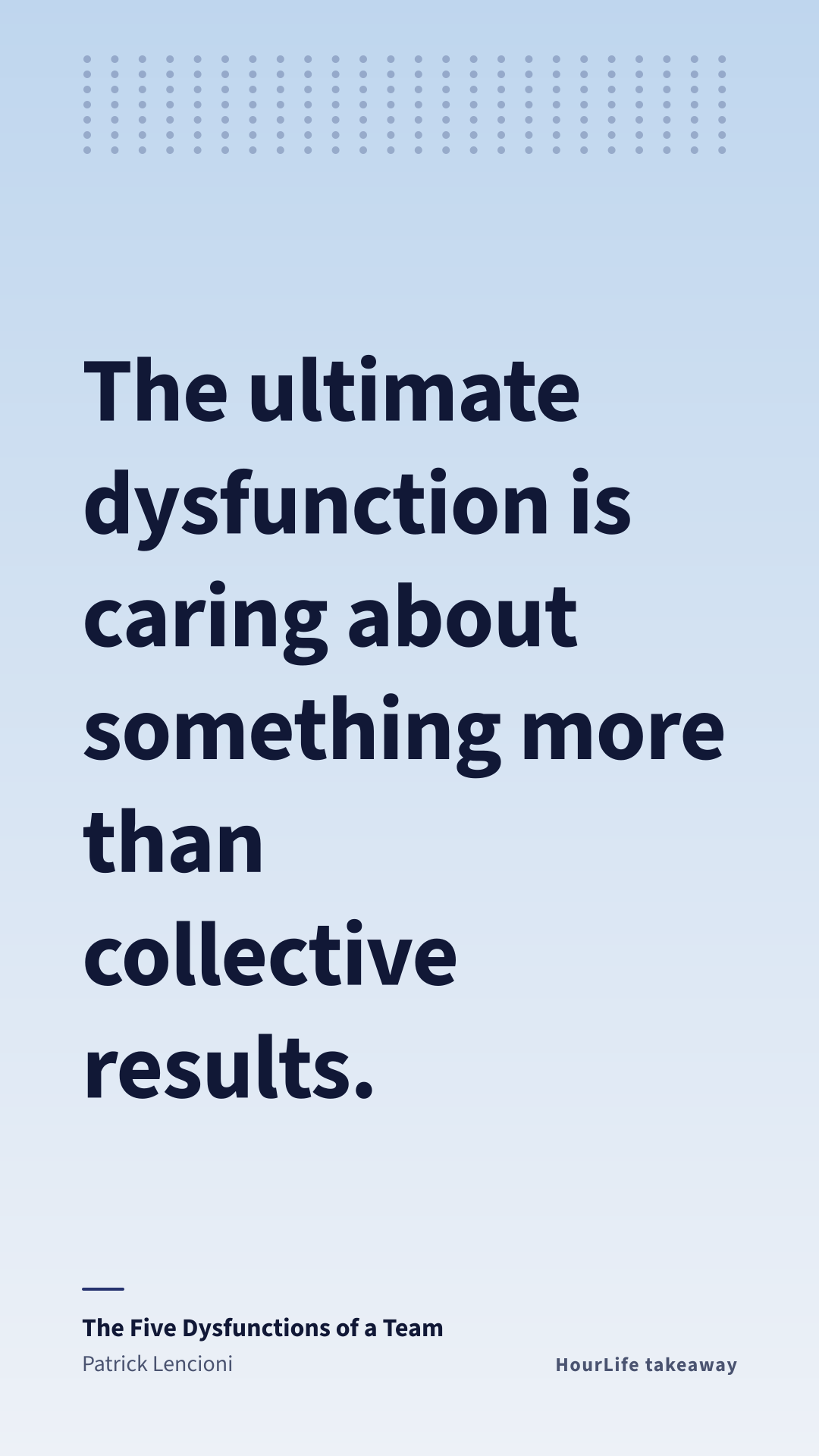
The ultimate dysfunction is caring about something more than collective results.
Status, department wins, and personal comfort become expensive when they outrank the team's shared scoreboard.
HourLife turns these ideas into a daily system — goals, habits, focus, and reflection in one private place.