Keep this author quotes for later
Sign in to save

Priya Satia

The most-loved lines from Priya Satia, drawn from 1 book in the library.

Lines labelled “HourLife takeaway” are our wording of the book’s ideas and may paraphrase it. Only lines in quotation marks are the author’s own words, with where they appear. Check the book for exact wording before you quote it. Spot an error?

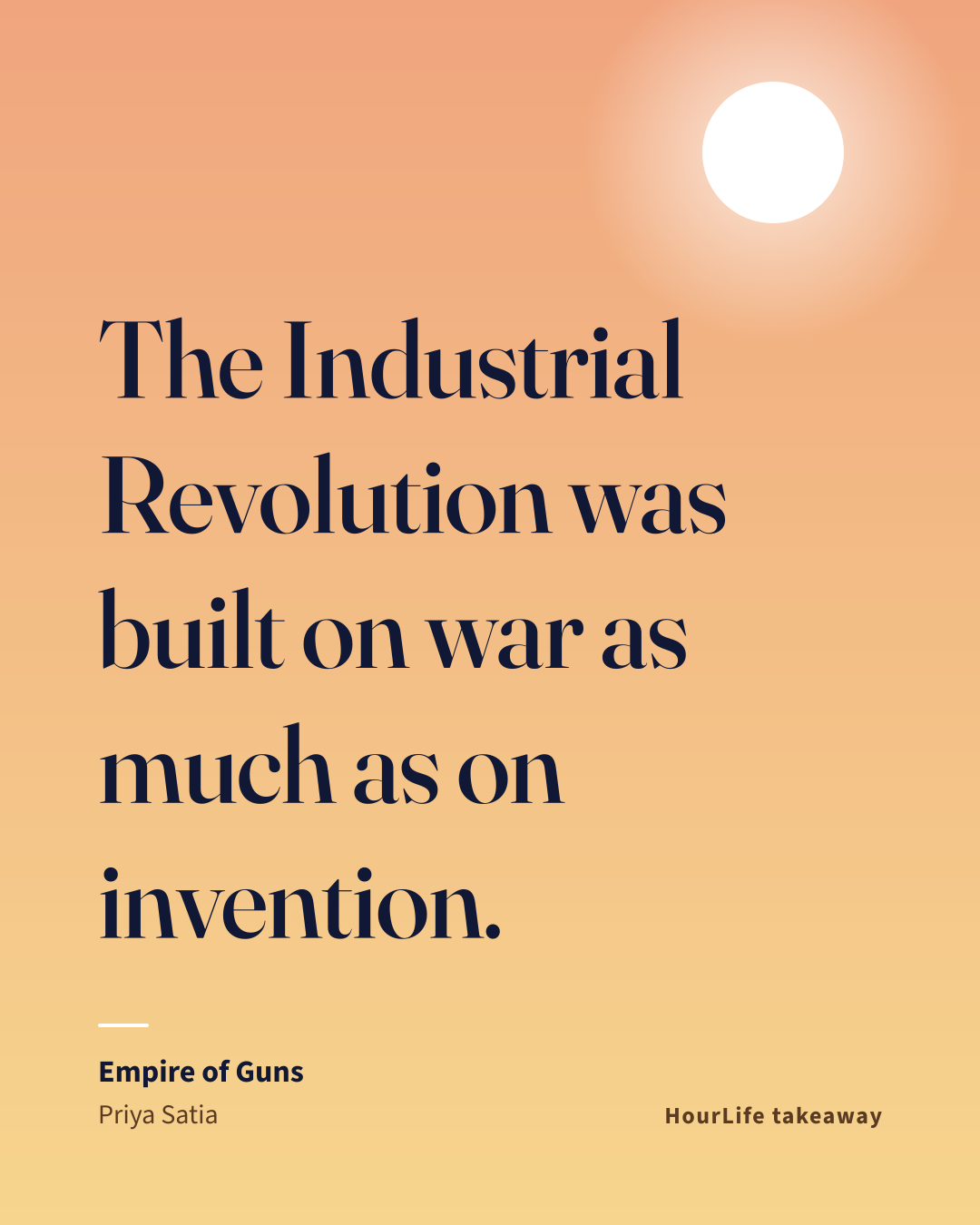
The Industrial Revolution was built on war as much as on invention.

Empire of Guns Priya Satia HourLife takeaway

Satia argues that Britain's near-constant wars in the eighteenth century made the state the biggest customer for metal goods. Its orders for guns kept Birmingham's workshops busy and pushed them to grow. In her account, war is not a backdrop to industry but one of its engines.


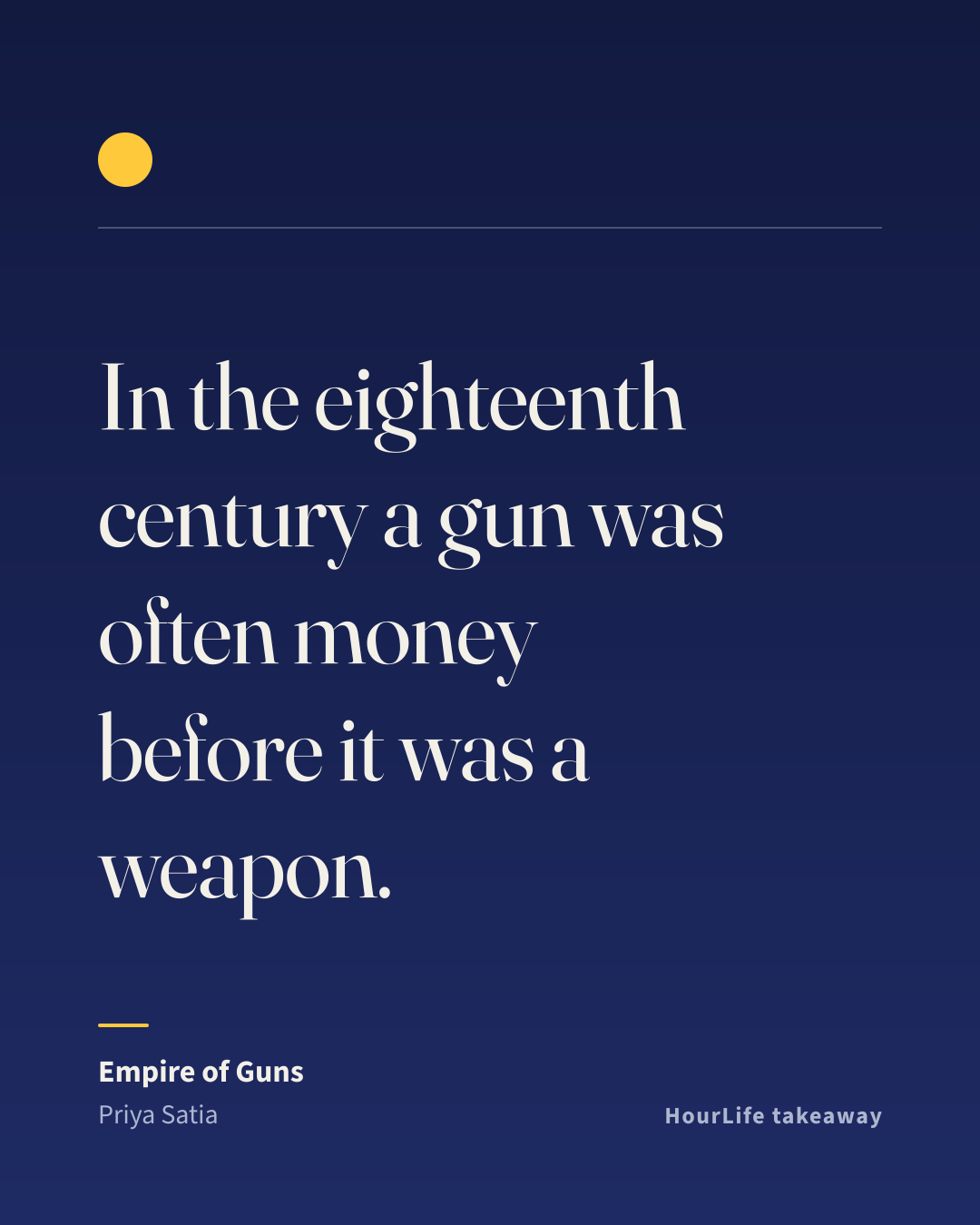
In the eighteenth century a gun was often money before it was a weapon.

Empire of Guns Priya Satia HourLife takeaway

Guns were traded in West Africa in exchange for enslaved people, and they changed hands as gifts and goods across the colonial world. Satia uses this to show that demand for guns did not come only from battle. They moved through the economy the way other trade goods did.

If everyone profits from war, the gunmaker is not the only one implicated.

Empire of Guns Priya Satia HourLife takeaway

When the Birmingham Quaker meeting moved against Samuel Galton Jr. in the 1790s, he argued that anyone who paid taxes or traded in an economy at war shared in it. The meeting disowned him anyway. Satia takes his argument seriously, because it was hard to answer.

Complicity spread thin is still complicity, and it is far easier to ignore.

Empire of Guns Priya Satia HourLife takeaway

Galton's case shows how a modern economy splits responsibility into small pieces. The supplier, the lender, the shipper and the taxpayer each touch a small part. No single person feels like the author of the harm.

The usual story of cotton mills and steam engines leaves war out of the picture.

Empire of Guns Priya Satia HourLife takeaway

Satia argues that the later telling of the Industrial Revolution, centred on clever inventors and peaceful factories, made industry look separate from violence. Putting the state and its wars back in changes who the story is about.

A good person can sit at the centre of a harmful trade.

Empire of Guns Priya Satia HourLife takeaway

Galton was a man of science and a member of the Lunar Society, the Birmingham circle that met to discuss experiments and ideas. He was also a gunmaker. Satia does not cast him as a villain, which makes his case more useful to think with.

A conscience needs a line, and a modern economy keeps moving it.

Empire of Guns Priya Satia HourLife takeaway

The Quakers' peace testimony drew a line at making weapons. Galton's defence asked why the line fell there and not at the banker, the ironmonger or the taxpayer. The book leaves the reader holding that question.

When the state is the biggest buyer, its wars shape the whole economy.

Empire of Guns Priya Satia HourLife takeaway

Government demand in wartime reached far beyond soldiers. Satia shows it running through metalworking, credit and trade, so that ordinary businesses were tied to the war effort whether they chose it or not.

Ask what your work and money ultimately support, not only what they make.

Empire of Guns Priya Satia HourLife takeaway

Galton made guns, but he argued the real question was where everyone's money went. That question still applies to a salary, a pension or a weekly shop. You cannot opt out of the economy, but you can look at your part in it.

Keep this going in the app.

HourLife turns these ideas into a daily system — goals, habits, focus, and reflection in one private place.