Keep this author quotes for later
Sign in to save

Rami Kaminski

The most-loved lines from Rami Kaminski, drawn from 1 book in the library.

Lines labelled “HourLife takeaway” are our wording of the book’s ideas and may paraphrase it. Only lines in quotation marks are the author’s own words, with where they appear. Check the book for exact wording before you quote it. Spot an error?

Not everyone needs to belong to a group to live a full life.

The Gift of Not Belonging Rami Kaminski HourLife takeaway

This is the book's central claim. Kaminski describes capable, well-liked people who still feel outside every room they walk into, and argues that this is a stable trait, not a problem waiting to be solved. The trouble usually starts when other people insist on fixing it.


An otrovert is not shy. They are easy company with one person and an outsider in any crowd.

The Gift of Not Belonging Rami Kaminski HourLife takeaway

Kaminski proposes a third style beside introversion and extroversion. Otroverts can be articulate, warm and popular, and one-to-one time does not drain them. What they lack is the inner pull toward a group's identity, so in large gatherings they feel alone even when they are welcome.

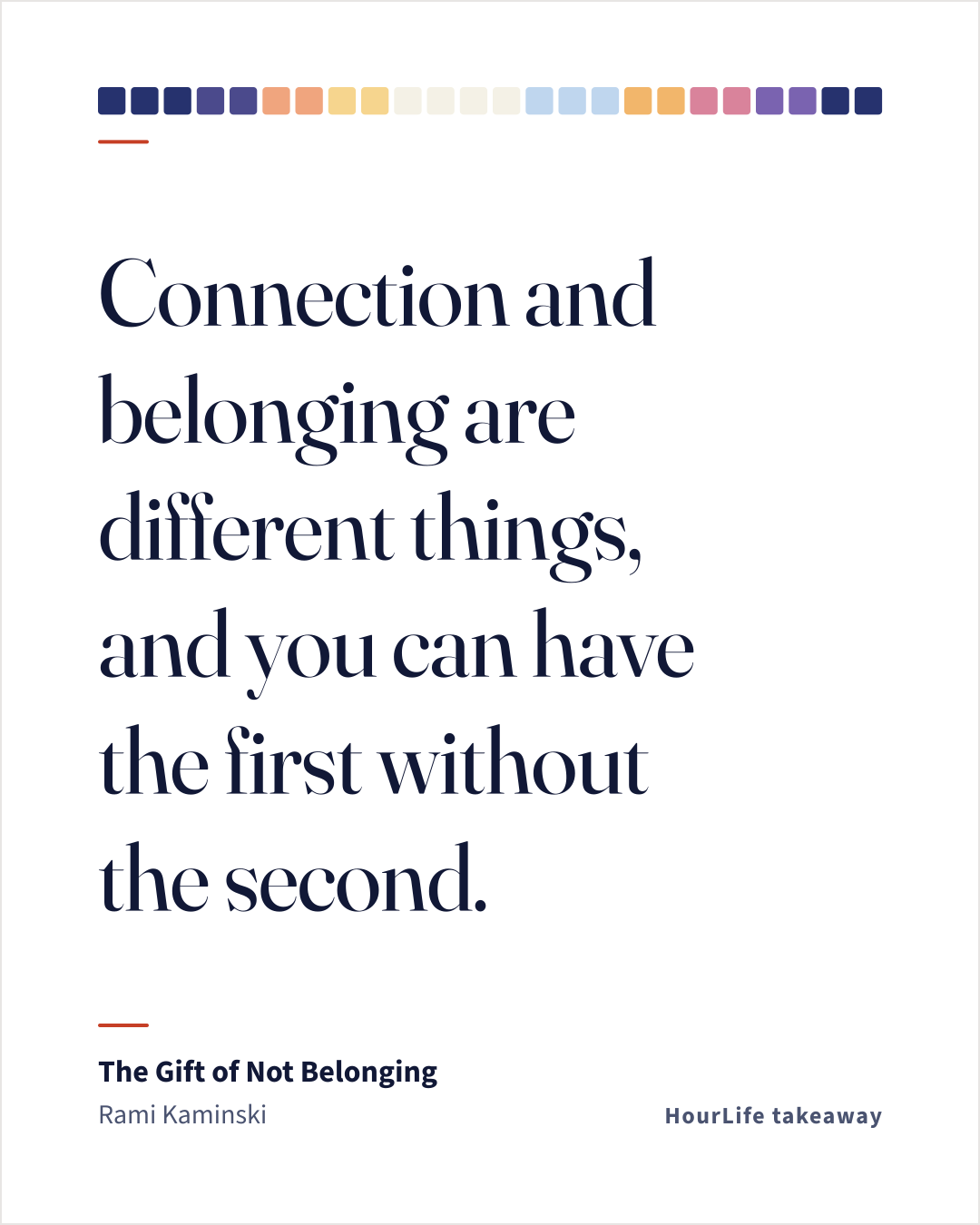
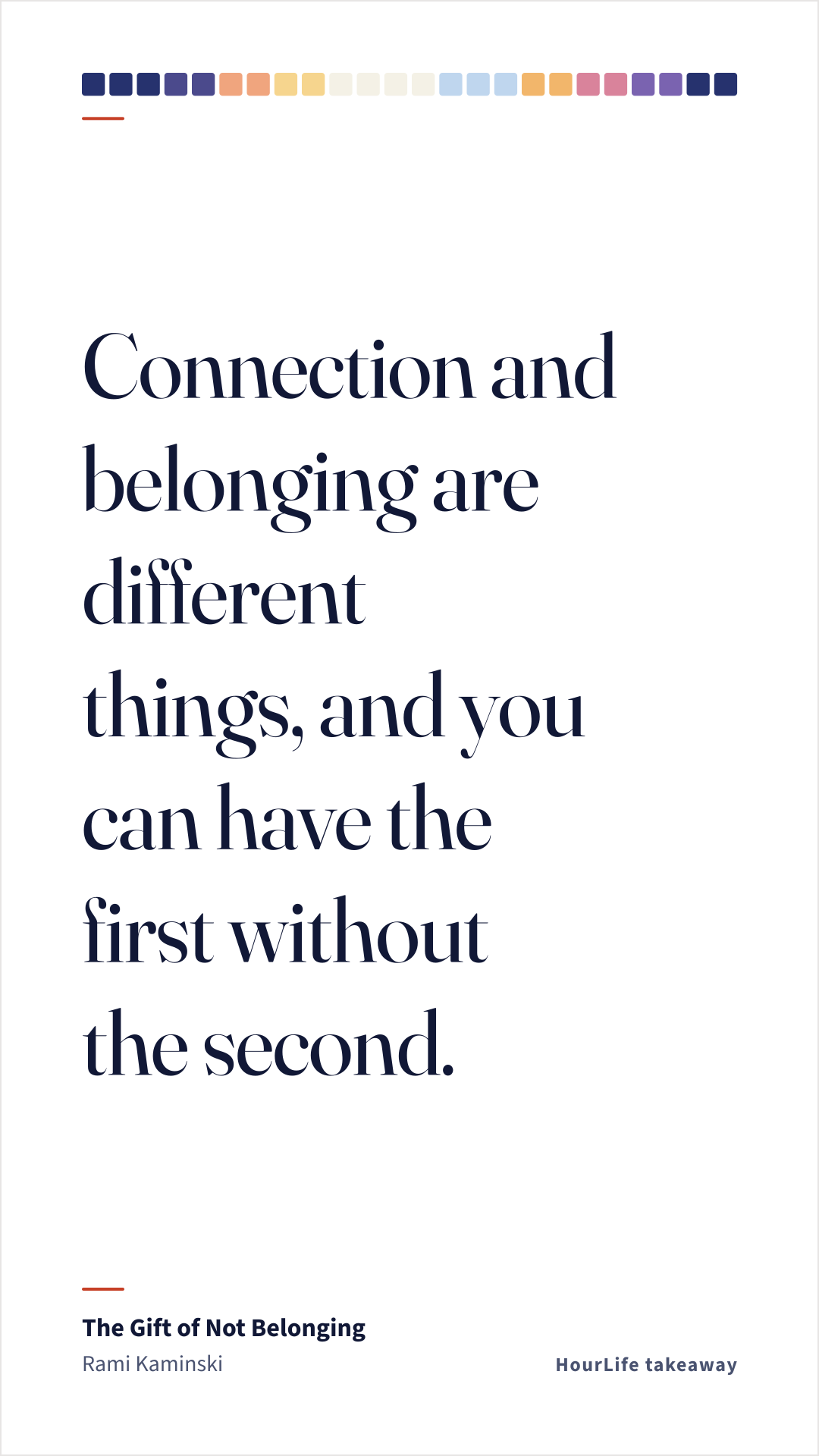
Connection and belonging are different things, and you can have the first without the second.

The Gift of Not Belonging Rami Kaminski HourLife takeaway

Because otroverts don't merge into a group or take on its ideology, the book argues, they often become trusted confidants. They offer one person their full attention instead of the group's ready-made answers.

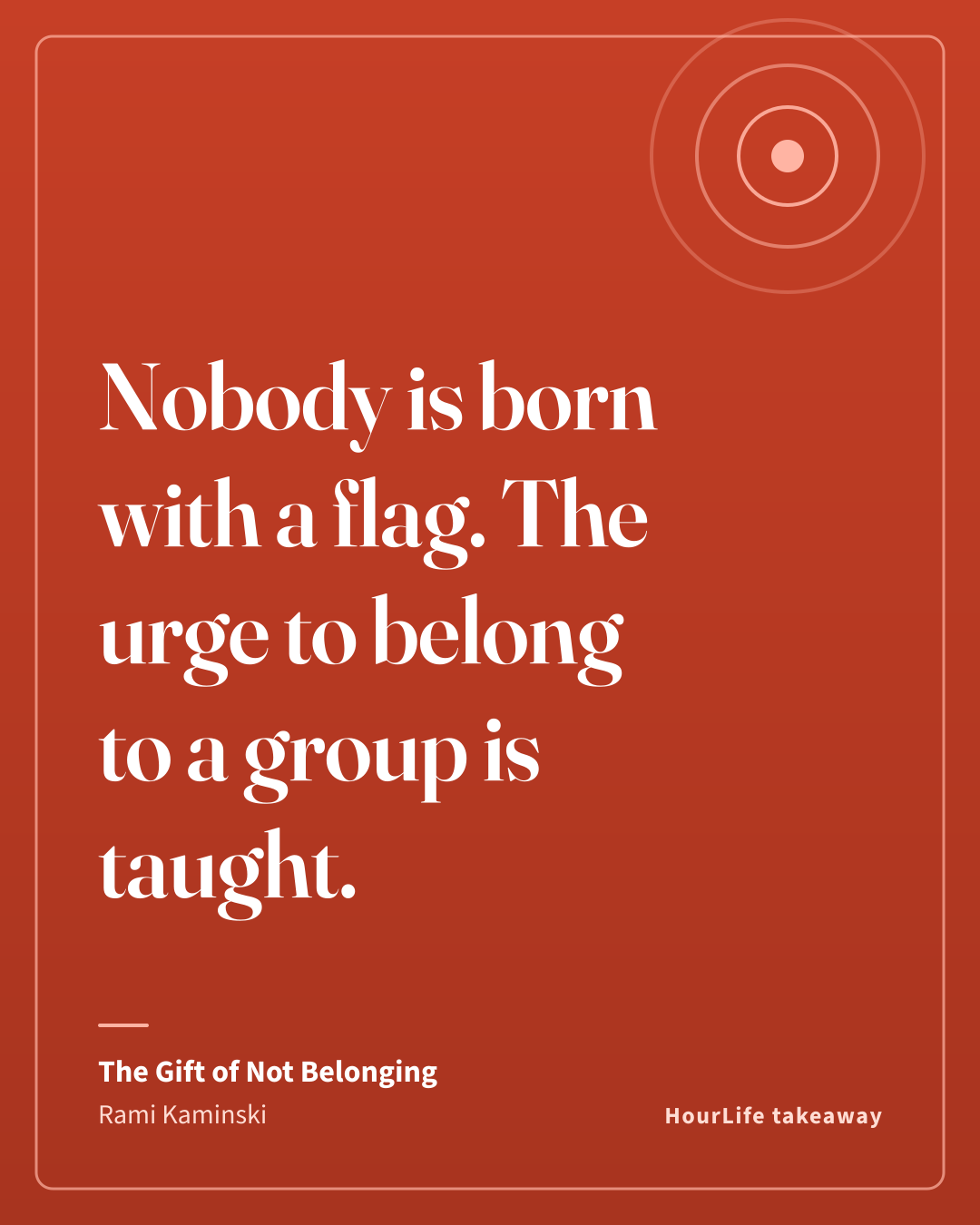
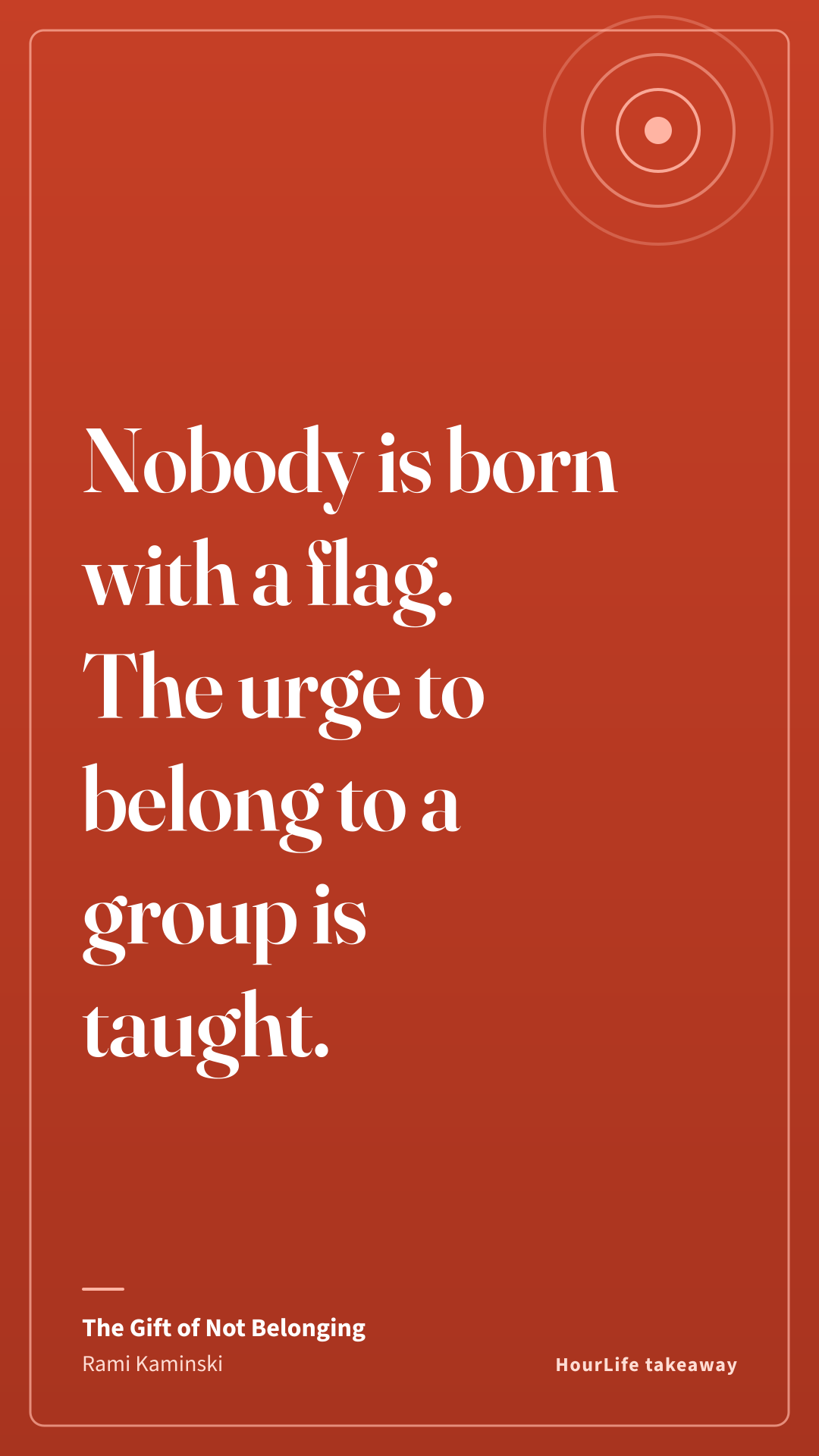
Nobody is born with a flag. The urge to belong to a group is taught.

The Gift of Not Belonging Rami Kaminski HourLife takeaway

Kaminski argues that children learn their teams, nations and creeds from the adults around them. He traces his own awareness to a Scout ceremony: the other boys felt proud as they recited the pledge, and he felt nothing. Otroverts, in his view, learn the rules of belonging without feeling the pull to play along.

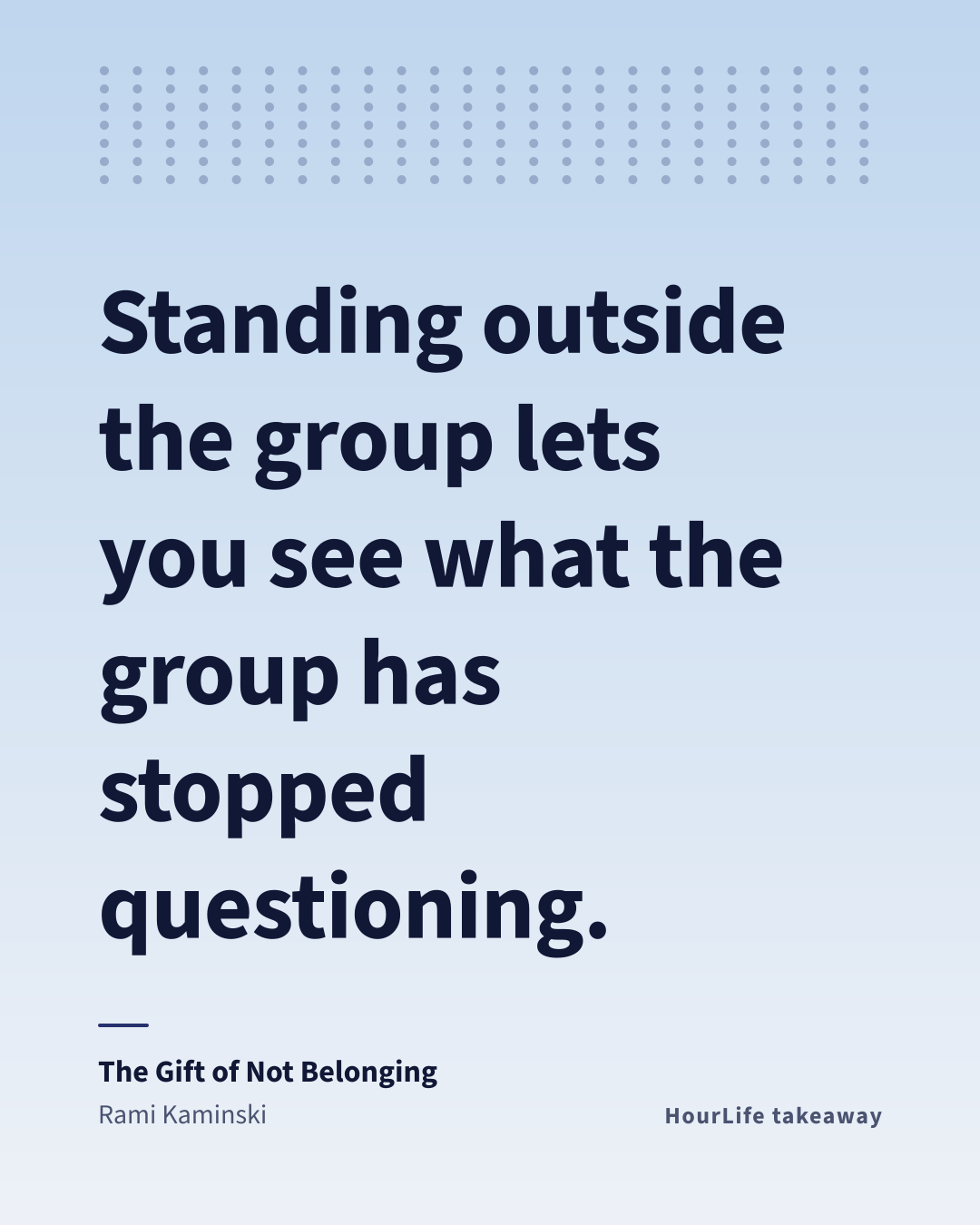
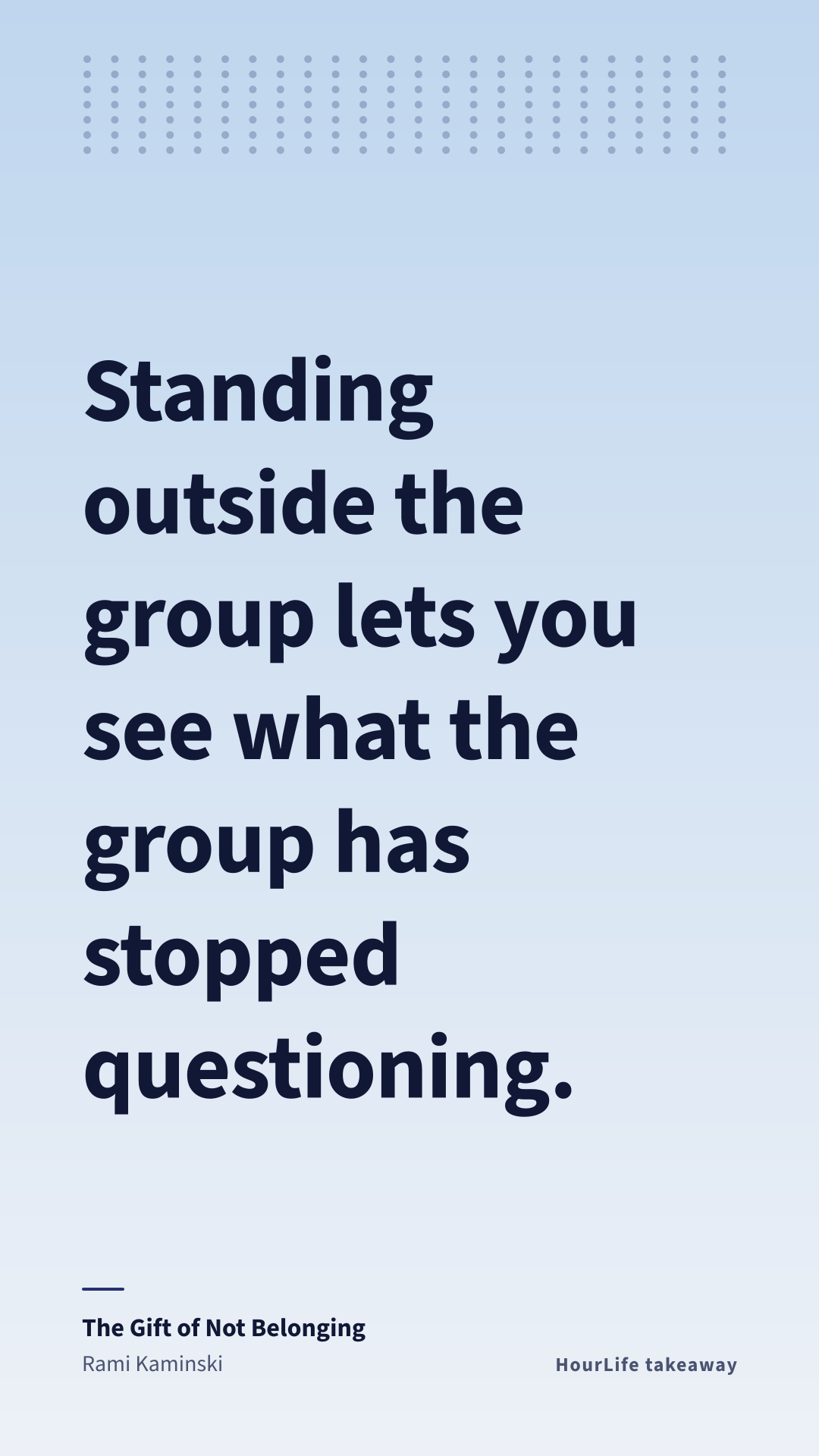
Standing outside the group lets you see what the group has stopped questioning.

The Gift of Not Belonging Rami Kaminski HourLife takeaway

The gift in the title is mostly this. Without a group's approval to protect, an otrovert can notice inherited beliefs and patterns that insiders take for granted. Kaminski links this independence to the work of artists, thinkers, inventors and founders.

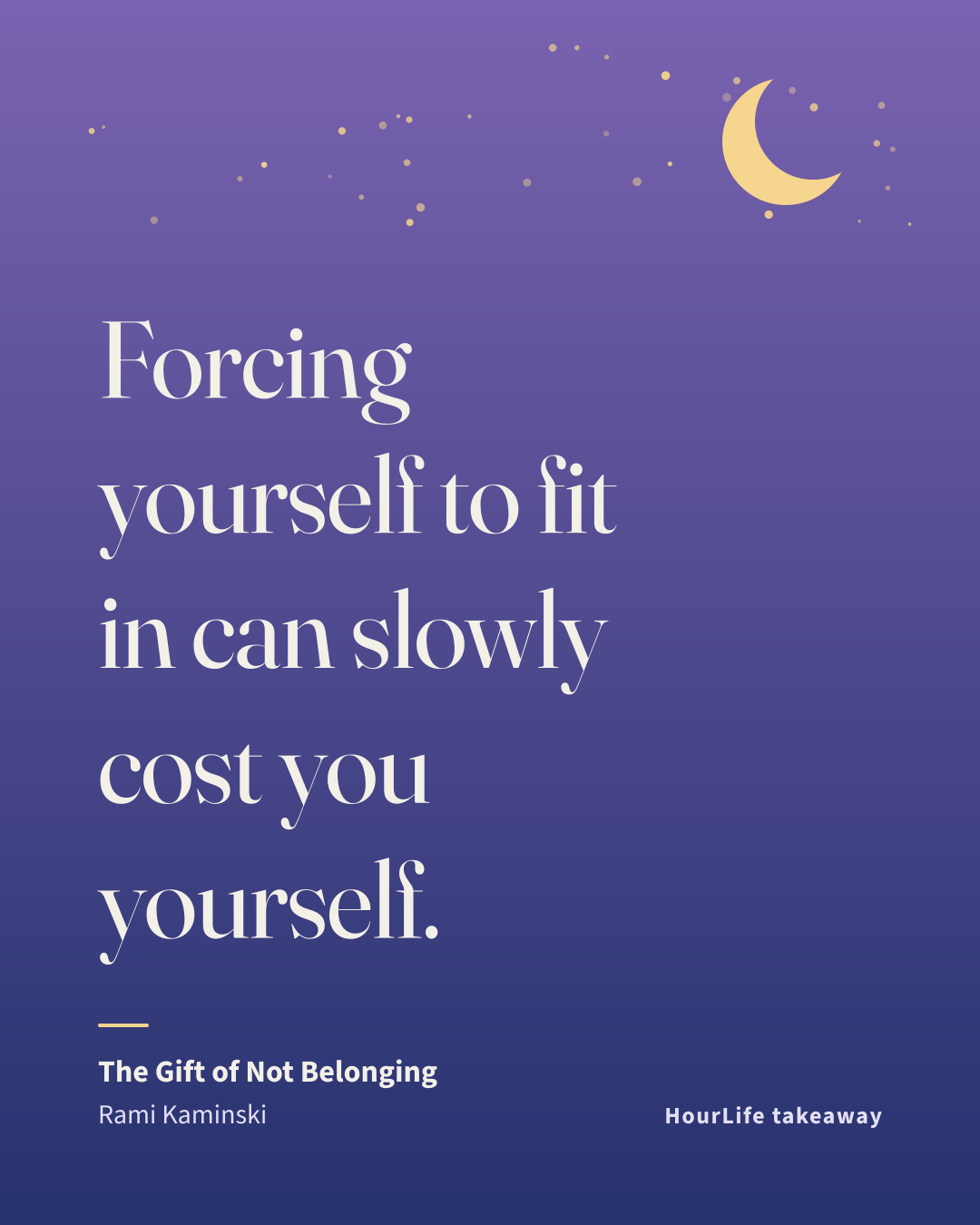
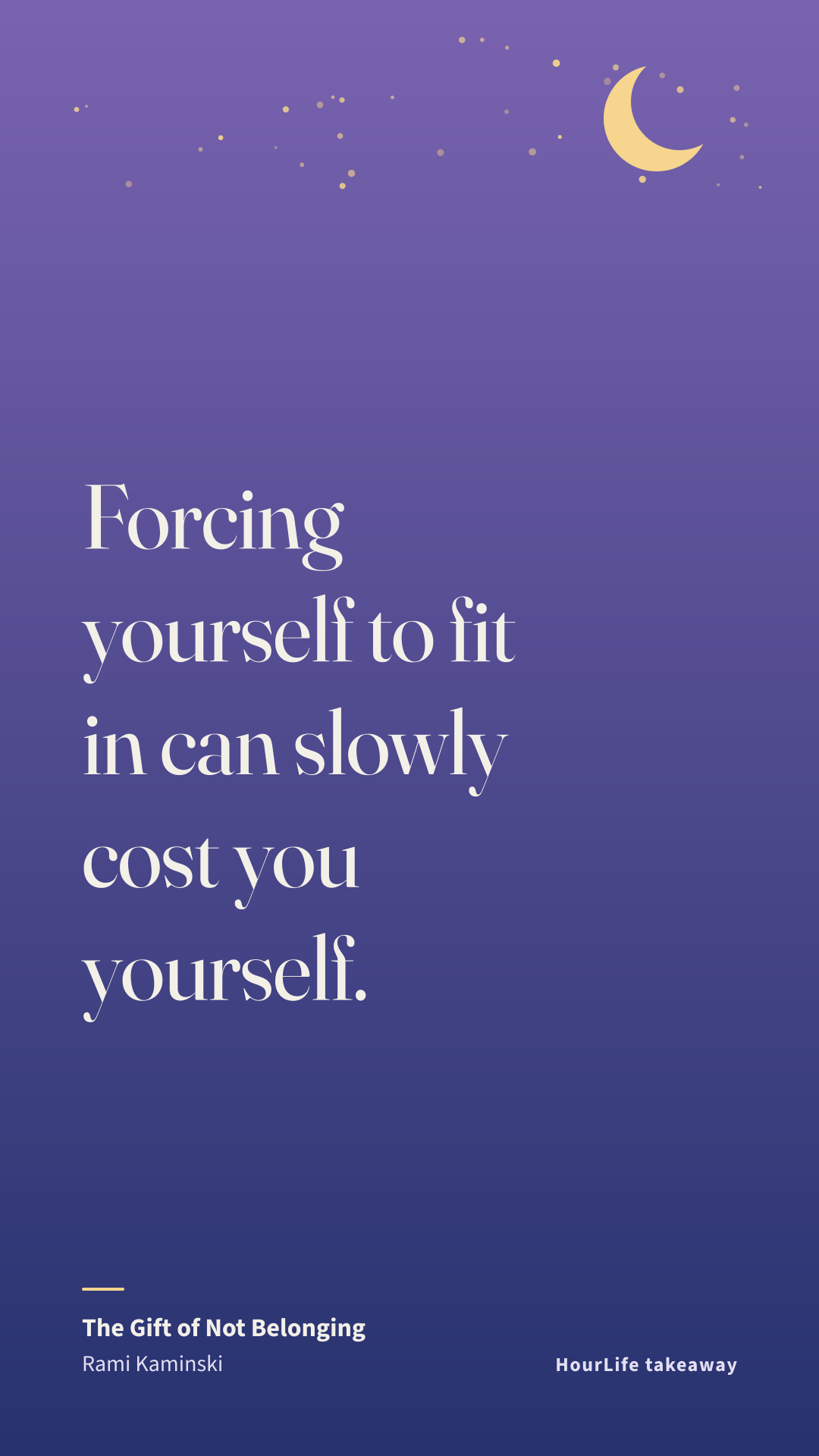
Forcing yourself to fit in can slowly cost you yourself.

The Gift of Not Belonging Rami Kaminski HourLife takeaway

The child who likes time alone is told to socialise more. The adult who dislikes groupthink is told to be a team player. Kaminski argues that years of this teach people to mask, and that even success can then feel hollow.

Some outsiders hide in plain sight as the life of the party.

The Gift of Not Belonging Rami Kaminski HourLife takeaway

The book describes the pseudo-extrovert: an otrovert who takes a role such as host, performer or organiser. The role gives them a reason to stand slightly apart while looking outgoing. It works, but it can be tiring to keep up.

Most of the group events you dread can be skipped at a smaller cost than you fear.

The Gift of Not Belonging Rami Kaminski HourLife takeaway

Kaminski's practical advice is to stop trying to fit in and to sort real obligations from social habit. Skipping what you can't face usually has fewer consequences than expected, and the energy saved goes to the people and work you care about.

Use otroversion as a lens for understanding yourself, not as a diagnosis.

The Gift of Not Belonging Rami Kaminski HourLife takeaway

Kaminski presents otroversion as a personality style, not a disorder, and says it needs no treatment. It also comes from his clinical observation rather than from tested research, and some psychologists argue that existing trait models already cover it. Take what helps you understand yourself and leave the label loose.

Keep this going in the app.

HourLife turns these ideas into a daily system — goals, habits, focus, and reflection in one private place.